
 TRIAL LESSON
Piano Lessons
Nikita Magaloff’s London Connection: The Curious Story Behind His Most Sought-After Chopin Interpretations
Mar
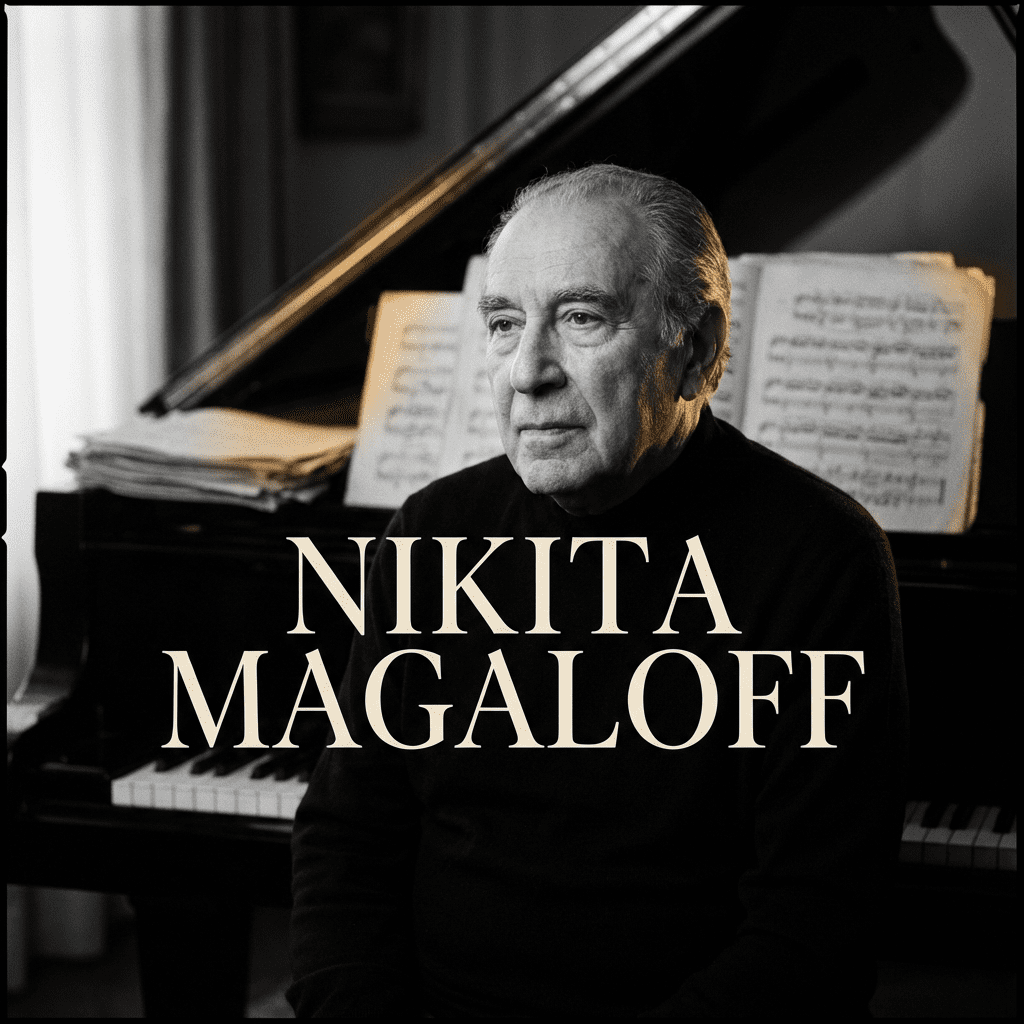
Nikita Magaloff in London
Pianists • Chopin • London recital life
Nikita Magaloff — His Life, Chopin Legacy and London Connection
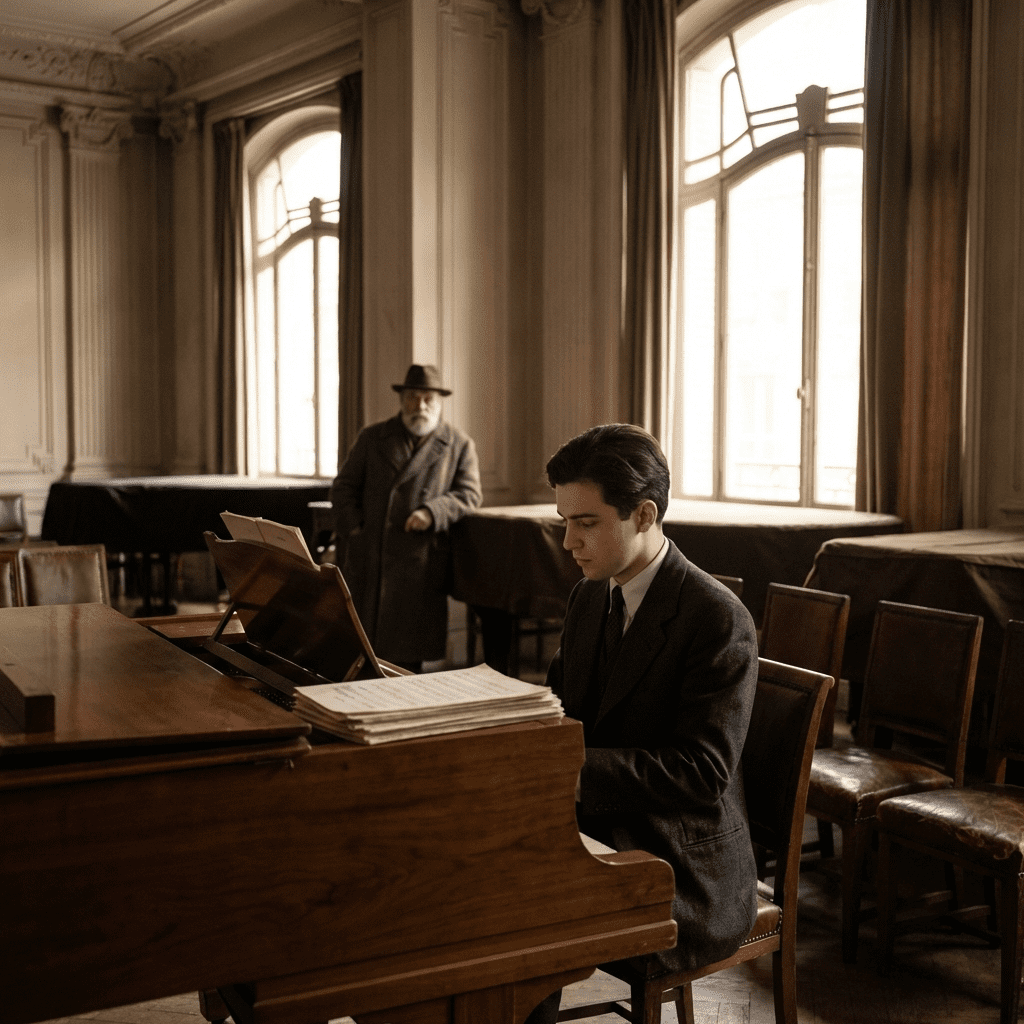
If you are drawn to Magaloff’s clarity, WKMT’s piano lessons in London from expert piano teachers develop the same care for line, rhythm, style, and musical understanding that this article explores in his Chopin playing.
Nikita Magaloff is one of those pianists whose reputation travels ahead of the publicity. Born in St Petersburg in 1912, trained in Paris, and later rooted in Swiss musical life, he became a defining Chopin interpreter of the 20th century—admired not for grand gestures, but for a kind of disciplined candour. Maurice Ravel, no easy man to impress, called the young Magaloff “a truly extraordinary musician” at his Paris Conservatoire graduation. It is a line that still feels accurate, if not especially fashionable.
What made Magaloff distinct was not a signature sound so much as a signature attitude: an unsentimental insistence that Chopin’s refinement does not require perfume. He was drawn to the composer’s autographs and wary of later editorial “improvements”, including the Fontana revisions. Over decades of international touring he carried that approach into recital halls—including London—while building a discography that, in Chopin, remains a reference point: lucid, text-conscious, and quietly personal.
Nikita Magaloff’s Chopin is defined less by display than by proportion: clarity of line, disciplined rhythm, and an interpretive honesty that makes restraint feel quietly radical.
This article traces Magaloff’s life and musical formation, the interpretive fingerprints that shaped his Chopin, the recordings that matter, and the London thread that places him within British concert life and teaching culture.
Quick biography and musical formation
Early life and studies
Magaloff was born on 21 February 1912 in Saint Petersburg, into the Georgian noble Maghalashvili family. The upheaval of the 1917 Revolution forced the family into exile in Finland, where his early piano studies began with Alexander Siloti—a Liszt pupil and a relative of Rachmaninov. The pedigree matters here: Siloti represents a direct line from 19th-century pianism into the modern era, and Magaloff would retain something of that tradition’s emphasis on line, rhythm, and proportion.
In 1923 the family settled in Paris. Magaloff entered the Paris Conservatoire and studied under Isidor Philipp, a teacher with formidable authority in Chopin. He also worked briefly with Maurice Ravel. At Magaloff’s 1929 graduation, Ravel offered a succinct verdict: “A truly extraordinary musician is born.” Ravel’s influence is often described in terms of crystalline tone and dexterity—qualities that would later serve Magaloff’s preference for clarity over weight.
Key relationships and an international career
Early in his career, Magaloff toured Europe in violin–piano duo recitals with Joseph Szigeti, and later married Szigeti’s daughter, Irene. After the Second World War he resumed public performance quickly, giving concerts in Paris soon after 1945, and making his US debut in 1947.
A significant turning point came in 1949 when Dinu Lipatti invited Magaloff to succeed him at the Geneva Conservatory. Magaloff taught masterclasses there for a decade while maintaining an active concert schedule. From the 1960s he toured widely—appearing in the United States, Japan, and South Africa—served on competition juries, and returned repeatedly to Chopin in recital cycles. He often programmed the composer’s complete works across a series of six programmes, and he made what is described in the supplied research as the first complete recording of Chopin’s solo piano oeuvre.
Magaloff and Chopin — why his interpretations matter
Repertoire breadth and the question of “complete Chopin”
Magaloff’s reputation rests most securely on Chopin, not least because of his complete recording project and his repeated programming of near-total Chopin cycles in concert. The “complete” claim has two sides in practice: the sheer scale of the undertaking and the editorial principles guiding it. Magaloff’s commitment to Chopin’s autograph sources—preferring them to later revisions, including those associated with Fontana—signals a musician thinking like a reader as well as a performer.
Interpretive fingerprints: line, rhythm, restraint
Contemporary descriptions of Magaloff’s Chopin converge on a few consistent traits: purity of line, structural clarity, and a “seamless legato” shaped by an unusually sensitive ear. The virtues are classical rather than theatrical. Where other pianists will use rubato to create an illusion of improvisation, Magaloff tends to use it as a tool of punctuation—slight hesitations at phrase ends, a controlled breathing in the bar, never the dissolving of time.
That restraint is not the same as coldness. Critics also noted a “mature sense of proportion” and moments of “breathtaking poetry” that sprang from rhythm rather than sentiment. In practical terms, Magaloff’s pedalling and touch are designed to reveal inner voice-leading. In the Waltzes, the left-hand bass lines remain clear and buoyant, avoiding a heavy-handed rubato that would blur the dance. In the Polonaises, the martial drive is maintained without being inflated into rhetoric.
In larger forms—such as the Sonatas—Magaloff often favoured Chopin’s own tempo indications and consulted original manuscripts that diverge from later editions. The result is a Chopin style described by one New York critic as “authoritative…solid and thorough”, even if “not always exciting”. That tension is telling: Magaloff’s excitement tends to be architectural. In the Ballades and Scherzos, he underplays flashiness to foreground inner contrasts and motivic unity. Phrasing often falls into symmetrical arch-shapes, so climaxes feel earned rather than seized.
A small example, noted in the supplied research, is his shaping of the opening of Ballade No. 1 in G minor, Op. 23: in the first three bars he slightly broadens beat two, creating a gentle ritardando into the cadence. It is not a “moment” in the usual sense; it is an adjustment that brings the phrase into focus. This is Magaloff’s Chopin in miniature: hearing the score more than showing it off.
Placed alongside Rubinstein’s larger Romantic gestures or Cortot’s elastic rubato, Magaloff can sound almost austere. With Claudio Arrau he shares a certain restraint and warmth, but without Arrau’s denser sonorities. The difference is not just taste: it is method. Magaloff aims for emotional expression through structure.
Discography and essential recordings
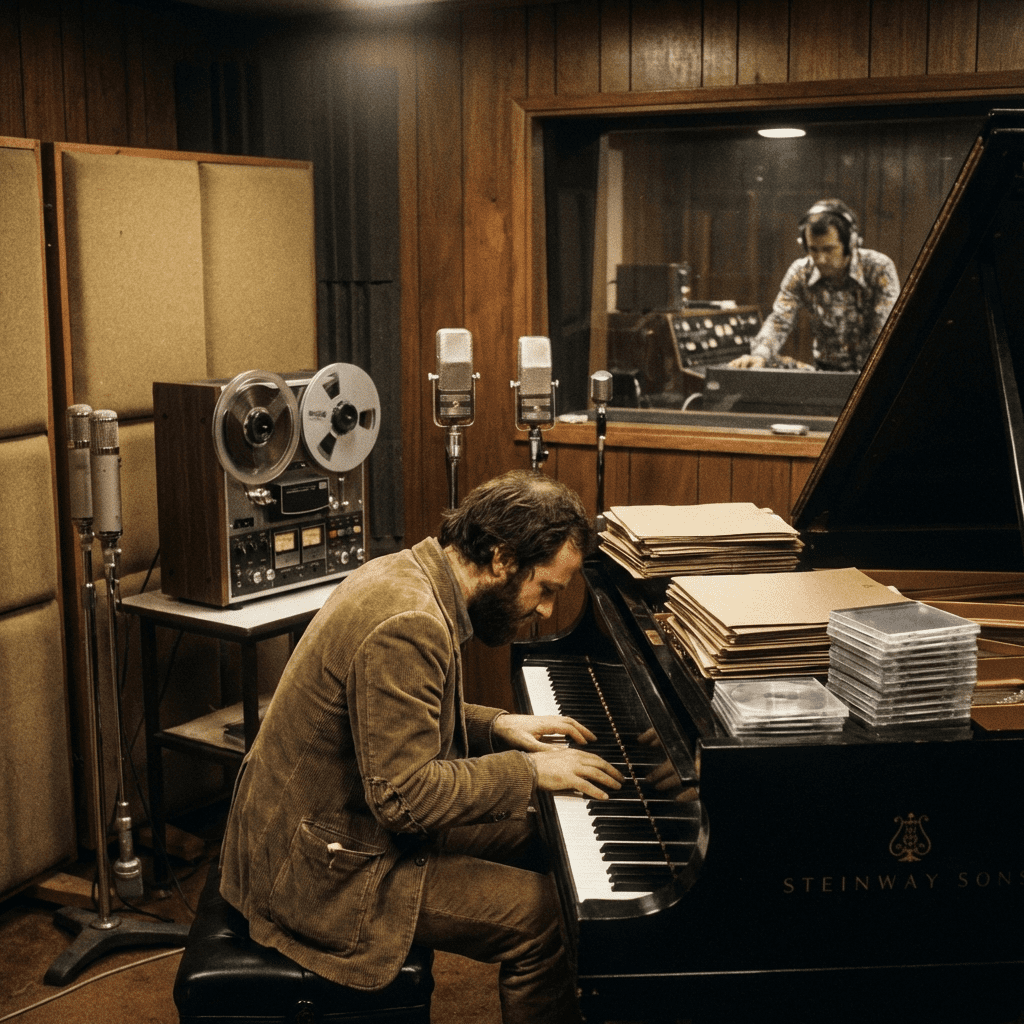
Magaloff’s discography is unusually valuable because it documents a coherent set of interpretive principles over time: clarity, textual fidelity, and disciplined rhythm. Below are the recordings highlighted in the supplied research, with label details and listening pointers.
Chopin: Complete Piano Works (Philips Classics 456 376-2, 13 CD box)
Recorded across 1974–78 and later issued as a 13-disc set (released in 1997), Magaloff’s complete Chopin project remains the central artefact of his recorded legacy. The set is frequently recommended for its consistent tone, structural steadiness, and the way Magaloff uses Chopin’s original text. A notable example cited is in Waltz Op. 64 No. 1, where he plays Chopin’s autograph ending rather than the familiar later alternatives.
What to listen for: crystalline voicing in the Preludes (Prelude No. 12, 0:22–0:45 is highlighted), poised ornamentation in the Nocturnes (Nocturne Op. 62 No. 2, 0:15–0:30), and a broader sense of “line” that keeps even miniature forms from feeling episodic. The research notes availability on major streaming platforms, last checked 2026-03-16.
Chopin: Waltzes & Polonaises (Decca LX 3076, LP 1958/59)
This early analogue LP is described as an exemplar of Magaloff’s style, including the popular Waltz in D♭, Op. 64 No. 1 (“Minute Waltz”) and the Op. 40 Polonaises. The point is not virtuoso display but a kind of rhythmic hygiene: light pedalling in the waltz and crisp articulation in Polonaise Op. 40 No. 1 (“Military”). The research also notes Magaloff’s preference for Chopin’s original waltz endings without added ritardando, a small but telling instance of textual discipline.
What to listen for: buoyant bass clarity around 0:45 in Op. 64 No. 1, and a firm, unsentimental drive in the “Military” Polonaise without exaggerated grandeur.
Chopin: Nocturnes Nos. 1–11 (Philips Concert Classics 426 979-2, CD 1990)
Recorded in September 1974 at the Concertgebouw in Amsterdam and later issued on CD by Philips, these Nocturnes are singled out for their “touching re-creations” and warm ambience. The research points to Op. 27 No. 2 (6:12–6:50) for transparent inner voicing, and Op. 37 No. 1 (0:30–1:00) for rubato that remains gentle and exact.
What to listen for: right-hand ornamentation that sits inside the rhythm rather than on top of it, and voicing that makes the harmonic shifts feel inevitable.
Chopin: Études Op. 10 & Op. 25 (Philips 6500 128, CD 1995)
Recorded in 1975 and issued on Philips (noted as Philips Silverline in the supplied research), these Études are praised for firm technique and restraint. Magaloff is not chasing danger for its own sake; he prioritises control and line. The research suggests listening to Étude Op. 25 No. 11 (“Winter Wind”) from 2:10–2:40 for controlled passagework, and Op. 10 No. 5 (“Black Keys”) at 0:50–1:10 for clarity in rapid figurations.
What to listen for: articulation that remains legible at speed, and a refusal to turn technical studies into melodrama.
Chopin: 26 Préludes • 4 Impromptus (Philips Concert Classics 422 483-2, CD 1988)
This single-disc selection, drawn from the larger Chopin cycle, is useful as an introduction to Magaloff’s poetic reserve. In Prelude Op. 28 No. 4 (0:30–1:00) he shapes the chromatic descent with understated elegance; the Impromptus stand out for nobility of pace rather than salon charm.
What to listen for: a sense of proportion that keeps short pieces from becoming sentimental postcards.
Across these recordings, the consistent advice is simple: listen for transparency, exacting fingering, rhythmic control, and a rubato that never becomes self-indulgence. In the Mazurkas, for example, the syncopations remain subtle—danced rather than declaimed.
Nikita Magaloff’s performance history — the London story
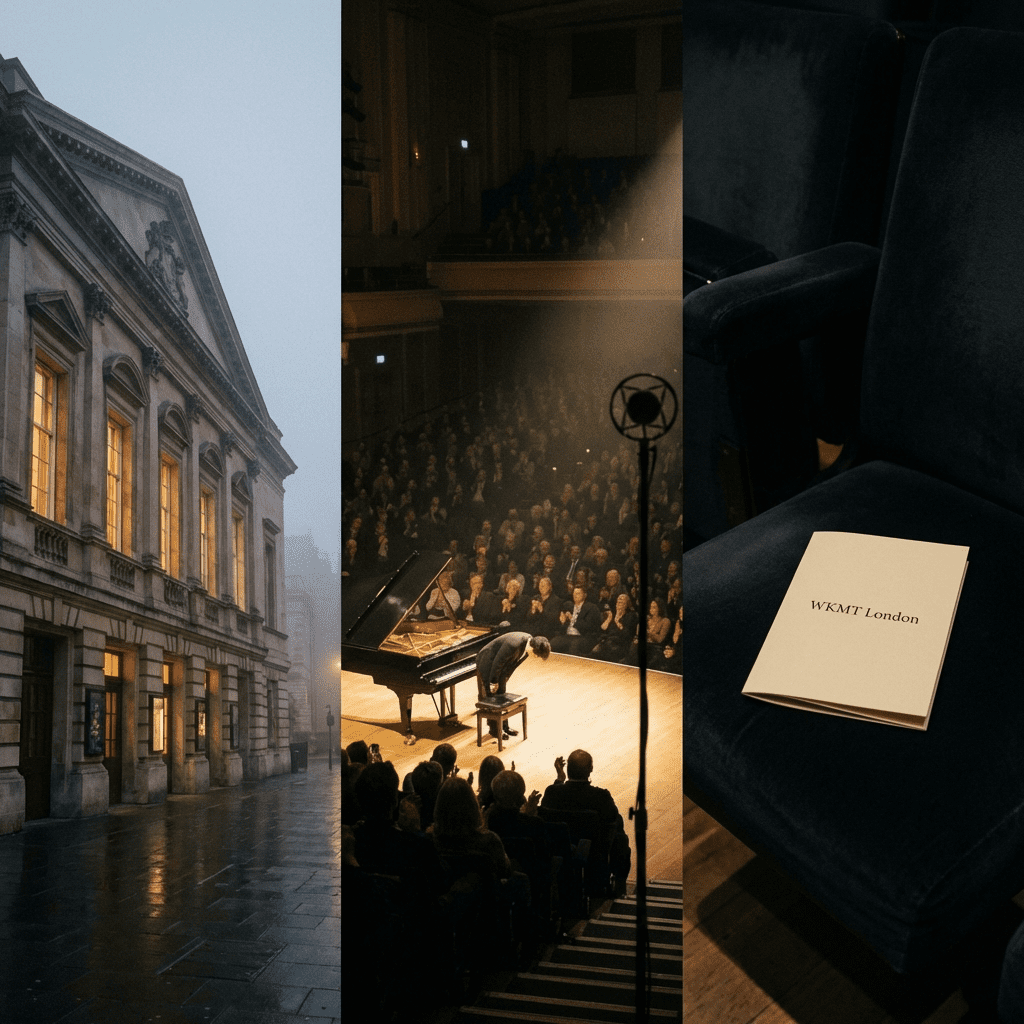
Concert life and venues
Magaloff’s relationship with London ran in parallel to his broader European career. The supplied research notes an early Wigmore Hall appearance in 1933 with violinist Irene Szigeti, placing him within a very specific London ecosystem: the serious recital tradition, alert to detail and suspicious of excess. In the post-war years he returned for recitals in the 1940s and 1950s, often receiving favourable critical notice.
London’s Concert Programmes archive is cited for a specific date—19 November 1946—when Magaloff appeared as soloist in a Tchaikovsky concert with the National Symphony Orchestra, conducted by Sidney Beer. Later, he appeared at the Festival Hall and on BBC broadcasts. The research also points to an Independent obituary remarking that his technique and “sense of expressive character” were widely admired, and that he travelled the world well into his sixties—an indication that UK engagements continued as part of a broader touring life.
Influence on UK pianism
Magaloff never became a household name in Britain on the scale of Rubinstein or Rachmaninov, but the research suggests a quieter influence among London’s musical circles: through competition juries (including Leeds, mentioned as an example), through masterclasses, and through the wider migration of students trained in Geneva. His teaching is described as patient and score-respecting, values that travel easily into British musical culture.
One symbolic connection is Martha Argerich, who studied with Magaloff in Switzerland and would later dedicate London recitals to him. Even where the details of British press coverage are noted as subject to source confirmation, the picture is consistent: London heard in Magaloff an interpreter of “unfailing purity” and elegance, a pianist whose authority lay in restraint.
Critical reception and legacy
Then and now
Magaloff’s reception has often hinged on a paradox: the same qualities that make his Chopin durable—discipline, clarity, proportion—can appear, to some ears, as a refusal to entertain. Reviews quoted in the supplied research capture both sides. Noel Goodwin’s 1992 obituary describes a musician who sought to communicate what the music meant “in both style and emotion”, sometimes finding “breathtaking poetry” through rhythm, while conceding that spontaneity could “occasionally lead into extravagances of interpretation”.
A later American review of a 1987 recital at UCLA praised his “solid and thorough” technique and “authoritative Chopin style”, while noting that he was “not always exciting”. That judgement can read differently today, in an era that often confuses speed and intensity with insight. Magaloff’s excitement is seldom surface-level; it is the quiet satisfaction of a phrase that makes structural sense.
Pedagogical lineage
Magaloff’s teaching legacy is substantial in the supplied research. During his decade at the Geneva Conservatory (1949–60), he shaped younger pianists through masterclasses and a teaching ethos centred on technical integrity and respect for the score. He served widely as a juror, including as President of the Jury of the Clara Haskil Competition in Vevey from 1977 to 1981, and is also described as chairing juries for Leeds and Santander. Such roles mattered: they extended his aesthetic into professional standards, rewarding the kind of playing that prioritises style and structure over display.
How to hear Nikita Magaloff today
Where to start, and what to notice
Magaloff’s key recordings are available on streaming and on CD, with budget reissues mentioned in the supplied research (including Newton Classics and Brilliant Classics). The Philips complete Chopin set can be streamed via major services and also appears as “Chopin: The Complete Solo Recordings” in a later Decca/Universal compilation (2022, as cited). Individual albums—Études, Nocturnes, Waltzes—are available on Spotify, Apple Music, and YouTube, with availability last checked 2026-03-16.
For collectors, the research notes original Decca LPs (including Decca LX 3076) and Philips mono LPs (for example, Philips 6532 363 for Nocturnes). If you are new to nikita magaloff, start with the Nocturnes to understand his rubato discipline, then move to the Waltzes to hear how he keeps dance rhythm intact. The surprise, in the end, is how expressive restraint can be when it is supported by real craft.
Internal reading & listening (WKMT London)
If you’re exploring this repertoire in practice, you may also wish to browse WKMT London’s wider resources and activities:
Conclusion on Nikita Magaloff
Nikita Magaloff bridged Romantic inheritance and modern exactitude. His Chopin—lucid, proportioned, and text-conscious—does not beg for attention; it rewards it. For listeners in London, his appearances at venues such as Wigmore Hall, his later broadcasts and concerts, and the influence that travelled through competitions and teaching form a local thread within a genuinely international career.
If Magaloff’s example resonates—musical intelligence without sentimentality—WKMT London’s community of students and concertgoers offers a natural next step. Explore our piano events and specialist tuition through WKMT London, and continue the conversation between performance and pedagogy that Magaloff spent a lifetime sustaining.
Appendix: Chronology & selected discography
Chronology of Nikita Magaloff in London (selected)
- 1912: Born in St Petersburg (21 February).
- 1918: Family flees to Finland; begins studies with Alexander Siloti.
- 1923: Moves to Paris; studies at the Paris Conservatoire.
- 1929: Graduates in Isidor Philipp’s class; praised by Ravel.
- 1947: US debut.
- 1949–60: Professor/masterclasses at the Geneva Conservatory (invited by Dinu Lipatti).
- 1957: Martha Argerich wins the Geneva competition after studying with Magaloff (as stated in supplied research).
- 1974–78: Records the Chopin complete cycle (as stated in supplied research).
- 1977–81: President of the Jury, Clara Haskil Competition (Vevey).
- 1992: Dies in Vevey (26 December).
Selected discography (from supplied research) played Nikita Magaloff
| Composer / Title | Label / Catalogue | Recording / Release notes |
|---|---|---|
| Chopin: Waltzes & Polonaises | Decca LX 3076 | LP, 1958/59 (recorded 1957, as stated) |
| Chopin: Nocturnes Nos. 1–11 | Philips 426 979-2 | Recorded Sept 1974; CD issue 1990 |
| Chopin: Études Op. 10 & Op. 25 | Philips 6500 128 | Recorded 1975; CD issue noted 1995 |
| Chopin: 26 Préludes • 4 Impromptus | Philips 422 483-2 | CD issue noted 1988 (drawn from complete cycle) |
| Chopin: Complete Piano Music (13 CD box) | Philips Classics 456 376-2 | Recorded 1974–78; box release noted 1997 |
| Mozart Sonatas Vol. 1 | Philips | Release noted 1977 |