
 TRIAL LESSON
Piano Lessons
Alfred Cortot in London: The Curious Recording Mishap That Made His Legend Even Bigger
Apr
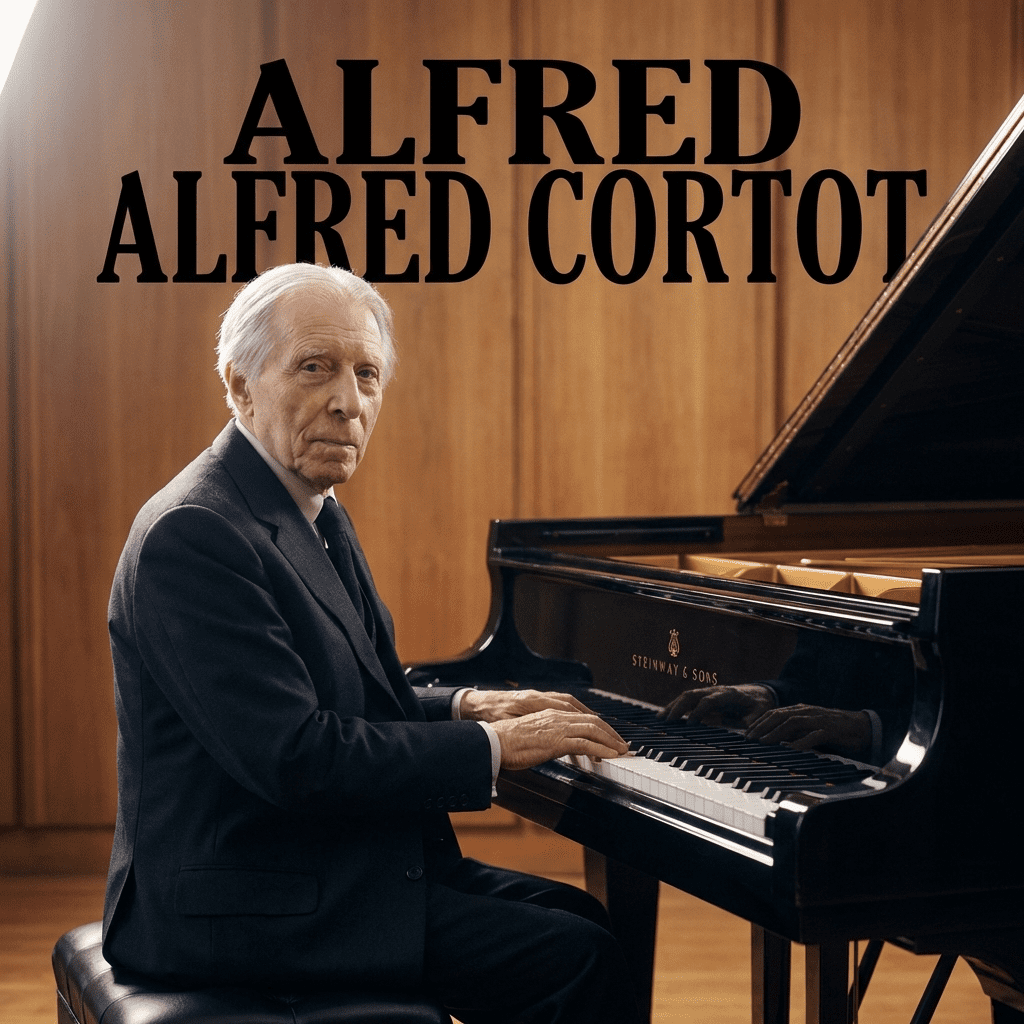
Alfred Cortot in London
Alfred Cortot — life, legacy and the London mishap that enlarged his legend
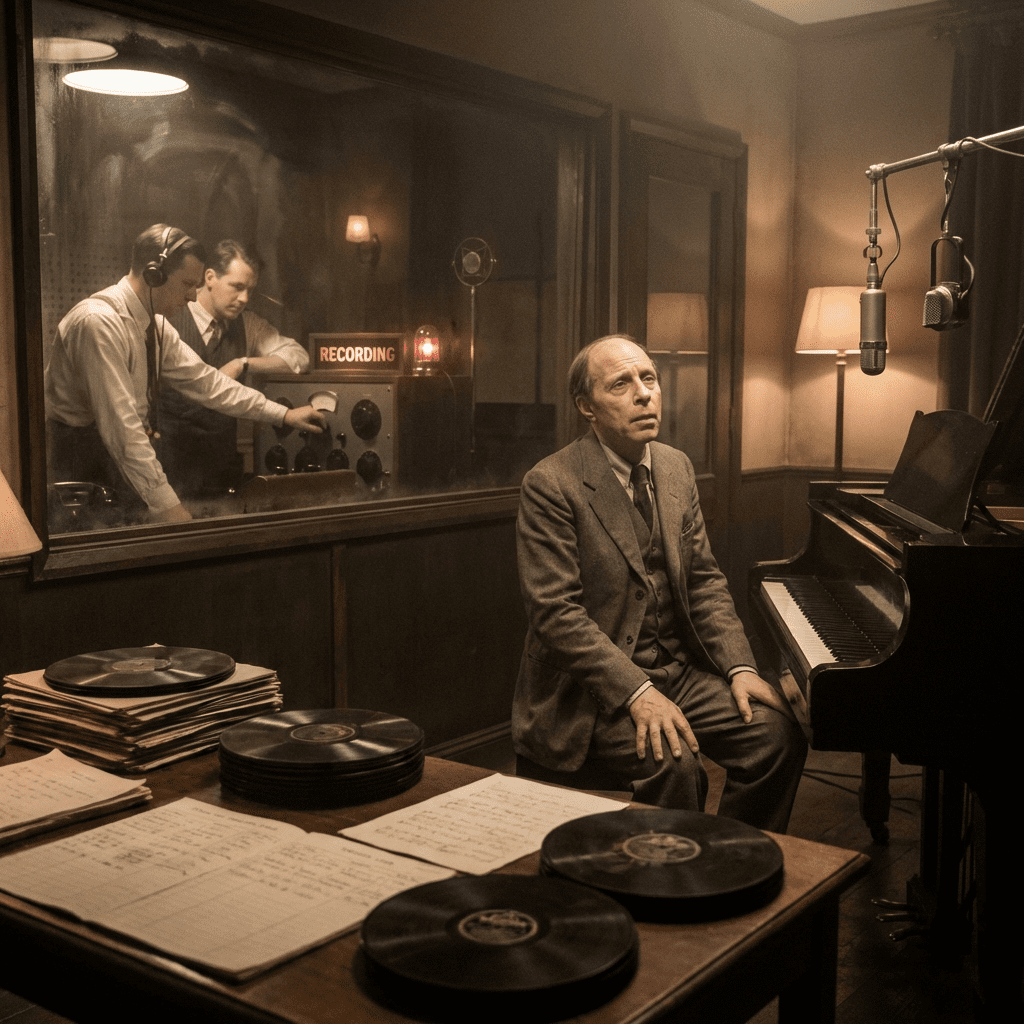
In the shellac age, fame could hinge on something as small as a fragile disc—or a date printed in tiny type. Picture a London studio day in 1928: the pianist has done the hard part, the red “recording” light has gone dark, and the room’s tension loosens. Then the discovery: the performance the engineers thought they had “caught” won’t be issued, or won’t be issued as it stands.
The documentation that survives for one of Alfred Cortot’s landmark London sessions doesn’t read like a myth at all; it reads like administration—two separate recording dates attached to the same work. But to musicians and collectors, that doubled date functions like a raised eyebrow in the archive: why return months later? what failed? what was salvaged?—and how did the resulting sound come to define the man’s aura?
What makes Cortot enduring is not clean-room perfection, but character under pressure—poetry that survives the machinery of history.
For London pianists today, that small mystery matters because it points to a bigger truth: Cortot’s greatness is not clean-room perfection, but character under pressure—poetry that survives the machinery of history. If you’re building your own interpretive voice—whether you’re revisiting Romantic repertoire or learning how to listen like a professional—WKMT’s piano lessons in London, our approach to technique and healthy coordination, and our concert opportunities for students exist for exactly this kind of long-view musicianship.
FULL DOCUMENTARY VIDEO
Quick facts & why he matters
Alfred Cortot (born in Nyon; died in Lausanne) was a pianist, conductor, and pedagogue whose career helped shape how the 20th century heard (and taught) the Romantic piano tradition.
Three points explain why he still matters—especially in a city like London where historic recordings sit alongside live performance and conservatoire training:
- Interpretation as living text. Cortot belongs to a lineage that treats the score as something spoken: meaning is carried through timing, sonority, and rhetoric rather than literalism.
- Teaching as institution. His name is inseparable from the École Normale de Musique de Paris “Alfred Cortot”, conceived to professionalise musicians not only as performers but as cultivated teachers.
- Recording as legacy. He left a documented, repeatable “text” of performance—sometimes revised, sometimes patched, sometimes unapologetically human—at a moment when recording itself was redefining what audiences expected from virtuosity.
For the WKMT audience, the practical takeaway is not to imitate Cortot’s mannerisms. It is to adopt his seriousness about meaning: to hear every bar as speech, every cadence as a decision, and every technical demand as a servant of narrative.
Chronology: career highlights
Early life and training
This article keeps strictly to what the documentary trail in the supplied sources can support: Cortot’s basic life dates and roles, and the institutions and recordings that anchor his public identity. Those bare facts already tell you something useful. He was not just a touring pianist who happened to teach; his career was built across three overlapping roles—artist, organiser, teacher—and he moved between them as naturally as a pianist moves between voices in a complex texture.
Paris years — performer, teacher, editor
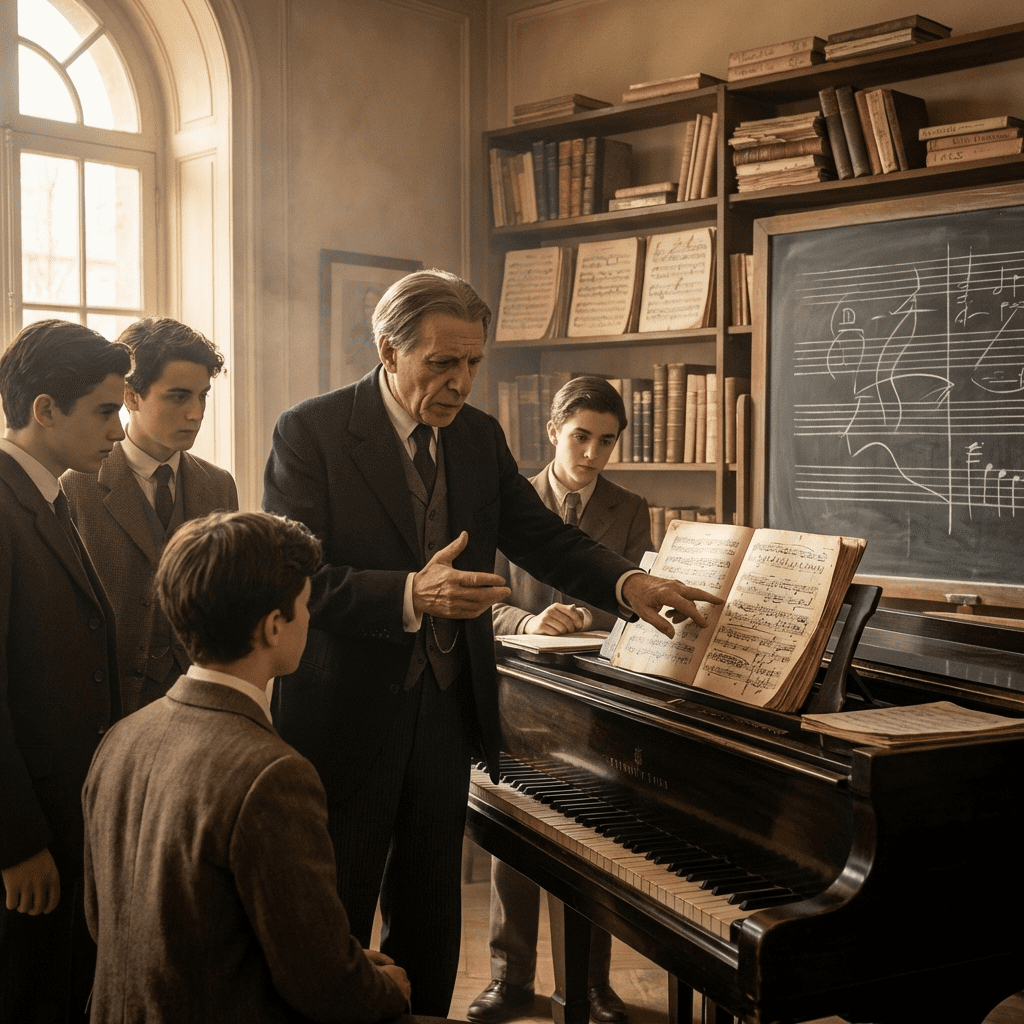
Cortot’s institutional legacy is clearest in Paris. He directed and taught at the École Normale de Musique de Paris “Alfred Cortot”, founded on 6 October 1919 with music critic and educator Auguste Mangeot. The school explicitly framed itself as a complementary institution to the traditional conservatoire model, intended to broaden access and train complete artists through core musicianship (including analysis and chamber music) alongside instrumental study.
That framing matters. It places Cortot at the heart of a 20th-century shift: the pianist as a cultivated musician who can explain, rehearse, analyse, and teach—not merely dazzle.
Major recordings and repertoire (Schumann, Chopin, Debussy)
The supplied research focuses most closely on Chopin, but it also points to the breadth of Cortot’s editorial reach. The Bibliothèque nationale de France catalogues an extensive body of “édition de travail” publications associated with Cortot’s name—study and working editions connected with repertoire by composers such as Chopin, Franz Liszt, Carl Maria von Weber, and Robert Schumann, among others. In other words, he didn’t merely play this music; he positioned himself as a mediator between text, tradition, and student.
This is also where recording becomes more than a career accessory. Cortot’s legacy is inseparable from the fact that recording fixed performances into portable artefacts—repeatable enough to teach from, human enough to argue about. For listeners raised on digital perfection, that combination can feel bracing.
Chamber music as a central discipline
Chamber music, meanwhile, wasn’t a footnote—it was central to how he thought. The trio most associated with his name—the Cortot–Thibaud–Casals Trio—is documented in UK institutional archives as forming in 1905 and continuing through 1937. That trio’s longevity matters because it reveals a musician who valued long-form musical argument and collaborative breathing—skills that later show up in his solo recordings as an almost vocal approach to phrasing.
A final chronological fact frames the “London chapter”: Cortot’s major commercial recording life increasingly intersected with London’s studios and halls, not only because London was a concert capital, but because it hosted the infrastructure that turned performances into portable history.
The London story — performances, recordings and reception
London is not merely a geographical tag in Cortot’s history; it is one of the cities where his artistic identity is unusually well documented—through institutional event records and programme collections that preserve what he played, where, and with whom.
Key concerts in London (dates, venues, significance)
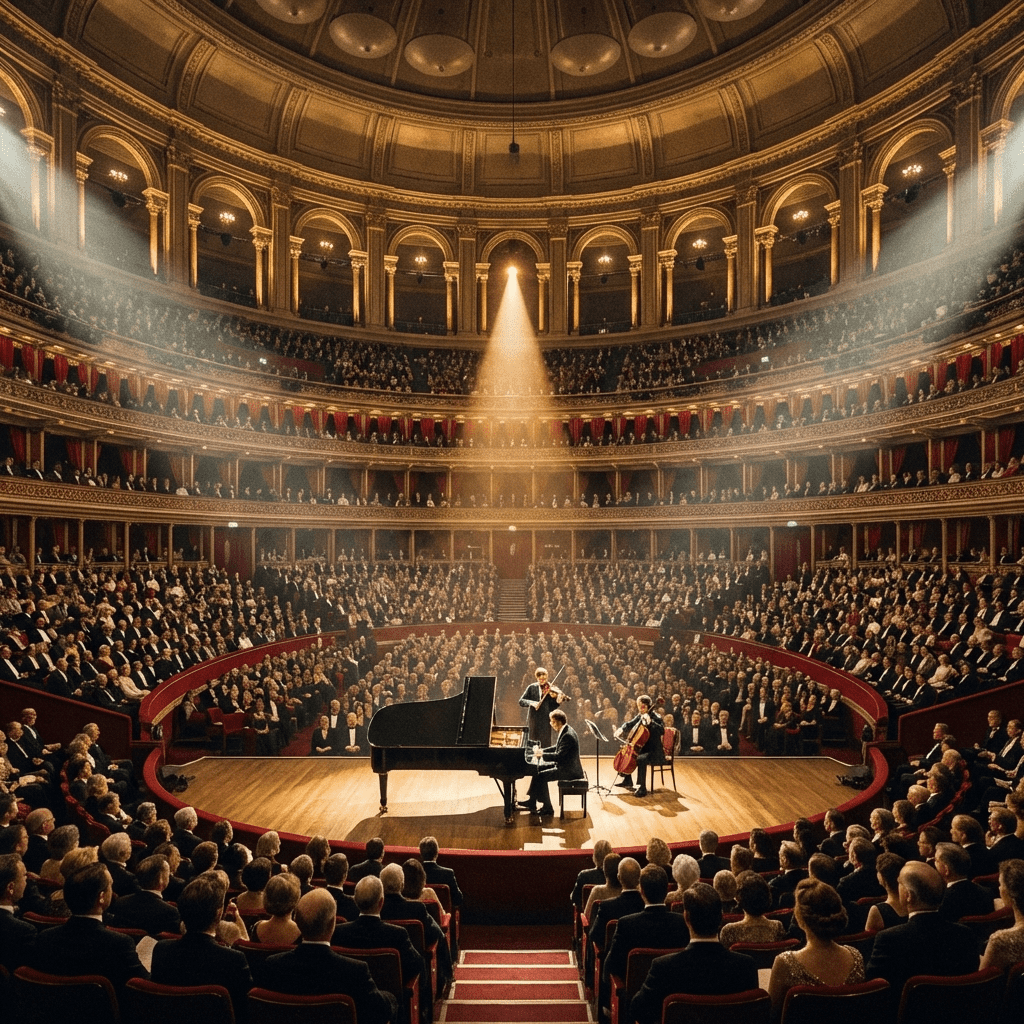
One clear example sits in the Royal Albert Hall event history. On 25 November 1928, the Cortot–Thibaud–Casals Trio appeared in the “Special Sunday Concerts – Jubilee Series”, playing trios by Franz Schubert, Joseph Haydn, and Felix Mendelssohn. The programme tells you something essential about Cortot’s London profile: he wasn’t imported only as a glittering soloist. He was presented as a chamber musician whose authority could fill a major hall with serious repertoire.
Another strand of London evidence lives in concert-programme collecting itself. The Concert Programmes Project describes a British Library-held London-halls collection that includes, among many items, a Queen’s Hall programme dated 16 January 1939—London Symphony Orchestra with Cortot at the piano, conducted by Stanley Chapple. This matters not simply as proof of presence, but as proof of position: even late into the interwar era, London institutions still programmed him in the company of leading orchestral forces.
Reception and what the archive can (and cannot) show
Reception is harder to summarise responsibly without quoting specific press reviews, because the most detailed contemporary criticism is scattered across periodical and newspaper archives with access restrictions. But the archive trail already tells the essential story: London treated Cortot as a serious musical intellectual—someone whose repertoire and collaborators placed him within the city’s high musical culture, not merely its celebrity circuit.
The curious recording mishap
The “London mishap” at the centre of this article is not a made-up anecdote. It is a documented oddity: a single commercial work whose issued recording history points to interruption, return, and editorial decision-making—exactly the kind of behind-the-scenes friction that can turn an artist into legend. Alfred Cortot in London.
What happened — the timeline we can prove
The work is Frédéric Chopin’s Piano Sonata No. 2 in B-flat minor, Op. 35 (“Funeral March”). For Cortot’s 1928 London recording, authoritative discographic packaging for a modern reissue states two separate London recording dates for the same sonata: 5 June and 11 December 1928.
There is a second, corroborating datapoint. Naxos’s catalogue commentary for a later Cortot release notes that an earlier 1927 recording attempt of the same sonata exists but remained unissued, and it explicitly distinguishes that unissued 1927 attempt from the 1928 issue and later remakes.
What the split dates imply in the 78 rpm era
What can we responsibly conclude? We can say, with certainty, that the issued performance is tied to two sessions months apart. We cannot, from the publicly available institutional documentation in the supplied material alone, assert the precise mechanical cause—damaged matrices, rejected takes, engineering fault—without overstepping what the sources state.
We can, however, explain why this kind of split dating is significant in the 78 rpm era:
- In a format where long works were issued across multiple sides, producers routinely chose the best takes side-by-side—sometimes across different days.
- If a return session occurs months later, it often indicates that something about the earlier attempt did not meet the company’s or artist’s standard (whether musical or technical), prompting replacement of parts rather than a simple “one-and-done” capture.
This is where London enlarges Cortot’s legend. The myth of the “perfect recording” had not yet fully hardened, but it was forming; and here is a famous interpreter whose work—by the evidence of the dates—had to pass through a second gate. The listener today hears not only a performance but also a trace of the industrial process that shaped what survived.
What London gives us, then, is not a single disaster, but a pattern: Cortot’s art repeatedly meets the hard edges of recording history—and remains compelling precisely because it does not pretend those edges aren’t there.
Cortot’s interpretive approach and legacy for pianists
If you want the distilled Cortot lesson, it is this: the point of technique is not to erase the human; it is to make the human intelligible. Alfred Cortot in London Completed Guide.
Editorial work and editions
His interpretive approach is inseparable from the idea of commentary. That is not metaphor; it is literal. The Bibliothèque nationale de France catalogues an extensive body of “édition de travail” publications associated with Cortot’s name—materials that present him not only as a performer but as a guide to reading, practising, and understanding the repertoire.
A recorded aesthetic that includes the imperfect
That editorial instinct aligns with a modern strand of performance scholarship that argues recordings should be taken seriously as they are, including their slips, compromises, and idiosyncrasies. In a recent peer-reviewed discussion of mistakes captured on record, Cortot becomes one of the emblematic cases: a pianist whose recorded “imperfections” are not simply technical failure but part of how listeners experience performance as a mediated, reproducible text.
For today’s London student—especially one navigating audition culture, curated perfection on social media, and the pressure to sound safe—Cortot’s legacy can be summarised in a few practical provocations:
- Prioritise rhetoric over polish. A phrase that communicates is more valuable than a phrase that merely survives.
- Learn the score as structure, not just notes. His editions point to analysis, voice-leading awareness, and character as the backbone of interpretive freedom.
- Accept the historical truth of performance. Great interpretation is not the absence of risk; it is risk placed in service of meaning.
This does not mean romanticising error. It means refusing to reduce artistry to error-avoidance—a distinction every serious teacher recognises, whatever technical school they represent.
Where to hear Cortot today
If you want to hear Cortot “as London heard him”, you have two complementary paths: modern reissues and London’s listening institutions.
Recommended recordings (with label and year)
The most direct approach is to start with one carefully restored London-linked reissue and listen actively—score in hand if possible. The Naxos Historical release Great Pianists • Cortot: Chopin — Piano Sonatas Nos. 2 and 3 / Polonaises (catalogue 8.111065) documents London recording dates for the works it includes, including the two-date 1928 recording discussed above.
Archives and digital collections
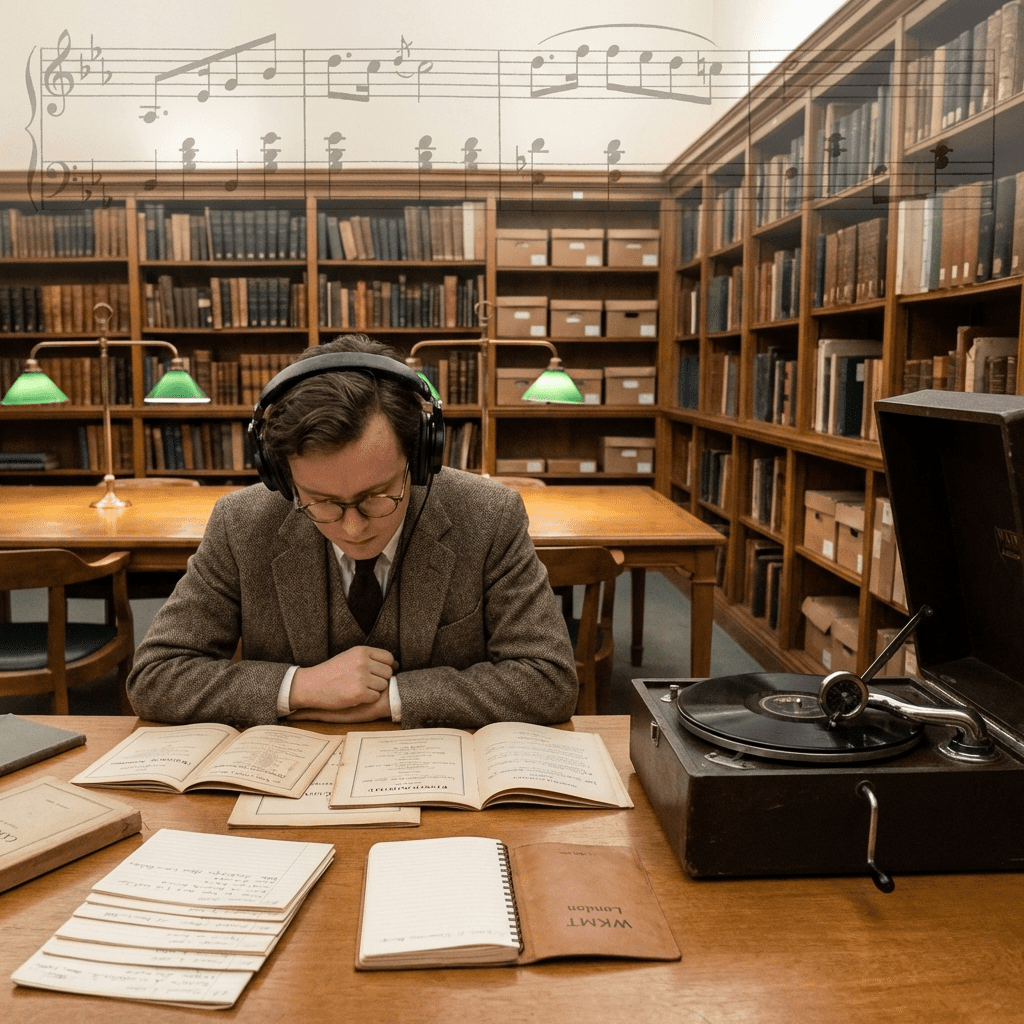
For deeper archival listening and verification in the UK, London offers unusually practical routes:
- British Library Sound Archive listening access via the Library’s Sound & Vision services
- British Library research access and Reader information
- Royal College of Music Library visitor guidance for external researchers
These are not just places to find audio. They are places where listening becomes scholarship: where you can connect a performance’s sound to the paper trail—programmes, catalogues, curated collections—that explain how it entered history.
FAQs on Alfred Cortot in London
- Was Cortot actually “sloppy”, or is that an unfair cliché?
- His recordings include missed notes, but the enduring argument for his importance is interpretive: timing, voicing, and narrative intensity that many listeners and scholars treat as historically consequential performance evidence.
- What connects Cortot to London in a way students can verify?
- Two kinds of documentation: institutional event records (for example, Royal Albert Hall performance listings) and programme-collection descriptions that record specific London concerts and collaborators.
- What is the “London mishap” in one sentence?
- A landmark London recording of Chopin’s Second Sonata is documented as spanning two London recording dates months apart—evidence of a disrupted or revised production process that became part of Cortot’s recorded mystique.
- Where should I start if I want to listen with the London evidence in mind?
- Begin with the Naxos Historical reissue that documents the London dates, then cross-check the surrounding London concert documentation via programme collections and UK listening institutions.
Conclusion on Alfred Cortot in London
The neatness of modern audio can tempt us into thinking that great pianism is chiefly a matter of control. Cortot’s London trail argues otherwise. Between a Royal Albert Hall programme and a split-dated studio record, you can watch an artistic personality meeting institutions, technology, and time—and leaving behind something more interesting than immaculate surfaces: a performance voice with consequences.
If that kind of musicianship speaks to you, explore WKMT’s piano lessons in London for adults. Cortot is not a template. He is a reminder that interpretation is a serious craft—and that London, when it keeps its records, can still teach.
Sources for Alfred Cortot in London
The British Library, London — Research access hub and Sound & Vision access guidance and https://bl.libguides.com/reference-services/sound-and-vision/how-to-request-and-access-material
Royal College of Music Library, London — Visitor information for external researchers