
 TRIAL LESSON
Piano Lessons
Visual Discrimination: How Young Pianists Learn to Read a Busy Page
Sep
WKMT London parent guide
Visual Discrimination: How Young Pianists Learn to Read a Busy Page
To an experienced musician, a page of notation is organised information. To a beginner, it can look like a crowded field of similar marks. Piano teaching helps the child notice which differences matter, group details into patterns and connect what the eyes see with what the ear expects.
In brief
Visual discrimination is the ability to notice relevant differences and similarities in what we see. In piano reading, children use it to distinguish line from space notes, compare rhythmic values, track stems and accidentals, recognise repeated patterns and keep their place across two staves. It develops through carefully graded reading, not through visual overload.
Visual discrimination on a musical page
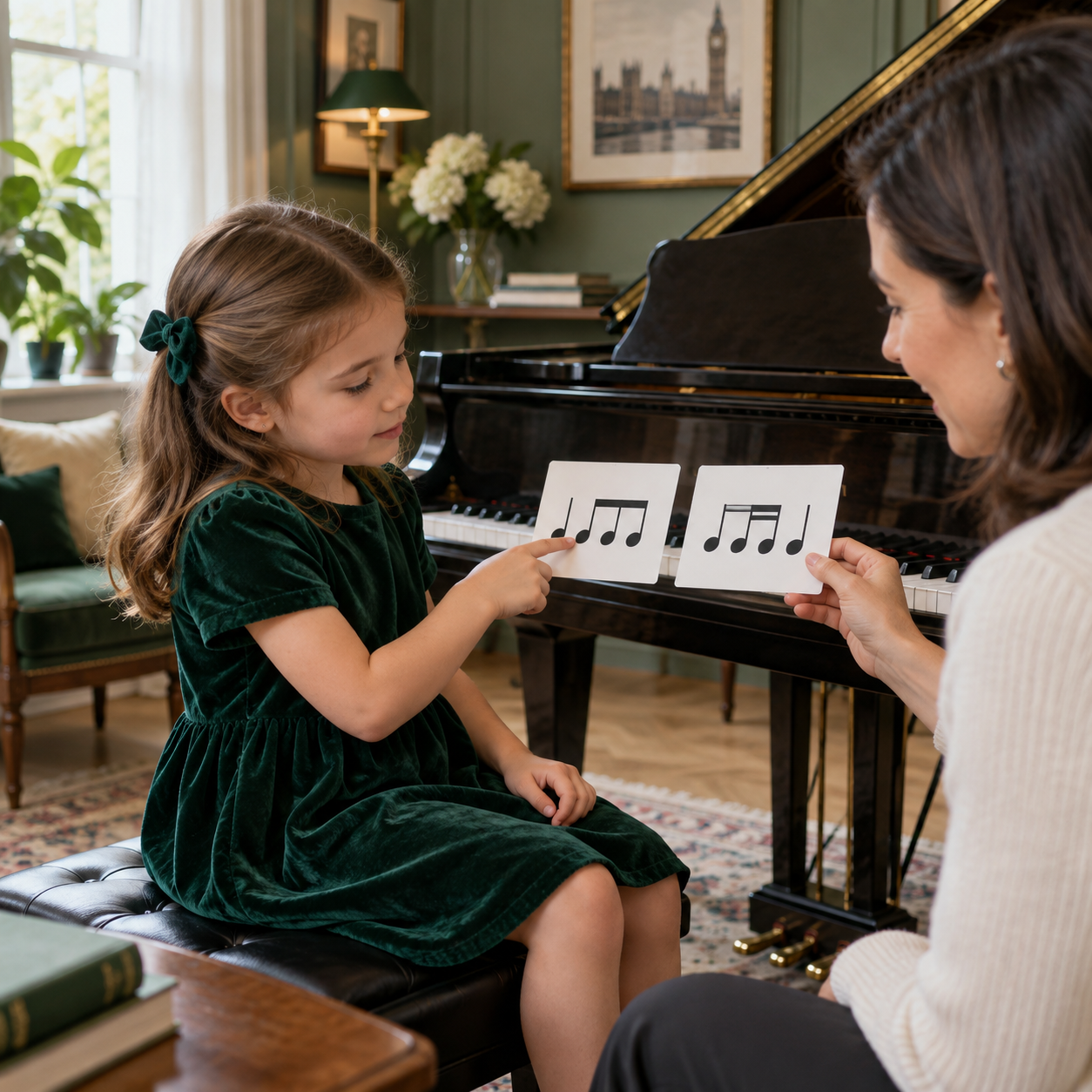
A crotchet and a minim share a stem and notehead, yet duration depends on one small visual difference. Two notes may occupy adjacent spaces but require different keys. A sharp may apply to one note while a natural cancels it later. Visual discrimination lets the learner filter these details according to their musical importance.
The goal is not to inspect every symbol separately. Fluent reading depends on grouping. A child learns to see steps, skips, repeated notes, chord shapes and rhythmic cells. These patterns reduce the amount of information that working memory must hold and connect the page to an expected sound.
Visual discrimination without naming every note
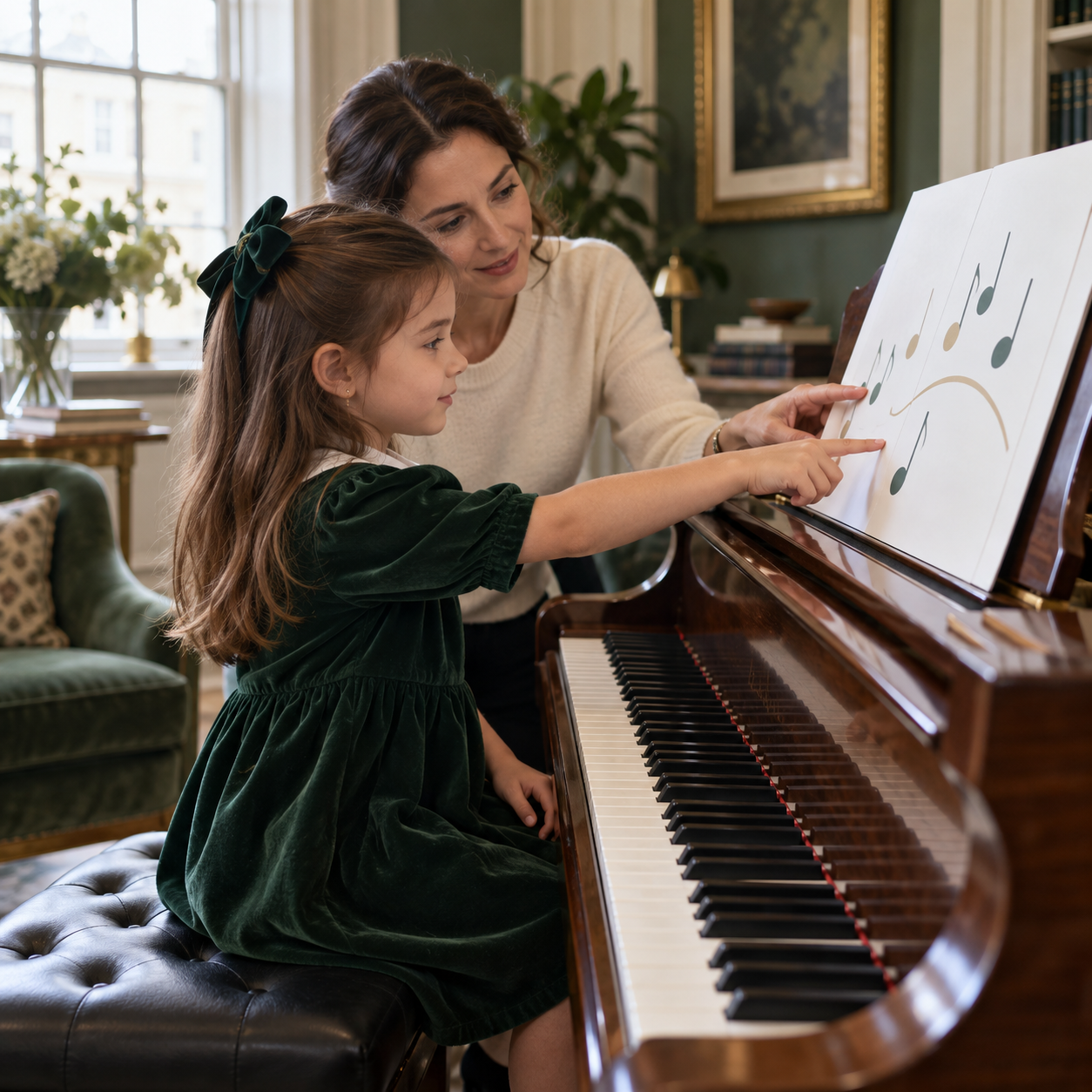
Teachers can begin with direction and distance. Does the melody move up, down or stay the same? Is the next note a step or a skip? Can the child circle two identical rhythm patterns? This builds a visual grammar before note naming becomes fast. The keyboard then confirms the pattern through sound and movement.
In piano lessons for children in London, the score can be temporarily simplified: one line covered, a short section enlarged, or a coloured marker placed only at the starting point. Such supports should fade as independence grows. Too many colours and annotations create a second layer of clutter.
What research on notation can tell us
Studies of children’s invented notations show that musical representation develops through meaning, not mere copying. Work on static and dynamic visual aids suggests that visual scaffolds can support discrimination of sound patterns, while research in music education has examined how spatial cues influence melodic judgements. The useful lesson is to align what the child sees with what the child is trying to hear.
Evidence does not support diagnosing a visual-processing difficulty from ordinary music-reading mistakes. Beginners reverse direction, lose their place and overlook accidentals for many reasons, including limited experience, attention and an over-difficult score. Persistent concerns belong with qualified educational or health specialists, while the piano teacher adjusts materials and observes musical behaviour.
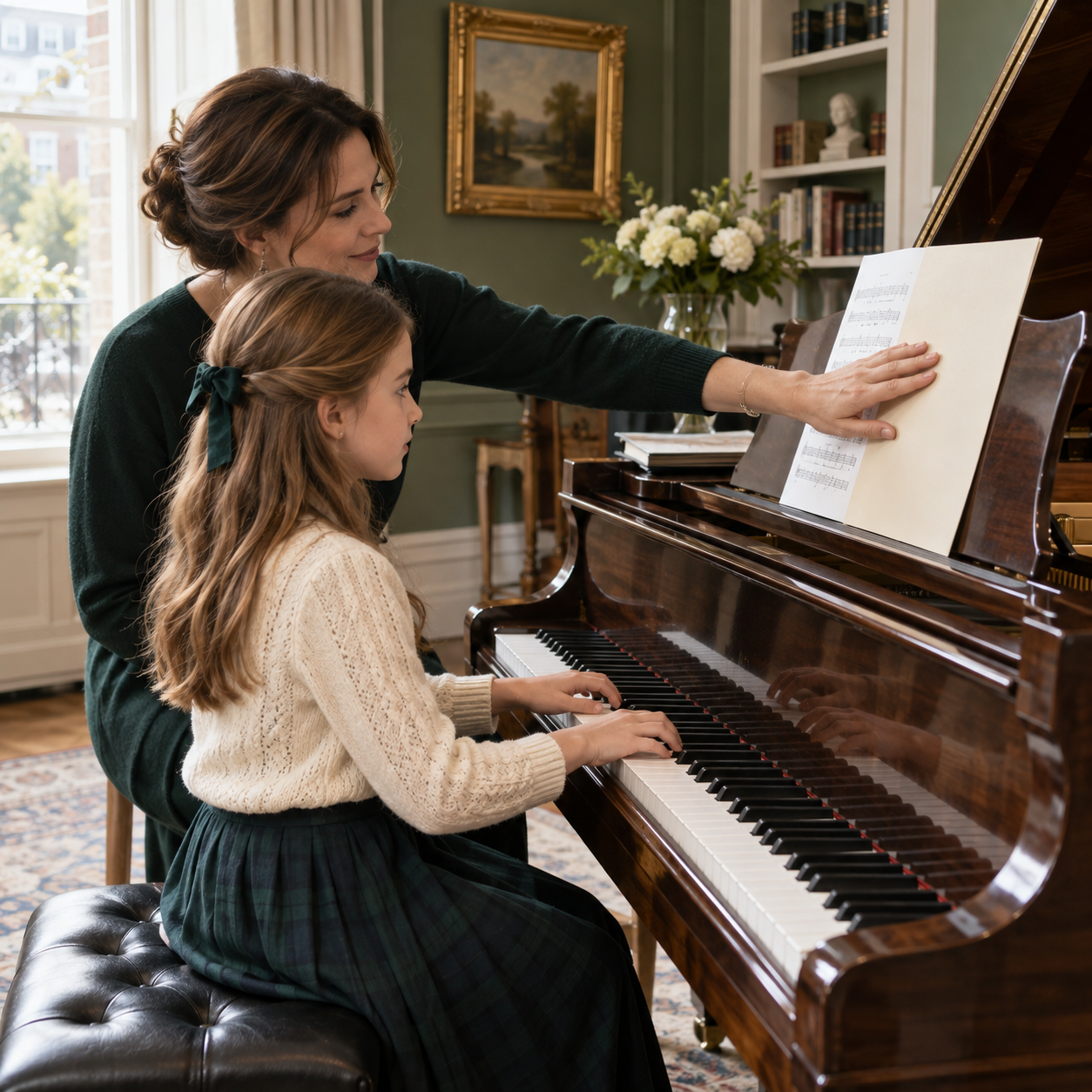
A score becomes readable when the child sees relationships, not a crowd of separate symbols.
Four ways to make a busy score readable
First, preview the page without playing and find repeated patterns. Second, mark only the first note of each phrase. Third, tap the rhythm while following the score with a finger. Fourth, play one hand while singing the other line. Each step changes a crowded page into a sequence of manageable questions.
Layout matters. A clear edition, suitable print size and good lighting reduce unnecessary difficulty. When a score is dense, copy one short passage onto a separate sheet for analysis, then return to the original page. WKMT’s article on pattern recognition at the piano explains how grouping allows children to read relationships rather than isolated marks.
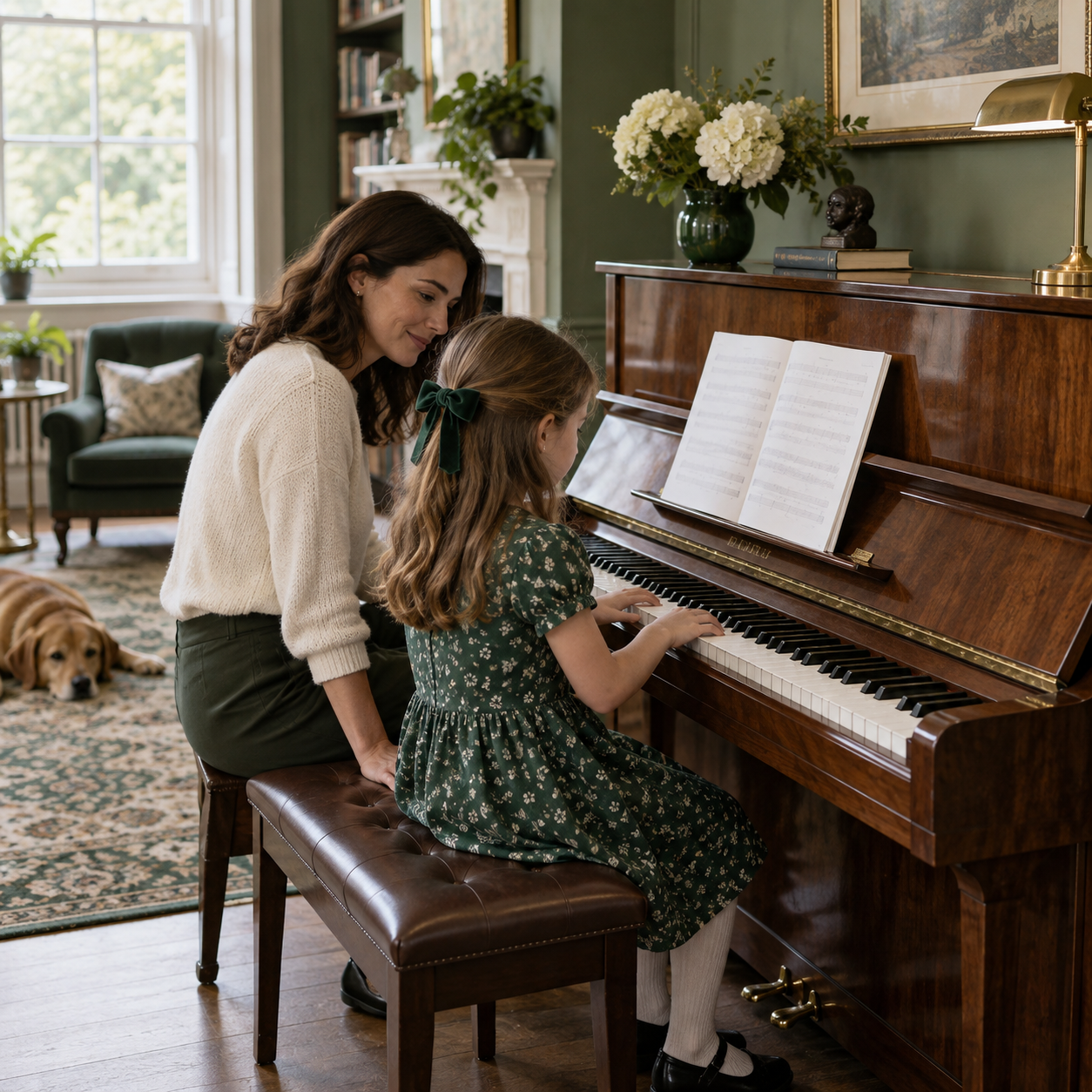
How parents can help without pointing at every error
Ask your child to show where the pattern repeats or where the music changes direction. Let the pupil identify one landmark before beginning. If the eyes lose their place, stop at the next phrase boundary and reset calmly rather than chasing the moving performance with a finger.
Progress appears when a child scans ahead, notices a changed accidental or recognises a familiar rhythm in a new piece. Visual discrimination is becoming musical when the page triggers an inner expectation of sound. The destination is not faster symbol naming for its own sake, but a score that increasingly behaves like meaningful language.
WKMT London
Help your child build confident reading through patient, musical and carefully graded teaching.
Explore children’s piano lessonsSources on visual discrimination
- Cambridge: children inventing musical notations
- iJET: visual representations and sound-pattern discrimination
- ERIC: visual-spatial cues and melodic discrimination
- ERIC: piano education for children aged 4-6
- RNIB: music and accessible notation
- British Dyslexia Association: visual difficulties
Sources checked 16 September 2026. Educational guidance; individual circumstances and progress vary.