
 TRIAL LESSON
Piano Lessons
Digital Piano Practice: How Adults Can Build Serious Habits at Home
Sep
WKMT London adult learner guide
Digital Piano Practice: How Adults Can Build Serious Habits at Home
For many London adults, the best piano is the instrument that can be played tonight without disturbing a neighbour. A digital piano can support disciplined, expressive study when its conveniences are used deliberately and its differences from an acoustic instrument are understood.
In brief
Digital piano practice can build strong reading, rhythm, coordination, memory and much of a pianist’s technique when the instrument has full-size weighted keys, stable pedals and an appropriate bench. Adults should use headphones at a safe level, avoid relying on exaggerated digital reverb, record themselves, and regularly transfer repertoire to an acoustic piano when possible.
Digital piano practice begins with setup, not features
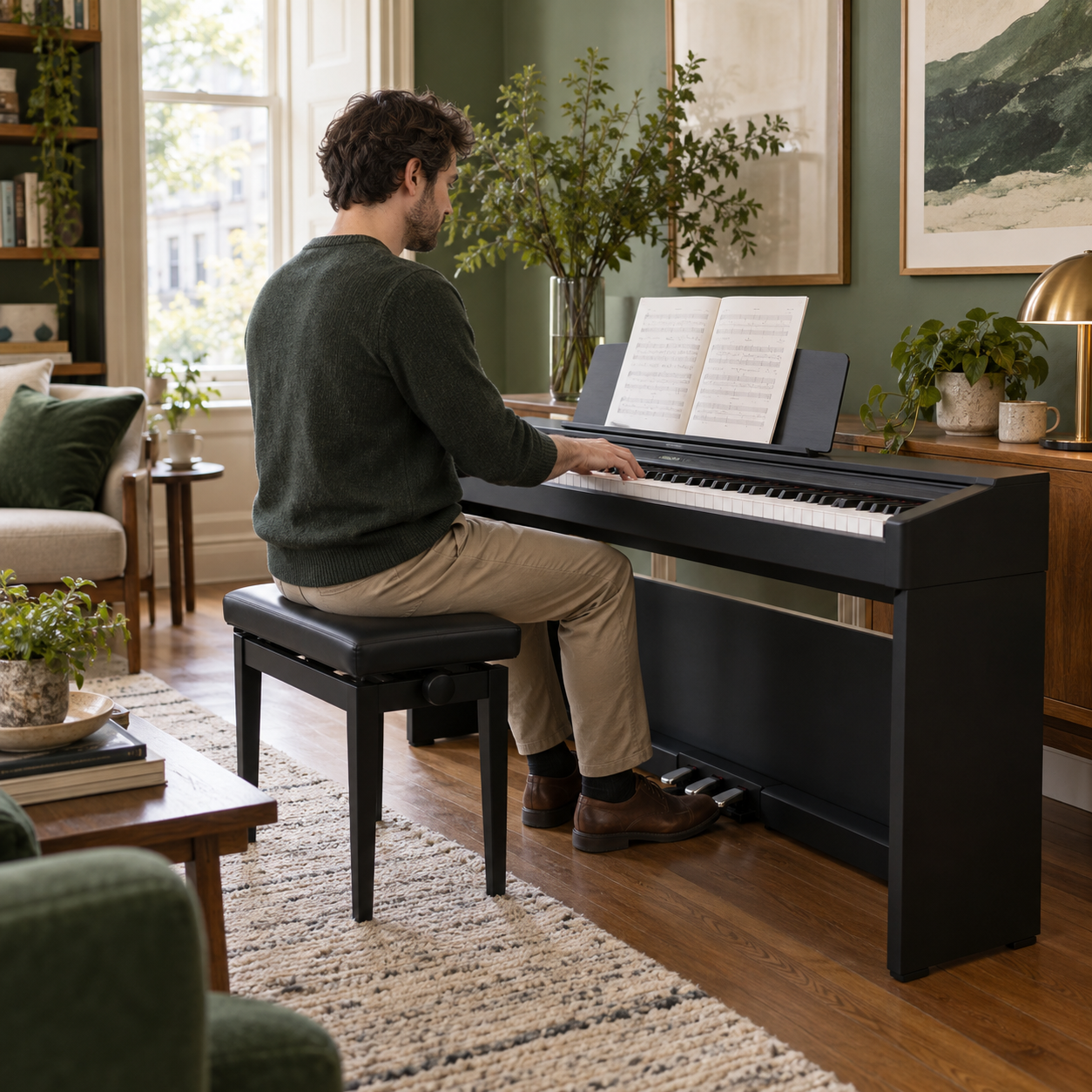
Place the keyboard at a height that allows relaxed shoulders and a level forearm, with a stable bench and pedals that do not slide. Good posture is harder to learn when the instrument sits on a desk or an unstable X-stand. The music rest should allow the head to remain balanced rather than leaning towards a tablet.
Weighted, touch-sensitive keys matter more for classical development than a long list of voices. A full 88-key compass supports repertoire and spatial orientation. The action will not reproduce every acoustic mechanism, but it should allow clear dynamic differences without forcing the player to strike aggressively.
Use headphones as a tool, not an isolation chamber
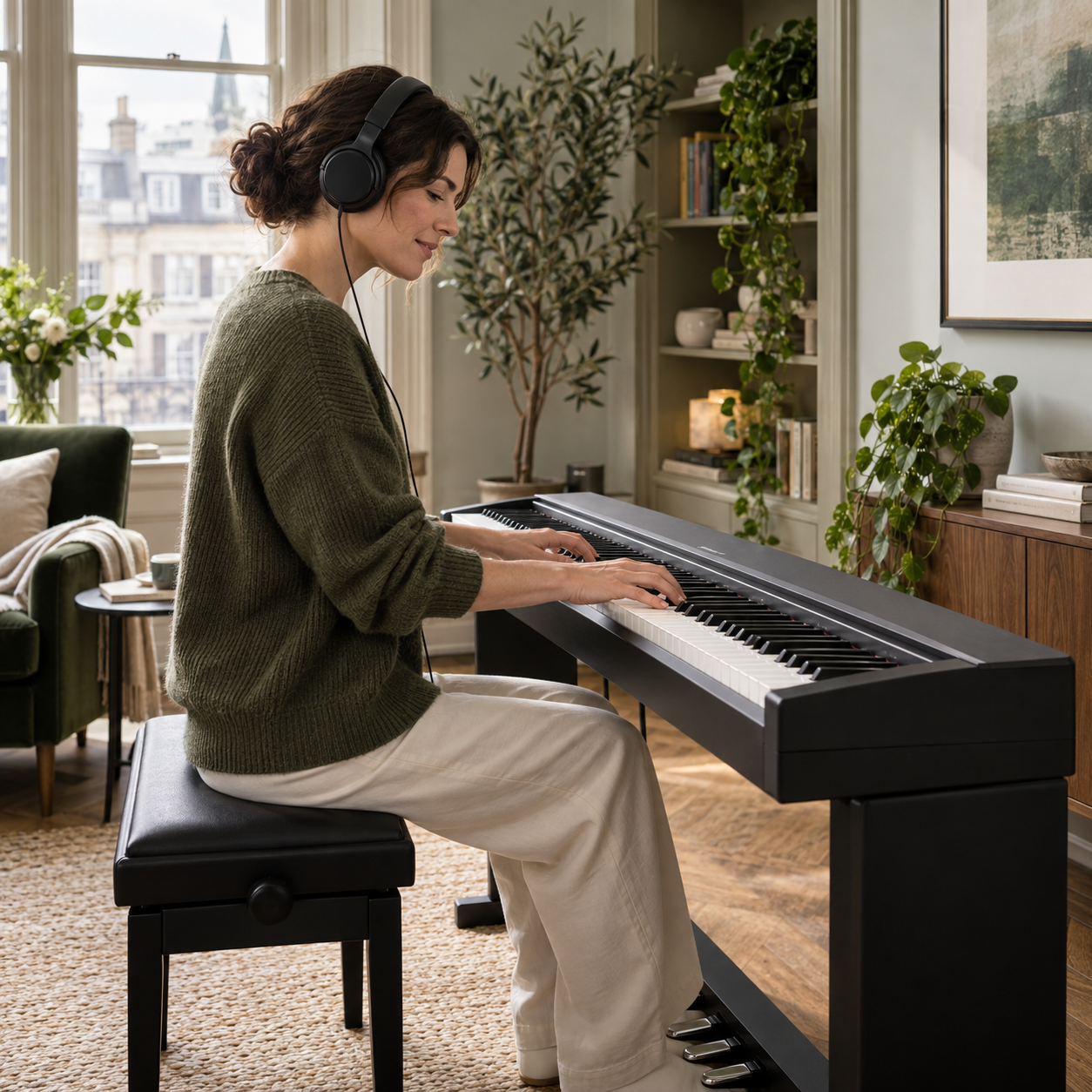
Headphones make early-morning or late-evening digital piano practice possible, which can transform consistency. Keep the volume moderate and take listening breaks. Wired headphones avoid the latency that can make attacks feel detached. Occasionally practise through the speakers, because balance and pedalling can feel different when sound occupies the room.
Reduce artificial reverb when working on articulation or pedal clarity. A generous concert-hall setting can flatter blurred releases. In adult piano lessons in London, a teacher can help calibrate what transfers well and what must be retested on an acoustic piano.
What transfers, and what needs checking
Reading, pulse, fingering, harmonic understanding, memorisation and most movement planning transfer strongly from digital practice. Fine control of escapement, una corda colour, resonance and the physical feedback of a real soundboard need separate attention. The gap is manageable when it is named.
Schedule periodic acoustic sessions before performances or examinations. Begin with slow scales and simple chord balances, then test the repertoire’s softest attacks and longest pedals. Do not immediately press harder because the acoustic instrument feels heavier. Listen, adjust the movement and allow time for the hands and ears to recalibrate.
Convenience becomes musicianship when easier access leads to more attentive repetition.
Build a routine around the digital instrument’s strengths
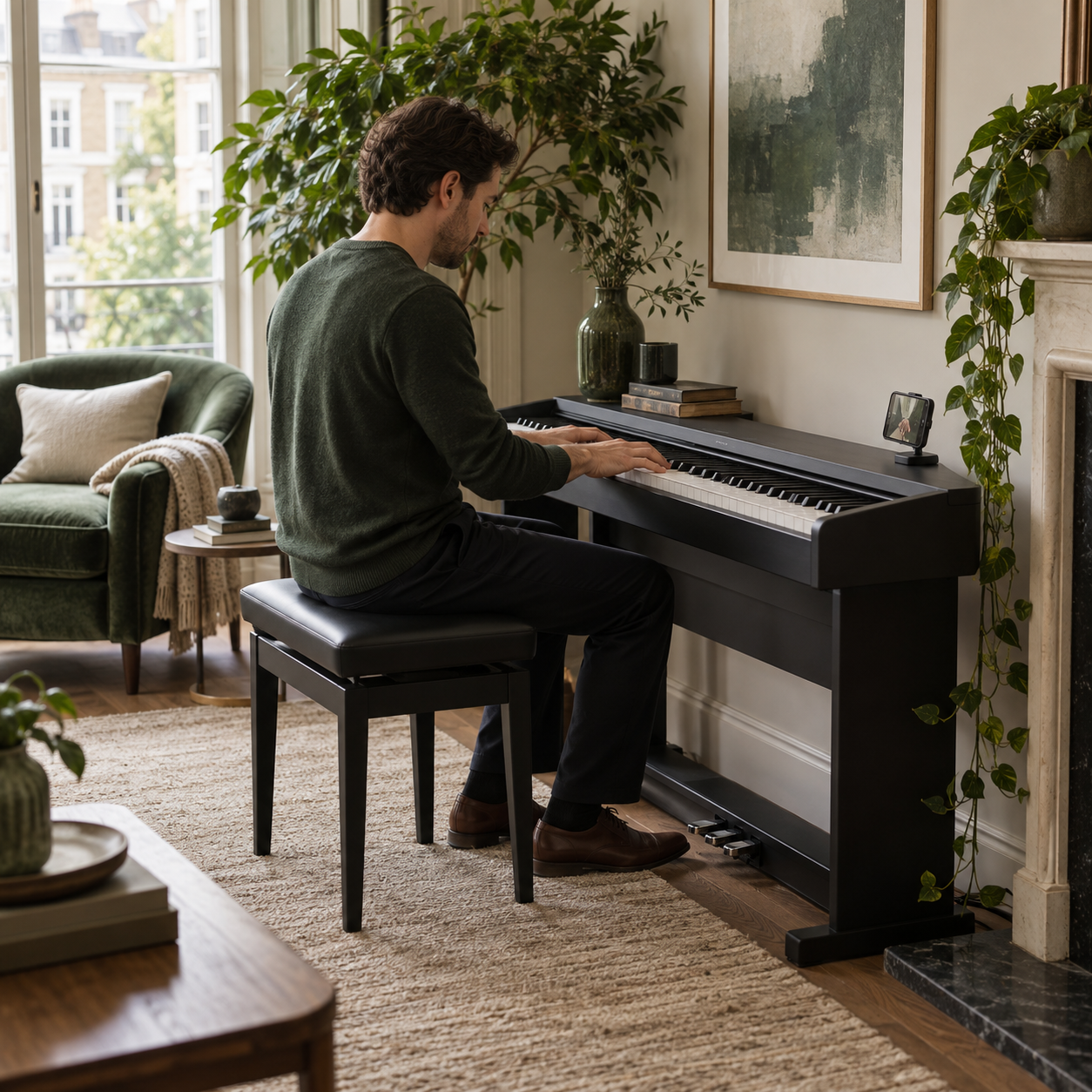
Digital tools can support deliberate work: a metronome, audio recorder and simple playback are enough. Record a complete take before correcting details, then identify one musical problem. Avoid turning every session into screen-led instruction. The instrument should remain the centre of attention.
Research with older adult novices shows that structured learning can be delivered with digital keyboards and home practice, while current feasibility work is exploring remote piano programmes for people over fifty. These studies support access and sustained learning, not the idea that an app replaces responsive teaching. WKMT’s guide to building a piano practice schedule can help organise short, repeatable sessions.
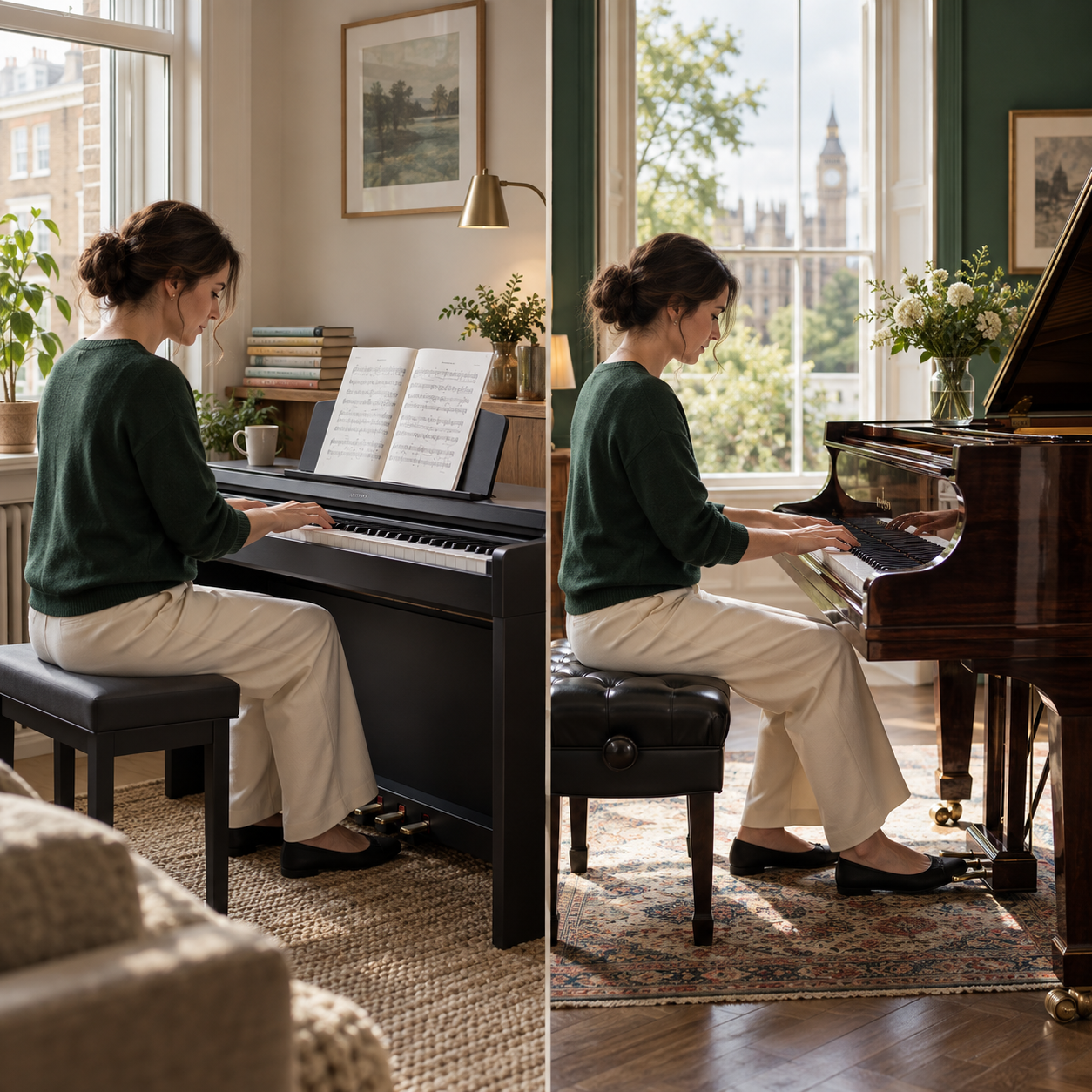
A serious 25-minute home session
Spend three minutes listening and moving comfortably, five minutes on one technical pattern, ten minutes on a difficult passage and five minutes playing a longer section without stopping. Use the final two minutes to write the next starting point. The proportions can change, but every session should contain both repair and continuity.
Digital piano practice works best when convenience creates frequency rather than carelessness. Leave the instrument ready, keep music within reach and decide the first task before sitting down. A quiet instrument can support an ambitious musical life when each session asks a precise question and ends with a clear next step.
WKMT London
Shape a flexible adult-learning plan around your home, timetable and musical goals.
Explore adult piano lessonsSources on digital piano practice
- PMC: musical learning in older adult novices
- Cardiff University: PIANO-Cog feasibility protocol
- Royal College of Music: Centre for Performance Science
- BAPAM: healthy practice guidance
- Action on Hearing Loss: protecting hearing
- PractiseWell research project
Sources checked 16 September 2026. Educational guidance; individual circumstances and progress vary.