
 TRIAL LESSON
Piano Lessons
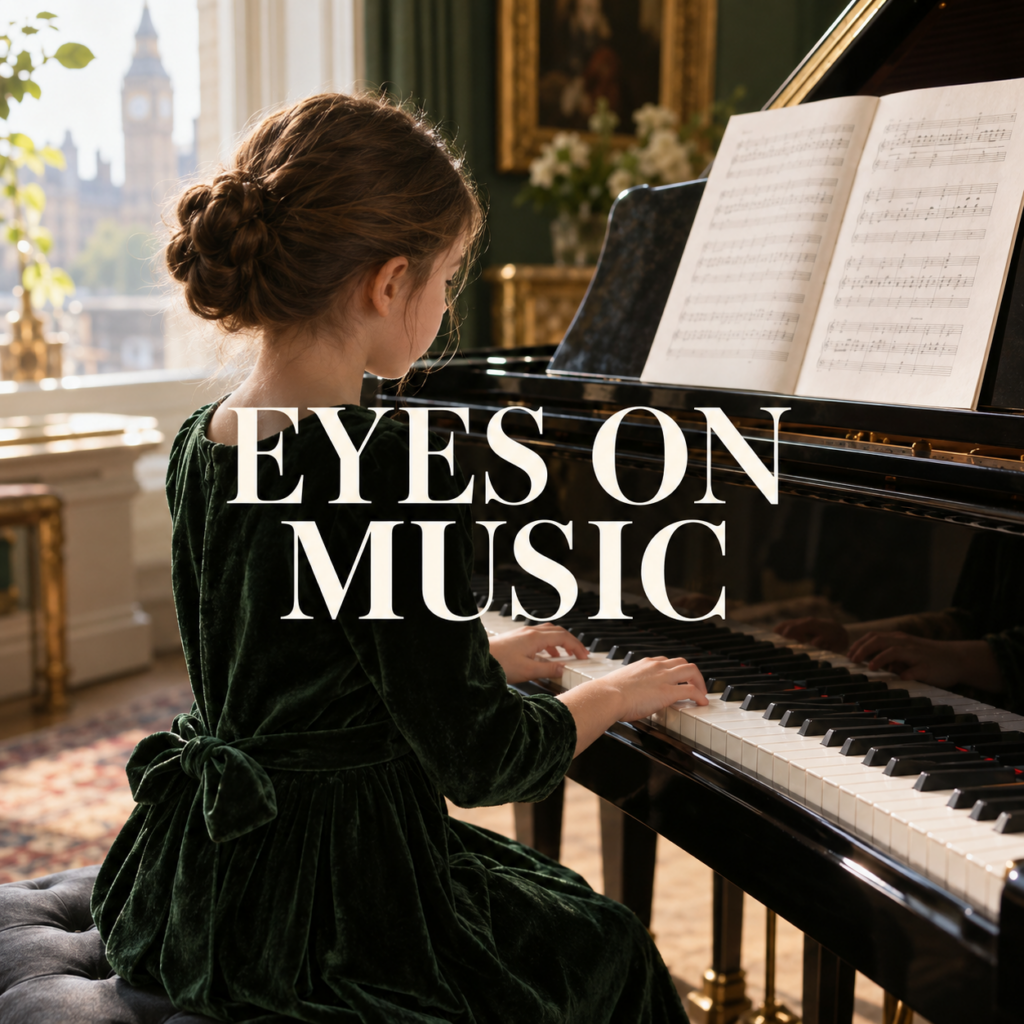
Visual Tracking at the Piano: How Children’s Eyes Learn to Move Through Music
Sep
WKMT London parent guide
Visual Tracking at the Piano: How Children’s Eyes Learn to Move Through Music
A child reading music is coordinating several moving worlds at once: eyes travel across the stave, hands travel across the keyboard, and the ear checks whether the result makes sense. Fluent reading grows when those journeys become organised, calm and increasingly independent.
In brief
Visual tracking at the piano is the controlled movement of the eyes across notation while the hands continue playing. It supports keeping place, reading ahead, noticing rhythm and coordinating the score with keyboard movement. Teachers can develop it with short patterns, steady pulse, uncluttered pages and gradual reduction of unnecessary looks at the hands.
Visual tracking is movement with musical purpose
Visual tracking does not mean staring at every note. The eyes make brief fixations and rapid movements, gathering enough information for the hands to continue. In music, the page also carries rhythm, phrasing, articulation and vertical relationships. A child must learn which detail matters now and which can be anticipated from the surrounding pattern.
Early visual tracking is often uneven. The pupil may look back after every note, lose the line at a system break or jump repeatedly between score and hands. Those behaviours are not laziness. They show that the visual, aural and motor maps are not yet connected. Simple material lets the maps meet without overwhelming attention.
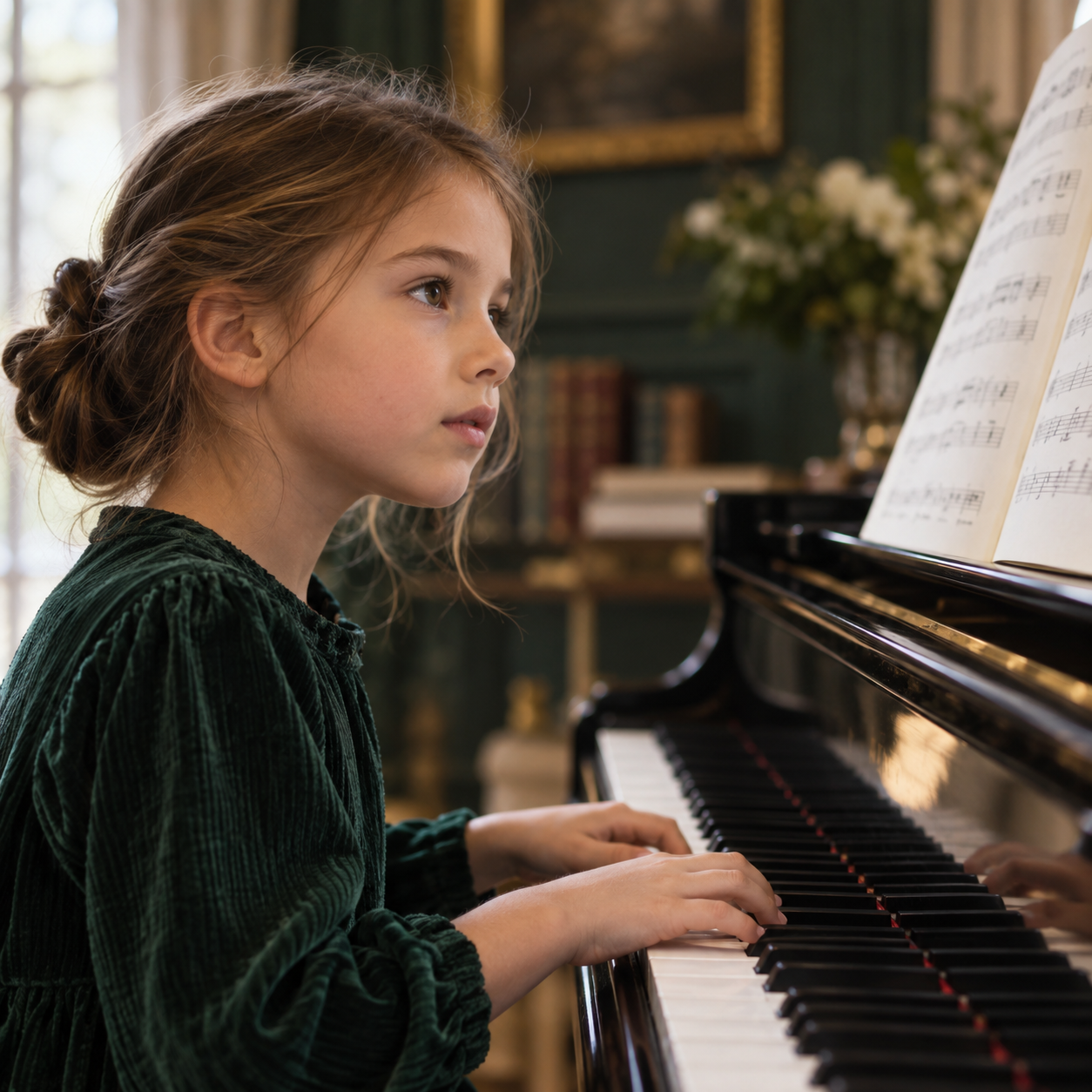
How visual tracking develops in a piano lesson
Begin with a narrow visual field: two bars, a clear pulse and familiar note patterns. Ask the child to point along the rhythm before playing, then sing or tap it. When playing begins, the teacher can cover completed bars or use a card beneath the current line. The purpose is to make direction visible without turning the page into a maze of marks.
In children’s piano lessons in London, visual tracking should develop alongside keyboard geography. Five-finger patterns, landmark notes and intervals reduce the need to identify every symbol from scratch. The child’s eyes can then move towards the next musical event while the hands complete the present one.
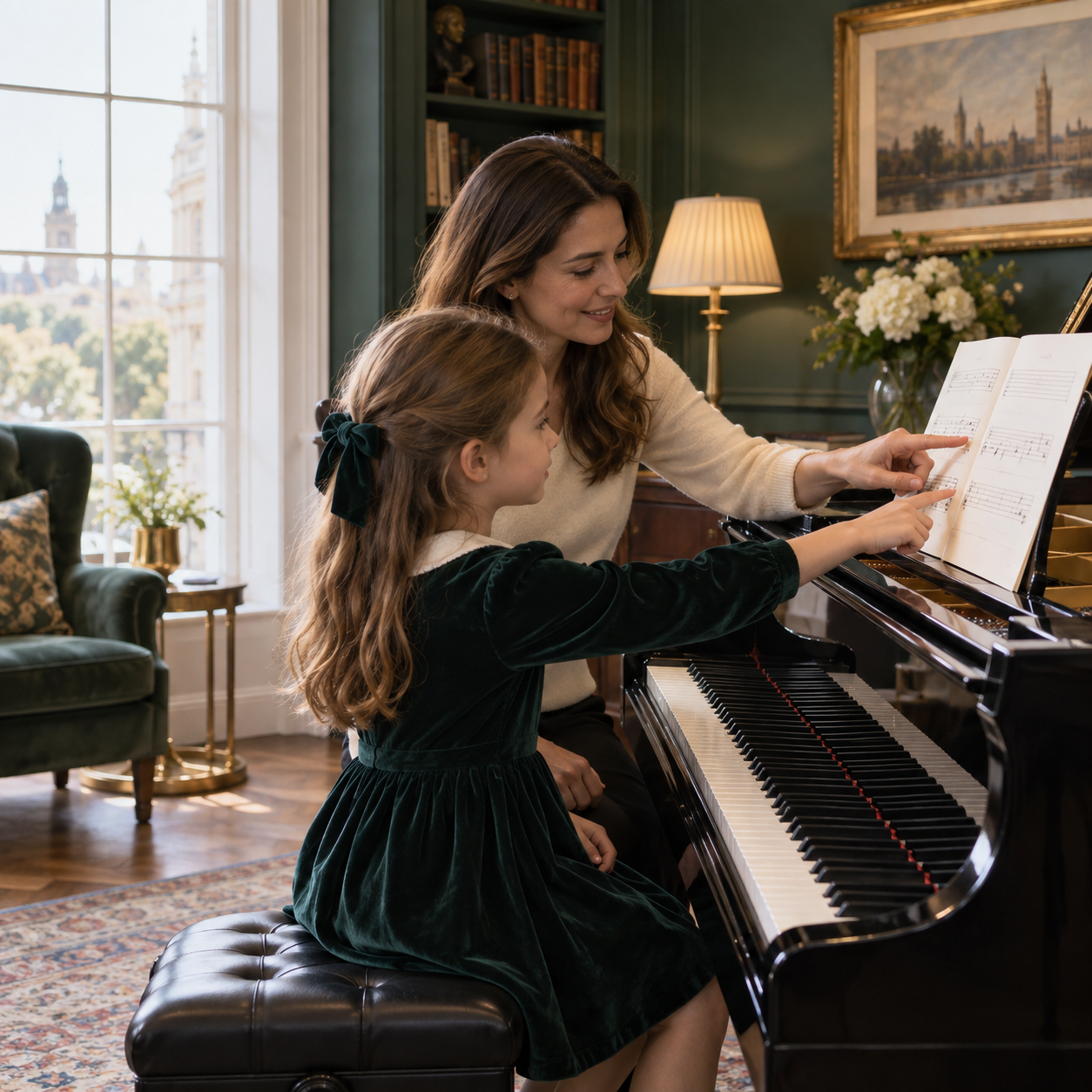
Reading ahead without rushing
Eye-tracking research in music reading often examines the eye-hand span: the distance between what the eyes are processing and what the hands are performing. More experienced readers may use wider perceptual information, but the span is flexible and depends on tempo, texture and familiarity. Reading ahead is therefore not a fixed number of notes.
A useful exercise is to stop playing while the eyes continue for one beat, then describe what comes next. Another is to play a repeated pattern while looking at the following bar. Keep the tempo slow enough that visual tracking remains accurate. WKMT’s guide to improving sight-reading in children gives related ways to separate reading skill from performance pressure.
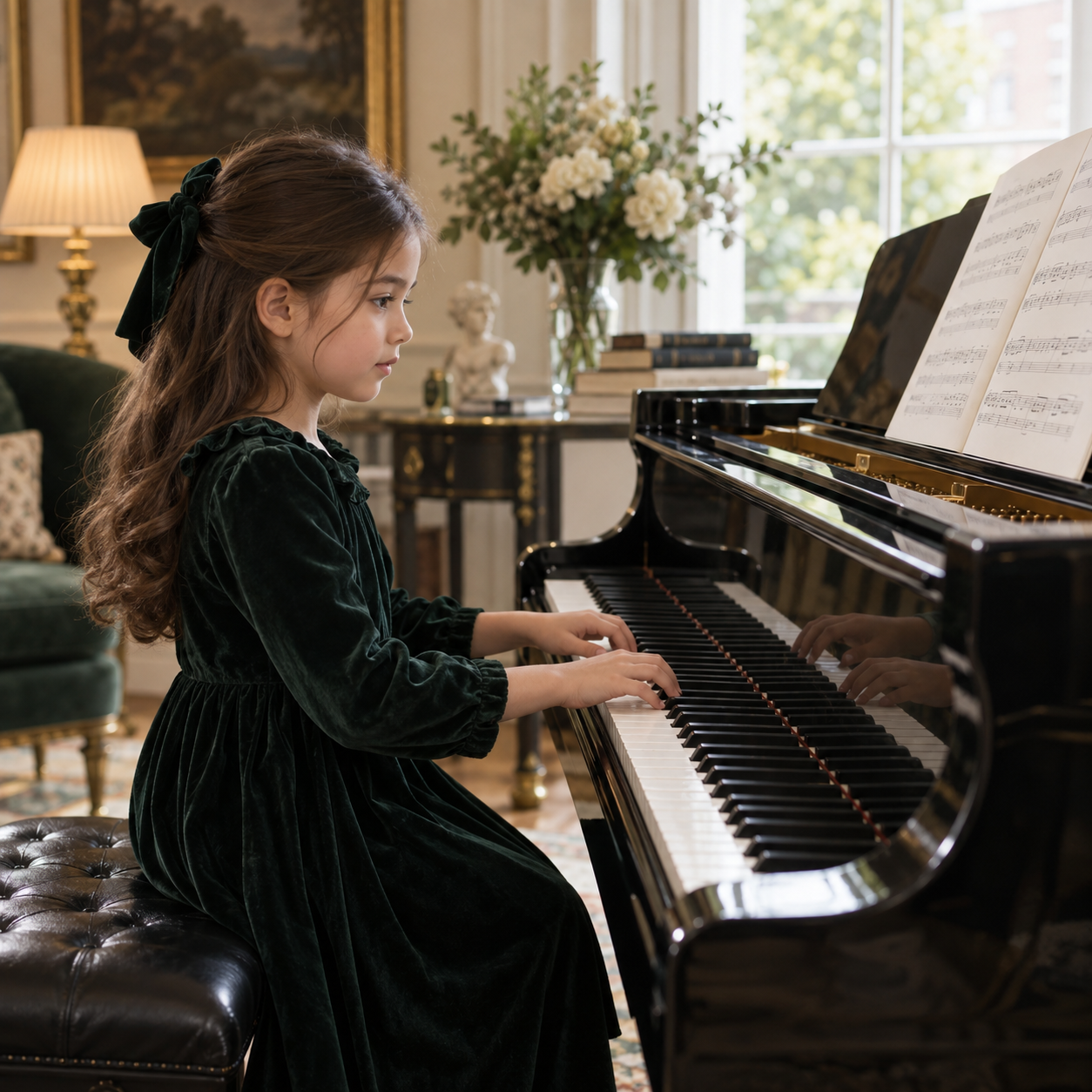
The eyes lead most confidently when the ear already understands the phrase.
Page design, attention and looking at the hands
Large print can help beginners, but cluttered illustrations, dense annotations or too many colours may compete with the notation. Mark only what the child must notice: perhaps a starting landmark, one repeated pattern and a system change. Clean pages make visual tracking easier to observe and teach.
Looking at the hands is not forbidden. Leaps, new positions and expressive gestures may require a glance. The goal is purposeful switching rather than panic. Practise finding groups of black keys by touch, then return the eyes to the score at a planned point. A stable bench and music height also matter because head movement changes the distance between score and keyboard.
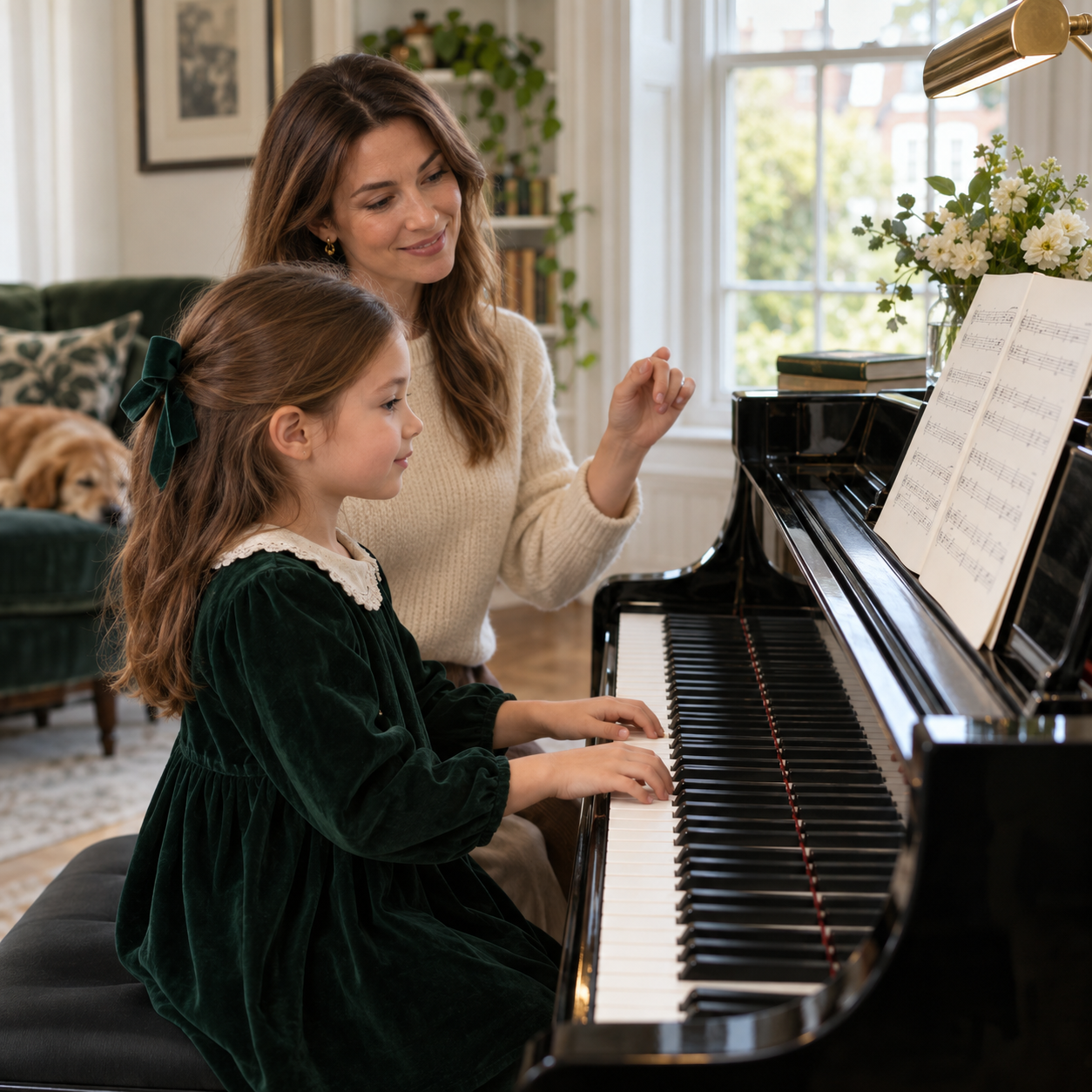
A five-minute home routine for visual tracking
First, trace one short line with a finger and clap the rhythm. Second, name the starting note and identify two interval patterns. Third, play at a steady, comfortable pulse while a parent silently points to each beat. Fourth, repeat without pointing. Finally, close the book and ask the child to describe where the music changed direction.
Progress appears in small signs: fewer lost places, smoother system changes, earlier preparation for a hand move and less dependence on watching every finger. Visual tracking is one part of reading, not a diagnosis of eyesight or learning difficulty. Persistent concerns about vision should be discussed with an appropriate health professional while the lesson remains musical and encouraging.
WKMT London
Give your child a lesson environment where notation, listening and movement are connected patiently and musically.
Explore children’s piano lessonsSources on visual tracking
- PMC: Eye on Music Reading methodological review
- PubMed: saccadic eye movements while reading music
- ERIC: reading ahead in adult music students
- PMC: cross-modal music integration and eye movements
- University of Ottawa: young piano students and page illustration
- ScienceDirect: eye movements and visual expertise in music reading
Sources checked 17 September 2026. Educational guidance; individual circumstances and progress vary.