
 TRIAL LESSON
Pianists, Piano Lessons
Stephen Kovacevich in London: Beethoven, Brahms and the Art of Serious Piano Listening
Jul
Stephen Kovacevich in London Complete Guide
WKMT London listening guide
Stephen Kovacevich in London: Beethoven, Brahms and the Art of Serious Piano Listening
A London-centred guide to Stephen Kovacevich, his Myra Hess lineage, his Beethoven and Brahms recordings, and the listening habits that make serious piano interpretation vivid.
Why Stephen Kovacevich Still Matters
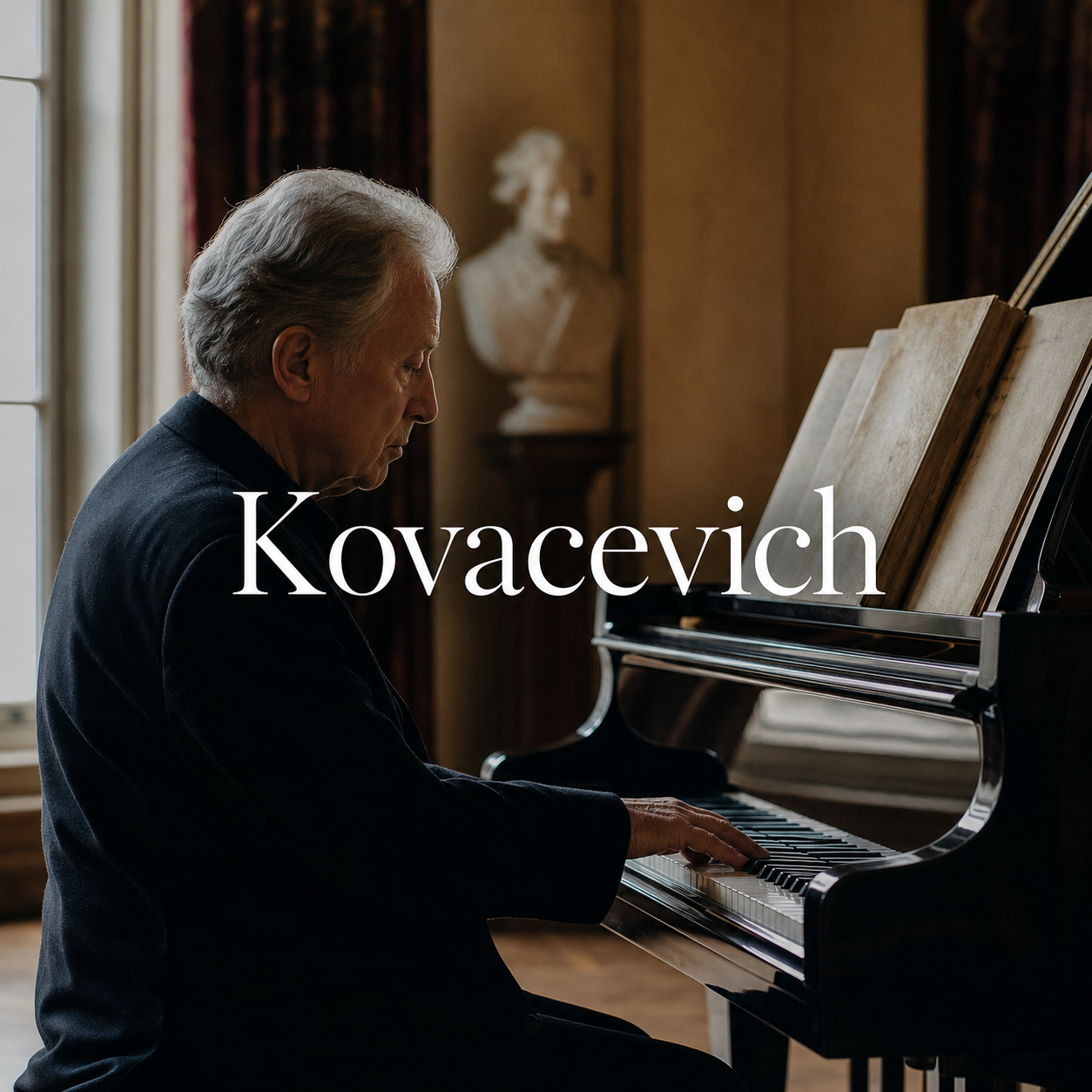
Stephen Kovacevich belongs to a rare line of pianists whose authority is not built on glitter, but on proportion. Born in San Pedro, California, in 1940, he moved to London as a teenager to study with Dame Myra Hess, and that decision gave his career its lasting British centre. Sources from Onyx Classics and Wigmore Hall both place his European debut at Wigmore Hall in 1961, with London becoming the city in which his Beethoven, Schubert, Brahms and Mozart identity took shape [1][2].
For London listeners, this matters because Kovacevich is not simply a name in a discography. He represents a local strand of serious piano culture: the chamber scale of Wigmore Hall, the Hess tradition of tonal concentration, the BBC and Royal Festival Hall orbit, and a kind of adult listening that prizes structure over display. The search intent behind Stephen Kovacevich is usually biographical, but the richer answer is musical: how does his playing teach us to hear weight, silence, touch and direction?
That is also why a Kovacevich guide belongs naturally on a WKMT site. Anyone looking for classical piano study in London needs examples of musical seriousness. Kovacevich offers one: a career in which Beethoven can sound exact without turning cold, and Brahms can sound inward without losing pulse.
San Pedro, Los Angeles, 17 October 1940.
Moved to England to study with Dame Myra Hess.
Beethoven, Brahms, Schubert, Mozart and Bartok.
Structural clarity, vocal voicing and disciplined touch.
Biography and London Connections
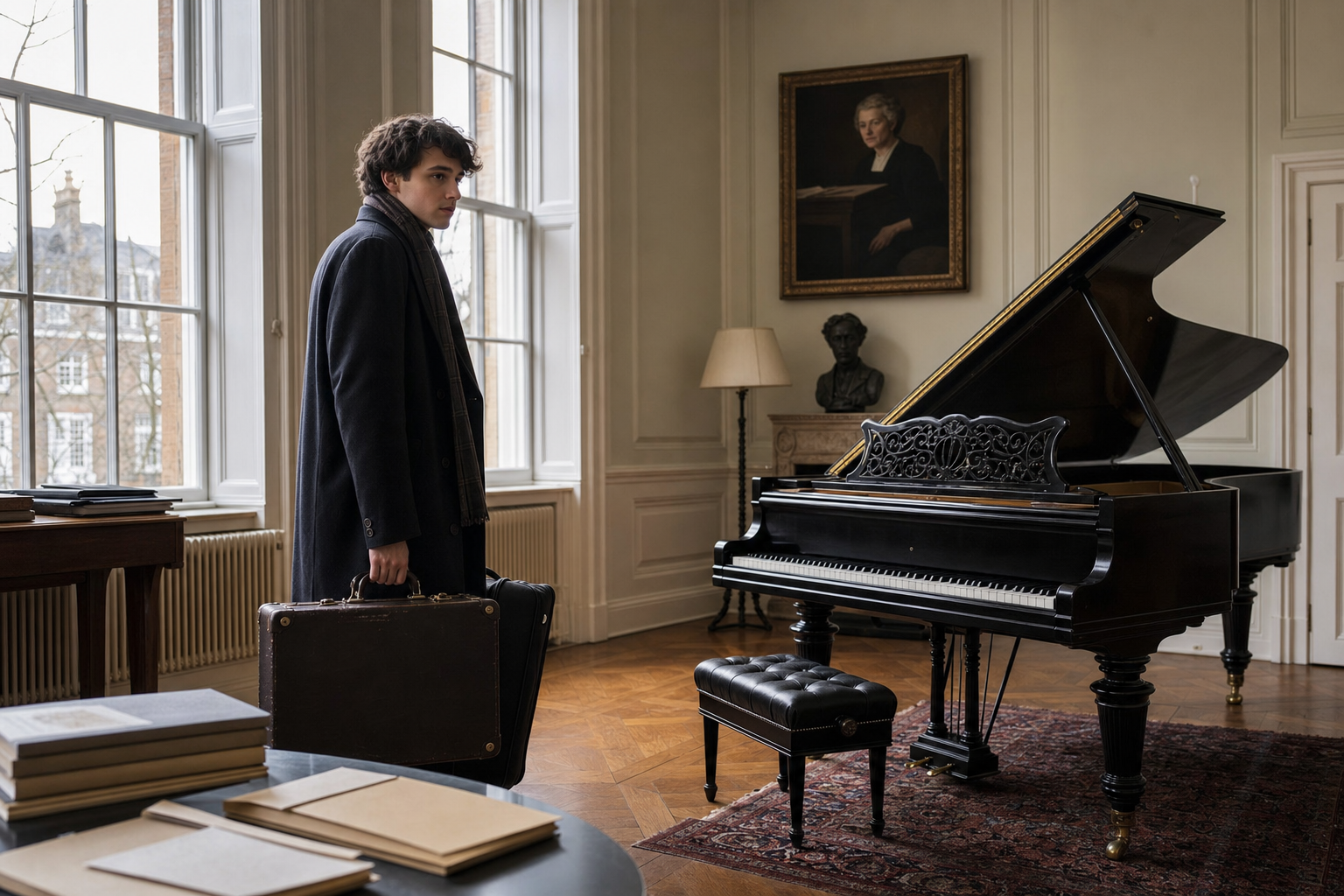
Kovacevich first performed under the name Stephen Bishop, his stepfather’s surname, before later using Bishop-Kovacevich and then Kovacevich to avoid confusion with the American singer-songwriter. The Guardian summarises the change plainly and places it within a career that had already become deeply British in its artistic setting [3]. London is not a decorative biographical note here. It is the hinge.
Myra Hess encouraged the central repertoire that still defines him. ABC’s 2025 Legends profile quotes Kovacevich remembering Hess as a “virtuoso in sound” and links her late-Beethoven knowledge with his own mature affinities [4]. That phrase is useful because it describes what listeners hear: not an abstract reverence for the canon, but a practical ear for how sound carries thought.
The Wigmore Hall archive records his 75th birthday concert on 2 November 2015 with Martha Argerich, including Debussy’s En blanc et noir, Rachmaninov’s Symphonic Dances and Schubert’s Sonata in B flat, D960 [2]. The same page recalls his 1961 debut and describes him as an American-born, British-based pianist who quickly established a reputation for integrity and vision. For a London reader, that archive is more valuable than a generic career list: it shows Kovacevich as part of the city’s living recital memory.
His career also crosses chamber music and conducting. Onyx notes long associations with Philips and EMI, concerto recordings with major conductors, and later conducting work with orchestras including the London Mozart Players [1]. The important point is continuity. Whether at the keyboard, in chamber partnership, or directing from within the ensemble, Kovacevich’s musicianship remains concerned with proportion.
Kovacevich is a useful model for adult listeners because his art rewards repeated hearing. The first pass gives the line; the second reveals the voicing; the third shows how tempo, silence and bass direction hold the whole form together.
Repertoire and Interpretive Profile
In Beethoven, listen for structure before temperament. Kovacevich’s association with the Diabelli Variations is central: The Guardian notes that the work formed part of his 1961 Wigmore Hall debut and that his 1968 recording helped seal his international reputation [3]. His Beethoven is rarely theatrical for its own sake. The drama comes from pressure within the phrase: repeated notes kept alive, bass lines made directional, and cadences prepared as events rather than punctuation.
In Brahms and Schubert, the language softens but the discipline remains. The late Brahms pieces need tonal patience: inner lines must glow without turning sentimental, and small rhythmic hesitations must feel breathed rather than delayed. Schubert asks for a longer horizon. In D960, heard at the 2015 Wigmore birthday concert, the danger is treating stillness as emptiness. Kovacevich’s strongest readings make stillness active, as if the listener can sense the harmony moving even when the surface barely stirs.
Bartok and twentieth-century repertoire reveal the other side of the same mind. Onyx and MusicGurus both emphasise his Philips-era concerto work, including Bartok, alongside Beethoven and Schumann [1][5]. Here clarity is not politeness. It is rhythmic grip, clean attack and the refusal to blur percussive writing into a general modernist haze. This is why comparisons with Alfred Brendel, Gilels or Pollini are most useful as context rather than ranking. Kovacevich belongs among pianists for whom intellect is audible as timing.
Signature Recordings and Recommended Listening
The best way into Stephen Kovacevich is through a small, serious listening route rather than a complete discography. Use the table below as a first path, then return to the works that resist quick understanding.
| Recording | Why it matters | Listen for |
|---|---|---|
| Beethoven, Diabelli Variations (Philips, 1968) | A reputation-making account tied to his Wigmore debut repertoire. | Variation-to-variation architecture and dry wit. |
| Beethoven piano concertos with Colin Davis | Philips-era concerto playing with directness and classical scale. | Orchestral dialogue rather than soloist display. |
| Brahms late piano pieces | A study in restraint, colour and late-Romantic inwardness. | Bass warmth under quiet upper voices. |
| Schubert sonatas for EMI | Part of the later recorded identity praised by artist biographies. | Long-range pacing and calm tension. |
| Brahms concertos with the LPO and Sawallisch | Onyx records awards for the first concerto and distinction for the second [1]. | Symphonic breadth without heaviness. |
| Bartok concerto and chamber recordings | Shows his rhythmic drive beyond the Austro-German centre. | Clean articulation and percussive precision. |
Listening map
Follow the bass. Kovacevich often lets the left hand reveal the argument before the melody confirms it.
Listen for voicing. Inner notes are rarely decorative; they clarify tension, colour and harmonic direction.
Notice silence. Pauses and soft landings keep the form alert rather than merely atmospheric.
Three listening habits help the article’s subject become practical without turning into a lesson plan. First, hear Kovacevich’s bass lines as structural pillars: in Beethoven they often carry the rhetorical weight, and in Brahms they prevent warmth from becoming blur. Secondly, follow how he grades sound within a chord. A melody may be bright, but the surrounding harmony still has shape, as if the hand is balancing several voices rather than pressing a single block of tone. Thirdly, notice his patience with endings. He does not always close a phrase by softening it; sometimes he clarifies the cadence by allowing rhythm and harmony to settle with plainness. These habits are especially useful for London concertgoers who move between recordings, recitals and study, because they make listening active without requiring technical jargon.
Do not listen to these recordings as museum objects. Notice how Kovacevich makes a climax by tightening the harmonic argument rather than by merely increasing volume. Notice also how his softer playing avoids haze: quiet does not mean vague. This is where serious listening becomes close to analysis, and why his recordings are especially rewarding for adults returning to piano study through adult piano lessons in London.
Career Highlights, Teaching and Influence
Kovacevich’s career highlights resist a single heroic narrative. There is the early California debut at eleven, the London move to Hess, the Wigmore breakthrough, the Philips and EMI recording periods, the chamber work with Jacqueline du Pre and Martha Argerich, the conducting career, and the long association with teaching contexts such as Dartington. Wikipedia is useful for the basic outline, but the record-label and venue sources give the stronger musical emphasis [1][2][6].
For teaching influence, the point is not a school of imitation. Kovacevich does not invite young pianists to copy a mannerism. He invites them, by example, to ask better questions: where is the phrase weighted, what is the real pulse, when does a silence speak, and how much tone is enough? That is why his art connects naturally with WKMT London piano masterclasses, where interpretation must be tested in sound rather than admired in theory.
London listeners can still experience him through recordings, broadcast archives, venue archives and reissues. The Wigmore Hall archive is last checked here on 15 July 2026; the Onyx and Guardian sources were also checked on 15 July 2026. If a current concert date is not visible from an official venue page, it is better to omit it than to imply a live appearance. The reliable path today is listening: compare early Philips directness with later EMI breadth, then hear how the same musical conscience survives.
For London pianists, Kovacevich is a reminder that interpretation is not decoration. It is the disciplined shaping of musical time.
Short FAQs and Sources on Stephen Kovacevich in London
He is an American-born, British-based classical pianist and conductor, especially associated with Beethoven, Brahms, Schubert, Mozart and Bartok.
He moved to England to study with Dame Myra Hess and made his European debut at Wigmore Hall in 1961, making London central to his artistic formation.
Start with Beethoven’s Diabelli Variations, then move to Brahms late piano pieces, Schubert sonatas and the Brahms concertos with Sawallisch.
As a final listening rule, resist the temptation to make Kovacevich easier than he is. His finest performances do not explain themselves at once. They ask the listener to stay with line, proportion and pressure until the musical argument feels inevitable in sound.
- Onyx Classics, Stephen Kovacevich artist biography, https://www.onyxclassics.com/artist/stephen-kovacevich/
- Wigmore Hall archive, Stephen Kovacevich 75th Birthday Concert, https://www.wigmore-hall.org.uk/whats-on/201511021930
- The Guardian, Stephen Kovacevich at 75: his best recordings, https://www.theguardian.com/music/2015/oct/20/stephen-kovacevich-bishop-best-piano-recordings-75-birthday-beethoven-schubert-grieg-brahms-bartok
- ABC Listen, Pianist Stephen Kovacevich, https://www.abc.net.au/listen/programs/legends/legends-stephen-kovacevich-2025/105804592
- MusicGurus, Stephen Kovacevich profile, https://www.musicgurus.com/gurus/stephen-kovacevich/
- Wikipedia, Stephen Kovacevich overview