
 TRIAL LESSON
Pianists, Piano Lessons
Nelson Freire in London: Colour, Clarity and the Art of Serious Piano Listening
Jul
Nelson Freire in London | WKMT Listening Guide
WKMT listening guide
Nelson Freire in London: Colour, Clarity and the Art of Serious Piano Listening
Nelson Freire remains a model for London listeners who value warmth, restraint and a piano tone that speaks before it dazzles.
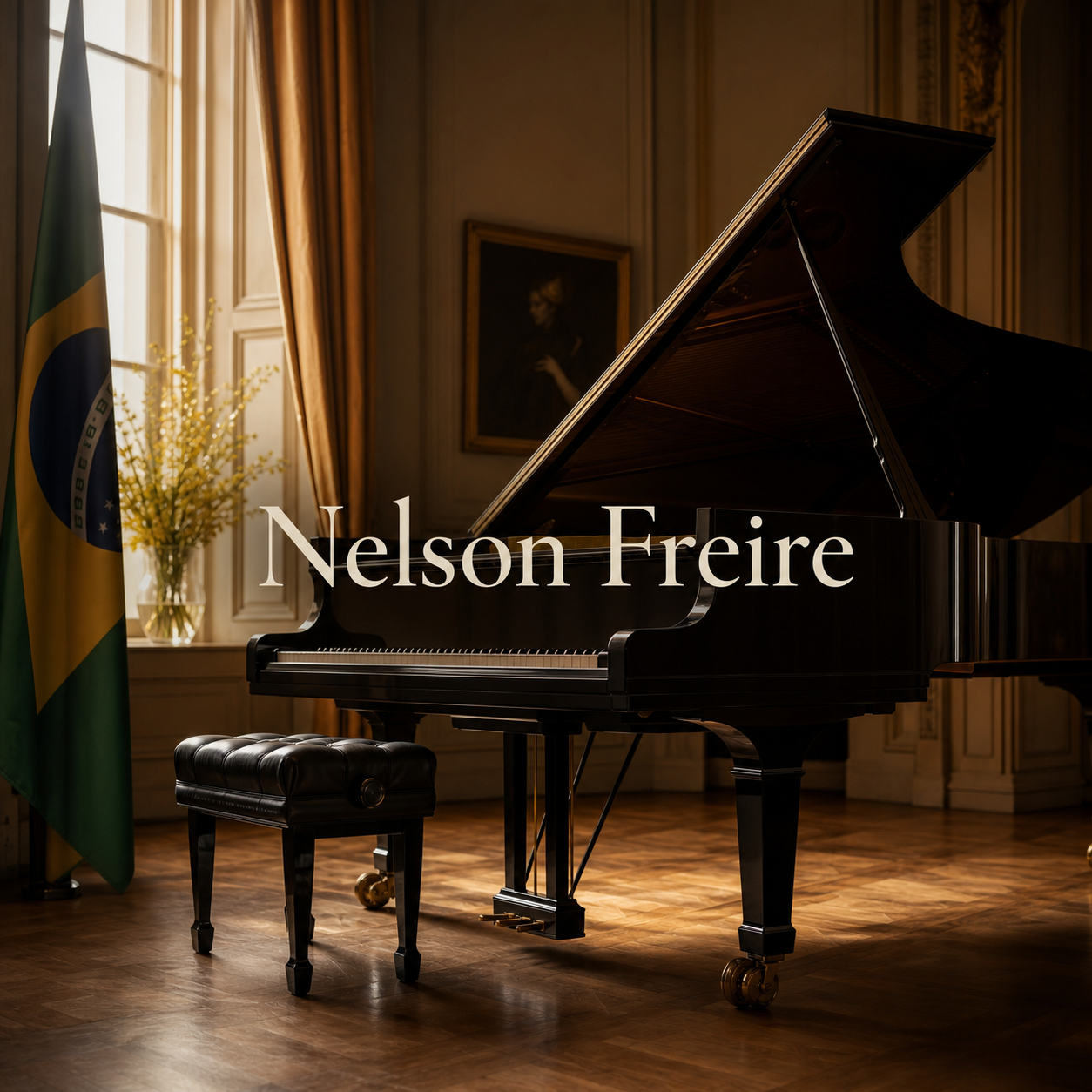
A refined visual frame for Freire’s London listening legacy.
Nelson Freire was never a pianist of theatrical excess. His authority came from touch, breathing, colour and the refusal to make a phrase louder than its meaning. For a London audience used to judging pianists in close recital spaces, that matters. The ear learns to follow legato layering, voicing, micro-dynamics and rhythmic elasticity rather than spectacle alone.
Freire’s career also gives serious adult listeners a practical route into interpretation. He recorded Chopin, Schumann, Brahms, Debussy, Beethoven, Liszt and Brazilian repertoire with a recognisable poetic reserve. He worked often with Martha Argerich, appeared with leading orchestras, and left a discography that rewards repeated listening rather than quick ranking. This guide places him in a London frame: the Southbank, critical response, recordings, and the kind of attentive listening that supports deeper classical piano study at WKMT’s London piano school.
Why Nelson Freire Matters
Freire’s distinction lies in proportion. The sound is full, but rarely inflated; the rhythm can stretch, but does not sag; the melodic line sings without forcing sentiment. Decca’s biography records his Philips inclusion in Great Pianists of the 20th Century and his later Decca recordings of Beethoven, Chopin, Schumann, Debussy, Liszt and Brahms concertos with Riccardo Chailly, a range that helps explain why his name still carries weight among pianists and collectors.
His playing is especially valuable for listeners who want to hear how touch controls structure. In Chopin, he avoids perfume for its own sake. In Brahms, he lets inner voices darken the texture without making the bass heavy. In Debussy, colour comes from timing and pedal clarity, not from blur. That is why Freire remains useful to adult pianists: he shows that beauty at the piano is often a disciplined act of selection.
There is also a moral quality to the musicianship. Freire does not sound casual, but he often sounds unforced. That distinction is worth hearing carefully. Many pianists can make a climax bigger; fewer can make a quiet transition feel inevitable. Freire’s best performances ask the listener to notice how a phrase is prepared before it arrives, and how a cadence is released after it has made its point.
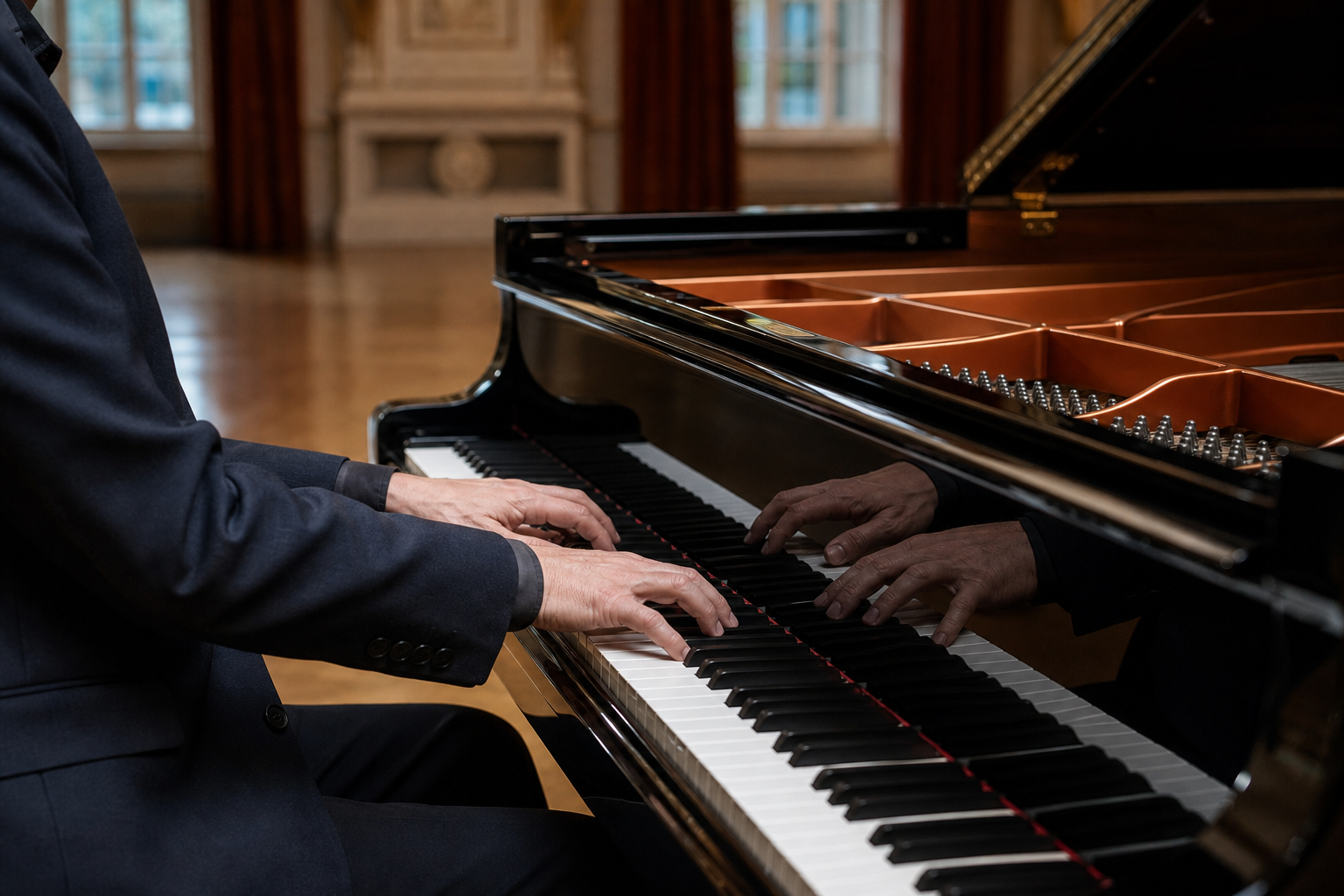
Freire’s London Story: Performances and Reviews
Freire’s London presence was never as constant as that of some touring virtuosi, which made his appearances feel unusually concentrated. The Guardian’s Andrew Clements noted of a 2007 Queen Elizabeth Hall recital that Freire was a “rare visitor to London”, a useful reminder that scarcity was part of the local memory around him.
That recital belongs to a pattern: Freire’s London identity is tied less to celebrity branding than to serious halls, substantial programmes and listeners who came for tone. A Classical Source review of his 2014 Queen Elizabeth Hall programme described an “astonishing tonal range”, while Seen and Heard International reported him in “superlative form” in May 2014.
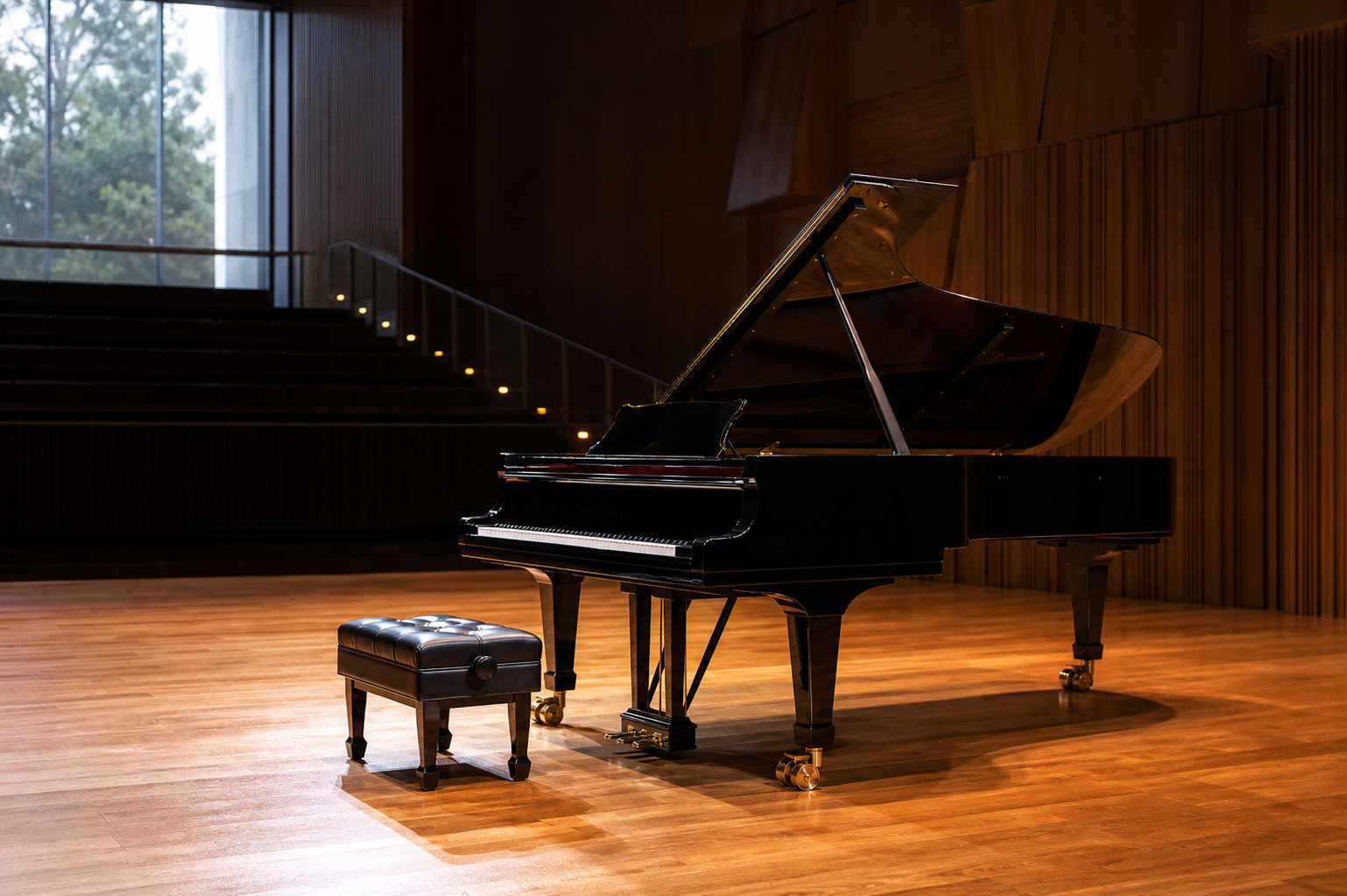
Freire’s London rarity sharpened attention around his recital return.
Concert indexes place him with the London Symphony Orchestra and Sir Colin Davis in Mozart and Brahms.
Beethoven, Debussy, Rachmaninov and Chopin framed the tonal range critics admired.
These entries are enough to establish a London listening angle without pretending that Freire was a resident fixture. His significance here is qualitative. He offered the Southbank listener a way to hear Romantic repertoire with intimacy intact: no glare, no empty thunder, no impatience with the slow work of colour.
For a city with a dense recital culture, that matters. London audiences can hear extrovert brilliance almost every week in season. Freire represented a different kind of event: a pianist whose authority gathered slowly, through the exact placement of sonority and silence. His programmes made familiar composers feel less like repertoire brands and more like living rooms of sound, each with its own light, air and pressure.
Signature Repertoire and Interpretive Fingerprints
Freire’s Chopin is the natural starting point. The Decca Chopin sonata and etude recordings show a pianist interested in long melodic breath rather than decorative volatility. In the Third Sonata, the challenge is not merely velocity; it is how to keep the line clear while the writing grows increasingly dense. Freire’s answer is balance: treble song, middle-register warmth and bass weight that supports rather than dominates.
Schumann and Brahms reveal another part of the voice. Freire lets Romantic ambiguity stay ambiguous. He does not over-explain rubato, and he does not polish away the darker corners. The result is playing that sounds lived-in rather than staged. For a mature pianist, this is a lesson in restraint: expressive freedom works best when the underlying pulse remains trusted.
Freire’s poetry is not a softening of structure; it is structure made audible through touch.
Debussy completes the picture. His colour is never a wash. The pedalling suggests atmosphere, but the voicing keeps the image in focus. That is the point for serious listening: Freire’s refinement is not vagueness. It is the discipline of letting each harmony carry its exact light.
Freire’s Beethoven is more selective in the public imagination, but it is important for the same reason. He does not force monumentality. The drama is held in proportion, and the cantabile remains central. In Liszt, where display can easily become the subject, he keeps the rhetoric within a singing frame. Across these composers, the fingerprint is consistent: the piano is treated as an instrument of speech, not merely resonance.
A Curated Listening Guide
Use these recordings as a listening path rather than a ranking. The aim is to hear how Freire changes colour without changing his essential musical manners.
| Chopin: Piano Sonata No. 3 and Etudes Op. 25, Decca, 2002 Listen for the way brilliance stays vocal. Even in the etudes, the technical point is absorbed into line and colour. |
| Schumann: Carnaval, Papillons, Kinderszenen, Decca, 2003 Notice how character shifts arrive through touch, timing and register, not through caricature. |
| Brahms: Piano Concertos with Riccardo Chailly, Decca, 2006 Freire finds grandeur without heaviness. The inner voices have weight, but the argument keeps moving. |
| Debussy: Preludes Book I and Children’s Corner, Decca, 2009 The colour is refined and clear-edged. Pedal becomes atmosphere only after the harmony has been voiced. |
| Salzburg: Martha Argerich and Nelson Freire, Deutsche Grammophon, 2009 Hear the chamber instinct: alert, affectionate, flexible, never self-advertising. |
| Brasileiro: Villa-Lobos and Friends, Decca, 2012 This is the warmest entry point into Freire’s Brazilian colour world: rhythmic ease, elegance and song. |
A useful listening exercise is to compare the first minute of a Freire performance with the final minute of the same work. In weaker readings, the opening colour and closing colour can feel unrelated. In Freire, the last page often seems to remember the first. That continuity is not an accident; it comes from proportion, pedal economy and a long-range sense of harmonic destination.
Freire’s Legacy in London and Influence
For London pianists, Freire’s legacy is not a school in the institutional sense. It is a listening ethic. He asks the player to care about what happens between the notes: how a chord releases, how a melody is carried by the wrist, how the pedal preserves warmth without clouding harmony. That ethic sits naturally beside serious adult piano lessons in London, where many returning pianists need to rebuild musical judgement as much as fluency.
His collaboration with Martha Argerich also matters. Their duo work is a reminder that virtuosity can be conversational. The best pianists do not merely project; they listen while playing. In that sense Freire remains a useful figure for teachers, advanced amateurs and conservatoire-minded students: he shows that musical authority can be quiet, and quiet authority can still fill a hall.
That legacy is especially relevant in a teaching environment where students often arrive with recordings already in their ears. Freire offers a corrective to imitation. He is not useful because his timing can be copied, but because his priorities can be studied: a singing top line, proportionate bass, careful pedalling, and the refusal to confuse speed with intensity. Those priorities travel well from professional recordings into lessons, masterclasses and private practice.
Practical Information for London Readers
To continue the Freire thread in London, look for programmes at the Southbank Centre, Wigmore Hall and Barbican that place Chopin, Schumann, Brahms, Debussy or Brazilian repertoire in intimate recital conditions. WKMT readers can connect this listening work with WKMT London homepage, WKMT masterclasses and events, WKMT concert listings, WKMT piano teachers and teacher biographies.
When choosing a concert, do not only chase the largest name. Choose programmes that let you hear touch clearly: solo recitals, chamber concerts with piano, and concerto performances where the piano is not swallowed by orchestral scale. Freire’s artistry is a reminder that listening is an active craft. The same craft helps students hear their own tone more honestly at the instrument, especially when mature interpretation matters more than display or surface excitement.
Study Piano Listening With WKMT
Freire’s playing rewards the same habits that strong piano study develops: attentive sound, clear structure and an honest relation between touch and phrase.
Nelson Freire teaches London listeners to value refinement without passivity. His recordings invite slow attention: the melody that glows but does not plead, the bass that supports rather than dominates, the phrase that breathes because the player has earned the right to wait. For WKMT students and concertgoers, that is more than admiration. It is a practical model of musical maturity.
For guided listening, masterclass preparation or one-to-one interpretive work, explore WKMT’s London piano lessons, concert activity and teacher-led study routes. Bring one Freire recording to your next serious listening session and ask a simple question: what exactly makes this sound alive?
Sources on Nelson Freire in London
- Decca Classics, Nelson Freire biography: https://www.deccaclassics.com/en/artists/nelsonfreire/biography
- The Guardian, Andrew Clements, Nelson Freire at Queen Elizabeth Hall: https://www.theguardian.com/music/2007/jun/28/classicalmusicandopera1
- The Classical Source, Nelson Freire at Queen Elizabeth Hall: https://www.classicalsource.com/concert/nelson-freire-at-queen-elizabeth-hall-beethoven-debussy-rachmaninov-and-chopin/
- Seen and Heard International, Nelson Freire in Superlative Form: https://seenandheard-international.com/2014/05/nelson-freire-in-superlative-form/
- Deutsche Grammophon catalogue, Chopin Piano Sonata No. 3 and Etudes: https://www.deutschegrammophon.com/en/catalogue/products/chopin-piano-sonata-no-3-op-58-nelson-freire-10153
- Southbank Centre classical guide 2020/21, Nelson Freire listing: https://bynder.southbankcentre.co.uk/m/6c9c42e39cdcfb9b/original/Classical-Guide-20-21.pdf