
 TRIAL LESSON
Pianists, Piano Lessons
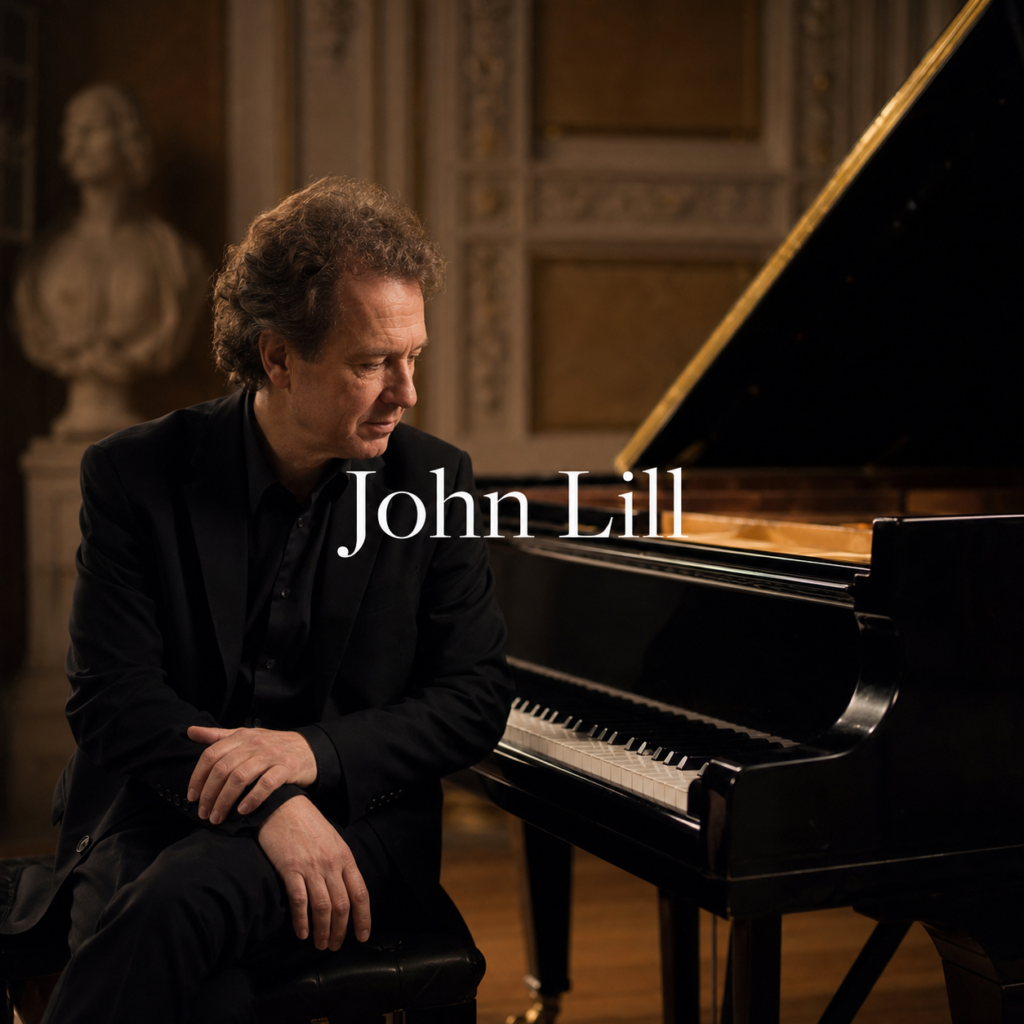
John Lill in London: Beethoven, Resilience and the Art of Serious Piano Listening
Jul
John Lill in London Complete Guide by WKMT
WKMT London listening guide
John Lill in London: Beethoven, Resilience and the Art of Serious Piano Listening
A cultured guide to John Lill, his Beethoven authority, London formation, essential recordings and what serious listeners can learn from his disciplined musical imagination.
At a glance: quick facts and honours
London, 17 March 1944.
Royal College of Music; later work with Wilhelm Kempff.
Shared first prize at the 1970 Moscow International Tchaikovsky Competition.
OBE in 1978; CBE in the 2005 New Year Honours.
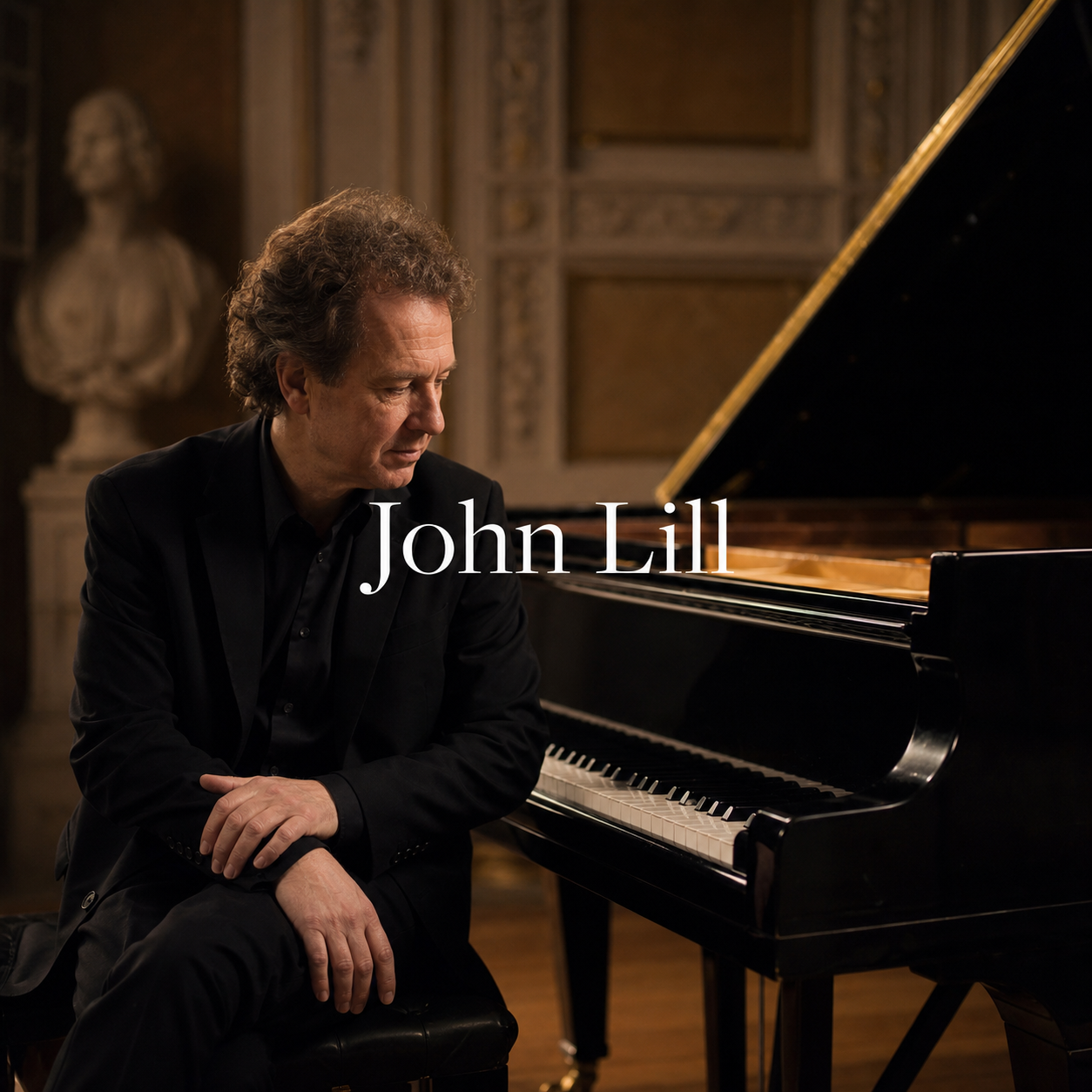
John Lill belongs to the school of pianists whose authority does not depend on theatrical display. His art is built on concentration: the long Beethoven line, the held bass, the phrase that seems to gather force because nothing is exaggerated. For London listeners, he is also a local figure of consequence. The Royal College of Music lists him as an International Visiting Artist and notes a career spanning half a century, more than 30 BBC Promenade concerts and repeated performances of Beethoven’s complete sonata cycle in the UK, USA and Japan [1].
The keyword John Lill usually leads searchers to short biography pages. Useful as those are, they rarely explain why his playing matters to a pianist sitting in a London studio, or to a listener preparing for a Beethoven recital. This guide fills that gap: biography where it clarifies the music, a listening roadmap where recordings help the ear, and a London frame that connects Lill’s seriousness to classical piano study in London.
Early life, training and breakthrough
Lill’s musical story starts with precocity, but it is more interesting as a story of discipline. The Royal College of Music profile records that he gave his first piano recital at the age of nine, performed Rachmaninoff’s Third Piano Concerto under Sir Adrian Boult at eighteen, and made a much-acclaimed London debut with Beethoven’s Emperor Concerto at the Royal Festival Hall [1]. Askonas Holt gives the broader frame: a career of more than 60 years and more than 5,000 concerts, rooted in RCM training and studies with Wilhelm Kempff [2].
The 1970 Moscow International Tchaikovsky Competition made his name internationally. The standard biographical account records that he shared the piano first prize with Vladimir Krainev, an achievement made more striking by the Cold War setting and by the competition’s prestige [2]. What followed was not a fashionable career built on one victory, but a durable concert life: major orchestras, large concerto repertoire, and an unusually consistent association with Beethoven.
Teacher’s note: Lill’s example is useful because it separates virtuosity from display. The point is not to sound severe; it is to make every strong effect feel earned by structure.
The Beethoven specialist: interpretive profile
John Lill is most often described through Beethoven, and the label is justified. The RCM and Askonas Holt both emphasise his complete Beethoven sonata cycles and his particular standing as a Beethoven interpreter [1][2]. Yet “Beethoven specialist” can be a lazy phrase unless we ask what the specialism sounds like.
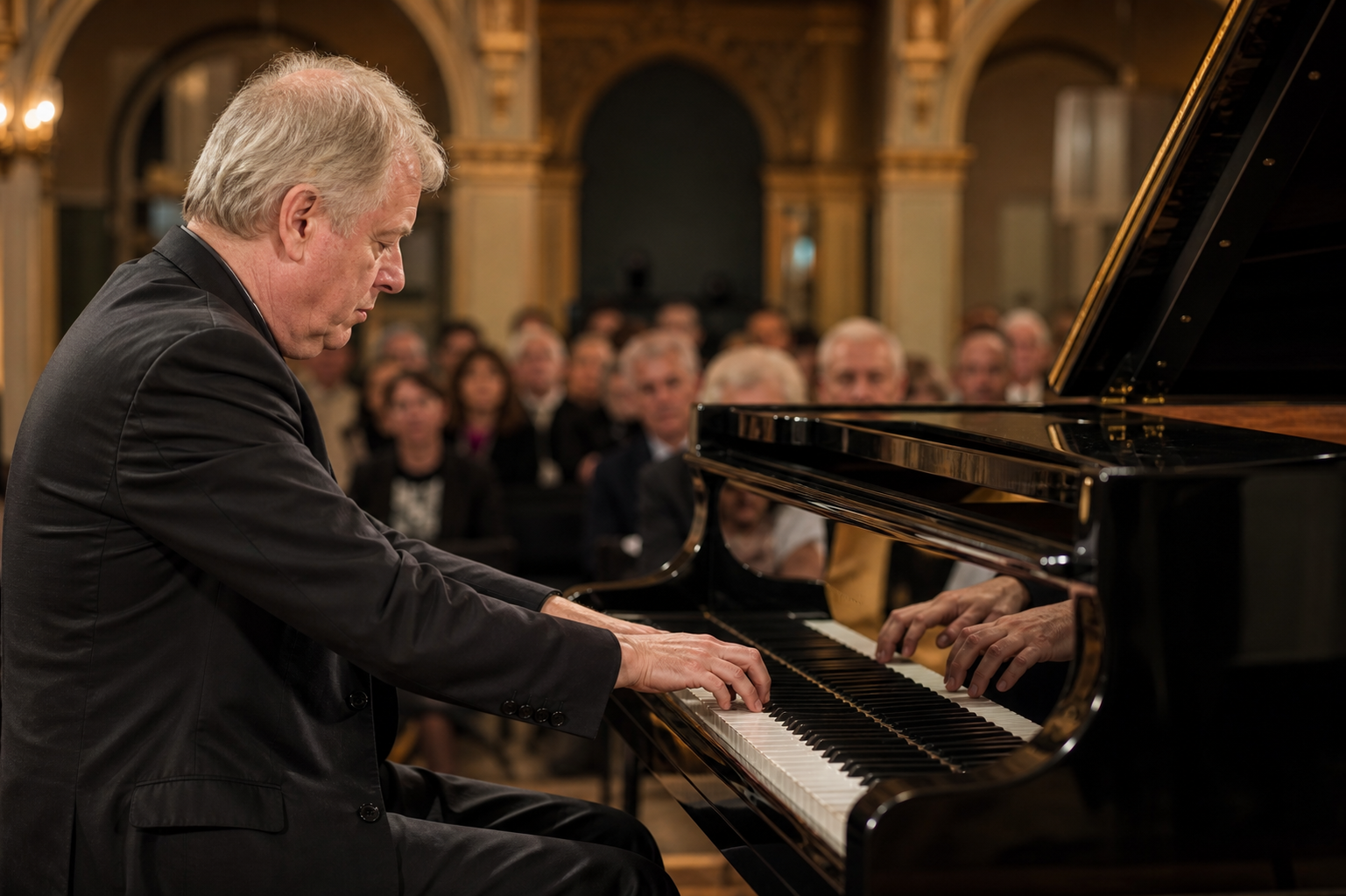
In Lill’s Beethoven, the listener often hears architecture before personality. The pulse is firm without feeling mechanical; climaxes are prepared rather than inflated; lyrical passages retain muscular support. In the Appassionata, that means the opening is not merely ominous but structurally alert, every low-register murmur aimed toward a larger design. In the Emperor Concerto, the ceremonial surface has weight because the left hand and inner voicing do not become blurred grandeur.
Pulse
A steady underlying beat allows rubato to register as meaning, not mannerism.
Voicing
Middle voices matter. Lill’s Beethoven rarely lets melody become detached from harmony.
Restraint
Intensity is held in reserve, so arrival points feel inevitable.
Key recordings and a listening roadmap
A good entry into John Lill is not to consume the discography chronologically, but to listen by question: how does he build a Beethoven argument, how does he sustain a concerto span, and how does he treat late-Romantic weight without heaviness?
| Recording area | Label / source context | What to listen for |
|---|---|---|
| Beethoven complete sonatas | ASV / Brilliant circulation noted in review listings [4]. | Structural patience. Start with a middle-period sonata and follow how bass rhythm governs the drama. |
| Beethoven concertos | EMI and Chandos contexts are cited in standard discographical profiles [3]. | Dialogue with orchestra. Notice how the piano enters as a public voice, not as decorative brilliance. |
| Brahms concertos | ASV recordings with the Halle are listed in biographical discography [3]. | Weight without congestion: chords are full, but the line remains clear. |
| Rachmaninoff concertos | Nimbus recordings are cited in Lill discographies [3]. | Listen for long-breathed melody supported by disciplined accompaniment figures. |
| Prokofiev sonatas | Complete Prokofiev sonatas appear in the recorded legacy described by artist sources [3]. | Dry wit, attack and line: the playing should sound sharp, but never merely percussive. |
“Serious listening begins when the ear stops waiting for effect and starts following consequence.”
Three listening prompts help. First, follow the left hand for one movement before judging the melody. Second, mark where Lill resists rushing into a climax. Third, compare the opening and closing pages: his strongest performances often make the end feel contained inside the beginning.
John Lill in London: landmark recitals, Proms, venues and influence
London is not a decorative setting in this article. Lill’s London debut at the Royal Festival Hall with Beethoven’s Emperor Concerto is part of his public formation [1]. His RCM role keeps him connected to the city’s conservatoire culture [1]. The Proms record in artist biographies places him within Britain’s largest public classical platform, while Cadogan Hall reviews document a late-career Beethoven sonata cycle in London [5].
For WKMT readers, this matters because the city rewards deep listening. A pianist who attends a Beethoven recital at Cadogan Hall, Wigmore Hall or the Southbank Centre brings that sound back to the practice room. The same principle underpins classical concerts in London and London piano masterclass culture: performance is not separate from education, but one of its most demanding forms.
Resilience, later career and teaching
Any account of John Lill must handle the 2000 attack with care. Contemporary reports described injuries to both hands during a robbery attempt; later biographies note his recovery and return to performing [3]. The episode should not become melodrama. Its musical significance is quieter: it clarifies the physical vulnerability of a pianist’s craft, and the discipline required to return to public performance after injury.
WKMT perspective
Advanced pianists often chase brilliance. Lill’s legacy asks a better question: can the hand, ear and judgement stay aligned under pressure?
His later teaching and visiting-artist work matter for the same reason. A serious pianist does not pass on merely fingerings or career anecdotes. He passes on habits of listening: how to test tempo against structure, how to phrase without sentimentality, how to hear the bass as the foundation of musical thought. That is why an article about John Lill naturally supports adult and advanced musical development as well as WKMT’s broader London authority.
Study serious piano listening in London
If Lill’s Beethoven draws your ear towards structure, tone and long-range thought, WKMT’s London teaching can help turn that listening into clearer pianism.
Practical: where to hear, buy and continue listening
For recordings, start with label and catalogue pages when available, then compare streaming services with physical releases because older ASV, EMI, Nimbus and Chandos material can appear under different reissue imprints. For live listening, check venue calendars directly: Royal Festival Hall, Wigmore Hall, Cadogan Hall, Barbican and BBC Proms listings can change quickly.
Readers interested in the educational side can continue through WKMT’s adult piano lessons in London, advanced piano lessons in London and guide to London concert halls. Those links keep the article focused on John Lill while sending commercial and study intent back to the correct WKMT pages.
Sources, further reading and discography by John Lill
- Royal College of Music https://www.rcm.ac.uk/Keyboard/professors/details?id=91016
- Askonas Holt, https://askonasholt.com/artist/john-lill
- Divine Art Records, https://divineartrecords.com/artist/john-lill/
- Classics Today, “Beethoven: Piano Sonatas/Lill”, https://www.classicstoday.com/review/review-10765/
- The Classical Source, “John Lill: Beethoven complete piano sonatas at Cadogan Hall”, https://www.classicalsource.com/concert/john-lill-beethoven-the-complete-piano-sonatas-at-cadogan-hall-7-8-pastoral-opus-110/
- Arthur Rubinstein International Music Society, “John Lill”, https://arims.org.il/jury/john-lill/