
 TRIAL LESSON
Pianists, Piano Lessons
Nikolai Demidenko in London: Russian Colour, Romantic Clarity and the Art of Serious Piano Listening
Jul
Nikolai Demidenko in London
WKMT London piano culture
Nikolai Demidenko in London: Russian Colour, Romantic Clarity and the Art of Serious Piano Listening
Nikolai Demidenko offers London listeners a demanding kind of pianism: sonorous, unsentimental, richly coloured and rooted in the Russian Romantic tradition without losing classical proportion.
Quick Facts
The search for Nikolai Demidenko usually begins with biography, but the better question for London audiences is musical: what kind of listening does he ask of us? The short answer is concentrated listening. His playing is associated with Russian colour, large-scale sonority, Romantic repertoire and a striking refusal to let virtuosity become merely decorative.
Russian-born and Russian-trained pianist.
Granted British citizenship in 1995.
Hyperion and Onyx both cite London recitals at the Barbican, Southbank Centre and Wigmore Hall.
Chopin, Rachmaninov, Prokofiev, Tchaikovsky, Medtner, Liszt, Schumann, Schubert and Bach-Busoni.
For serious listeners, the phrase best Nikolai Demidenko recordings should not mean a quick greatest-hits list. It should mean a route into his sound world: the singing line in Chopin, the density of Rachmaninov, the dark brilliance of Prokofiev and the long-breathed architecture of Schumann. Those searching for a Demidenko Wigmore Hall review are often looking for the same thing in local form: a way to understand why this kind of playing matters in a live London room.
Why Demidenko Matters
Demidenko matters because his playing keeps Romantic piano music serious. In weaker hands, the repertoire around Liszt, Rachmaninov, Tchaikovsky, Prokofiev and Chopin can become a sequence of effects: speed, volume, thunder, sentiment. Demidenko’s reputation rests on something more durable. He can produce a great sound, but the sound is organised by line and harmonic pressure.
That distinction is important for London listeners and for students taking classical piano lessons in London. A listener does not learn much from a performance that simply overwhelms. A listener learns from the way tone is graded, from the moment a bass note changes the emotional temperature, from the difference between rubato that follows the music and rubato that merely advertises the pianist.
The Russian school is sometimes described too broadly, as if weight and passion were enough. Demidenko’s best playing suggests a more refined inheritance: cantabile line, deep key contact, orchestral imagination and a willingness to draw large structures without making every phrase equally emphatic. That makes him especially useful for advanced amateurs, teachers and adult learners. He shows that power is not the opposite of clarity; it is clarity carried at scale.
The central lesson is that Romantic pianism becomes most compelling when colour, weight and freedom remain accountable to the musical sentence.
Signature Repertoire and Must-Hear Recordings
Demidenko’s discography is unusually helpful because it crosses the repertoire clusters that define his public identity. Hyperion documents a wide relationship with Russian and Romantic music, while Onyx highlights his later Chopin project and his continuing association with major recital repertoire. The following route is designed for listeners who want to hear the breadth without losing focus.
| Recording Area | Why It Matters | Listen For |
|---|---|---|
| Chopin Preludes and larger Chopin works | Onyx notes his special affinity with Chopin and his 24 Preludes project. | The difference between atmosphere and structure in short forms. |
| Rachmaninov concertos | Hyperion describes his performances of Rachmaninov concertos with leading orchestras. | Full sonority that still keeps the melodic line audible. |
| Medtner concertos | Onyx records that his Hyperion Medtner concerto recording won a Gramophone Award. | Narrative tension in dense textures and long-spun phrases. |
| Mussorgsky and Prokofiev | These recordings reveal his ability to give piano sound orchestral character. | Colour changes, bite, irony and physical weight. |
| Schubert, Schumann and Liszt | They show the lyrical and architectural side of his Romantic identity. | How rubato is kept within the phrase rather than laid over it. |
The most productive listening path is not chronological. Begin with Chopin because it exposes touch and proportion. Move next to Medtner or Rachmaninov, where the same principles are tested under heavier musical weather. Then hear Mussorgsky or Prokofiev, where character, attack and colour must be more sharply profiled. By the time one reaches Schumann or Schubert, the ear has been prepared to notice how much restraint sits behind the apparent freedom.
Listening Guide for London Audiences
London’s concert culture rewards attentive preparation. A pianist like Demidenko is not best approached through clips or isolated climaxes. He is best heard through a sequence of listening questions. What happens to the bass when the melody grows warmer? How much pedal is being used, and when is it released? Does the phrase lean forward because of tempo, harmony, register or touch?
Follow the top line first, then the bass. Notice how decoration becomes speech.
Listen for breadth without blur. The biggest sound should still have direction.
Track the narrative. The music often changes character before the listener expects it.
Hear the piano as an orchestra: brass, bells, tread, line and colour.
Listen for inner restlessness held inside formal clarity.
This method is valuable before a London recital even when Demidenko himself is not in the calendar. It trains the ear to hear serious pianism on its own terms. A performance at Wigmore Hall may make voicing and release unusually vivid. A larger Southbank or Barbican acoustic may make long-range sonority easier to understand. The listener should arrive with one question, not ten. The best question is often simple: where is the line going?
For adult learners, this form of listening is practical. It helps avoid the common trap of treating expressive playing as a matter of emotion added at the end. Expression in this repertoire comes from voicing, timing, touch, pedal and harmonic direction. Those are teachable, repeatable matters. They can be studied slowly at the piano, and they can be heard more clearly after careful listening.
Demidenko’s London Story and Critical Reception
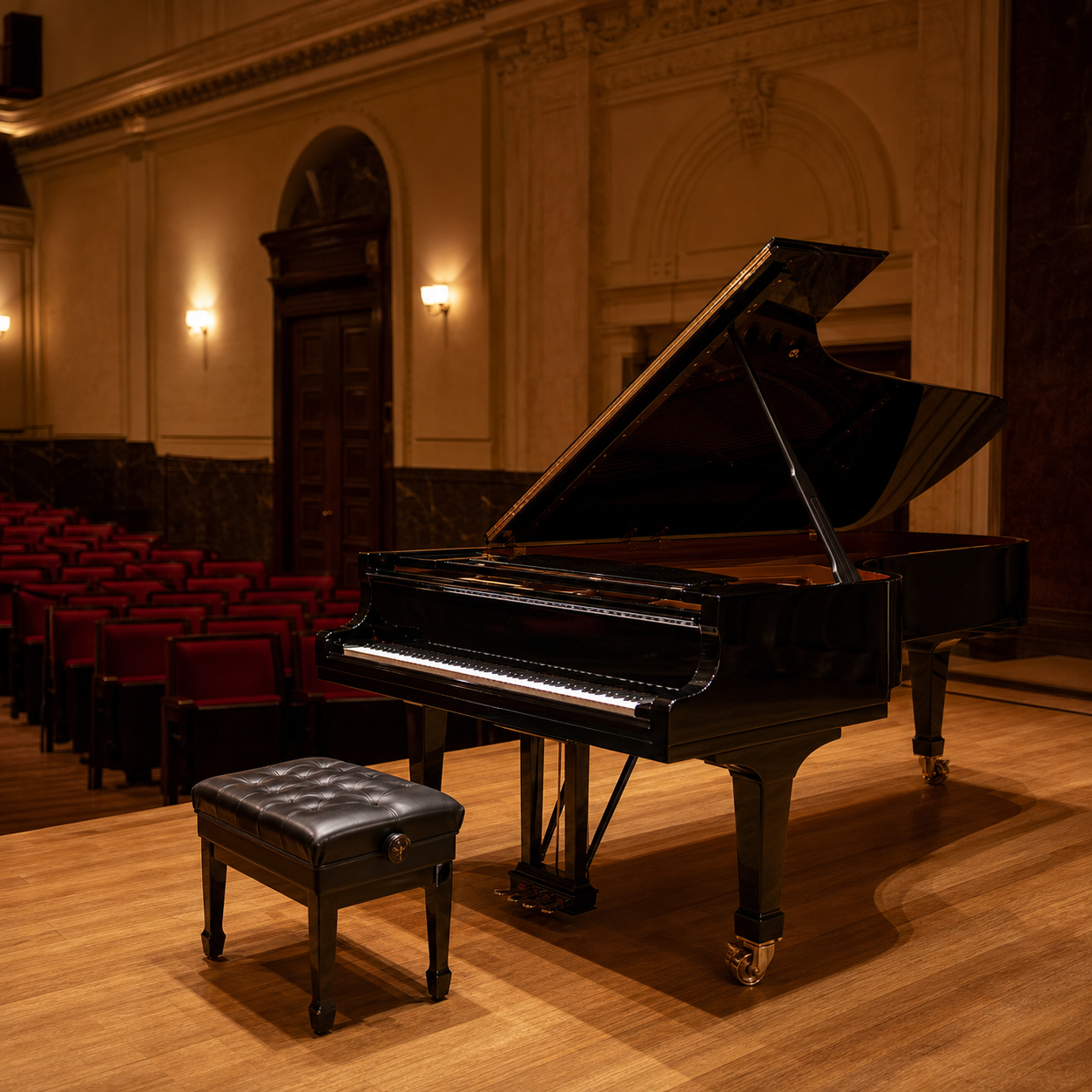
Demidenko’s London story is not a single anecdote. It is a pattern of appearances within the city’s serious piano ecology. Hyperion describes frequent London recitals including the Barbican Concert Hall’s Great Performers series, the International Piano Series at Southbank Centre and the London Pianoforte Series at Wigmore Hall. Onyx repeats that London frame and places it alongside his wider international festival life.
That matters because London can be unforgiving to pianists whose appeal depends only on loudness or image. The city’s main halls attract listeners who know the repertoire and remember comparisons. Demidenko’s reputation has persisted because his musical personality is specific: dark colour, deep sonority, an instinct for the Russian concerto tradition, and a seriousness in Chopin that avoids prettiness.
His official site currently presents press material, recordings and event material, and at the time checked for this article it listed no upcoming events. That absence should not be padded with speculative dates. Serious readers are better served by accurate guidance: check the official artist site, the principal London venue sites and label pages before relying on secondary calendars. Time-sensitive event information was last checked on 1 July 2026.
Technical and Pedagogical Notes for Advanced Students
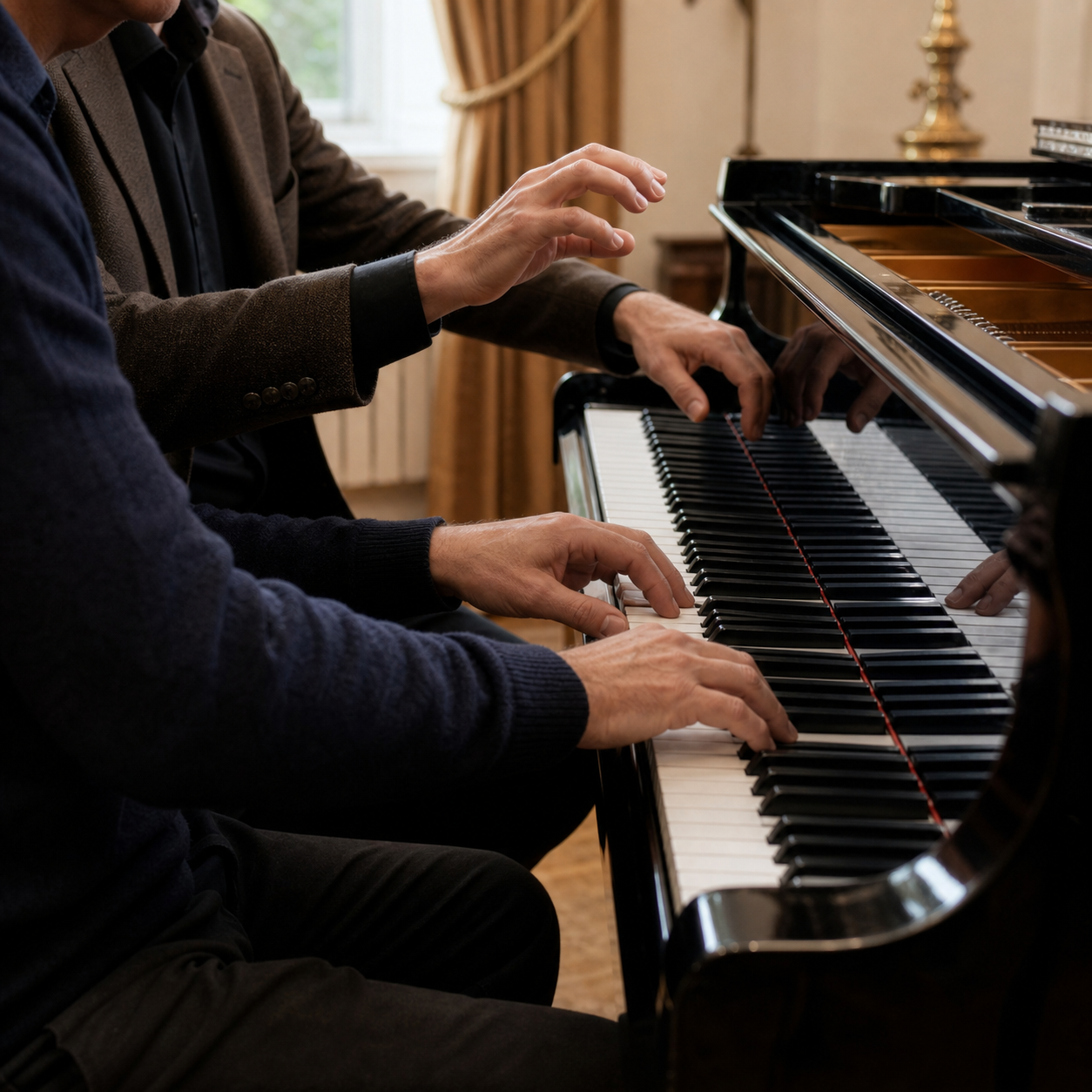
Demidenko’s playing is especially useful for teachers and advanced students because the technical lessons are audible. The first is weight. Romantic sonority does not come from pressing harder at every moment. It comes from directing arm weight into a hierarchy of voices, then releasing what is no longer needed. Students who want a larger sound often add tension before they add organisation.
The second lesson is voicing. In Chopin, Rachmaninov or Schumann, the melody may sit above figuration, inside chords or beneath a glittering surface. Demidenko’s kind of playing asks the student to decide which voice is carrying meaning at each moment. That decision then controls fingering, balance, pedal and tempo flexibility.
The third lesson is rubato. Freedom should grow from musical pressure. If the harmony intensifies, the phrase may need space. If a cadence settles, it may need time to breathe. If every bar is stretched equally, nothing is really expressive. This is where adult piano lessons at WKMT can become more than correction: the lesson becomes a place to test musical judgement.
For students interested in physical organisation, WKMT’s work around rotation and piano technique is relevant. It reminds players that colour and ease depend on movement as much as intention. A beautiful sound is not produced by an abstract wish; it is produced by coordinated contact, release and listening.
Where and When to Hear Him in London
As of 1 July 2026, the official Demidenko site stated that there were no upcoming events listed. That may change, so the practical route is to check the artist site first, then the London venue calendars most relevant to his documented recital history: Wigmore Hall, Southbank Centre and the Barbican. For a pianist of this kind, venue acoustics shape the experience. Wigmore Hall favours detail and speech-like phrasing; the Barbican and Southbank can reveal broader sonority and orchestral scale.
When a recital appears, book with the programme in mind. For Chopin or Schumann, a central seat with clear treble-bass balance may reveal more than a seat chosen only for proximity. For Rachmaninov or Prokofiev, listen for how the hall carries bass resonance. If the programme includes unfamiliar Russian repertoire, spend one evening with the score or a recording before attending. It will change the concert.
Connect concert listening with piano study
If Demidenko’s playing draws your attention to tone, voicing and serious interpretation, WKMT can help you bring those listening habits into your own practice.
FAQ, CTA and Sources on Nikolai Demidenko in London
What is Nikolai Demidenko best known for?
He is best known for Russian and Romantic repertoire, especially Chopin, Rachmaninov, Prokofiev, Medtner and richly coloured recital playing.
Which Nikolai Demidenko recordings should a new listener try first?
Start with Chopin, then move to Rachmaninov or Medtner, before exploring Mussorgsky, Prokofiev and Schumann.
What can advanced piano students learn from Demidenko?
They can learn how voicing, pedal, arm weight and rubato work together to create Romantic sound without losing clarity.
For London pianists, Demidenko’s artistry is a reminder that serious listening and serious practice belong together. Hear the bass, follow the line, notice the colour, then return to the keyboard with more exact questions.
WKMT’s London piano masterclasses and music events give students and listeners a local setting for that same kind of disciplined musical attention.