
 TRIAL LESSON
Pianists, Piano Lessons
Daniil Trifonov in London: Virtuosity, Colour and the Art of Serious Piano Listening
Jul
Daniil Trifonov in London – Complete Guide
WKMT London listening guide
Daniil Trifonov in London: Virtuosity, Colour and the Art of Serious Piano Listening
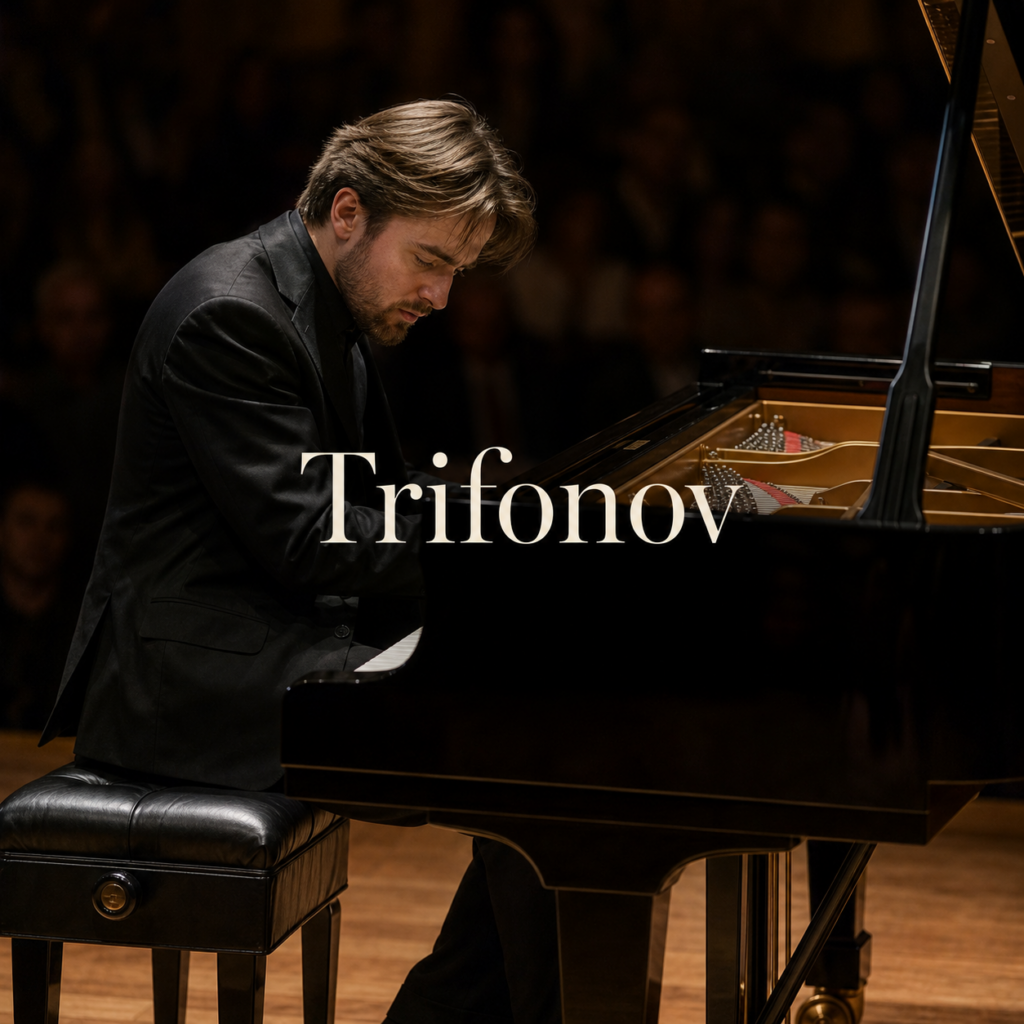
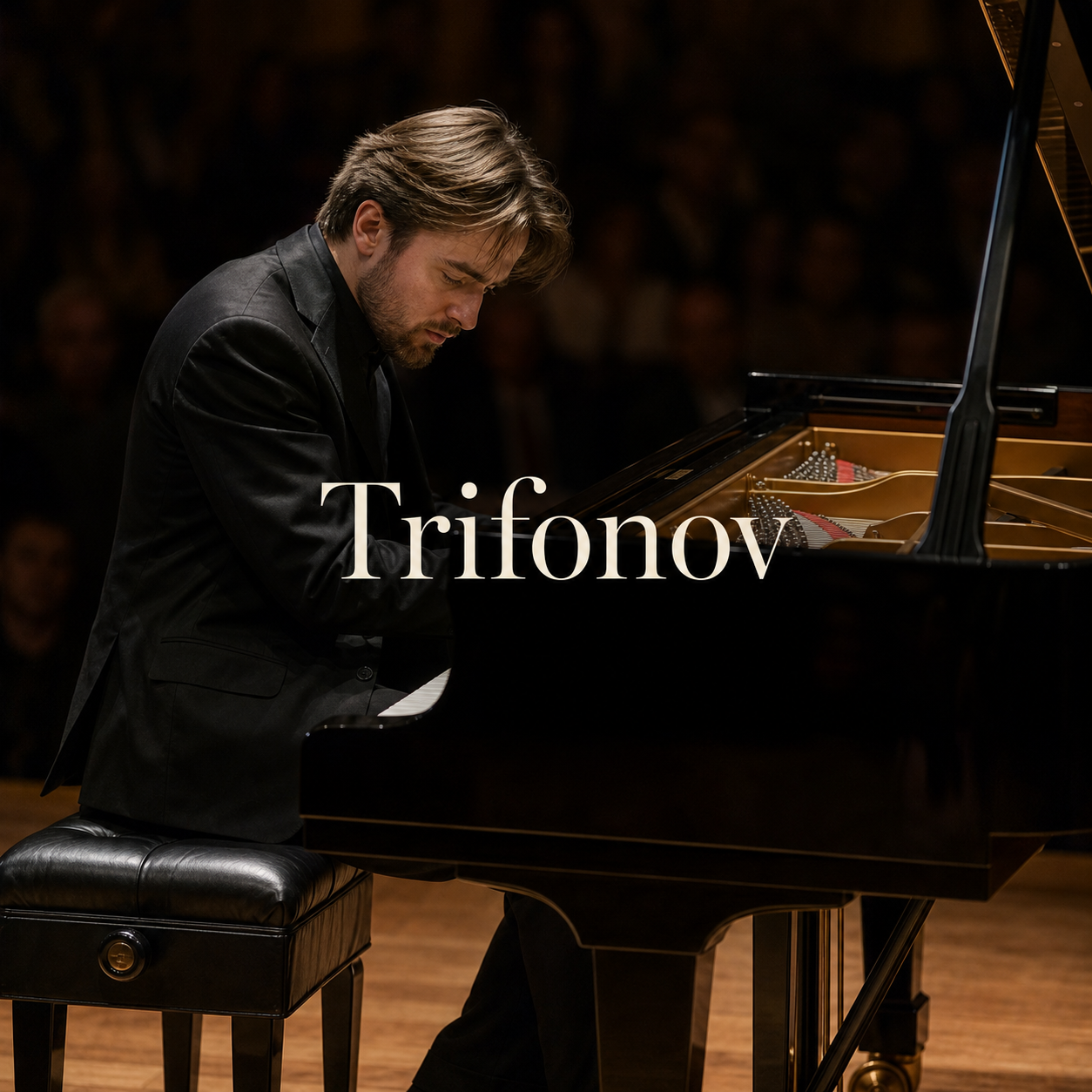
Daniil Trifonov in London means more than a famous pianist passing through a concert diary. It is an invitation to hear modern virtuosity as colour, structure and inward musical argument.
Nizhny Novgorod, 1991
Barbican, Proms, major orchestra culture
Rachmaninoff, Chopin, Liszt, Schumann, Prokofiev
Voicing, pedal colour, scale, volatility
Daniil Trifonov is often introduced through velocity. That is understandable, but incomplete. The more revealing way to listen is to notice how speed is absorbed into tone: the top line brightens without becoming brittle, inner voices flicker into view, and climaxes are prepared through colour rather than mere force. For London listeners accustomed to the acoustic variety of the Barbican, Royal Albert Hall and Southbank venues, that makes him a particularly absorbing artist. His playing asks the ear to move between detail and architecture.
This guide is for listeners who want a richer route into Trifonov’s artistry. It gathers the essential biography, London context, recording landmarks and practical listening cues, while linking that experience to classical piano study in London at WKMT.
Who He Is: Biography, Prizes and Artistic Profile
Trifonov was born in Nizhny Novgorod in 1991 into a musical family. Deutsche Grammophon records that he made his orchestral debut at eight, studied at Moscow’s Gnessin School of Music with Tatiana Zelikman, and then moved to the Cleveland Institute of Music to work with Sergei Babayan. That combination matters: Russian pianistic lineage, American conservatoire discipline and an unusually active interest in composition all feed the breadth of his playing.
His international breakthrough came in 2011, when he won the Arthur Rubinstein International Piano Master Competition and then the International Tchaikovsky Competition, including first prize, Gold Medal and Grand Prix. The competition result explains the sudden visibility; it does not explain the staying power. Trifonov’s later career has been shaped by an exclusive Deutsche Grammophon relationship, a Grammy-winning Liszt set, complete Rachmaninoff concerto recordings, Bach projects, song collaborations and a continuing life as a composer.
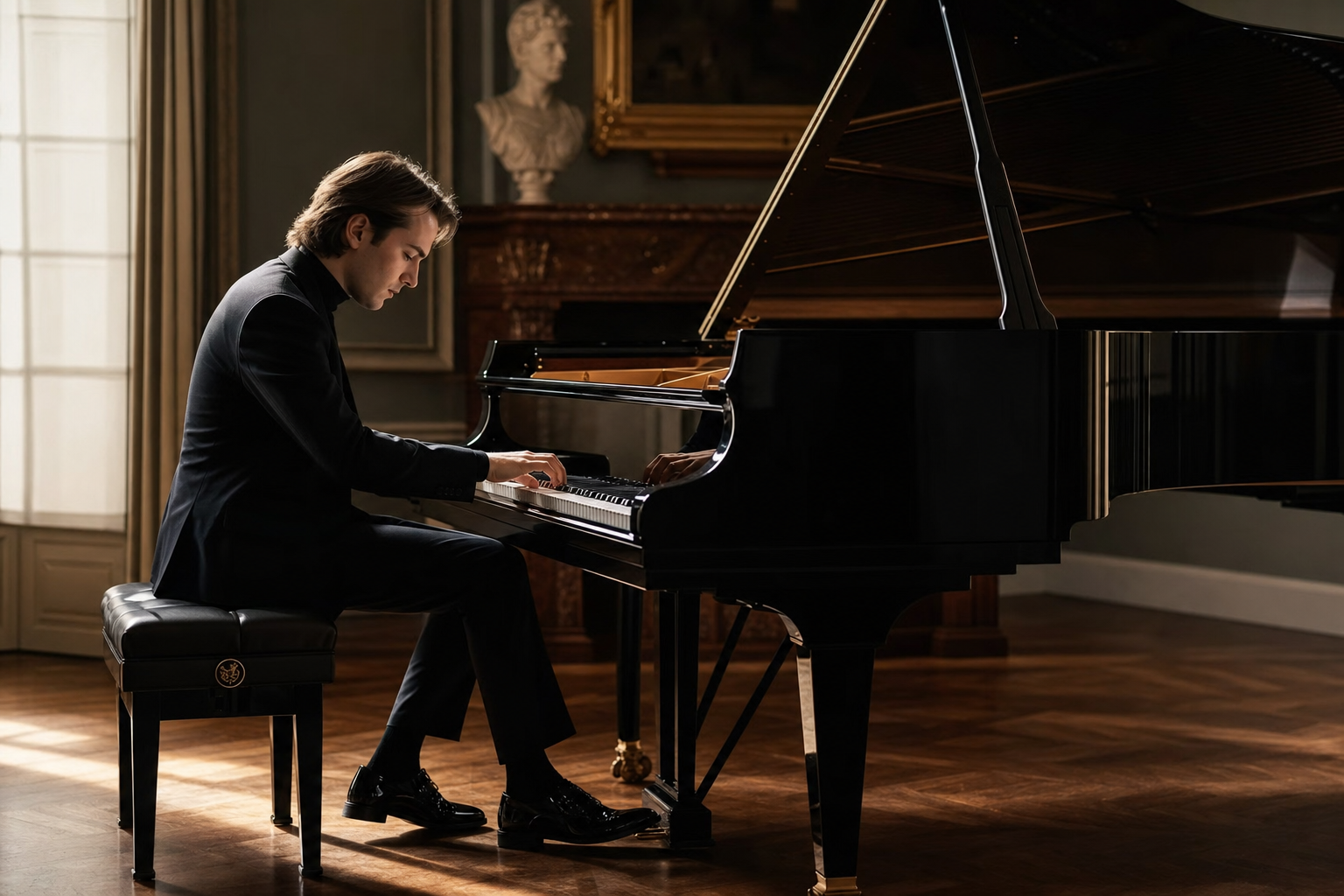
A young virtuoso becomes musically serious when brilliance begins to clarify the score rather than decorate it. Trifonov is worth studying because his surface fire is usually tied to harmonic direction.
Trifonov and London: Halls, Orchestras and Reception
London has heard Trifonov in several revealing frames. The Barbican presented him in the London Symphony Orchestra’s Artist Portrait series in 2019, including an opening concert with Sir Simon Rattle and a later solo recital. Barbican notes from that period place him inside the LSO’s wider programming rather than as a standalone celebrity: this was Trifonov as a musician in dialogue with repertoire, conductors and institutional taste.
The Royal Albert Hall archive documents a 30 July 2023 BBC Proms appearance in which Trifonov gave the UK premiere of Mason Bates’s Piano Concerto with the BBC Symphony Orchestra and Gustavo Gimeno. That detail is important because it shows a different side from the familiar Romantic repertoire: a pianist able to carry contemporary concerto writing in one of London’s most exposed musical spaces. A later Barbican listing with Daniel Harding and the LSO framed him through Schumann’s Piano Concerto and Mahler’s Seventh, again placing colour and Romantic imagination beside symphonic scale.
Those appearances also show why London is a useful listening laboratory. The Barbican can make textures feel clean and analytical; the Royal Albert Hall asks for projection across a vast dome; the Southbank and Wigmore cultures reward different shades of intimacy and rhetoric. A pianist who depends only on brilliance can sound impressive in each space, but not necessarily different. Trifonov’s strongest London profile is more subtle: the same technical equipment becomes a way of negotiating acoustic distance, orchestral density and the attention span of a cultivated audience.
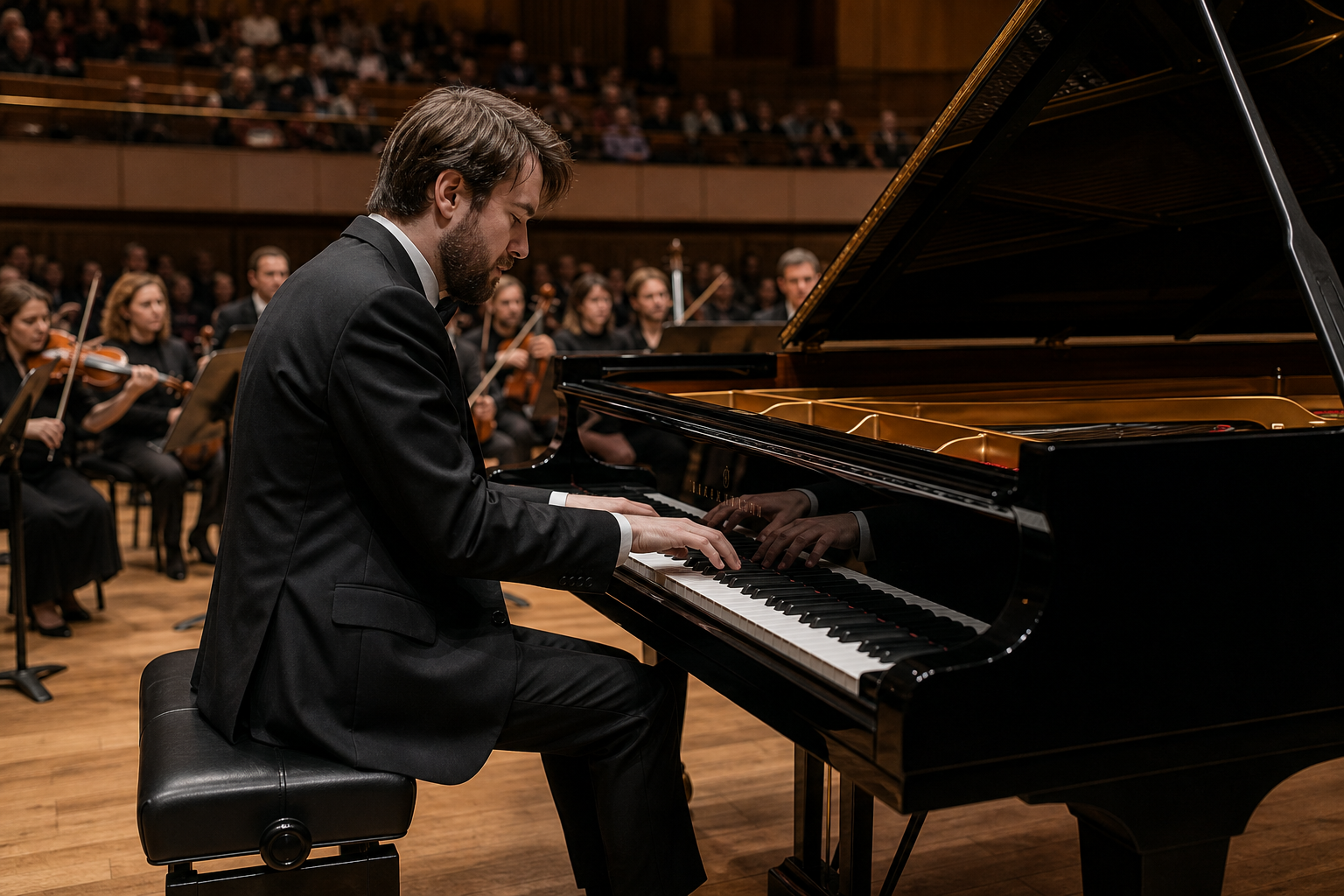
The London question is not whether Trifonov can astonish. It is whether the listener can hear how carefully the astonishment is organised.
Signature Repertoire and Recommended Recordings
For a first route into Trifonov, begin with Rachmaninoff. His complete concerto cycle with The Philadelphia Orchestra and Yannick Nezet-Seguin lets the listener compare the glowing sweep of the Second Concerto with the stormier rhetoric of the Third. The point is not simply power. Notice how often he lets a secondary line disturb the main melody, or how a transition becomes a change in light rather than a gear shift.
Liszt is the other essential doorway. Transcendental, his complete recording of the concert etudes, won the Grammy Award for Best Classical Instrumental Solo. It is a useful test of Trifonov’s pianism because Liszt can invite spectacle at the expense of form. Trifonov’s strongest moments make the spectacle feel architectural. In Chopin, especially in the concerto and late-work repertoire gathered around Chopin Evocations, the ear should follow rubato as grammar: flexible, but rarely casual.
Bach and Tchaikovsky complete the picture. Bach: The Art of Life is valuable because it removes some of the external glamour and exposes Trifonov’s patience with line. The newer Tchaikovsky project, highlighted by Deutsche Grammophon in 2026, is useful for a different reason: it shows his taste for atmosphere, transcription and private fantasy. Taken together, these recordings resist a narrow portrait of Trifonov as a concerto athlete. They present a pianist who thinks in layers, and whose best performances invite repeated listening rather than instant consumption.
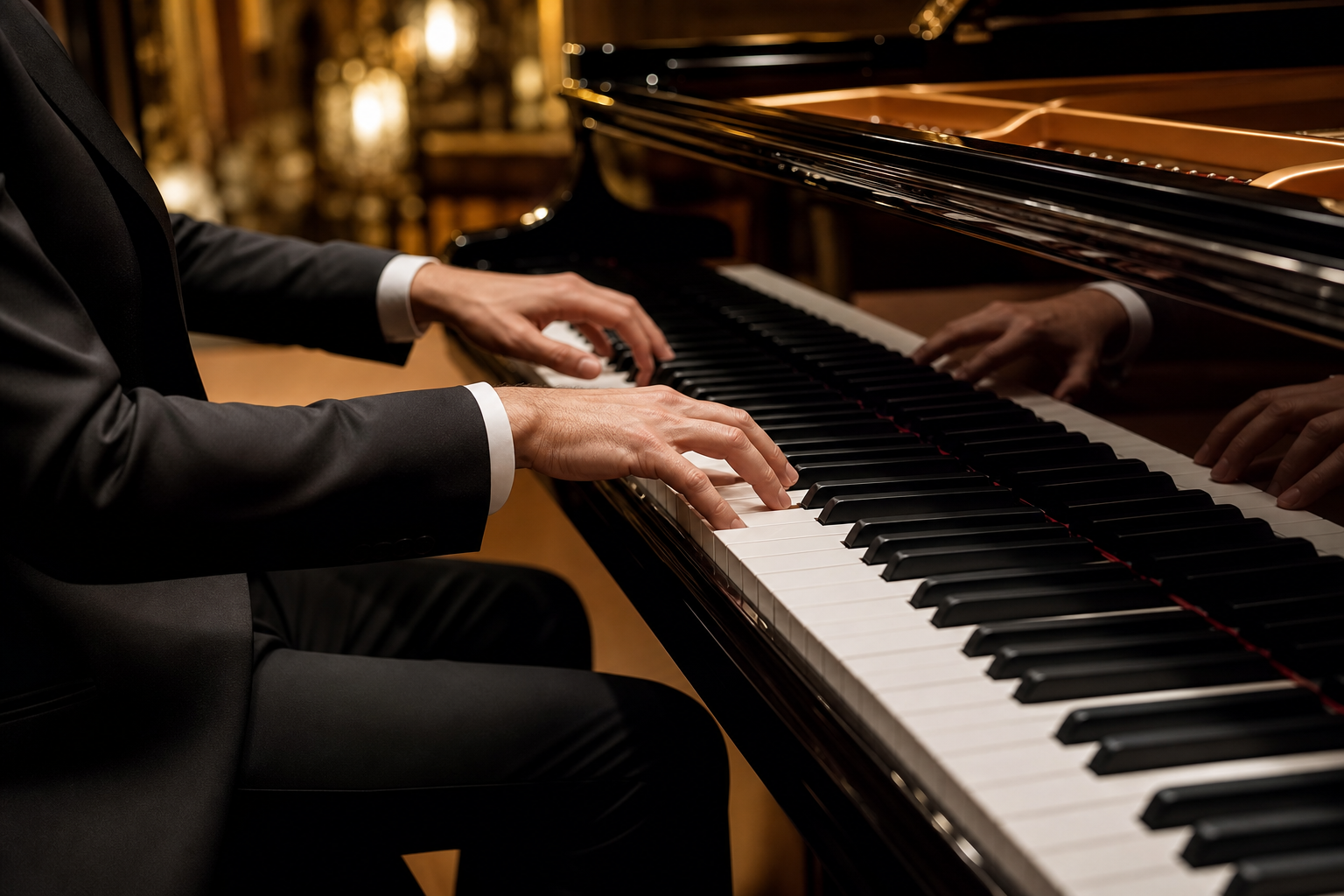
| Recording | Why Start There | Listening Hook |
|---|---|---|
| Destination Rachmaninov | The broadest view of concerto-scale Trifonov. | Hear how accompaniment figures glow under the main line. |
| Transcendental | A complete Liszt etude statement on DG. | Listen for shape inside velocity. |
| Chopin Evocations | Places Chopin beside later composers influenced by him. | Follow the changing weight of the singing line. |
| Bach: The Art of Life | Shows Trifonov away from Romantic display. | Attend to clarity, patience and contrapuntal balance. |
| Tchaikovsky | A newer DG project focused on solo works and transcriptions. | Notice intimacy rather than orchestral bombast. |
How to Listen: Tone, Voicing, Rubato and Pedal Colour
The first listening habit is to separate loudness from intensity. Trifonov can produce enormous climaxes, but the more interesting drama often lies in how he colours the approach. In Rachmaninoff, a bass line may darken before the right hand expands. In Chopin, the melodic line can seem to breathe after a harmonic change rather than before it. In Liszt, a technical cascade often behaves like orchestration: brass brightness, string shimmer, sudden chamber intimacy.
His pedalling is also central. The listener should ask whether resonance is being used to blur, bind or illuminate. When the harmony is stable, a generous pedal can create a halo around the sound; when the harmony shifts quickly, small changes in pedal depth prevent the texture from becoming opaque. This is where an advanced student can learn without imitating mannerisms. The lesson is not to play like Trifonov, but to hear how colour choices can make structure audible.
Rubato is the next question. In lesser hands, flexibility can feel like personality placed on top of the score. In Trifonov’s best playing, tempo freedom tends to reveal tension already present in the phrase. A hesitation before a cadence, a slight acceleration through a sequence, or a held inner harmony should be heard as syntax. London listeners can test this live by following the bass rather than the right hand for a minute or two. If the bass still feels purposeful, the freedom is probably structural rather than decorative.
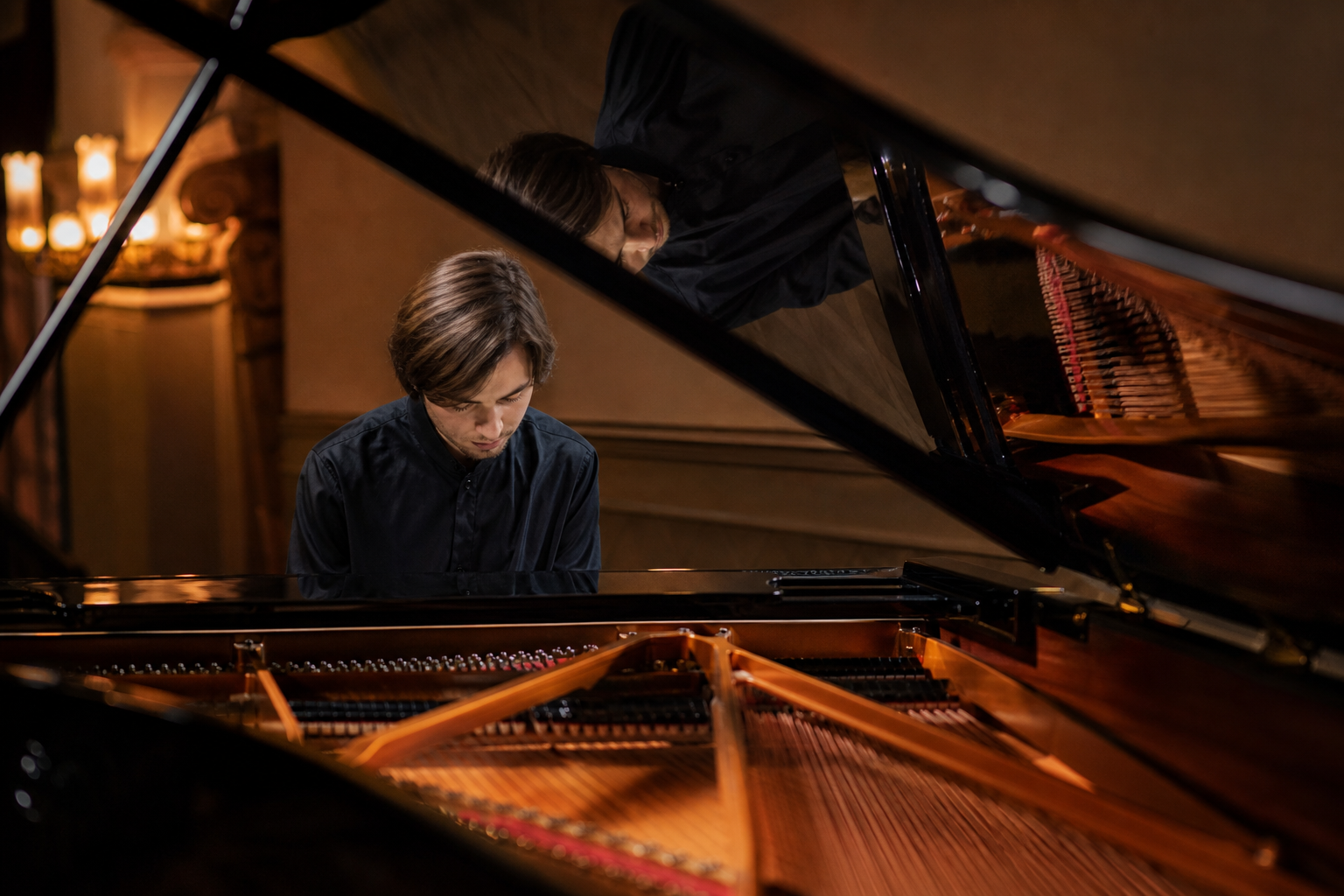
Serious listening is practical. After hearing Trifonov, return to a slow passage in your own repertoire and ask: which voice carries the argument, and which colour makes that argument clear?
Three London Listening Case Studies
Barbican Artist Portrait
The 2019 LSO Artist Portrait placed Trifonov across orchestral and solo settings. Listen for range: not one recital persona, but a musician adjusting scale to programme and acoustic.
Proms 2023
The Royal Albert Hall archive identifies Trifonov as soloist in the UK premiere of Mason Bates’s Piano Concerto. The listening point is rhythmic clarity under huge hall pressure.
Schumann with the LSO
A Barbican listing with Daniel Harding frames Trifonov through Schumann’s single piano concerto: lyric fantasy, orchestral conversation and Romantic inwardness.
Practical London Listening and the WKMT Perspective
For current dates, use the official Daniil Trifonov tour page and the Deutsche Grammophon on-tour listing first; both were checked on 16 July 2026. At that point, the DG listing displayed summer 2026 dates outside London rather than a London appearance. That absence is still useful: London listeners can prepare through recordings and archive listening rather than waiting passively for a ticket release.
At WKMT, this kind of preparation is part of mature musicianship. Students who attend major recitals learn faster when they can name what they hear: balance, projection, pedal colour, voicing, rhetorical timing. Those are not abstract critical terms; they are the same musical questions that shape a serious lesson, whether the student is a young professional, an advanced amateur or an adult returning to the piano.
A practical approach is simple. Choose one Trifonov recording before the concert announcement, make a few notes about colour and pacing, then compare those impressions with a live programme when London dates return. The aim is not to become a critic, but to become a more exact listener. That precision changes how one practises: a chord is no longer merely correct or incorrect; it has weight, direction, temperature and a role in the larger sentence.
Study Serious Piano Listening in London
If Trifonov’s playing makes you listen differently, WKMT can help turn that listening into clearer interpretation, tone control and musical confidence at the piano.
Short FAQs
What is Daniil Trifonov best known for?
He is best known as a pianist of exceptional virtuosity and colour, with major recognition in Rachmaninoff, Liszt, Chopin, Bach and contemporary concerto repertoire.
Has Daniil Trifonov performed in London?
Yes. Documented London contexts include the Barbican’s LSO Artist Portrait series and a 2023 BBC Proms appearance at the Royal Albert Hall.
Which Trifonov recording should a new listener start with?
Start with the Rachmaninoff concerto recordings for orchestral scale, then move to Transcendental for Liszt and Bach: The Art of Life for contrapuntal clarity.
Sources and Further Listening
- Daniil Trifonov official website and news, last checked 16 July 2026: daniiltrifonov.com
- Deutsche Grammophon artist biography and discography, last checked 16 July 2026: DG biography
- Deutsche Grammophon on-tour listing, last checked 16 July 2026: DG tour dates
- Barbican, LSO Artist Portrait with Sir Simon Rattle, last checked 16 July 2026: Barbican listing
- Barbican, LSO/Daniel Harding concert listing, last checked 16 July 2026: Barbican 2025 listing
- Royal Albert Hall archive, BBC Proms 2023 performance record, last checked 16 July 2026: Royal Albert Hall archive
- WKMT page and post sitemaps consulted for internal linking, last checked 16 July 2026.