
 TRIAL LESSON
Pianists, Piano Lessons
Igor Levit in London: Beethoven, Bach and the Art of Serious Piano Listening

Jul
Igor Levit in London – Complete Guide
WKMT London Listening Guide
Igor Levit in London: Beethoven, Bach and the Art of Serious Piano Listening
Igor Levit in London: a cultured guide to Beethoven, Bach, recent London appearances, recordings and serious piano listening through a WKMT lens.

Igor Levit belongs to the rare group of pianists whose concerts feel less like recitals than public acts of concentration. In London, where piano culture moves between Wigmore Hall intimacy, Southbank scale and the wider civic life of classical music, his Beethoven and Bach speak especially clearly.
Born in Nizhni Novgorod and raised in Germany from childhood, Levit studied in Hanover and later became a professor at the Hochschule fur Musik, Theater und Medien Hannover. His official biography records major recognition including the 2018 Gilmore Artist Award, Gramophone’s Artist of the Year 2020, BBC Music Magazine awards and the Order of Merit of the Federal Republic of Germany. Those facts matter, but they do not explain the charge of the playing. The charge comes from seriousness: a refusal to separate sound from thought.
For adult pianists, Levit is valuable because he makes interpretation audible. You hear architecture, pressure, release, courage and restraint, not a polished surface detached from musical argument.
Why Igor Levit Matters Now
Levit’s public profile rests on three linked qualities. First, there is the repertoire: Beethoven sonatas, Bach partitas, Brahms, Liszt, Shostakovich, Rzewski and contemporary projects that ask listeners to stay with long forms. Secondly, there is his recording career with Sony Classical, from the 2013 late Beethoven sonatas to the 2019 complete Beethoven cycle, the 2021 On DSCH, the 2023 Fantasia and the 2024 Brahms release with Christian Thielemann and the Vienna Philharmonic. Thirdly, there is civic presence: the lockdown house concerts, the Southbank Vexations project, and a public language that treats music as part of culture rather than ornament.
That combination gives the search for “Igor Levit” a richer intent than biography alone. Readers want facts, but they also want help: what should I hear, which recordings should I start with, and why does this pianist matter in a London hall?
Levit’s London Connections
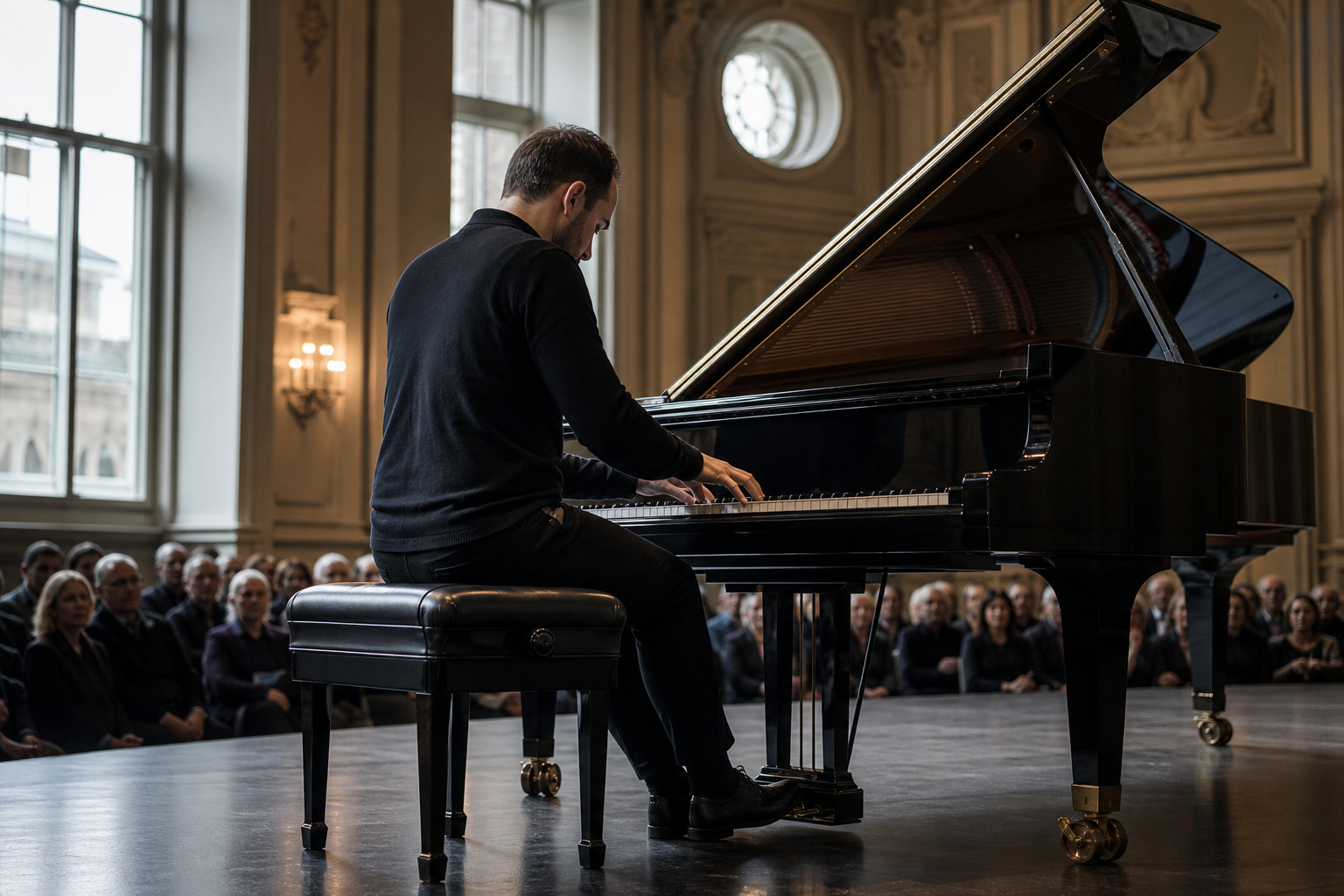
London has heard Levit in several complementary frames. Wigmore Hall lists four Levit events for May and June 2026, including chamber collaborations and an Anniversary Gala Concert, with archived appearances also attached to the artist page. Southbank Centre records his Royal Festival Hall programme of Bach, Brahms and Beethoven, and also the 2025 Vexations performance at Queen Elizabeth Hall, directed with Marina Abramovic. Its event page describes Satie’s one-page work and the instruction to repeat the material 840 times, translating into a performance lasting between 16 and 20 hours.
That London context matters because it shows the scale of Levit’s artistic identity. He can stand inside the traditional recital economy, then step into a durational event that asks the public to think about time, silence and endurance. The venues change, but the premise remains: listening is an active discipline.
Chamber scale, detailed sound, Beethoven and late-style intensity.
Large-hall projection, programme architecture, public concert culture.
Experimental endurance, contemporary framing, listening as ritual.
Beethoven: Sonatas and What to Listen For
Levit’s Beethoven is not decorative Beethoven. Sony Classical’s release note for the complete sonatas says the 32-sonata project represented years of sustained work and was released in September 2019. The Guardian’s 2017 review of his Wigmore Hall cycle described the final recital as bold, technically outstanding and full of thought, while noting the shock tactics and dramatic contrasts that make his Beethoven personal rather than pious.
For a first listening exercise, take Op. 109. Do not begin by asking whether the tempo is “right”. Listen instead for how the opening seems to breathe, how sudden contrast is made structural, and how the closing variations become a test of patience. Adult pianists at WKMT adult piano lessons often work on exactly this distinction: playing the notes is one task; revealing why the next event matters is another.
Bach: Partitas, Counterpoint and Modern Perspective
Bach asks a different kind of honesty. Levit’s Bach discography includes the Partitas and later Bach-related albums shaped by arrangement, memory and reflection. What is compelling is not a museum idea of Baroque correctness, but a modern pianist’s attempt to make counterpoint transparent on an instrument Bach did not know in this form.
Listen to a partita movement as if each line were a human voice entering a room. The danger on the modern piano is weight: too much pedal and the counterpoint thickens; too little singing tone and it becomes dry. Levit’s best Bach listening teaches adult players to separate clarity from thinness. For WKMT readers interested in this craft, our article on why musicians study counterpoint is a useful companion.
In Bach, notice whether the left hand is accompaniment or character. A serious pianist makes the bass speak without turning every entry into an announcement.
Liszt, Satie and Contemporary Repertoire
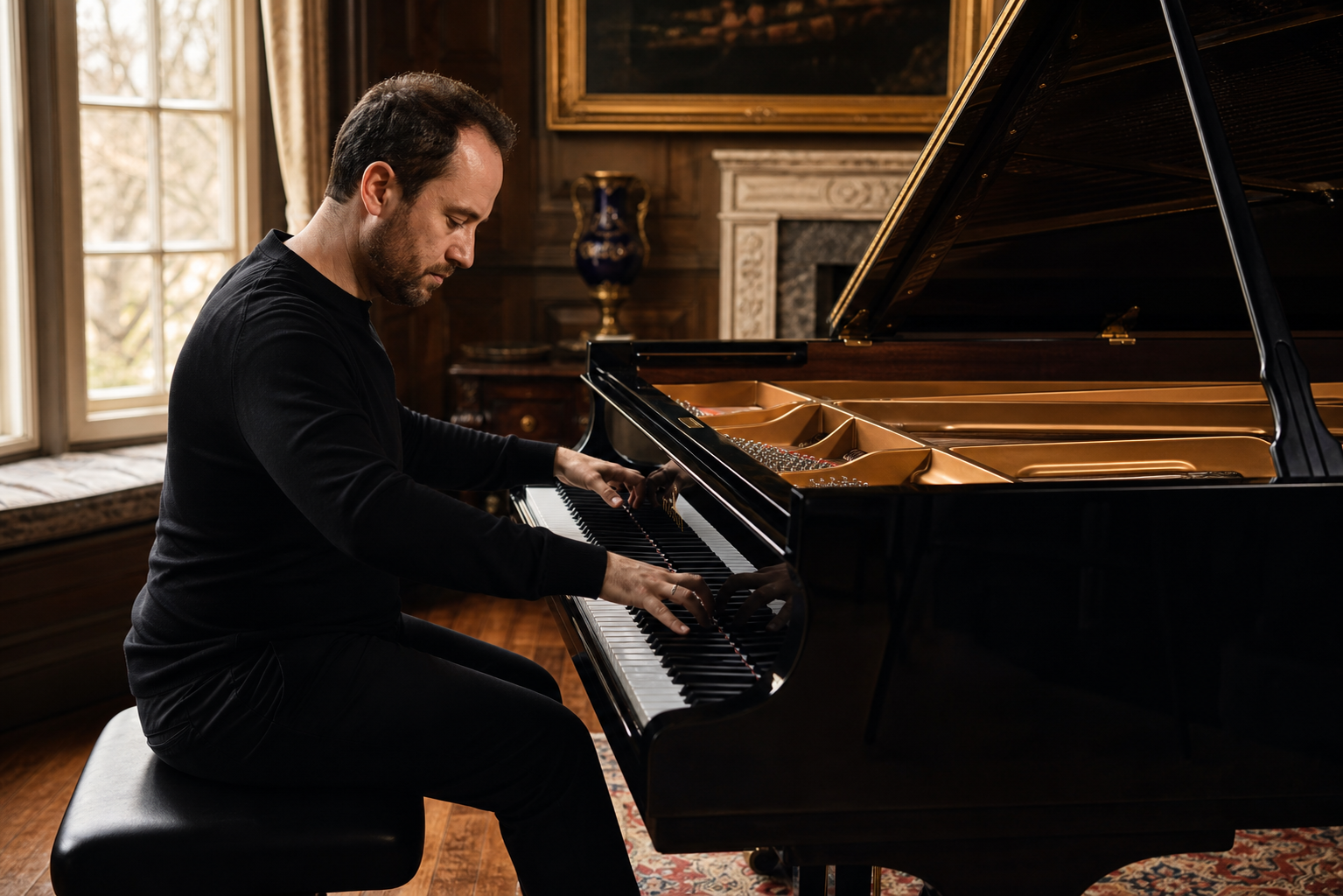
Levit’s programming often shows how virtuosity can become thought. Liszt is present through transcription and transformation, not only brilliance. In the Southbank Bach, Brahms and Beethoven programme, Beethoven’s Seventh Symphony appeared in Liszt’s piano transcription, giving the instrument orchestral responsibility. In the Vexations project, virtuosity meant endurance and concentration rather than speed.
This is valuable for students because it widens the meaning of technique. Technique is not merely what the hand can do quickly. It is also what the mind can sustain, how the ear orders time, and how the body keeps intention alive over a long span.
Recordings: A Practical Listening Path
| Recording | Start by listening for |
|---|---|
| Beethoven: late sonatas | How late style moves between intimacy, rupture and release. |
| Beethoven: complete sonatas | The long arc of a complete cycle rather than favourite isolated works. |
| Bach: Partitas | Voices, dance rhythm and tonal cleanliness. |
| On DSCH | Modernist stamina, bleakness, ritual and structural memory. |
| Brahms with Thielemann | Density, warmth and large-form command. |
Use the recordings as a route, not a shopping list. Begin with Beethoven if you want structure; Bach if you want clarity; On DSCH if you want to test concentration; Brahms if you want breadth of sonority.
Critical Reception and London Listening
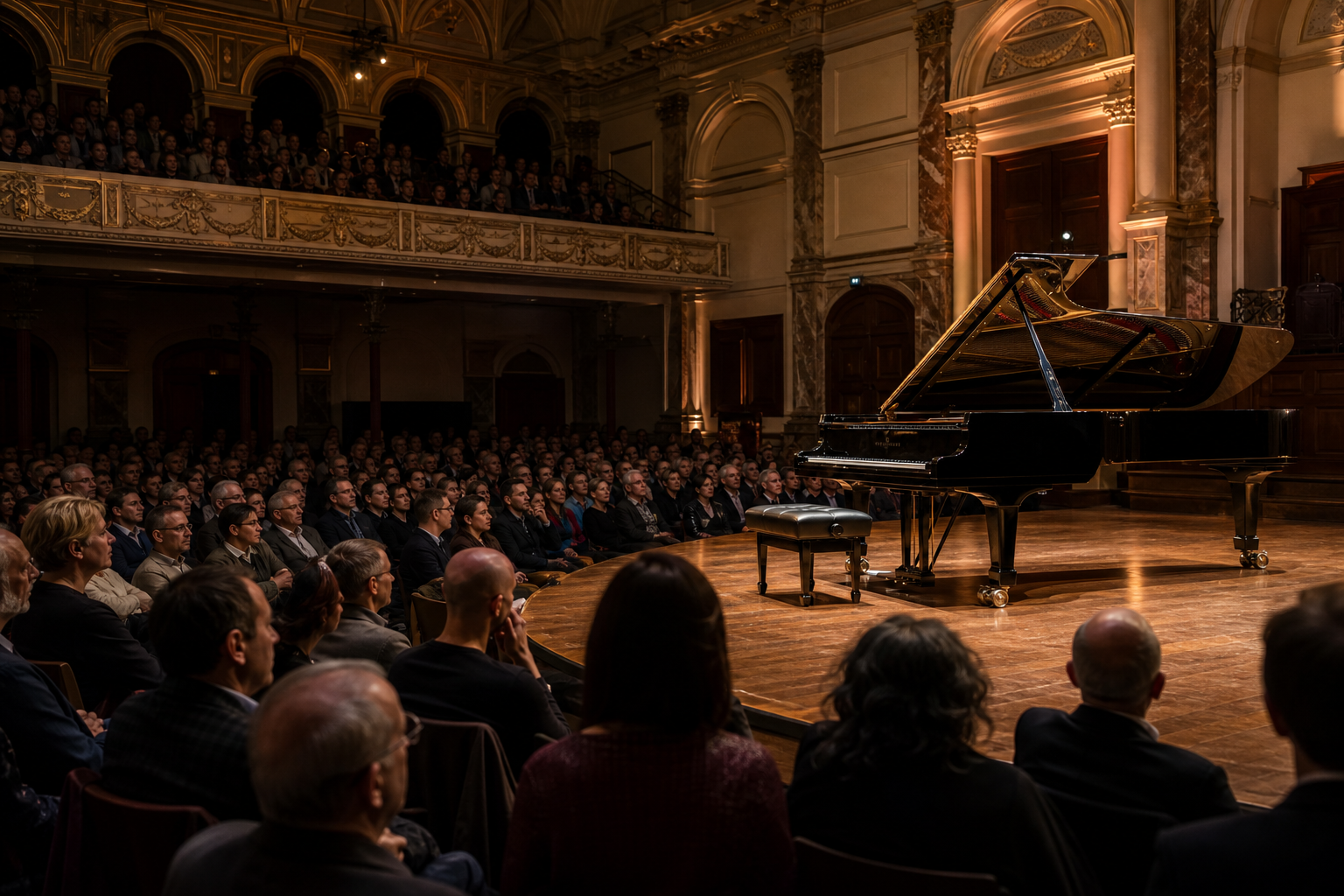
UK reception of Levit tends to emphasise mind and risk. Southbank’s event page cites the Financial Times on his demanding intellectual goals and Gramophone on rigour and technique. The Guardian’s Wigmore Hall review is more nuanced: admiring the thought and technical command while hearing moments of overstatement. That nuance is helpful. It saves Levit from celebrity flattening and gives listeners permission to disagree intelligently.
Serious listening begins when admiration leaves room for judgement.
That is precisely why he belongs in a WKMT listening guide. A strong pianist does not ask for passive admiration. He asks you to hear, question and return.
How to Experience Levit in London
For future appearances, check the official Igor Levit calendar, Wigmore Hall, Southbank Centre and major London venue listings. Wigmore Hall’s artist page currently lists London events in May and June 2026 and has announced a 2026/27 season including a complete Beethoven sonata cycle across 2027. Southbank’s recent records show both traditional recital programming and the 2025 Vexations project.
If you attend, prepare lightly. Read the programme, choose one movement to know in advance, then listen in the hall for touch, timing and silence. For more London context, WKMT’s guide to the best London concert halls helps place venues inside the city’s wider piano culture.
Study serious piano listening in London
WKMT’s London piano teaching connects repertoire, interpretation and listening habits for students who want more than mechanical progress.
What Piano Students Can Learn
The main lesson is not to imitate Levit’s gestures. It is to listen for musical consequence. In Beethoven, ask what a contrast proves. In Bach, ask which voice carries the argument. In Liszt, ask whether brilliance clarifies or distracts. In contemporary repertoire, ask whether duration changes the listener’s responsibility.
Those questions are close to the work of serious study. They also connect naturally with WKMT London piano masterclasses and analytical work such as classical sonata analysis. The pianist’s task is to make form audible and human.
Quick Facts and Sources on Igor Levit in London
- Born in Nizhni Novgorod; moved to Germany as a child; studied in Hanover.
- Professor at the University of Music, Theatre and Media Hanover from 2019.
- 2018 Gilmore Artist Award recipient; Gramophone Artist of the Year 2020.
- Key recordings include Bach Partitas, Beethoven late sonatas, Beethoven complete sonatas, On DSCH, Fantasia and Brahms.
- London reference points include Wigmore Hall, Royal Festival Hall and Queen Elizabeth Hall.
Sources for Igor Levit, Igor Levit official site; Wigmore Hall artist page; Southbank Centre Bach, Brahms and Beethoven event; Southbank Centre Vexations event; Sony Classical Beethoven complete sonatas; Sony Classical On DSCH; The Guardian Wigmore Hall Beethoven review.