
 TRIAL LESSON
Pianists, Piano Lessons
Arcadi Volodos in London: Colour, Virtuosity and the Art of Serious Piano Listening
Jul
Arcadi Volodos in London Complete Guide
WKMT London listening guide
Arcadi Volodos in London: Colour, Virtuosity and the Art of Serious Piano Listening
A cultured guide to Arcadi Volodos recordings, London recital context, tone colour and the listening habits that serious piano students can bring back to the keyboard.
Why Arcadi Volodos Matters Today
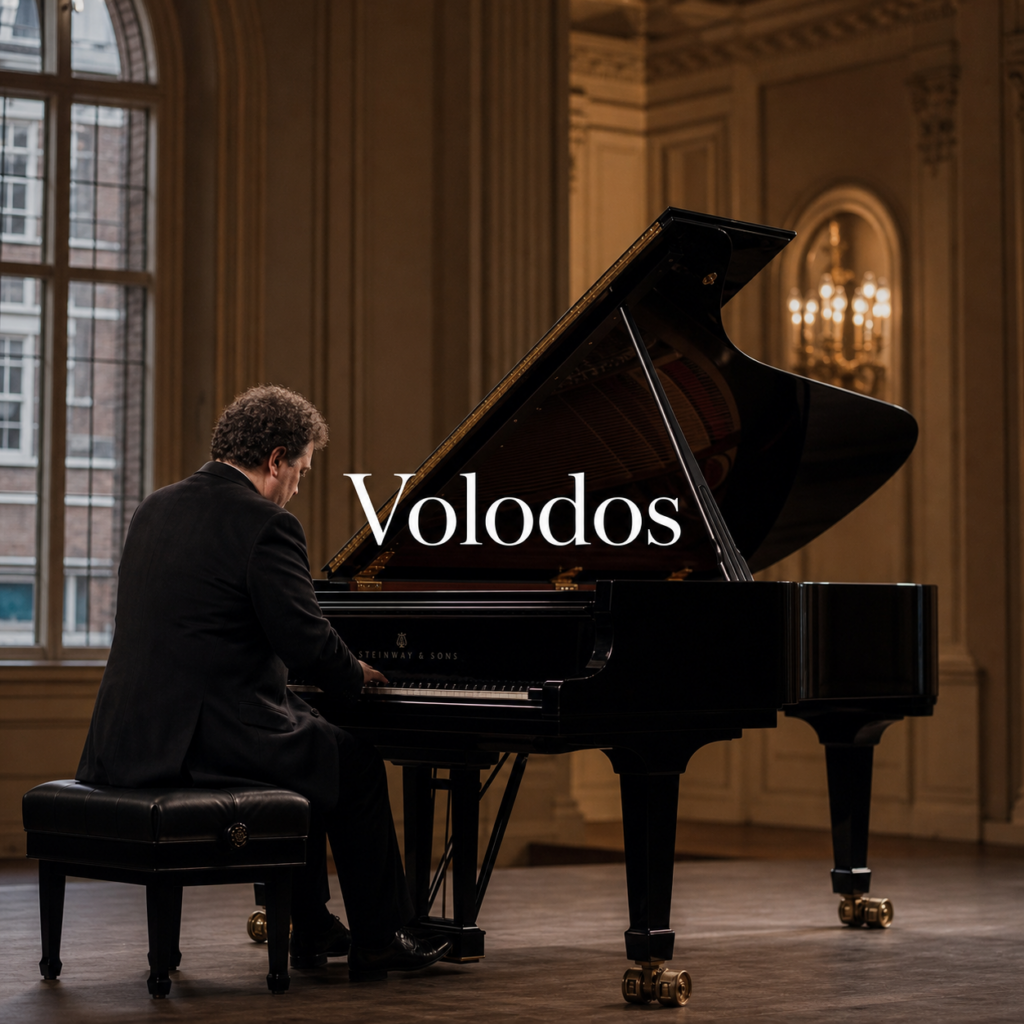
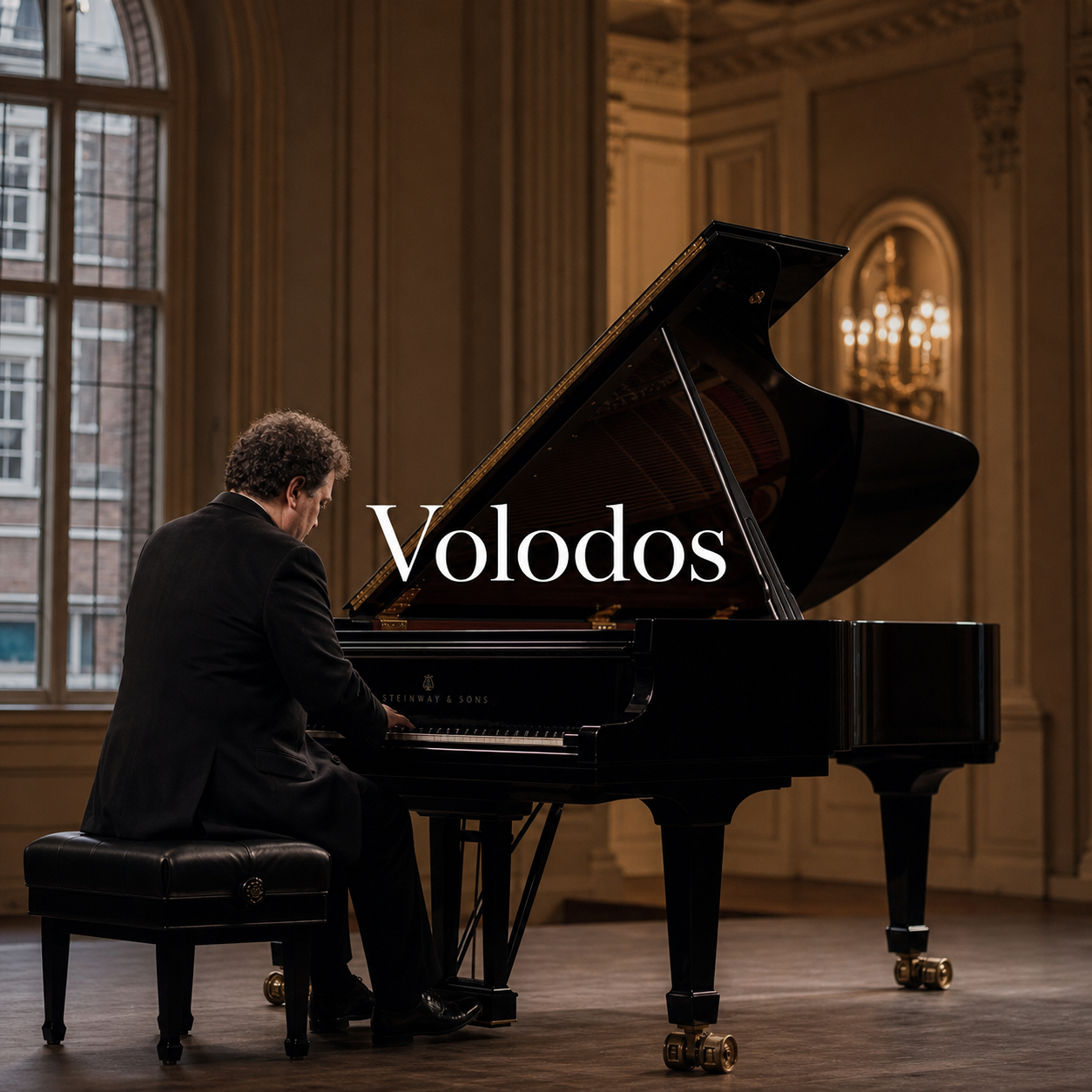
Arcadi Volodos is searched because listeners want more than a short biography. They want to know why his name carries such authority among serious pianists, which recordings to hear first, and whether the legend of his sound is still alive in the concert hall. Born in St Petersburg in 1972, he first studied singing and conducting, then began serious piano training in 1987 before continuing in Moscow, Paris and Madrid. Sony Classical describes his career after the 1996 New York debut as one of international recital and concerto appearances with leading orchestras and conductors.
That late pianistic start matters. Volodos is often introduced as a virtuoso, but his mature artistry is better understood as command of proportion, voicing and colour. The official and management biographies list Schubert, Schumann, Brahms, Beethoven, Liszt, Rachmaninoff, Scriabin, Prokofiev, Ravel, Mompou, Lecuona and de Falla among his core repertoire. The range is broad, but the public image is selective: fewer albums, carefully prepared recital programmes, and an insistence that sound itself carries musical argument.
For students, Volodos is useful because he changes the hierarchy of attention. Speed impresses for a moment; voicing, pedalling and harmonic patience teach the ear how to listen for years.
Volodos and London: Recitals, Reviews and Cultural Context
Volodos has a London history that suits a WKMT article because London listeners hear pianists through a distinctive network of halls, orchestras and critical habits. The Royal Albert Hall archive records Arkady Volodos as soloist at BBC Proms Prom 61 on 3 September 1997, with the Royal Concertgebouw Orchestra and Riccardo Chailly in Rachmaninoff’s Piano Concerto No. 2. That is not merely a date: it places him in the Proms tradition very early in the public phase of his international career.
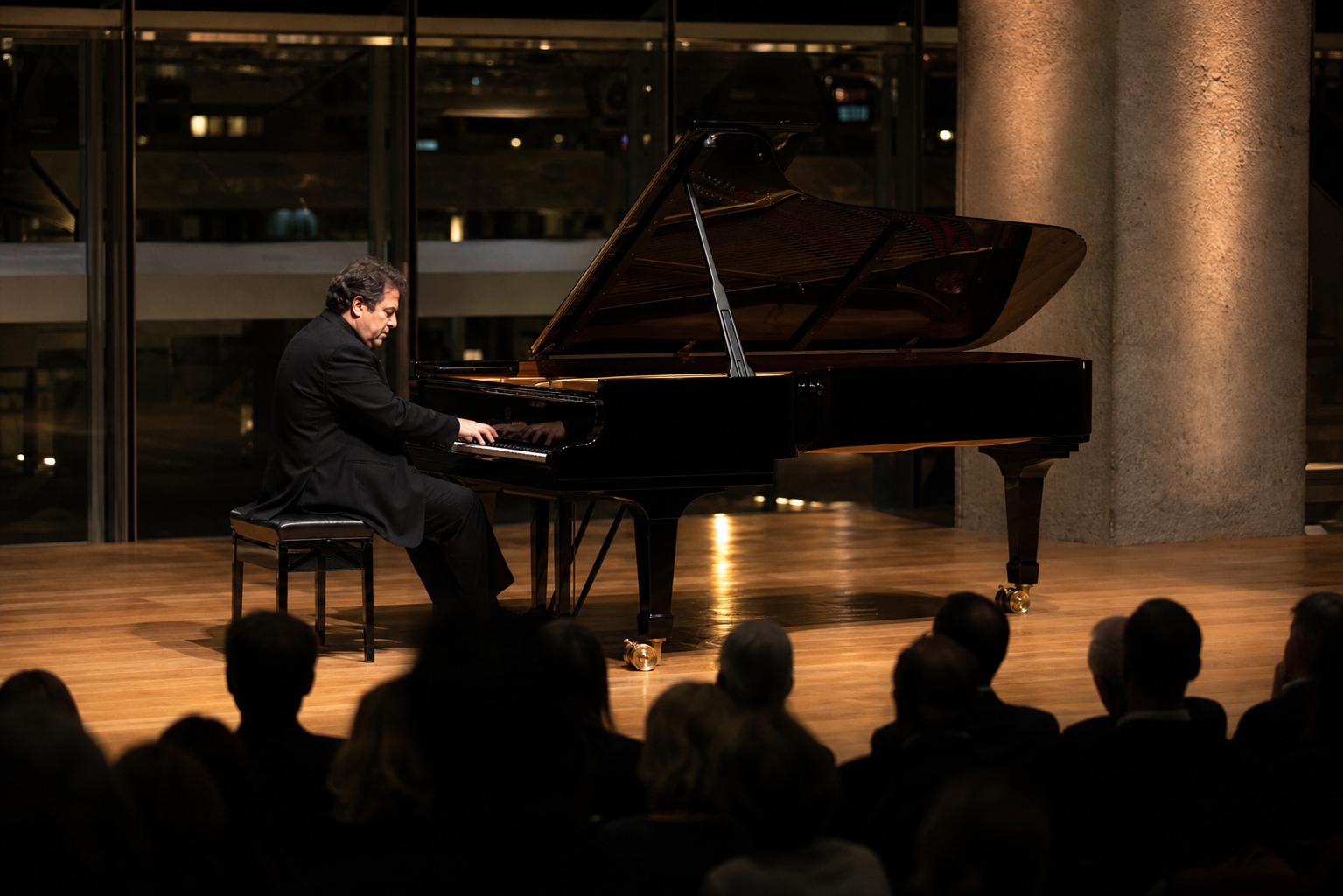
More recently, the Barbican listed Arcadi Volodos in Recital for 12 December 2025, with Schubert’s Sonata in A major D959, Schumann’s Davidsbundlertanze and Volodos’s arrangement of Liszt’s Hungarian Rhapsody No. 13. The same page described the evening as a return to the Barbican and a journey into the Romantic spirit. The Barbican’s recital listings, last checked on 17 July 2026, also show a future Volodos recital on 16 December 2026 with Schubert and Chopin.
That London context is important for readers deciding how to hear him. The Barbican Hall rewards concentration on long lines and sonority rather than instant dazzle. A Volodos recital in that setting asks the listener to notice how a bass note decays, how inner voices change temperature, and how a large phrase can seem to breathe without losing architectural control.
Signature Repertoire and What to Listen For
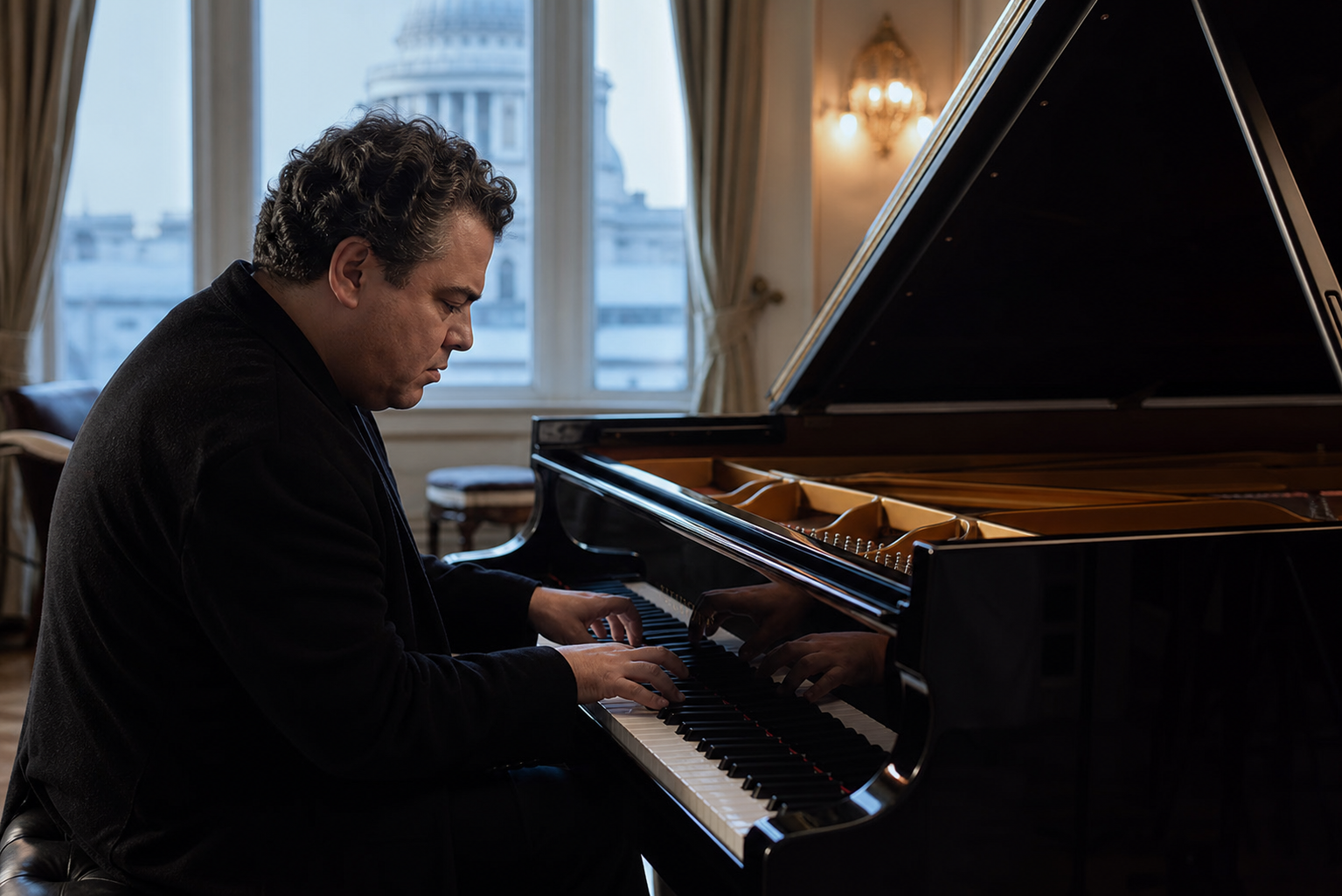
With Volodos, the first question is not “How fast can he play?” but “What does the sound make audible?” In Brahms, listen for bass weight that never becomes thick. In Schubert, listen for tempo flexibility that keeps the line human without breaking the form. In Mompou, listen for colour as an expressive language in itself. In Liszt and transcription repertoire, listen for orchestral imagination translated into the physical reality of two hands.
Sony’s 2026 note on the Schubert D850 and Schumann Kinderszenen album is revealing because it frames Volodos around silence, transition and half-tones. The release presents the album as his first after several years, recorded live at the Fondation Louis Vuitton in Paris, and quotes Volodos on Schubert’s transparency and on tempo as musical language rather than equation. Those remarks match the strongest impression of his mature playing: the piano can thunder, but the central drama often happens between one colour and the next.
Follow the middle register. Volodos often lets the melody glow from inside the texture rather than placing it on top like a spotlight. That habit makes Brahms and Schubert sound less declamatory and more confessional.
For pianists, this is directly practical. The WKMT post on tone configuration in playing and study is a natural companion because Volodos shows how touch, arm weight, pedal and listening cannot be separated. Likewise, his Lisztian inheritance connects naturally with WKMT’s article on the Liszt tradition and modern piano technique.
Essential Arcadi Volodos Recordings: A Listening Path
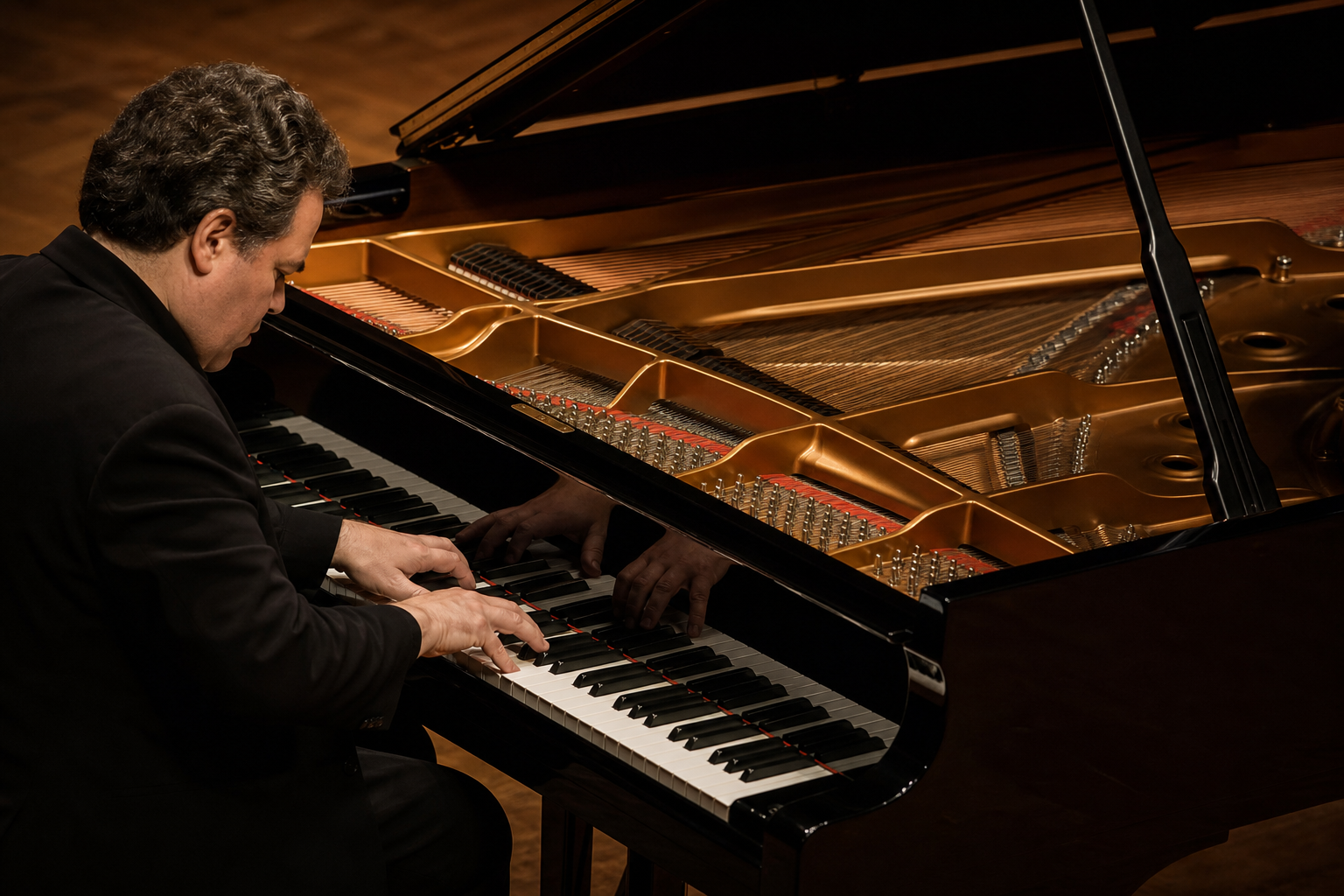
The most useful route through Arcadi Volodos recordings is not chronological. Begin with the mature colour world, then return to the earlier virtuoso profile. Volodos Plays Brahms, released by Sony Classical in 2017, is central. His official site notes that it was recorded at Teldex Studios in Berlin between 2015 and 2017 and includes Brahms’s late piano pieces. It also records the Diapason d’Or and Edison Klassiek recognition for the album. Sony adds that the recording later received the 2018 Gramophone Award for instrumental recording.
Next, hear the Schubert recordings. Sony lists the 2019 Schubert D959 album and the 2026 Schubert D850/Schumann Kinderszenen release. These albums are invaluable for learning how a pianist can allow tempo to breathe while keeping the phrase morally clear. Then return to Volodos in Vienna and Volodos Plays Liszt, where the older image of Volodos as a sovereign virtuoso still has pedagogical value, especially for colour, projection and large-scale continuity.
| Listening stage | Recording focus | What to study |
|---|---|---|
| First encounter | Brahms late piano pieces | Bass warmth, inner voices, controlled melancholy |
| Deep listening | Schubert sonatas | Flexible tempo, transitions, silence after cadence |
| Virtuoso context | Liszt and transcription repertoire | Orchestral imagination, register contrast, touch variety |
Annotated Discography: What Each Album Teaches
A compact Volodos discography can be more useful than a long list. Volodos Plays Brahms teaches restraint: the hand must carry a full sound without allowing chordal textures to become heavy. For an adult pianist, the immediate lesson is voicing discipline. Practise a Brahms intermezzo slowly enough to hear the bass, alto and melody as separate colours, then decide which one actually needs to lead.
The Schubert recordings teach another skill: how to sustain time without over-explaining it. Schubert can become square if every repeat is treated identically, but it can also lose dignity if tempo changes are sentimental. Volodos tends to make transitions feel discovered rather than announced. That is precisely the territory many serious students find difficult, because it asks for confidence without exaggeration.
The Liszt and transcription recordings belong in the listening path because they explain the scale of his imagination. Here, brilliance is not a circus effect. The point is how registers answer each other, how octaves can suggest brass, how filigree can become atmosphere rather than display. If you listen with that in mind, the technical glamour becomes musically useful.
A Concertgoer’s Map: From Volodos to Better Piano Listening
A strong Volodos programme often places the listener inside Romantic ambiguity: Schubert’s long-distance architecture, Schumann’s divided personalities, Brahms’s late inwardness, Liszt’s transfigured theatre. The best preparation is not to memorise facts. It is to choose two or three things to hear with unusual patience.
Listen once without reading. Mark the places where time seems to stop, then return to the score or programme note.
Let the acoustic guide you. Notice whether soft playing travels, and whether bass sonority clarifies or clouds the harmony.
Write one sentence about sound, one about structure, and one about emotional temperature. That is enough to make listening cumulative.
London is particularly rich for this kind of listening. A reader who enjoys Volodos will likely also benefit from WKMT’s guide to the best London concert halls, because venue acoustics shape how piano colour is perceived. The same reader may find adult piano lessons at WKMT useful if listening has begun to create practical questions at the keyboard.
After hearing Volodos, do not rush to imitate his rubato. First ask a smaller question: can you make the top voice, inner voice and bass sound like three different instruments while keeping one physical gesture? That question is enough for a whole week’s practice.
For serious adult learners
Turn Listening Into Study
If Volodos’s playing makes you hear tone, voicing and pedalling with new attention, WKMT can help you translate those discoveries into structured piano study in London.
Practical Information for London Concertgoers
For future Volodos London dates, check the official artist calendar, the Barbican recital listings, Wigmore Hall artist pages and major London venue calendars. Event availability changes, so the only safe rule is to verify on the venue page before booking. Last checked: 17 July 2026. For piano tone, avoid treating the most expensive seat as automatically best. In a large hall, the middle stalls or front circle often give a more balanced blend of direct sound and resonance than very close seats, especially for Schubert and Brahms.
Arrive with one listening question rather than a full checklist. For a Schubert programme, ask how silence shapes the next phrase. For Brahms, ask which inner voice changes the harmony’s emotional colour. For Liszt, ask whether brilliance clarifies the line or merely decorates it. That simple preparation makes a London recital less passive and more memorable.
Three Questions Readers Ask
What is the best Arcadi Volodos recording to start with?
Start with Volodos Plays Brahms if you want mature colour and inwardness. Add the Schubert recordings next, then the Liszt and transcription recordings for the virtuoso background.
Has Arcadi Volodos played in London?
Yes. The Royal Albert Hall archive records him at the 1997 BBC Proms, and the Barbican listed a Volodos recital for December 2025 with Schubert, Schumann and Liszt.
What should pianists learn from Volodos?
Listen for voicing, pedal timing, bass resonance and phrase scale. The lesson is not imitation; it is the discipline of making every colour serve the musical form.