
 TRIAL LESSON
Pianists
Jean-Efflam Bavouzet in London: Debussy, Colour and Serious Listening
Jul
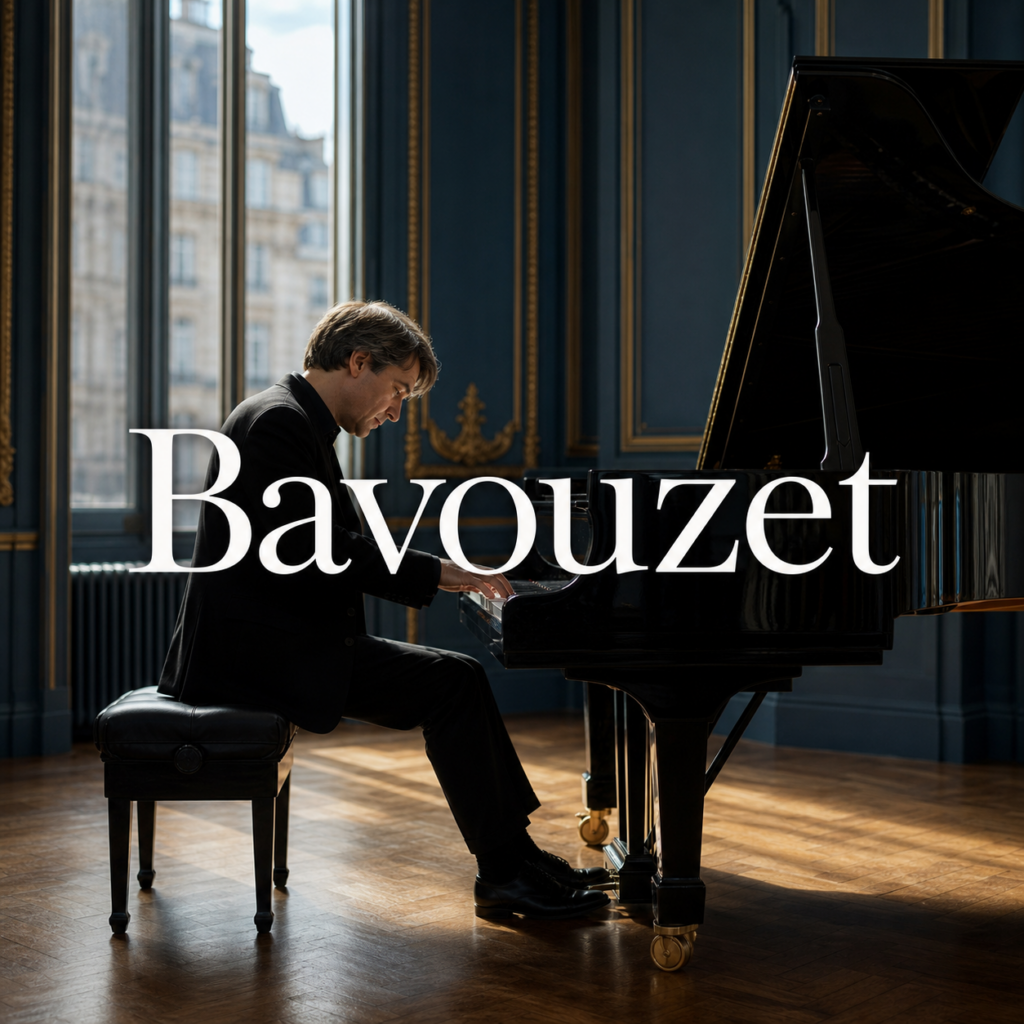
Jean-Efflam Bavouzet in London
WKMT London listening guide
Jean-Efflam Bavouzet in London: Debussy, Colour and the Art of Serious Piano Listening
A cultured guide to Bavouzet’s recordings, London recital context and the kind of listening that helps serious pianists hear colour, clarity and structure with greater precision.
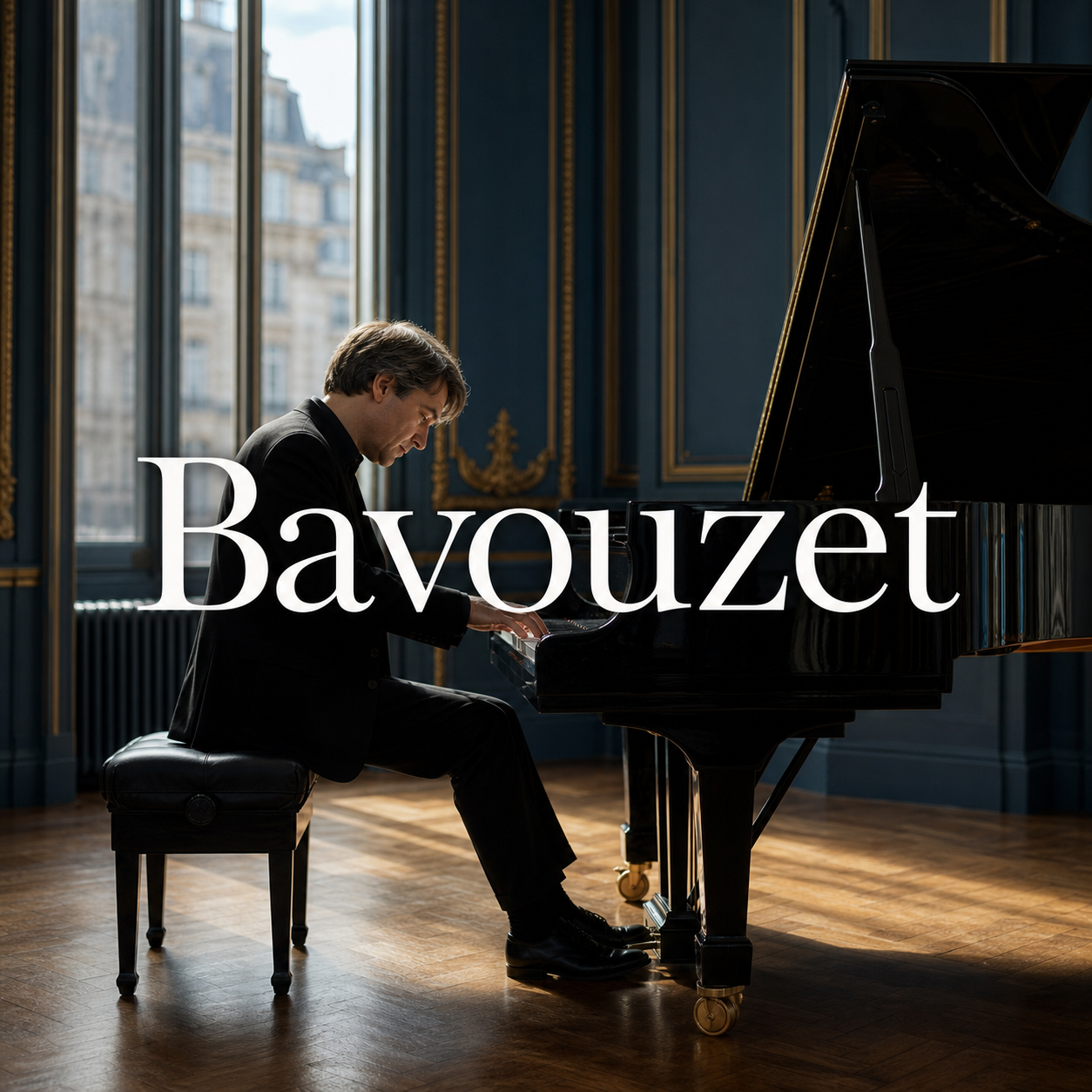
At a glance: who is Jean-Efflam Bavouzet?
Nationality and role: French classical pianist, internationally managed by HarrisonParrott and closely associated with Chandos recordings.
Core repertoire: Debussy, Ravel, Haydn, Beethoven, Bartok, Prokofiev, Mozart and modern French music.
London signal: recurring Wigmore Hall presence, a major Ravel programme at Wigmore Hall in May 2026, and a long relationship with UK musical institutions. Last checked: 2026-07-20.
For London listeners, Jean-Efflam Bavouzet is not merely a name in a discography. He is a pianist who makes recorded colour feel like live thought: exact, bright, mobile and never merely decorative. His official site lists an active 2026 concert calendar and recent Chandos releases, including the final Mozart concerto volume and a 2025 Ravel solo collection. HarrisonParrott describes a pianist whose recordings have won major critical awards and whose complete Haydn sonata survey has become a modern point of reference.
Why Bavouzet matters to modern pianism
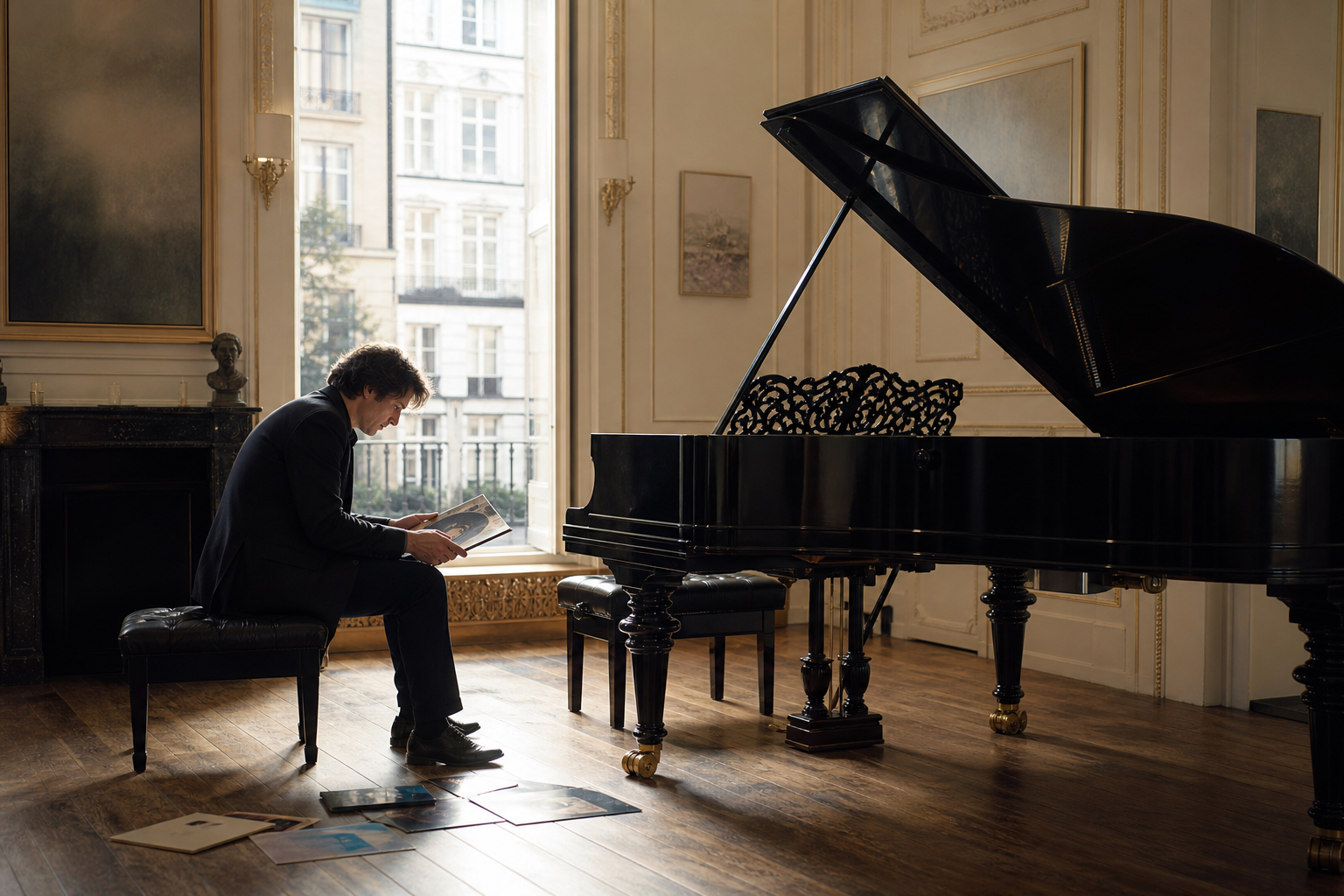
Bavouzet matters because his pianism sits at an unusually useful intersection: French colour, classical line, modern clarity and studio discipline. Debussy and Ravel need atmosphere, but atmosphere alone can blur the architecture. Haydn needs wit and proportion, but elegance without risk can turn mannered. Bavouzet’s best playing finds a way through both problems. Colour is not a haze; it is a series of deliberate choices about voicing, touch and release.
WKMT perspective: listen for the moment where sonority becomes argument. A beautiful sound is useful only when it clarifies the phrase.
This is why Bavouzet is valuable for adult pianists as well as record collectors. His Debussy does not invite vague impressionism; it trains the ear to separate layers. His Haydn asks listeners to hear surprise, pause and articulation as expressive material. His Beethoven and Mozart recordings, especially through Chandos, show a musician interested in continuity between Classical rhetoric and later Romantic pressure rather than in isolated showpieces.
There is also a useful corrective here for pianists who equate French music with surface charm. Bavouzet’s recorded profile suggests that colour begins before the pedal is pressed: in the balance of inner parts, in the attack of a repeated note, in the speed of a release, in the decision to let a bass note speak without becoming heavy. That kind of musicianship is teachable because it is observable. The listener can ask practical questions: which line is carrying the sentence, where does the harmony change temperature, and how much resonance is needed before the phrase loses focus?
A concise biography and career highlights
Bavouzet’s public biography is best read through work rather than mythology. HarrisonParrott records his exclusive Chandos relationship, his awards from Gramophone, BBC Music Magazine, Diapason d’Or and other publications, and his 2012 ICMA Artist of the Year recognition. It also places him in a line of musical encounters with Pierre Boulez, Karlheinz Stockhausen, Gyorgy Kurtag, Maurice Ohana, Bruno Mantovani and Jorg Widmann. The Royal Northern College of Music identifies him as an International Visiting Artist in Keyboard Studies and notes his role as one of its International Chairs in Piano from 2017.
That breadth matters. It explains why Bavouzet can move from Haydn’s theatrical silences to Debussy’s reflected light, from Bartok’s edges to Ravel’s precision, without sounding like a pianist who has changed costumes. The continuity is a habit of attention: the phrase is alive, the pedal is controlled, the colour is chosen, and the line remains audible.
His recent Ravel focus gives that continuity a timely frame. The official Bavouzet site notes a 2025 Ravel complete solo works recording on Chandos and a broad Ravel recital presence during the composer’s anniversary year. That is not a minor programming detail. Ravel exposes every pianist’s relationship with surface: too dry, and the music loses magic; too perfumed, and the form collapses. Bavouzet’s value is that he makes the surface accountable to the design beneath it.
Listening guide: how to hear Bavouzet
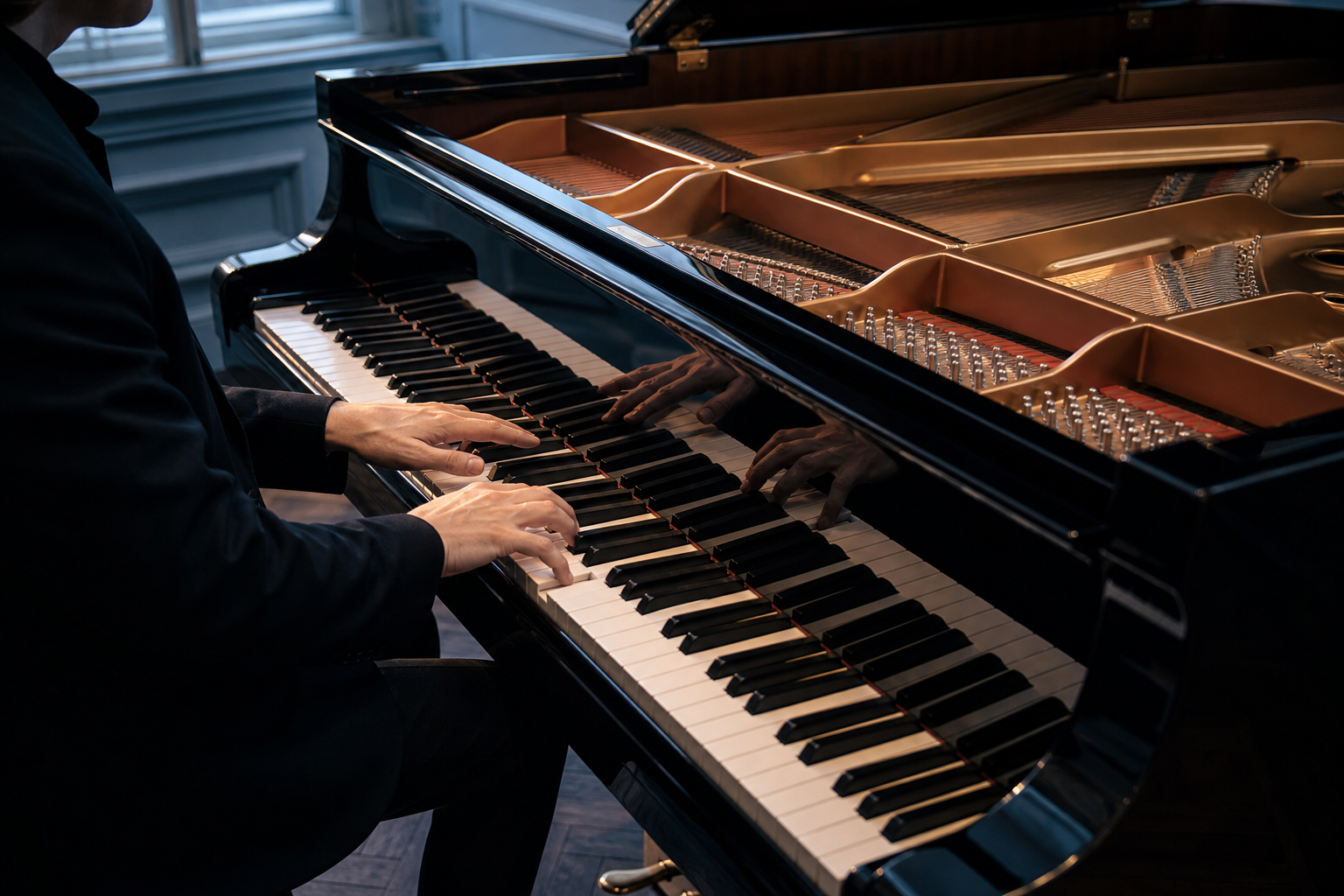
Start with Debussy. In the Preludes and Images, listen for how the treble can shimmer without losing its speaking edge. The pedal often feels like pigment rather than perfume: it colours the sonority but does not excuse unclear harmony. In Ravel, the test is different. Ravel’s textures ask for brilliance that remains proportionate, especially when repeated notes, liquid figurations or hard-edged dance rhythms could easily become mechanical.
Ask whether each register has its own light, not merely its own volume.
Notice where Bavouzet releases sound cleanly instead of relying on pedal wash.
Follow long harmonic direction, especially in Haydn, Beethoven and Ravel.
Haydn is the quickest way to hear his mind at work. The Arts Desk, reviewing a Wigmore Hall Haydn recital, heard a pianist who was “elegant and lucid” in the way he shaped pauses and rhetorical space. That description suits the best of Bavouzet’s Classical playing: the wit is never flippant, because the timing has been considered. For students, this is a direct lesson in musical grammar. A pause is not empty time; it is a decision about expectation.
Compared with pianists who wrap French repertoire in velvet, Bavouzet often sounds more etched. Compared with those who make Haydn all sparkle, he lets its oddity and theatre remain visible. This balance is why his playing is so useful for serious listeners: he encourages the ear to enjoy beauty while still asking what each colour is doing.
A helpful exercise for the listener is to choose one parameter at a time. In a Debussy prelude, follow the bass and ignore the glitter above it; the harmonic movement will suddenly feel less misty. In a Haydn sonata, listen only to endings of phrases; Bavouzet’s timing often tells you more at the release than at the attack. In Ravel, listen to repeated figures and ask whether they are decorative, motoric or vocal. The same recorded passage can be revisited three times with three different questions, which is exactly how advanced listening becomes useful practice.
Bavouzet and London: performances, recordings and critical reception
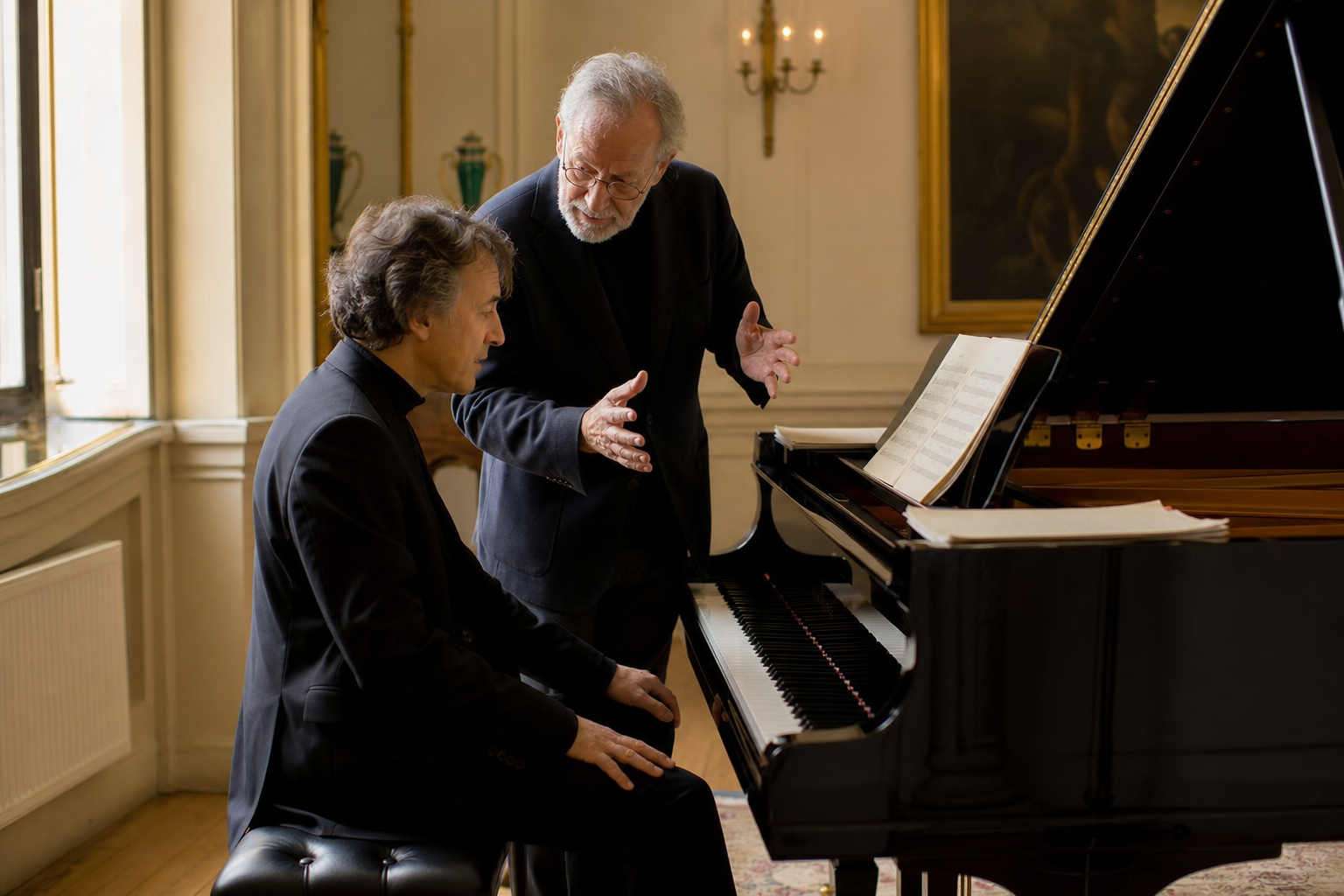
London has been a natural listening city for Bavouzet because its recital culture rewards detail. His official concert archive lists a Wigmore Hall Ravel programme on 14 May 2025, and Wigmore Hall lists a 10 May 2026 recital tracing lines from Haydn and Hummel towards Beethoven and Schumann. London Classical Concerts also records recent Wigmore Hall and Barbican dates, useful as a sign of continuing local presence, though official artist and venue pages remain the stronger sources.
“The London point is not celebrity. It is proximity: a pianist whose studio achievements can be tested in a hall where tone, timing and proportion are exposed.”
For WKMT readers, that matters because listening in London is not passive consumption. It can become a form of musicianship. A student who hears Bavouzet at Wigmore Hall after studying his Debussy recordings will listen differently to colour; an adult pianist working on Haydn will hear how a clean release changes the humour of a phrase. That is the bridge between concertgoing and classical piano study in London.
The city also gives context to the recordings. Wigmore Hall’s intimacy rewards the qualities Bavouzet cultivates on disc: proportion, transparency and audible thought. Barbican and Milton Court contexts, noted in public profiles and listings, place him within a larger London culture of serious recital and orchestral listening. The important point is not to chase every date. It is to use verified venue calendars, then arrive prepared with one or two listening questions instead of a vague expectation of virtuosity.
Discography at a glance
| Recording area | Why it matters | Listening focus |
|---|---|---|
| Debussy complete piano works | The central Bavouzet entry point for French colour and clarity. | Layered sonority, pedal discipline, register balance. |
| Ravel complete solo works | A recent Chandos focus, shortlisted in the 2025 Gramophone Awards according to the official site. | Brilliance under control, rhythmic poise, colour without excess. |
| Haydn piano sonatas | A long Chandos series praised for wit, finish and modern benchmark value. | Speech-like phrasing, surprise, clean articulation. |
| Mozart concertos | A nine-year Manchester Camerata collaboration reached its final volume in 2026. | Dialogue, transparency, chamber-scale intelligence. |
Chandos’ own artist listing confirms the breadth: Debussy, Haydn, Beethoven, Mozart, Pierne, Bartok, Prokofiev and two-piano transcriptions all sit in the catalogue. The point is not to collect every release at once. Choose one track, one question, one sound. Ask whether you can hear the line through the colour. That is enough for one serious evening.
For a first path, begin with Debussy for sonority, move to Haydn for musical speech, then return to Ravel for refinement under pressure. The order matters. Debussy opens the ear to colour; Haydn disciplines the ear through grammar; Ravel tests whether colour and grammar can coexist under bright technical light. Adult pianists often improve their own repertoire choices when they hear those three habits side by side.
Where to hear and how WKMT connects
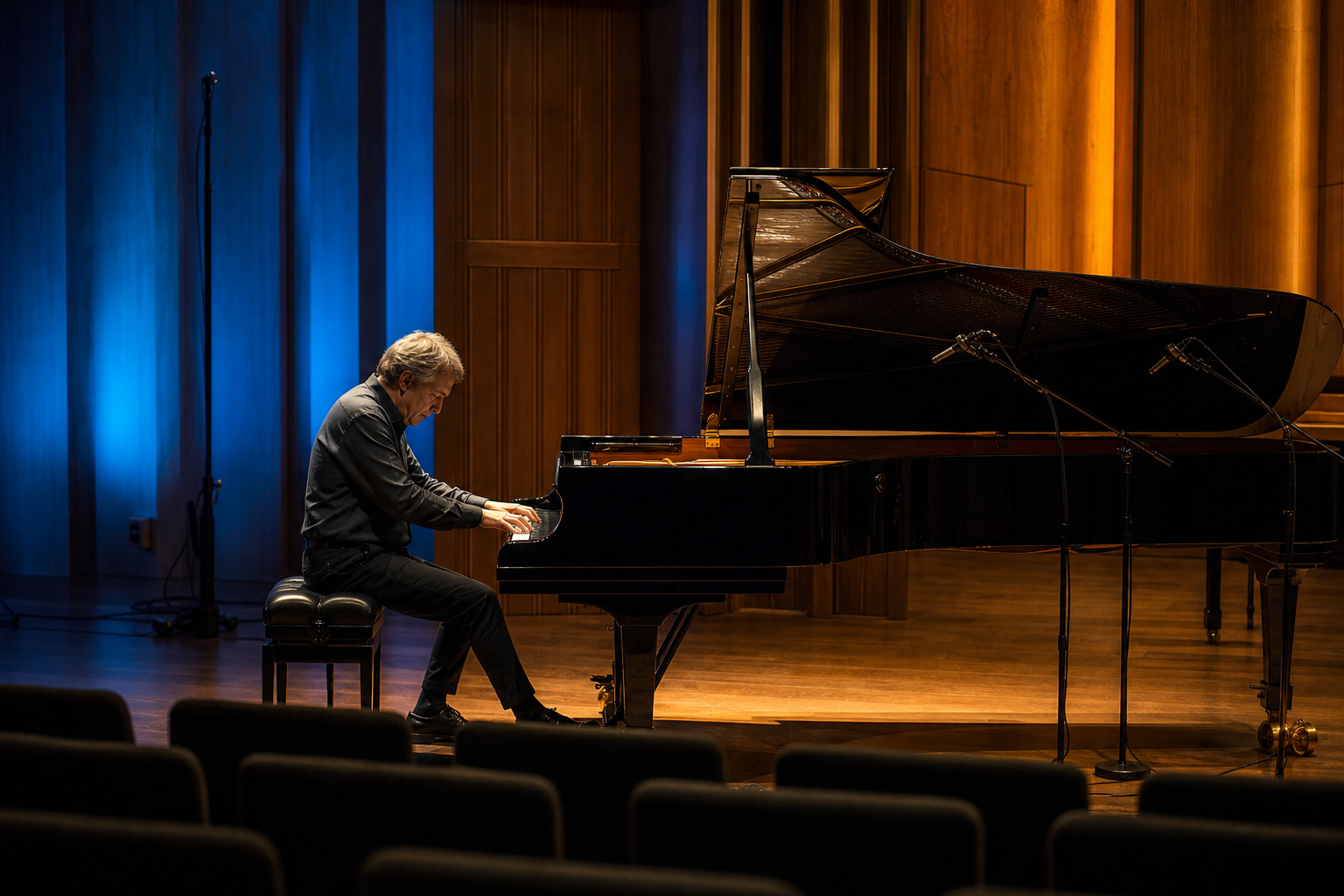
Check Bavouzet’s official concert page and Wigmore Hall listings for live dates; schedules change, and official venue pages are the only reliable source for booking status. For listeners who want to turn the experience into musical growth, WKMT’s work is complementary: recital listening, tonal vocabulary and interpretive questions can all feed serious lessons, especially for adults returning to repertoire with mature ears. Readers considering guided study can explore adult piano lessons at WKMT, while those interested in performance culture may also enjoy WKMT’s London piano masterclasses and the studio’s writing on tone configuration in piano study.
Study piano through serious listening
Bavouzet’s repertoire shows how colour, articulation and structure can become practical study questions for London pianists.
Conclusion: why serious listeners should rediscover Bavouzet
Jean-Efflam Bavouzet is rewarding because he resists the lazy split between colour and discipline. His French repertoire is luminous but never boneless; his Haydn is elegant but alert to disruption; his recording culture is polished without feeling inert. For London listeners, that combination is ideal. It gives the concertgoer something beautiful to hear and the pianist something concrete to study: the shape of a silence, the weight of a chord, the exact point at which pedal changes from atmosphere into argument.
Sources for Jean-Efflam Bavouzet
- Jean-Efflam Bavouzet official website, news, concerts and recordings: https://bavouzet.com/ and https://bavouzet.com/concerts.php?period=2025
- HarrisonParrott artist biography and reviews: https://www.harrisonparrott.com/artists/jean-efflam-bavouzet
- Chandos Records artist listing: https://www.chandos.net/list/artist/Jean-Efflam_Bavouzet/13688
- Wigmore Hall event listing, Jean-Efflam Bavouzet piano, 10 May 2026: https://www.wigmore-hall.org.uk/whats-on/202605101930
- Royal Northern College of Music profile: https://www.rncm.ac.uk/people/jean-efflam-bavouzet/
- The Arts Desk, Wigmore Hall Haydn review