
 TRIAL LESSON
Piano Lessons
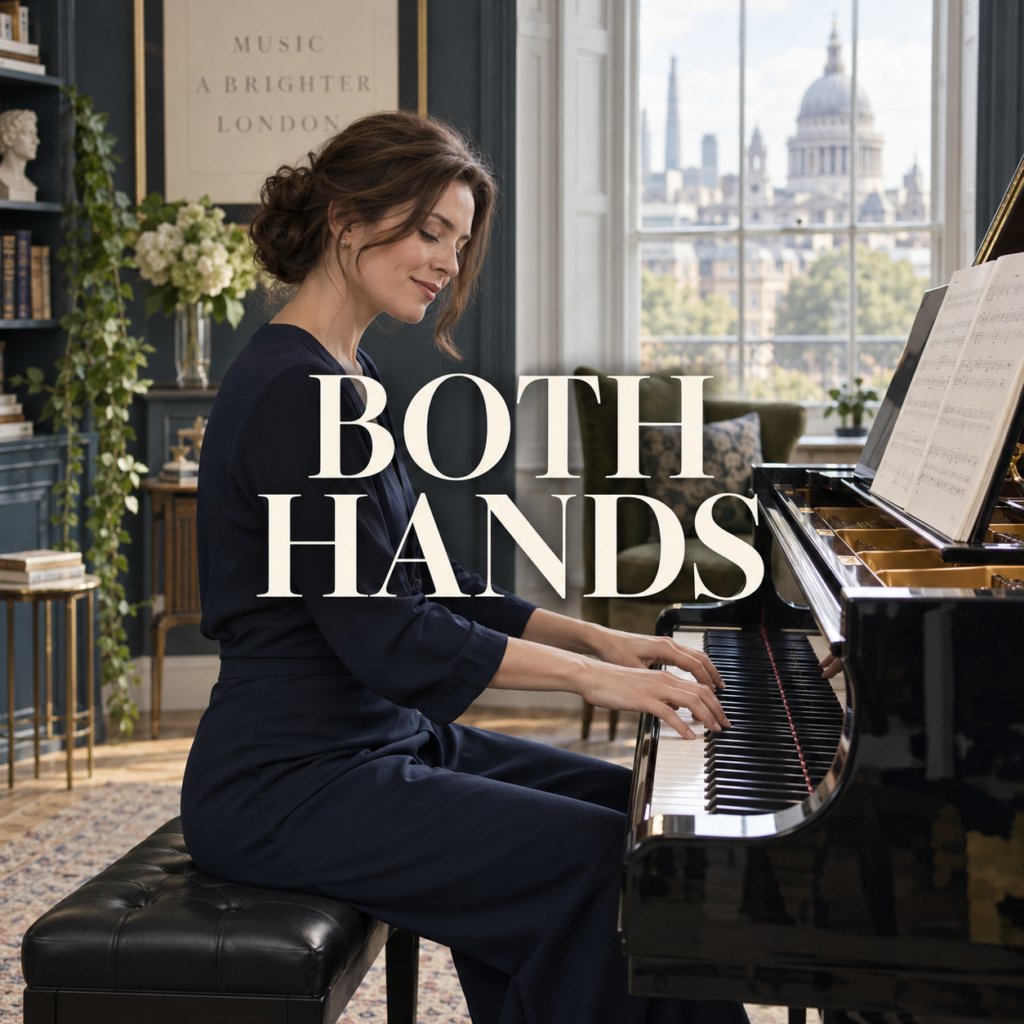
Playing Piano with Both Hands: A Practical Route from Separate Parts to One Musical Thought
Oct
WKMT London adult learner guide
Playing Piano with Both Hands: A Practical Route from Separate Parts to One Musical Thought
The leap from separate hands to two-hand playing can make a familiar passage feel suddenly unknown. The solution is rarely more force. Adults progress when they map shared beats, reduce the texture and rebuild one short musical unit at a time.
In brief
To start playing piano with both hands, learn each hand with secure fingering and rhythm, identify notes that occur together, reduce the passage to beat-by-beat landmarks, and combine one or two bars slowly. Add notes between the beats only after the skeleton is stable. Keep one hand quieter when it accompanies, pause when tension rises, and connect short units gradually rather than repeating the whole passage through errors.
Playing piano with both hands is a coordination skill
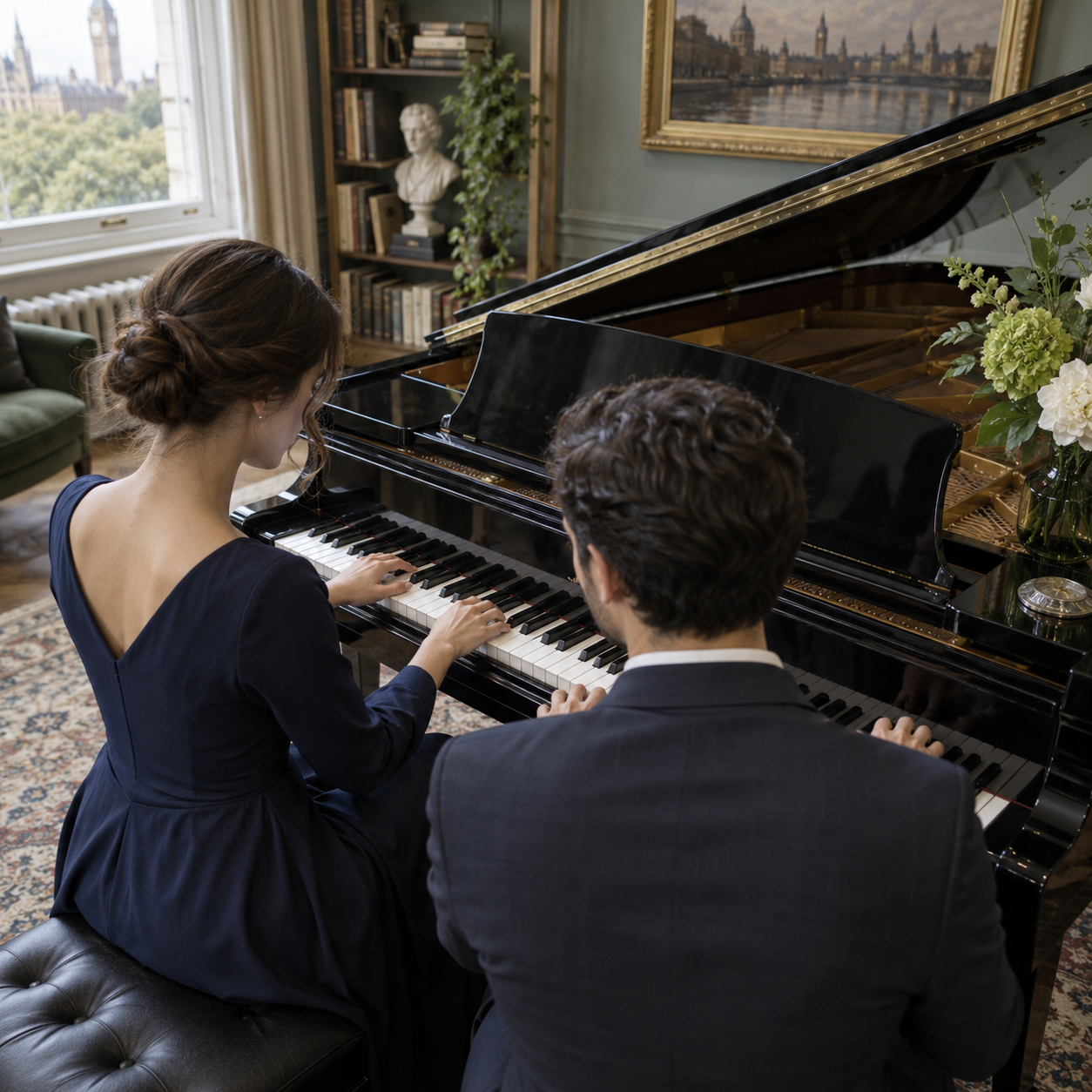
The hands do different things, but they belong to one metre, harmony and phrase. Treating them as independent strangers increases mental load. Begin by noticing relationships: where do they attack together, where does one hand continue while the other rests, and which hand carries the musical direction?
Studies of bimanual performance show that coordinated actions are more demanding than one-hand movements and develop through specialised practice. For an adult learner, that means the task should be made clear enough to repeat accurately. Difficulty is information about complexity, not evidence of a lack of musical ability.
Prepare each hand with rhythm and direction
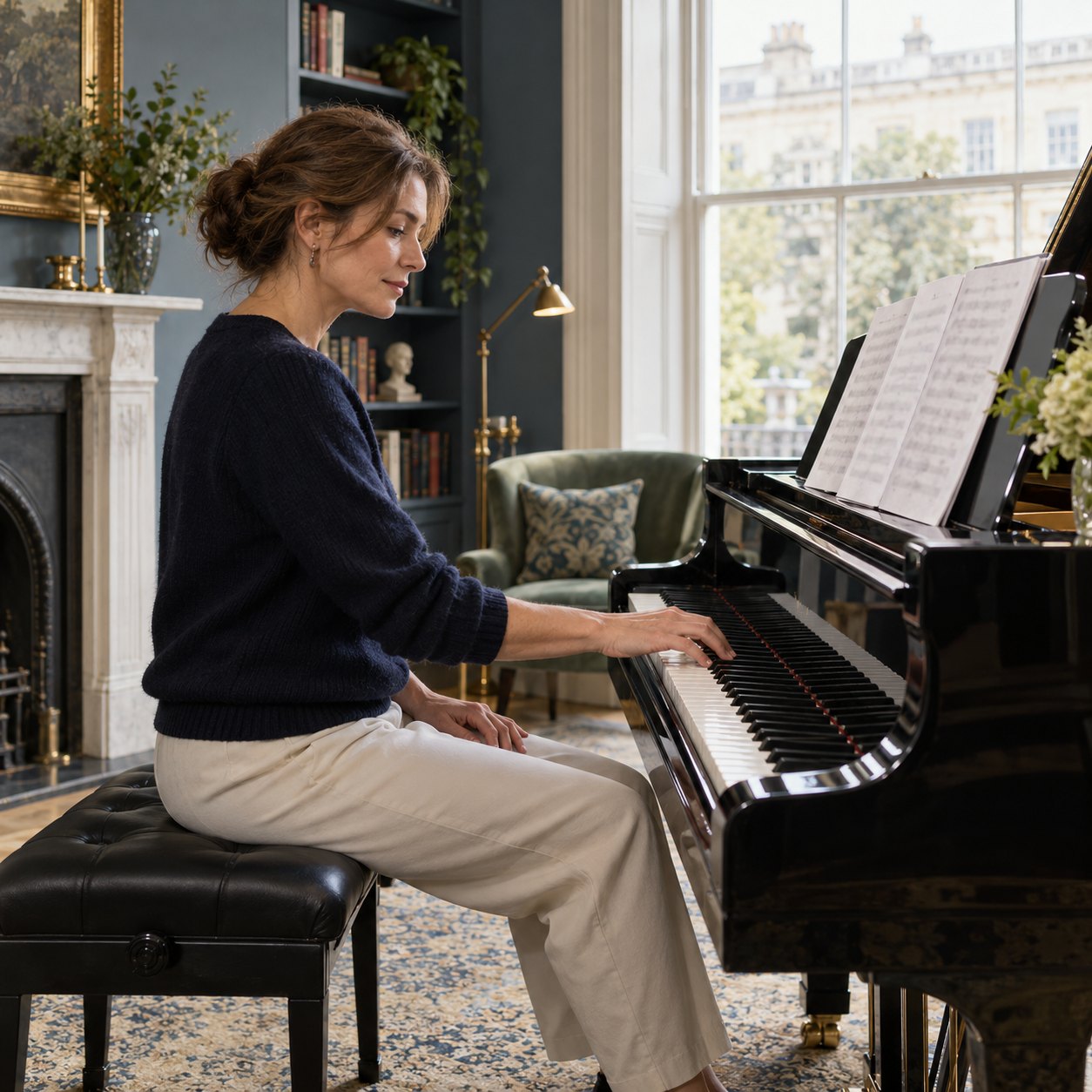
Separate-hand practice should go beyond finding notes. Fix fingering, count the rhythm and shape the phrase. Play the left hand while singing the right, then reverse the roles. If the missing part cannot be imagined, combining the hands will depend on visual reaction rather than musical expectation.
In adult piano lessons in London, a teacher can identify whether playing piano with both hands is blocked by reading, fingering, pulse or attention. WKMT’s guide to hand independence at the piano explains why different roles still require one organising intention.
Build the shared-beat skeleton
Circle the notes that fall on each main beat. Play only those landmarks with both hands, feeling how the harmony moves. Then add one group of intervening notes at a time. This reduction keeps the metre visible and stops slow practice from becoming a note-by-note crawl with no sense of destination.
For unequal rhythms, tap both parts before using the keyboard. Choose a subdivision slow enough to hear and say. Playing piano with both hands becomes more secure when every event has a known place inside that grid. Speed should rise only after the pattern feels predictable.
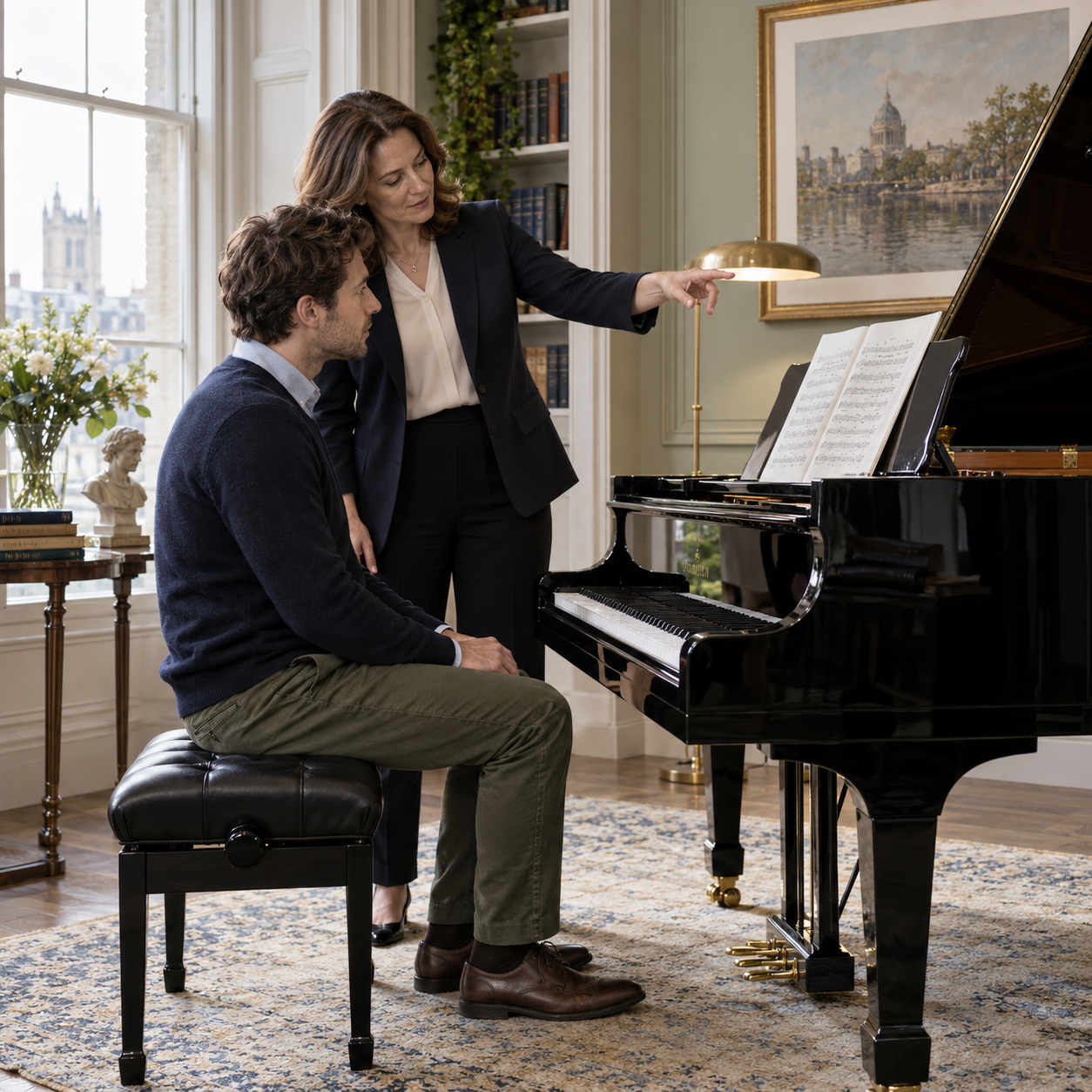
Two hands become manageable when the player hears one pulse, one harmony and one direction.
Restore balance and articulation
Correct timing is not yet music. A melody must often project above a lighter accompaniment, or one hand may play legato while the other releases clearly. Practise the accompaniment alone at the intended quiet dynamic, then sing the melody over it. Add the melody without allowing the supporting hand to become heavier.
Shift listening deliberately: once to the bass, once to the melody and once to the joins. Attention does not need to be divided equally at every instant. Stable patterns can recede while the ear follows the changing line. That selective attention is one of the freedoms developed by playing piano with both hands.
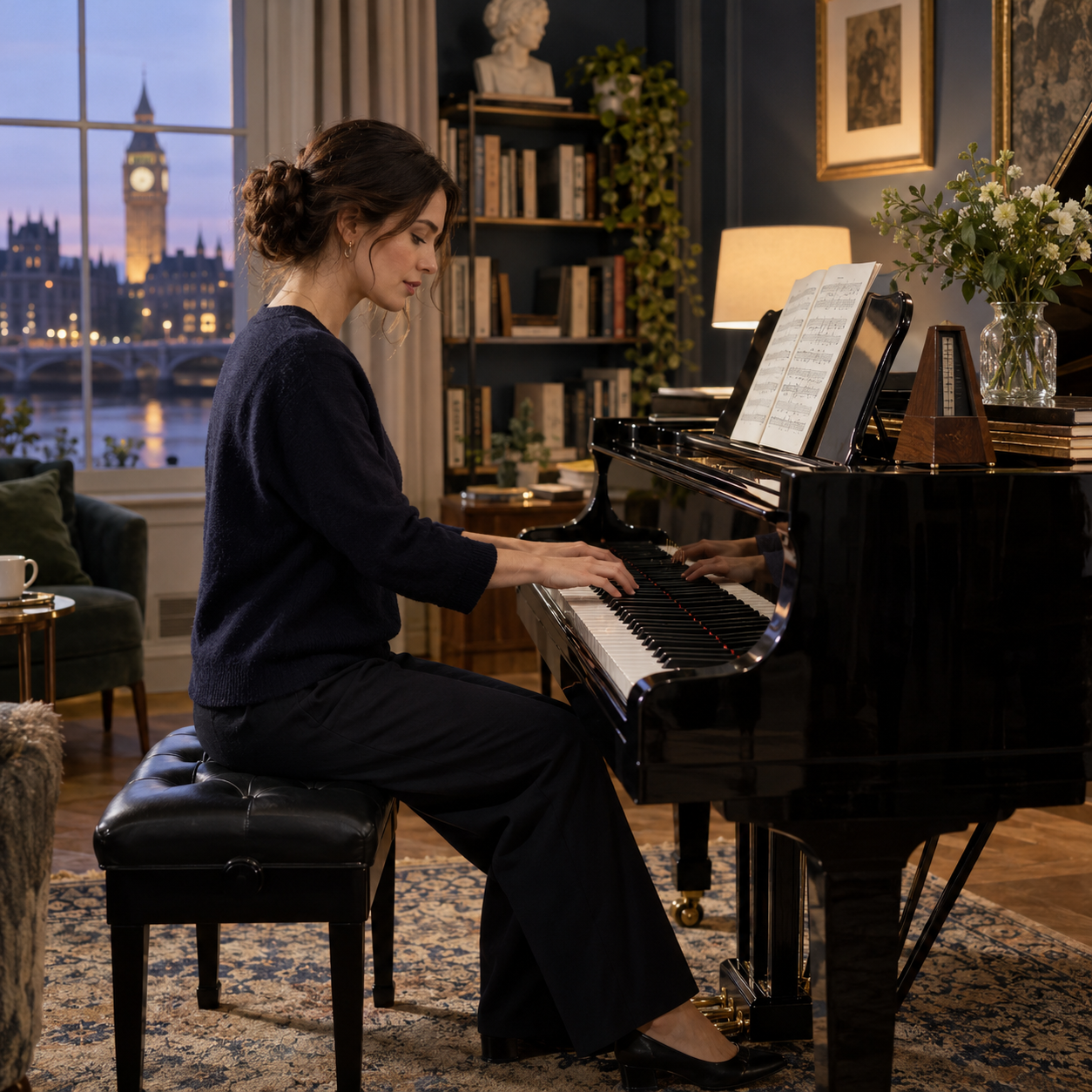
A seven-step repair for difficult bars
Choose one or two bars. Confirm fingering, tap both rhythms, play only beat notes, add the spaces between beats, repeat at a comfortable tempo, restore dynamics, then attach one neighbouring bar. Stop after several clean repetitions. Fatigue disguises itself as a coordination problem.
On the next day, try the complete two-hand unit once before dismantling it. The first attempt reveals what memory retained. Progress compounds through clear reconstruction: two secure beats become a bar, a bar becomes a phrase, and the learner begins to hear one musical thought rather than two competing jobs.
WKMT London
Build confident two-hand playing through teaching that adapts rhythm, fingering and practice structure to the adult learner.
Explore adult piano lessonsSources on playing piano with both hands for adults
- PMC: left-hand piano practice and bimanual control
- PLOS ONE: neural mechanisms of bimanual coordination
- Frontiers in Psychology: music training and bimanual coordination
- PubMed: interhemispheric inhibition and musicians’ dexterity
- BAPAM: healthy practice guidance
- Royal College of Music Centre for Performance Science
Sources checked 8 October 2026. Educational guidance; individual circumstances and progress vary.