
 TRIAL LESSON
Piano Lessons
Music and Movement Activities: How Piano Helps Children Feel Pulse Before Counting
Oct
WKMT London parent guide
Music and Movement Activities: How Piano Helps Children Feel Pulse Before Counting
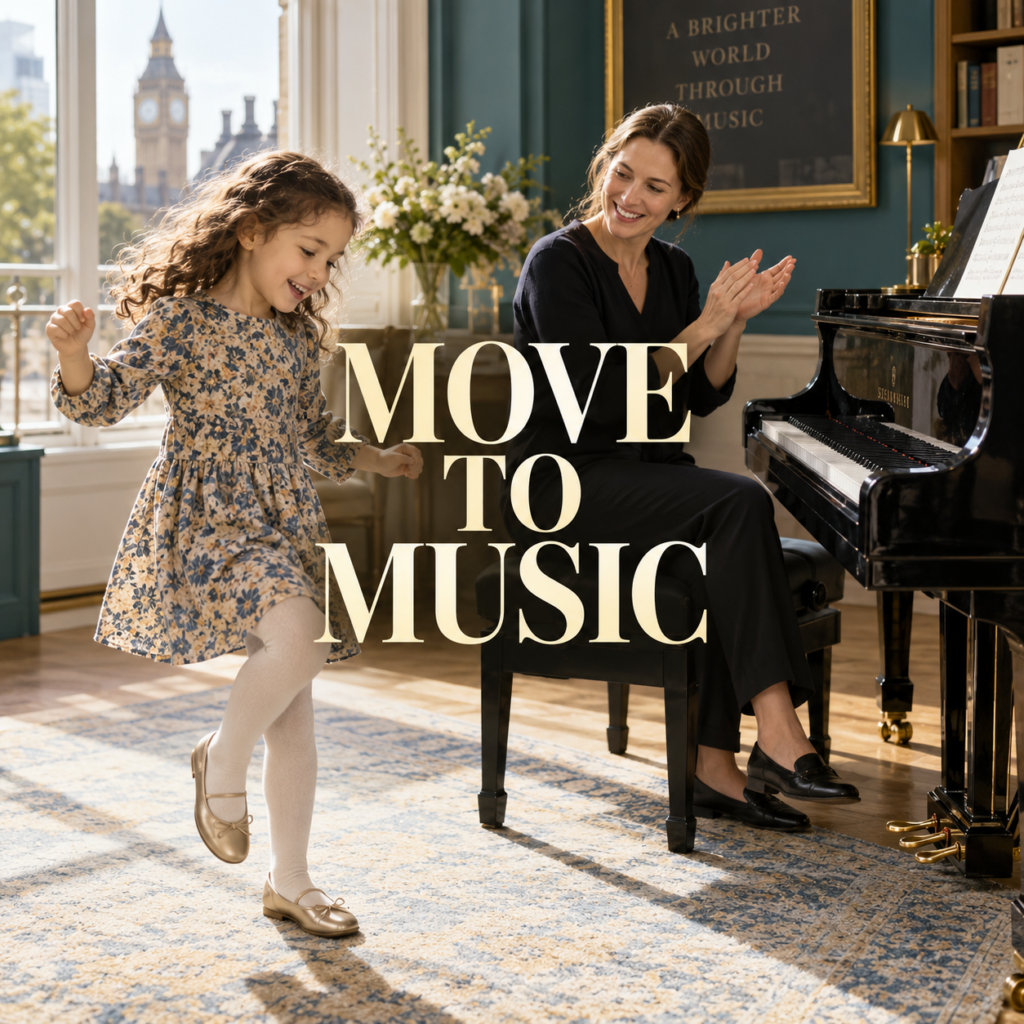
Before a child can explain metre, the body can already meet a beat. Walking, swaying, clapping and stopping turn pulse into an experience. The piano then gives that experience a sound, a shape and eventually a place on the page.
In brief
Effective music and movement activities for young piano learners include walking to a steady beat, freezing when the sound stops, echoing short rhythms, showing high and low sounds with whole-body movement, passing a pulse around a circle and transferring a large movement to a simple keyboard pattern. Keep instructions short, use clear musical contrasts and return to the same game often enough for the child to predict what comes next.
Music and movement activities begin with pulse
Pulse is the regular underlying beat that makes musical time feel organised. A child may sense it before understanding numbers or notation. Ask them to walk while the teacher plays a clear march, then keep walking through a short silence. The silence reveals whether the beat has become internal rather than merely copied.
Useful music and movement activities separate pulse from rhythm. Feet can keep the beat while hands clap the changing rhythm of a familiar name or song. When these layers are secure away from the keyboard, a child is better prepared to understand why different notes can fit inside one steady musical flow.
Walk, freeze and change direction
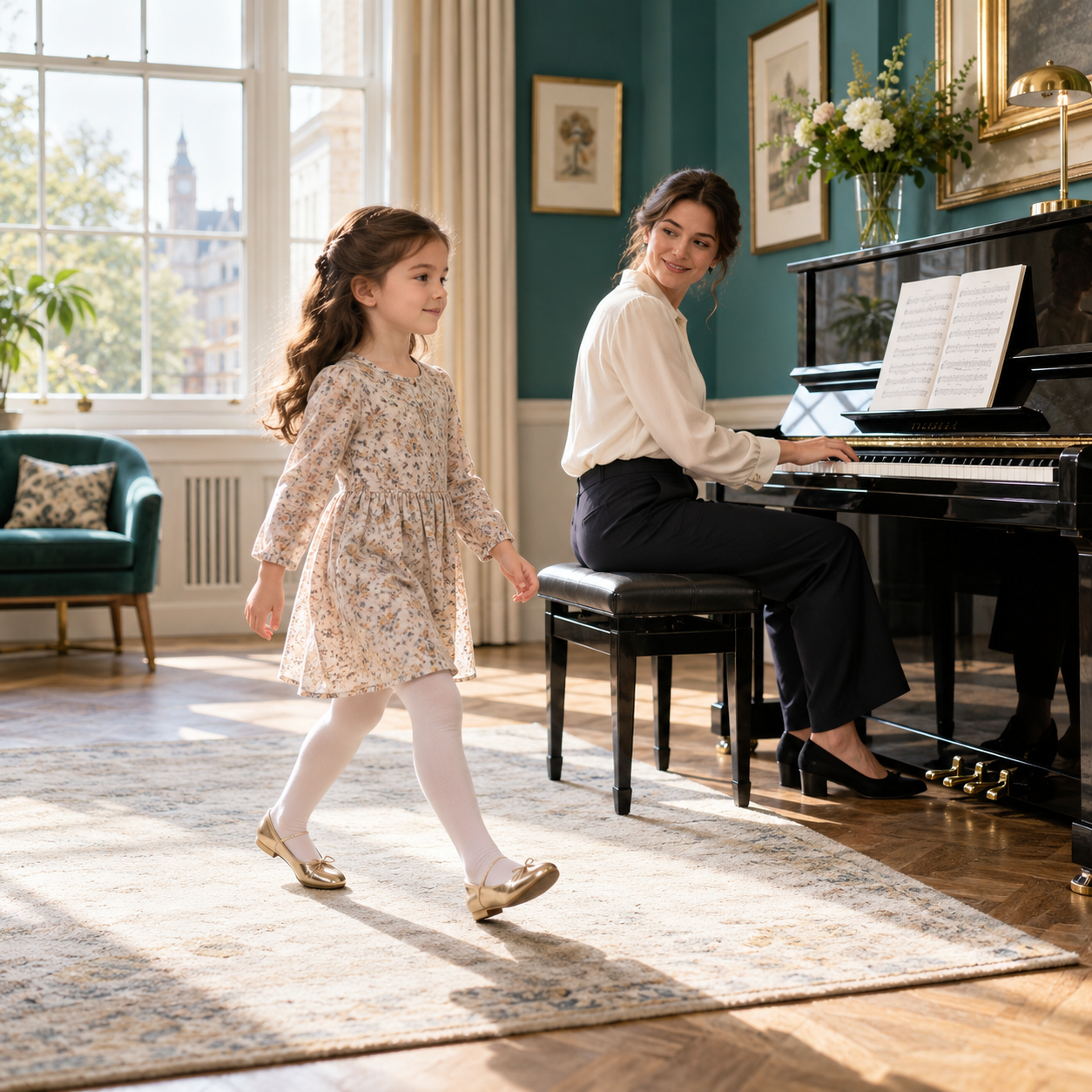
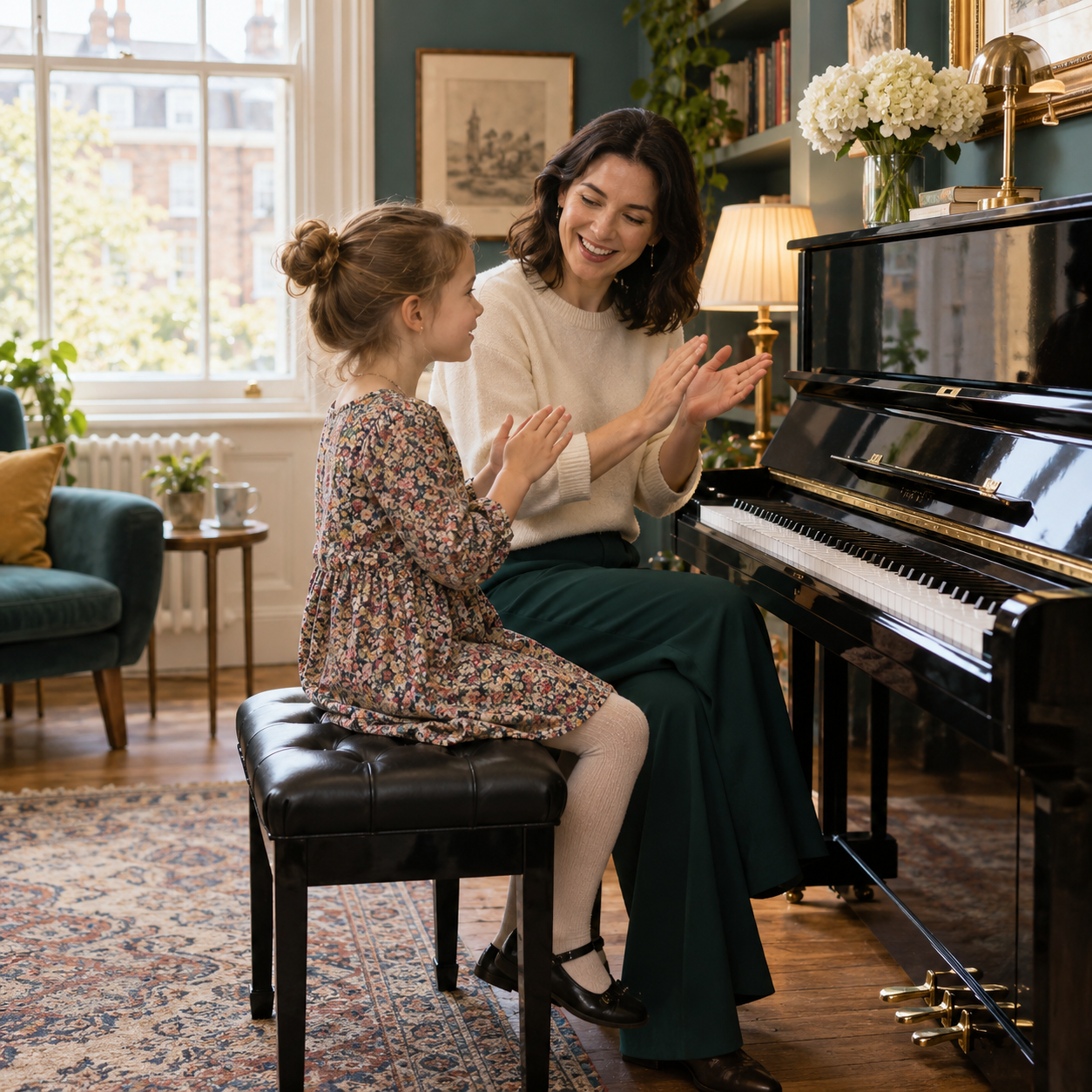
Play four-bar phrases with an obvious beat. The child walks while sound continues and freezes at the cadence. Later, ask for a direction change when the harmony changes or a smaller movement when the music becomes quiet. The aim is attentive response, not energetic movement for its own sake.
In children’s piano lessons in London, music and movement activities can be adjusted to age, confidence and physical comfort. WKMT’s guide to auditory memory activities shows how movement, prediction and short sound patterns can reinforce one another.
Echo games that join hearing and action
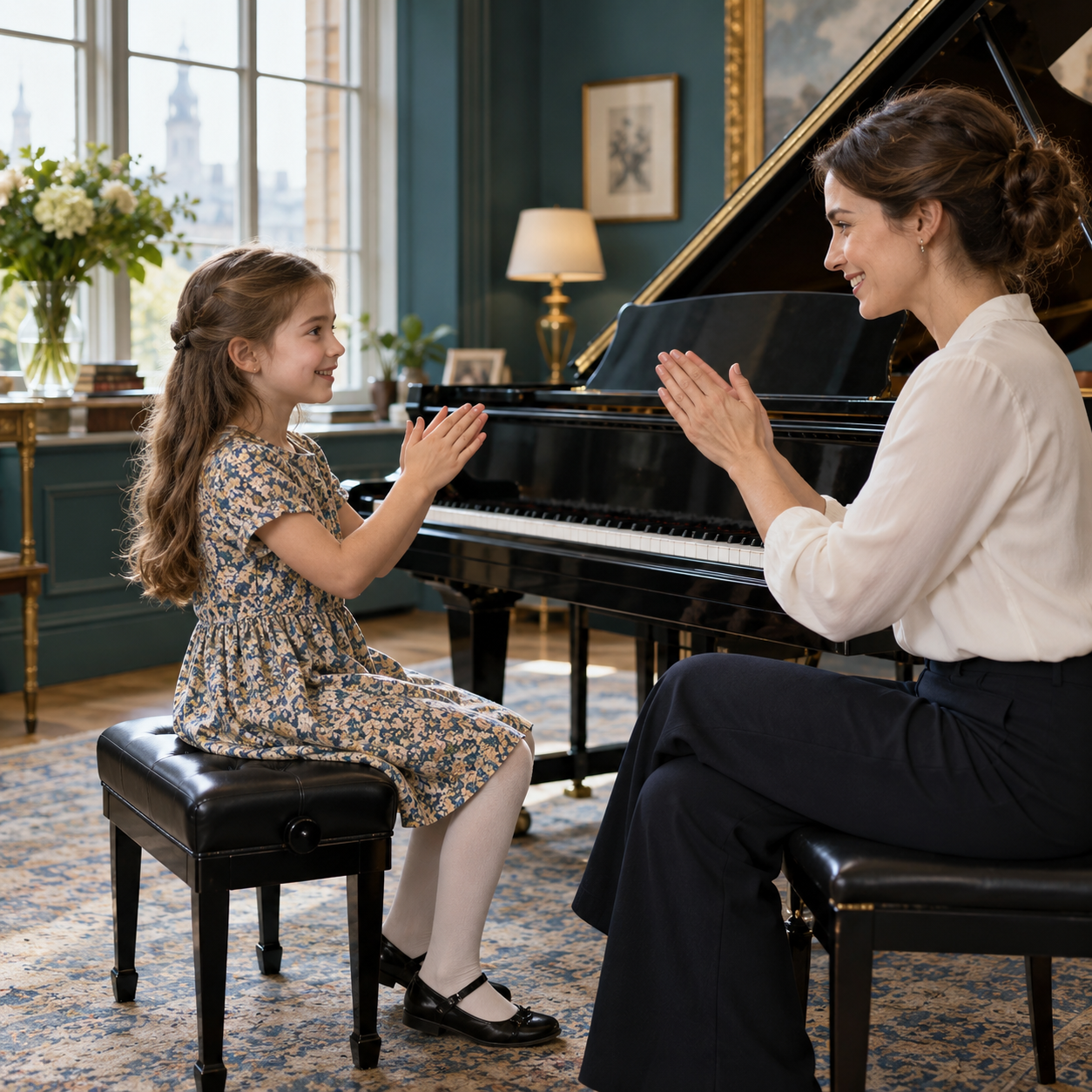
Clap a two-beat pattern and leave a space for the child to answer. Keep the pulse audible with a soft piano note, then remove that support. Use only one change at a time: longer rhythm, softer sound or a different starting beat. A successful echo should feel like a reply inside shared time.
Transfer the same pattern to one piano key, then to two neighbouring keys. Large arm movement becomes smaller finger movement without losing its rhythmic character. Research on rhythm and motor learning supports this close link between hearing and coordinated action, although individual differences and teaching context matter.
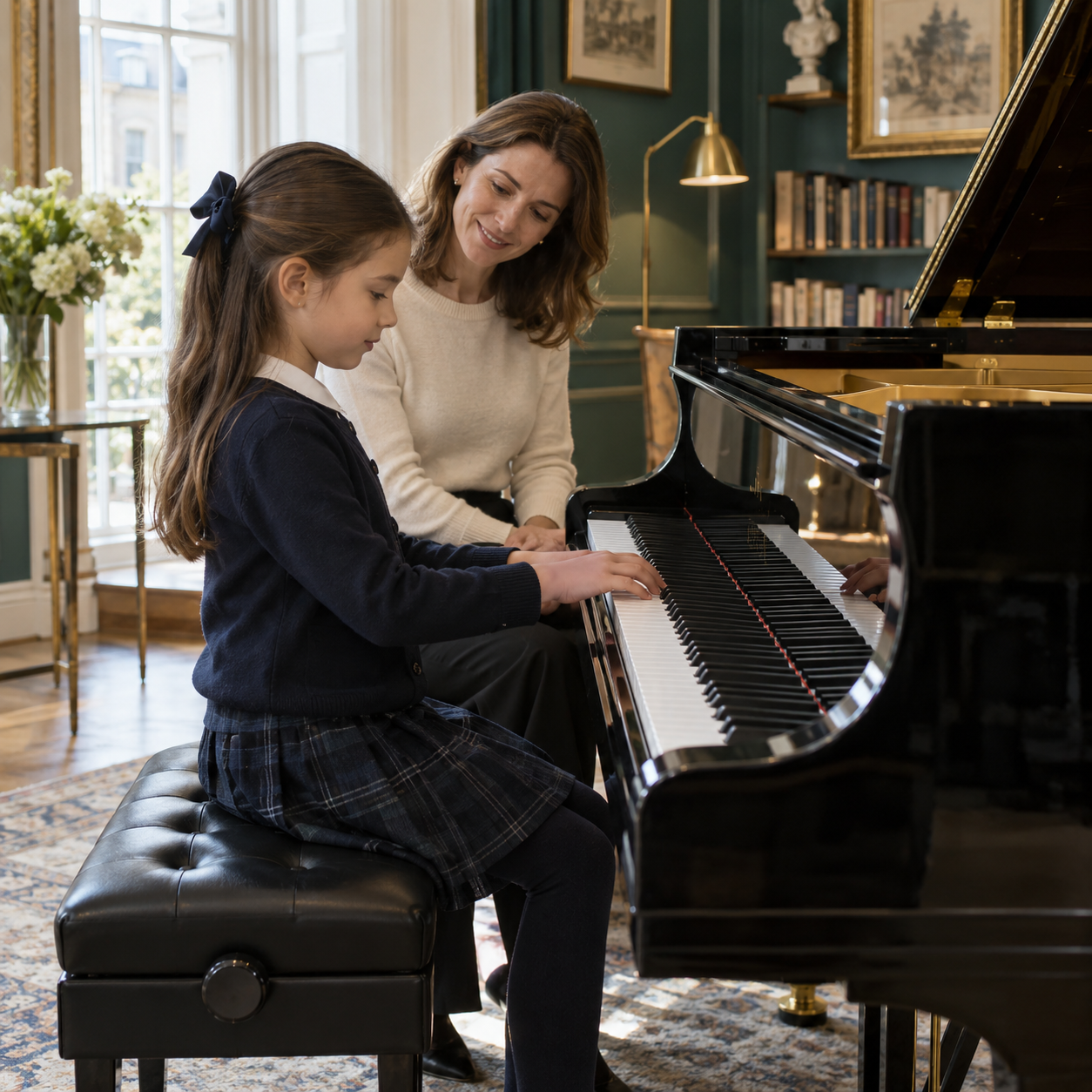
Children often understand musical time with the body before they can explain it with numbers.
From whole-body pulse to the keyboard
Place two groups of keys at comfortable distances. The child steps the pulse first, taps it on the closed fallboard, and then plays alternating notes. Ask for relaxed preparation before each sound. The body should organise the beat rather than lunge after it.
Music and movement activities are especially useful when notation makes time feel abstract. A drawn note can seem static; a step has duration, weight and direction. Once the child can feel two or four beats as a complete journey, bar lines and note values have something lived to describe.
A ten-minute home sequence
Spend two minutes walking and freezing, two minutes echoing claps, two minutes moving high and low with register, two minutes transferring one rhythm to the keyboard, and two minutes playing a familiar piece while a parent taps the pulse quietly. Stop while attention and coordination are still fresh.
Repeat the sequence several times before adding complexity. Progress appears when the child anticipates a stop, maintains the beat through silence, or plays a rhythm without losing comfortable movement. These music and movement activities work because repetition becomes meaningful prediction, not because every session offers a new novelty.
WKMT London
Give your child piano teaching that connects listening, movement, imagination and the first foundations of notation.
Explore children’s piano lessonsSources on music and movement activities for kids in London
- Early Childhood Education Journal: music-movement activities and rhythmic ability
- Frontiers in Psychology: Orff training, dexterity and bimanual coordination
- PMC: rhythm perception and music-related motor learning in children
- University of Southern California: keeping the beat in early childhood
- Harvard Center on the Developing Child: serve and return
- Royal College of Music Centre for Performance Science
Sources checked 8 October 2026. Educational guidance; individual circumstances and progress vary.