
 TRIAL LESSON
Piano Lessons
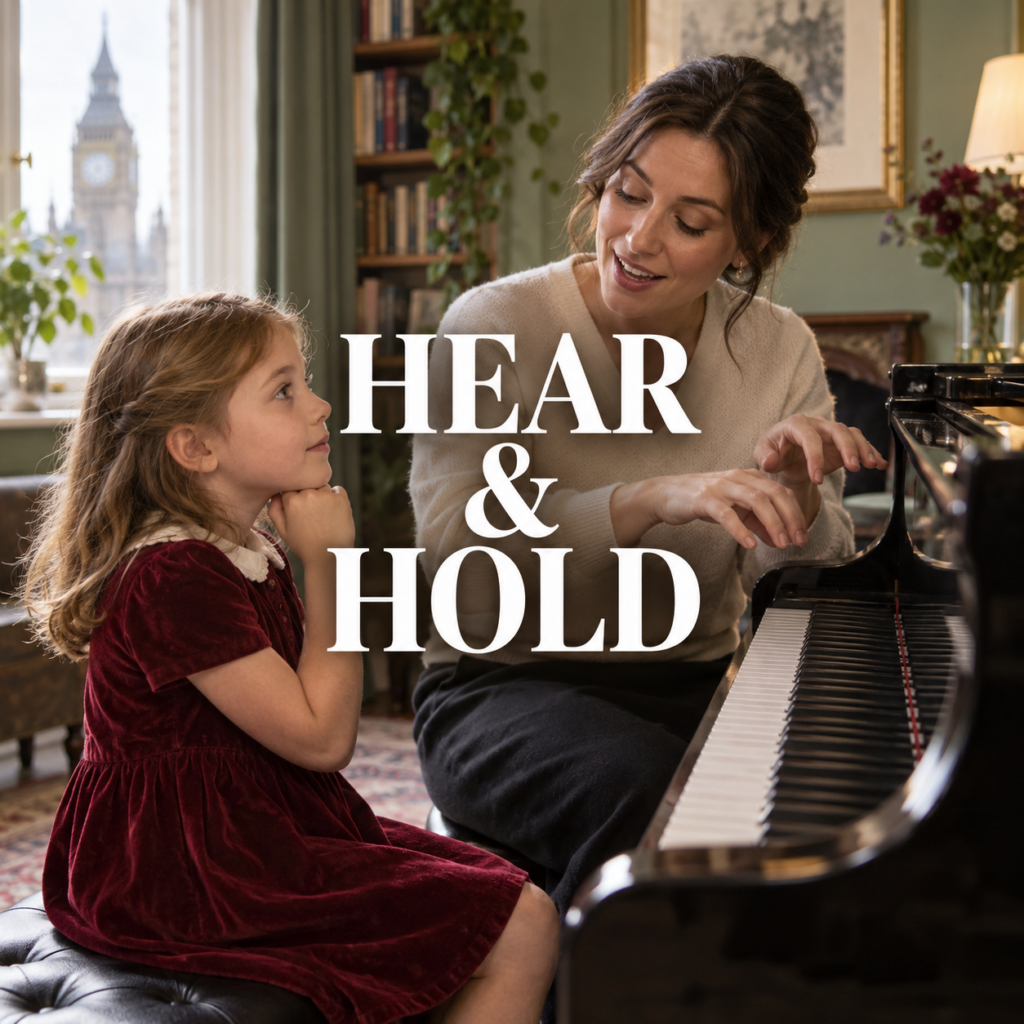
Auditory Memory Activities: How Piano Helps Children Hold a Phrase in Mind
Oct
WKMT London parent guide
Auditory Memory Activities: How Piano Helps Children Hold a Phrase in Mind
A child hears four notes, waits, and finds them again. That small act joins attention, memory, pitch, rhythm and movement. At the piano, listening becomes something a child can test, repeat and gradually make more precise.
In brief
Auditory memory activities ask children to hear, retain and reproduce a short sequence of sounds. Piano lessons can develop this skill through echo games, rhythm copying, singing before playing, missing-note challenges and short phrase recall. The aim is not to test a child under pressure, but to make careful listening visible and enjoyable.
Auditory memory activities at the piano
Auditory memory is the ability to keep sound in mind long enough to recognise, compare or reproduce it. In music, the material may be a rhythm, a contour, a short melody, a dynamic shape or a sequence of instructions. A pianist uses this capacity constantly: to connect one phrase with the next, notice a wrong note and imagine the sound before the hands move.
Research offers promising but careful evidence. A longitudinal intervention with school-aged children found stronger development on a backward digit-span task after music training, while simpler forward recall did not show the same difference. A recent systematic review also reported a modest positive effect on working memory in preschool children. These findings support patient musical work, but they do not mean that piano lessons guarantee broad academic gains for every child.
Five games that grow with the child
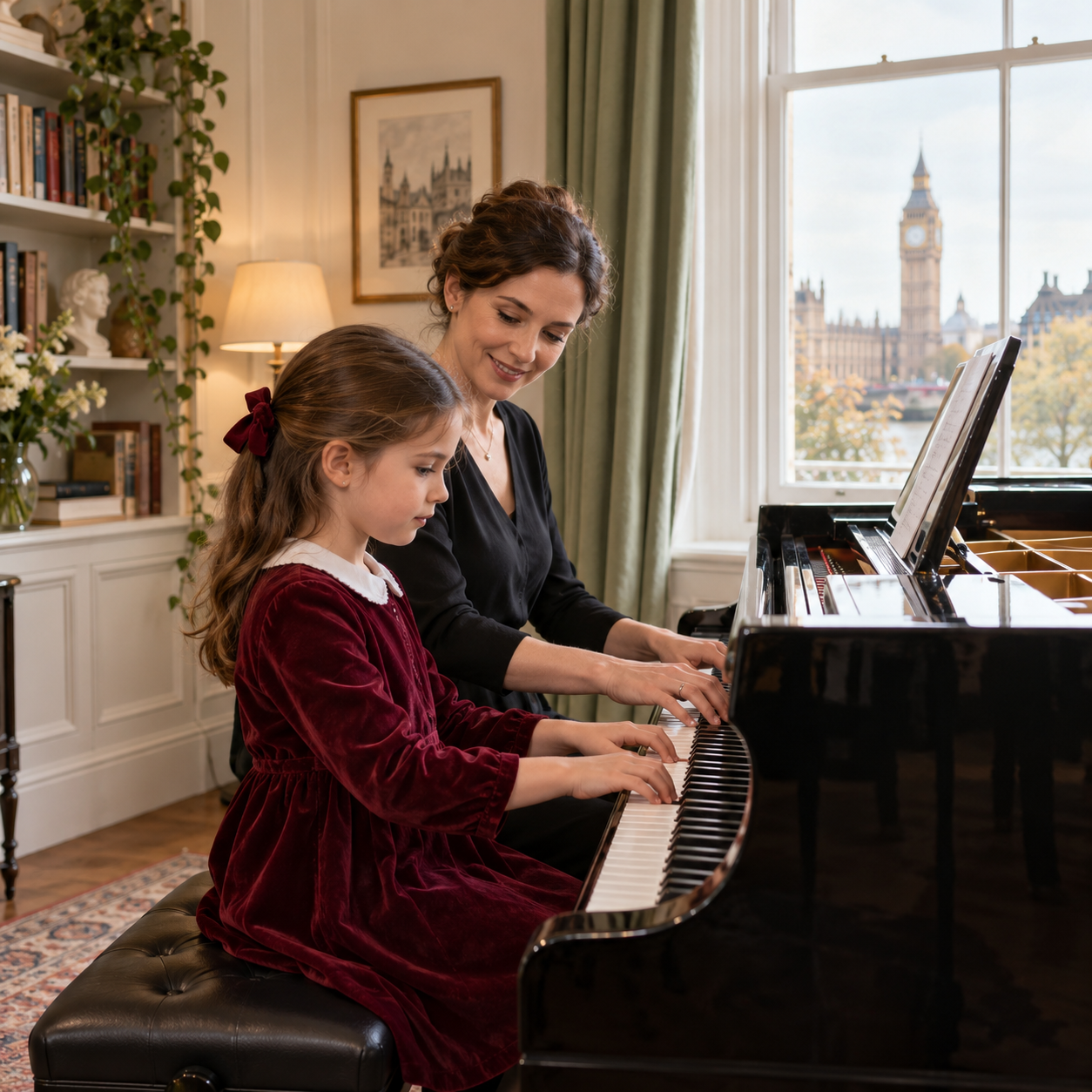
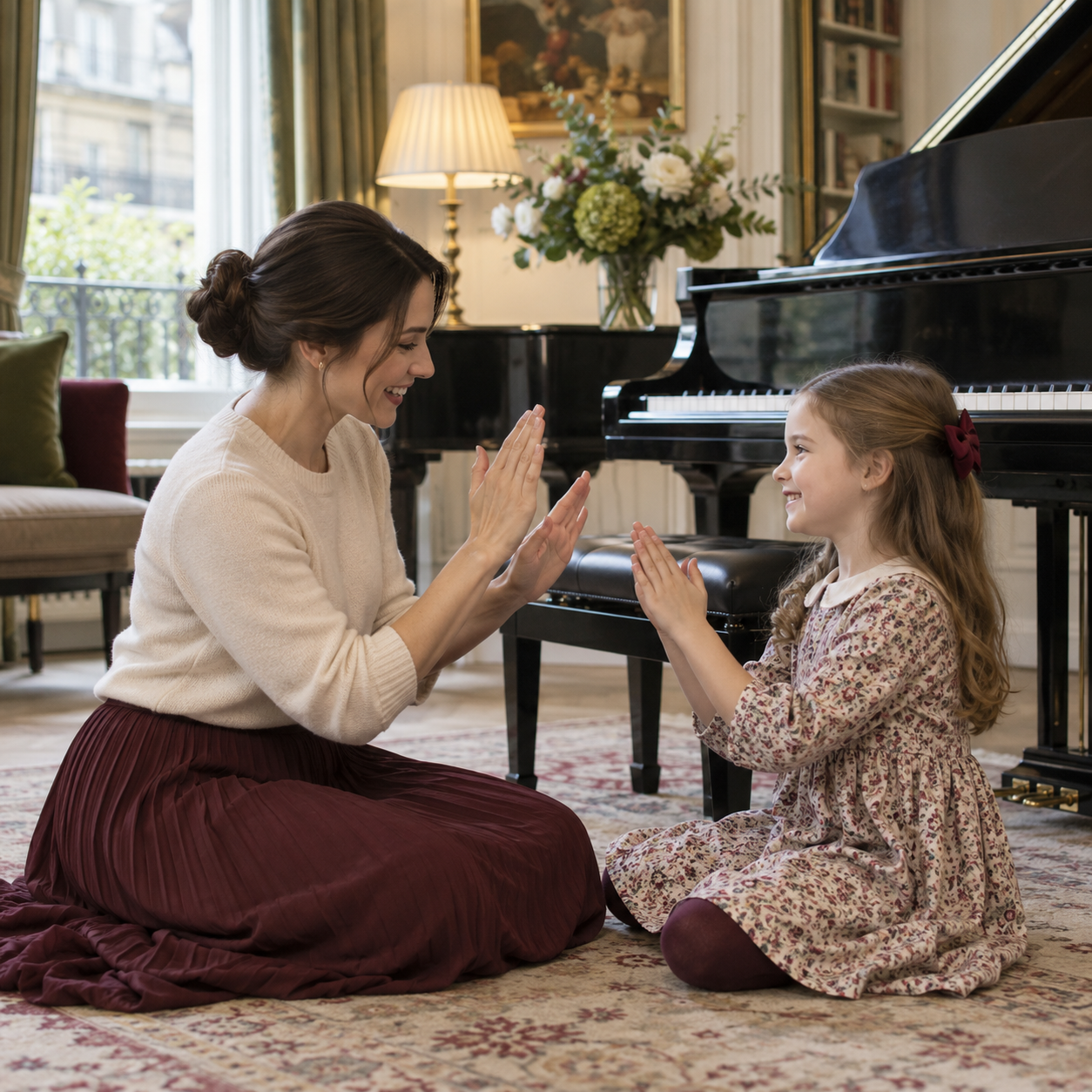
1. Rhythm echo. Tap two beats and ask the child to copy. Add one beat only when the reply is secure. Change one feature at a time: length, accent or speed.
2. Two-note answer. Play two nearby notes and let the child find them. If pitch matching is difficult, ask first whether the second note went higher, lower or stayed the same.
3. Sing then play. Sing a tiny phrase on a neutral syllable. The child sings it back before touching the keyboard. Voice removes the distraction of finding keys too early.
4. What is missing? Repeat a familiar three- or four-note phrase but omit one sound. The child identifies the gap, then restores it at the piano.
5. Musical message. Give a sequence such as “soft, two notes, then one high note”. The child says the plan aloud and performs it. This joins auditory memory with self-organisation.
Why the piano is a useful memory laboratory
The instrument gives immediate feedback. A copied rhythm can be heard; a melodic direction can be seen on the keyboard; a phrase can be repeated without needing a large ensemble. Because sound, sight and movement meet in one task, a teacher can discover where the difficulty lies. Did the child lose the pulse, forget the order, confuse pitch direction or simply move before listening?
Good children’s piano lessons in London use that information to adapt the task. WKMT’s article on memory and music learning offers further context, while its guide to performing from memory explains why secure recall is more than playing without a score.
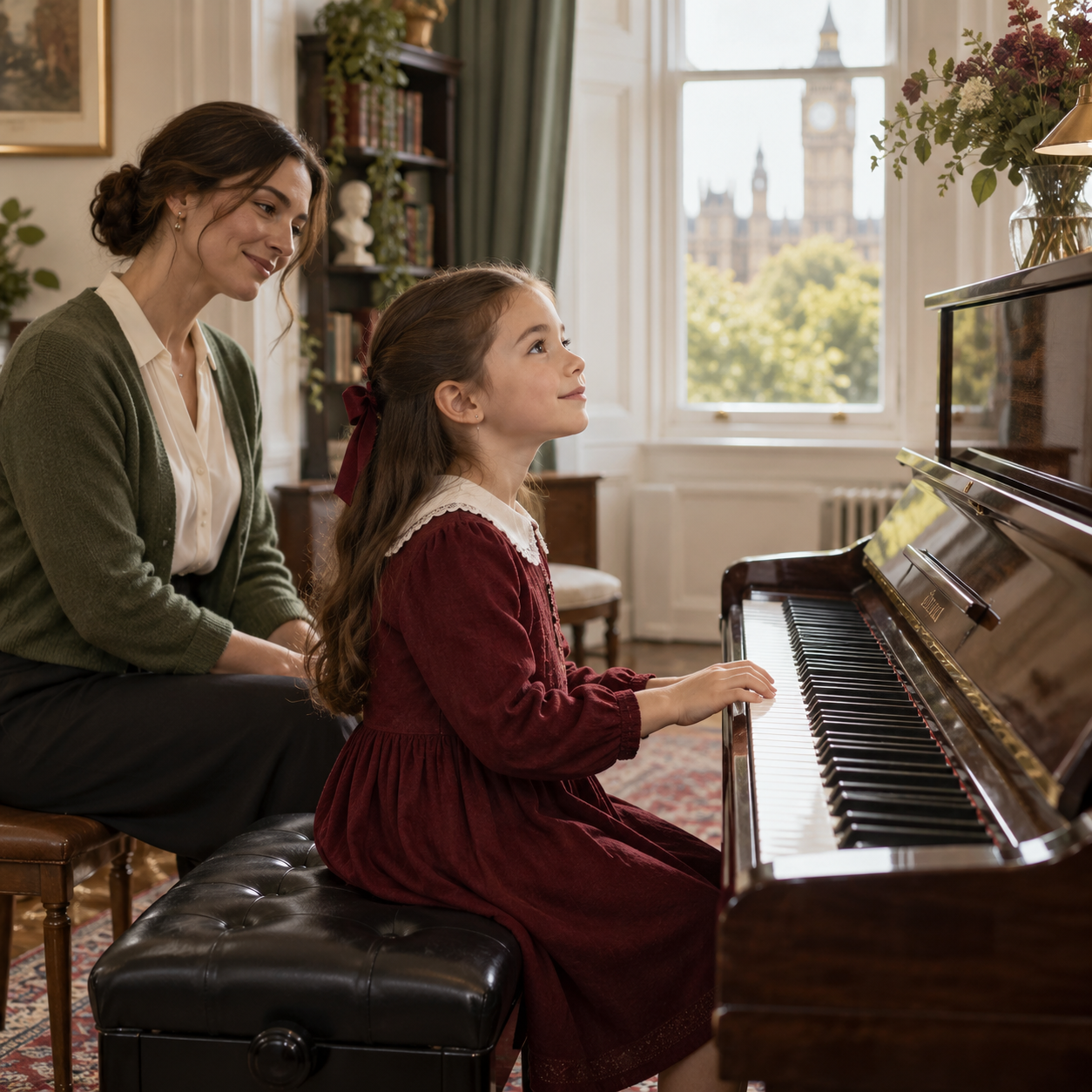
A child remembers music more securely when the phrase has shape, meaning and a chance to be answered.
How to keep auditory memory activities playful
Use short turns and alternate roles. Let the child invent a pattern for the adult to copy, including an occasional deliberate trick. This changes the child from recipient to musical author and reveals whether the pattern is clear enough to communicate. Keep praise specific: “You held the rhythm through the pause” is more useful than “clever”.
Do not turn every lesson into a memory examination. Reading, improvisation, technique and repertoire all matter. Auditory memory activities work best as brief threads woven through real music: remembering the opening of a piece, anticipating a cadence or replaying a phrase with a changed dynamic.
WKMT London
Help your child connect listening, movement and imagination through carefully paced piano study.
Sources on auditory memory activities
- Longitudinal study of music training and auditory working memory
- Systematic review of music training and executive functions
- Working-memory development in musically trained children
- School instrumental music and verbal memory study
- Attention and working memory in musically trained children
- NCCIH Music as Medicine evidence summary
Sources checked 6 October 2026. Educational guidance; individual development varies.