
 TRIAL LESSON
Piano Lessons
Early Years Music: What Piano Learning Looks Like Before Formal Study
Oct
WKMT London parent guide
Early Years Music: What Piano Learning Looks Like Before Formal Study
Before a child reads notation or practises a scale, music can already be full of purposeful learning. Songs, movement, imitation and carefully guided keyboard exploration build the listening and coordination from which later piano study grows.
In brief
Early years music for future piano learners should develop steady pulse, attentive listening, singing, turn-taking, sound contrasts and comfortable movement. Short musical games can include walking to a beat, echoing rhythms, finding high and low sounds, inventing a two-note answer and stopping with the music. The goal is not accelerated formal study; it is a secure, playful foundation for later lessons.
Early years music begins with relationship and response
A young child learns through shared attention. An adult sings a short phrase, pauses and waits; the child answers with a sound, movement or expression. That exchange is already musical. It teaches that sound has intention, that another person can be listened to, and that a response may arrive in time.
Good early years music therefore makes room for turn-taking rather than filling every second with instruction. Repeated songs become more valuable as the child begins to anticipate an ending, supply a missing word or prepare a movement before the cue. Familiarity is not stagnation. It allows memory, confidence and participation to deepen.
Pulse before counting and sound before symbols
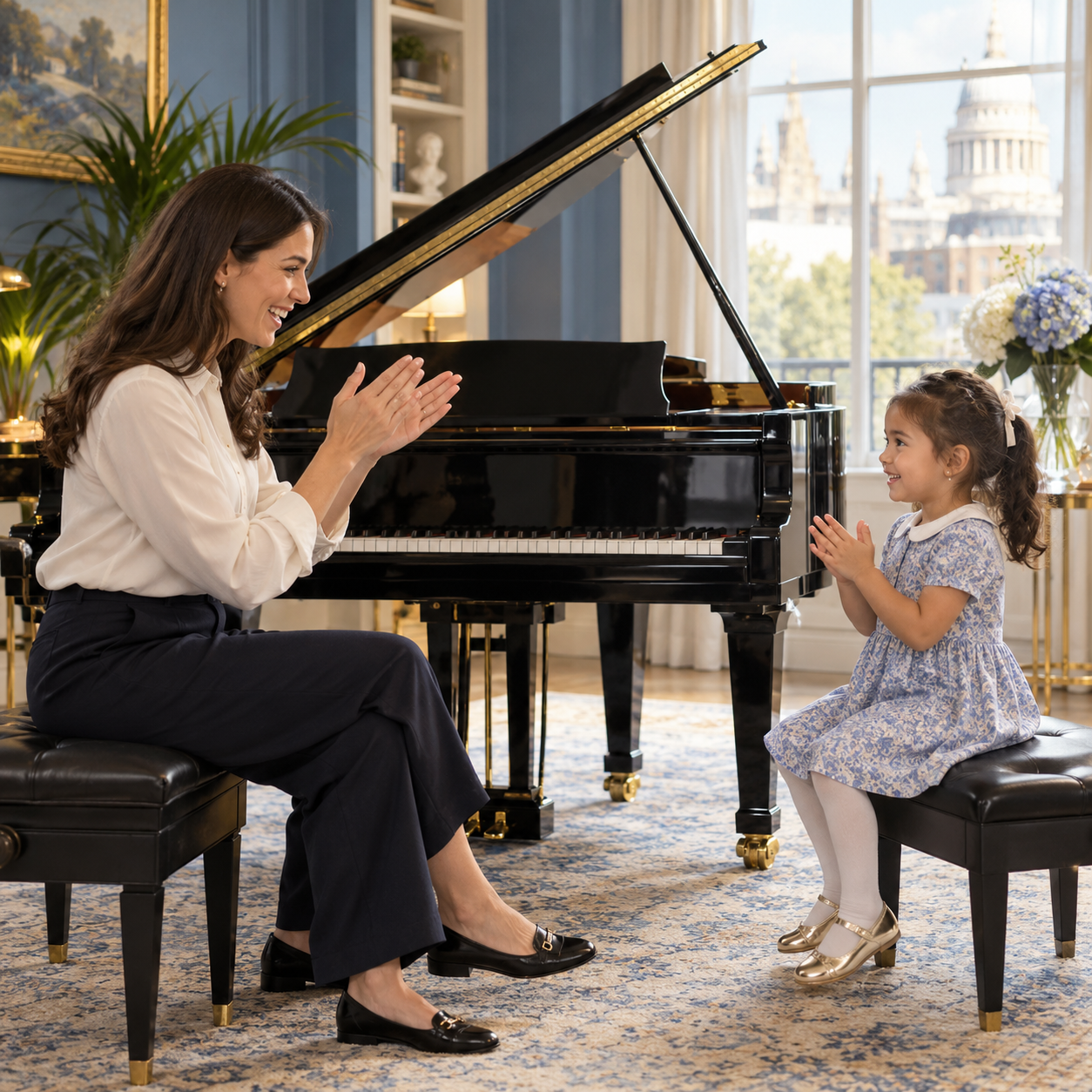
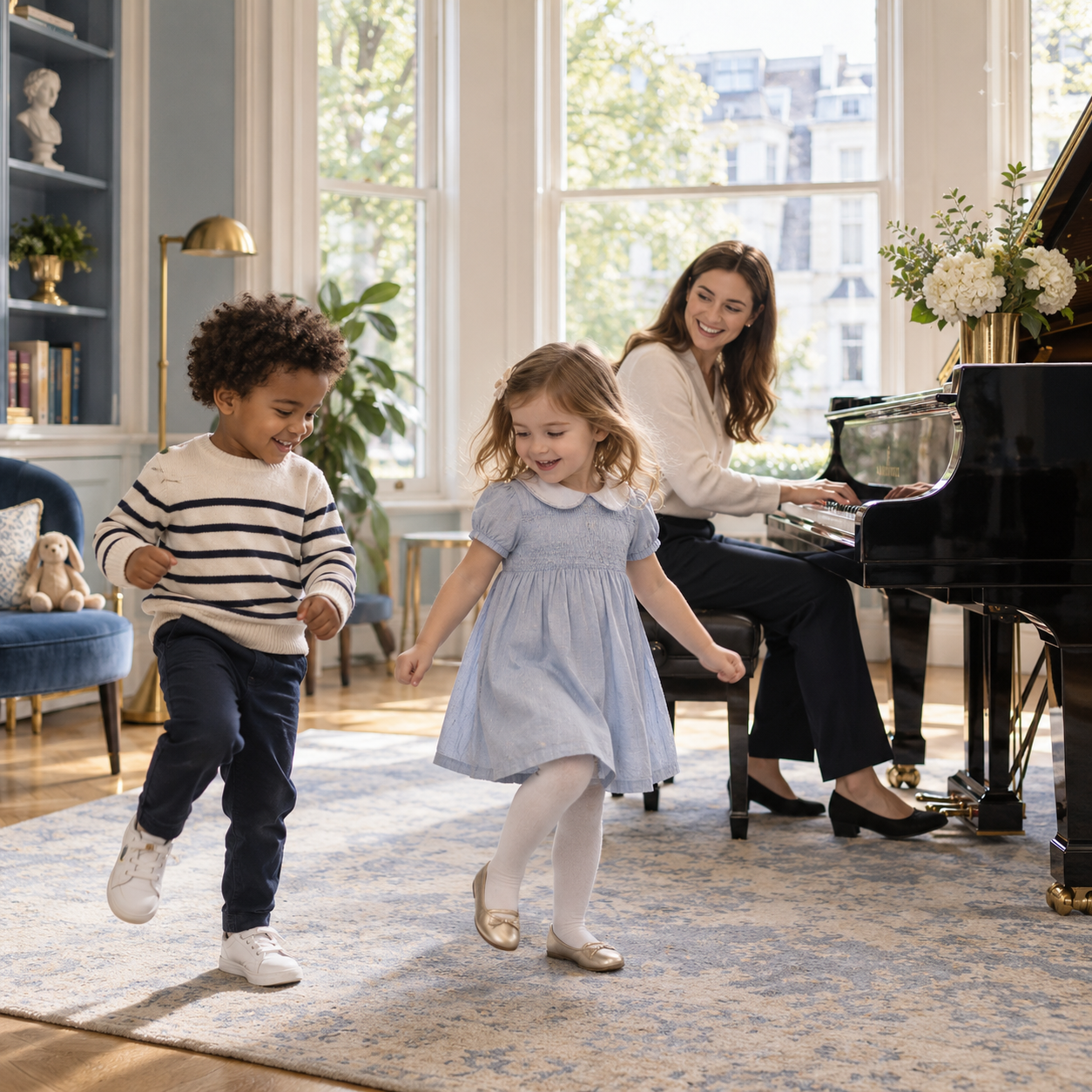
Young children can walk, sway or bounce with a steady beat before they can explain metre. Let the body experience regular time, then contrast it with the changing rhythm of names or song words. Feet may keep the pulse while hands clap the rhythm. The two layers make musical organisation tangible without requiring notation.
In children’s piano lessons in London, these experiences can lead naturally towards the keyboard. WKMT’s guide to music and movement activities shows how walking, freezing and echoing give later symbols something real to describe.
What the piano can offer before formal study
The keyboard makes musical contrasts visible and audible. A child can travel from low sounds to high ones, group black keys in twos and threes, or answer a teacher with a short pattern. Use one idea at a time and protect a comfortable hand shape. Exploration should sound intentional, not become a test of how many notes the child can name.
A simple task might ask the child to play two quiet notes after a listening cue, then leave space for the adult’s answer. Another uses a soft toy to mark groups of keys while a song moves higher or lower. Early years music at the piano succeeds when hearing guides movement and the child remains curious about the result.
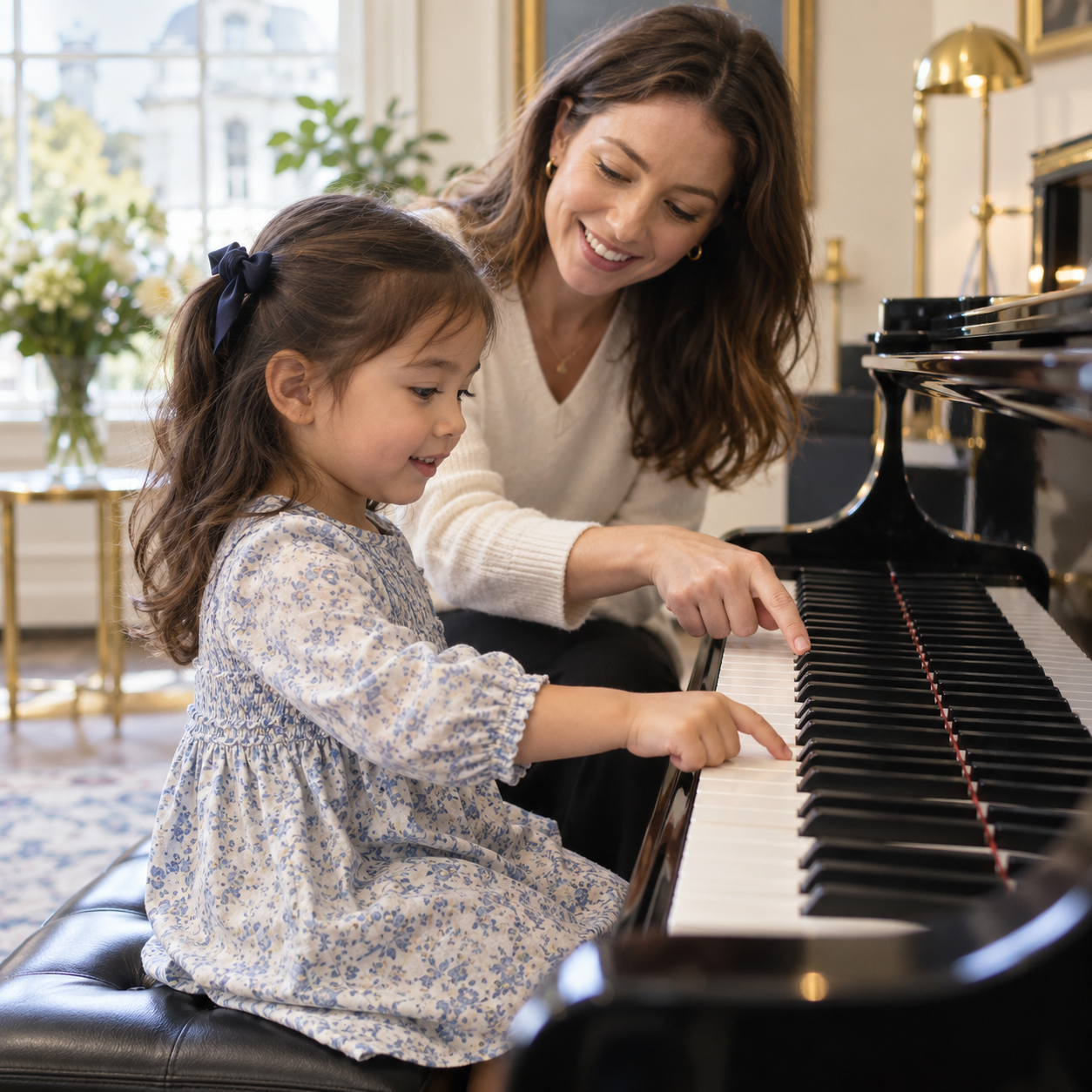
Before notation, a child can already learn that sound has direction, time and the power to invite an answer.
Readiness is broader than age
There is no single birthday at which every child becomes ready for individual piano teaching. Useful signs include the ability to attend to a short game, imitate a simple action, accept a turn, recover from a small mistake and show interest in repeating a musical idea. Physical comfort, language and temperament also shape the lesson.
Research links active musical participation with aspects of movement, attention and social interaction, but families should avoid promises of automatic general development. Early years music is worthwhile first as music: a way to listen, communicate, coordinate and imagine. A responsive teacher adjusts the length and structure of activities to the child in front of them.
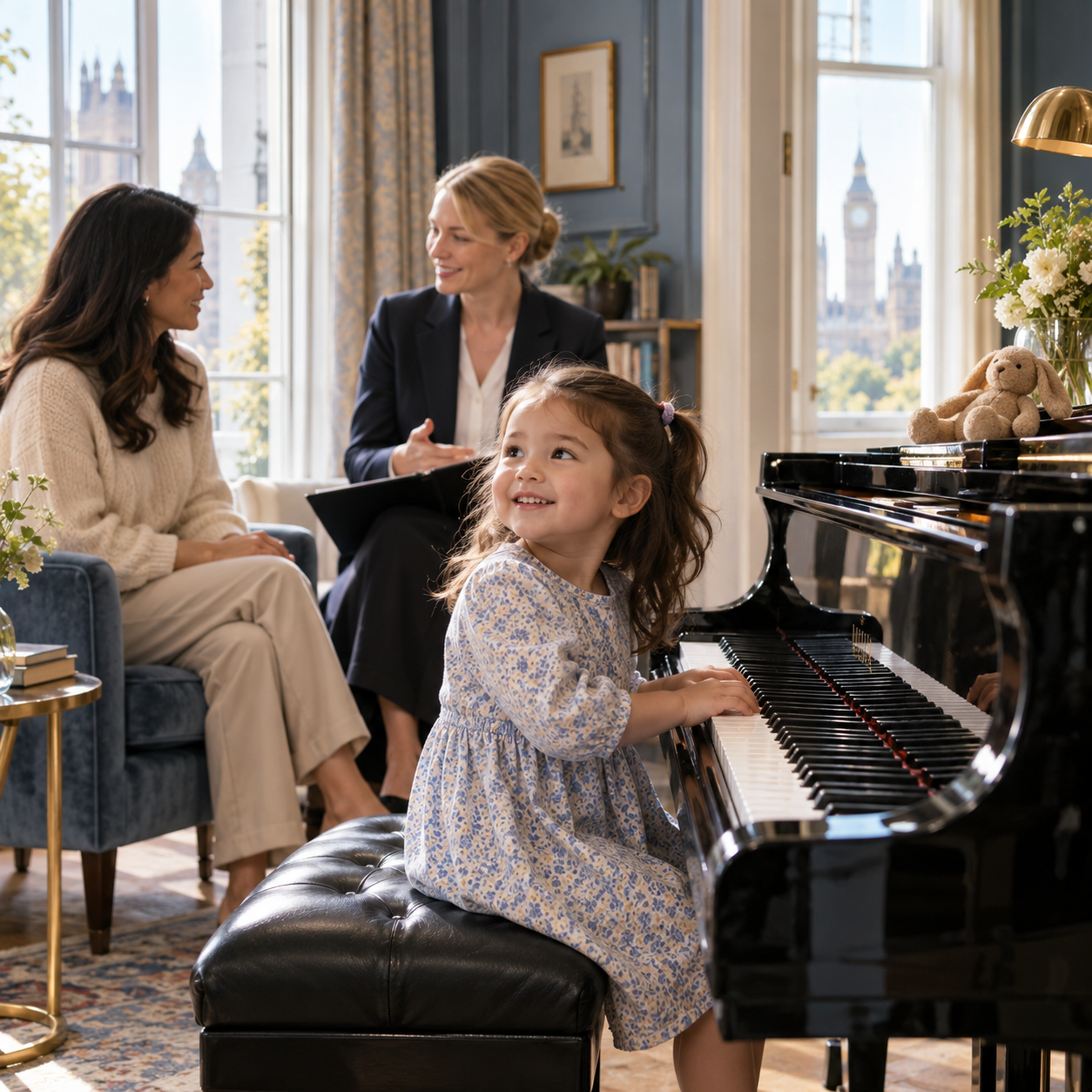
A twelve-minute early years music routine
Begin with a greeting song and a steady bounce. Walk or tap the pulse for two minutes, then play a call-and-response rhythm. Explore one keyboard contrast, such as high and low, and finish with a familiar song in which the child supplies a movement or final sound. Keep transitions calm and instructions brief.
Repeat the routine across several days. Progress may appear as anticipation, a steadier response or greater control of silence rather than a longer list of pieces. Stop while the child still wants one more turn. The best preparation for future piano lessons is an association between careful listening, achievable challenge and shared musical pleasure.
WKMT London
Give your child a thoughtful musical start shaped around listening, movement, imagination and individual readiness.
Explore children’s piano lessonsSources on early years music
- GOV.UK: Best Start in Life research review
- PubMed: music classes and infant development trial
- PubMed: parent-child music groups and social development
- PMC: systematic review of music and early childhood development
- UNICEF Parenting: babies, music and development
- Harvard Center on the Developing Child: serve and return
Sources checked 9 October 2026. Educational guidance; individual circumstances and progress vary.