
 TRIAL LESSON
Pianists, Piano Lessons
Piotr Anderszewski in London: Bach, Silence and the Art of Serious Listening
Jul
Piotr Anderszewski in London | Bach Listening Guide
WKMT London listening guide
Piotr Anderszewski in London: Bach, Silence and the Art of Serious Listening
A refined guide to Anderszewski’s sound world, essential recordings, London recital culture and the kind of attention serious adult pianists can bring back to their own study.
Quick Facts and Listening Essentials
Piotr Anderszewski is a Polish pianist, born in Warsaw in 1969, whose international reputation rests on unusually concentrated readings of Bach, Beethoven, Schumann, Szymanowski, Mozart and Brahms. His official biography and Warner Classics profile frame him as both recitalist and recording artist, with a career shaped by major European halls, orchestras and a particularly serious relationship with recorded sound. For London listeners, the most useful first question is not “how brilliant is he?” but “how does he make time, silence and harmonic direction audible?”
Early Life and Musical Formation
Anderszewski’s biography is often told through geography: Warsaw, Strasbourg, Lyon, Southern California, Paris, and the wider European circuit in which his mature career unfolded. That geography matters because his playing rarely sounds provincial or school-bound. It carries a Central European seriousness about structure, a French sensitivity to colour, and a traveller’s suspicion of easy labels.
The public turning point came through the Leeds Piano Competition in 1990, where Anderszewski withdrew during the semi-final rather than continue with a performance he felt had moved away from his artistic standard. That episode has sometimes been mythologised, but its lasting value is simpler: it revealed a pianist for whom integrity of interpretation mattered more than a conventional career step. The later career has largely confirmed that temperament.
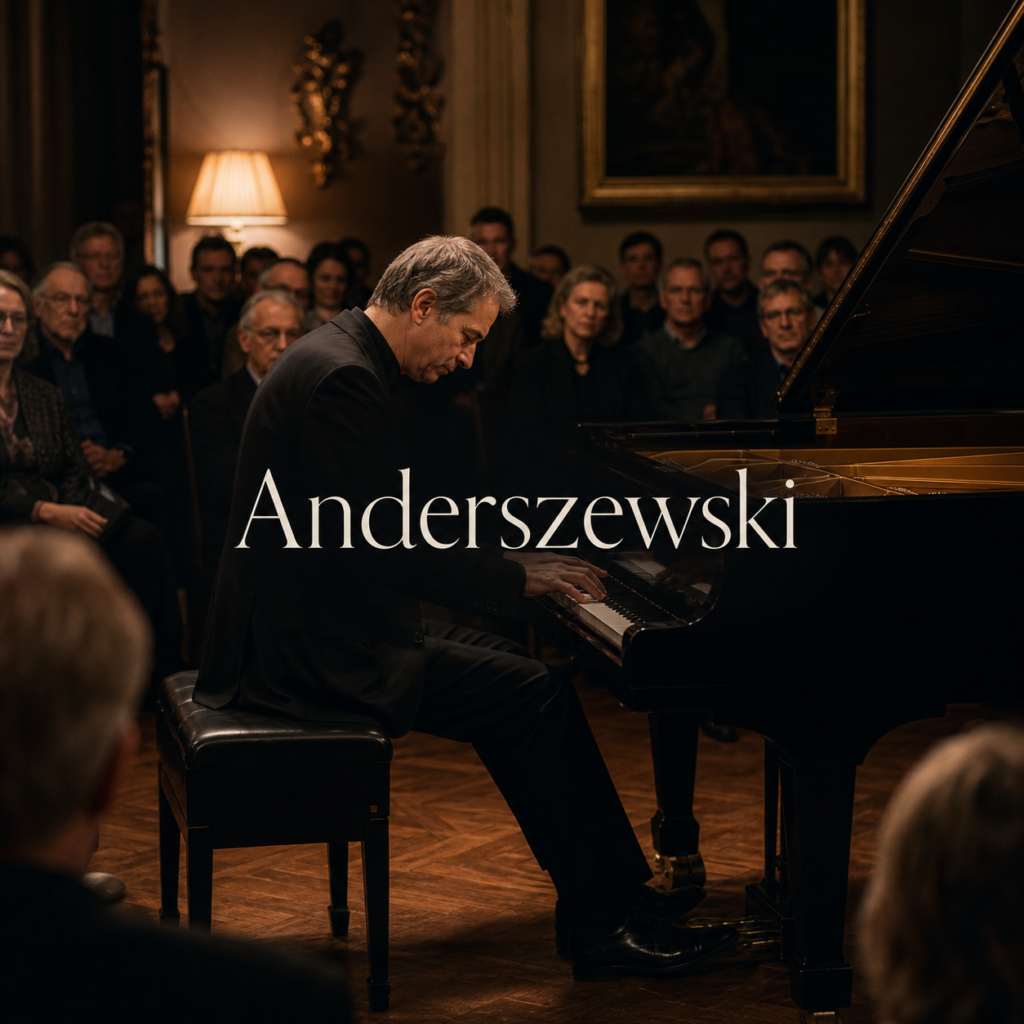
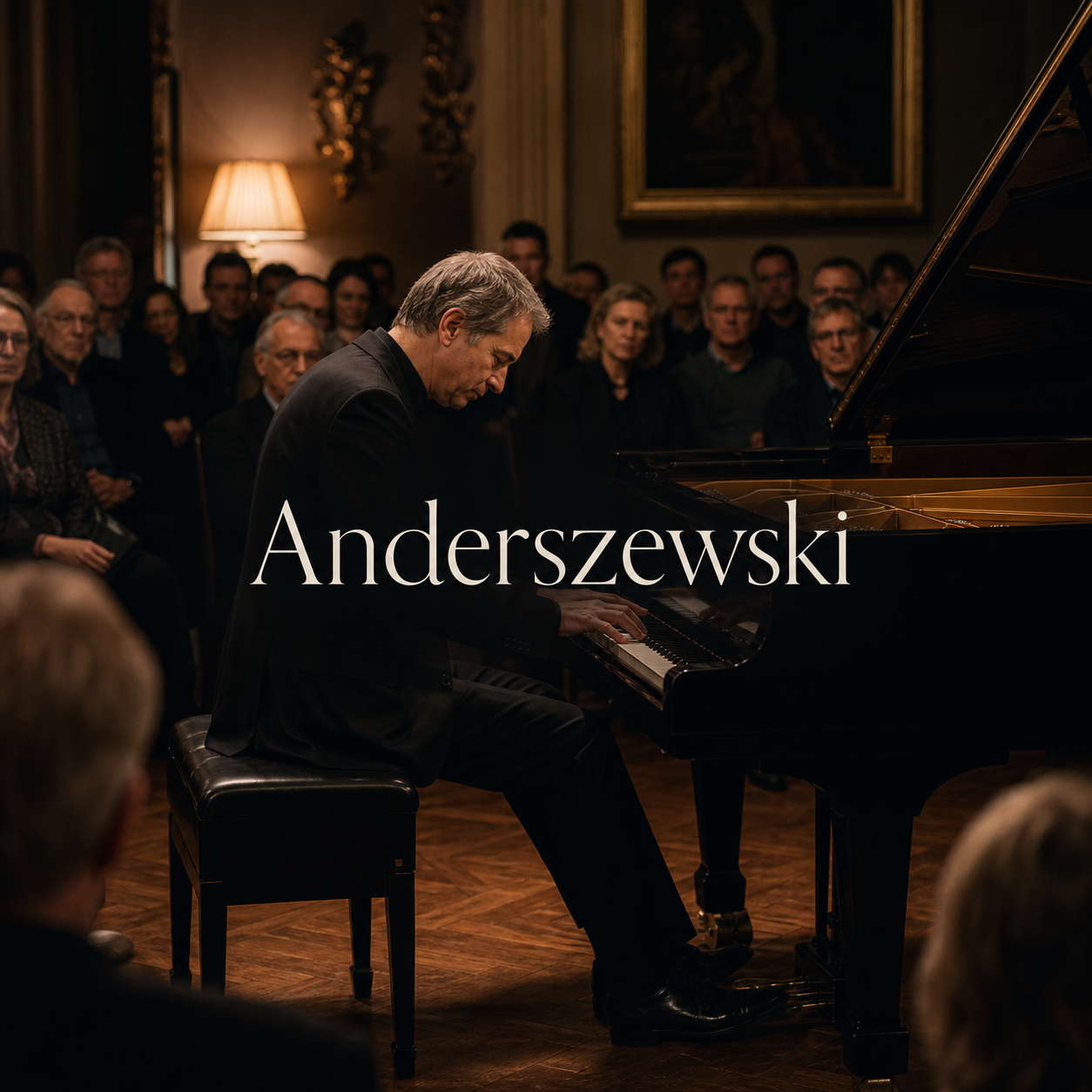
For the listener, this helps explain the atmosphere around his performances. Anderszewski is not a pianist of constant external display. He often asks the audience to follow a line through stillness, to hear phrase endings, and to sense how a silence can prepare the next musical event. In that respect, Piotr Anderszewski is a useful name for any London pianist who wants to understand the difference between technical control and artistic necessity.
Teacher’s Note
When a pupil hears Anderszewski, ask them to identify one moment where restraint is more expressive than force. That single listening task often teaches more than a general request to “play musically”.
Career Highlights and Signature Repertoire
Anderszewski’s career resists a single repertory label, yet certain composers return with particular force. Bach is central: the Partitas and selected keyboard works reveal his fascination with dance, architecture and the weight of silence. Beethoven brings another kind of testing ground, especially in works where variation form and long-range argument require patience rather than theatricality. Szymanowski gives him a link to Polish colour and twentieth-century harmonic perfume. Schumann, Mozart, Janacek and Brahms show the inward side of his art.
The prizes and distinctions are less important than the pattern they confirm. The Gilmore Artist Award, the Royal Philharmonic Society recognition and major recording projects all point towards a pianist valued for individuality, not merely for virtuoso currency. Warner Classics’ catalogue is especially revealing because it places Bach beside Brahms, Mozart beside Szymanowski, and shows a musician willing to let a disc feel like a considered essay rather than a market category.
That breadth is useful for London audiences. A city with Wigmore Hall intimacy, Southbank scale, BBC Proms openness and conservatoire-level expectations can reward different pianistic virtues from one week to the next. Anderszewski belongs naturally in that ecology because his playing is concerned with how music thinks. Whether the programme is Bach, Beethoven, Schumann or Polish repertoire, the performance tends to ask for listening that is active rather than decorative.
Bach
Listen for dancing rhythm held inside a severe architecture. The music should move, but never lose its spine.
Beethoven
Notice the patience of argument: a small change in texture can redirect the whole musical landscape.
Szymanowski
Colour is never just perfume. In Anderszewski’s hands it often clarifies memory, distance and atmosphere.
Silence, Structure and Tempo
The most distinctive Anderszewski quality is his treatment of musical time. Some pianists fill silence nervously; he lets it hold the room. That does not mean slow playing for its own sake. It means that rests, phrase endings, delayed arrivals and quiet transitions become structural material. The listener senses the architecture because the empty spaces are not empty.
In Bach, this can be heard as a tension between dance and thought. A partita movement must keep its pulse, yet the phrase should still speak as rhetoric. Listen for how Anderszewski lets a line breathe before the next entry; the silence gives the following voice dignity. In Beethoven, the same instinct becomes dramatic. A tempo may feel broad, but the harmony keeps moving underneath. In Szymanowski, silence can become colour: a pause after a luminous chord lets the sound decay like light leaving a room.
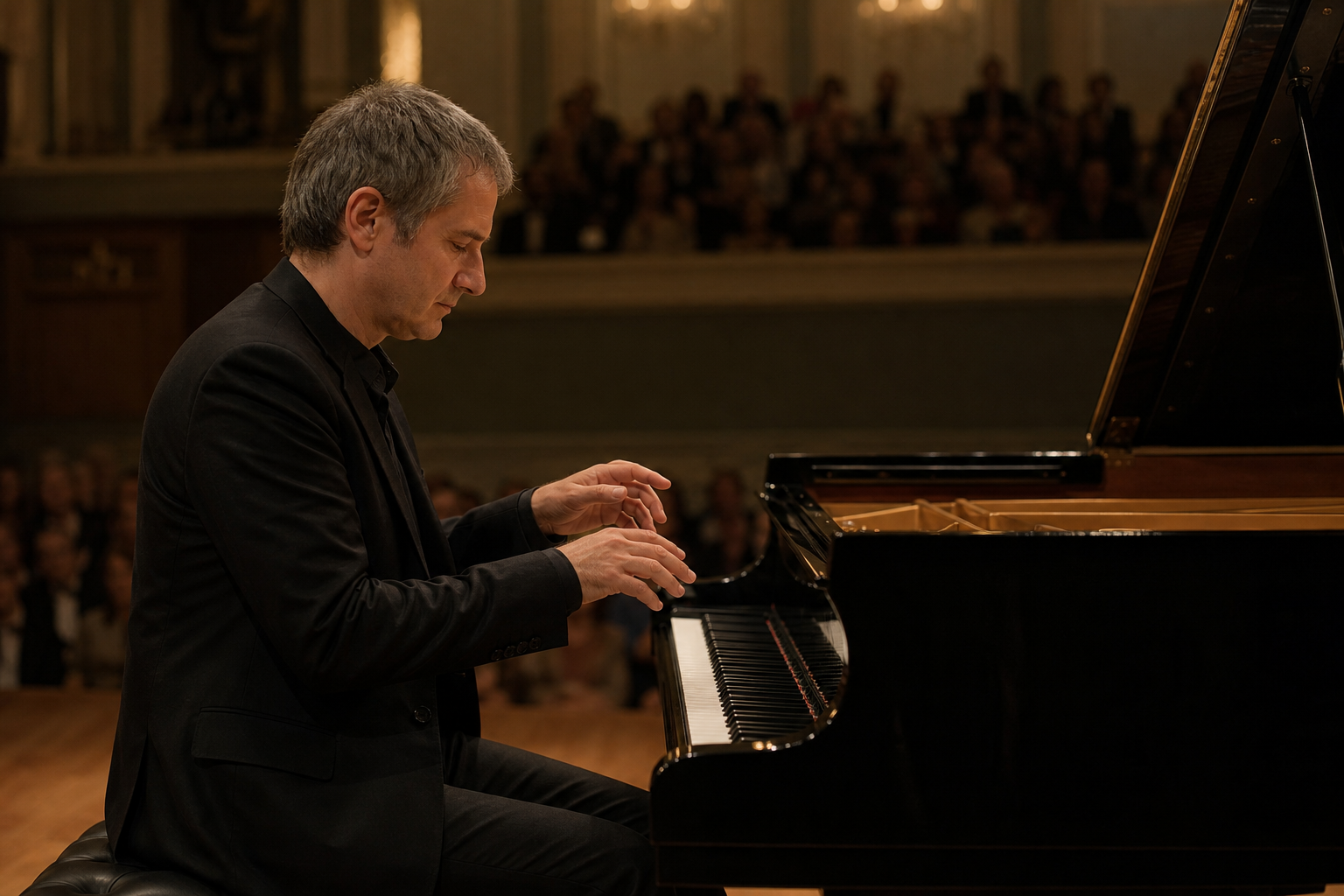
Serious piano listening begins when the ear stops treating silence as absence and starts hearing it as part of the form.
For adult pianists, this is practical. Before repeating a difficult passage, ask where the phrase is going and where it is allowed to breathe. Tempo is not a number pasted on top of the score; it is the speed at which meaning remains legible. Anderszewski’s playing can be demanding because it refuses easy excitement, but that is precisely why it repays repeated listening.
Landmark Recordings and How to Listen
A good first route through Piotr Anderszewski recordings is not chronological. Start by choosing a musical problem. If the question is architecture, hear Bach. If the question is transformation, hear Beethoven. If the question is colour under pressure, hear Szymanowski or Janacek. If the question is late inwardness, hear Brahms. This turns a discography into a listening practice.
| Listening Aim | Suggested Repertoire | What To Notice |
|---|---|---|
| Architecture | Bach Partitas and keyboard works | Dance rhythm, voice hierarchy and the proportion of silence. |
| Transformation | Beethoven variation writing | How a small rhythmic or harmonic cell grows into a full argument. |
| Colour | Szymanowski and Janacek | Pedal shade, harmonic perfume and speech-like irregularity. |
| Inwardness | Brahms late piano pieces | Bass warmth, middle-register depth and restraint of climax. |
One illustrative method is to hear the opening minute of a Bach movement twice. The first time, follow the upper line. The second time, follow the bass and the implied harmony. Anderszewski’s value becomes clearer on the second hearing because the music’s balance is not merely melodic; it is architectural. The same method works in Brahms. Listen once for the tune, then again for the inner voices and the decay of the sound after each cadence.
For teachers and advanced amateurs, this kind of listening builds vocabulary. Instead of saying a performance is “deep”, one can name the means: slower harmonic breathing, controlled release, limited but telling pedal, and a refusal to turn climaxes into blunt volume.
Anderszewski and London
London is not merely a place to buy tickets; it is a listening environment. Wigmore Hall encourages concentration because the room exposes colour, voicing and phrase-endings with unusual honesty. The Royal Festival Hall and wider Southbank Centre ecosystem place piano recitals within a larger civic culture. The BBC Proms and Royal Albert Hall bring piano interpretation into a public ritual, where intimacy must survive scale. WKMT’s own work in classical piano study in London belongs to that same city of serious listeners.
Last checked: 2026-07-08. Current event pages should always be verified through the artist’s official schedule and the relevant venue before travel, because recital listings and broadcast availability change. This article does not rely on a specific future London date; it uses London as cultural context rather than as a live ticket notice.
That context is still important. A listener who has heard Anderszewski in a small hall will often remember the pressure of attention: the audience becomes alert to a held chord, a delayed resolution, a left-hand colour that would disappear in a less focused performance. London audiences respond to this because the city offers a rare density of informed listening. A pianist who plays quietly but intensely can still command the room.
WKMT Perspective
A recital is most educational when the listener arrives with one question. For Anderszewski, try this: how does silence change the next sound?
How to Experience Him Live
Approach an Anderszewski recital as chamber listening, even when the hall is large. Arrive having heard one Bach track and one non-Bach work, then let the live performance correct your assumptions. Sit where the piano’s middle register is clear rather than where the instrument merely sounds loud. In a hall such as Wigmore, that may mean valuing balance and line over spectacle; in a larger venue, listen for whether the quiet playing still carries intention.
First-time listeners can build a simple programme at home: Bach for architecture, Beethoven for transformation, Szymanowski for colour, Brahms for late inwardness. That sequence prepares the ear for the range of his recital identity without pretending that one album explains the artist.
During the performance, resist the temptation to judge each movement immediately. Anderszewski’s best work often reveals itself retrospectively: a tempo that first seemed severe may later feel necessary, and a colour that sounded withheld may prove to have protected the shape of the whole piece. Let one movement settle before naming it. That habit of delayed judgement is useful beyond concerts, because it trains the same patience required in serious practice.
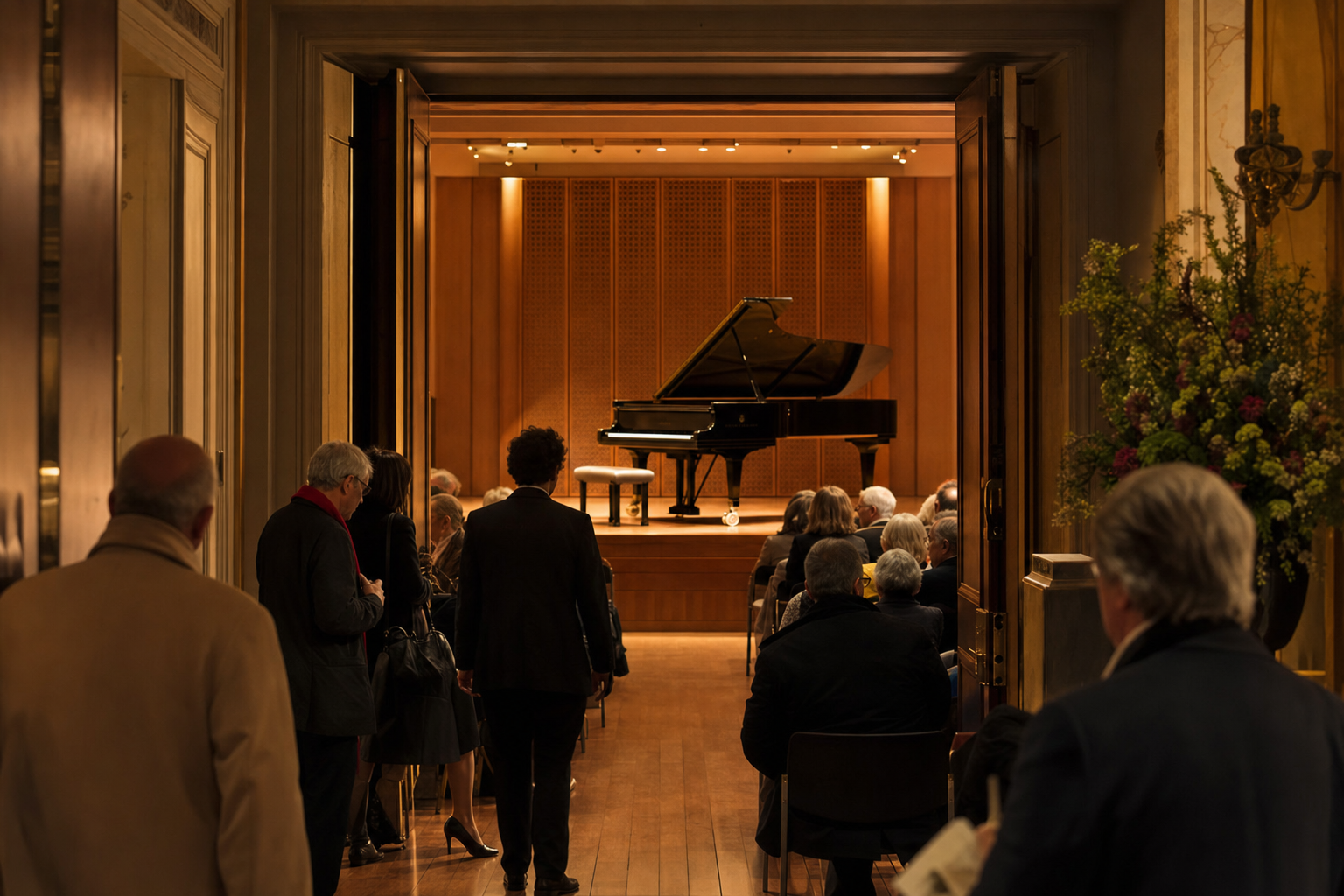
For adult learners, a live Anderszewski performance can also reshape practice. Many pianists spend too much time asking whether the notes are correct and too little time asking what the sound is doing. A serious lesson should connect both. WKMT’s adult piano lessons in London can help returning and advanced amateur pianists translate listening into touch, voicing and phrase control.
Develop a more serious piano ear
WKMT helps London pianists connect repertoire, technique and listening culture through structured classical piano study.
Further Reading, FAQ and Sources on Piotr Anderszewski
Has Piotr Anderszewski recorded Bach?
Yes. Bach is one of the central strands of his recorded identity, especially through keyboard works where dance, counterpoint and silence can be heard with unusual clarity.
Why is he associated with silence?
Because his interpretations often make pauses, phrase endings and decays of sound feel structurally meaningful rather than incidental. This is a listening description, not a marketing slogan.
Is Piotr Anderszewski useful for piano students to hear?
Yes, especially for adult and advanced amateur pianists studying voicing, pacing, Bach articulation, restrained pedalling and the discipline of making form audible.