
 TRIAL LESSON
Pianists, Piano Lessons
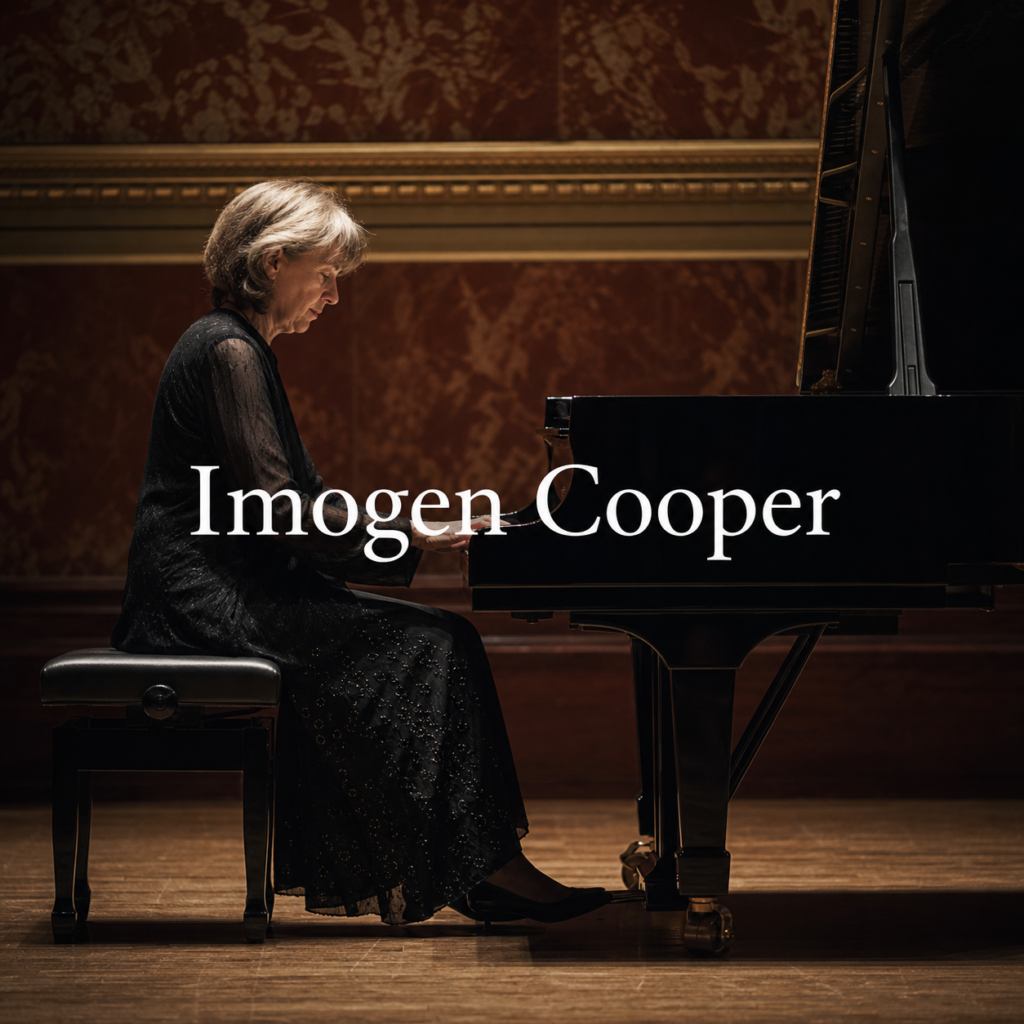
Imogen Cooper in London: Schubert, Colour and the Art of Serious Piano Listening
Jul
Imogen Cooper in London
WKMT London Piano Culture
Imogen Cooper in London: Schubert, Colour and the Art of Serious Piano Listening
A WKMT guide to Dame Imogen Cooper’s artistry, recordings and London recital legacy for serious listeners and adult pianists.
Quick Overview
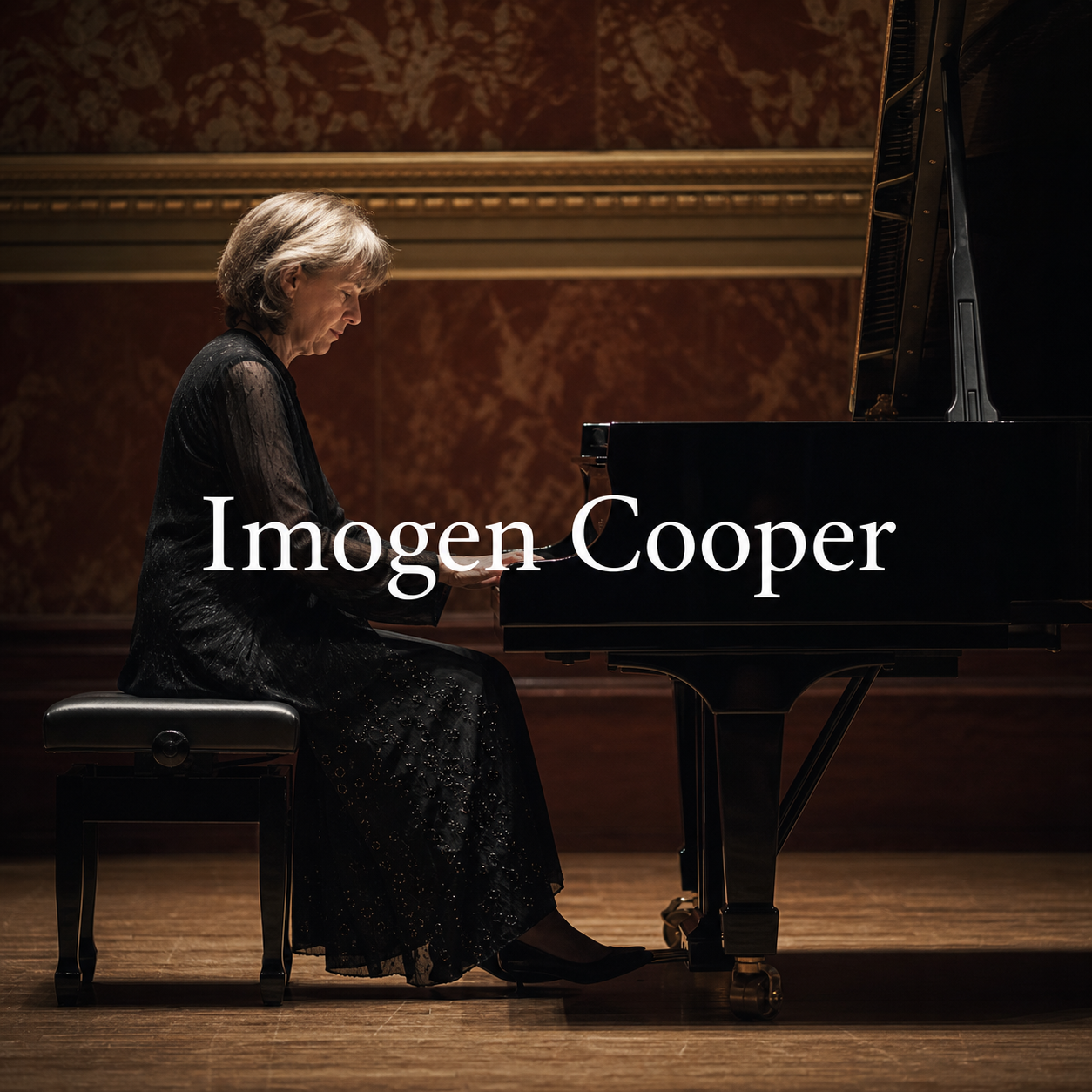
Imogen Cooper is a British pianist of rare concentration: a musician associated with Schubert, Mozart, Schumann, chamber music and song partnership rather than display for its own sake. For London listeners, her career also carries a local story. North London-born, formed in Paris and Vienna, honoured as a Dame for services to music, and long connected with Wigmore Hall, she represents a kind of pianism that values inner hearing, proportion and human speech at the keyboard.
Why Imogen Cooper Matters Today
Searches for Imogen Cooper often begin with a simple biographical question and end with a more musical one: why does her playing continue to matter in a crowded recording culture? The answer lies in restraint. Cooper’s reputation has been built on tone that speaks without fuss, tempo choices that feel considered rather than imposed, and a strong sense that the score is being listened to from within.
Her official biography places the centre of gravity around Mozart, Schubert, Schumann, Beethoven, chamber music and song. That range is not incidental. It asks for a pianist who can make a long phrase breathe, who can keep harmonic tension alive at a quiet dynamic, and who can collaborate with singers and instrumentalists without flattening the piano into accompaniment. For adult pianists, that is a useful model: the highest level of playing is often less about adding force and more about removing anything that clouds the line.
Key Listening Point
Listen for the moment after a phrase has ended. In Cooper’s best Schubert and Mozart, silence is not a gap; it is part of the sentence.
Biography in Brief
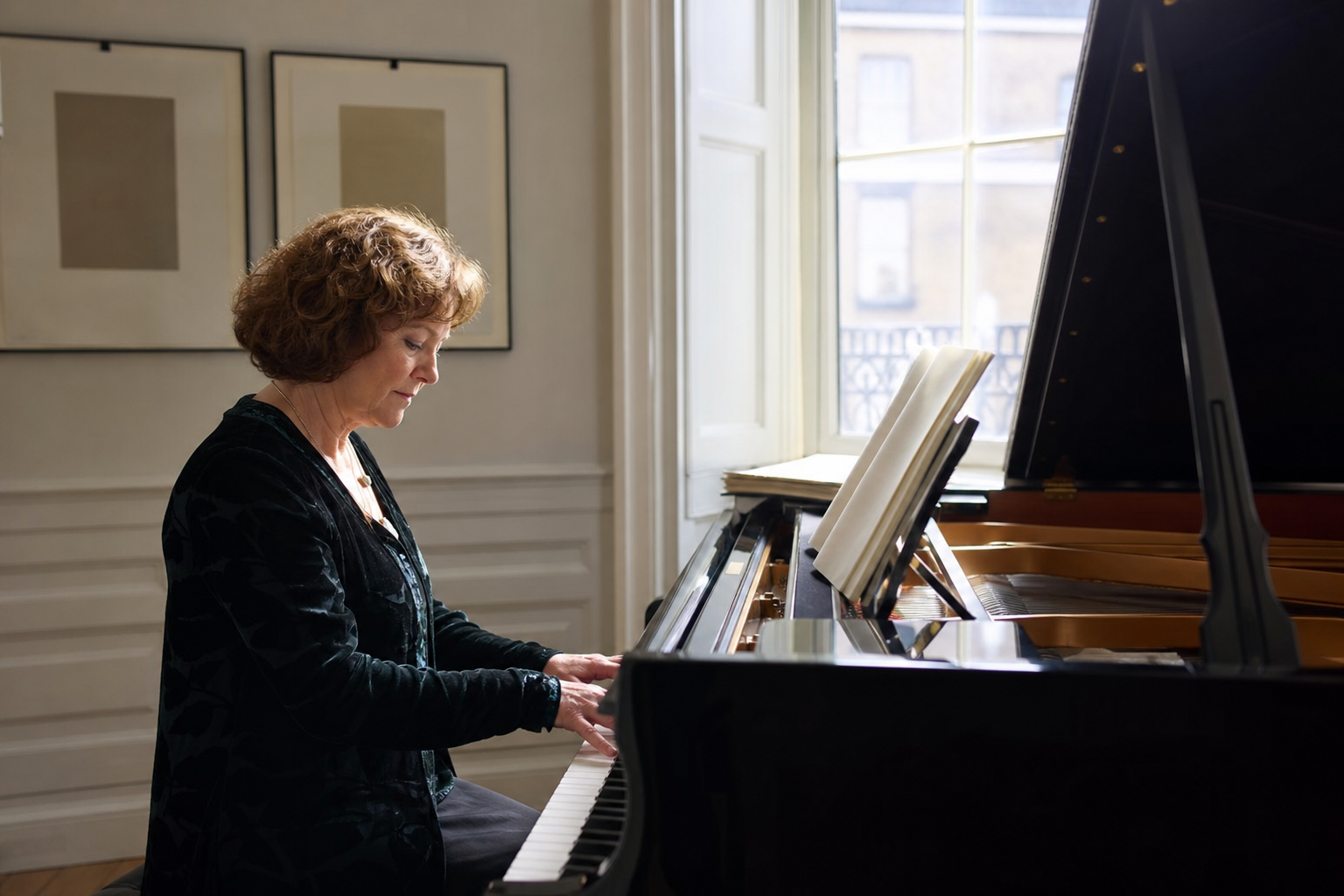
Cooper was born in North London in 1949 and studied abroad early, including formative years in Paris and later work in Vienna. The names around her training matter: Jacques Fevrier, Yvonne Lefebure, Germaine Mounier, Alfred Brendel, Paul Badura-Skoda and Jorg Demus represent a European keyboard culture in which text, structure and sound are inseparable. That background helps explain why Cooper’s playing rarely sounds provincial, even when the repertoire is intimate.
Her public recognition has followed the same long arc. She received the Royal Philharmonic Society’s Instrumentalist Award in 2008, the Queen’s Medal for Music in 2019, and was appointed DBE in the 2021 Birthday Honours for services to music. She also founded the Imogen Cooper Music Trust in 2015, giving young professional musicians intensive study time away from the noise of ordinary career pressure.
In January 2026, Askonas Holt reported that Cooper received the Wigmore Hall Medal after her final solo recital at the Hall. Wigmore Hall’s archive lists that 18 January 2026 event as a Schubert recital of approximately 90 minutes. The detail is telling: when a career of this scale turns towards farewell, it does so through Schubert and through a London room built for concentrated listening.
At a Glance
North London, 1949
Schubert, Mozart, Schumann, Beethoven, song and chamber music
RPS Instrumentalist Award, Queen’s Medal for Music, DBE
Long Wigmore Hall association and final solo recital there in 2026
Signature Repertoire and Interpretive Hallmarks
Cooper’s Schubert is often the best place to begin. Her playing understands that Schubert’s late piano music can turn from song to abyss in a few bars. The danger is to make the contrast theatrical. Cooper tends instead to let the change happen through harmony, voicing and weight. The listener feels the floor move because the pianist has kept the surface calm.
In Mozart, she avoids porcelain neatness. The articulation remains clear, but the phrase has conversation in it. In Beethoven, particularly in late works and variations, her strength is architectural patience. She does not need to announce profundity; she allows the form to accumulate meaning.
| Repertoire area | What to hear | Lesson for pianists |
|---|---|---|
| Schubert | Long-breathed melody, inward drama, harmonic patience | Shape the line before increasing volume |
| Mozart | Speech-like articulation and transparent texture | Make clarity expressive, not mechanical |
| Schumann | Character shifts held inside one poetic world | Change colour without losing pulse |
| Lieder and chamber music | Listening as partnership | Pedal and voicing must leave space for others |
A Serious Listener’s Guide
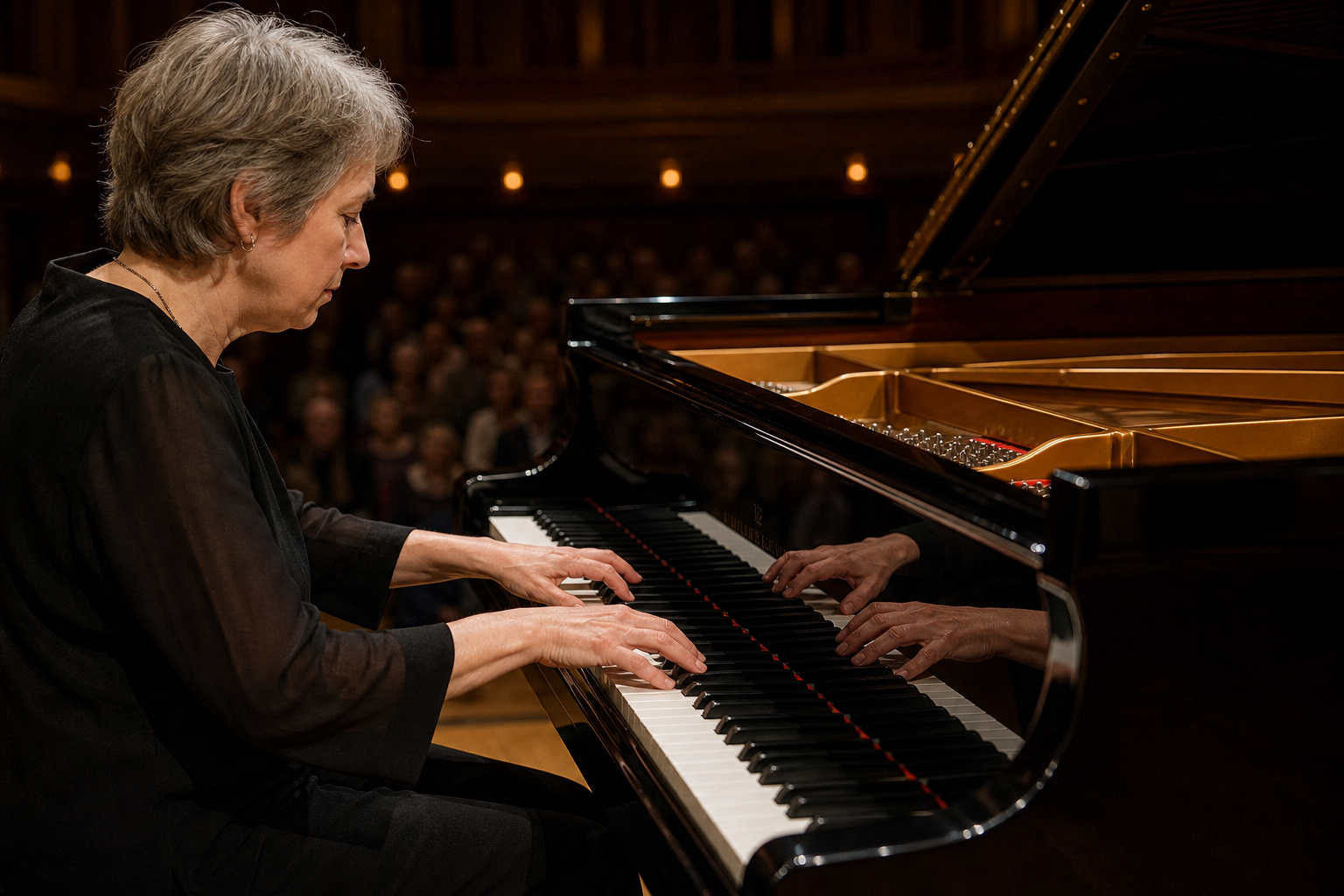
Begin with her official recording list, then choose by question rather than by catalogue order. If you want to understand Cooper’s Schubert, start with the Schubert Live releases, recorded around her London International Piano Series performances. If you want late Beethoven, the Chandos listing for Beethoven: The Last Three Sonatas gives a recent point of entry. For song partnership, her work with Wolfgang Holzmair in Schubert cycles shows how the piano can narrate without claiming the foreground.
Hear how the left hand sustains emotional weather while the melody remains plain-spoken.
Notice articulation that has lift and elegance without becoming brittle.
Use her recordings as models for proportion: where to breathe, where to wait, where not to over-explain.
The most valuable thing Cooper teaches the listener is that intensity does not need to be loud.
Imogen Cooper in London
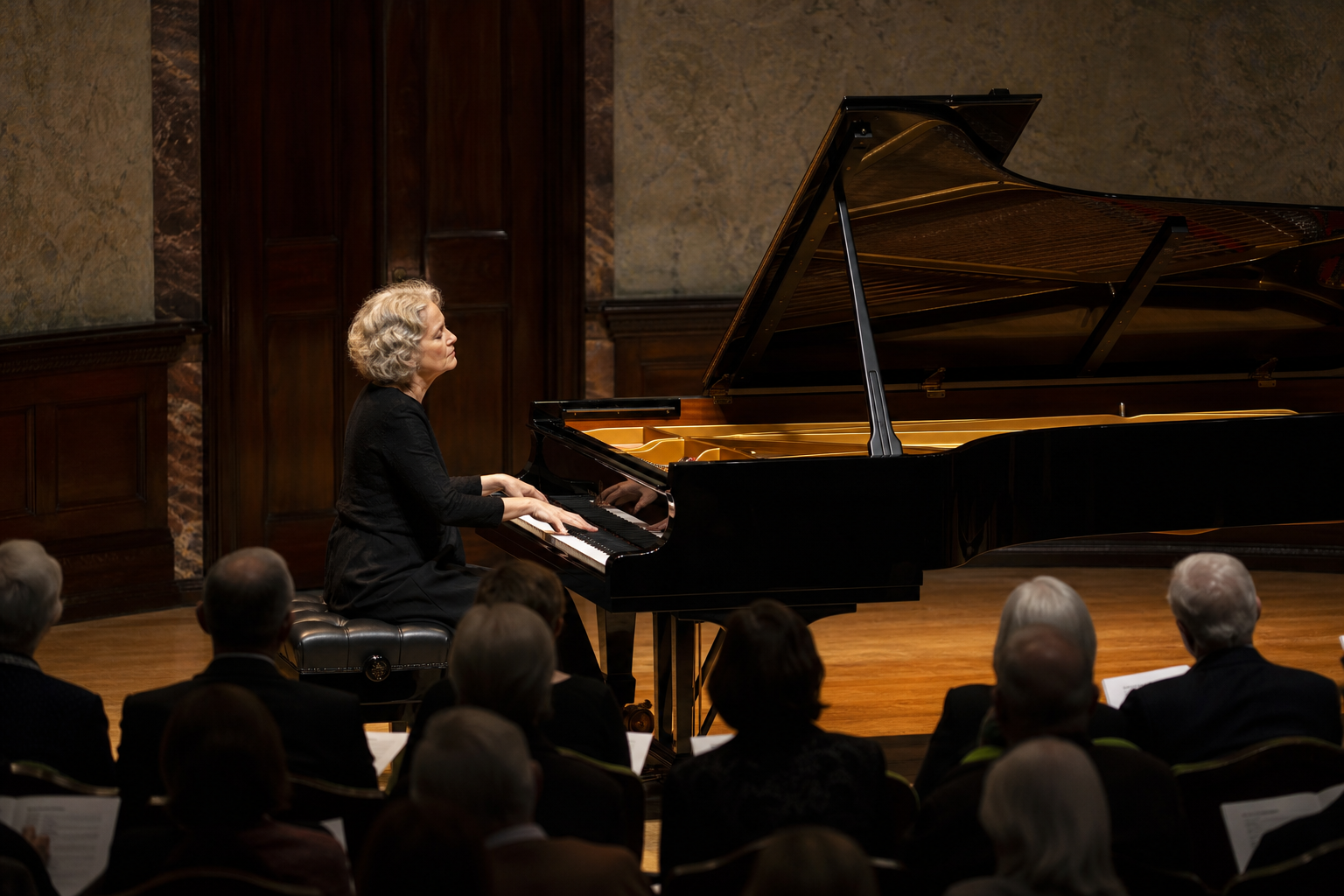
London has been more than a backdrop. The city links Cooper’s biography, audience and recital identity. Wigmore Hall, in particular, suits the scale of her art: close enough for a half-colour in the bass to register, formal enough to demand concentration, and historically connected to song, chamber music and solo piano culture.
Wigmore Hall’s page for her January 2026 recital lists Schubert’s Impromptus in a concert of about 90 minutes, archived after the event. Askonas Holt’s January 2026 note records the award of the Wigmore Hall Medal after that final solo appearance. A later Wigmore listing shows further appearance context around 2026 programming, which matters for readers checking current London connections. Time-sensitive concert information was last checked on 2 July 2026.
For WKMT readers, the point is practical. London piano study is not only about lessons; it is also about learning how to listen in the city’s best rooms, then carrying that listening back into practice. A Cooper recital asks for attention to scale: how a hall changes soft playing, how repeated material shifts meaning, and how a performer trusts a cultivated audience.
Pedagogical Legacy and Adult Listening
The Imogen Cooper Music Trust frames her teaching legacy clearly: young musicians are given time and space for intensive study, with depth valued above speed. That principle also matters to adult learners. Many mature pianists arrive with a strong musical appetite but uncertain habits of listening. Cooper’s example suggests a different order: first hear the phrase, then choose the touch.
At WKMT, this connects naturally with classical piano study in London and with the needs of adults who want more than note-learning. A pianist studying Schubert or Mozart should ask: where is the line going, which voice carries the thought, what kind of silence follows the cadence, and how much pedal can be removed before the harmony loses warmth?
For Adult Learners
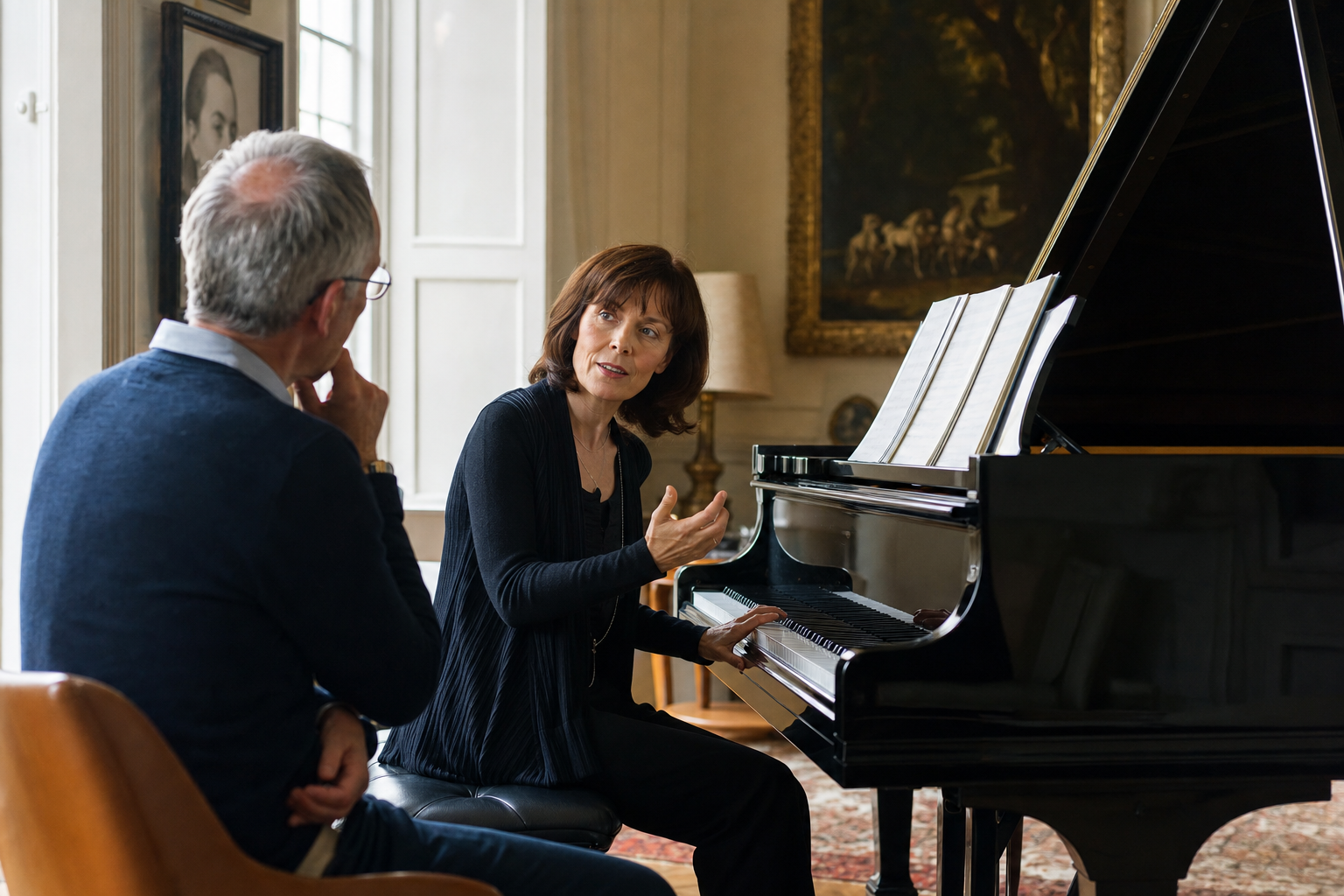
If Cooper’s playing attracts you, bring that recording into a lesson. A good teacher can translate what you admire into concrete decisions about voicing, timing, pedalling and phrase direction.
Recordings Compared
Use the recordings as a map of musical questions. Schubert Live asks how late classical form can hold private feeling. The Mozart concerto recordings ask how dialogue with orchestra changes the pianist’s attack. The Schumann and Chopin discs ask how a pianist keeps fantasy and discipline in balance. The recent Beethoven sonata listing points towards late-style compression, where every small interval matters.
None of these should be treated as background music. Put one movement on, follow the bass for a page, then replay it following the right-hand line. Cooper’s playing rewards that kind of attention because it is built from relationships rather than surface effects.
WKMT Perspective
The best reason to study artists like Imogen Cooper is not imitation. It is ear-training at the highest level. London offers rare access to this culture through recordings, concerts and teaching; the task is to make that culture audible in your own playing.
FAQs
What is Imogen Cooper best known for?
She is especially associated with Schubert, Mozart, Schumann, chamber music and song partnership, alongside a wider classical and romantic repertoire.
Why is she important for London listeners?
Her career is closely tied to serious London recital culture, especially Wigmore Hall, and she gives listeners a model of concentrated, text-led piano playing.
Can adult pianists learn from her recordings?
Yes. Her recordings are particularly useful for studying voicing, phrase breathing, pedalling restraint and the relation between tone and structure.
Sources on Imogen Cooper
- Imogen Cooper official biography, https://www.imogen-cooper.com/biography” style=”color:#6f3f27
- Askonas Holt, Imogen Cooper awarded the Wigmore Hall Medal, askonasholt.com
- Wigmore Hall archived event, Imogen Cooper piano, 18 January 2026, wigmore-hall.org.uk
- Imogen Cooper Music Trust, https://www.imogencoopermusictrust.com
- Charity Commission register entry for The Imogen Cooper Music Trust, register-of-charities.charitycommission.gov.uk
- Royal Academy of Music profile, Dame Imogen Cooper, ram.ac.uk