
 TRIAL LESSON
Pianists, Piano Lessons
Pierre-Laurent Aimard in London: Messiaen, Ligeti and the Art of Serious Piano Listening
Jul
Pierre-Laurent Aimard in London
WKMT London listening guide
Pierre-Laurent Aimard in London: Messiaen, Ligeti and the Art of Serious Piano Listening
A pianist renowned for modern music can also change how we hear Bach, Ravel and the piano itself. This guide follows Aimard’s musical formation, his composer collaborations and the listening habits that make his performances so revealing.
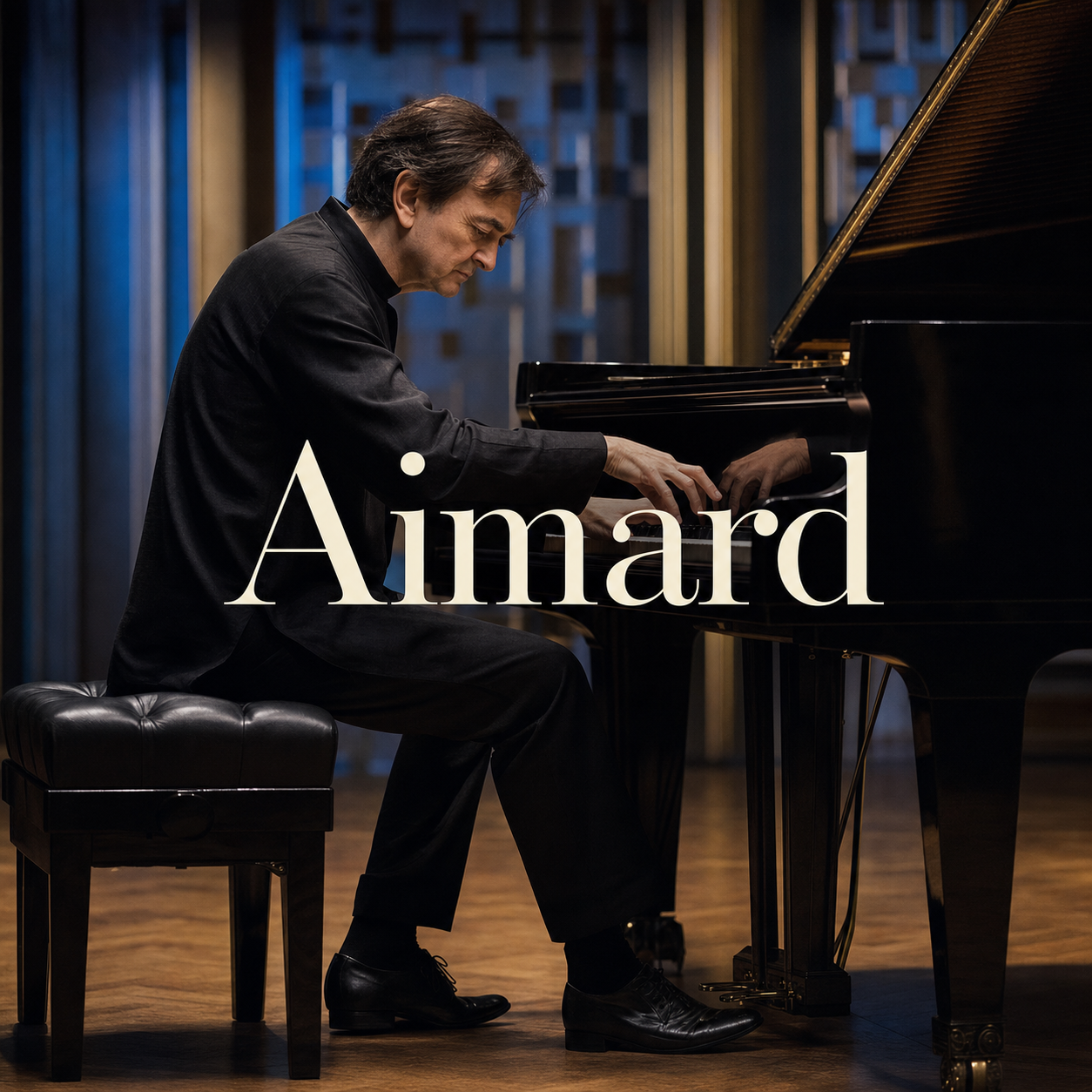
Pierre-Laurent Aimard is compelling because precision never becomes clinical. Rhythm, register and resonance are made clear so that the music’s character becomes more, rather than less, mysterious.
Why Pierre-Laurent Aimard matters
Pierre-Laurent Aimard occupies a distinctive place in modern pianism. He is neither a specialist confined to one century nor a virtuoso who treats new music as an occasional display of difficulty. His career has been built through sustained contact with composers, deep score study and an ability to make unfamiliar structures audible at first hearing. The result is a kind of musical translation: dense writing begins to breathe, complicated rhythms acquire direction, and unusual sounds feel necessary rather than decorative.
Born in Lyon in 1957, Aimard studied at the Paris Conservatoire with Yvonne Loriod and later in London with Maria Curcio. His official biography records that he won first prize in the Olivier Messiaen Competition in 1973, aged sixteen. Three years later Pierre Boulez appointed him the first solo pianist of Ensemble InterContemporain. He remained with the ensemble for eighteen years, working in a culture where rehearsal meant close attention to notation, new sonorities and direct exchange with living composers.
That background matters when he plays older repertoire. In Bach, a fugue is not an abstract exercise but a changing balance of voices. In Beethoven, proportion and interruption become dramatic events. In Ravel, colour is organised with the exactness of harmony and rhythm. Aimard’s route into the canon came through the laboratory of contemporary music, and it leaves his playing alert to every layer of a score.
A career shaped by composers
First prize at the Olivier Messiaen Competition.
Joins Ensemble InterContemporain as its first solo pianist.
Works closely with Ligeti and premieres most of the later piano études.
Directs the Aldeburgh Festival, joining performance to adventurous curation.
Messiaen: colour organised in time
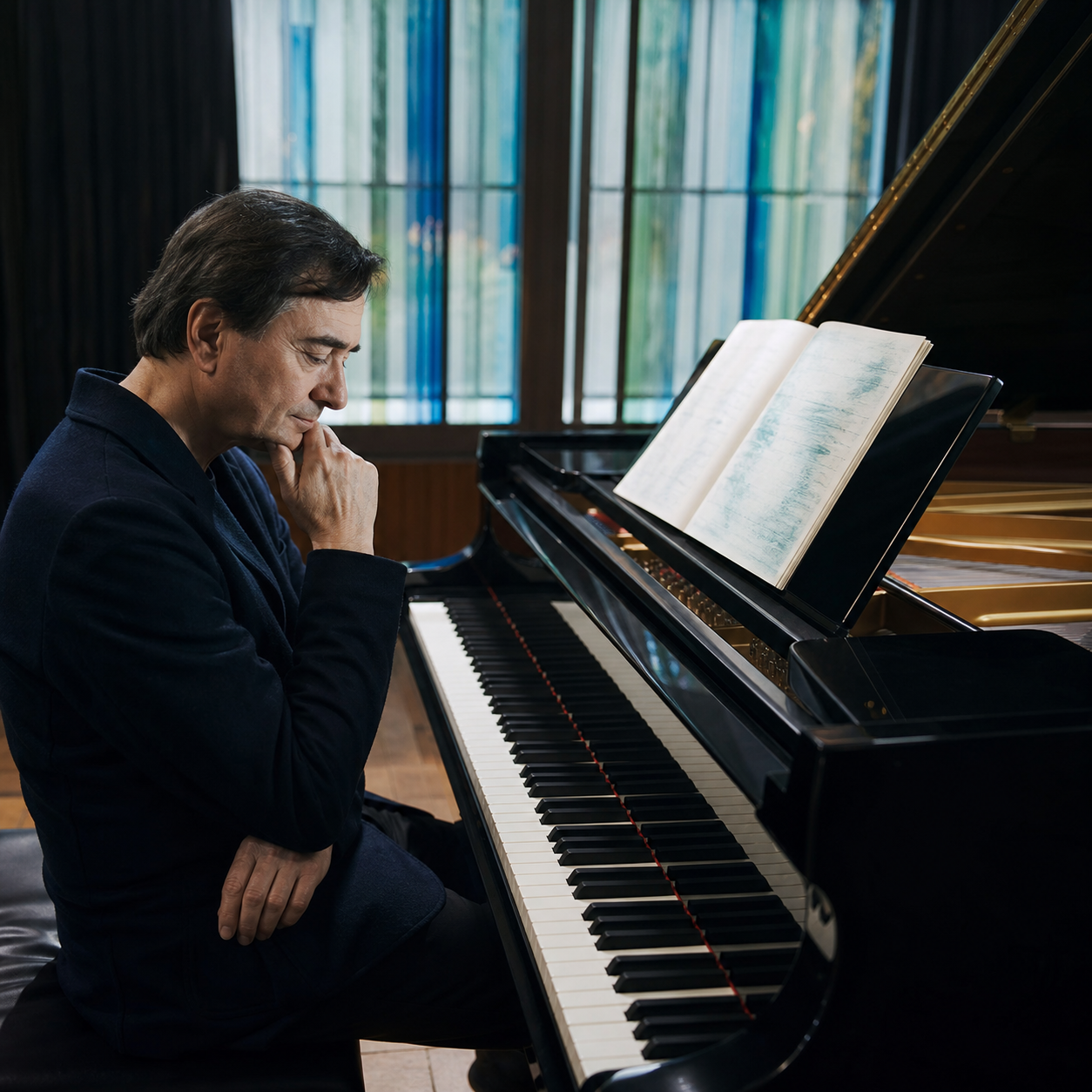
Aimard encountered Olivier Messiaen’s musical world unusually early. Yvonne Loriod, Messiaen’s foremost pianist and later his wife, taught him at the Paris Conservatoire; Aimard’s later performances and recordings grew from an unusually direct line of knowledge. Yet authority here does not mean imitation. His playing shows how a score can retain the composer’s grammar while becoming alive in a particular acoustic and moment.
Begin with Catalogue d’oiseaux. The cycle can seem vast if approached as a collection of effects. Aimard instead reveals its geography. Bird calls occupy different registers; chords change the imagined light; silence separates distances; sudden attacks alter the scale of the landscape. Pedal is not a continuous wash but a means of placing resonance. The listener can follow the music by asking three questions: what is foreground, what is far away, and how has the colour of the space changed?
In Visions de l’Amen, recorded with Tamara Stefanovich, the two-piano writing offers another perspective. Massive sonorities are held within firm rhythmic architecture. Listen for the division of labour between the instruments and for the way repeated chords gather harmonic pressure. Aimard’s gift is to let splendour emerge from exact relationships. The music sounds radiant because its proportions are trusted.
Ligeti: hearing several clocks at once
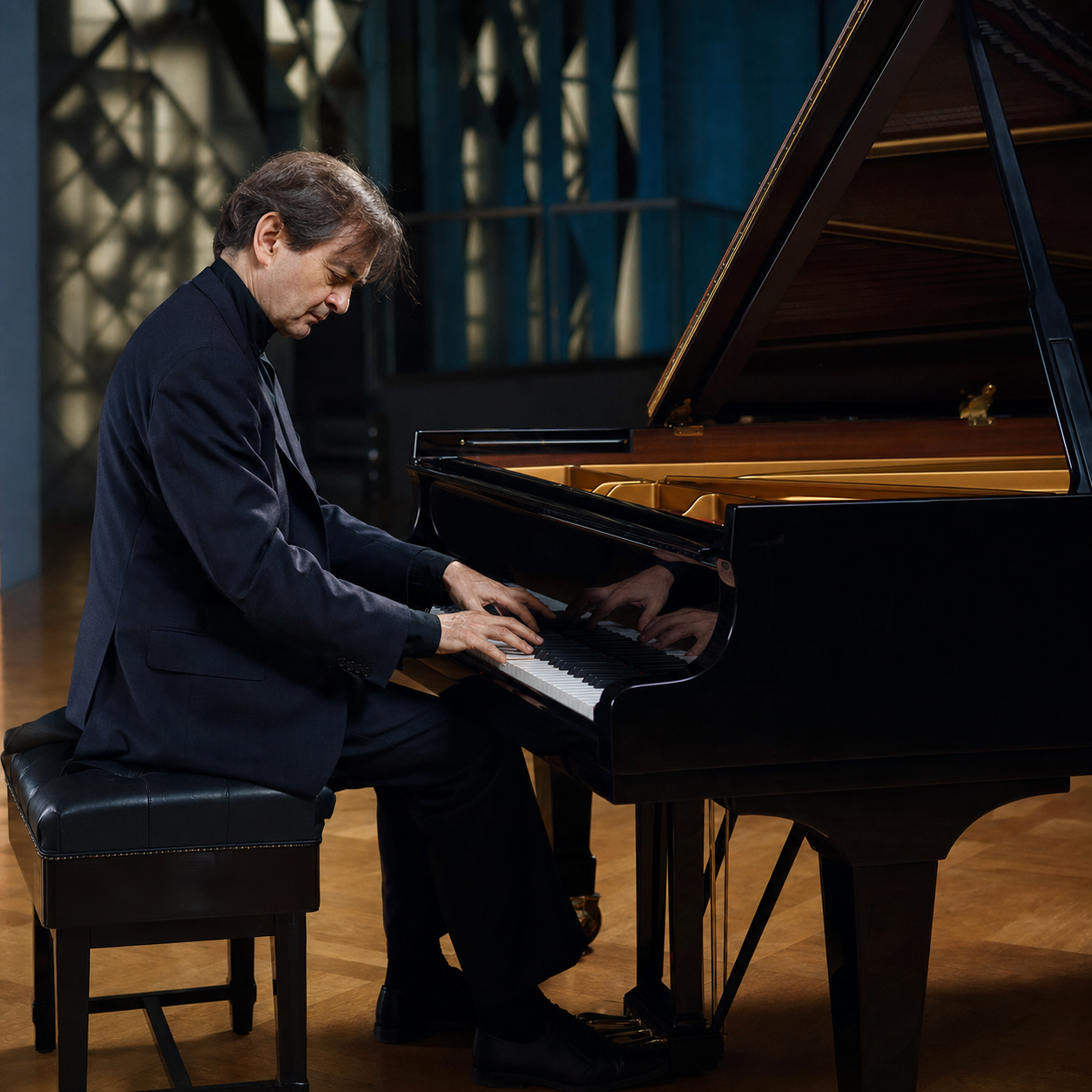
Aimard’s relationship with György Ligeti was both professional and personal. The Klavier-Festival Ruhr’s Explore the Score resource documents how their work intensified from the mid-1980s. Aimard gave the French première of the first book of piano études in 1987; between 1993 and 2001, Ligeti entrusted him with the premières of nearly all the later études. Two, Der Zauberlehrling and Entrelacs, were dedicated to him.
What should a listener notice? First, resist hearing the études as speed alone. Ligeti often sets several processes in motion at once. A pattern may repeat while accents suggest a different metre; one hand may seem to accelerate against another; registral leaps can turn mechanism into theatre. Aimard clarifies each strand without breaking the larger sweep. The playing feels dangerous because the layers remain independent, not because the surface is blurred.
Try Cordes à vide for open resonance, Fém for metallic attack and shifting accents, then L’escalier du diable for an ascent that continually renews its pressure. The institutional Explore the Score project is especially valuable because it combines performances, annotated sources and Aimard’s own explanations. It shows that fidelity to a composer is not passive obedience. It is the disciplined recreation of character, proportion and sound.
The most revealing virtuosity is the kind that lets us hear relationships we could not previously perceive.
A practical Pierre-Laurent Aimard listening path
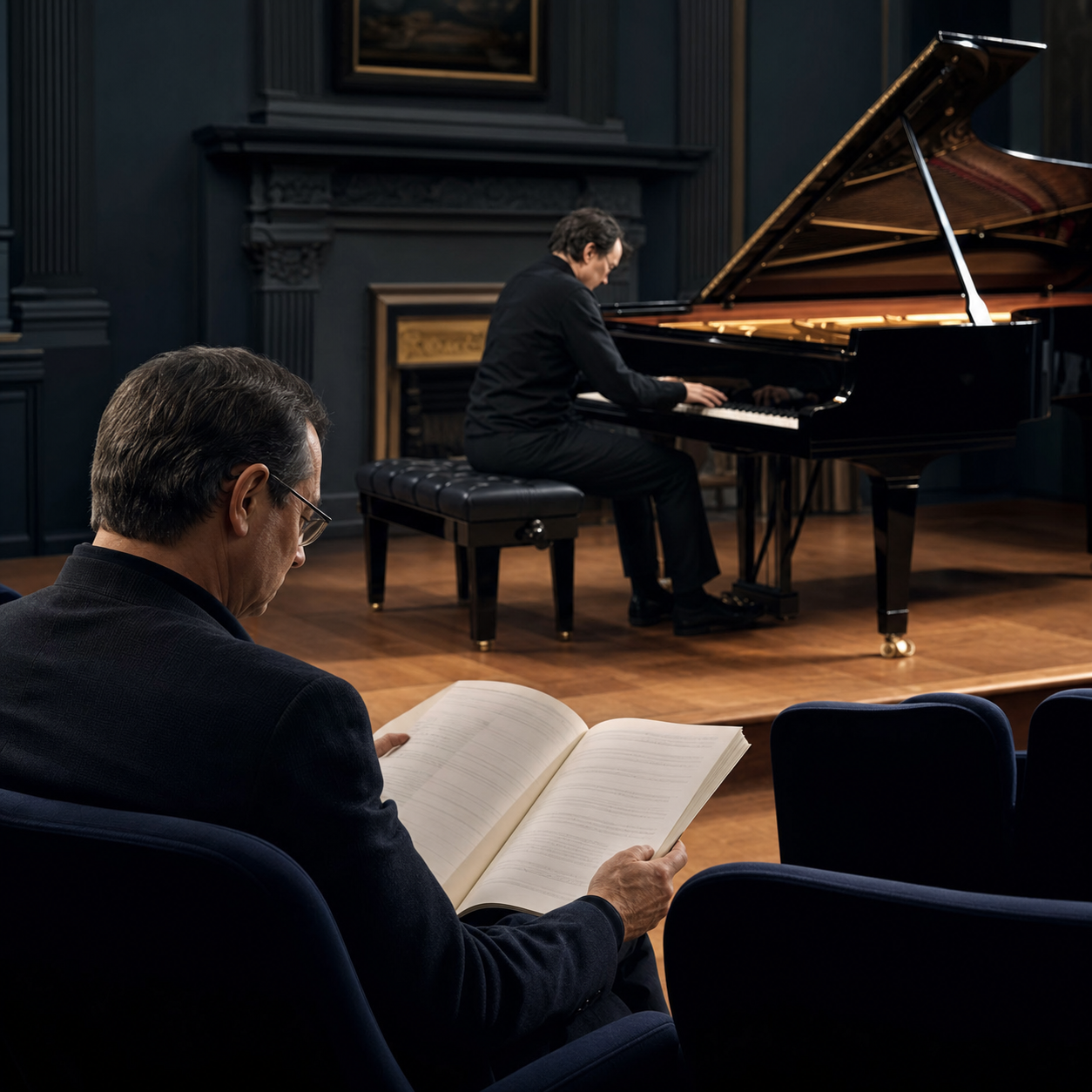
Aimard’s discography is broad enough to reward several routes. New listeners need not begin with the most forbidding work. A carefully ordered sequence lets the ear acclimatise to his priorities before confronting music in which the notation itself is highly complex.
| Starting point | Listen for | Why it helps |
|---|---|---|
| Bach: The Well-Tempered Clavier | Independent voices, pacing and harmonic arrival | The language is familiar while Aimard’s structural ear is easy to follow. |
| Debussy: Préludes | Layered pedal, attack and changing distance | It prepares the ear for colour as a formal element. |
| Messiaen: Catalogue d’oiseaux | Register, birdsong, silence and landscape | Large spans become intelligible through spatial listening. |
| Ligeti: Piano Études | Independent pulses and accent patterns | The full force of Aimard’s composer-led precision comes into focus. |
Recordings also reveal how Aimard changes his approach to different musical worlds. The Deutsche Grammophon catalogue places his Debussy, Ravel, Bach, Messiaen and Ligeti recordings side by side; Pentatone documents later projects including Beethoven, Bartók, Schubert, Messiaen and Kurtág. Compare the opening of a Bach prelude with a Ligeti étude. The sound is not made uniform in the name of a recognisable personal style. In Bach, articulation helps voices converse across a stable pulse. In Ligeti, attack defines the identity of simultaneous rhythmic mechanisms. In Messiaen, resonance gives harmony its weight and atmosphere.
This flexibility is one reason Aimard repays repeated listening. His signature is less a particular tone than a way of organising attention. One recording may seem restrained until the ear notices how carefully climaxes have been prepared; another may feel dazzling, yet the brilliance is anchored in voicing and timing. Listen at a moderate volume first. On a later hearing, use headphones or a well-balanced system to catch the decay of chords, the placement of inner voices and the differences between dry and resonant attacks.
On a first hearing, do not attempt to account for every event. Identify the principal energy: a line rising, a pulse dividing, a resonance expanding. On a second hearing, choose one layer and follow it until it disappears. With a score, mark changes of texture rather than every difficult rhythm. This is how serious listening remains musical. Analysis serves expectation, memory and surprise.
Aimard and London’s culture of close listening
London has played a continuing role in Aimard’s musical life. He studied here with Maria Curcio, appeared with major London orchestras, directed a Messiaen festival at the Southbank Centre in 2008 and later held a multi-season Southbank residency. In October 2023 he returned to Queen Elizabeth Hall for the London Sinfonietta’s Ligeti centenary celebrations. On 9 May 2026, the same hall presented his account of Book II of Bach’s Well-Tempered Clavier.
His official calendar also lists a three-concert Wigmore Hall day on 19 September 2026 devoted to György Kurtág’s Játékok, matching Wigmore Hall’s season announcement. Because concert details can change, readers should confirm the programme with the venue before travelling. Last checked: 21 July 2026.
These appearances suit London’s strongest musical tradition: curiosity supported by institutions that allow artists to place old and new repertoire beside one another. Aimard’s Bach is enriched by Ligeti; his Ligeti is informed by years of hearing polyphony; his Messiaen shows that brilliant colour can be structurally exact. For pianists, teachers and concertgoers, the lesson is not to divide repertoire into familiar and difficult. It is to learn the kind of attention each work asks for.
Contemporary repertoire can sharpen rhythm, listening and control even when the final work is beyond one’s present level. A teacher can select short, approachable pieces that develop the same qualities without turning study into an endurance test. Explore adult piano lessons at WKMT for structured, individual guidance.
What pianists can take from his example
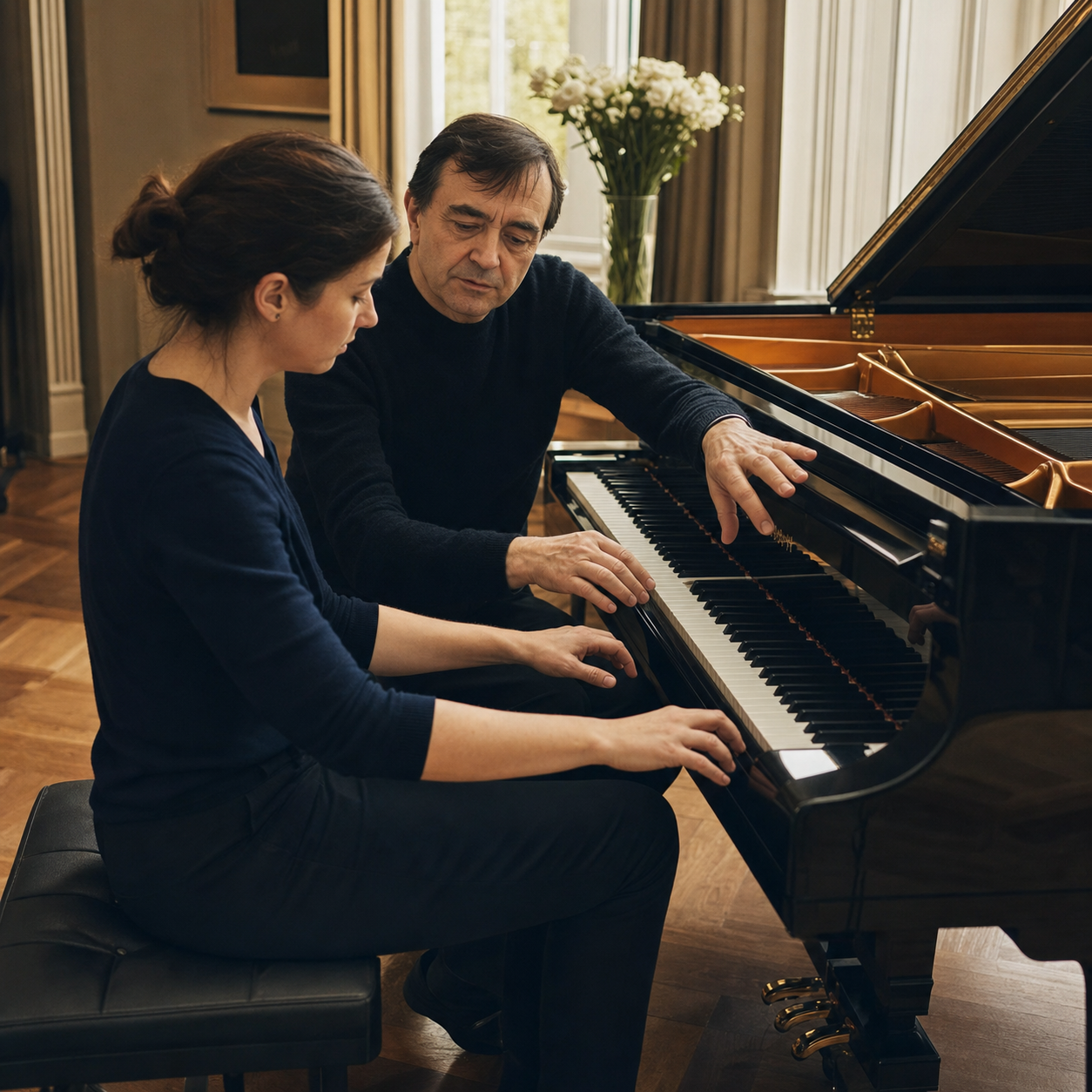
The first lesson is to treat accuracy as a beginning. Correct notes matter because they make relationships audible; they are not the final artistic purpose. The second is to distinguish layers. A pianist who can hear melody, accompaniment, resonance and rhythmic counter-current separately can shape them without forcing. The third is to connect interpretation to evidence. Composer testimony, manuscripts, recordings and institutional resources can inform choices, but the resulting performance must still speak in real time.
WKMT’s article on contemporary classical music in London offers a wider cultural frame, while the importance of listening brings these habits into everyday musical study. Aimard’s example joins the two. Repertoire, interpretation and a listener’s attention are parts of the same craft.
Develop a more exact musical ear
WKMT’s London piano teaching connects close listening with technique, repertoire and thoughtful interpretation at the keyboard.
Sources and further listening for Pierre-Laurent Aimard
- Pierre-Laurent Aimard: official biography
- Pierre-Laurent Aimard: official calendar and news
- Klavier-Festival Ruhr, Ligeti & Aimard, collaboration, premières and recordings.
- Southbank Centre, Pierre-Laurent Aimard on György Ligeti.
- Deutsche Grammophon: Aimard discography.
- Pentatone: Pierre-Laurent Aimard recordings.
- Wigmore Hall 2026/27 season announcement