
 TRIAL LESSON
Uncategorized
Jeremy Denk in London: Bach, Ives and the Art of Serious Piano Listening
Jul
Jeremy Denk in London
WKMT London listening guide
Jeremy Denk in London: Bach, Ives and the Art of Serious Piano Listening
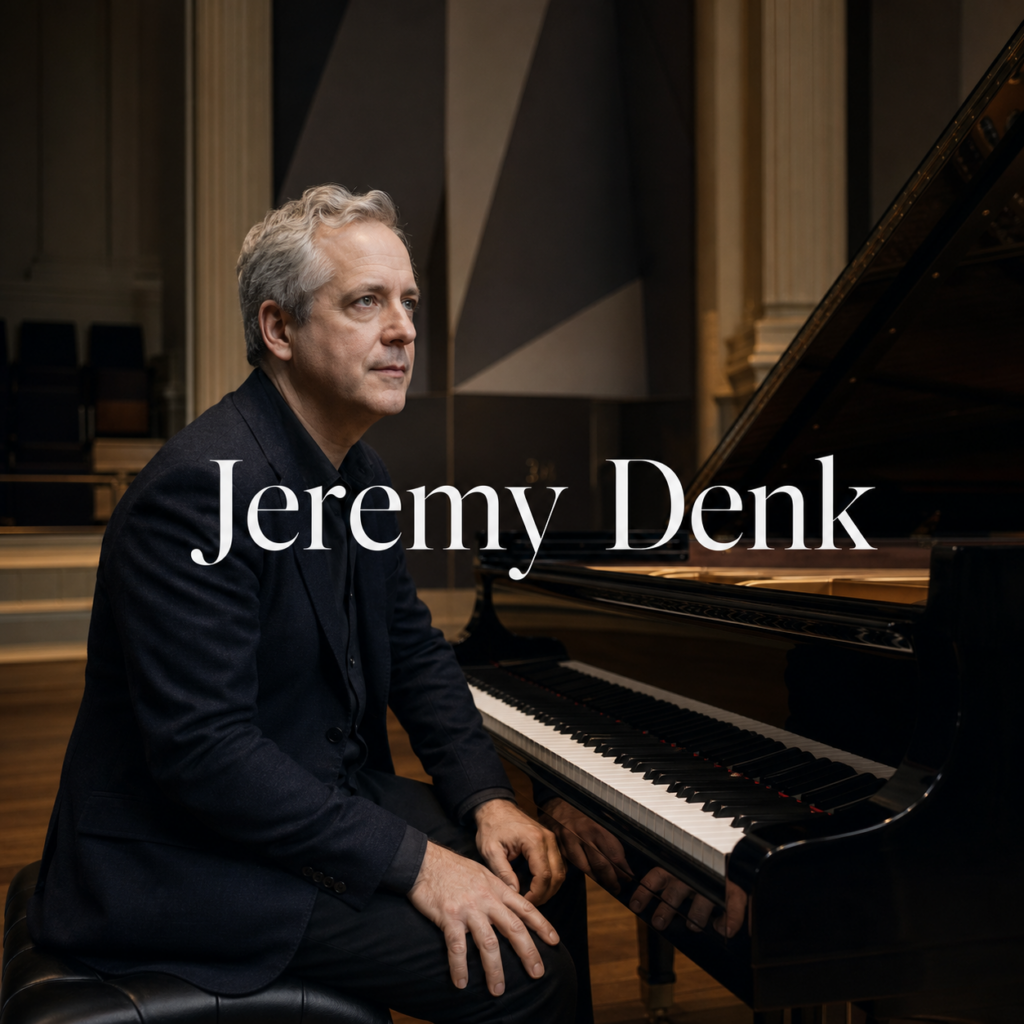
Jeremy Denk invites us to hear classical music as a field of questions: how voices converse, how memory disturbs order, and how wit can sharpen rather than diminish seriousness.
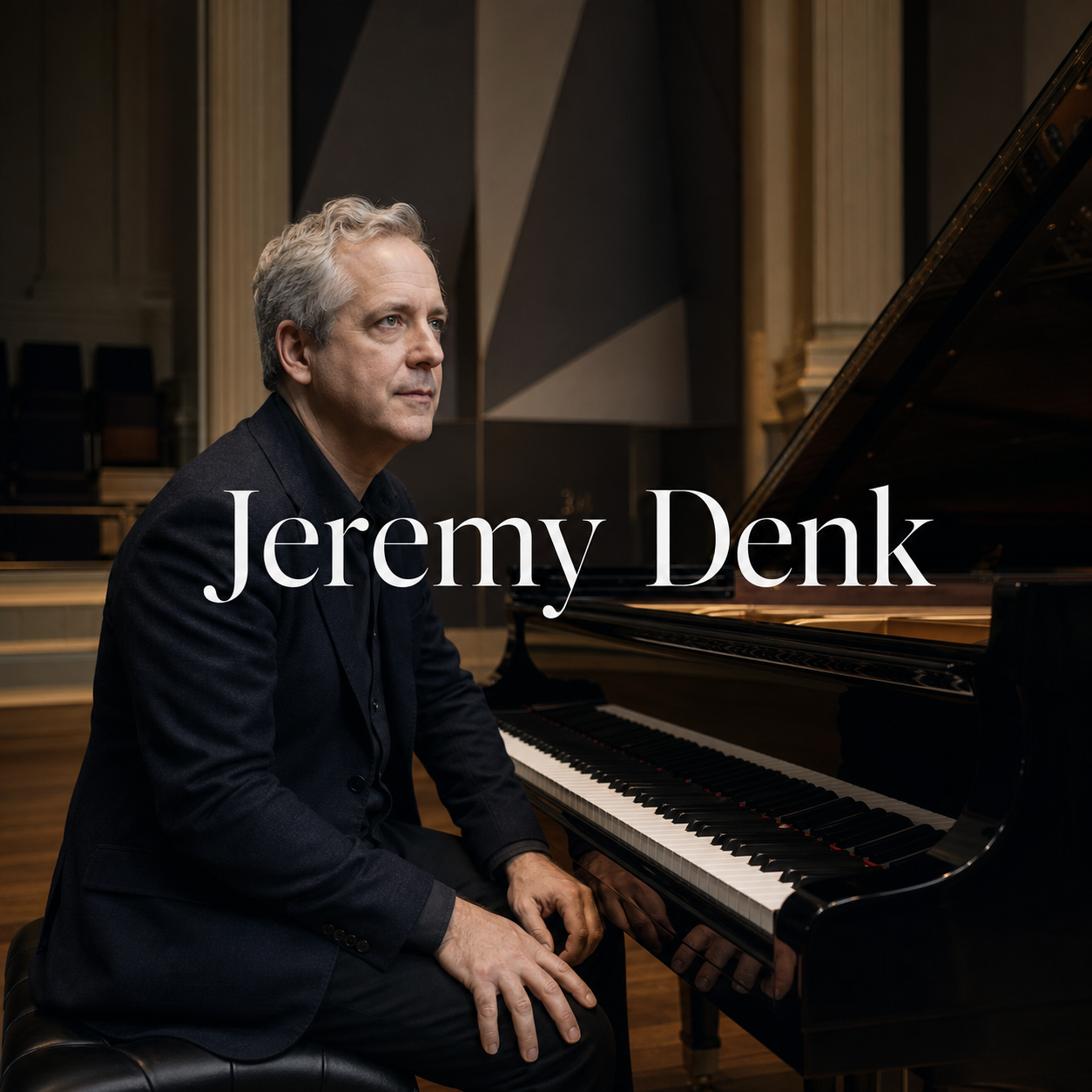
Jeremy Denk is unusually well suited to London’s listening culture. He can make the architecture of Bach feel conversational, expose the clashing memories inside Charles Ives, and bring a writer’s ear to the rhythm of a phrase. For concertgoers, adult pianists and teachers, the attraction is not virtuosity displayed at a distance. It is the sensation that musical thought is happening in real time.
His appearances in the capital have reinforced that impression. Wigmore Hall named him an Artist in Residence for its 2023/24 season, where programmes moved from Ligeti to Ives and chamber music. The point was less eclecticism for its own sake than the discovery of relationships across style and history. That same spirit makes Denk a valuable guide to serious listening: he encourages us to follow the argument, notice the joke and remain alert when familiar music changes direction.
WKMT perspective
Listening becomes active when we stop asking whether a performance is merely beautiful and begin asking what each musical event changes.
Why Jeremy Denk matters to London listeners
Denk’s profile rests on two connected abilities. He is a pianist of formidable range, and he is an exceptionally lucid communicator about musical experience. The MacArthur Foundation, which named him a Fellow in 2013, described the union of his playing and writing as a way of drawing amateurs and specialists into deeper attention. His official biography also records the Avery Fisher Prize and frequent appearances with major American orchestras, alongside performances at the BBC Proms.
These distinctions explain professional standing, but they do not quite explain the pleasure of hearing him. Denk’s playing often treats texture as drama. An inner voice can become a character; a pause can revise what we thought a phrase meant; a rhythmic displacement can land like dry humour. His 2022 memoir, Every Good Boy Does Fine, extends the same curiosity to teaching, practice and the long process by which musicians learn to hear.
That combination feels at home in London. The city rewards musicians who can address the intimate acoustic of Wigmore Hall, the public scale of the Royal Albert Hall and the curious, mixed audience found across its concert life. Denk does not simplify difficult music. He gives listeners better handles with which to approach it.
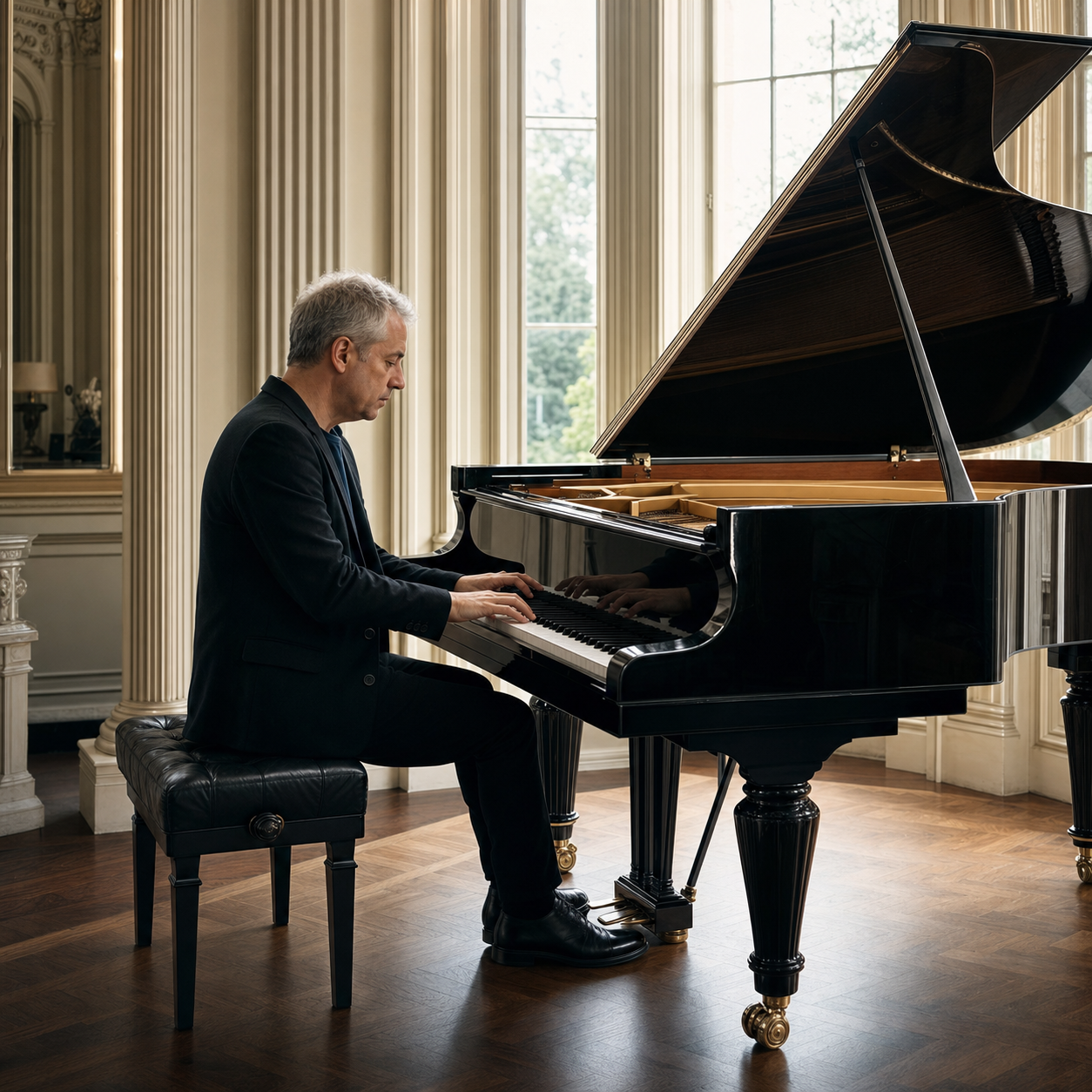
Jeremy Denk in Bach, Ives and more
Bach: voices in motion
Hear the independence of each line before admiring the whole. Denk’s Bach makes counterpoint feel like social intelligence: agreement, interruption, resistance and return.
Ives: memory in collision
Hymns, popular songs and dissonant layers coexist. The listener’s task is not to tidy them, but to notice how private memory and public noise occupy the same space.
Ligeti and Beethoven: pressure
Different centuries share an appetite for momentum, surprise and compressed argument. Denk reveals structure by making its forces audible.
Bach is central to Denk’s public identity. His recording of the Goldberg Variations and his long engagement with the Partitas show a pianist interested in how repetition alters perception. The Aria’s return at the end of the Goldbergs is not simply a homecoming. After thirty variations, the listener has changed; restraint carries the memory of everything heard in between.
Ives asks for another kind of attention. Denk’s 2024 release Ives Denk, made with violinist Stefan Jackiw and including remastered versions of the two piano sonatas, presents music in which hymns and vernacular tunes are folded into radically layered textures. At Wigmore Hall in May 2024, Denk, Maria Włoszczowska and The Gesualdo Six placed Ives’s violin sonatas beside the hymns and popular songs from which their material grows. The programme made quotation audible as cultural memory rather than an academic footnote.

The most revealing performance is not the one that removes every difficulty, but the one that makes the music’s questions impossible to ignore.
How to listen: five moments in Denk’s work
This compact route can be used with recordings at home or before a London recital. It is a sequence of listening actions rather than a ranked list.
Key listening point
Do not try to hear everything at once. Choose one element for a passage: bass direction, inner voice, rhythmic layer or change of register. A second hearing will reveal another route through the same music.
Denk and London: an intelligent fit
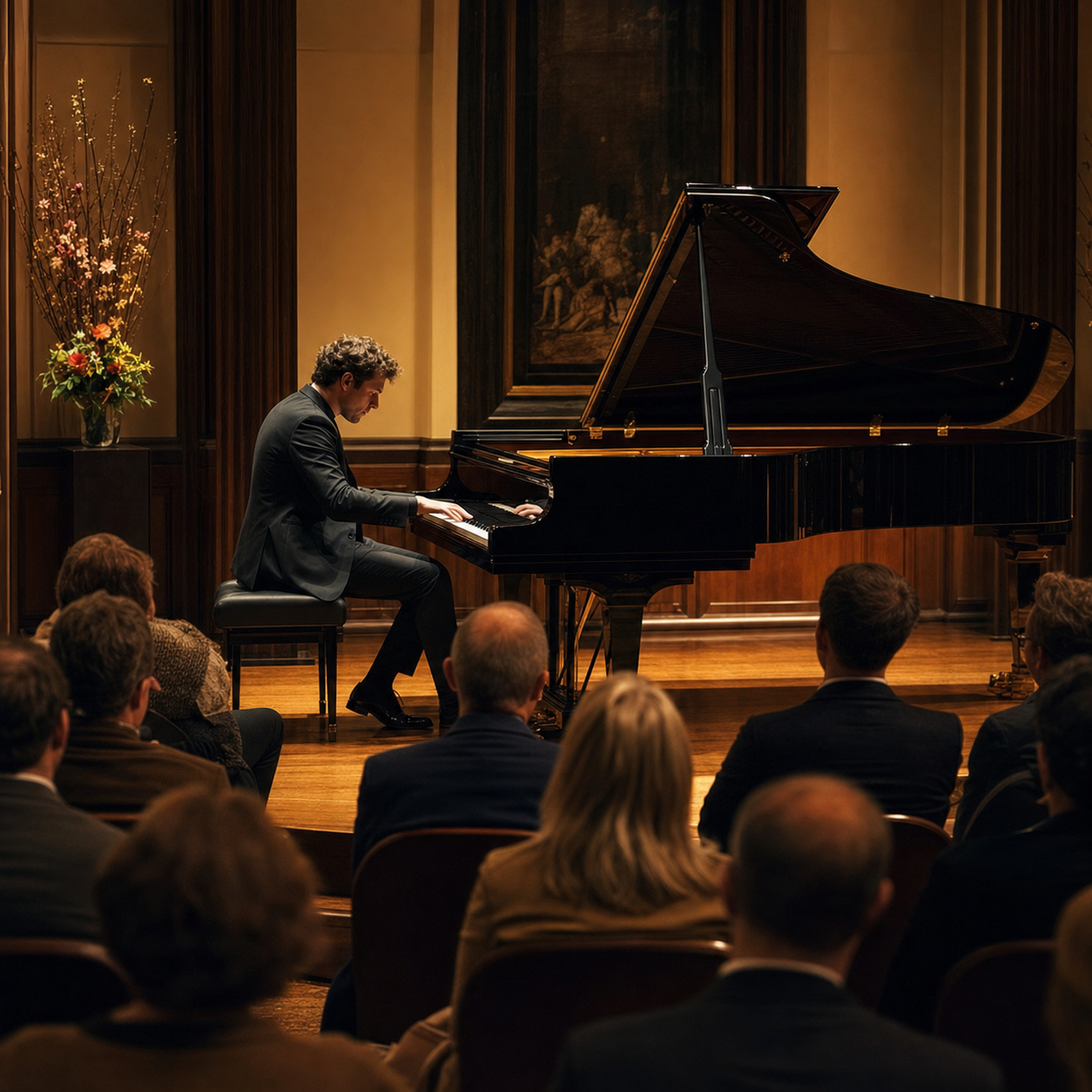
Wigmore Hall’s 2023/24 residency gave London an especially concentrated view of Denk. The opening programme combined Ligeti’s first book of Études with chamber works by Mozart, Britten and Schumann. Later, the Ives project connected violin sonatas with the hymns embedded within them. These were programmes built around relationships, not celebrity.
That matters because London listeners can encounter piano music across very different rooms and traditions. An intimate recital makes voicing and timing unusually exposed; a larger hall tests projection and long-range structure. Denk’s approach speaks to both. His writing and spoken introductions can open a door, while the playing itself asks the audience to complete the thought through attention.
Current schedules change, so consult the official Jeremy Denk website and London venue listings before planning a visit (last checked 22 July 2026). The Wigmore Hall archive remains valuable even when an event has passed, because it documents the programme and its artistic rationale.
Bring this depth of listening into your own piano study
WKMT’s London teaching connects technique with structure, sound and musical understanding.
What adult pianists can learn from Jeremy Denk
Denk’s example is useful because it replaces the fantasy of effortless mastery with a more durable model: intelligent curiosity. Adult learners can ask what a phrase is doing before deciding how it should sound. They can separate the voices in Bach, locate the harmonic pressure in Beethoven or hear how an Ives quotation changes when surrounded by noise.
This is not an invitation to turn every practice session into a lecture. Thought must return to sound. Sing one line, play another alone, test a different balance and record the result. The aim is to make interpretation audible. For a broader foundation, WKMT’s article on the importance of listening and its Bach analysis offer related perspectives. Adult learners seeking regular guidance can also explore adult piano lessons at WKMT.
A productive weekly habit is to keep a listening notebook beside the piano. Write down the precise moment at which attention wandered, a bass note changed the harmony, or an unexpected accent clarified the form. Return to that place the next day before touching the keys. This separates musical diagnosis from physical repetition and often makes practice calmer, shorter and more exact.
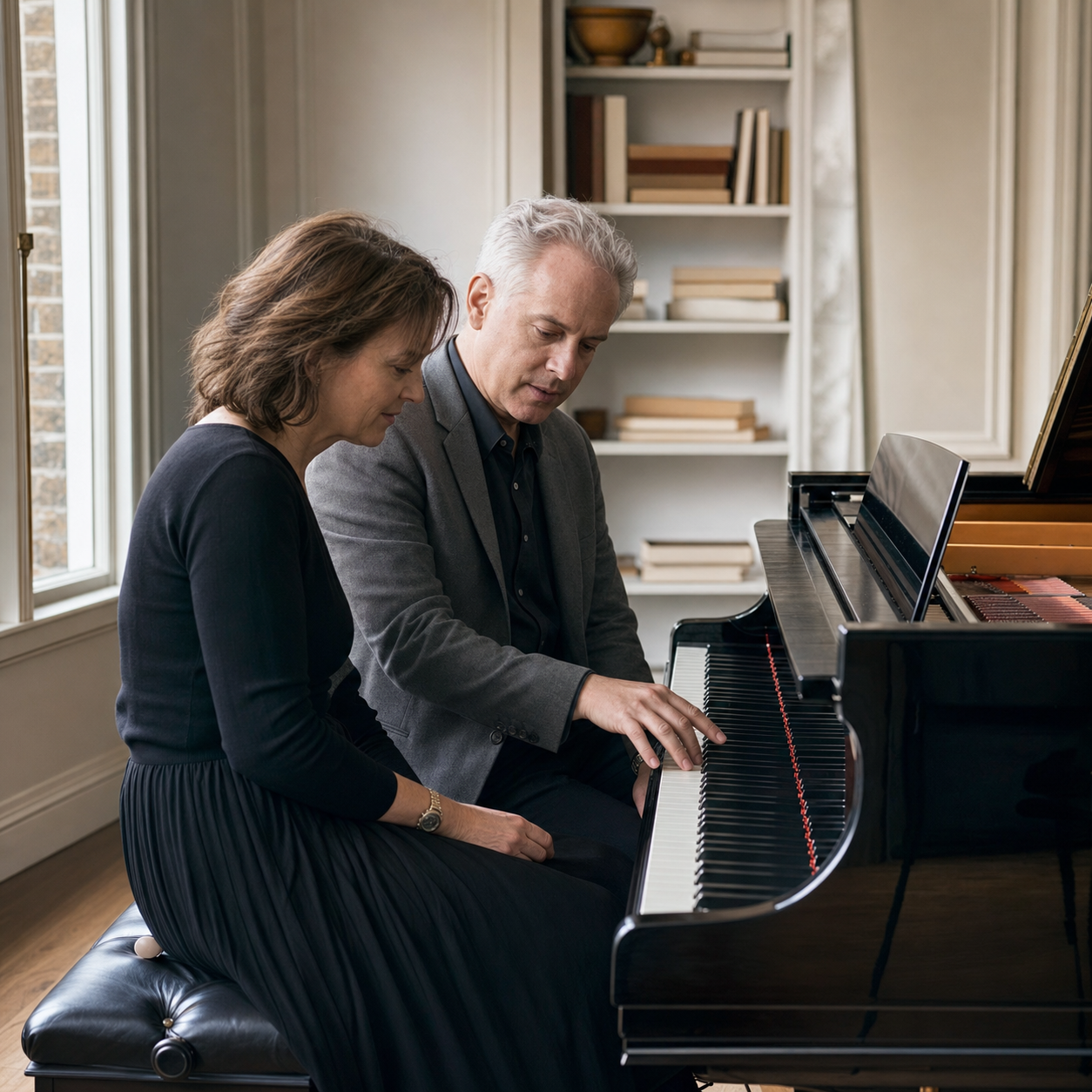
Practice insight
At the end of a practice session, name one change you made and why: a quieter inner voice, a longer harmonic arrival, a firmer pulse or a more transparent pedal. If the reason cannot be heard, the experiment is not finished.
Recordings and resources: where to begin
| Resource | Best starting question |
|---|---|
| J. S. Bach: Goldberg Variations | How does character change while the underlying design remains present? |
| Ives Denk | When does quotation feel nostalgic, comic, defiant or unstable? |
| Every Good Boy Does Fine | How do teaching, repetition and language shape musical identity? |
| Wigmore Hall residency archive | What argument is created by placing unlike composers together? |
Start with one work, not the whole catalogue. Read a short programme note, listen without interruption, then listen again with one specific question. Denk’s greatest value as a musical guide may be his refusal to close interpretation down. His performances make strong choices while leaving the listener mentally active.
A final invitation to listen seriously
Jeremy Denk shows that seriousness need not be solemn. In Bach, intellectual order can dance; in Ives, disruption can carry affection; in Ligeti, difficulty can produce exhilaration. London’s concert culture offers an ideal setting for this kind of attention, but the habit begins anywhere: one recording, one repeated passage, one question held long enough to change what we hear. The next time a familiar phrase returns, listen for recognition and for difference. That is where interpretation becomes alive.
Sources on Jeremy Denk in London
- Jeremy Denk official website: biography, recordings and schedule
- Jeremy Denk official book page: Every Good Boy Does Fine and its teaching themes
- MacArthur Foundation: Fellow profile and artistic overview
- Wigmore Hall: 2023/24 residency announcement
- Wigmore Hall: archived Ives programme, 6 May 2024
- Jeremy Denk press archive: selected performance context and reviews