
 TRIAL LESSON
Piano Lessons
Piano Grades Explained: A Parent’s Guide to Levels, Exams and Healthy Progress

Jul
Piano Grades Explained: Parent Guide to Levels and Exams
A clear guide for parents
Piano Grades Explained: A Parent’s Guide to Levels, Exams and Healthy Progress
What each level means, how the main UK exam boards differ, and how to decide whether a young pianist is ready without turning music into a race.

Piano grades explained simply: they are progressive assessments, usually numbered from Initial or Grade 1 to Grade 8, that recognise growing musical and technical command. They can give a child a useful destination, an impartial report and the satisfaction of presenting finished work. They are not a universal measure of talent, a compulsory ladder or a reliable way to compare one child with another.
For parents, the important questions are therefore broader than “Which grade is next?” A sound decision considers the child’s playing, listening, reading, independence, confidence and appetite for the exam process. It also considers which assessment format suits them. ABRSM, Trinity College London and London College of Music Examinations all offer respected pathways, but they arrange performance and supporting skills differently.
This guide sets out those differences, describes the musical territory of Grades 1 to 8 and offers a readiness framework for families. The primary aim is healthy progress: an exam should collect and celebrate learning already taking place, rather than force the whole lesson into preparation for one day.
For families searching for piano grades explained in practical terms, one principle keeps the detail in proportion: level, date and board are three separate decisions. First establish the musical level. Then decide whether an assessment would help. Only after that should teacher, parent and pupil choose a board and a date. This order prevents an attractive booking deadline from dictating a level that is too easy, too difficult or simply premature. Piano Grades Explained: Parent Guide to Levels and Exams.
The short answer
Grades describe stages, not ages. A secure Grade 2 pianist may be six, twelve or sixty. Choose a level from demonstrated musicianship, then choose an exam date only when the programme is becoming fluent, expressive and dependable.
Piano grades explained at a glance
The eight numbered grades form an ascending framework. Early grades establish coordination, rhythm, notation and short musical phrases. Middle grades demand wider technical resources, more independent practice and a stronger grasp of style. Advanced grades ask the pianist to sustain longer structures, control tone and texture, and make convincing interpretative decisions.
Foundation
Initial–Grade 2
Reading, pulse, coordination and short character pieces.
Developing
Grades 3–4
Greater independence, range, articulation and stylistic contrast.
Intermediate
Grades 5–6
Mature phrasing, layered textures and purposeful preparation.
Advanced
Grades 7–8
Sustained architecture, tonal refinement and performance authority.
There is no requirement to take every grade. A teacher may use a syllabus as a repertoire map, enter selected assessments, or pause exams while a pupil develops reading, ensemble playing, improvisation or broader repertoire. ABRSM states that its Initial to Grade 5 Practical Grades have no prior-entry requirement; candidates can also be entered at any age. The right sequence is the one that serves the learner.
“The grade should be evidence of musical growth, never a substitute for it.”
What are piano grades and who runs them?
A graded exam is a structured assessment at a stated level. Its value lies in the combination of a published standard and feedback from an external examiner. Depending on the board and format, a candidate may perform set pieces, demonstrate technical work, respond to sight-reading or aural tasks, discuss music, improvise or submit a continuous recorded programme.
Parents sometimes ask which board is “best”. A better question is which syllabus and format fit the child at this stage. The three established classical routes below are all credible. Repertoire choice, assessment design and the pupil’s relationship with the work usually matter more than brand loyalty.
| Board | Core pathway | What may suit a child |
|---|---|---|
| ABRSM | Practical Grades: three pieces, scales and arpeggios, sight-reading and aural tests. Performance Grades: four-piece recorded programme. | A clearly defined all-round route, or a performance-focused digital alternative using the same repertoire framework. |
| Trinity | Face-to-face grades combine pieces, technical work and two supporting tests. Digital routes include technical-work and repertoire-only options. | Choice within supporting tests, broad repertoire and flexibility including duet or own-composition options in specified grades. |
| LCME | Graded exams combine three pieces, technical work, discussion, aural and sight-reading or keyboard harmony. Recital Grades emphasise performance. | A student-centred route with Steps before Grade 1 and a choice between rounded and recital-style assessment. |
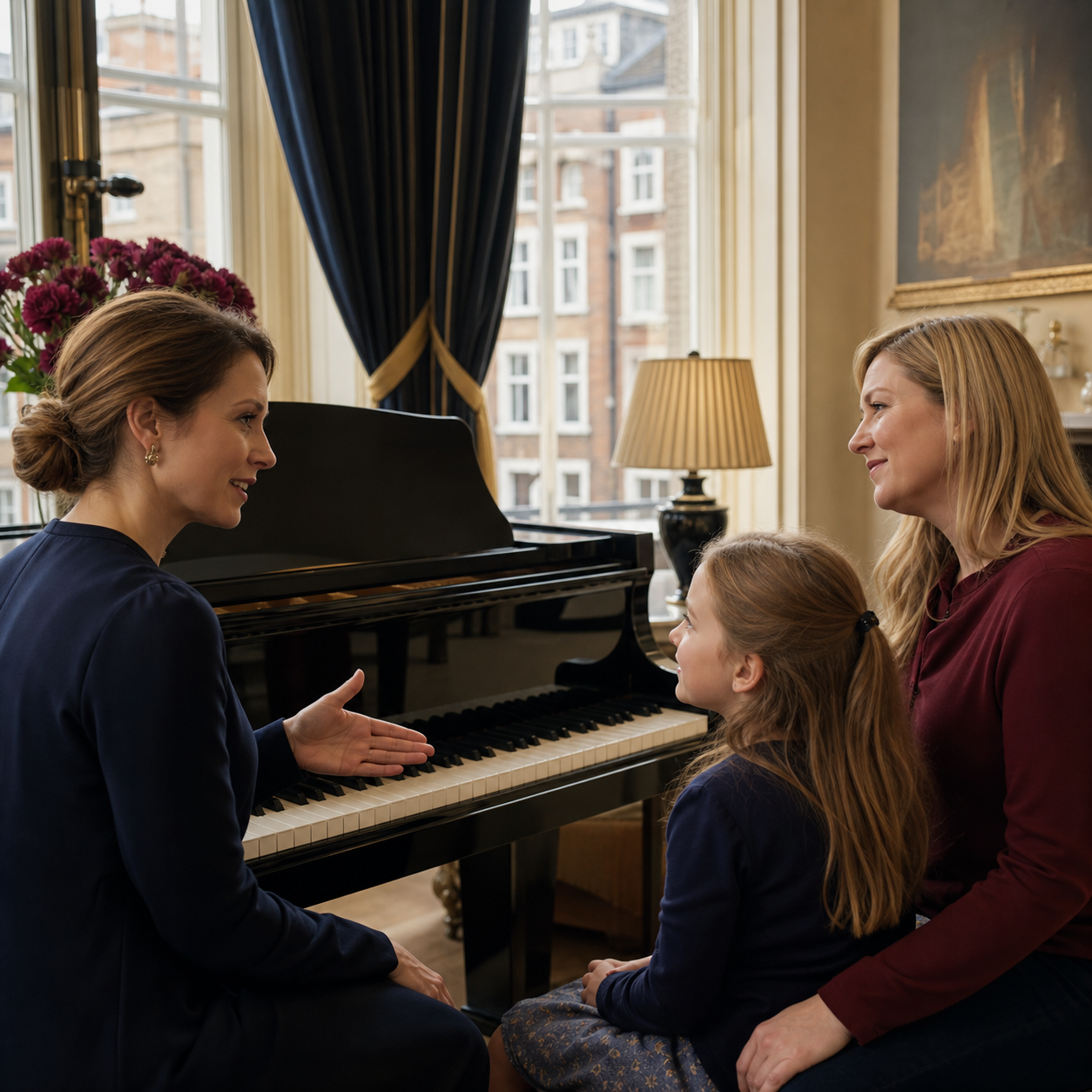
ABRSM’s Practical Grade route is deliberately broad. Its official description lists three pieces, technical work, sight-reading and aural tests. Its Performance Grade route replaces the supporting tests with four pieces and an assessment of the programme as a whole. Trinity’s face-to-face model allocates marks to three pieces, technical work and two supporting tests chosen from the permitted options; its digital repertoire-only pathway uses four pieces. LCME’s new 2026 pathway offers graded and recital formats, with its current and previous syllabuses overlapping during the transition period.
These are differences of emphasis rather than simple differences in difficulty. A child who thrives on immediate interaction may prefer a face-to-face exam. A pupil who becomes very tense around unseen tests might initially flourish with a performance route, while continuing to study reading and listening in lessons. Conversely, a confident performer who avoids sight-reading may benefit from the rounded discipline of a practical grade. The assessment should reveal development, not create a permanent escape from an important skill.
For parents
Ask the teacher to show you two or three suitable pieces from the proposed syllabus and explain the assessment format. A child’s interest in the music is practical information, not an indulgence: engagement supports the patient repetition that polished playing requires.
Grades 1 to 8: what changes as a pianist grows
Any account of piano grades explained grade by grade must avoid false precision. Boards publish requirements, but children arrive with different hands, attention, reading experience and practice conditions. The practice ranges below are planning prompts, not quotas. Ten attentive minutes can be more fruitful than thirty distracted ones, and progress is rarely linear.
Grades 1–2: reliable foundations
At the early grades, the pianist learns to coordinate simple patterns across both hands, keep a steady pulse and shape short phrases. Reading becomes more continuous: the child should recognise common note patterns rather than decode every symbol in isolation. Contrasts of legato and staccato, basic dynamics and clear endings begin to sound intentional.
- Musical focus: pulse, simple balance, articulation and character.
- Technical focus: comfortable hand position, controlled finger movement and the first systematic scales or patterns required by the board.
- Practice shape: often 15–25 minutes on five or six days, divided between repertoire, reading, listening and technical work.
- Healthy milestone: the child can restart after a slip and finish a short piece without an adult prompting every note.
A useful Grade 1 or 2 programme usually contains contrast: perhaps a poised dance, a lyrical piece and something rhythmically lively. The pupil is beginning to understand that accurate notes are the start of interpretation, not its end.
Grades 3–4: independence and contrast
Middle-elementary repertoire asks for longer concentration and more layered coordination. One hand may need to sing while the other stays quiet; ornaments, pedalling or wider leaps may enter the picture. Rhythm becomes less square, and style matters more. A Classical movement, a Romantic miniature and a contemporary work do not speak with the same touch.
- Musical focus: phrase direction, voicing, stylistic awareness and a wider dynamic range.
- Technical focus: more keys, more fluent patterns, controlled changes of position and developing pedal judgement.
- Practice shape: commonly 25–40 minutes on most days, sometimes split into two sittings.
- Healthy milestone: the pupil can identify a difficult passage, isolate it and explain what needs to improve.
This is often where a child’s practice identity begins to change. They no longer succeed by playing each piece through from the beginning. They need a small plan: slow work, separate-hand checking where useful, rhythm repair, then reintegration into the phrase.
Grades 5–6: musicianship becomes more integrated
Grade 5 is widely treated as a significant intermediate landmark. Textures become denser, structures longer and interpretative choices more consequential. At Grade 6 the pupil enters the advanced RQF level used by the major boards, and the music demands stronger autonomy.
For ABRSM Practical and Performance Grades 6–8, candidates must have passed Grade 5 or above in Music Theory, Practical Musicianship or an accepted alternative before booking. This is a board-specific entry rule, not a universal law of piano education. Trinity and LCME organise their pathways differently, so families should check the current syllabus rather than transfer one board’s rule to another.
- Musical focus: long-line phrasing, inner-voice awareness, stylistic detail and persuasive pacing.
- Technical focus: evenness at speed, chordal control, voicing, broader key knowledge and economical movement.
- Practice shape: often 40–60 purposeful minutes on most days, adjusted around school and wellbeing.
- Healthy milestone: the pupil can maintain a weekly plan and bring considered questions to the lesson.
Skipping from Grade 4 to Grade 6 can be appropriate if the intervening musicianship is genuinely covered. Skipping a certificate is not the same as skipping the learning. A teacher should be able to name the technical, reading and repertoire bridges that make the move secure.
Grades 7–8: advanced study and artistic responsibility
At Grades 7 and 8, a pianist must sustain larger musical arguments. The hands often carry several layers at once, and the player must decide which line leads, how harmony shapes timing and where the music breathes. Virtuosity is never only speed; control of colour, texture and silence becomes part of the standard.
- Musical focus: architecture, tonal variety, stylistic conviction and continuity under pressure.
- Technical focus: secure movement across the keyboard, refined pedalling, chord and octave control, and dependable fluency.
- Practice shape: frequently 60 minutes or more across the day, with rest and intelligent rotation rather than mechanical endurance.
- Healthy milestone: the pupil can record a full programme, evaluate it honestly and make priorities without losing confidence.
Grades 6–8 in recognised qualifications can carry UCAS Tariff points, but UCAS is clear that institutions decide which qualifications and points they accept. An advanced music grade can enrich an application; it should not be sold to a child as a guaranteed admissions advantage. The lasting reward is advanced musicianship.
How to know when your child is ready
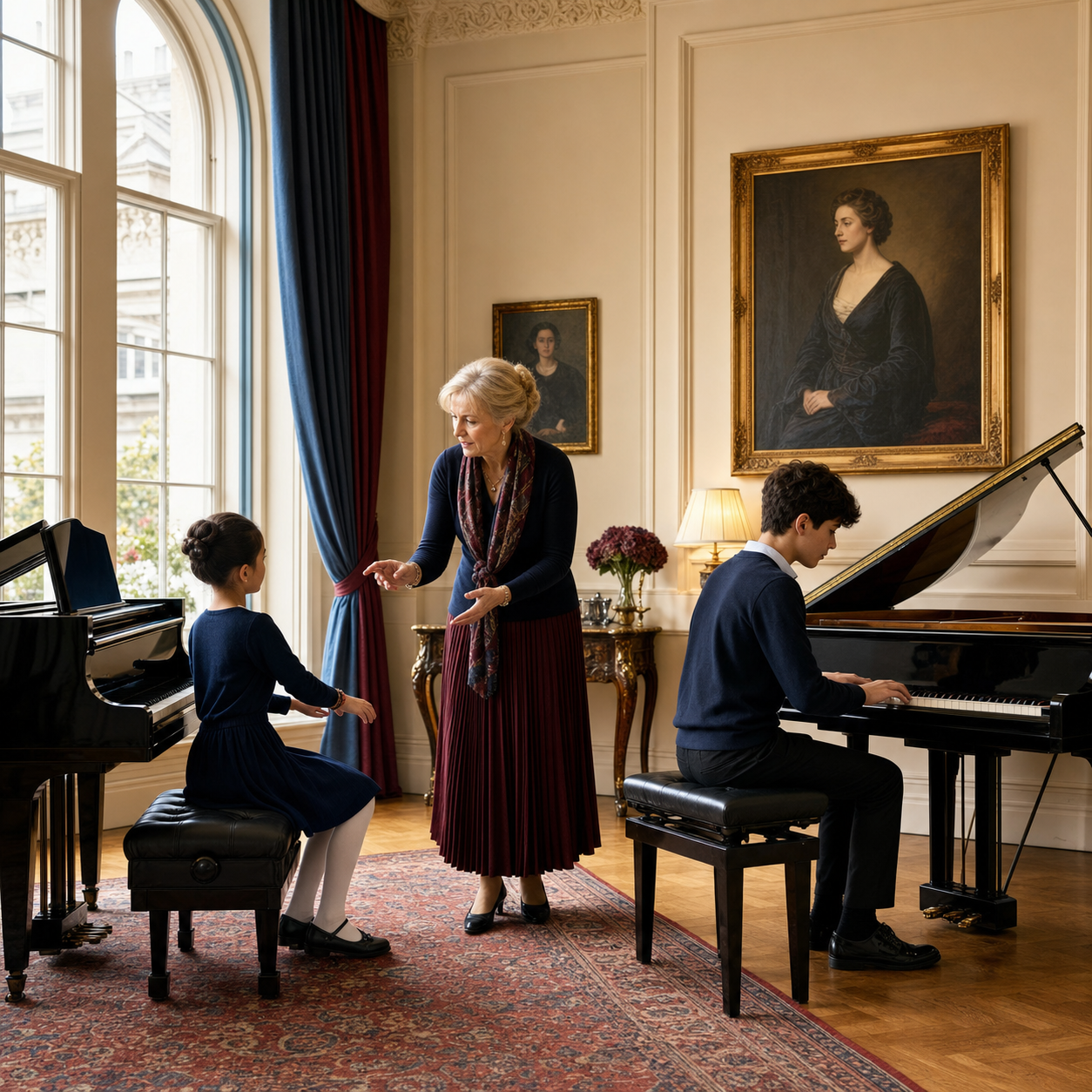
Readiness has three parts: musical security, practical consistency and emotional consent. A child may be capable of the notes but not yet willing to make an exam the centre of several months’ work. Another may relish the occasion and become more organised because a date gives purpose to practice. Both responses are legitimate.
The five-part readiness check
- Music: the pieces are largely learnt and beginning to sound shaped, not merely decoded.
- Skills: the required technical and supporting work is developing alongside the repertoire.
- Recovery: a small mistake does not routinely stop the whole performance.
- Routine: practice happens with increasing independence and without daily family conflict.
- Choice: the child understands what the exam involves and is willing to prepare for it.
Use the checklist as a conversation, not a test imposed at home. Ask, “What feels secure?” and “What still makes you tense?” A perceptive teacher will combine the child’s answer with evidence from lessons, informal performances and full programme run-throughs.
Timelines vary so widely that promises such as “one grade per year” are rarely helpful. A young beginner may need considerable time before Grade 1, then move more quickly once reading and coordination settle. School examinations, illness, growth, a change of teacher or a particularly rewarding piece can alter the pace. Consolidation is progress when it makes the next stage more musical.
A thoughtful next step
Build the level before booking the date
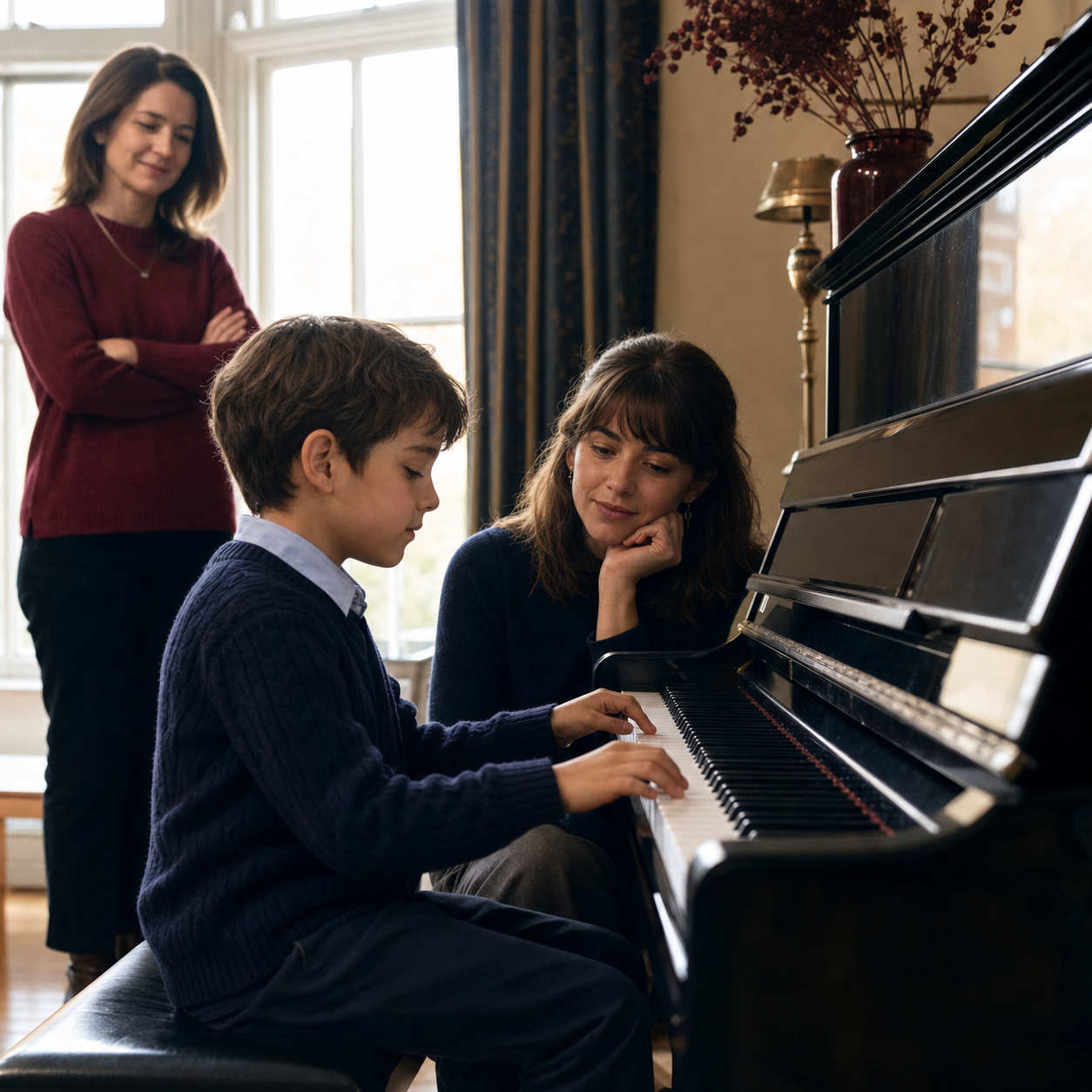
If your child would benefit from a clear, individual assessment of repertoire, technique and confidence, explore structured piano lessons for children in London.
Exam logistics and costs in the UK
Formats, dates, fees and policies change, so the official board page should be the final authority. Information in this section was last checked on 27 July 2026.
For ABRSM, Practical Grades are face-to-face, while Performance Grades are submitted as recorded programmes. Trinity offers face-to-face and digital choices, including technical-work and repertoire-only digital routes. LCME offers in-person and digital options across its graded and recital pathways. London families should check venue, piano provision, access arrangements and travel before paying, especially when a familiar instrument or quiet waiting routine matters to the child.
Current entry fees rise with grade and differ by format. Trinity’s published 2026 UK fees, for example, run from £55 at Initial to £138 at Grade 8 for face-to-face classical grades, with digital grades listed lower at each corresponding level. ABRSM and LCME publish their own current fee schedules. Budget for music, possible books, teacher time and travel as well as the entry fee; the cost of an exam is not only the booking charge.
Exam-day checklist
- Confirm the date, venue or upload deadline, permitted programme and current identification rule.
- Prepare original music and any programme form required by the board.
- Plan a calm journey with more time than the route appears to need.
- Keep the final warm-up familiar and brief; exam day is not the moment to rebuild technique.
- Agree one reassuring sentence in advance: “Play the music you know; one slip changes nothing.”
ABRSM allows candidates to choose the order of elements in a Practical Grade, subject to the practical arrangements described in its guidance. That small choice can help an anxious child start with the element that settles them. Ask the teacher to rehearse the entire exam sequence, including walking in, adjusting the stool, pausing between pieces and continuing after an error.
WKMT’s guide to music examination boards in the UK offers further context, while its overview of ABRSM and Trinity syllabus choices explores two major routes in greater detail. Families preparing for a specific London sitting can also consult WKMT’s piano exam preparation guidance.
Preparing without pressure
Healthy preparation is specific, varied and bounded. Repeating the complete programme every day may feel industrious, but it can preserve the same faults and exhaust the music. A better week alternates detailed repair, supporting skills, listening, performance practice and repertoire beyond the exam.
| Grade band | A balanced session might include | Parent’s most useful role |
|---|---|---|
| Initial–2 | Short technical pattern, one detailed passage, one whole piece, reading or listening game. | Protect the routine, notice effort and help the child stop while attention is still good. |
| Grades 3–5 | Technical work, two focused repertoire goals, supporting test and short run-through. | Ask what the teacher’s priorities are rather than correcting from the next room. |
| Grades 6–8 | Warm-up, rotating technical priorities, deep work on selected passages, recorded performance and reflection. | Support planning, sleep and perspective while allowing the pianist increasing ownership. |
Motivation improves when the child can see the next achievable action. “Make bar 18 reliable at half speed” is clearer than “Practise harder”. A weekly plan should contain one or two priorities per piece, not a page of criticism. Teachers can make progress audible by recording the same passage a fortnight apart or returning to a previously difficult sight-reading example.
Pressure often hides in language. “You have worked hard, so you must get a distinction” turns effort into a debt the result must repay. Prefer: “You have prepared carefully; now you can share what you know.” Distinction, merit and pass bands are useful feedback categories, but they do not describe the whole musician.
Teacher’s note
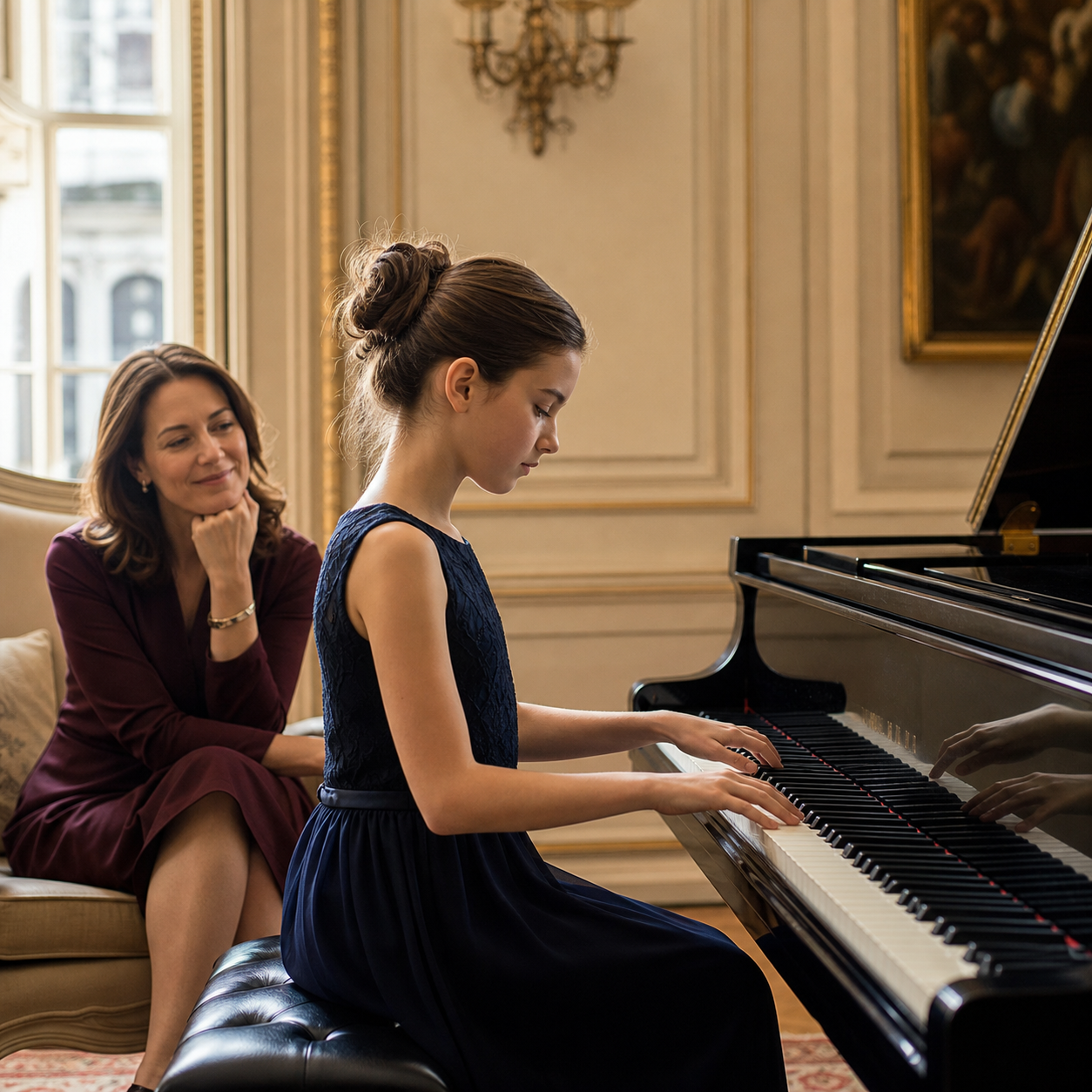
Leave some lesson and practice time for music that will never be examined. Improvising, playing duets, accompanying a song and learning a favourite piece remind the pupil that the piano is a living musical instrument, not an assessment machine. Piano Grades Explained: Parent Guide to Levels and Exams.
Alternatives to graded exams and wider pathways
A pupil can progress seriously without taking numbered grades. Studio concerts, festivals, ensemble projects, repertoire challenges and informal assessments can provide deadlines and feedback with a different emotional temperature. For a child recovering from exam anxiety, a term of broader music-making may restore attention and confidence.
Performance-focused qualifications are another option. ABRSM Performance Grades use a recorded four-piece programme. Trinity offers digital repertoire-only grades and separate certificate exams built around recital presentation. LCME offers Recital Grades alongside its all-round graded exam. Rock and pop routes, composition, music technology and theory may also suit a young musician whose interests extend beyond classical solo performance.
After Grade 8, diploma pathways assess a more advanced recital or professional level, but they should not be treated as an automatic ninth rung. The move from graded repertoire to diploma study asks for artistic stamina, breadth and independent judgement. Some pupils benefit more from spending a year widening repertoire, playing chamber music or strengthening theory before making that transition.
The clearest account of piano grades explained therefore ends with permission: a family may use the framework selectively. Taking Grade 3 and then Grade 5, choosing a recital route, changing boards or pausing exams can all be musically responsible when the underlying skills continue to grow.
FAQs and next steps for London families
What age should a child take Grade 1 piano?
There is no fixed age. Enter when the required pieces and skills are secure, the child can recover from small mistakes, and they understand the event. Musical readiness matters more than birthday or school year.
Does a child have to take every piano grade?
No. Boards generally allow candidates to enter selected grades, subject to any stated higher-grade prerequisite. A teacher should fill the musical gaps between levels even when a certificate is skipped.
Is ABRSM Grade 5 theory compulsory?
It is one accepted prerequisite for ABRSM Practical and Performance Grades 6–8. ABRSM also lists Practical Musicianship, a Jazz Practical Grade and specified alternatives. Other boards have different rules, so check the current official requirements.
For London families, the next step is a conversation with a teacher who can hear the child now, not a prediction based on age alone. Bring the current repertoire, recent feedback and any concerns about practice or performance. A well-chosen grade can create focus and pride. A well-chosen pause can do the same.
Let the exam serve the musician
WKMT’s children’s piano teaching combines classical standards with an individual pace, helping young pianists build secure skills, confidence and musical independence.
Sources on piano grades explained guide
- ABRSM, Practical Grades: entry requirements and exam components for Piano Grades Explained: Parent Guide to Levels and Exams
- ABRSM, equivalence of Performance and Practical Grades
- ABRSM, 2026 dates and fees
- Trinity College London, graded exam formats and assessment
- Trinity College London, UK music exam fees 2026
- London College of Music Examinations, piano pathways and 2026 syllabus
- UCAS, Tariff points and institutional discretion