
 TRIAL LESSON
Pianists, Piano Lessons
Ignacy Jan Paderewski in London: The Pianist-Statesman Whose Tone Still Teaches Courage and Clarity

Jun
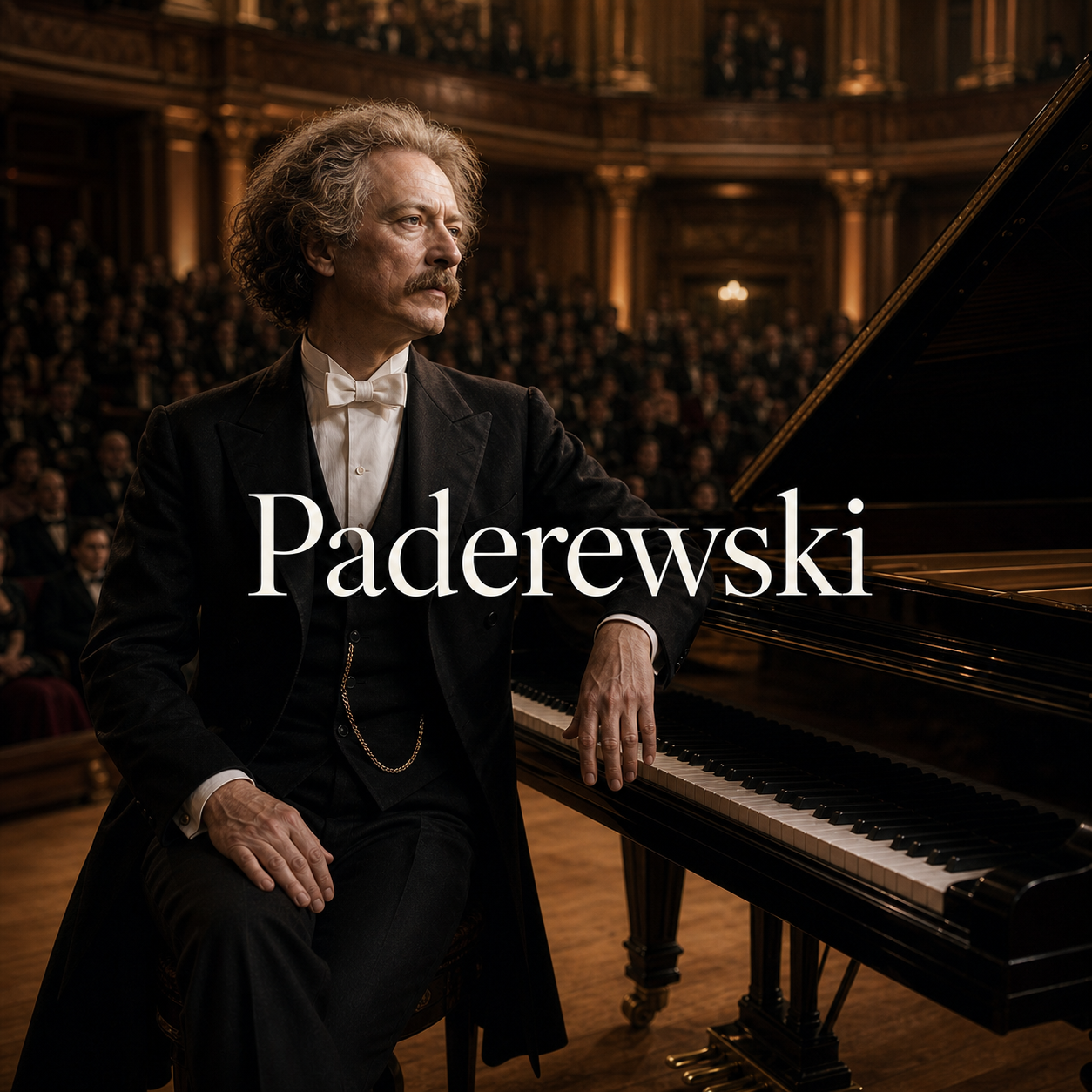
WKMT London classical piano culture
Ignacy Jan Paderewski in London: The Pianist-Statesman Whose Tone Still Teaches Courage and Clarity
Ignacy Jan Paderewski belongs to the rare class of musicians whose public force was inseparable from the sound they made at the piano. For London pianists, his story is not only biography; it is a study in tone, presence, conviction and artistic responsibility.
When London audiences first encountered Paderewski, they were meeting more than a virtuoso. They were hearing a pianist who carried the Romantic stage tradition into a modern public world of newspapers, touring, recording, diplomacy and national causes. His name still gathers several identities at once: Polish pianist, composer, philanthropist, campaigner, prime minister, treaty signatory, and later elder statesman of a displaced European culture.
That breadth is exactly why an article about Ignacy Jan Paderewski should not read like a neutral list of dates. The useful question is sharper: what did London hear in him, and what can serious pianists still learn from that hearing? WKMT approaches Paderewski as part of the city’s wider classical piano memory, linked naturally to classical piano study in London and to the habit of listening historically before playing emotionally.
Why Paderewski Still Matters in London
Paderewski’s life has a theatrical scale, but its musical lesson is intimate. The Polish Music Center describes him as a virtuoso pianist, composer, politician and philanthropist whose 1888 Paris success launched an international career. Britannica records the same arc with sober clarity: after studies in Warsaw and Vienna, his public success in Vienna, Paris, London and New York became overwhelming.
For a London reader, the important point is that Paderewski arrived at a moment when recital culture was becoming a civic event. The solo pianist could command a hall, shape taste, raise money, persuade political sympathies and become a recognisable public figure. That is a demanding model of musicianship. The pianist is not merely agile; the pianist carries meaning.
Practice note
Paderewski’s enduring lesson is not imitation of Romantic mannerism. It is the discipline of making every phrase sound publicly inevitable and privately sung.
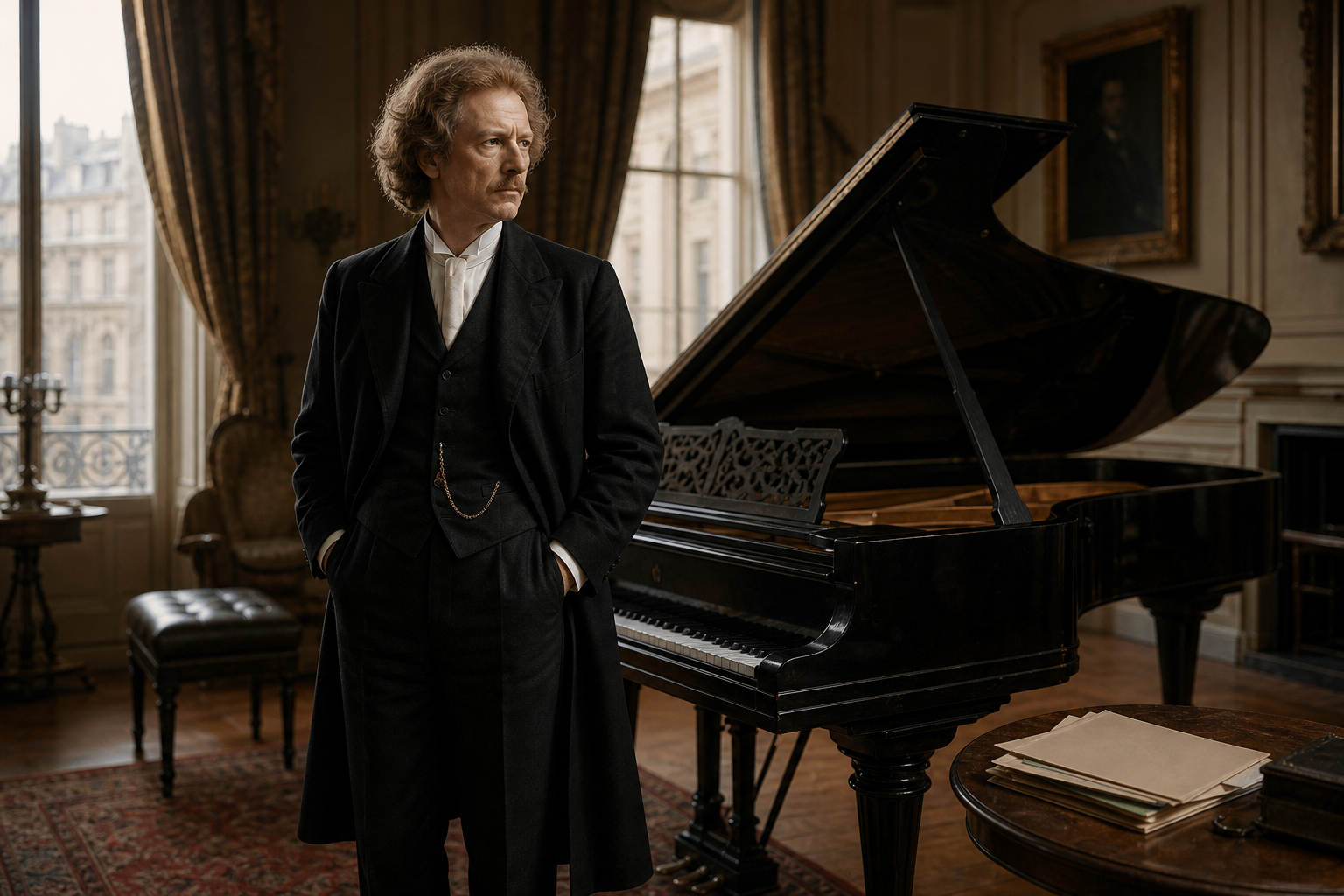
Paderewski in London: Concert Culture, Public Memory and the Solo Recital
Paderewski’s London significance sits within a broader European pattern. Culture.pl notes that he pioneered the solo recital format at a time when mixed-artist concerts were still common; that shift matters because it changed what audiences expected from one pianist alone. A recital ceased to be a sequence of pieces and became an argument in sound.
London’s musical life was especially suited to that transformation. Its halls, newspapers and society networks could magnify a pianist’s reputation quickly. The same city that valued musical pedigree also responded to atmosphere: appearance, authority, pacing, encore culture and the sense that a performance had become a social event. Paderewski understood this without reducing music to display. His platform image drew attention, but his staying power came from the singing quality listeners associated with his touch.
For modern pianists, that combination is instructive. Public confidence cannot replace musical substance, but musical substance needs public shape. A recital programme must feel coherent; tempo flexibility must be grounded in harmonic knowledge; tone must carry through a hall without becoming harsh. These are still the same problems a pianist faces before a London audience.
The pianist who convinces a hall is not the one who merely plays loudly. It is the one whose sound makes the audience believe that the phrase could not have been spoken otherwise.
London’s Critical Reception: What the Press Heard in Paderewski
The surviving critical story around Paderewski is remarkably consistent: listeners heard beauty of tone, personal magnetism and a freedom that later musicians sometimes judged excessive. The Polish Music Center summarises this well, noting his reputation for tone colour and a touch that could make the piano sing, while also acknowledging criticism of rubato and chordal unevenness. That tension is valuable. It prevents Paderewski from becoming a marble saint.
Romantic pianism was not metronomic pianism. Its risks were theatricality, exaggeration and uneven discipline; its gifts were rhetorical timing, vocal line and the courage to let harmony breathe. London’s serious musical culture has long been alert to that balance. A performance that sounds merely sentimental is quickly exposed. A performance that is too severe can miss the human centre of Chopin, Schumann, Liszt and late-Romantic repertoire.
Projected singing sound, varied colour and voicing that suggested orchestral imagination.
Flexible rubato shaped by phrase direction rather than casual delay.
A recital manner that made the audience feel addressed, not merely impressed.
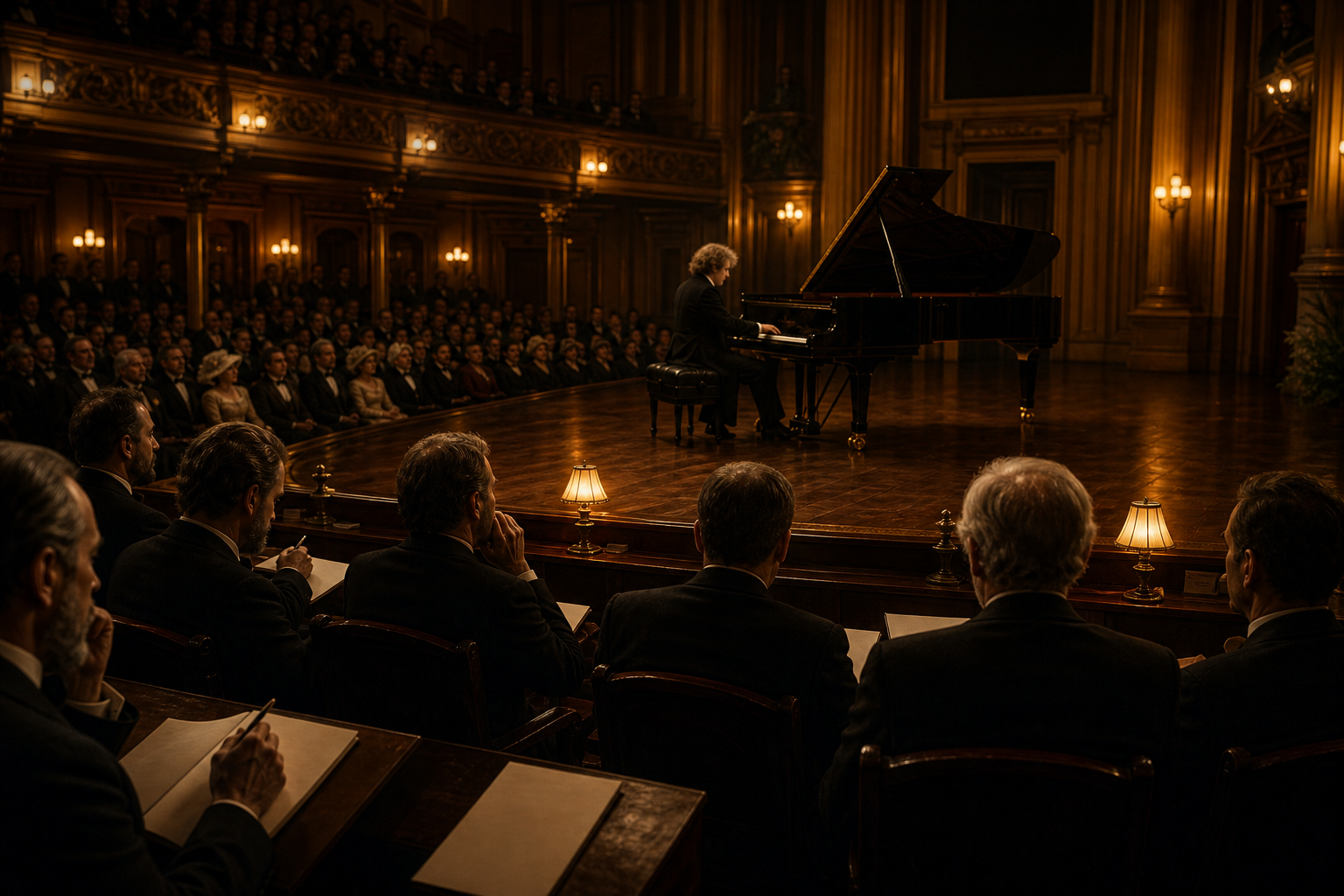
Paderewski the Statesman and London’s Polish Community
Paderewski’s political life cannot be separated from his concert life. His fame opened doors; his oratory and discipline gave him political usefulness. Britannica records his wartime advocacy for Polish independence, his connection with President Woodrow Wilson’s support for Poland in the Fourteen Points, and his 1919 role as Poland’s prime minister and foreign minister. Culture.pl places that public work within a larger story of philanthropy and patriotic duty.
London matters here because the city has always been a meeting place for exile, diplomacy, charity and cultural self-definition. Paderewski’s statesmanship gives musicians a difficult but necessary lesson: prestige is a resource. Used vainly, it becomes spectacle. Used nobly, it can gather attention for something beyond the artist.
WKMT Perspective
A classical education is strongest when it teaches judgement as well as technique. Paderewski shows how musical authority can become moral authority, provided the artistry remains serious.
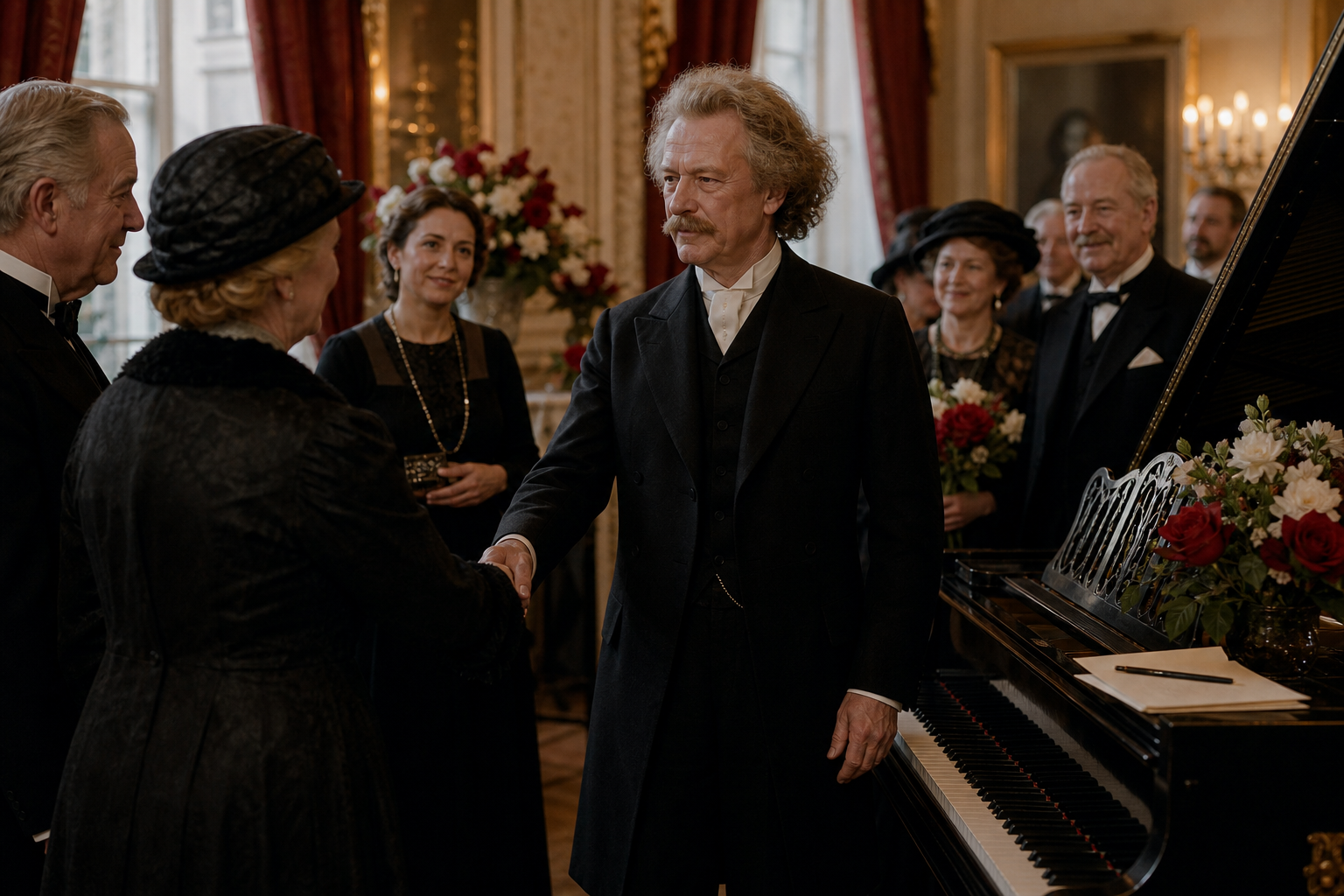
Musical Profile: Repertoire, Recordings and Piano Tone
Paderewski’s repertoire centred on the composers through whom late-Romantic pianism tested itself: Chopin, Bach, Beethoven, Schumann and Liszt. The Polish Music Center notes his reputation in Chopin and Liszt, his interest in Bach, and the popularity of pieces such as the Minuet in G. Culture.pl adds the composer’s catalogue: the Piano Concerto in A minor, the Polish Fantasy, the B minor Symphony, Manru and many piano miniatures.
The recordings that survive cannot fully reproduce what London audiences heard in a hall. Early recording technology narrows colour, compresses dynamic scale and changes the listener’s sense of time. Yet recordings remain invaluable because they reveal habits of inflection: how a phrase leans, where a melody relaxes, how a cadence is prepared, and how ornament can sound spoken rather than mechanical.
| Area | What to listen for | Modern lesson |
|---|---|---|
| Chopin | Vocal line, rubato and harmonic arrival | Freedom must still clarify structure |
| Beethoven | Weight, rhetoric and long-range tension | Intensity needs architectural thought |
| Miniatures | Character, charm and polish without triviality | Small forms deserve complete artistry |
Paderewski Listening Framework for Pianists
Identify the principal singing line before judging speed.
Notice where the phrase seems to inhale or hold tension.
Ask whether accents come from arm weight, harmonic stress or theatrical emphasis.
Separate persuasive freedom from decorative distortion.
Where to Find Paderewski in London Today
Paderewski’s London presence now survives through catalogues, portraits, recordings, newspaper archives and the continuing memory of the city’s recital tradition. Publicly accessible searches should begin with institutional sources: the National Portrait Gallery for portrait holdings, the British Library for printed and recorded material, major newspaper archives for reviews, and concert-hall archives where available. Details such as private collection-room access or unpublished programme serials should be verified directly with the institution before publication.
WKMT’s contribution is interpretive rather than archival ownership. A student can use these sources to hear London’s piano past more intelligently: not as nostalgia, but as a record of how public taste, virtuosity and teaching ideals evolve.
A Teacher’s Take: What London Pianists Can Learn from Paderewski’s Stagecraft
The danger in studying Paderewski is to copy surface freedoms. The better approach is to study the conditions that made those freedoms persuasive: command of tone, understanding of style, patience with cantabile, and a public manner that honoured the music’s scale. A serious adult pianist can learn from this without trying to sound antique.
First, tone must be prepared before it is projected. A grand piano does not sing by sentiment; it sings when voicing, pedalling, finger support and balance agree. Secondly, rubato must be accountable. When time bends, harmony should explain why. Thirdly, stage presence begins before the first note. The audience reads how a pianist sits, breathes and listens.
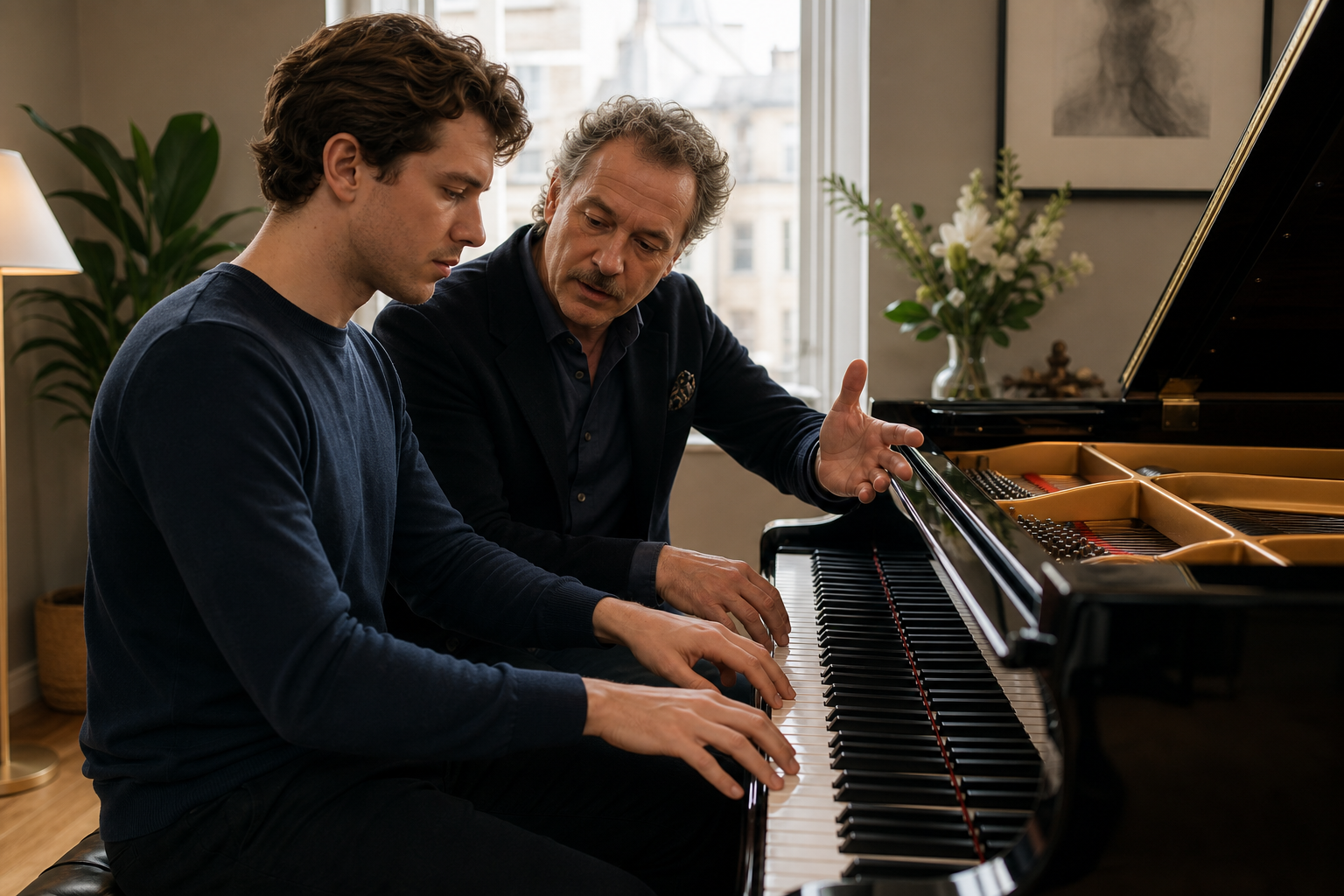
Study piano through London’s classical tradition
For pianists who want historical listening, tone and interpretation to shape practical study, WKMT offers a serious London setting for classical piano development.
Explore classical piano study in LondonSuggested Listening, Sources and Further Study
Begin with Paderewski’s own miniatures, then compare his Chopin and Beethoven recordings with later pianists who valued structural restraint. Read around him as a public figure, not merely as a pianist. His artistic identity makes more sense when seen beside Polish independence, philanthropy, the rise of the solo recital and the early recording industry.
For WKMT readers who enjoy pianist history, the existing guide to great pianists of all time, the page on classical concerts in London, and the studio’s work with Scaramuzza technique provide natural next steps.
Sources on Ignacy Jan Paderewski in London
- Polish Music Center, USC: Ignacy Jan Paderewski. Last checked: 2026-06-01.
- Encyclopaedia Britannica: Ignacy Jan Paderewski. Last checked: 2026-06-01.
- Culture.pl / Adam Mickiewicz Institute: Ignacy Jan Paderewski biography. Last checked: 2026-06-01.
- International Paderewski Piano Competition: Paderewski profile. Last checked: 2026-06-01.
- National Portrait Gallery: Ignacy Jan Paderewski collection search. Last checked: 2026-06-01.
- British Library catalogue and people search for Paderewski-related holdings. Last checked: 2026-06-01.