
 TRIAL LESSON
Piano Lessons
John Ogdon in London: Power, Clarity and Serious Listening
Jun
John Ogdon in London Guide
WKMT London | Pianist Legacy
John Ogdon in London: Power, Clarity and Serious Listening
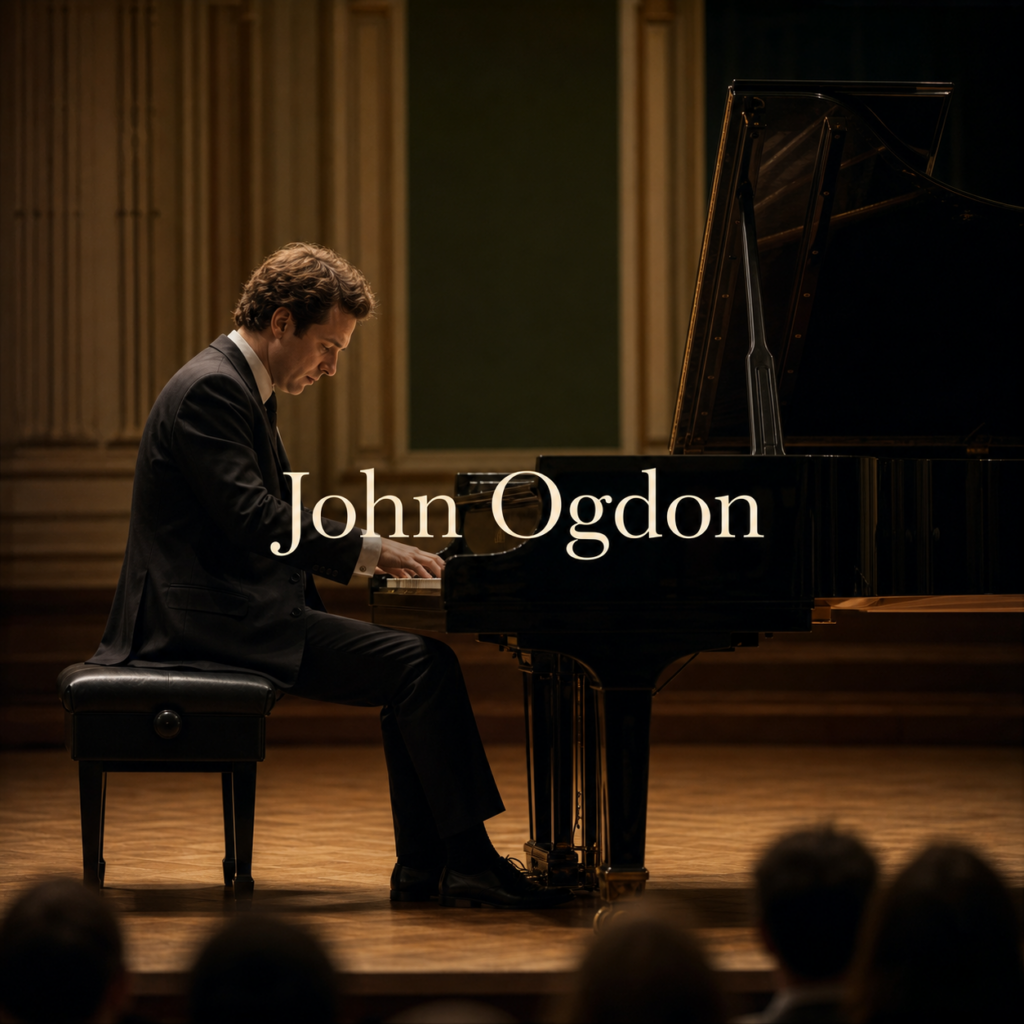
John Ogdon was one of Britain’s most formidable pianist-composers: a musician of colossal technique, restless curiosity and unusual sensitivity to musical architecture.
Why John Ogdon Still Matters
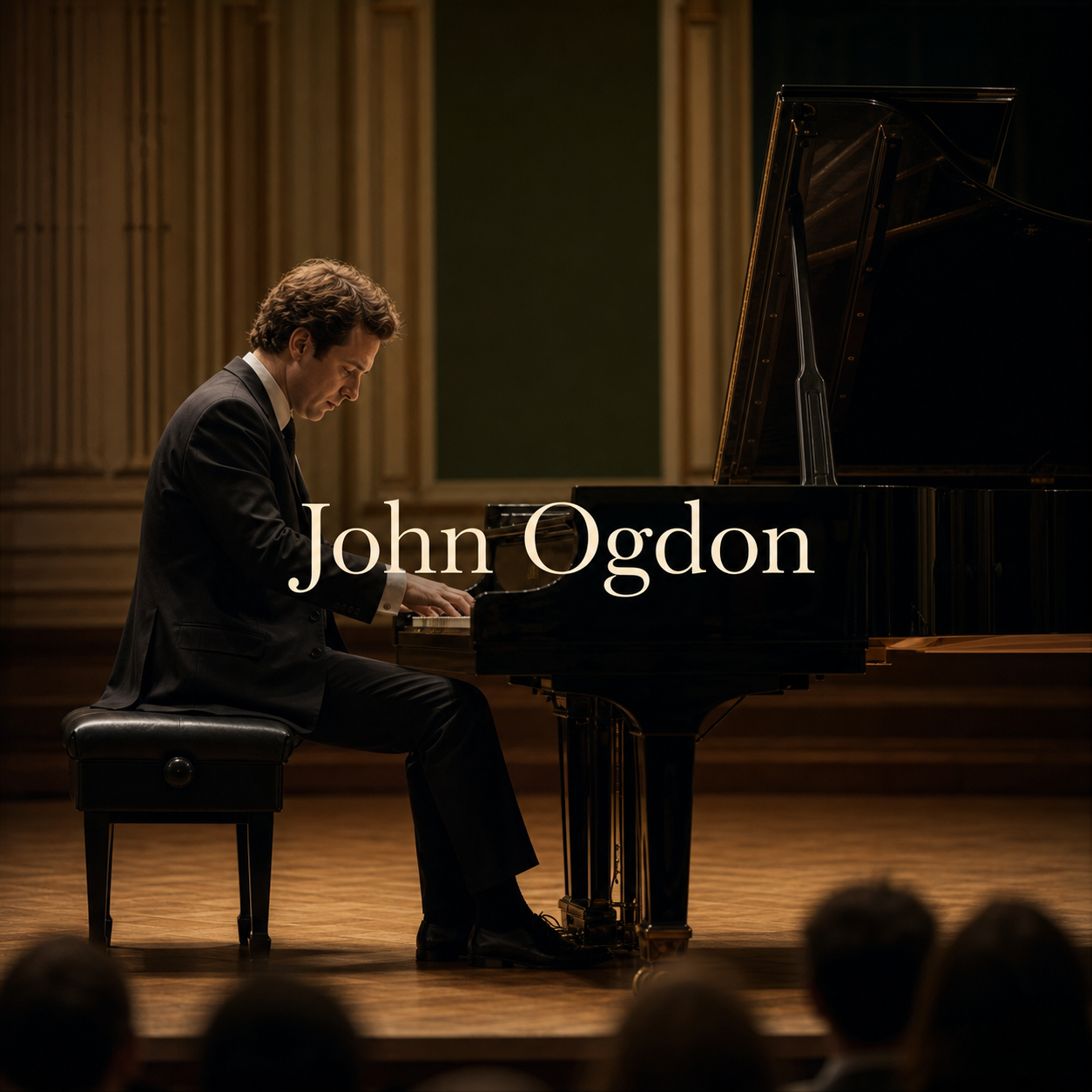
John Ogdon attracts a particular kind of attention. Searchers usually want biography, recordings and context; pianists want to know how one performer could move so naturally between Liszt, Busoni, Alkan, Scriabin, Sorabji, British modernism and the central classics. For WKMT readers, the useful answer is not hero worship. It is a lesson in musical appetite: the serious pianist must learn how to think through sound, not merely decorate it.
The John Ogdon Foundation records his birth in Mansfield Woodhouse, his studies at the Royal Manchester College of Music, his 1958 London debut at the Proms in Busoni’s Piano Concerto, and the joint first prize with Vladimir Ashkenazy at the 1962 International Tchaikovsky Competition. Those facts explain the public outline. The deeper value lies in how Ogdon listened. Even at his most thunderous, he was concerned with form, colour and the shape of musical argument.
Ogdon is a powerful reminder that virtuosity is more than speed or volume. It is the ability to make difficult music sound intelligible, inevitable and alive.
Quick Facts At A Glance
27 January 1937 – 1 August 1989.
Royal Manchester College of Music; teachers included Claude Biggs, Denis Matthews, Gordon Green and Egon Petri.
Liszt Prize in Budapest, 1961; joint first prize at the 1962 Moscow Tchaikovsky Competition.
Busoni, Liszt, Alkan, Scriabin, Rachmaninov, Sorabji, British modernists and classics.
He also composed extensively. Piano Classics describes him as a privately passionate composer whose output approached 200 works, especially for piano. That compositional imagination matters when listening to him as a performer: Ogdon often sounds as if he is reading the mechanism of a piece from the inside.
Early Life And Musical Training
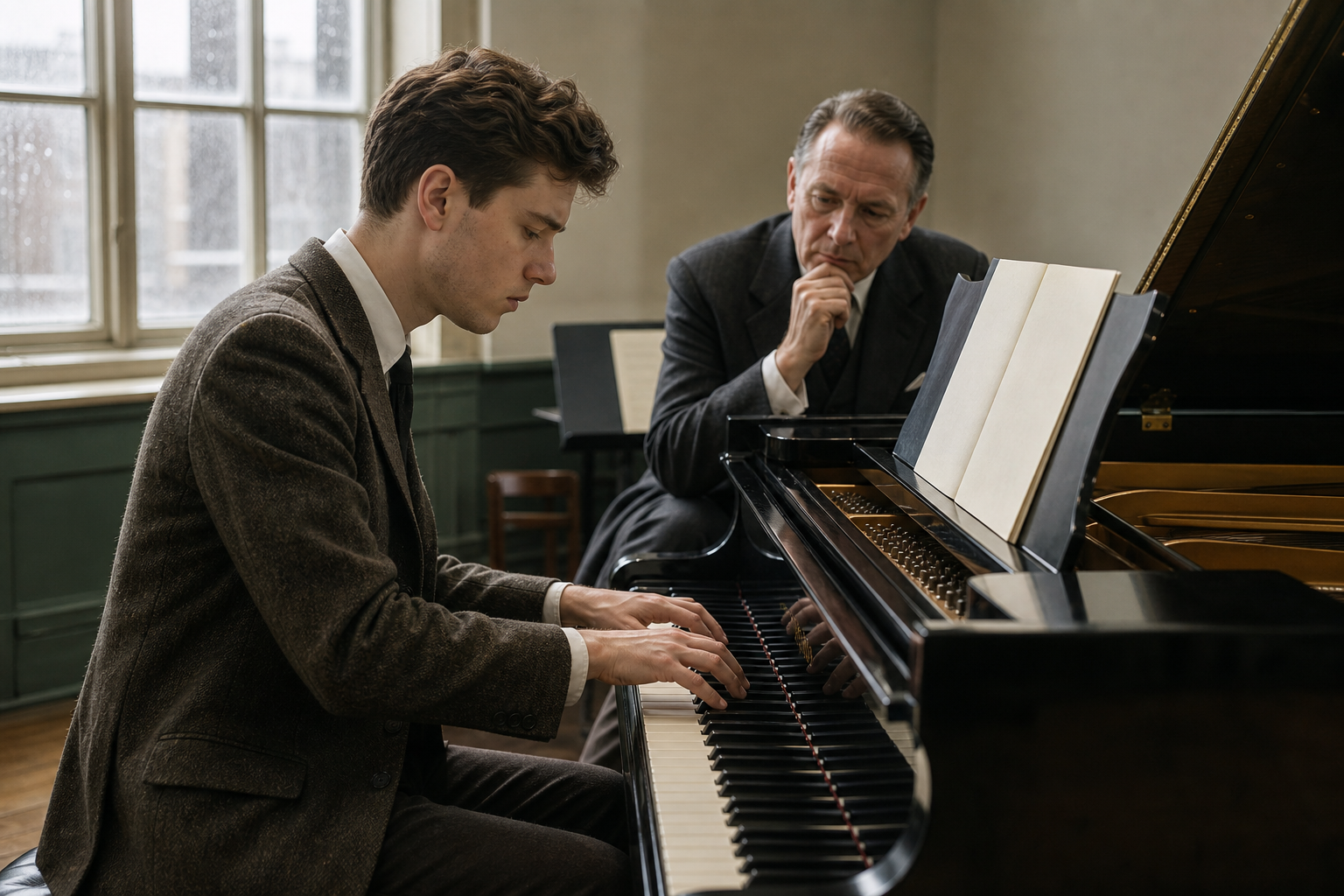
Ogdon entered the Royal Manchester College of Music as a young musician with exceptional facility, but the important point is not precocity alone. Manchester gave him a musical climate in which performance and composition were not separate worlds. The Foundation places him within the Manchester New Music Group, alongside figures such as Harrison Birtwistle, Alexander Goehr and Peter Maxwell Davies. That company helps explain why Ogdon’s repertoire later felt so unusually wide.
He did not treat contemporary music as an academic duty. He played it as a living extension of piano culture. He could move from romantic mass to modern complexity because his imagination was structural. A vast score did not intimidate him simply because it was large. The question was whether its inner logic could be made audible.
For students, that is the first Ogdon lesson. Repertoire should not be chosen only by comfort. A pianist grows by meeting music that enlarges the ear. That may mean Busoni, Scriabin or a contemporary score for an advanced player; it may mean one carefully chosen Beethoven movement for an adult learner. The principle is the same: stretch the musical mind without losing the line.
It is tempting to describe this as fearlessness, but that word can flatten the musical reality. Ogdon’s range was not a stunt. It came from an ear willing to live with density until its grammar became clear. That distinction matters for teaching. A student should not be pushed into difficulty merely to prove ambition; the teacher’s task is to choose difficulty that reveals a new kind of hearing. Ogdon’s formation shows how a broad musical environment can make that possible.
Ogdon’s London Career: Concerts, Venues And Relationships
London enters the story early. The Foundation states that Ogdon made his London debut at the Proms in 1958, playing Busoni’s Piano Concerto. That was a telling entrance. Busoni’s concerto is vast, demanding and intellectually eccentric; it was exactly the kind of work that suited a pianist who could combine physical command with analytic imagination.
His 1962 Moscow triumph made him an international name. The John Ogdon Foundation records the joint first prize with Vladimir Ashkenazy at the International Tchaikovsky Competition, a result that carried obvious Cold War-era visibility for a British pianist. The prize did not create his musicianship, but it gave the wider public a simple marker for something that was already unusual.
For London audiences, Ogdon belongs to the city’s serious recital and broadcast memory: Proms culture, British orchestral life, recording studios, two-piano work with Brenda Lucas, and the postwar appetite for pianists who could make difficult repertoire public. WKMT’s own work in classical piano study in London sits in that larger ecology. A city needs teachers, halls, recordings, listeners and students who are willing to hear beyond the obvious.
This is why a London frame is more than local decoration. Ogdon’s career asks what a capital city can do for demanding music. It can give the pianist an audience for unusual repertoire, a broadcast culture that carries work beyond the hall, a recording industry that preserves risk, and a teaching culture that helps listeners become more exacting. For WKMT students, that history turns the city itself into part of the lesson.
Repertoire And Landmark Recordings
Ogdon’s discography is not tidy. That is part of its fascination. Presto Music’s artist profile highlights the breadth: Busoni’s Piano Concerto, Beethoven’s Hammerklavier Sonata, Alkan, Sorabji’s Opus Clavicembalisticum, and hundreds of recorded works. The Foundation notes a recording legacy spanning 30 years, later represented in major anniversary and Great Pianists of the 20th Century collections.
The repertoire tells us what kind of pianist he was. Scriabin asked for colour and volatility. Sorabji asked for stamina and labyrinthine concentration. Busoni asked for philosophical scale. Rachmaninov asked for breadth without heaviness. British twentieth-century music asked for advocacy and belief. Ogdon’s special gift was to make these worlds feel connected by musical thought rather than by mere technical appetite.
The Ogdon lesson is not to chase difficulty for its own sake. It is to ask whether the most complex music can still speak clearly.
Decca’s 2025 John Ogdon: The Argo Years release is useful for modern listeners because it restores a concentrated view of his late-1960s and early-1970s recorded identity, including Messiaen, Mozart, Mendelssohn, Shostakovich, Stravinsky and two-piano material with Brenda Lucas. It shows the range as a musical fact, not as legend.
The most revealing way to use those recordings is comparative. Hear Ogdon beside a more classical, contained pianist, then ask where the energy comes from. Sometimes it is sheer sonority; often it is rhythm, harmonic pressure or the refusal to make a complex passage sound decorative. This turns a recording into a practical lesson. The listener begins to hear how scale, clarity and imagination can coexist without cancelling one another.
| Repertoire area | What Ogdon reveals | Listener’s question |
|---|---|---|
| Busoni and Alkan | Scale, stamina and architecture | Can I still hear the form? |
| Scriabin and Rachmaninov | Colour, sonority and tension | Where does the harmony pull? |
| British modernism | Advocacy, clarity and conviction | What makes the unfamiliar persuasive? |
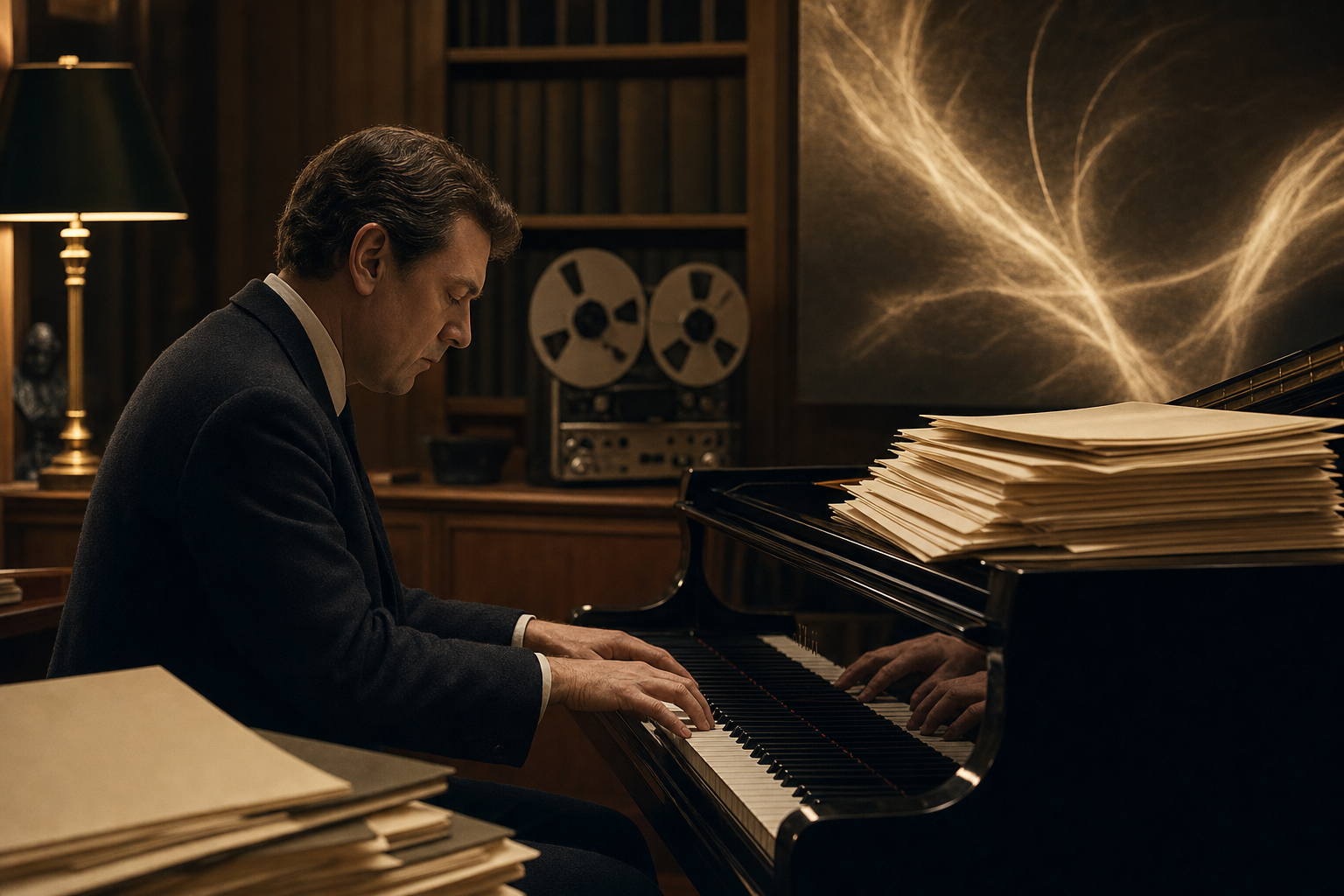
How To Listen: A Short Recommended Path
Begin with contrast. Choose one lyrical recording, one architectural work and one twentieth-century score. Do not try to absorb Ogdon’s whole discography as a monument. Hear it as a set of questions about musical intelligence.
This is a useful exercise for advanced students and thoughtful adults. It moves listening away from admiration and towards diagnosis. How does a pianist control density? How does a chord become a destination rather than a noise? How can intensity remain humane?
For an adult learner, the route is especially productive because it avoids the false choice between technique and musical understanding. You may not play Sorabji or Busoni this year, but you can still learn from the way Ogdon organises weight, risk and direction. Listen for one principle at a time. If the passage is fast, follow the harmonic rhythm. If the chordal writing is massive, listen for voicing. If the music sounds wild, ask where the pianist is creating order.
When the texture becomes huge, listen lower in the piano. Ogdon’s power makes sense when the bass, harmony and long line remain clear.
Teaching, Influence And Legacy In The UK
Ogdon’s legacy must be framed with care. His public story includes illness, interruption and return; it should not be reduced to romantic suffering. The responsible musical point is simpler and more respectful: his gifts were extraordinary, his career was complex, and the Foundation founded in his memory continues to promote awareness of his work as pianist and composer.
That legacy is especially valuable for adult learners because it gives permission to be serious. You can study piano without reducing it to exams, speed or easy repertoire. You can listen historically, compare recordings, read around a composer and use lessons to build musical judgement. For readers wanting structured support, adult piano lessons at WKMT provide a practical route into that depth.
There is also a compassionate lesson for teachers. A pianist’s life is never only a list of prizes and performances. It includes health, pressure, memory, relationships and the vulnerability of public work. Ogdon’s story should therefore be handled without sensationalism. The music remains central, and the human context should deepen respect rather than become a shortcut to drama.
For serious adult learners
Choose one demanding work you do not yet understand. Listen twice, read one reliable source, then bring three precise questions to your lesson. This is how difficult repertoire becomes musical education rather than intimidation.
Study Classical Piano In London With A Listening-Led Approach
WKMT’s London piano teaching values repertoire, technique and musical judgement together. Ogdon’s example fits that tradition: listen deeply, understand the score, then let technique serve meaning.
Where To Hear Ogdon In London Today
There is no single Ogdon destination to visit. His presence survives through recordings, Foundation material, reissues, archives and the kind of concert culture that still makes demanding piano music public. London listeners can build a route through recordings, WKMT study, and live programmes that place major repertoire in context.
For related WKMT reading, use advanced piano lessons in London for structured repertoire development, classical concerts in London by WKMT for performance culture, and Scaramuzza technique for a disciplined technical perspective. Those links are not substitutes for Ogdon’s recordings; they are practical ways to turn listening into study.
Sources And Further Listening
- A Brief Biography of John Ogdon, John Ogdon Foundation, last checked 2026-06-03.
- Welcome to the John Ogdon Foundation, John Ogdon Foundation, last checked 2026-06-03.
- John Ogdon artist profile, Presto Music, last checked 2026-06-03.
- John Ogdon: The Argo Years, Presto Music / Eloquence, last checked 2026-06-03.
- Ogdon: Original Piano Music, Piano Classics / Brilliant Classics, last checked 2026-06-03.