
 TRIAL LESSON
Pianists, Piano Lessons
Clifford Curzon in London: The British Pianist Whose Mozart Still Teaches Poise and Listening

May
WKMT London piano culture
Clifford Curzon in London: The British Pianist Whose Mozart Still Teaches Poise and Listening
Clifford Curzon made refinement sound active. For London pianists, teachers and serious adult learners, his Mozart, Schubert and chamber-minded restraint still offer a precise lesson: listen first, then let the hands serve the ear.
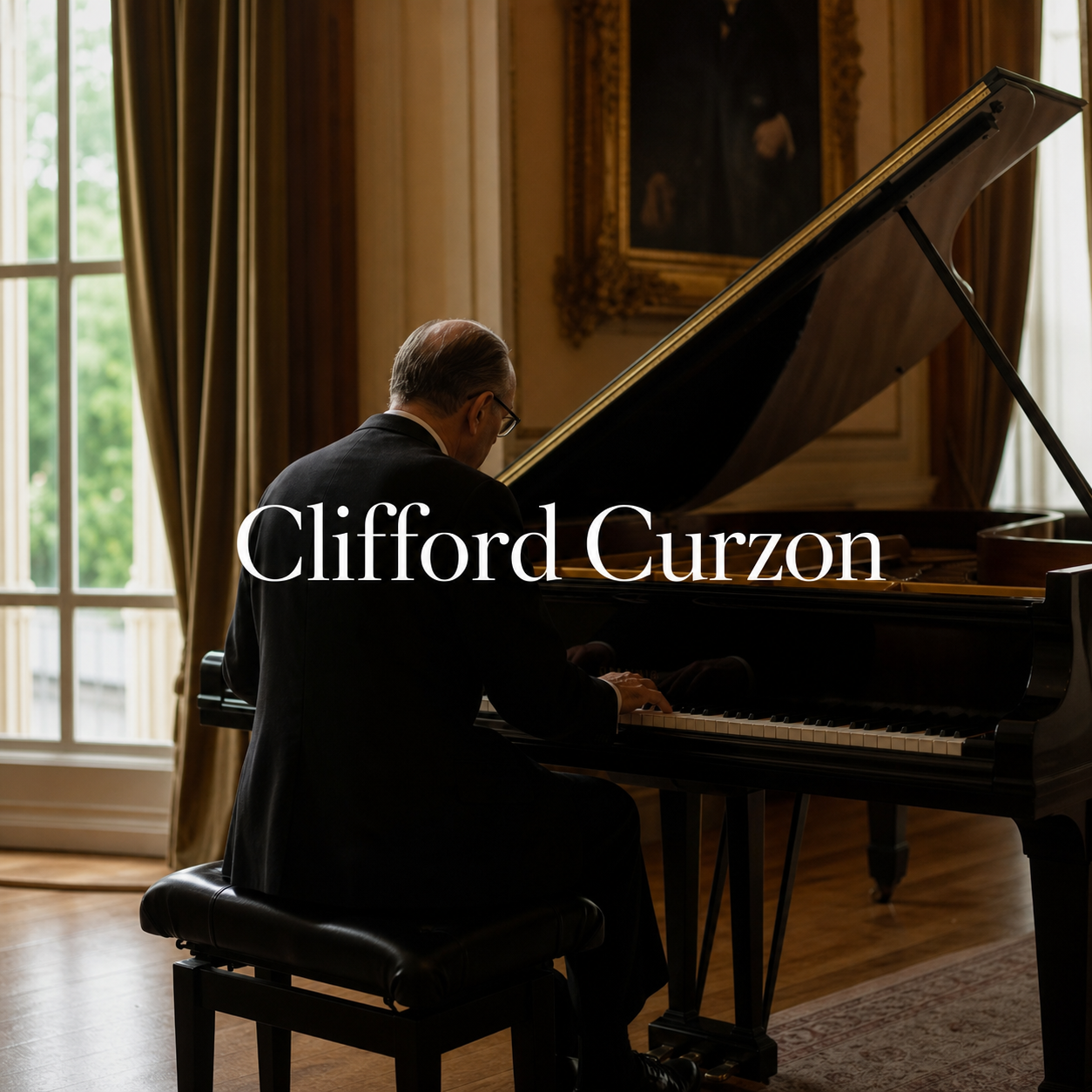
Clifford Curzon was born in Islington in 1907, trained at the Royal Academy of Music, and became one of the twentieth century’s most admired British pianists. The basic facts are easy to list: early London promise, continental study with Artur Schnabel, Wanda Landowska and Nadia Boulanger, a long association with Decca, and a later reputation for Mozart, Schubert, Beethoven and Brahms. Yet the reason Curzon still matters is subtler. He shows how a pianist can be intense without becoming heavy, elegant without becoming decorative, and exacting without losing warmth.
This WKMT feature is for adult learners, advanced students and London listeners who want more than a short biography. It asks how Curzon’s London formation shaped his musical values, why his recordings remain useful for close listening, and how his example supports disciplined classical piano study today. The aim is not to copy his manner. It is to learn from his standards: restraint, proportion, chamber sensitivity, and the patience to make Mozart sound spoken rather than displayed.
Clifford Curzon: Life and London Roots
Curzon’s story begins in London. Born Clifford Michael Siegenberg, he entered the Royal Academy of Music as a gifted child and developed under Charles Reddie and Katharine Goodson, both connected to strong nineteenth-century pianistic traditions. By his teens he was already performing in serious public contexts; accounts of his early career place him at the Proms in the 1920s and later as a young sub-professor at the Academy. London was not just his birthplace. It gave him institutional discipline, early public responsibility and a culture in which pianists were expected to combine artistry with service.
Born in Islington, London.
Entered the Royal Academy of Music as a young pianist.
Early Proms and Academy activity placed him in public London musical life.
Knighted after a long international career.
Curzon’s later fastidiousness can be misunderstood as mere perfectionism. It was also an ethic. A performer formed in London, then sharpened abroad, he carried into adulthood a belief that serious playing demanded more than accurate execution. It required judgement. For WKMT students, that is the first takeaway: technique becomes meaningful only when it is governed by musical responsibility.
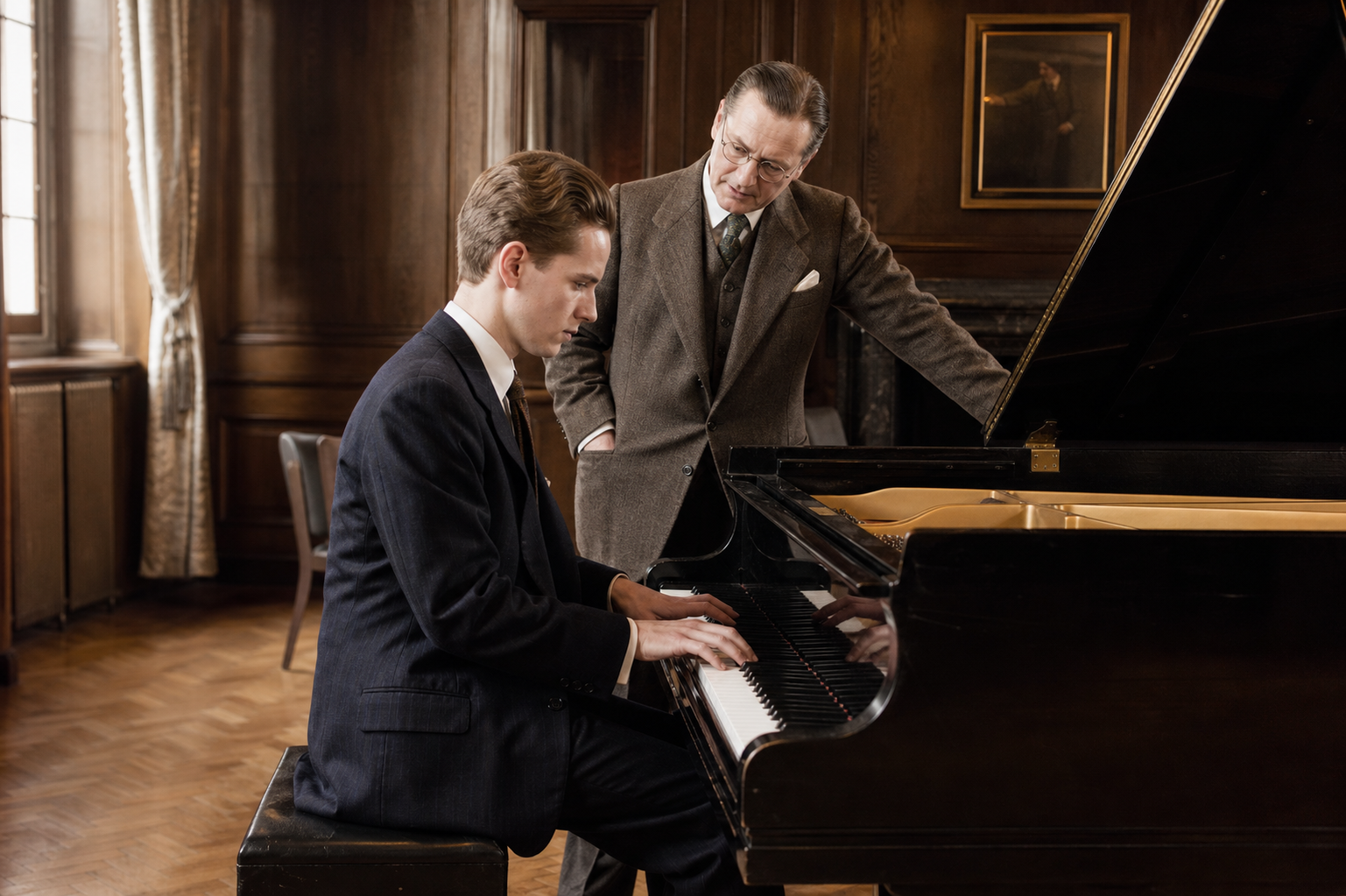
Training and Influences: The Continental Lineage
After the Royal Academy, Curzon broadened his training in Europe. Schnabel strengthened the Beethoven-Schubert line: structure, moral seriousness, and the conviction that the score contains more than a pianist can exhaust. Landowska opened a window onto earlier keyboard clarity, and Boulanger represented another kind of discipline: harmonic intelligence, style and proportion. These names can look like biography, but for a student they are practical clues.
Curzon did not become a copy of any one teacher. Instead, he absorbed a continental seriousness and made it speak in a British voice. The result was a pianist suspicious of superficial brilliance. In earlier years he could play bravura repertoire; later, he increasingly placed his authority in Mozart, Schubert, Beethoven and Brahms. That shift is instructive. Many pianists mature by adding more force. Curzon matured by removing anything unnecessary.
Practice Insight
When studying Curzon, do not begin by asking how soft or refined he sounds. Ask what he refuses to exaggerate. The omissions are often where his discipline is clearest.
For a London adult learner, this is a powerful model. A player who comes to the piano after years of listening can use maturity as an asset: less impatience, more attention to harmony, and a stronger instinct for musical speech.
Clifford Curzon in London Concert Culture
Curzon’s London associations are inseparable from the Royal Academy, the Proms, the recital platform and British broadcasting. Public records and biographical summaries connect his early professional life to the Academy and the Proms, while his Decca discography preserves a London-centred recording story that stretched from the 1930s into the 1970s. The important point is not simply that he appeared in prominent places. It is that his artistry suited a city where serious listening has long been cultivated through institutions, halls, radio and teaching studios.
Unlike pianists who projected charisma through gesture, Curzon’s authority often came from concentration. This made him particularly compelling in repertoire where architecture and poise matter: Mozart concertos, Schubert’s late piano writing, Beethoven’s classical rhetoric, Brahms’s inward density. The London listener meeting Curzon through records or archival memory hears a player who made refinement dramatic by making every detail accountable.
Curzon’s London lesson is not nostalgia. It is the living discipline of making a phrase sound inevitable without forcing it to announce itself.
That is why he belongs naturally in WKMT’s wider London piano culture. The city does not only need virtuosity. It needs teachers and students who can hear proportion, style and silence. Curzon gives that tradition a concrete example.
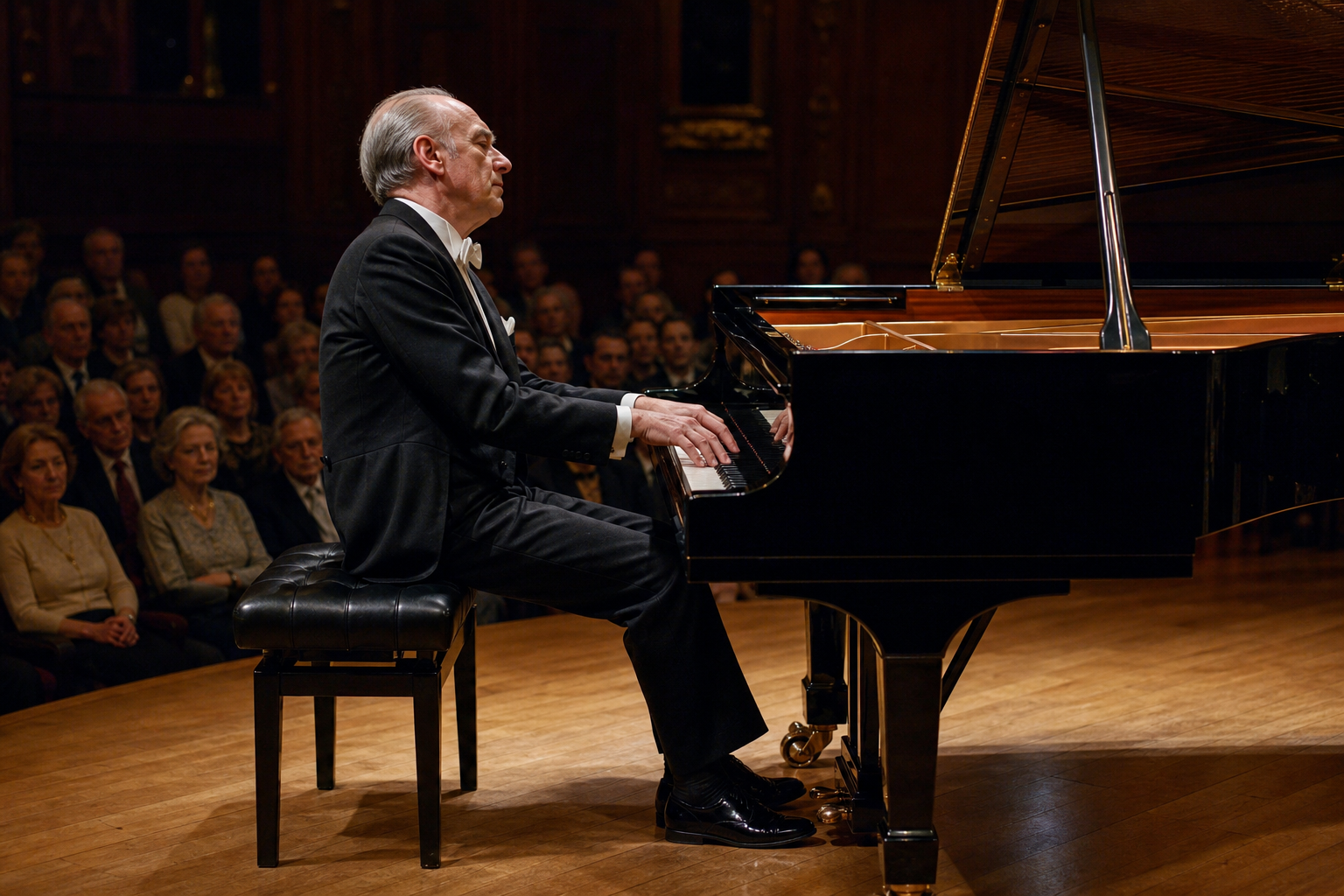
Clifford Curzon and the Art of Mozart Listening
Curzon’s Mozart remains central because it avoids two common traps: porcelain prettiness and over-Romantic weight. In the concertos with Benjamin Britten and the English Chamber Orchestra, the piano line often feels conversational. The touch is clear, but not dry. The phrases breathe, but the pulse remains dignified. Even where the surface appears simple, the balancing of voices is intensely considered.
Listen especially for endings. Curzon often lets a cadence settle rather than close it with a hard full stop. In Mozart, this changes everything. The music becomes speech: question, answer, hesitation, courtesy, wit. In Schubert, the same instinct becomes more private. A repeated figure can sound like memory returning, not a pattern being played again.
Tone
Clear enough for Mozart’s line, warm enough for Schubert’s inwardness.
Time
Flexible, but never shapeless; rubato remains tied to grammar.
Touch
The finger serves the ear. Sound quality is decided before pressure is applied.
For WKMT teachers, Curzon offers a useful teaching principle: ask the student to describe the phrase before playing it. If the musical sentence is unclear in speech, it will usually become unclear at the keyboard.
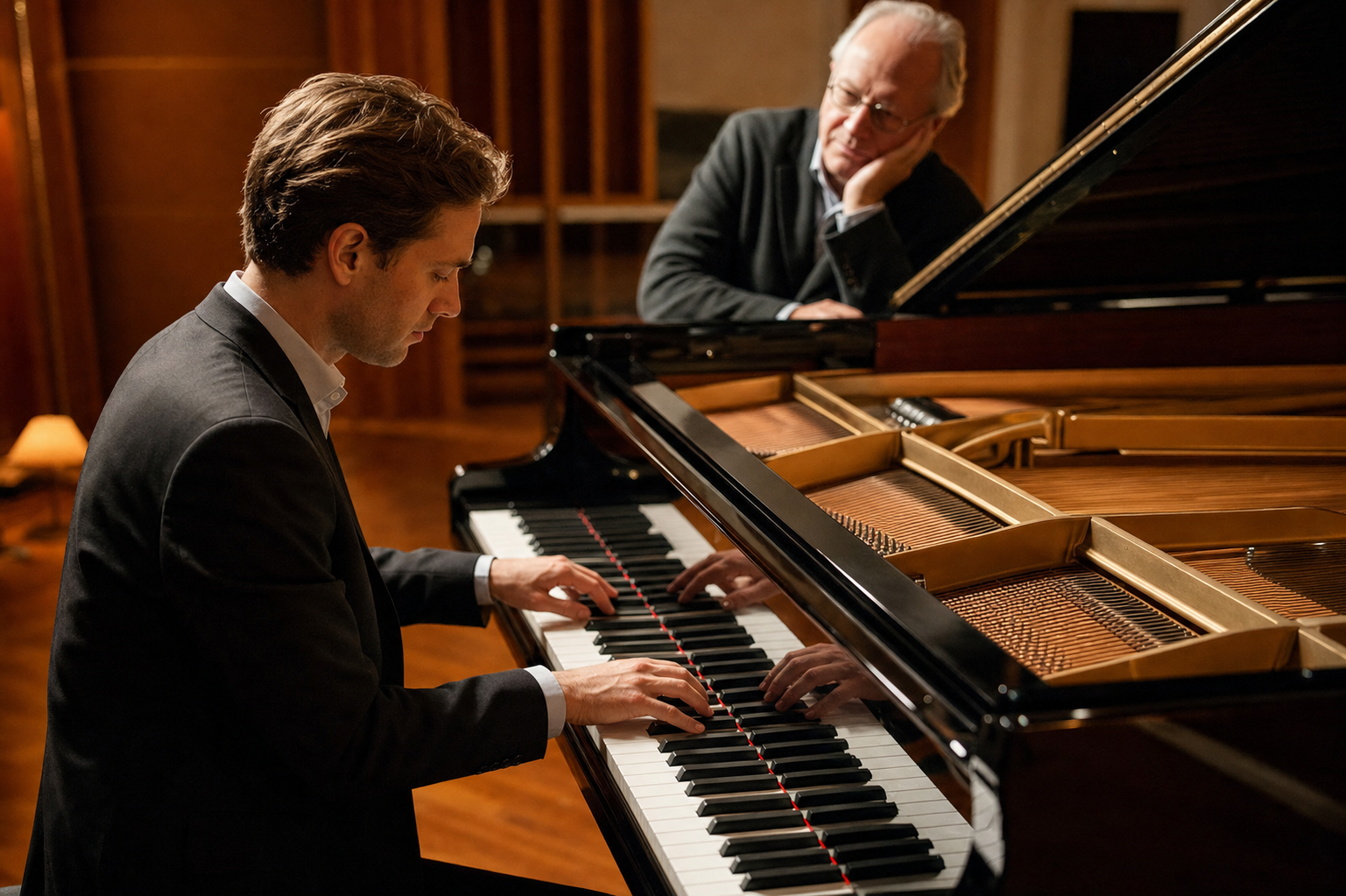
Recordings and Discography: Where to Begin
Curzon was famously demanding about recordings, and his Decca legacy is therefore concentrated rather than vast. That is an advantage for students. Instead of treating the discography as a museum, approach it as a listening curriculum.
| Recording area | What to hear | Student value |
|---|---|---|
| Mozart concertos with Britten | Dialogue, buoyancy and poised articulation. | A model for classical phrasing without stiffness. |
| Schubert solo works | Long musical paragraphs and controlled inwardness. | Teaches patience, release and harmonic listening. |
| Brahms and chamber recordings | Weight, balance and collaborative awareness. | Builds ensemble-minded piano playing. |
Collectors may compare original Decca issues, later complete-recording boxes and specialist transfers of earlier material. Practical listeners can start more simply: choose one Mozart concerto and one Schubert work, then listen for the same question in both. How does Curzon keep the line alive without pressing too hard? The answer is not a trick. It is a cultivated habit of hearing.
Clifford Curzon, Teaching and Adult Piano Study
Curzon’s legacy is especially useful for adults because it rewards maturity. A child may be dazzled by speed; an adult learner often understands ambiguity, restraint and patience. That gives Curzon’s repertoire a natural place in serious adult piano lessons in London. His example encourages students to listen for harmonic colour, phrase endings, voicing and the emotional effect of not overplaying.
It also suits advanced study. Students preparing Mozart, Schubert, Beethoven or Brahms often focus first on correctness. Curzon reminds them that correctness is only the beginning. A phrase must have direction; a left-hand pattern must carry meaning; a transition must change the room’s temperature. These are not vague poetic ideas. They are practical tasks that can be taught slowly, bar by bar, through singing, recording, comparison and guided listening.
Practice note
Before solving a technical problem, ask what kind of sound the passage needs. Curzon’s artistry suggests that the technical answer should follow the aural decision, not replace it.
For students seeking deeper classical interpretation, WKMT’s advanced piano lessons in London can turn this kind of listening into structured practice.
Where to Hear and Research Clifford Curzon Today
Begin with the Decca recordings, especially Mozart and Schubert. Then place them beside reputable discographic resources and institutional references: Royal Academy history for the London formation, Steinway and label profiles for concise career context, and specialist reviews for how recordings have been received across editions. For venue context, explore the Proms and London recital tradition more broadly rather than assuming every anecdote is preserved in a public catalogue.
Three quick questions guide further listening. Which recordings show Curzon at his most conversational? Which reveal his Schubertian patience? Which passages make restraint feel more intense than brilliance? Answer those at the keyboard and Curzon becomes more than a historical name. He becomes a method of attention.
Study Poise and Listening at WKMT
If Clifford Curzon’s Mozart and Schubert make you want to listen more carefully at the piano, WKMT offers structured classical piano study in London for adults, advanced amateurs and committed young musicians.
Explore WKMT piano lessons in LondonShort FAQ
Who was Clifford Curzon?
Clifford Curzon was a London-born British classical pianist, trained at the Royal Academy of Music, later associated especially with Mozart, Schubert, Beethoven and Brahms.
What are the best Clifford Curzon recordings to start with?
Start with his Mozart concertos with Benjamin Britten and the English Chamber Orchestra, then move to Schubert solo works and Brahms chamber or concerto recordings.
Why does Curzon matter for piano students?
He shows how listening, phrase direction and tonal restraint can be more powerful than outward display. Those are teachable skills for serious adult and advanced piano study.
Sources
- Royal Academy of Music context and institutional history, last checked 2026-05-28.
- Steinway artist profile: Clifford Curzon, last checked 2026-05-28.
- Universal Music / Decca profile and complete-recordings notes, last checked 2026-05-28.
- Pristine Classical notes on Curzon’s Schubert recordings and Decca studio history, last checked 2026-05-28.
- Classical Net and Classics Today reviews of Decca Curzon reissues, last checked 2026-05-28.
- Pianist Discography listing for Clifford Curzon, last checked 2026-05-28.