
 TRIAL LESSON
Piano Lessons
Hobbies for Adults: Why Piano Can Become Serious Personal Study
Aug
WKMT London adult learner guide
Hobbies for Adults: Why Piano Can Become Serious Personal Study
Among hobbies for adults, piano is unusual: it can offer immediate pleasure on the first evening and still contain a lifetime of craft. The best reason to begin is not self-improvement theatre, but the satisfaction of giving sustained attention to music that matters to you.
Adult life is full of efficient tasks. A worthwhile hobby creates a different kind of time: attention without an immediate commercial result. Piano does this particularly well because a single phrase asks the mind and body to cooperate. The work is exact, but the meaning remains personal.
WKMT London’s adult piano lessons in London are designed for beginners, returning players and advanced amateurs. One-to-one teaching matters because adults arrive with different musical histories, schedules, hands, ambitions and anxieties. The course can be serious without pretending that every learner wants the same destination.
Why piano stands out among hobbies for adults
Some hobbies for adults are primarily social, others physical or creative. Piano sits across categories. It can be solitary practice, shared chamber music, concert listening, historical study and performance. It also provides unusually clear feedback: the phrase either becomes more balanced, the pulse steadier or the movement easier.
A large Nature Medicine study harmonised data from more than 93,000 people aged 65 and over in sixteen countries. Hobby engagement was associated with fewer depressive symptoms and higher self-reported health, happiness and life satisfaction. The researchers did not claim that one hobby causes every benefit, but the pattern supports a modest, useful idea: meaningful leisure belongs within a good life.
Depth
The repertoire and craft never run out.
Flexibility
Ten attentive minutes can still be real practice.
Feedback
Sound reveals what changed from one attempt to the next.
Connection
Lessons, concerts and ensembles can widen a musical community.
From casual interest to a sustainable piano habit
Begin smaller than enthusiasm suggests. Choose three regular windows in the week and protect fifteen to twenty minutes. Start with one physical warm-up, one short passage and one piece played for pleasure. Stop while attention is still alive. Consistency grows from sessions that are easy to begin, not heroic plans that collapse.
The useful unit is a question: can the melody project without hardening, can this left-hand pattern feel lighter, can two bars remain steady? “Practise piano” is too broad to invite action after a long day. A precise question makes the first minute obvious.
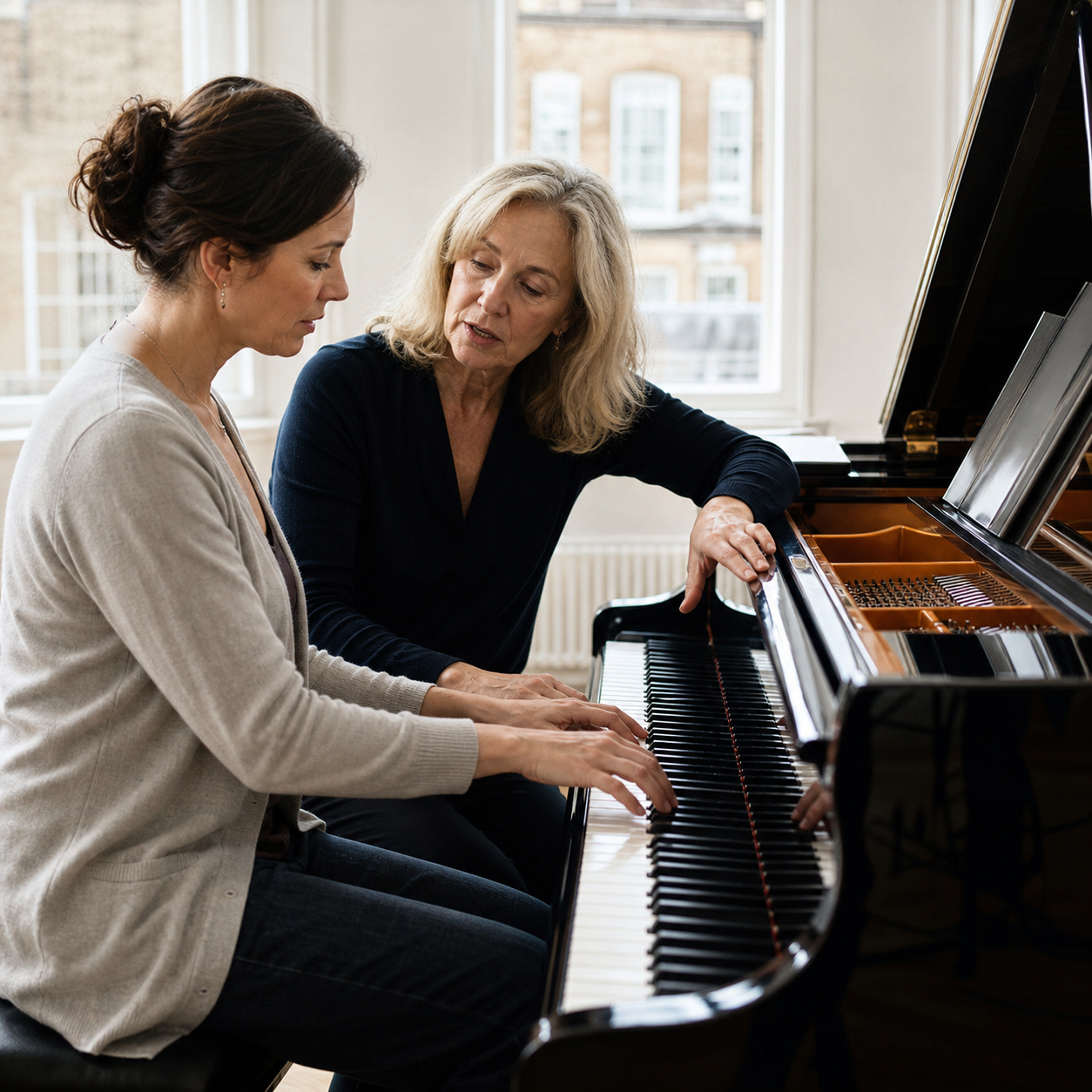
A serious hobby is not one that consumes every spare hour; it is one that rewards attention and remains worth returning to.
Choosing a teacher, instrument and first repertoire
A teacher should take adult aims seriously without mistaking seriousness for severity. Ask how lessons are structured, how technique is taught, whether repertoire can include your interests and how practice is adapted during busy periods. The right teacher diagnoses the obstacle, offers a workable experiment and helps the learner hear why the change matters.
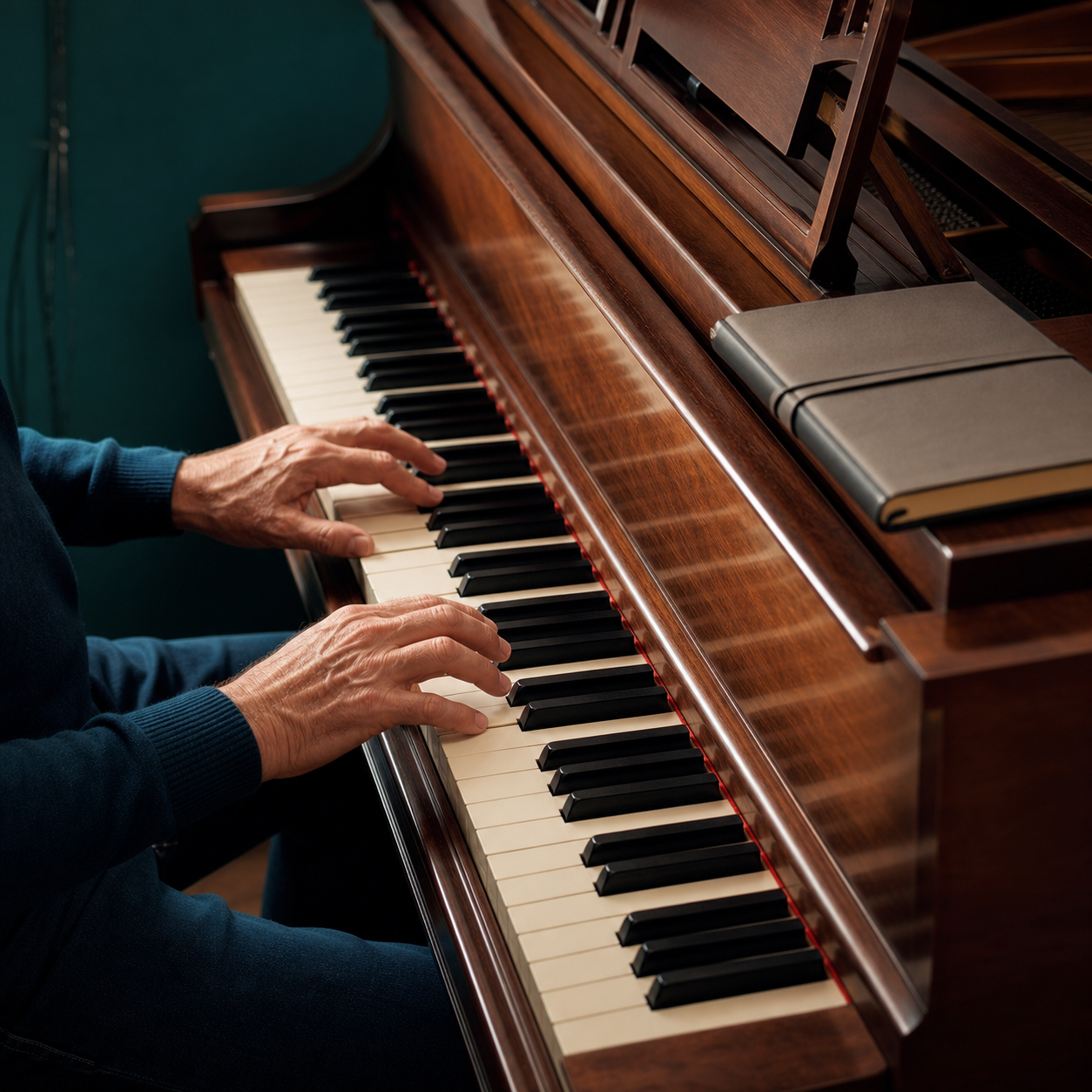
An acoustic piano is wonderful but not the only beginning. A well-regulated digital instrument with weighted keys, a stable stand, adjustable bench and pedal can support early study. What matters is reliable touch, comfortable posture and an instrument ready enough that playing does not require setting up a temporary workstation.
What research can and cannot say about adult piano
A recent randomised controlled trial of piano practice in older adults reported improvements across psychological, physical and environmental quality-of-life domains. It is encouraging evidence, not a promise that piano prevents illness or produces identical effects for everyone.
The US National Institute on Aging similarly treats cognitive health as the product of many factors. Music can be a rich mentally engaging activity, but sleep, physical health, social connection and clinical care still matter. Piano deserves to be chosen for its musical value first; possible wider benefits are welcome companions.
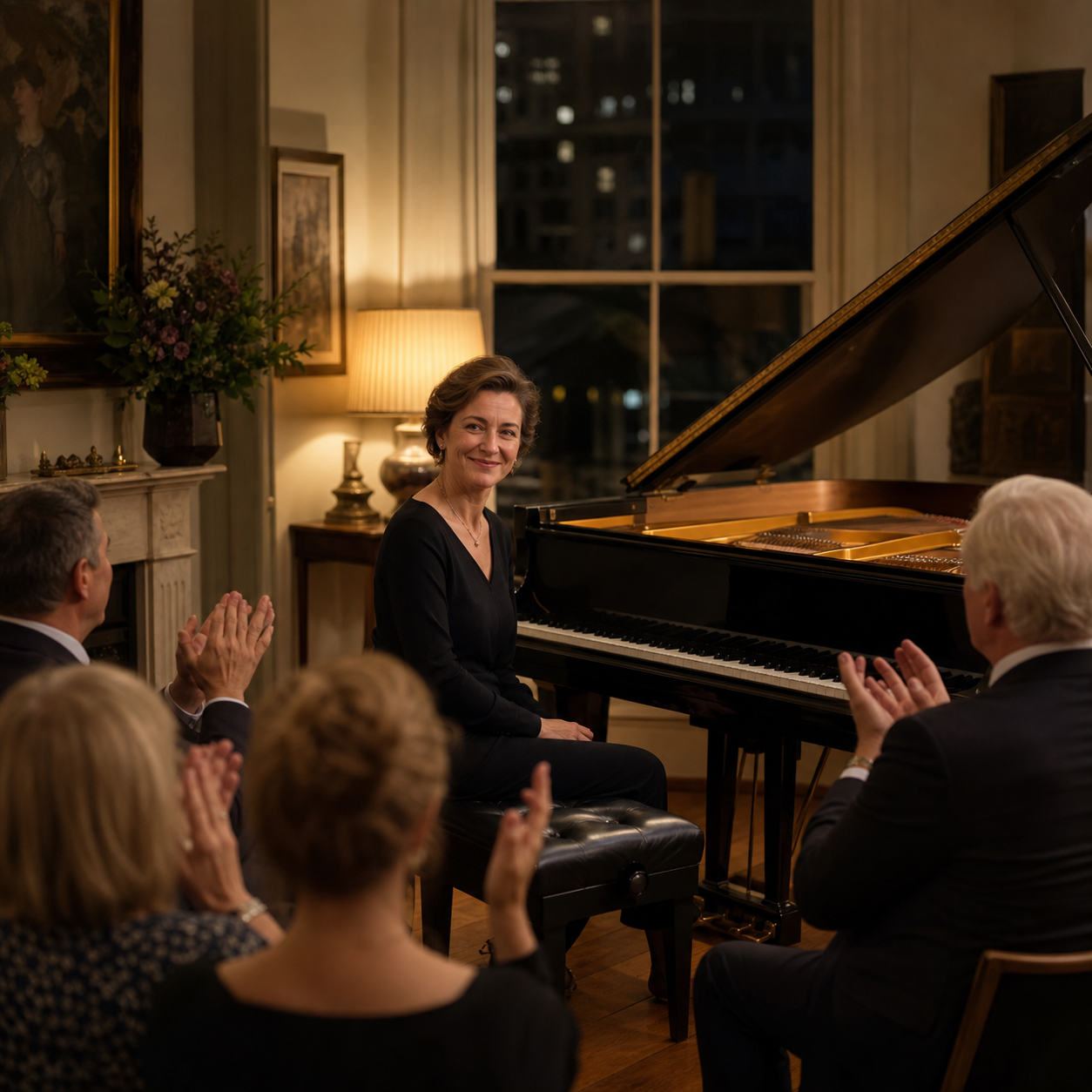
This distinction protects motivation. If every session must improve memory, reduce stress and justify itself scientifically, the hobby becomes another obligation. Playing a Schumann miniature because its harmony moves you is already a sufficient reason.
A decision guide for hobbies for adults
Choose piano if
You enjoy repeated listening, gradual craft and a private practice that can become social.
Expect
Uneven progress, changing repertoire and satisfaction that grows with understanding.
Avoid
Buying excessive equipment before a stable weekly routine exists.
Review after six weeks
Do you look forward to the instrument, hear changes and know what to practise next?
For adults returning after years away, the article on returning to piano offers a gentle re-entry route. Beginners wondering about pace can also read how long adult piano learning takes. Both emphasise that progress is better measured through musical independence than through a race to a particular grade.
Among hobbies for adults, piano is demanding in the best sense. It asks for patience, but repays it with a more articulate ear, a more responsive touch and a repertoire that can accompany decades of changing life.
WKMT London
Discover individual adult piano study at WKMT London, from first notes and returning confidence to advanced interpretation.
Sources on hobbies for adults
- Nature Medicine: Hobby engagement and mental wellbeing in sixteen countries
- Quality of life in older adults is enhanced by piano practice
- National Institute on Aging: Cognitive health and older adults
- UNESCO Institute for Lifelong Learning
Sources last checked 25 August 2026.