
 TRIAL LESSON
Piano Lessons
Developmental Milestones: A Piano Parent’s Listening Guide
Aug
Developmental Milestones
WKMT London parent guide
Developmental Milestones: A Piano Parent’s Listening Guide
Developmental milestones help parents notice how a child plays, learns, communicates and moves. At the piano, they are best used as broad clues for choosing the right task, never as a timetable or a test of talent.
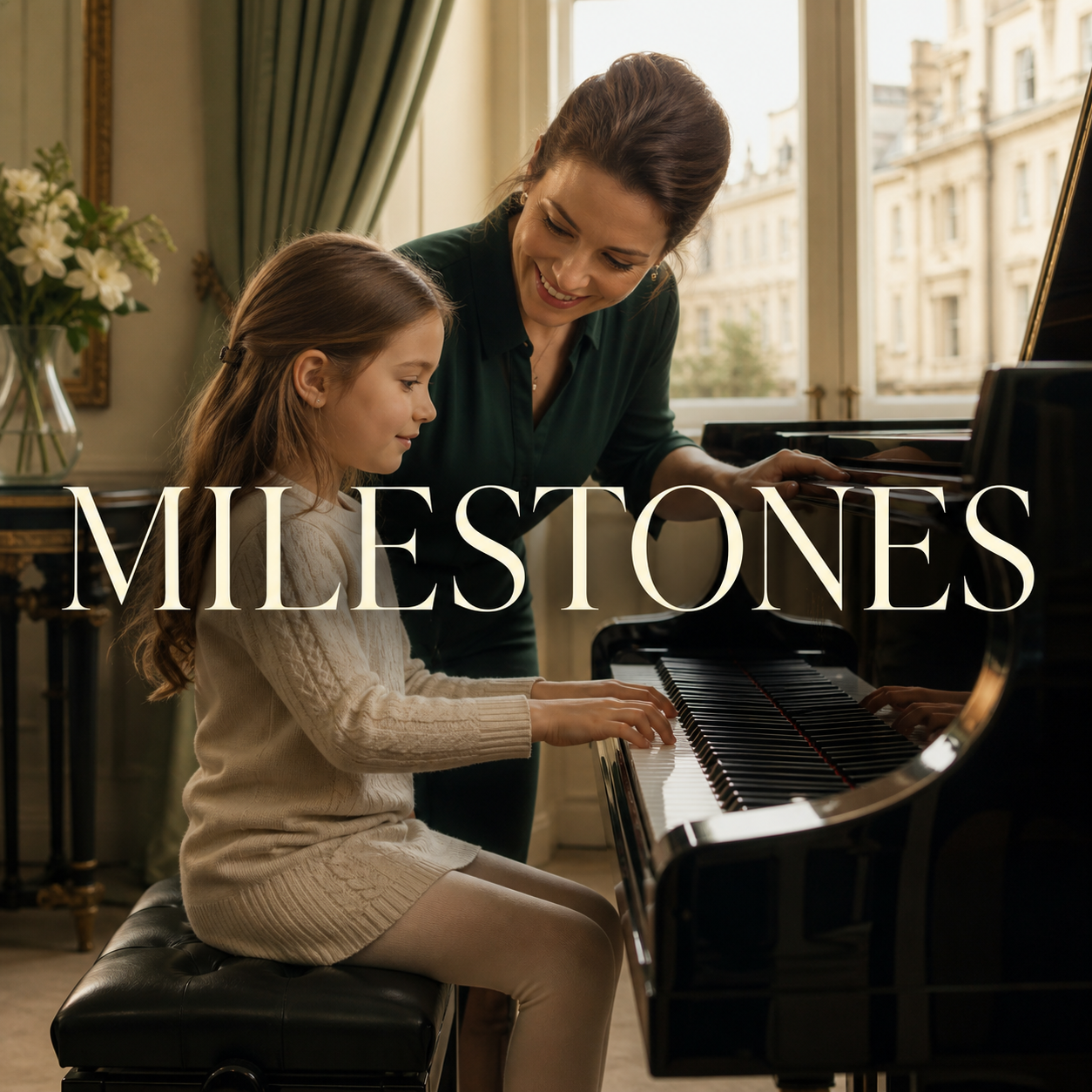
Parents often ask whether a child is “ready” for piano as though readiness were one switch. In practice it is a pattern. Can the child share attention for a short activity, copy a simple movement, hear a contrast, communicate discomfort and recover after a mistake? Different answers can all lead to worthwhile music when the lesson is shaped accordingly.
At WKMT London, children’s piano lessons in London are individual, allowing the teacher to adjust language, pace, repertoire and physical demands. Developmental milestones guide observation; they do not rank children or predict how musical they will become.
What developmental milestones mean for music
The CDC groups developmental milestones around how children play, learn, speak, act and move. These areas overlap at the piano. A turn-taking game uses communication and social attention. Finding high and low sounds links hearing with movement. Playing a short pattern from memory combines listening, planning and motor control.
Milestones are broad population guides, not deadlines. Children may be advanced in language and slower in fine-motor coordination, or physically confident and initially cautious in an unfamiliar lesson. Good teaching starts from what is observable today and chooses one manageable next step.
Listen
Can the child notice and respond to a change in sound?
Move
Can a gesture be copied comfortably without strain?
Remember
Can one short pattern be held and repeated?
Relate
Can teacher and child share attention, take turns and communicate a need?

Developmental milestones from play to purposeful practice
For a young beginner, the first lesson may involve exploring registers, copying two-note rhythms and learning how to sit safely. The aim is not to imitate an older student’s routine. It is to make the instrument understandable. As attention and self-regulation develop, tasks can lengthen: a four-bar pattern, a choice between two fingerings, a return to yesterday’s challenge.
The Harvard Center on the Developing Child describes executive function in terms that fit music well: holding information in mind, managing impulses and shifting between demands. Piano offers repeated practice in those processes, but the adult must keep the challenge proportionate. A child cannot learn calm attention through a task that has already overwhelmed them.
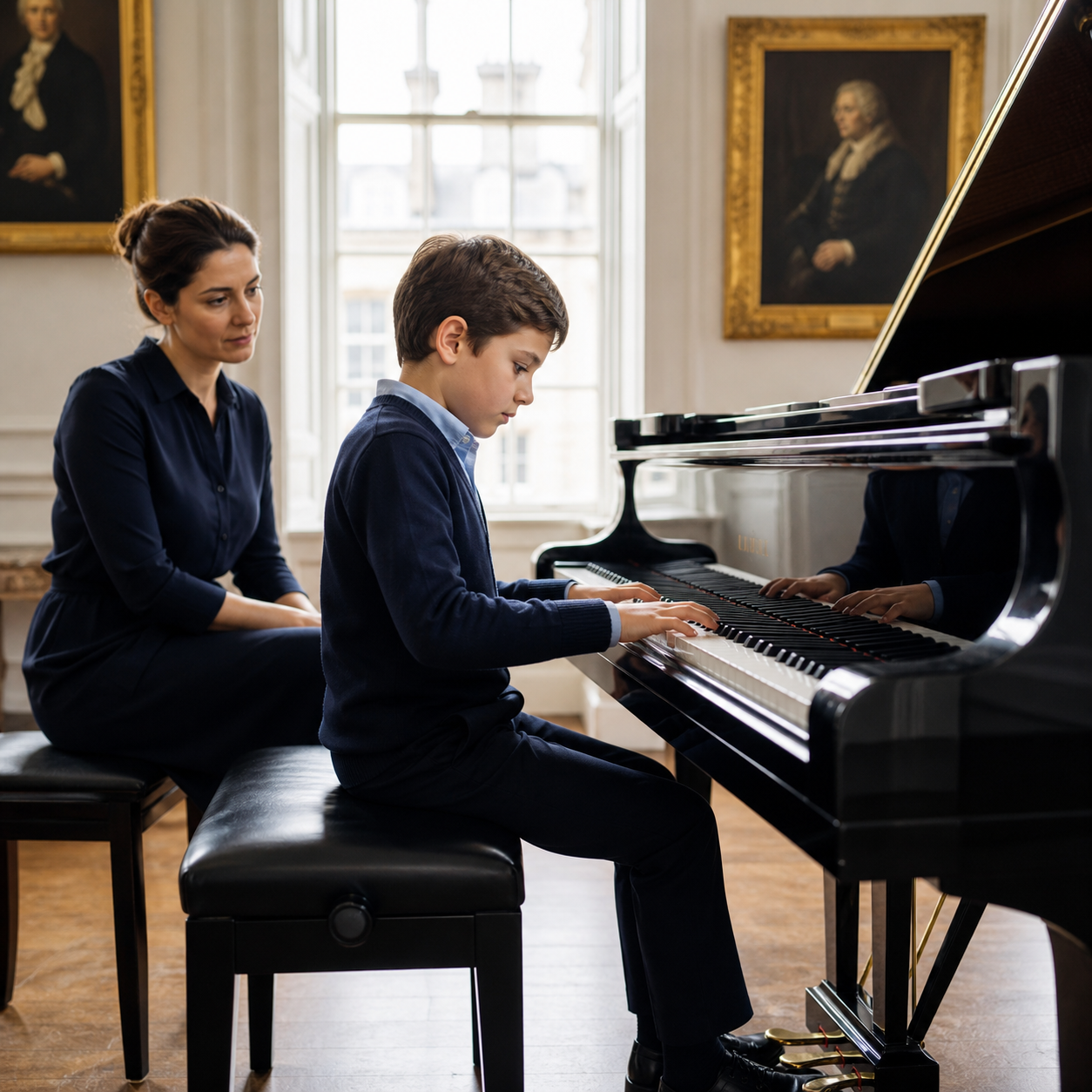
The useful question is not “Is my child ahead?” but “What kind of musical challenge can they understand and enjoy next?”
Four piano observations parents can make
First, watch comfort. Shoulders, wrists and fingers should not be forced into a fixed adult shape. Second, notice response to sound: does the child hear when a melody disappears beneath the accompaniment? Third, observe communication: can they say when instructions are confusing? Fourth, notice recovery. A child who pauses, tries a different way and continues is building a valuable learning habit.
Comfort
No pain, forced stretch or prolonged tension.
Clarity
One instruction and one audible goal at a time.
Agency
The child can ask, choose and describe.
Recovery
Mistakes lead to a smaller strategy, not shame.

When developmental milestones raise a wider concern
A piano teacher can notice patterns, but cannot diagnose development. If a child loses a skill, consistently struggles across settings, or a parent has concerns about speech, movement, hearing, behaviour or learning, the right route is a GP, health visitor, school professional or another qualified clinician. The CDC’s family guidance similarly encourages parents to track development and act early when concerned.
Music can remain part of a supportive life while professional advice is sought. The lesson may need shorter turns, clearer visual routines, more movement, quieter surroundings or different repertoire. Adaptation is not lowering expectations; it is finding the route by which this child can participate meaningfully.
Developmental milestones and long-term musical growth
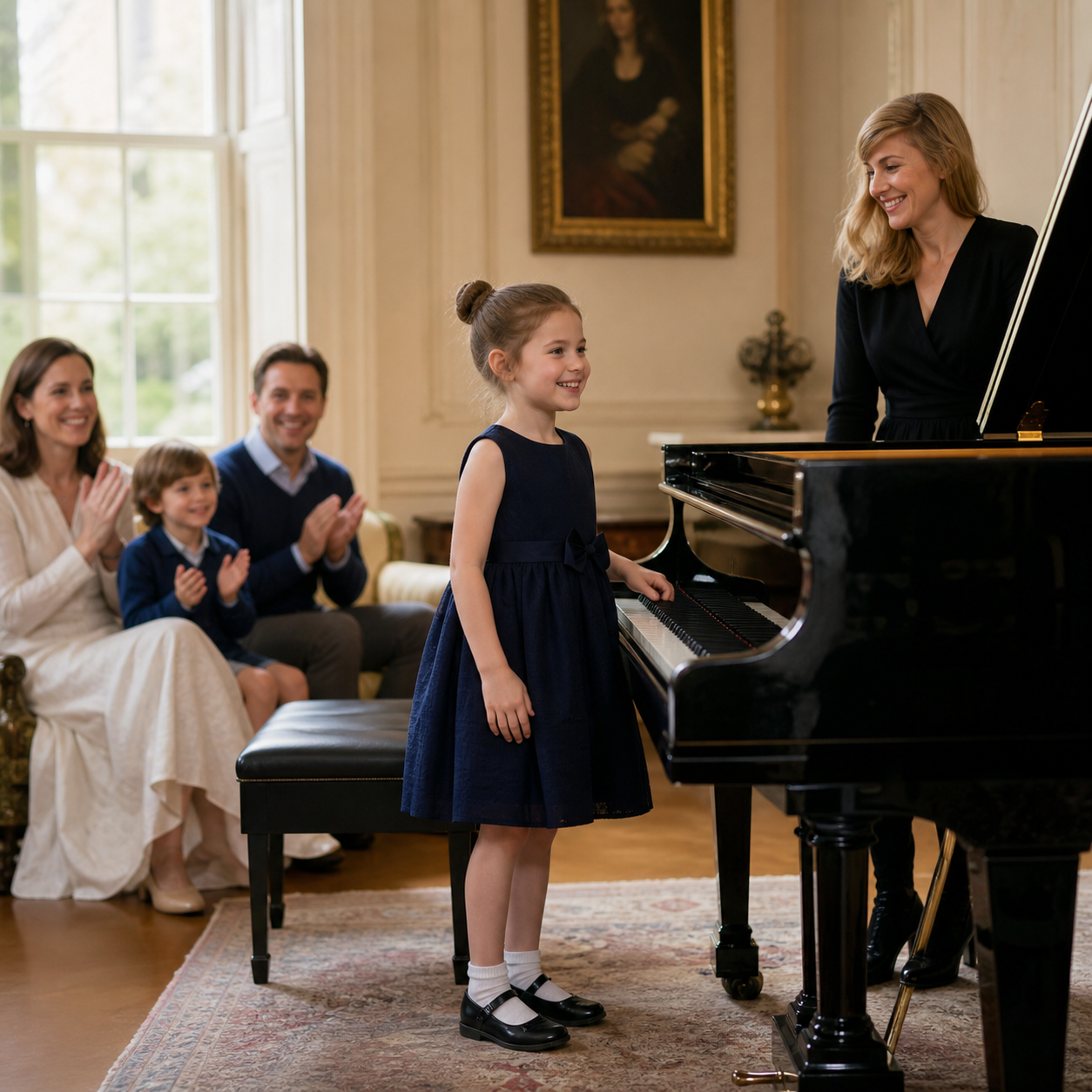
Over time, piano study becomes richer: independent reading, longer memory, controlled coordination, expressive decisions and performance. These do not arrive in a fixed order. A child may play beautifully by ear before reading fluently, or analyse well before feeling comfortable on stage. The teacher’s task is to join strengths to the next area of growth.
The World Health Organization’s nurturing-care framework emphasises responsive relationships, opportunities for early learning and safety. Those principles suit piano education at every age: attentive adults, meaningful interaction and enough security for curiosity to take musical risks.
Parents do not need to turn every practice into an assessment. Listen for increasing ease, a longer musical idea, a question asked more clearly or a mistake met more calmly. These small changes are often the most honest signs that learning is taking root.
WKMT London
Discover how WKMT London supports young learners through individual teaching, thoughtful practice and secure musical foundations.
Sources ON developmental milestones
- CDC: Developmental Milestones
- CDC: Developmental Milestones Matter
- Harvard Center on the Developing Child: Executive Function
- World Health Organization: Nurturing Care
Sources last checked 25 August 2026.