
 TRIAL LESSON
Piano Lessons
Gross Motor Skills and Piano: Why Posture and Pulse Matter
Aug
WKMT London parent guide
Gross Motor Skills and Piano: Why Posture and Pulse Matter
Before a child can shape a tiny finger movement, the whole body must provide a stable, responsive base. Gross motor skills help young pianists sit comfortably, organise movement, feel pulse and recover from tension without turning music into a posture test.
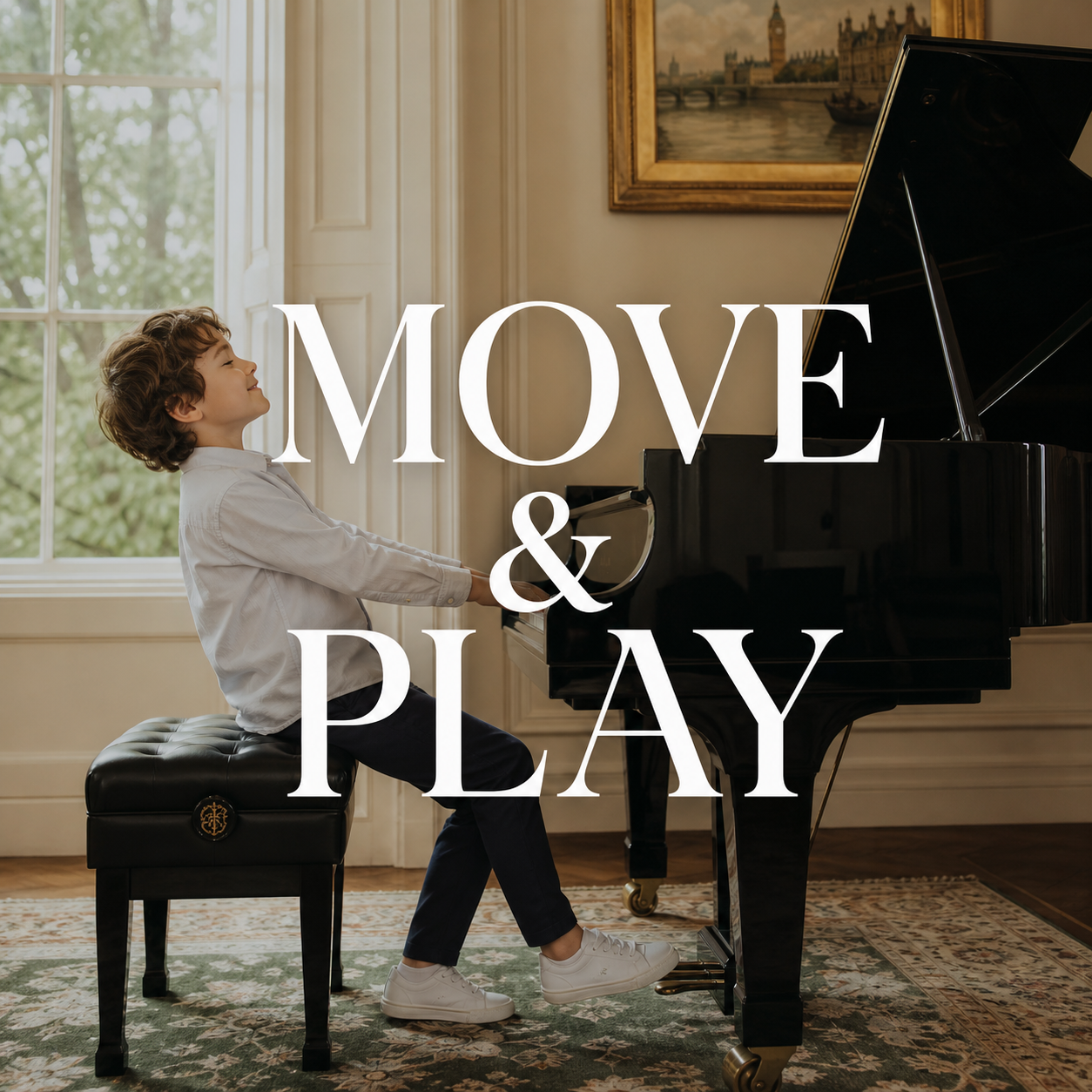
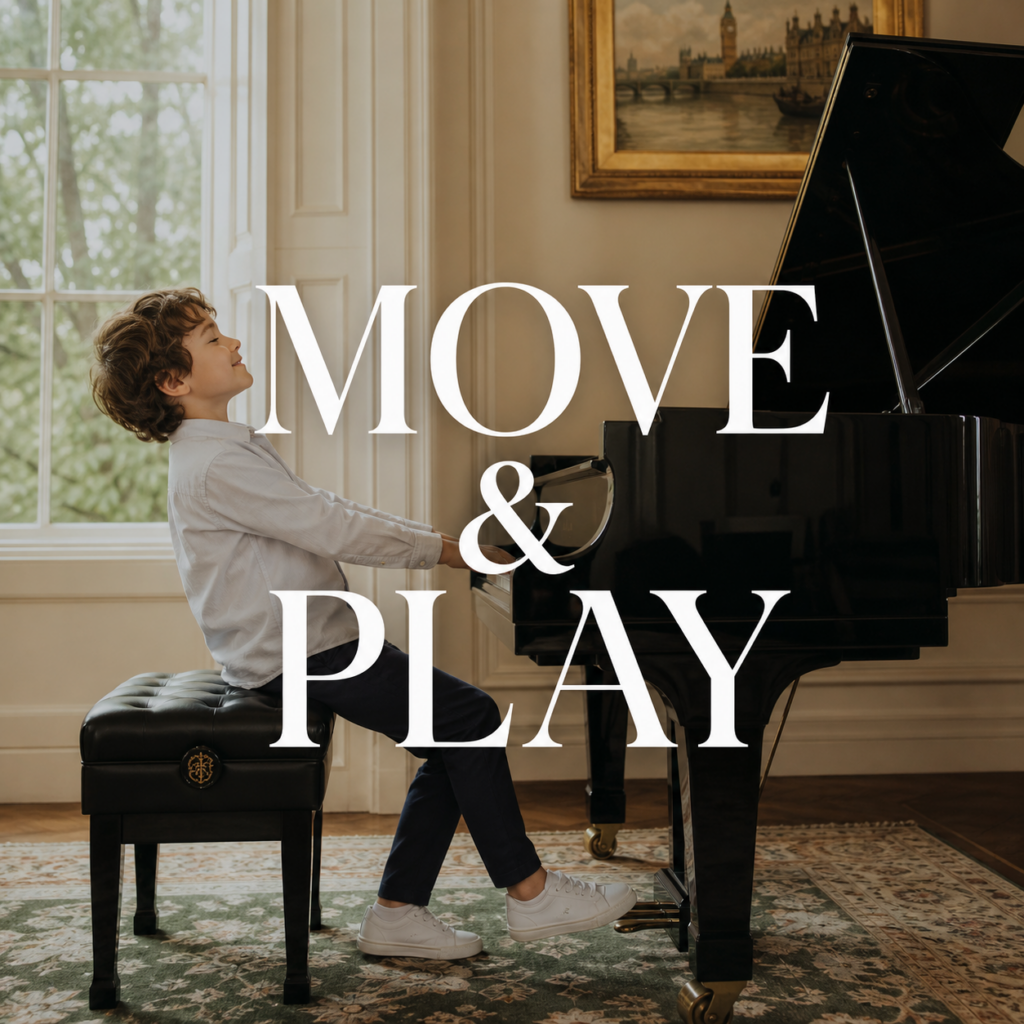
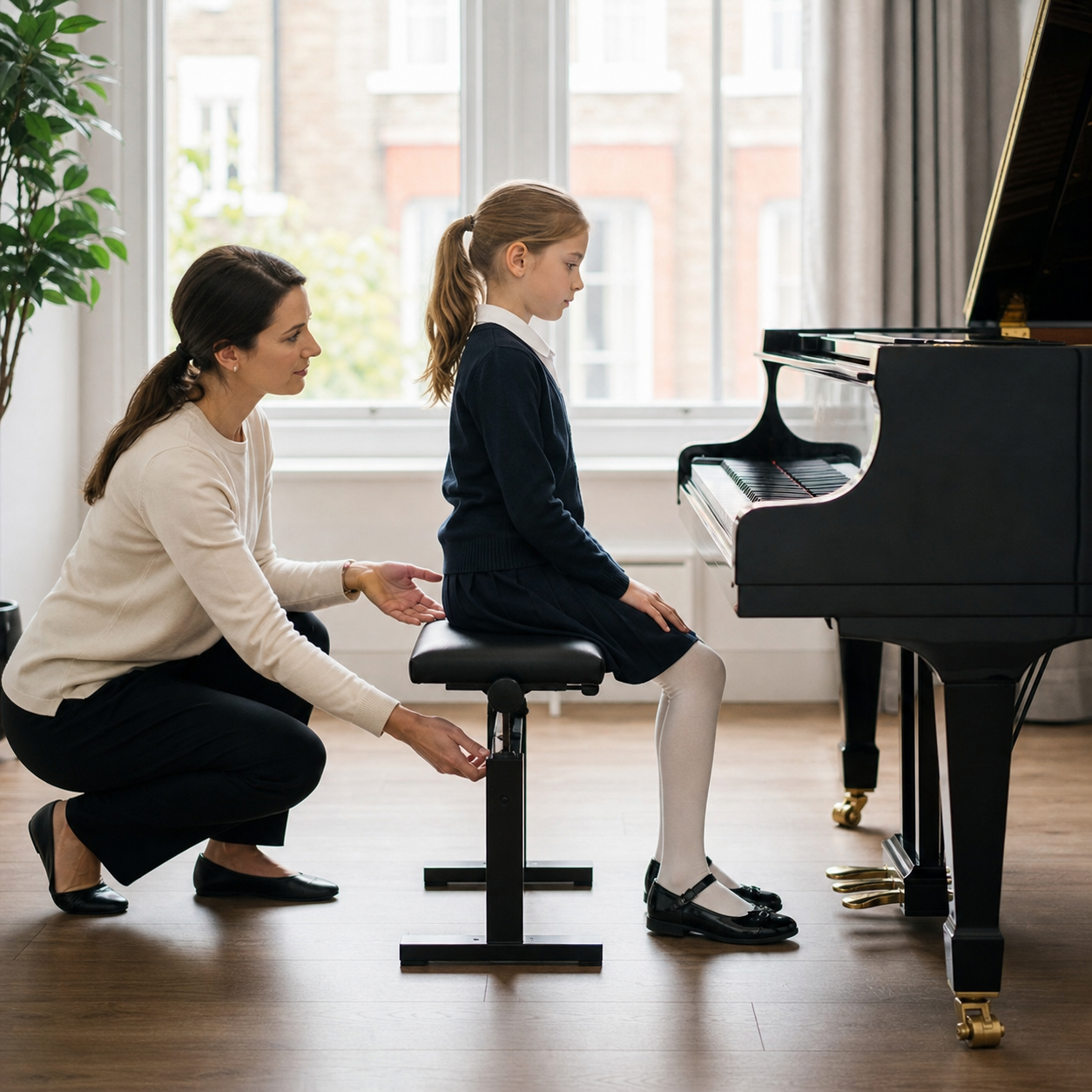
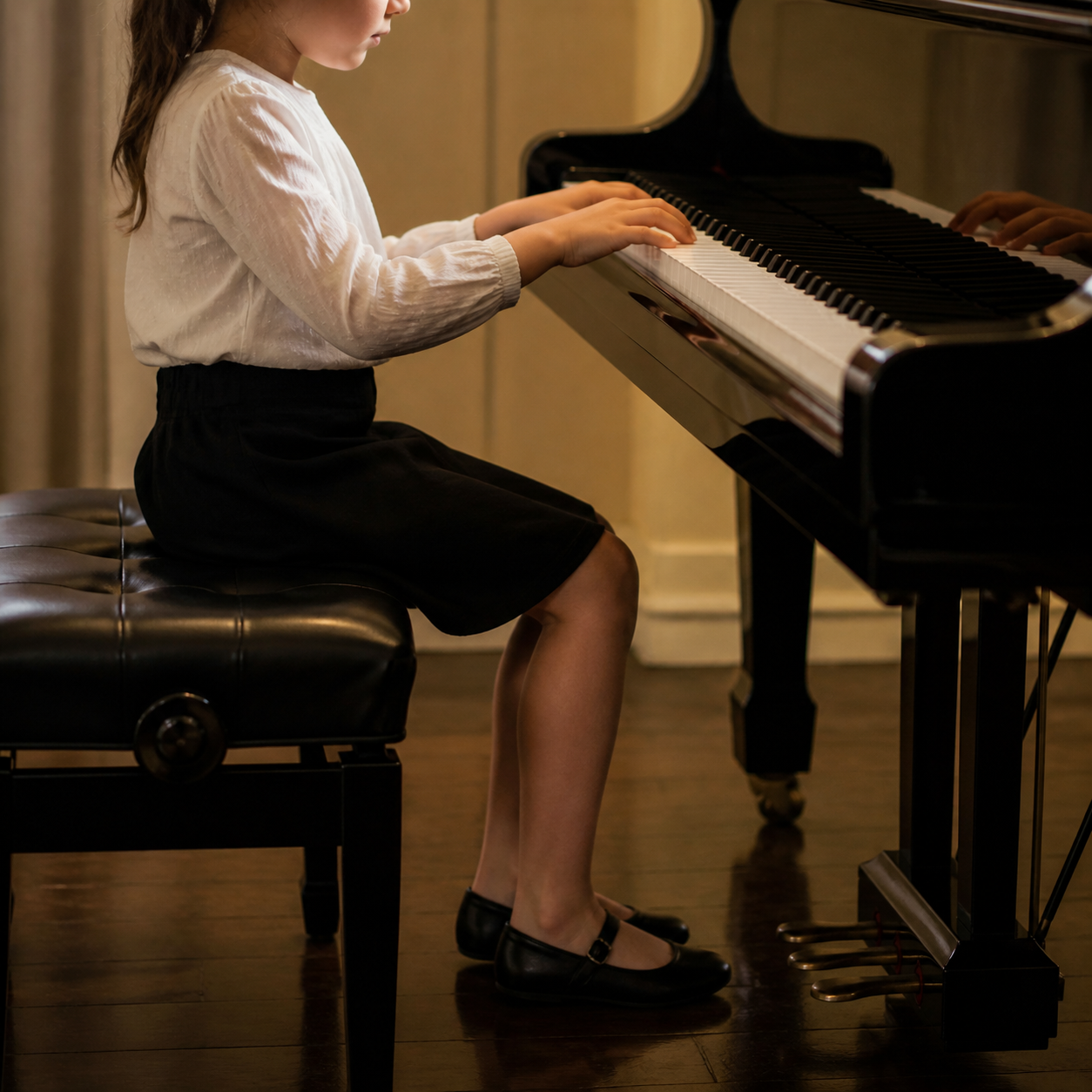
A young pianist does not leave the body behind when sitting at the keyboard. Feet, pelvis, spine, shoulders and head continue to organise balance. If the bench is too high, the feet dangle; if it is too close, the elbows retreat; if the child is asked to hold a rigid pose, attention moves from sound to endurance.
Individual children’s piano lessons in London allow WKMT teachers to adjust bench height, language, movement breaks and repertoire to the learner. The aim is neither military stillness nor restless entertainment. It is a body sufficiently secure that the ear can lead.
What gross motor skills mean at the piano
The Royal United Hospitals Bath children’s therapy guide defines gross motor skills as whole-body actions using large muscle groups. It highlights balance, core strength and the ability to adjust body position. At the piano, those foundations do not produce technique by themselves, but they make controlled hand and arm movement easier to organise.
Berkshire Healthcare’s guidance on postural control and balance describes the trunk, shoulders and hips as the stable base for controlled movement of the limbs and head. This helps explain why a child who struggles to sit upright may also tire during reading or hand tasks. The response should be supportive observation, not blame.
Feet
Provide contact with the floor or a stable footrest.
Seat
Use the front half of a firm bench with room to move.
Pulse
Step, sway or clap before transferring rhythm to the keys.
Reset
Let the child stand, breathe and return before tension becomes the task.
Gross motor skills, posture and a stable base
Good piano posture is dynamic. The child sits tall enough to move, not tall because someone has ordered the spine into a statue. The pelvis should feel supported, the feet should have a surface, and the shoulders should remain available for breathing and arm travel. A slight lean towards a musical destination can be healthy; collapsing or bracing is different.
Parents can look for comfort rather than perfection. Does the child repeatedly hook a foot around the bench, grip with the toes or lean on one elbow? Do they shake out the hands after a minute? These clues may simply mean the equipment needs adjustment. Persistent pain, marked asymmetry or difficulty across daily activities belongs with a GP, health visitor, school or qualified therapist.
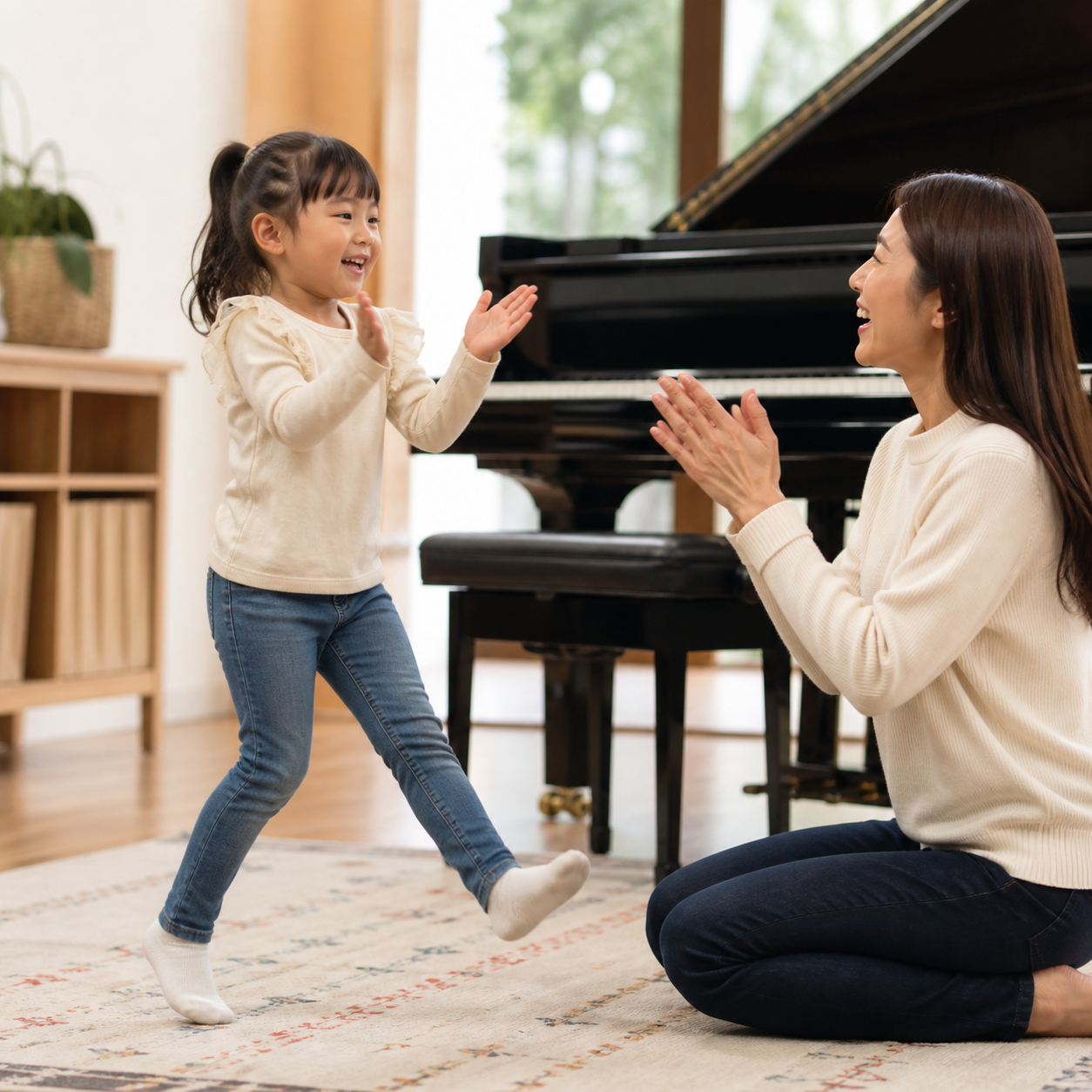
The body should make musical attention possible. It should never become another exam the child feels they are failing.
How gross motor skills help children feel pulse
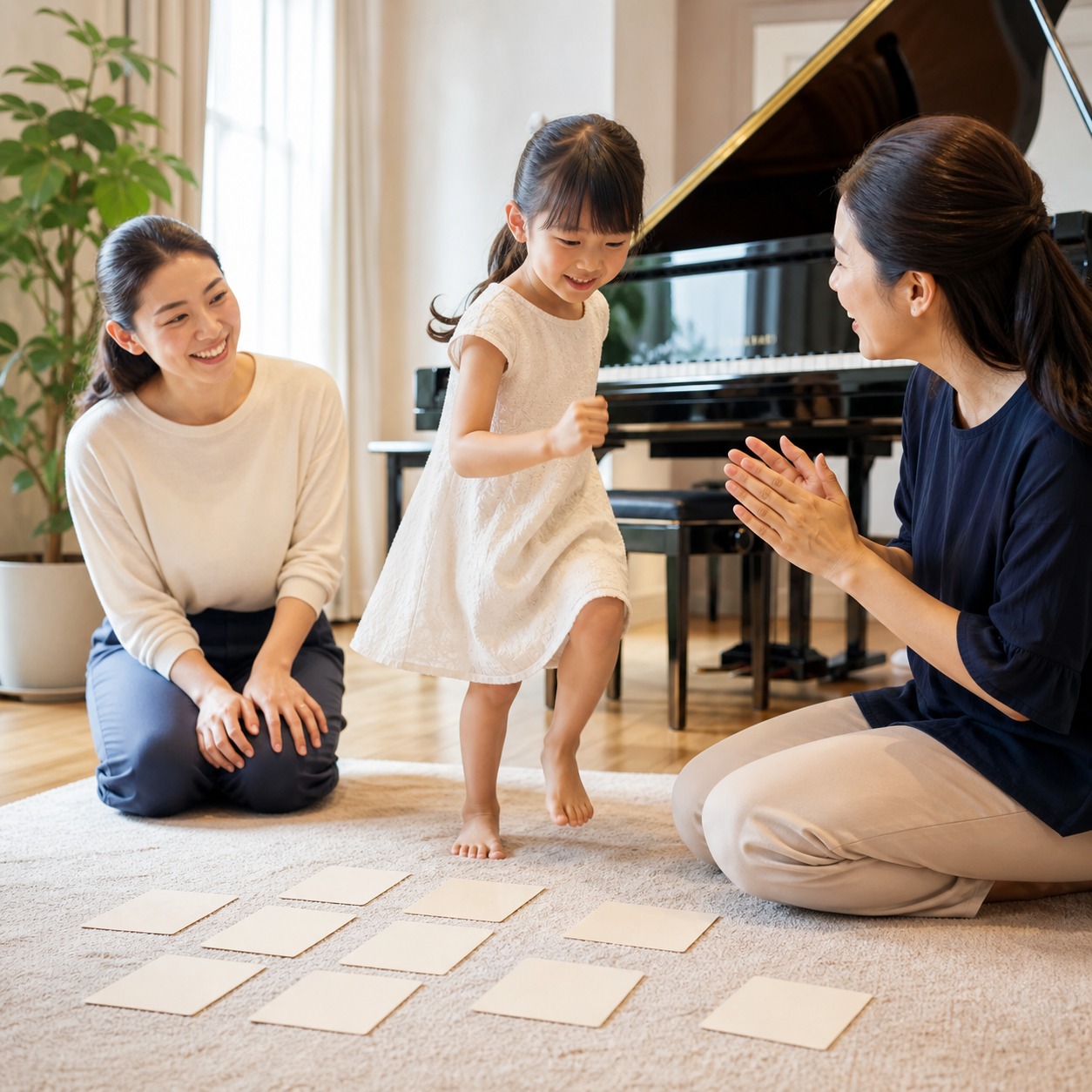
Pulse is easier to feel in a step than in an isolated fingertip. Walking, rocking, passing an imaginary ball or clapping a pattern gives rhythm a larger physical frame. When the child returns to the piano, the fingers are no longer asked to invent time on their own; they join a pulse the body already knows.
A 2024 systematic review of music and movement pedagogy describes approaches that connect rhythm, listening and kinaesthetic experience. It also shows why broad claims should be avoided: programmes vary, and music cannot be treated as a guaranteed motor intervention. The sound educational principle is simpler. Children often understand musical time more deeply when they can move through it.
Related video
Piano Essentials for Kids: Body Position, Arms, Wrists, Hands and Fingers is embedded below from YouTube for educational posture context. Rights remain with the original YouTube creator and the relevant rights holders.
A whole-body practice framework
Arrive
Check feet, bench distance and one easy breath.
Move
Experience the pulse with a step, sway or clap.
Transfer
Play one short phrase while keeping the larger pulse in mind.
Reflect
Name one sound that became steadier or freer.
This sequence can take two minutes. It is not an exercise circuit. Its purpose is to connect position, pulse and sound. WKMT’s guide to fine motor skills in children’s piano practice explores the smaller hand actions that grow from this stable base, while the guide to developmental milestones explains how to observe the whole child without turning progress into a timetable.
When to adapt and when to seek advice
The World Health Organization guidance for children under five places movement, sedentary time and sleep within overall health and development. Piano belongs inside that wider life, not in competition with active play. A child who has spent the day sitting may need movement before detailed keyboard work.
If concerns about balance, coordination, fatigue or posture appear across school, play and self-care, families should seek qualified advice. A piano teacher can describe what happens at the instrument and adapt the musical task; a health professional assesses development. Keeping those roles clear protects the child while allowing music to remain a positive, demanding and humane part of growth.
WKMT London
Discover individual piano teaching that respects each child’s movement, attention and musical development.
Sources
- Royal United Hospitals Bath: Gross Motor Skills
- Berkshire Healthcare NHS: Postural control and balance
- Frontiers in Education: Music and movement pedagogy review
- WHO: Physical activity, sedentary behaviour and sleep under five
Sources last checked 26 August 2026.