
 TRIAL LESSON
Piano Lessons
Gross Motor Development: Why Posture, Pulse and Piano Belong Together
Sep
WKMT London parent guide
Gross Motor Development: Why Posture, Pulse and Piano Belong Together
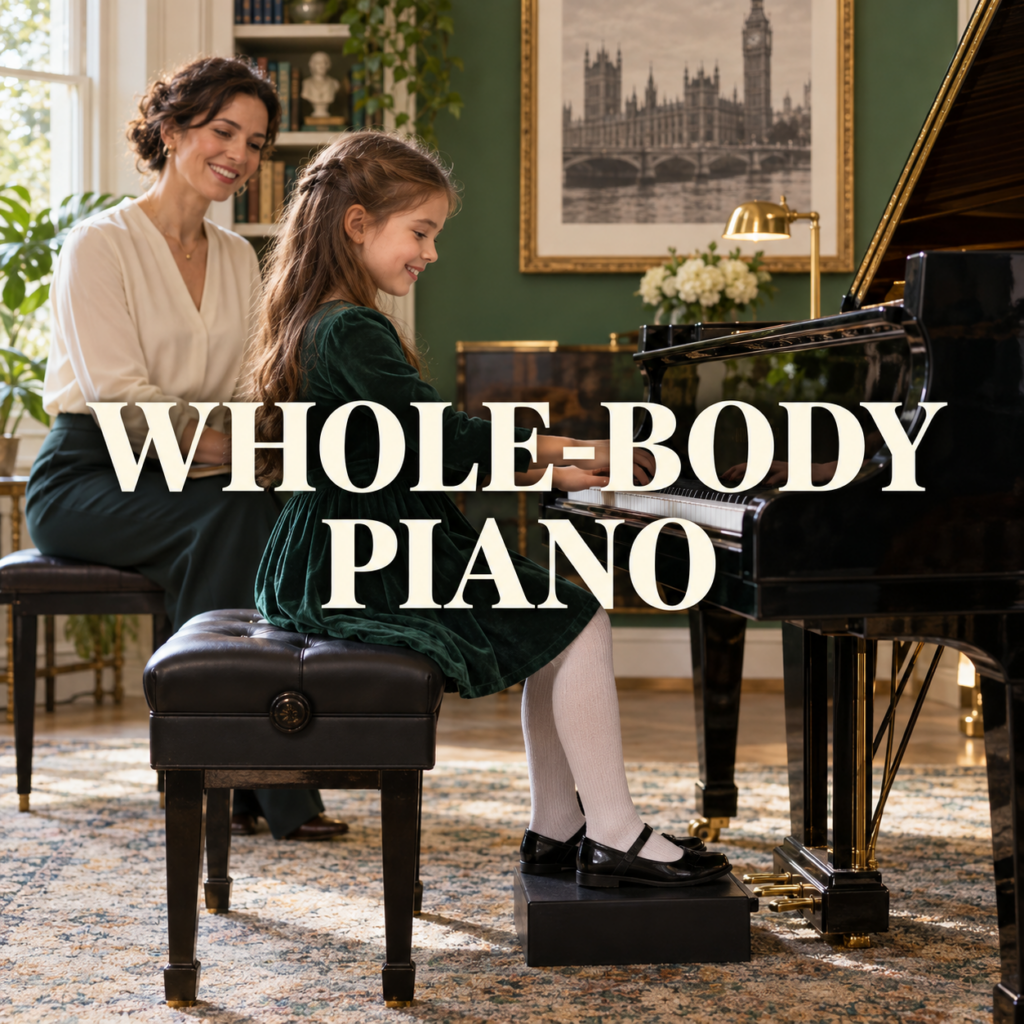
Piano is usually associated with busy fingers, yet the quality of a child’s playing begins much further back: feet, seat, trunk, shoulders and the ability to organise movement in time. Good teaching lets the whole body support the sound.
What gross motor development means at the piano
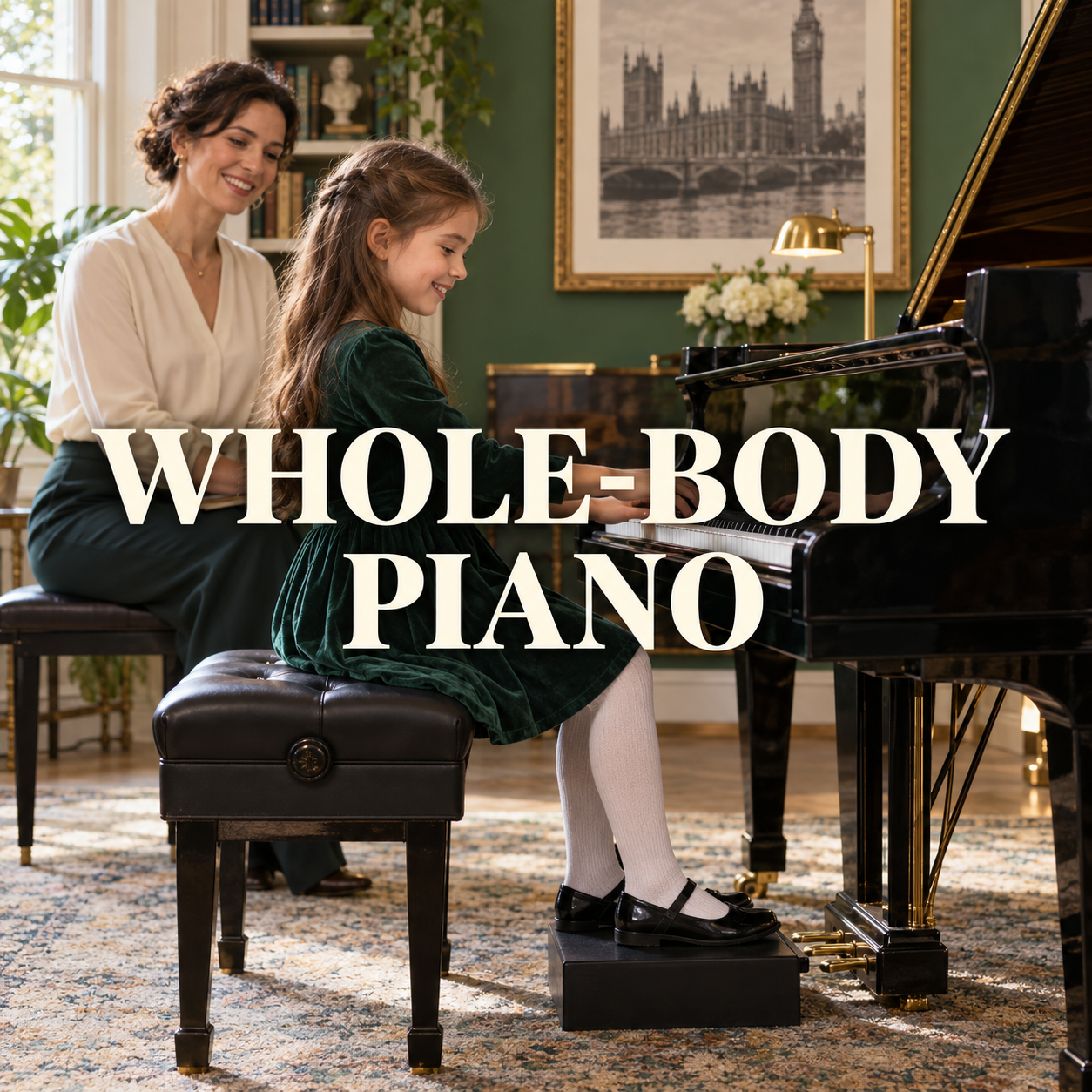
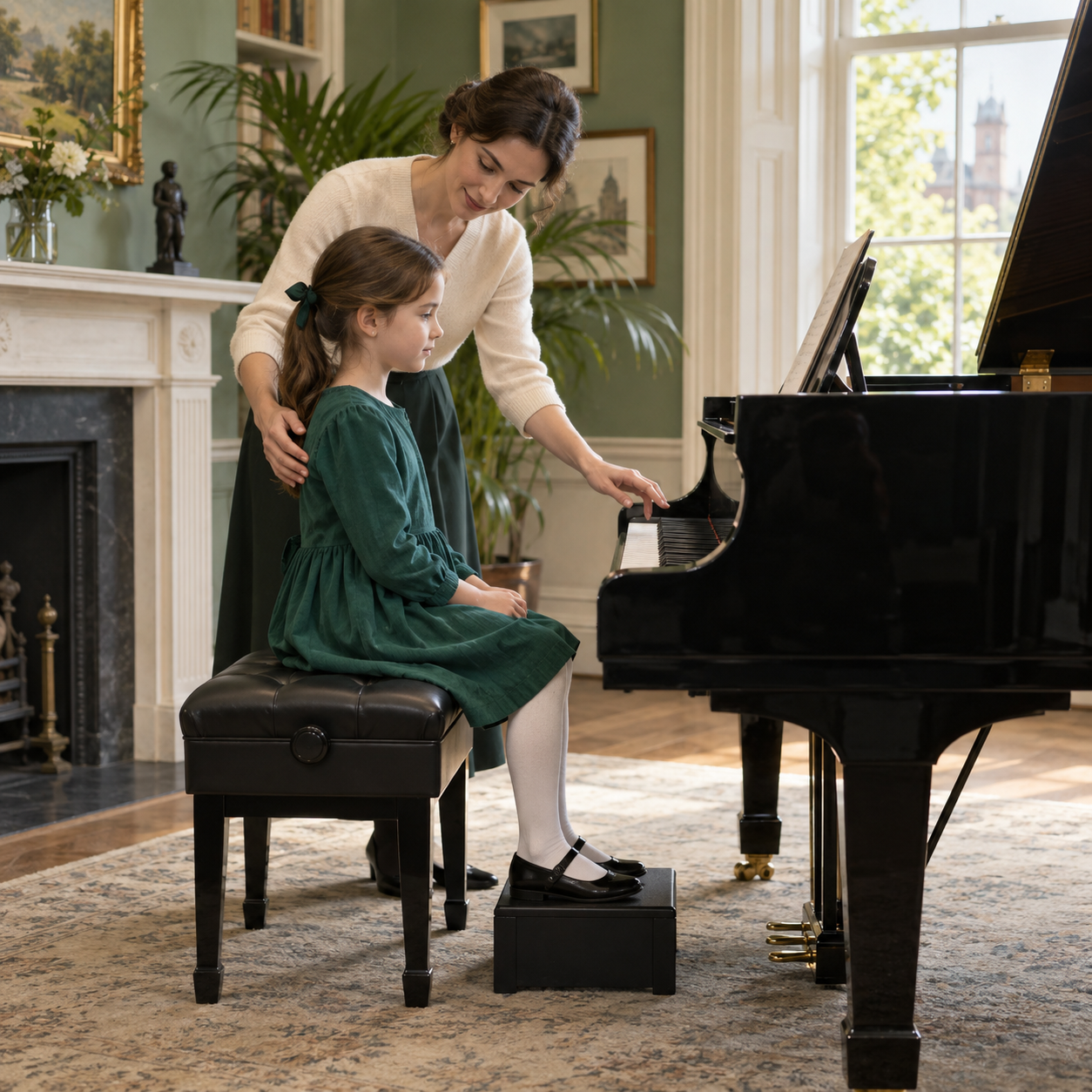
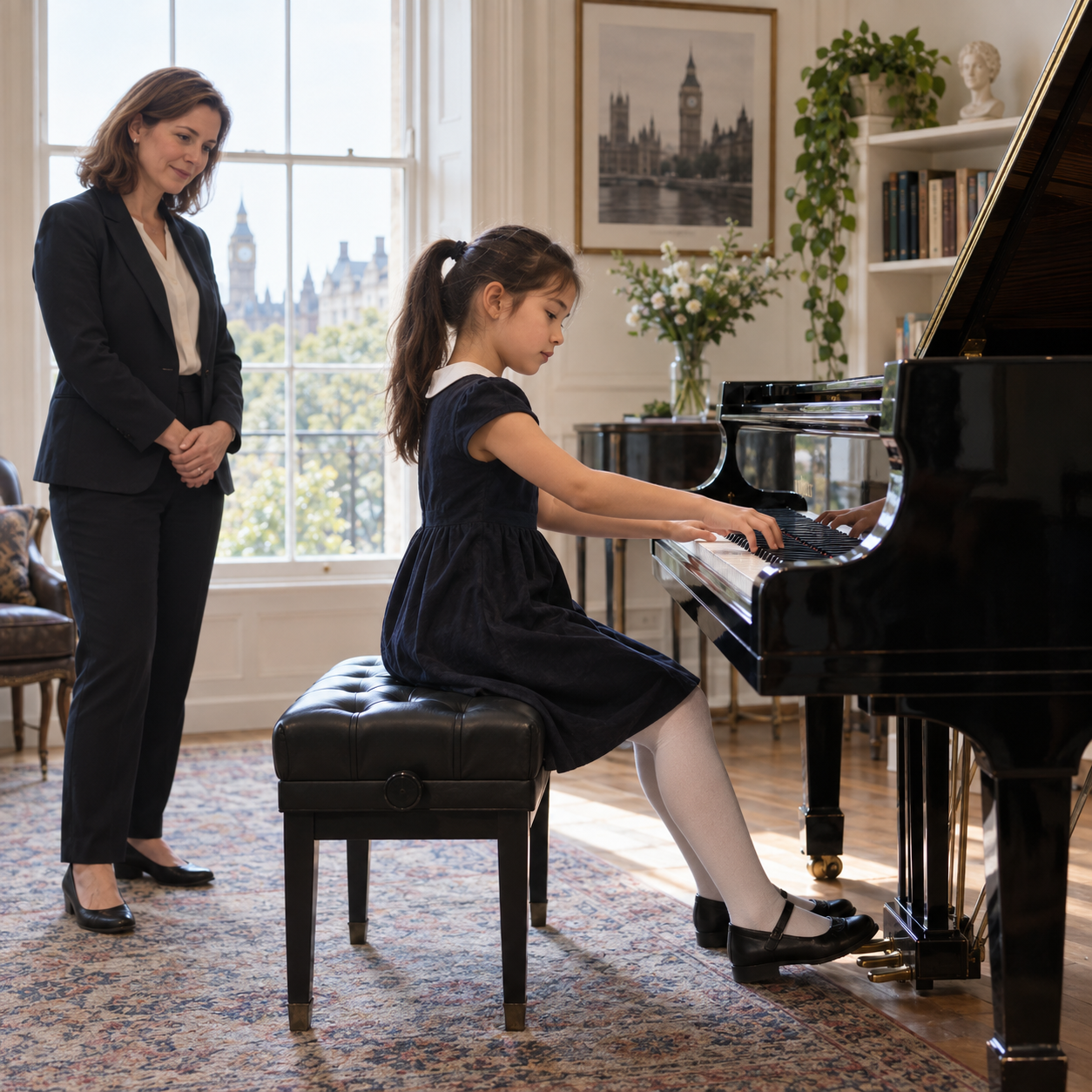
Gross motor development is visible before a child plays a single key. Can the pupil sit upright without stiffening? Are both feet supported? Can the shoulders remain free while the arm travels across the keyboard? These are whole-body questions. A stable centre gives the hands a dependable base from which smaller movements can become accurate.
Postural control is not a demand to sit rigidly. NHS guidance describes it as control of the central body, especially the trunk, shoulders and hips, so that the arms, legs and head can move effectively. At the piano, the useful posture is alive: balanced enough to support a phrase and flexible enough to move with it.
Settle
Find balanced sitting, supported feet and free breathing.
Move
Use a clear whole-body action before asking for detailed finger work.
Hear
Let the child identify how the movement changed pulse, tone or ease.
Why pulse and movement belong together
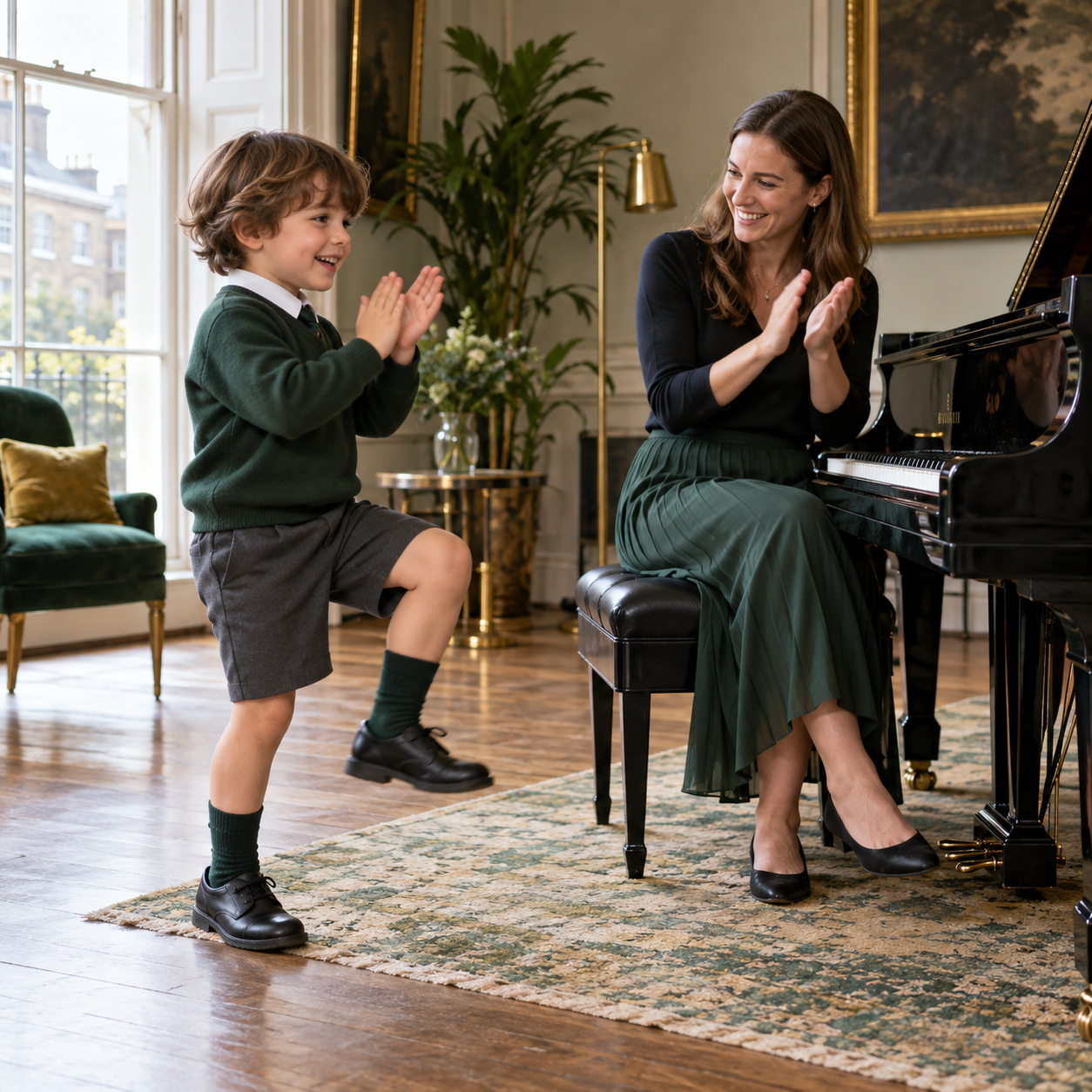
Rhythm is heard, predicted and enacted. Children often understand a steady pulse more quickly when they can step, sway, clap or pass a gesture before transferring it to the keyboard. Research on full-body rhythmic synchronisation shows that this capacity develops gradually through middle childhood; variation is normal rather than evidence of laziness.
A longitudinal music-training study with eight-year-olds found gains in rhythm and motor measures, while also showing that children’s starting rhythm abilities influenced some improvements. That is a useful caution. Musical activity can provide a rich environment for coordination, but gross motor development is not a guaranteed outcome delivered identically to every child.
The hand plays more freely when the rest of the body has somewhere stable, responsive and unforced to belong.
A gross motor development pathway for piano lessons
Begin with the room rather than the repertoire. Adjust the bench so the child can balance without gripping, add a footstool if the feet do not reach the floor, and place the music where the head can remain easy. Then use large, clear actions: dropping a relaxed arm into one sound, moving between two keyboard areas, or stepping a pulse before playing it.
Next, connect the movement to an audible purpose. A broad arm journey can shape a long phrase; a quiet rebound can prepare the next beat; a small forward shift can help the hands travel without twisting. Gross motor development becomes musically meaningful when the child hears why the movement helped.
What parents and teachers should notice
Look for increasing ease rather than a perfect pose. Does the child recover balance after reaching? Can they maintain a pulse without locking the knees or shoulders? Can they stop, listen and begin again? These modest signs are often more informative than speed. Persistent pain, marked fatigue or wider coordination concerns should be discussed with an appropriate health professional.
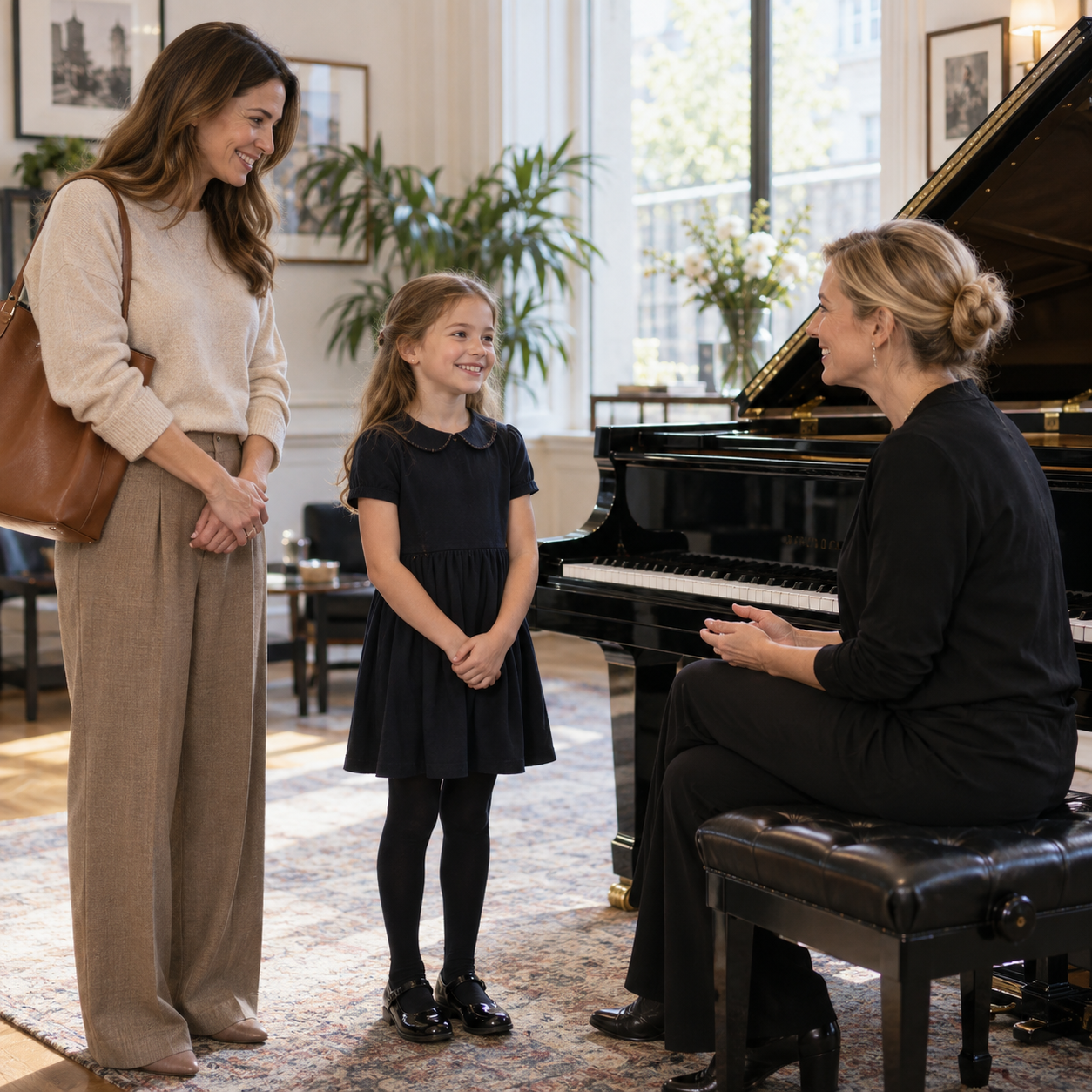
WKMT’s piano lessons for children in London use face-to-face observation so bench height, foot support, movement and sound can be adjusted together. Parents can support the process through ordinary active play as well as short musical games. The piano contributes one carefully structured setting inside a much larger developmental life.
For a related WKMT perspective, read effective piano teaching for children.
WKMT London
Give your child piano study in which posture, pulse, listening and confidence are developed as one musical experience.
Sources on gross motor development
- Berkshire Healthcare NHS: postural control and balance
- East Lancashire Hospitals NHS: balance and coordination
- PMC: rhythm perception and motor learning in children
- PMC: full-body rhythmic synchronisation in childhood
- PubMed: music training and timed movement
- Harvard Center on the Developing Child
Sources checked 10 September 2026. Educational guidance; individual learning and development vary.