
 TRIAL LESSON
Piano Lessons
Habit Formation: How Adults Make Piano Practice Last
Sep
WKMT London adult learner guide
Habit Formation: How Adults Make Piano Practice Last
Lasting piano practice rarely begins with heroic discipline. Habit formation works better when the first action is obvious, the session is small enough to begin, and the musical reward arrives quickly.
What habit formation means for piano practice
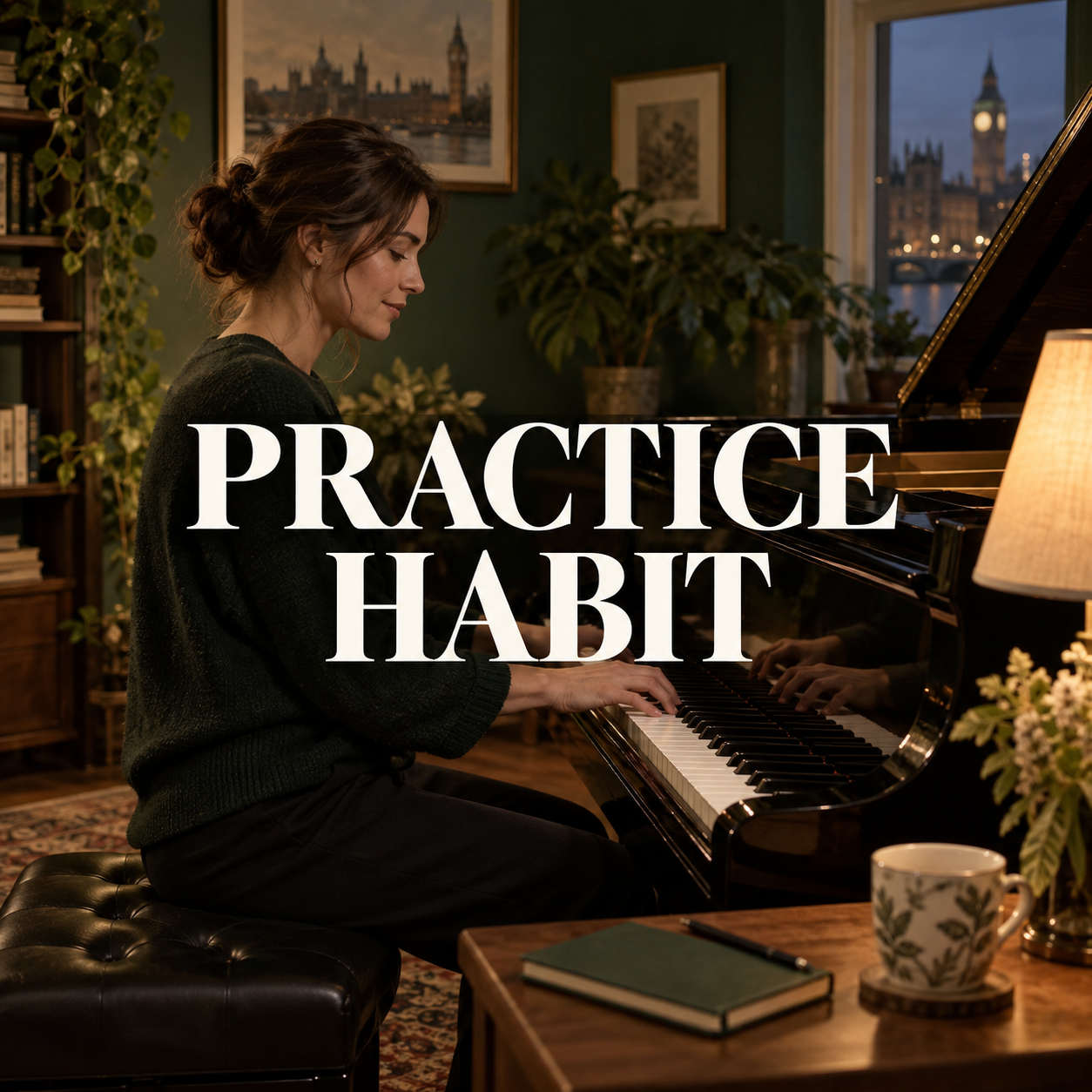
Motivation changes with work, travel, sleep and family demands. A routine built only on enthusiasm therefore has weak foundations. A stable cue—after breakfast, after closing the laptop, or before the evening meal—can reduce the number of decisions that stand between the learner and the keyboard.
The behaviour attached to that cue should be concrete. “Practise piano” is large and vague; “sit down, play the opening phrase slowly, then choose the next task” has a visible beginning. Once sound starts, continuing often becomes easier, but the small beginning must still count on a difficult day.
Cue
Choose a routine event that already happens reliably.
Tiny opening
Begin with two minutes and one unmistakable musical action.
Reward
End with a phrase or piece you genuinely want to hear again.
Why the twenty-one-day promise is misleading
Popular advice often claims a habit appears in twenty-one days. A recent systematic review of health-related behaviours found far wider timelines: reported medians around 59–66 days, means from 106–154 days, and substantial individual variation. Piano practice is a complex behaviour, so no universal countdown is credible.
Earlier work on context-dependent repetition found that automaticity rose quickly at first and then approached a plateau. Missing one opportunity did not destroy progress. That matters for adult learners: the skill is not perfect attendance, but a reliable return to the same cue after disruption.
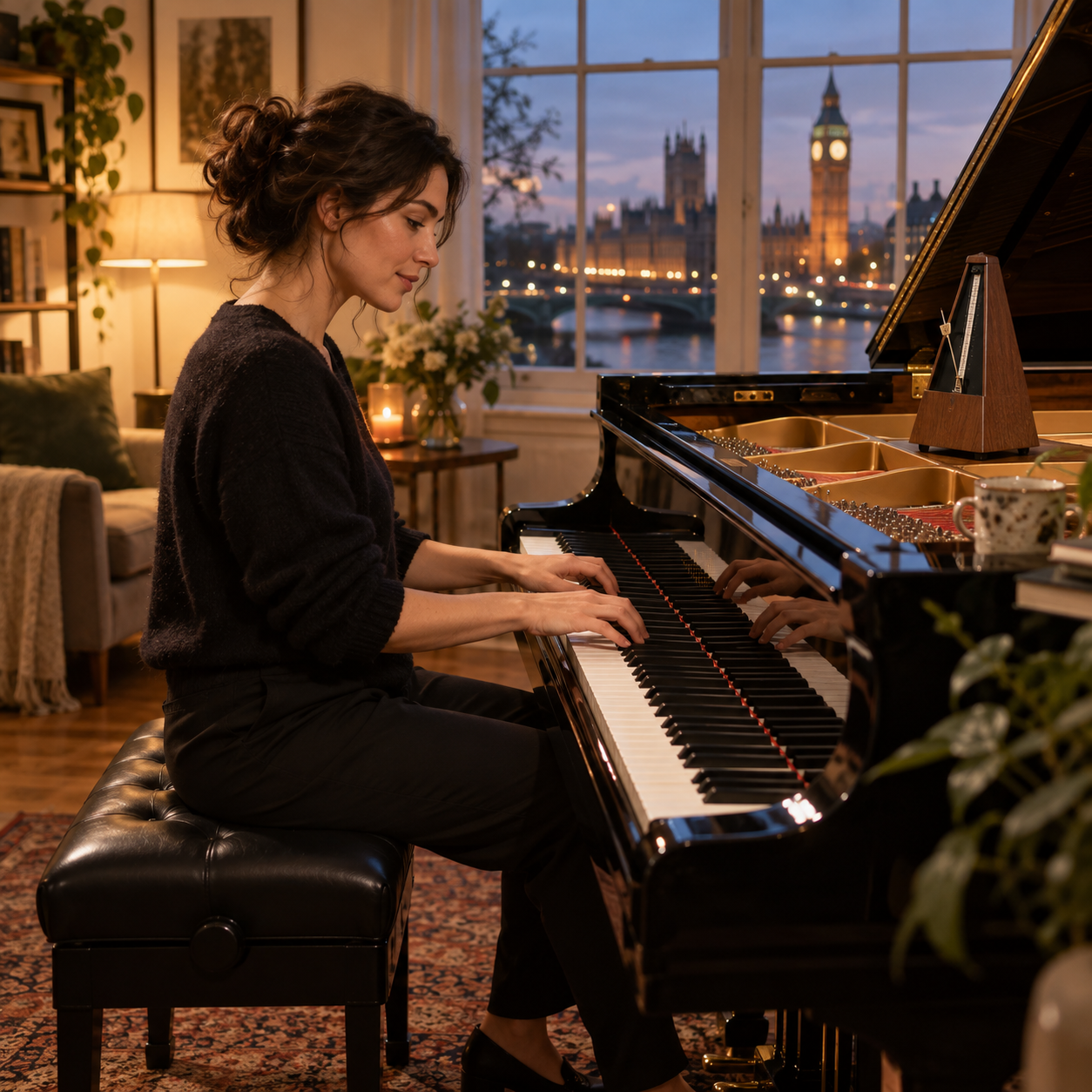
Consistency becomes durable when the routine makes starting easier without making the music smaller.
A habit formation design for busy adults
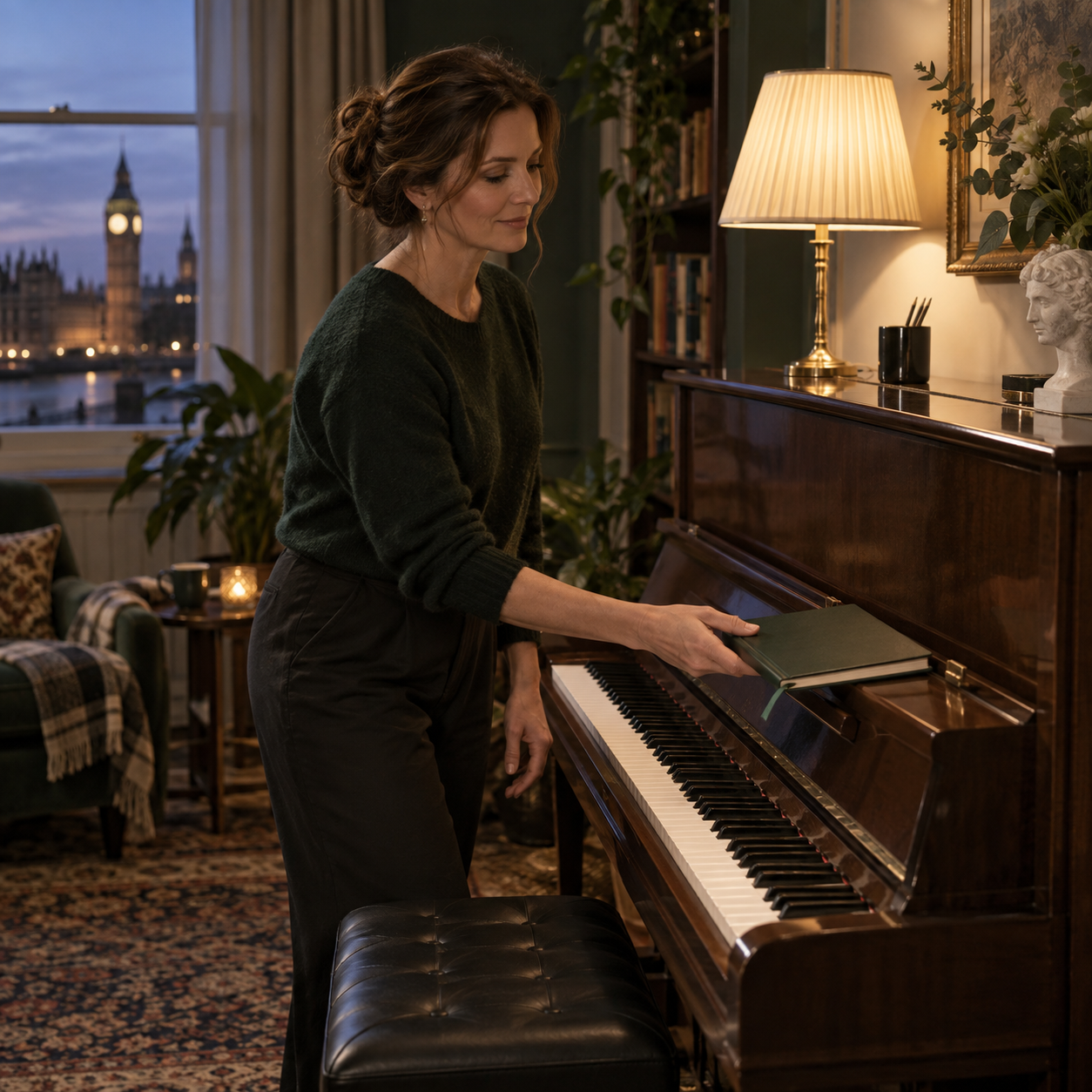
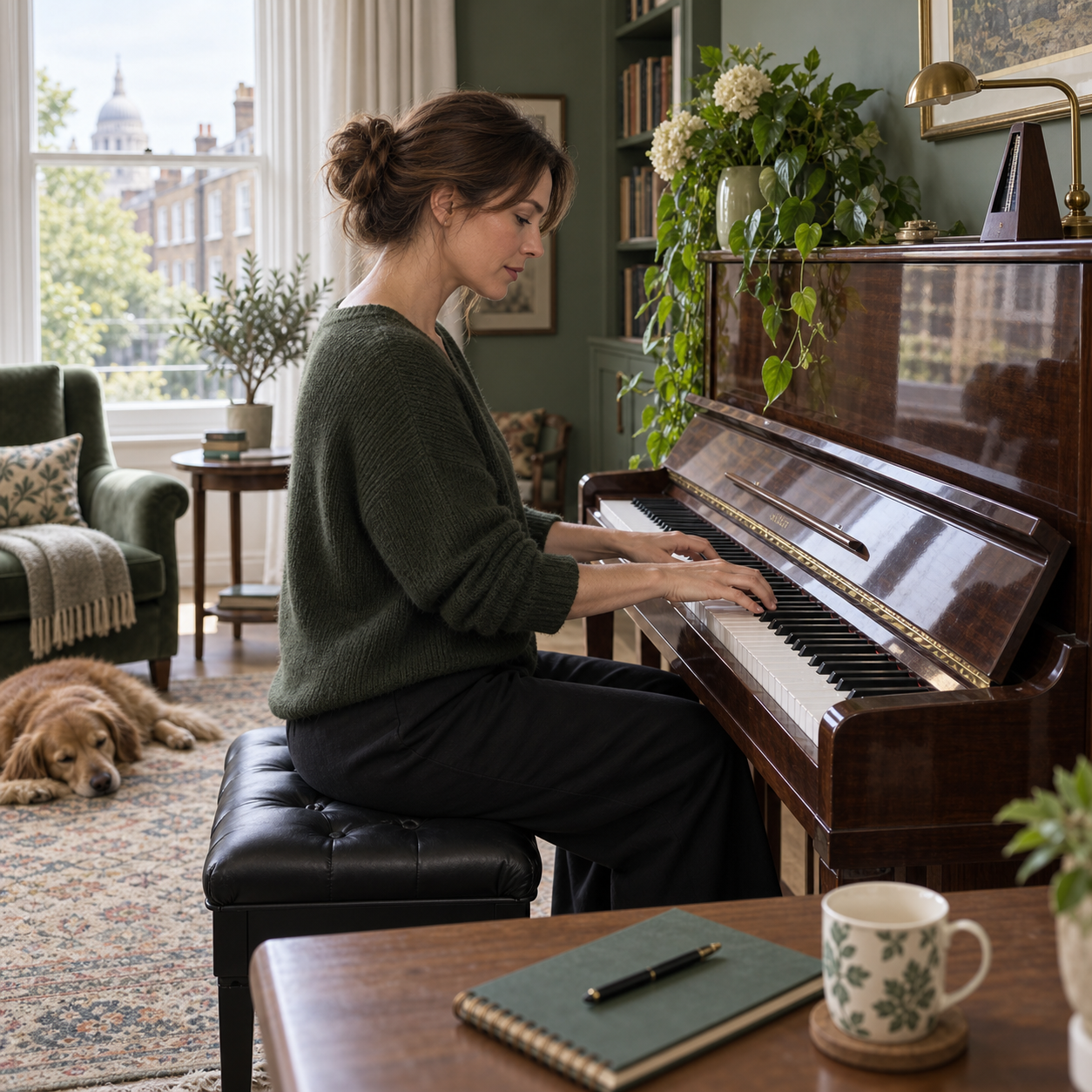
Start by choosing one anchor already present in daily life. Reduce friction by leaving the bench clear and the current music ready. Define a minimum session of five minutes: one familiar opening, one small challenge and one satisfying close. Longer practice is welcome, never required for the habit to count.
Track repetitions lightly rather than scoring artistic worth. A simple mark can confirm that the cue led to action. Keep evaluation inside the music: Was the left hand quieter? Did the cadence breathe? Could the phrase begin from memory? Those questions preserve meaning while habit formation supports consistency.
How lessons keep the routine musical
Weekly lessons create an external rhythm, but they should not turn practice into fear of inspection. A good teacher selects proportionate tasks, helps adults recover after busy weeks and protects a strand of repertoire that is pleasurable enough to make returning attractive.
At WKMT London, adult piano lessons join that structure to immediate technical and musical feedback. The adult learner is not asked to live like a conservatoire student. The aim is a sustainable relationship with the instrument—serious, expressive and compatible with real life. For related guidance, read WKMT’s page on planning effective practice.
WKMT London
Build an adult piano routine with repertoire, feedback and expectations shaped around your actual week.
Sources on habit formation for piano
- PMC: systematic review of time to habit formation
- PMC: making health habitual
- UCL: habit formation research guidance
- University of Surrey: the 66-day finding in context
- British Journal of Health Psychology: habit formation in context
Sources checked 9 September 2026. Educational guidance; individual learning and development vary.