
 TRIAL LESSON
Pianists, Piano Lessons
Grigory Sokolov in London: Silence, Structure and the Art of Serious Piano Listening
Jul
Grigory Sokolov in London and Worldwide
WKMT London listening guide
Grigory Sokolov in London: Silence, Structure and the Art of Serious Piano Listening
Grigory Sokolov rewards the kind of listener who hears form, silence and touch as musical events. For London piano students, his art is a lesson in attention before display.
Quick overview
A London-focused guide to Grigory Sokolov, his recital culture, essential recordings and what serious piano listeners can learn from his silence, touch and structure.
Grigory Sokolov is one of the rare pianists whose reputation has grown through scarcity. He gives solo recitals, avoids routine publicity, and has built a modern legend around live performance rather than studio polish. Born in Leningrad in 1950, he was already giving major recitals as a child and won the International Tchaikovsky Competition as a teenager [1]. Today, listeners speak of his playing less in terms of speed or glamour than of weight, space, inner voicing and the almost physical authority of quietness. London has heard him at key moments, including Wigmore Hall recitals remembered by UK critics, although recent official touring has concentrated on continental Europe [2]. Listen first for the way a note begins, then for the silence that follows it.
At a glance – essential facts
18 April 1950, Leningrad, now St Petersburg [1].
Central Special School and Leningrad Conservatory, with Liya Zelikhman and Moisey Khalfin [1].
First prize at the 1966 International Tchaikovsky Competition [1].
Solo recital tours, long programmes, generous encores, live recordings.
His repertoire reaches from Byrd, Purcell and Rameau to Beethoven, Schubert, Chopin, Brahms, Debussy, Prokofiev and Schoenberg. Deutsche Grammophon lists the 2024 Purcell and Mozart release, drawn from Spanish festival recitals in August 2023, as a recent example of his preference for live material rather than studio fabrication [3]. His official 2026 tour schedule, last checked on 27 June 2026, listed continental European dates including Germany, with no London date visible at that check [2]. For London readers, that absence makes the recordings and historic UK criticism more valuable. Listen for continuity across eras: the same gravity that serves Purcell’s ground bass can also clarify a late Beethoven sonata.
The artist’s biography in brief
Sokolov’s musical formation belongs to the Leningrad school: rigorous, public from an early age, and shaped by teachers who understood talent as discipline rather than spectacle. The official biography records piano study from the age of five, formal study two years later, and a Leningrad debut recital in 1962 [1]. By 1966 he had won the Tchaikovsky Competition, a victory that placed him among the most watched young Soviet pianists of his generation.
The later story is more unusual. Many international pianists build visibility through orchestral appearances, studio cycles and media interviews. Sokolov gradually moved in another direction. His management biography notes work with major orchestras including the New York Philharmonic, Royal Concertgebouw Orchestra, Philharmonia and Munich Philharmonic before his present concentration on solo recitals [4]. That shift matters. A solo recital is a test of architecture: no conductor, no orchestral colour, no external drama. The pianist must make the sequence of works feel inevitable.
Teacher’s Note: Sokolov’s career reminds adult students that artistic authority is not noise. It is the capacity to make a phrase sound chosen, timed and necessary.
He is also known for guarding the conditions of performance. The result can appear severe from outside, yet it has produced a rare consistency of atmosphere. Listeners do not attend a Sokolov recital expecting a public personality. They expect a musical climate. That is why an older Wigmore Hall review could describe the experience in unusually absolute terms, stressing that familiar canonical works felt renewed in performance [5]. Listen for biography in sound, not anecdote: the slow walk to the keyboard, the refusal of haste, the first note that sets the room’s moral temperature.
Signature repertoire and interpretive hallmarks
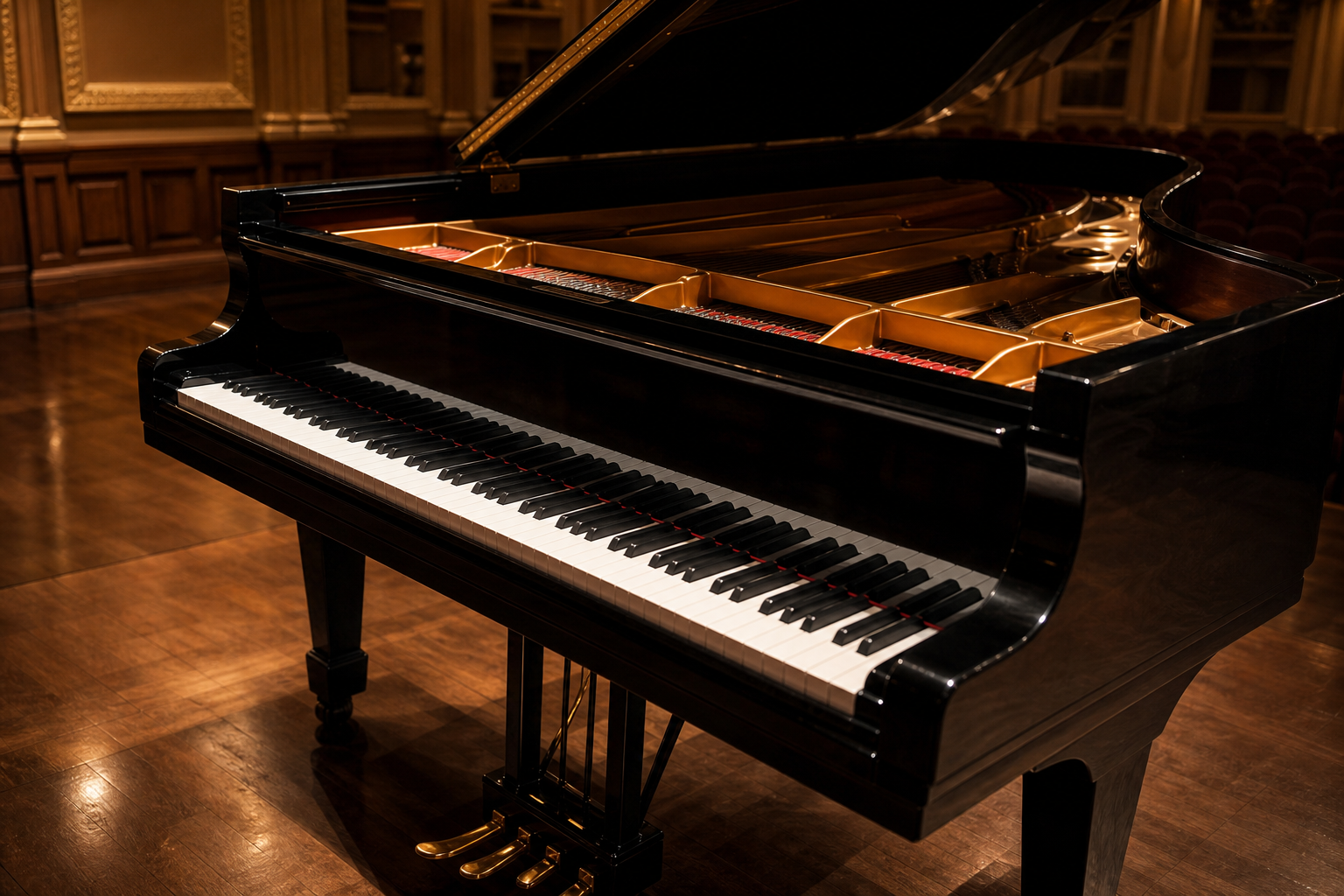
The easiest mistake is to treat Sokolov as a pianist of atmosphere alone. The deeper point is structure. In Beethoven, he can make a phrase feel carved from within, with bass lines that carry moral weight and inner voices that refuse to disappear. In Schubert, he often allows time to dilate without becoming slack. Silence is not an empty gap; it is the frame that lets the next harmony arrive with consequence.
His older and newer repertoire also reveal a distinctive relation to the instrument. In Purcell, Rameau and other early keyboard music, he does not try to pretend the modern piano is a harpsichord. Instead, he uses transparency, fast decay, restrained pedal and sharply profiled rhythm to suggest an older rhetoric through modern sonority. In Mozart and Haydn, the danger is prettiness. Sokolov tends to seek weight beneath elegance: a bass note placed like a column, a repeated figure made to think, a cadence that closes without theatrical wink.
A Sokolov performance asks a simple question: can the listener hear patience as intensity?
For students at WKMT’s London piano school, that question is practical. Tone is not merely beautiful sound. It is decision-making. A melody can lean without sagging. A bass can speak without bullying. A rest can hold direction. These are the same principles explored in structured work on classical phrase analysis and performance preparation. Listen for the moment where volume stops being the main expressive currency.
Sokolov in London – performance history, venues and critical reception
London’s memory of Sokolov is partly archival. Wigmore Hall, with its dry intimacy and intense audience concentration, suits the kind of pianist who can make small gradations feel monumental. A 2004 Wigmore Hall review in The Classical Source framed the recital as one where canonical music became fresh again in the act of performance [5]. The Guardian’s 2007 notice, from a London critical culture that still took the piano recital seriously as a public event, described a vision of Russian pianism grounded in ease, dependable technique and deep familiarity with the repertory [6].
There is also a practical historical caveat. UK appearances became complicated after the late-2000s visa and entry-policy dispute reported at the time, and recent official listings do not show London as a regular tour stop [2]. That means a London article should not pretend there is an imminent booking path unless an official date exists. The honest value is different: to help readers recognise what made those recitals important and how to carry that standard into listening now.
| Listening context | What to notice | London lesson |
|---|---|---|
| Wigmore-style intimacy | Small tonal gradations, pauses, breath before attack. | The room hears everything. Prepare quietly. |
| Large-hall recital | Projection without hardness, long-line pacing. | Sound must travel, but not shout. |
| Recorded live performance | Risk, continuity, a whole programme’s emotional weather. | Listen by programme, not isolated track. |
London pianists can also place him beside the city’s wider recital ecology: music events in London, masterclasses, student concerts and private listening. Listen for the social discipline of the hall: the silence before a late Beethoven movement can be as revealing as applause after it.
A serious listener’s guide – how to hear Sokolov live and on record
Begin with the attack of a single note. In Sokolov, the first sound often tells you the scale of the whole reading. Is the note released into space, pressed into the keybed, or allowed to bloom? Then follow the bass. In Beethoven, the bass is frequently the argument, not an accompaniment. If you hear only the upper melody, you miss the architecture.
For the 2020 Deutsche Grammophon Beethoven, Brahms and Mozart live set, approach the Beethoven sonatas as a study in different kinds of inevitability [7]. In an early sonata, listen for articulation: the pianist’s refusal to blur classical syntax. In Op. 111, listen for transformation: the Arietta’s calm must be earned by the preceding struggle. Do not listen for speed. Listen for proportion. At roughly the opening minute of a slow movement, ask whether the pulse has stopped or simply become interior.
For the 2024 Purcell and Mozart release, use the Purcell sequence as ear training for decay [3]. The modern piano can over-sustain this music. Sokolov’s interest lies in speech, hinge, turn and ground. A ground bass should feel like stone under running water. In Mozart K.333, listen for elegance under pressure: the phrases must smile, but they must also think. When an ornament appears, ask whether it decorates the line or changes the line’s grammar.
Practice Insight
Before practising a phrase, listen once without touching the piano. Mark where the silence has direction. Then play only enough to test whether your hands understood what your ear heard.
Finally, attend to encores. Sokolov’s recitals are famous for their generosity after the formal programme. The encore is not a dessert course. It is a different kind of truth: miniature, exposed, often tender. A short piece after a monumental sonata can reveal whether the pianist’s power is flexible. Listen for the smallest dynamic that still carries the room.
Recordings compared – essential discs and what each reveals
Sokolov’s discography is best approached as a sequence of live documents rather than a conventional catalogue. That distinction is crucial. A studio cycle promises control. A live recital preserves decisions made under pressure, with continuity, acoustics and risk intact.
A useful entry point for hearing breadth of colour, grand scale and the encore culture around his playing.
Best for listeners studying sonata architecture, late style and the difference between weight and force [7].
Best for hearing how early keyboard rhetoric can survive on the modern concert grand [3].
If you are an adult student, resist the collector’s urge to skim. Choose one disc and hear it as a recital. Read the programme order. Notice whether your attention changes after forty minutes. Serious listening is a stamina, and it improves. The comparison that matters is not which recording is “best”, but which one teaches your ear to follow form for longer.
Practical information for London concertgoers and pedagogical takeaways
If Sokolov returns to London, check only official venue and artist listings before buying tickets. Last checked on 27 June 2026, the official tour page showed European dates but no London listing [2]. For similar recital discipline in London, follow Wigmore Hall, the Barbican, Southbank Centre and smaller chamber series, then prepare as you would for study: read the programme, hear one reference recording, arrive early, and let the first silence settle.
The pedagogical lesson is not to copy Sokolov’s manner. It is to copy the seriousness of preparation. Adult students can take four principles into their own work: shape the bass line first; practise release as carefully as attack; use pedal as grammar rather than perfume; and make tempo serve structure. These principles sit naturally beside adult piano lessons at WKMT, where mature learners often need interpretive clarity as much as technical repair.
Bring serious listening into your own piano study.
WKMT teaches classical piano in London with a focus on structure, tone, repertoire and musical judgement. If Sokolov’s playing sharpens your ear, let that attention inform your next lesson.
For further development, use WKMT London piano masterclasses to connect listening with performance, and performance preparation guidance to translate concentration into stage confidence. Listen for the final discipline: never mistake intensity for loudness.
Brief FAQ
Has Grigory Sokolov played in London?
Yes. Historic London appearances include Wigmore Hall recitals reviewed by UK critics, although recent official tour listings checked on 27 June 2026 did not show a London date.
What is the best way to start listening to Sokolov?
Begin with one complete live recital recording rather than isolated tracks. His art depends on programme architecture, silence and cumulative attention.
What can adult piano students learn from him?
They can learn patience, structural hearing, bass-led phrasing, controlled pedalling and the courage to let quiet playing carry authority.
Sources on Grigory Sokolov
- Deutsche Grammophon, Grigory Sokolov biography: deutschegrammophon.com
- Deutsche Grammophon, Purcell and Mozart release information: deutschegrammophon.com
- Artists Management Company, Grigory Sokolov artist biography: amcmusic.com
- The Classical Source, Wigmore Hall review, 17 January 2004: classicalsource.com
- The Guardian, Grigory Sokolov review, 9 June 2007: theguardian.com
- Deutsche Grammophon, 2020 live recordings note: deutschegrammophon.com