
 TRIAL LESSON
Piano Lessons
Deliberate Practice at the Piano: How Adults Work on the Right Problem
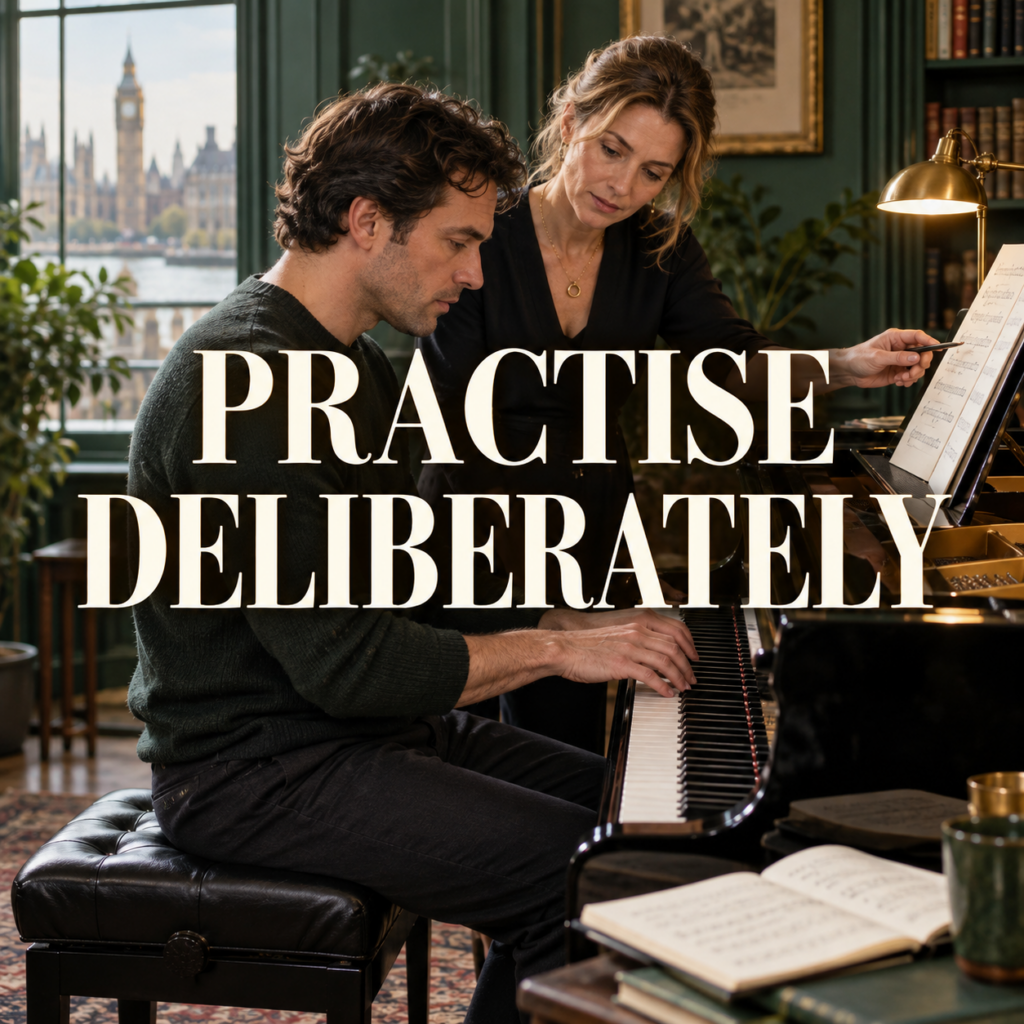
Sep
WKMT London adult learner guide
Deliberate Practice at the Piano: How Adults Work on the Right Problem
Adult pianists often know how to work hard; the more difficult question is whether the work is aimed at the right problem. Deliberate practice narrows attention to a defined weakness, uses feedback and repeats with adjustment. It is demanding, but it need not be joyless or endless.
In brief
Deliberate practice is highly structured work designed to improve a specific aspect of performance beyond its current level. It requires a clear task, full attention, informative feedback and repeated correction, often with guidance from a teacher. At the piano, adults can use deliberate practice on one technical, rhythmic or musical problem, then reconnect the repaired passage to expressive playing.
Deliberate practice is more specific than repetition
Playing a passage again may strengthen whatever happened the first time, including uncertainty. Deliberate practice begins by naming the gap: an uneven turn, a hidden inner voice, a late leap or a memory failure at one harmonic change. The task is then designed to expose that weakness under manageable conditions.
This differs from general playing, performance and recreation. Those activities remain valuable, but they serve other purposes. Deliberate practice is effortful because attention cannot drift. For an adult with limited time, that intensity is useful only in short, well-chosen blocks surrounded by continuity, repertoire and musical pleasure.
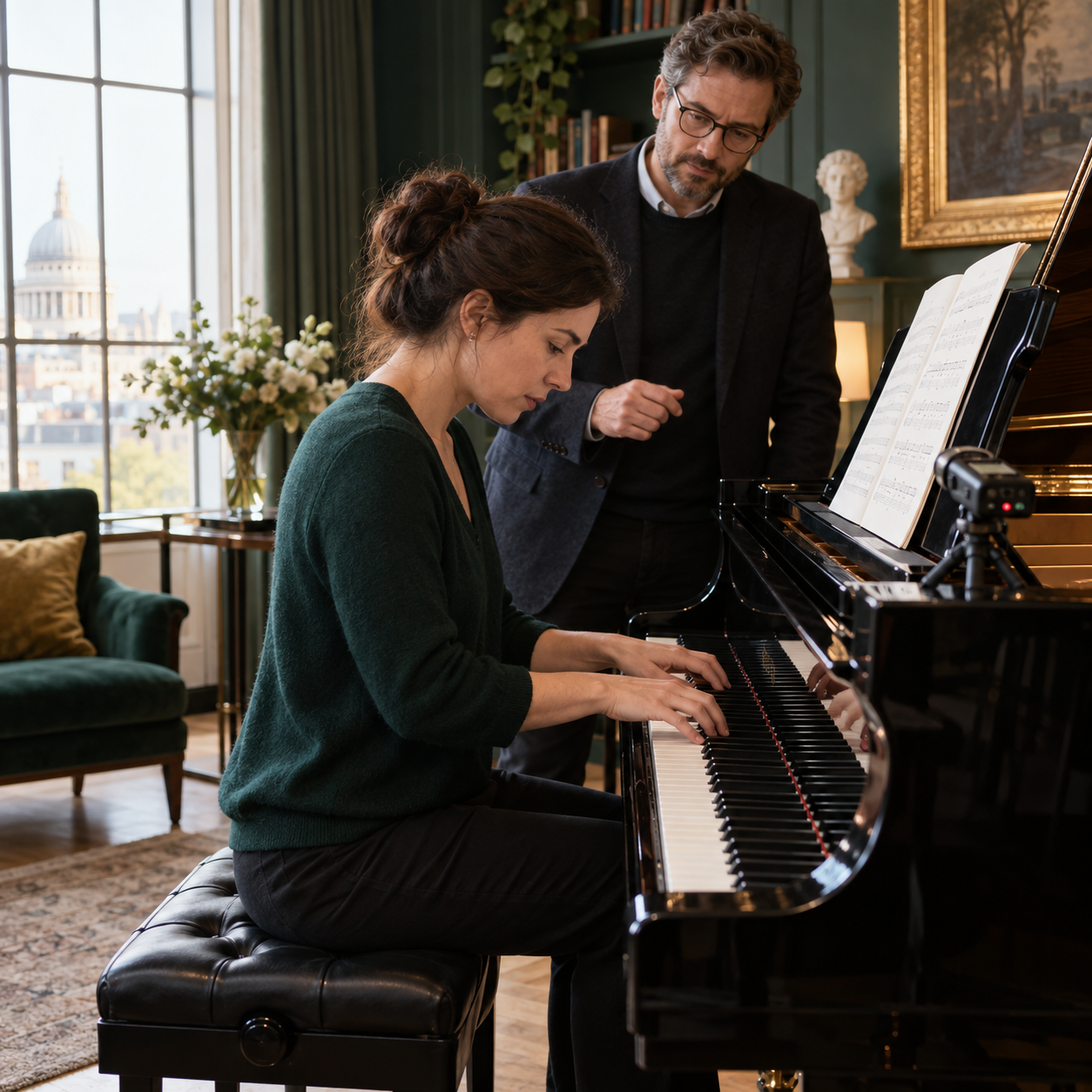
A teacher helps identify the right problem
Self-observation is imperfect. The hand may feel tense because the fingering is poor, because the musical destination is unclear or because the tempo exceeds present control. A teacher can distinguish symptoms from causes and prescribe a task that changes the underlying coordination rather than merely suppressing the visible error.
In adult piano lessons in London, deliberate practice can fit a demanding timetable. One carefully diagnosed passage may provide a week’s useful work. The lesson supplies feedback; home practice gathers evidence. The next lesson then evaluates change rather than restarting the diagnosis.
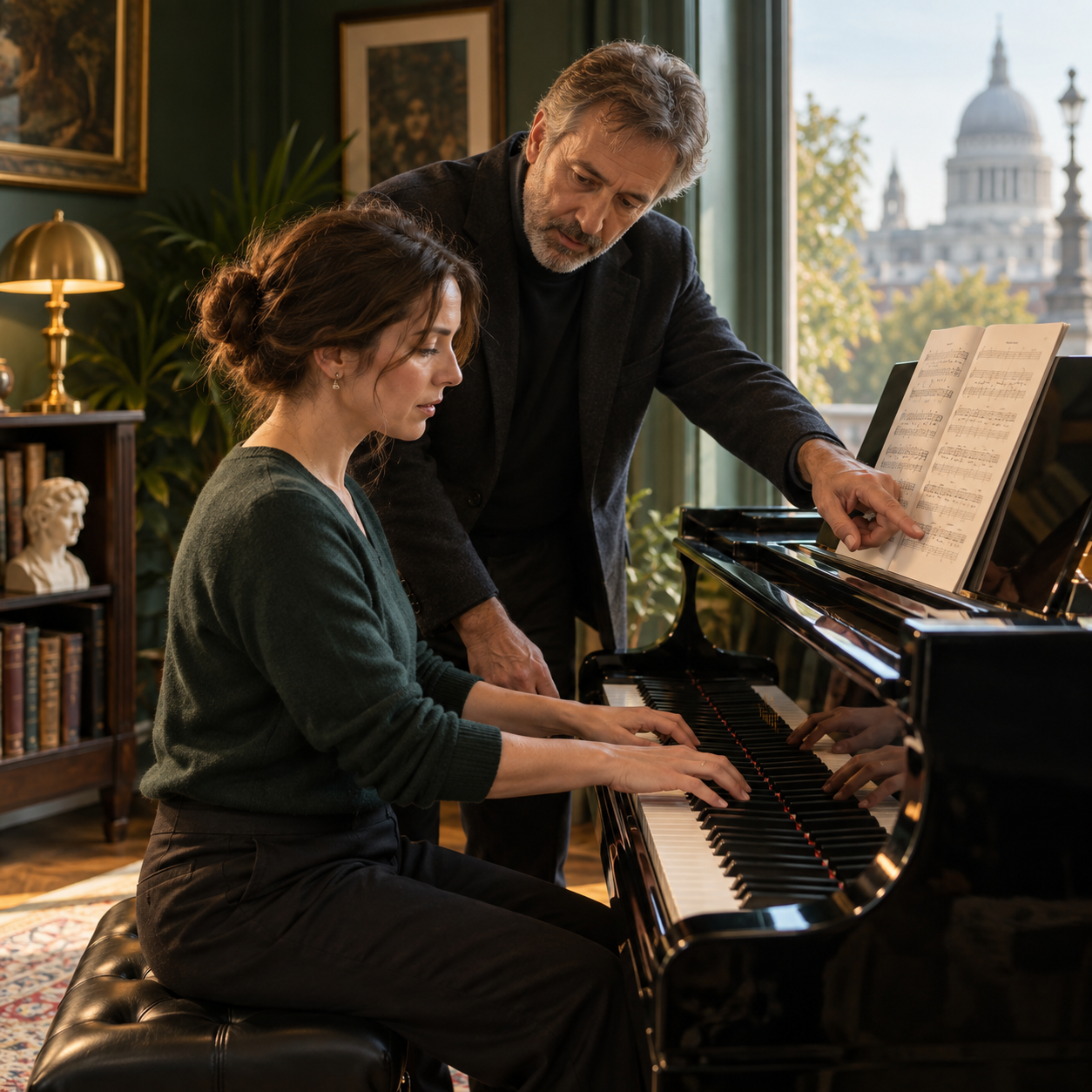
The deliberate practice loop at the piano
Define one outcome that can be heard or observed. Choose a small unit and an intervention: dotted rhythms, blocked chords, silent preparation, reduced texture or a different fingering. Perform the test slowly enough to notice the result. Compare it with the target, then keep, revise or replace the strategy.
Feedback must be specific. Good or bad is too vague. Ask whether the melody remained above the accompaniment, whether every leap began from release, or whether the pulse survived a difficult change. WKMT’s guide to efficient piano practice offers complementary ways to organise focused work without losing the larger piece.
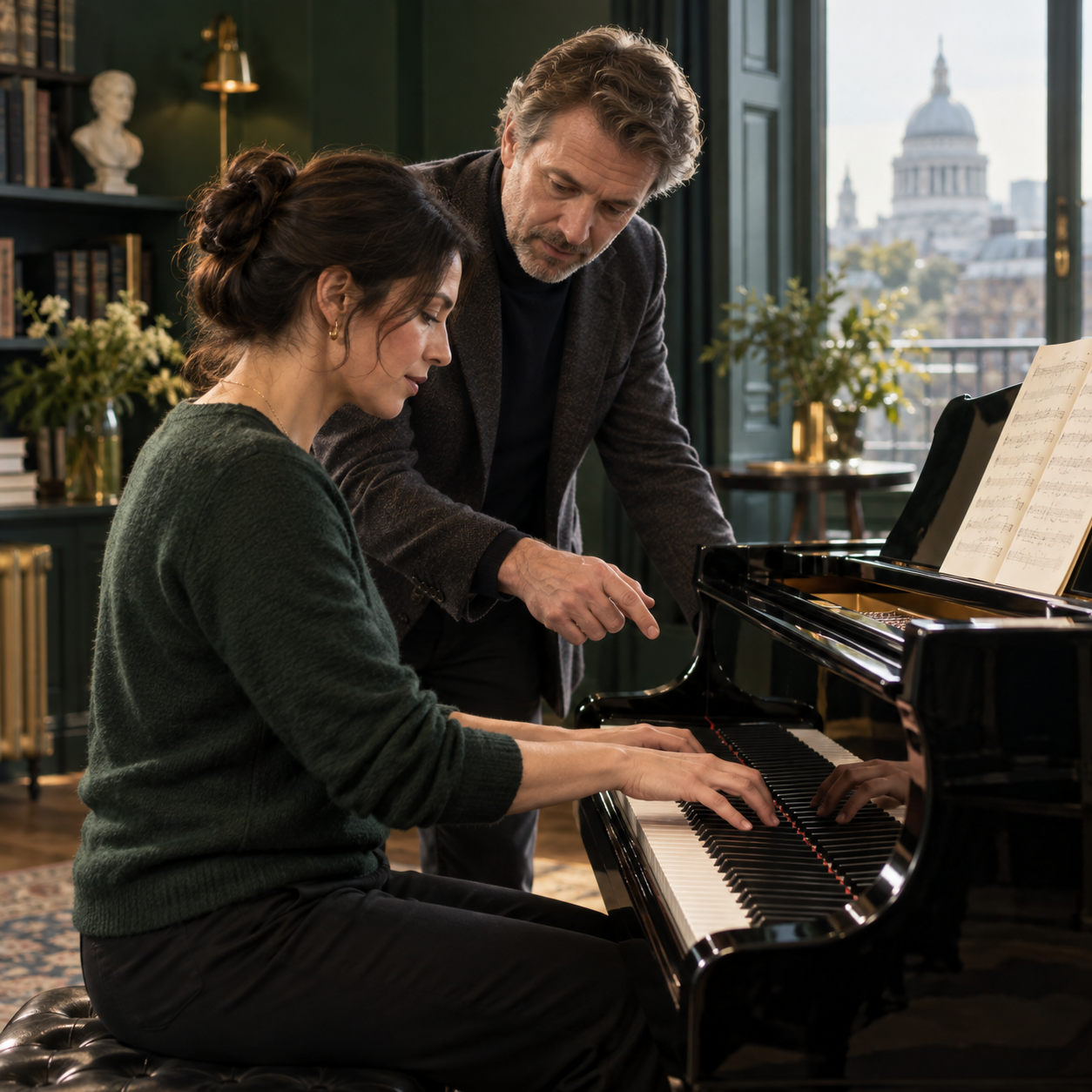
The purpose of deliberate practice is not to endure more repetitions, but to make the next repetition answer a better question.
What research supports, and what it does not prove
Classic research on expert performance placed deliberate practice at the centre of high-level skill development, including studies of pianists. Later meta-analysis found a meaningful relationship between structured practice and musical achievement while also showing that practice does not explain every difference between performers. Ability, opportunity, health, teaching and motivation matter too.
The sensible conclusion for adult learners is neither ten-thousand-hour mythology nor fatalism. Deliberate practice improves the quality of work on a chosen problem, but it is not a guarantee of elite status and it should not dominate every musical experience. Use the idea as a method for learning, not as a judgement of worth.
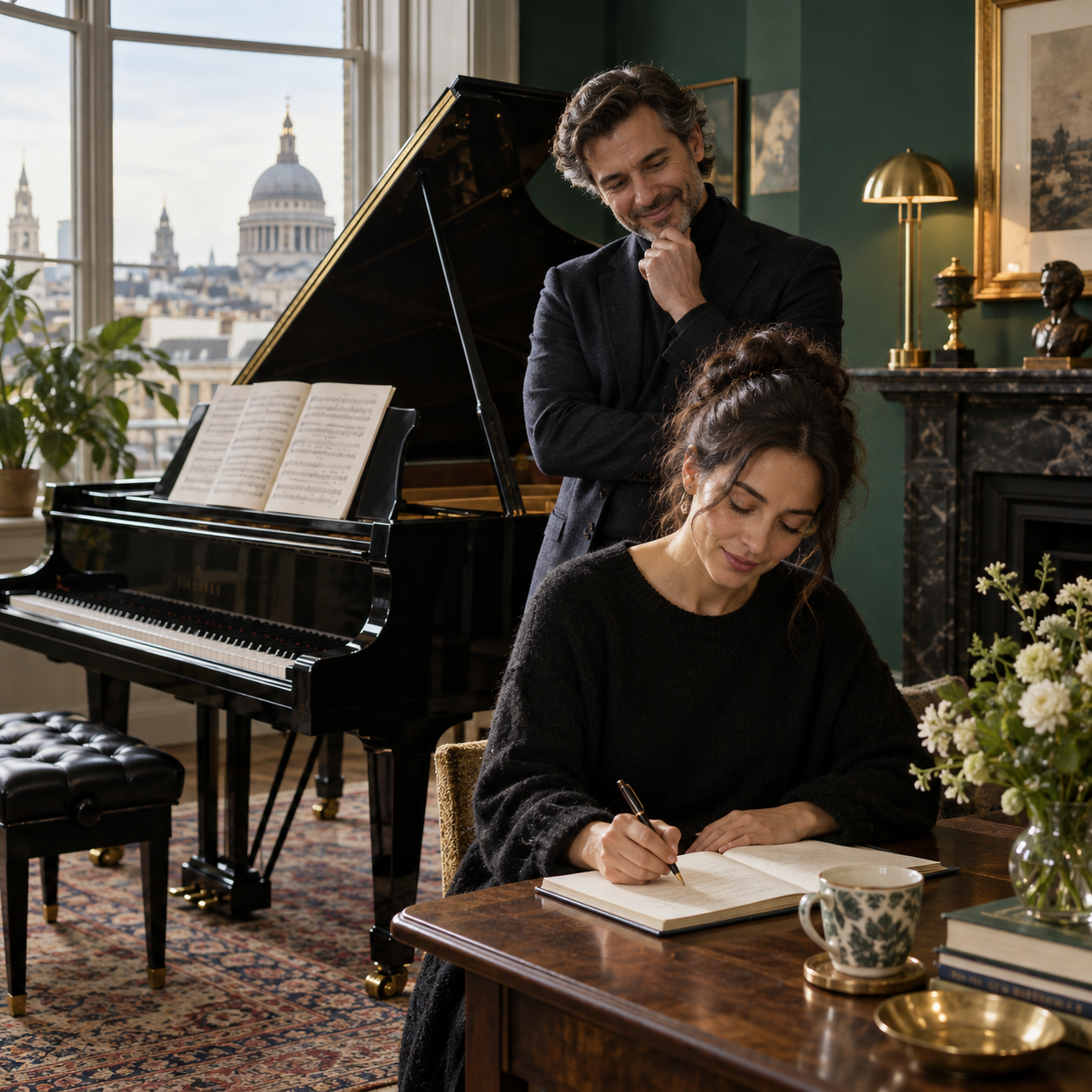
A humane 30-minute deliberate practice plan
Begin with five minutes of comfortable playing and listening. Spend ten minutes on one diagnosed problem, taking short pauses between tests. Use five minutes to reconnect the passage on both sides. Play for seven minutes without stopping, then spend three minutes noting what changed and where the next session should begin.
Stop if pain, escalating tension or concentration failure makes feedback unreliable. Deliberate practice depends on accurate perception; exhausted repetition defeats the method. Alternate demanding blocks with expressive repertoire and rest. The adult pianist’s aim is a sustainable musical life in which focused problem-solving supports, rather than replaces, the reason for playing.
WKMT London
Build an adult piano practice method shaped by expert diagnosis, realistic London schedules and meaningful repertoire.
Explore adult piano lessonsSources on deliberate practice on piano
- Psychological Review: deliberate practice and expert performance
- PMC: deliberate practice and musical achievement meta-analysis
- Frontiers in Psychology: definition and limits of deliberate practice
- SAGE: preparation of a public piano performance
- Royal College of Music Centre for Performance Science
- British Association for Performing Arts Medicine
Sources checked 25 September 2026. Educational guidance; individual circumstances and progress vary.