
 TRIAL LESSON
Piano Lessons
Musical Aptitude in Children: What Teachers Can Notice and What Practice Can Grow

Sep
WKMT London parent guide
Musical Aptitude in Children: What Teachers Can Notice and What Practice Can Grow
A child who sings in tune immediately is easy to notice, but musical potential is broader and quieter than a quick display. Musical aptitude includes the capacity to hear relationships, remember patterns, feel rhythm and respond imaginatively. Good teaching observes these tendencies without turning them into a verdict.
In brief
Musical aptitude describes a child’s potential to learn music, including tonal and rhythmic perception, memory and audiation. It is not the same as current achievement, and it should never be used to exclude a child. Teachers can notice how a pupil imitates, predicts, remembers and responds, while rich musical experience and well-paced practice help that potential become skill.
Musical aptitude is not a pass-or-fail label
Musical aptitude tests attempt to measure potential rather than the amount already taught. Research finds meaningful but imperfect relationships between aptitude measures and later musical outcomes, so no single score can describe a child’s musical future.
A confident singer may have abundant experience, while a hesitant beginner may be listening deeply before responding. Teachers should combine observation over time with an understanding of the child’s background, attention and comfort.
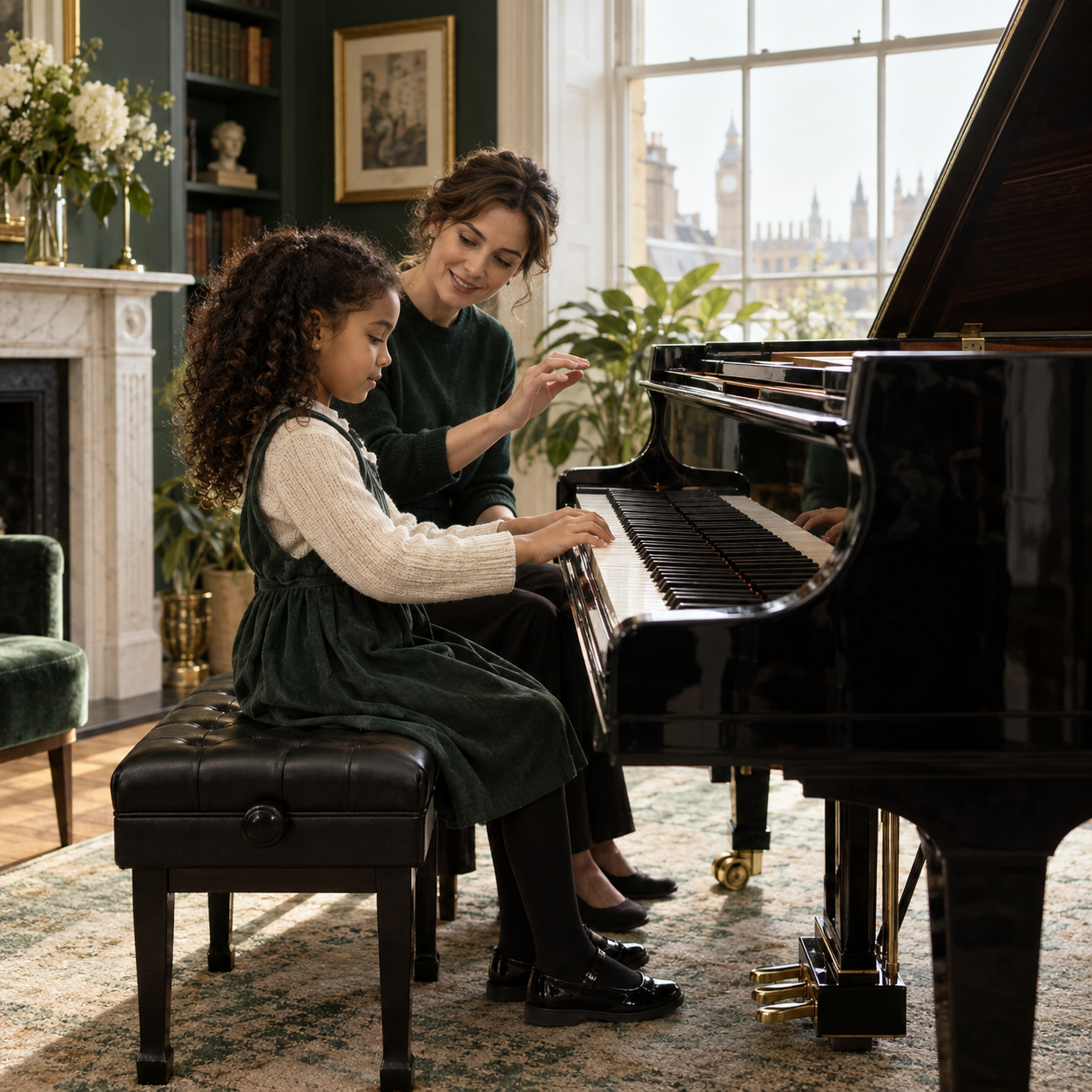
What a piano teacher can observe
In children’s piano lessons in London, musical aptitude appears through small behaviours: matching a contour, finding a pulse, recognising a changed note or shaping a repeated phrase differently. Curiosity and recovery after a mistake are as informative as speed.
The teacher can vary the task so that pitch, rhythm, memory and movement are not confused. A child who struggles with notation may still reproduce a phrase beautifully by ear; another may read accurately but need help imagining sound before playing.
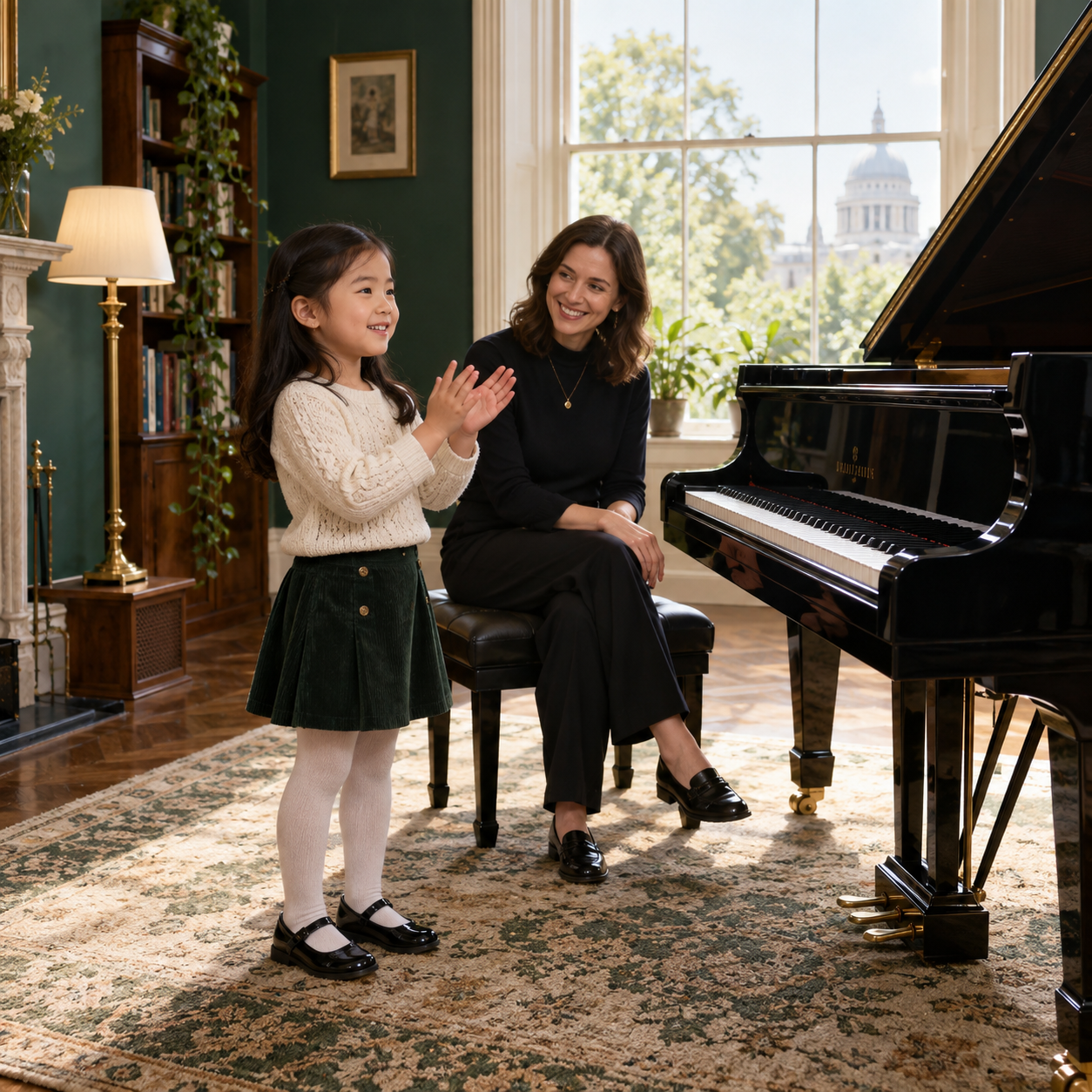
Audiation: hearing before sound
Audiation is the capacity to understand music internally when the sound is absent or incomplete. It grows when children sing, echo, pause, predict and continue a phrase in imagination rather than pressing keys continuously.
WKMT’s guide to listening skills at the piano offers a practical companion. Ask the child to sing the destination note, tap the pulse through a rest or choose which of two endings feels complete.
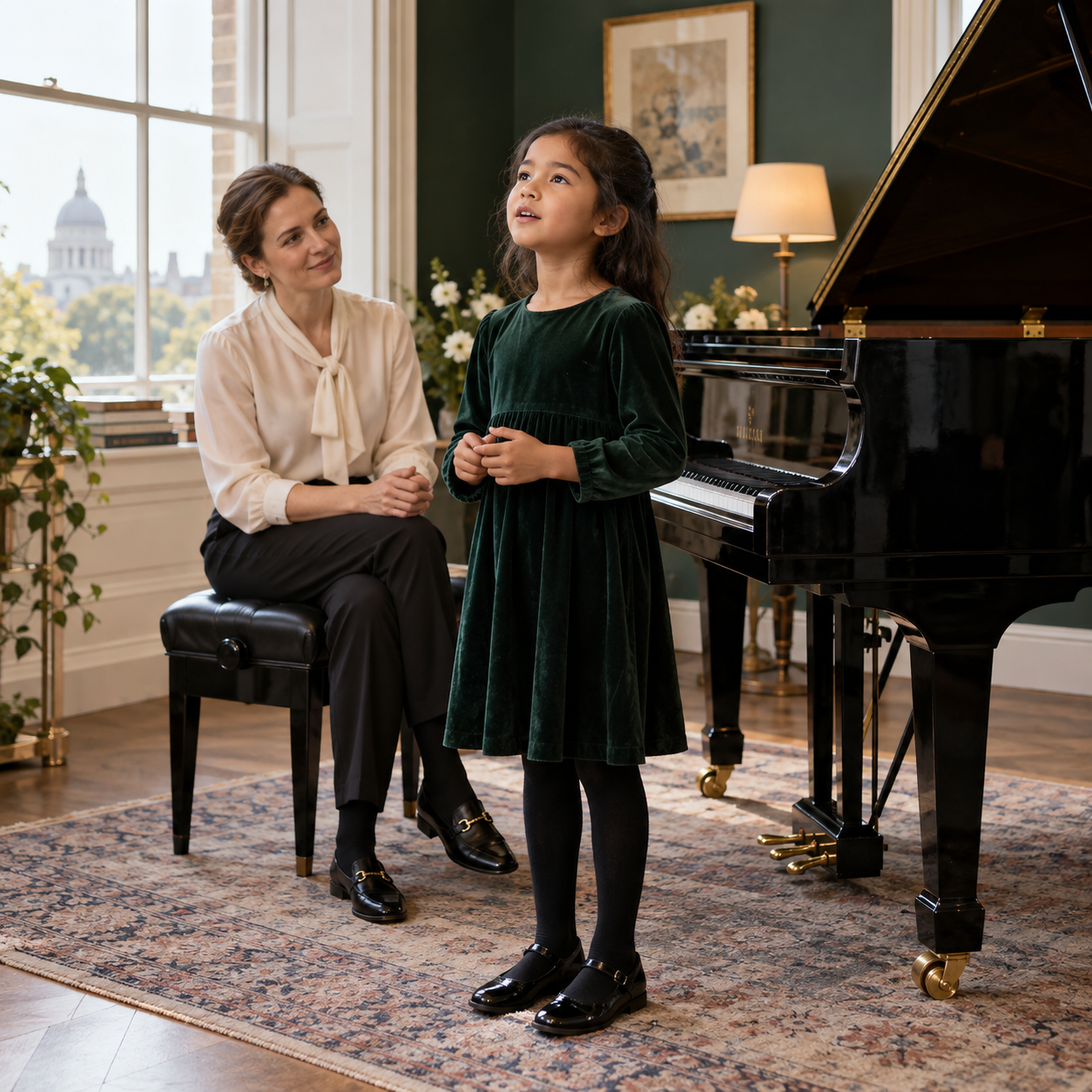
Potential becomes visible through repeated encounters with music, not through one impressive moment.
What practice can genuinely grow
Practice turns potential into achievement by strengthening associations between hearing, movement and notation. Short, varied tasks are especially valuable: echo one rhythm, transpose a tiny motif, improvise an answer and then return to the written piece.
Musical aptitude should not become an excuse for pressure. The useful question is not whether a child is talented, but which musical relationship is ready to become clearer today.
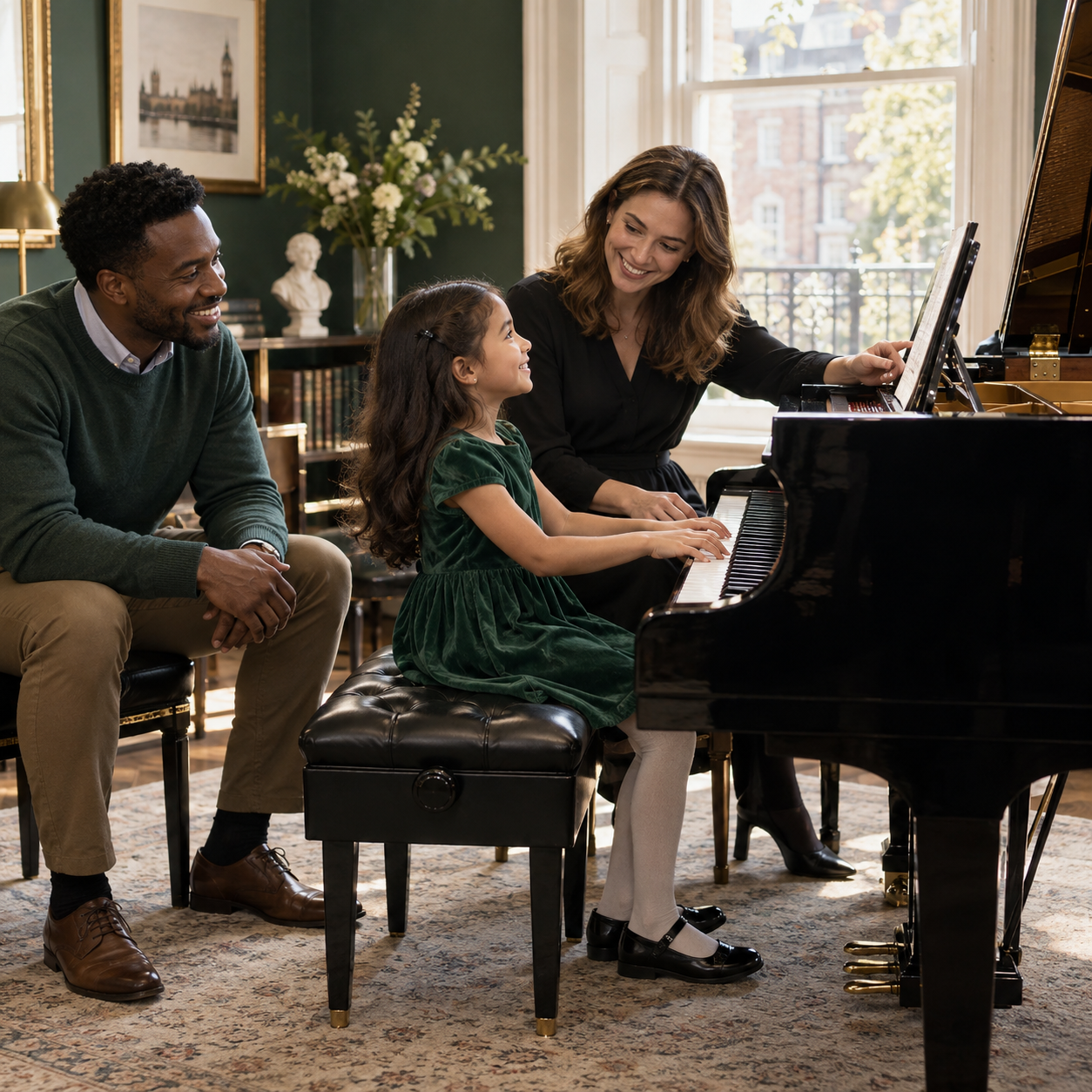
A parent-friendly observation week
Across one week, notice whether your child remembers a tune, moves to a steady beat, invents an ending or spots a changed note. Record observations without ranking them; the pattern helps a teacher choose the next activity.
Praise attention and musical choices rather than identity. Saying ‘you kept the pulse through the rest’ gives the child something repeatable, whereas ‘you are gifted’ can make later difficulty feel like a threat.
WKMT London
Give your child a thoughtful musical environment where listening, movement and imagination can develop together.
Explore children’s piano lessonsSources on musical aptitude
- ERIC: validity of Gordon music aptitude tests
- Gordon Institute for Music Learning: aptitude
- PMC: music aptitude, training and cognitive transfer
- PMC: instrument training and development
- AOSA: short-term music instruction study
- UConn music education research archive
Sources checked 28 September 2026. Educational guidance; individual circumstances and progress vary.