
 TRIAL LESSON
Pianists, Piano Lessons
Benjamin Grosvenor in London: Clarity, Colour and the Art of Serious Piano Listening
Jul
Benjamin Grosvenor in London | Listening Guide
WKMT London listening guide
Benjamin Grosvenor in London: Clarity, Colour and the Art of Serious Piano Listening
A cultured guide to Grosvenor’s sound world, essential recordings, London concert context and what attentive adult pianists can learn from his playing.
Quick Snapshot: Who He Is
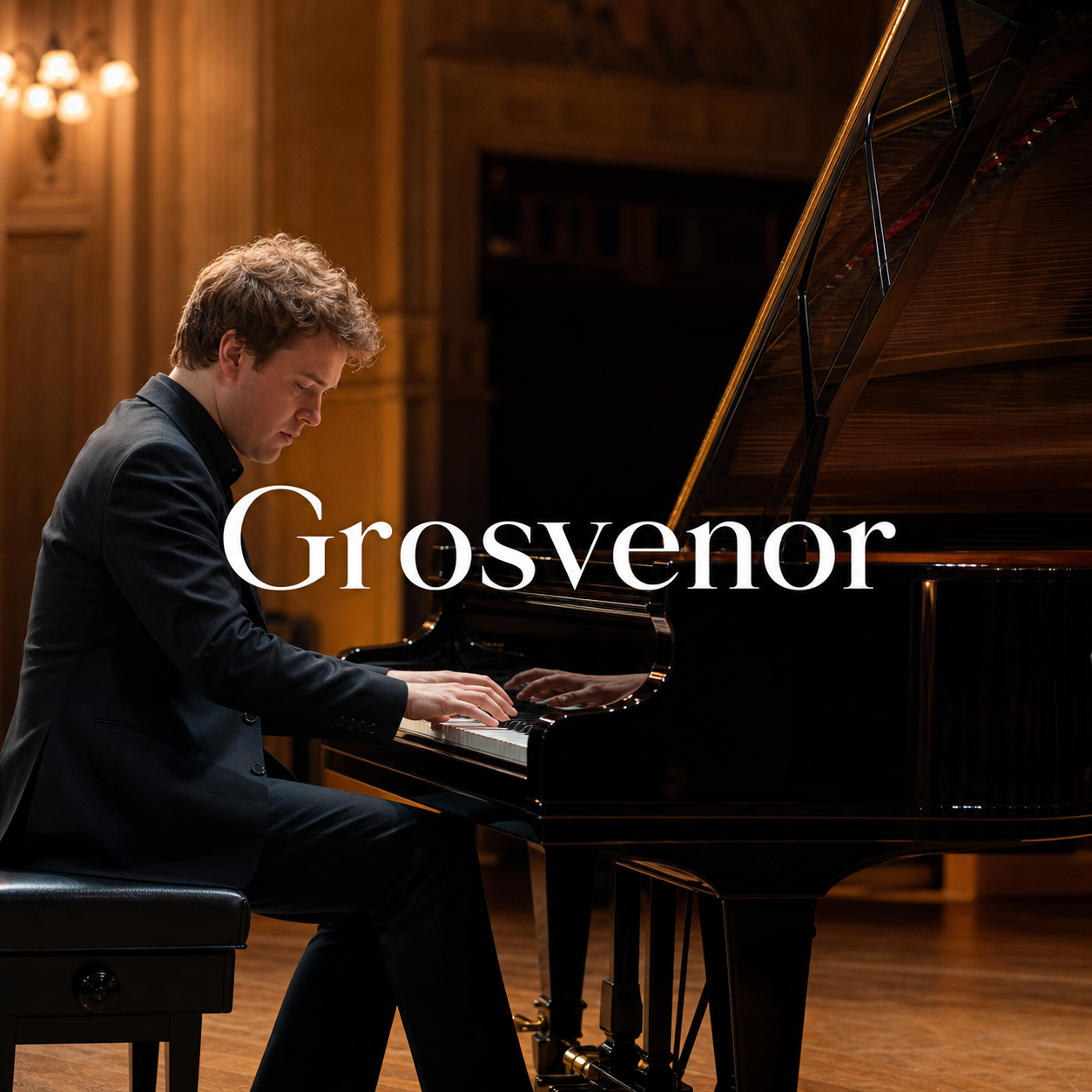
Benjamin Grosvenor is a British classical pianist, born in 1992, whose international profile has grown from early competition success into a mature career with Decca Classics, major orchestras and regular London appearances. His official biography emphasises a 2025/26 season spanning recital, concerto and chamber work, while Decca’s catalogue records a steady line of releases from Chopin, Liszt, Schumann, Brahms and Beethoven. For London listeners, his name is now associated with Wigmore Hall, BBC Proms culture, the Royal Albert Hall, chamber collaborations and the serious craft of listening closely.
Why Grosvenor Matters to Modern Piano Audiences
Grosvenor’s appeal lies in a rare balance: the surface is clean, the line is elegant, yet the playing is never neutral. He can make the piano sound pearled, vocal, orchestral or almost translucent without turning interpretation into display. That matters in an era when many listeners meet classical pianists through short clips or algorithmic playlists. Grosvenor rewards longer attention.
His public profile began unusually early, but the more durable point is artistic discipline. The official artist materials present him as acclaimed for virtuosity and understated elegance; Decca’s discography shows a pianist who has avoided a narrow brand. Chopin concertos, Liszt, Schumann and Brahms, Beethoven chamber repertoire and twentieth-century colour all sit beside each other. The through-line is not speed. It is touch.
That distinction is important for London audiences. A city with Wigmore Hall intimacy, Southbank symphonic scale, BBC Proms openness and conservatoire-level expectation can be unforgiving to shallow brilliance. Grosvenor’s pianism makes sense in that ecology because it travels between settings. In a small hall, the listener notices the grain of a quiet chord. In a concerto setting, the same clarity helps the solo line carry without forcing. This is why he is useful to discuss at WKMT: his artistry gives adult listeners a vocabulary for discernment, not just admiration.
There is also a British continuity to his profile. Without reducing him to nationality, his career intersects with the institutions that shape UK piano culture: broadcasts, festivals, chamber partnerships, artist management, orchestral seasons and recital programming. For a serious listener, those connections help explain why the keyword is not merely biographical. Searchers want to know who he is, but they also want to know how to hear him, which recordings to try, and how his London presence fits into a wider musical life.

Key Listening Point
When a pianist has exceptional control, the danger is polish without speech. Grosvenor’s best performances avoid that by giving the inner voices a conversational life: melody, bass and harmony each seem to breathe in proportion.
Essential Recordings, Curated by Listener
A useful first encounter is not necessarily the most difficult repertoire. The listener should choose a recording that reveals a particular part of Grosvenor’s musicianship. Decca’s catalogue is especially helpful because it lets the ear move from familiar romantic language into more specialised colour-worlds without leaving the same pianist’s sound.
For The Beginner
Start with Chopin. The piano writing is direct enough to hear singing tone, rubato and pedalling without needing a specialist map of the score.
For The Collector
Move to Liszt, where brilliance must still have architectural direction. Listen for bass foundations, not just the flying upper register.
For The Concertgoer
Use the Schumann and Brahms releases to prepare the ear for live recital listening: colour, intimacy and long phrasing matter more than spectacle.
Try a simple three-stage listening plan. First, hear a Chopin track for line: ask whether each phrase seems sung or merely placed. Secondly, hear Liszt for scale: notice whether the bass creates architecture or simply impact. Thirdly, hear Schumann or Brahms for inwardness: the best moments often arrive as shifts of shade rather than sudden gestures. This kind of listening helps collectors avoid treating a discography as a list and helps beginners hear why one pianist’s sound can feel recognisable across different composers.
For London concertgoers, recordings also serve a practical purpose. A recital programme is easier to enter when the ear has already met the artist’s touch. Before a Wigmore Hall evening, listen for the kind of pianissimo that still carries meaning. Before a Proms or concerto appearance, listen for how the right hand projects without hardening. The recording is not a substitute for the hall; it is preparation for hearing more in the hall.
How to Listen: Tone, Colour, Articulation and Live Detail
In a London hall, Grosvenor’s sound can be heard in layers. The first layer is tonal cleanliness: notes speak without smudge. The second is colour: a phrase may shift from silver to amber within a few bars. The third is articulation: repeated figures, ornaments and passagework remain legible without becoming dry.
For listeners, this means avoiding the lazy question, “Was it fast?” A better question is, “What did the speed reveal?” In Liszt, velocity should open the harmonic panorama. In Chopin, flexibility should reveal grammar. In Ravel, shimmer should still leave the line intact. This is the vocabulary that helps an audience hear like musicians.
The highest piano virtuosity does not ask the listener to admire effort; it makes the structure audible.
Teachers can use that idea with pupils without imitating Grosvenor’s repertoire. Ask an adult learner to name the melody, the bass direction and the colour of the accompaniment. That single exercise of attention often clarifies more than another hour of unexamined repetition.
Colour is not a decorative extra. It is the means by which the listener understands musical distance, warmth, tension and release. A phrase in Ravel may need a glassy surface; a Brahms intermezzo may need a darker middle register; a Chopin concerto passage may need elegance without sentimental delay. Grosvenor’s recordings are valuable because they invite comparison between those states. The ear begins to recognise that a pianist’s identity is not one fixed tone, but a set of controlled transformations.
Articulation is the companion to colour. When passagework is too blurred, the listener loses grammar; when it is too clipped, the poetry evaporates. Grosvenor’s best playing suggests a middle path, where fast notes remain shaped and slow notes retain direction. Adult pianists often need precisely that reminder: clarity does not mean stiffness, and expressiveness does not require rhythmic fog.
Signature Repertoire and Performance Highlights
Grosvenor’s repertoire profile is broad but recognisable. Chopin gives him vocal elegance and rhythmic poise. Liszt offers scale and iridescence. Schumann and Brahms invite inward colour. Beethoven chamber work, including recent Decca material with Nicola Benedetti and Sheku Kanneh-Mason, places him inside conversation rather than above it.
The 2025 Decca listing for Beethoven’s Triple Concerto is significant because chamber-minded concerto playing asks different virtues from solo display. The pianist must project, listen, answer and sometimes withdraw. That is a useful corrective to the mythology of the solo virtuoso. Grosvenor’s public identity may include brilliance, but his most interesting work often lies in proportion: how much sound is enough, how little pedal is safe, how a phrase can be given to another player without losing continuity.
His Liszt profile is equally instructive. Liszt can be reduced to athleticism by careless listeners, yet the music needs line, harmonic imagination and long-range control. A pianist who makes Liszt sound merely loud has missed the point. Grosvenor’s attraction in this repertoire is the impression that bravura still has a singing surface and an underlying map.
| Repertoire Area | What To Hear | Why It Matters |
|---|---|---|
| Chopin | Line, breath, rubato | Reveals singing tone and proportion. |
| Liszt | Scale, colour, bass control | Separates virtuosity from noise. |
| Schumann and Brahms | Inner voices, late colour | Shows maturity of listening and phrase. |
| Chamber music | Response, balance, restraint | Places pianism inside musical dialogue. |
Benjamin Grosvenor in London: Venues, Collaborations and Where to Hear Him Now
London has been central to Grosvenor’s public identity because the city offers several kinds of listening. Wigmore Hall rewards chamber subtlety and recital colour. The Royal Albert Hall and BBC Proms frame concerto playing at a public scale. Broadcasts through BBC Radio 3 extend that London culture beyond the hall.
Wigmore Hall lists a Benjamin Grosvenor piano recital for 1 December 2026 with Beethoven, Chopin, Liszt, Skryabin and Sofia Gubaidulina. Royal Albert Hall archives also list his BBC Proms Ravel appearance on 15 August 2025 and an earlier Busoni Piano Concerto Prom with the London Philharmonic Orchestra. These official listings are the safest place to verify current ticket and broadcast details before planning a visit.
For practical planning, treat official venue pages as live sources and artist calendars as orientation rather than guarantee. Programmes change, broadcast links expire, and archive pages can outlast ticket information. The most reliable routine is to check the artist’s calendar, then the venue page, then the broadcaster or orchestra page if a concert is linked to a festival. This is particularly true for Proms events, where the Royal Albert Hall page, BBC material and orchestra listings may each hold different parts of the picture.
London also lets a listener compare acoustics. Wigmore Hall puts pressure on detail: a half-pedal blur or misweighted inner voice is immediately audible. The Royal Albert Hall changes the problem: projection, pacing and concerto-scale rhetoric become more prominent. A serious listener should expect Grosvenor’s artistry to adapt. The pianist is not simply the same recorded object placed in different rooms; the room changes what the audience can hear.

WKMT Perspective
For a student, attending a recital is most useful when the ear has an assignment: choose one movement and listen for voicing, one for pedal colour, and one for silence between phrases.
What WKMT Students and Concertgoers Can Learn
Grosvenor’s playing offers a disciplined model for adult pianists and teachers: make the musical argument clear before making it impressive. That principle supports WKMT’s broader work in classical piano study in London, where serious listening, structured lessons and intelligent repertoire choice belong together.
Adult learners can take three ideas from this sound world. First, tone is a decision, not an accident. Secondly, speed must serve shape. Thirdly, a recording or recital should be studied for hierarchy: which line leads, which colour supports it, and where the phrase releases.
This is where a concert guide becomes educational rather than merely appreciative. An adult student who hears Grosvenor’s voicing can return to a Clementi sonatina, a Chopin nocturne or a Schumann Album for the Young piece with better questions. Is the melody truly above the accompaniment? Is the bass moving somewhere? Does the pedal clarify harmony or hide uncertainty? These questions are modest, but they change practice.
For teachers, Grosvenor is useful as a reference point because he demonstrates refinement without making refinement sound precious. The playing is cultivated, but it still speaks. That balance matches WKMT’s own ideal for adult study: technique in service of musical understanding, repertoire chosen with care, and listening treated as part of the lesson rather than a separate hobby.
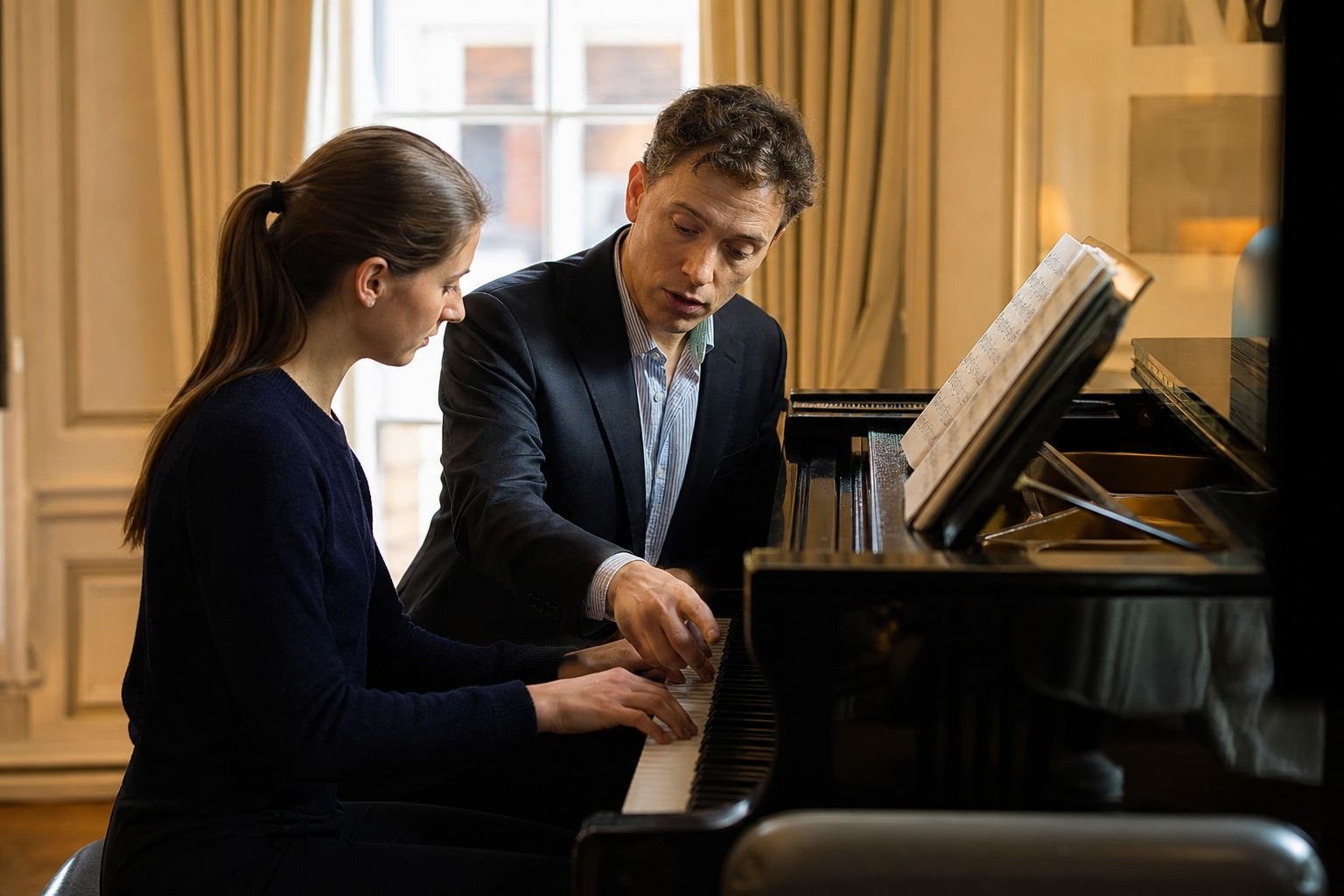
Develop a more serious piano ear
WKMT helps London pianists connect repertoire, technique and listening culture through structured classical lessons.
Sources on Benjamin Grosvenor
- Benjamin Grosvenor official
- Decca Classics artist overview and discography
- Wigmore Hall artist and recital listings
- Royal Albert Hall BBC Proms archive pages
- BBC Proms and London Philharmonic/Royal Albert Hall archive material for Busoni and Ravel appearances