
 TRIAL LESSON
Piano Lessons
Auditory Discrimination: How Piano Helps Children Notice Smaller Differences in Sound
Sep
WKMT London parent guide
Auditory Discrimination: How Piano Helps Children Notice Smaller Differences in Sound
Two notes can look identical to a child and still ask for completely different responses. One rises, one falls; one belongs to the tune, another changes the harmony. Piano lessons make those small differences audible, nameable and eventually playable.
In brief
Auditory discrimination is the ability to notice and distinguish differences between sounds, including pitch, duration, rhythm, loudness and timbre. Piano study can exercise this skill through comparison, singing, imitation and immediate correction. Evidence supports improvements in music-related sound processing, but lessons should not be presented as a diagnosis or guaranteed treatment for language, attention or hearing difficulties.
What auditory discrimination sounds like at the piano
Auditory discrimination begins with a tiny question: was the second sound the same or different? At the piano, that question quickly becomes richer. Did the melody move up or down? Was the second note longer? Did the teacher play more softly, or did the sound merely fade? A child learns that listening is an active comparison rather than waiting passively for sound to happen.
The keyboard helps because it makes pitch spatially visible, yet the eyes can also take over. A thoughtful teacher sometimes asks the pupil to look away, sing an answer or identify a change before finding it on the keys. This keeps auditory discrimination genuinely auditory. The aim is not perfect pitch. It is a more reliable relationship between what the child hears, imagines and plays.
Pitch
Same, higher or lower?
Time
Longer, shorter or differently grouped?
Colour
Brighter, rounder or more distant?
Pattern
Which note or beat changed?
Why small differences matter for young musicians
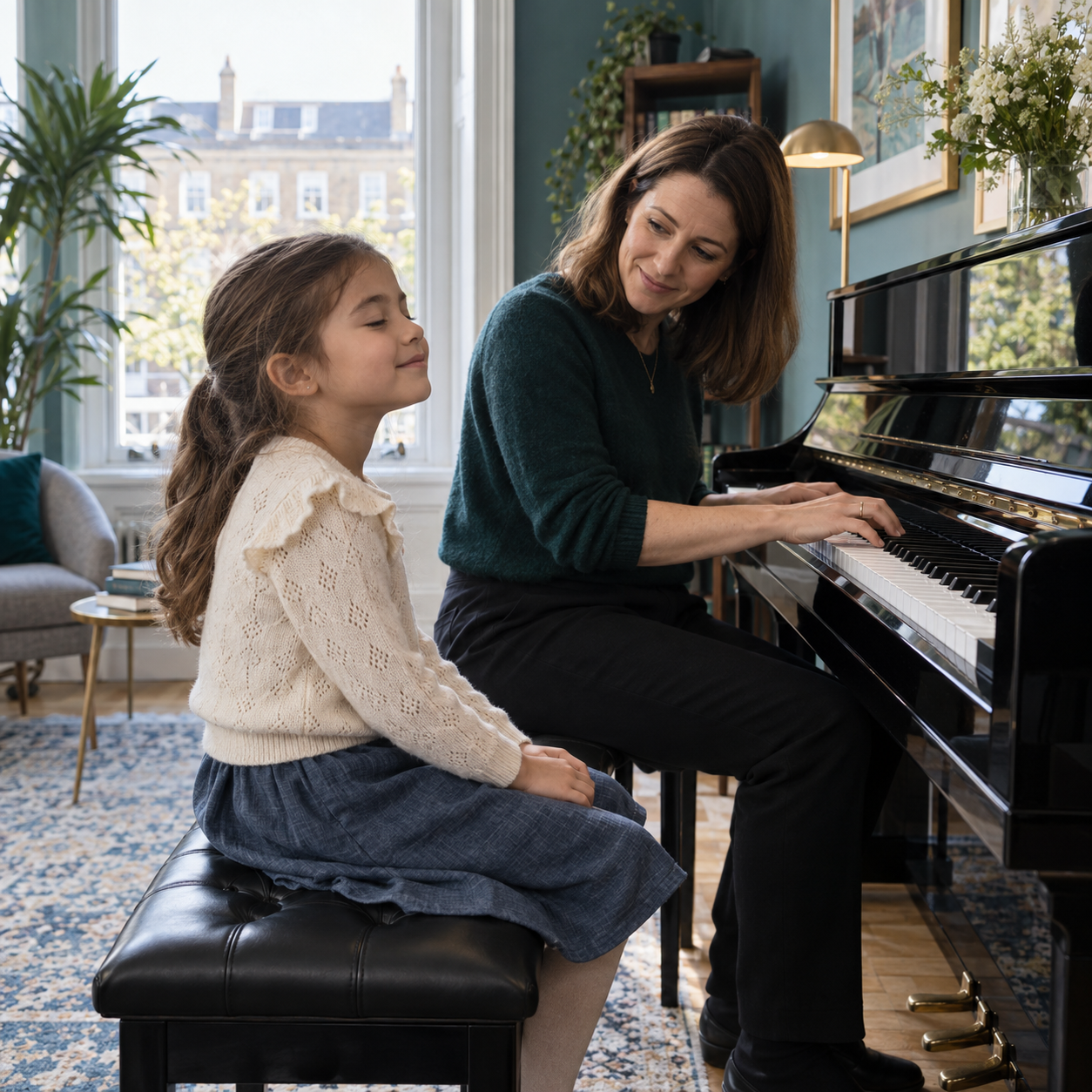
A child who hears that two notes differ can begin to diagnose a mistake without being told its location. A child who recognises rhythmic length can preserve pulse when notation becomes busier. Differences in tone colour also matter: the same pitch can sound round, brittle, distant or sharply accented. These are the beginnings of interpretation, not optional refinements reserved for advanced players.
Auditory discrimination also supports ensemble habits. In a duet, the pupil must notice whether another part has entered, whether the shared pulse has moved and whether one sound is covering another. WKMT’s article on music and concentration explores the wider discipline of sustained attention; here the focus is narrower and more musical: noticing exactly what changed.
What research can and cannot tell parents
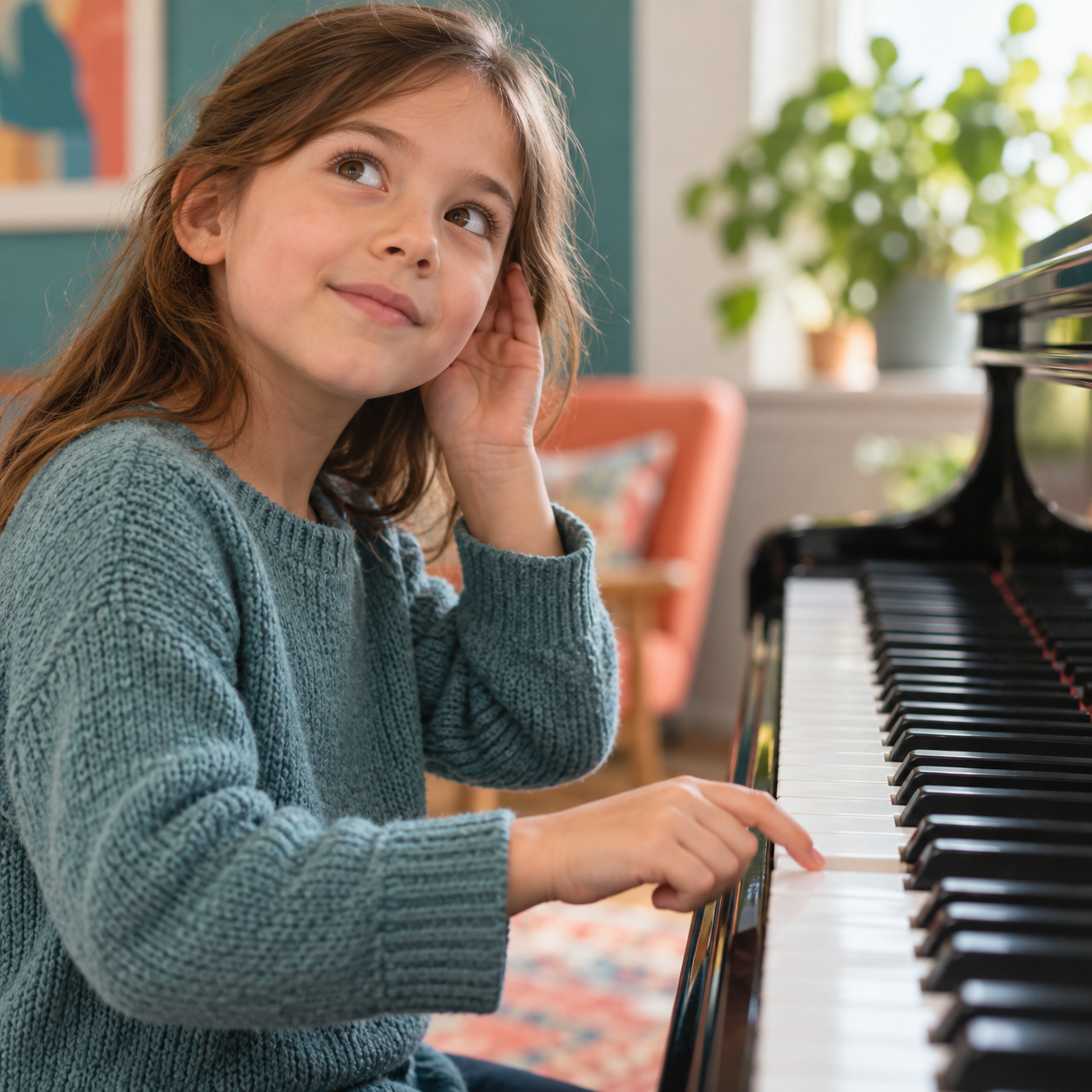
A 2018 study of 74 Mandarin-speaking children aged four to five found that six months of piano training improved neural responses to pitch and some measures of auditory word discrimination compared with reading and no-contact groups. A separate longitudinal project following six- and seven-year-olds reported more accurate detection of tonal changes after two years of music training. These are meaningful findings, but they do not prove that every piano pupil will gain the same non-musical benefit.
Long-term research also points to an interplay between prior aptitude, normal maturation and training. That is a useful restraint. Children arrive with different hearing histories, interests and needs. Piano teaching can provide repeated, well-designed listening experiences; it should not promise to cure a difficulty or replace an audiologist, speech and language therapist, school specialist or other qualified professional.
Close listening becomes confidence when a child can hear a difference, name it and change the sound independently.
Four listening games that remain musical
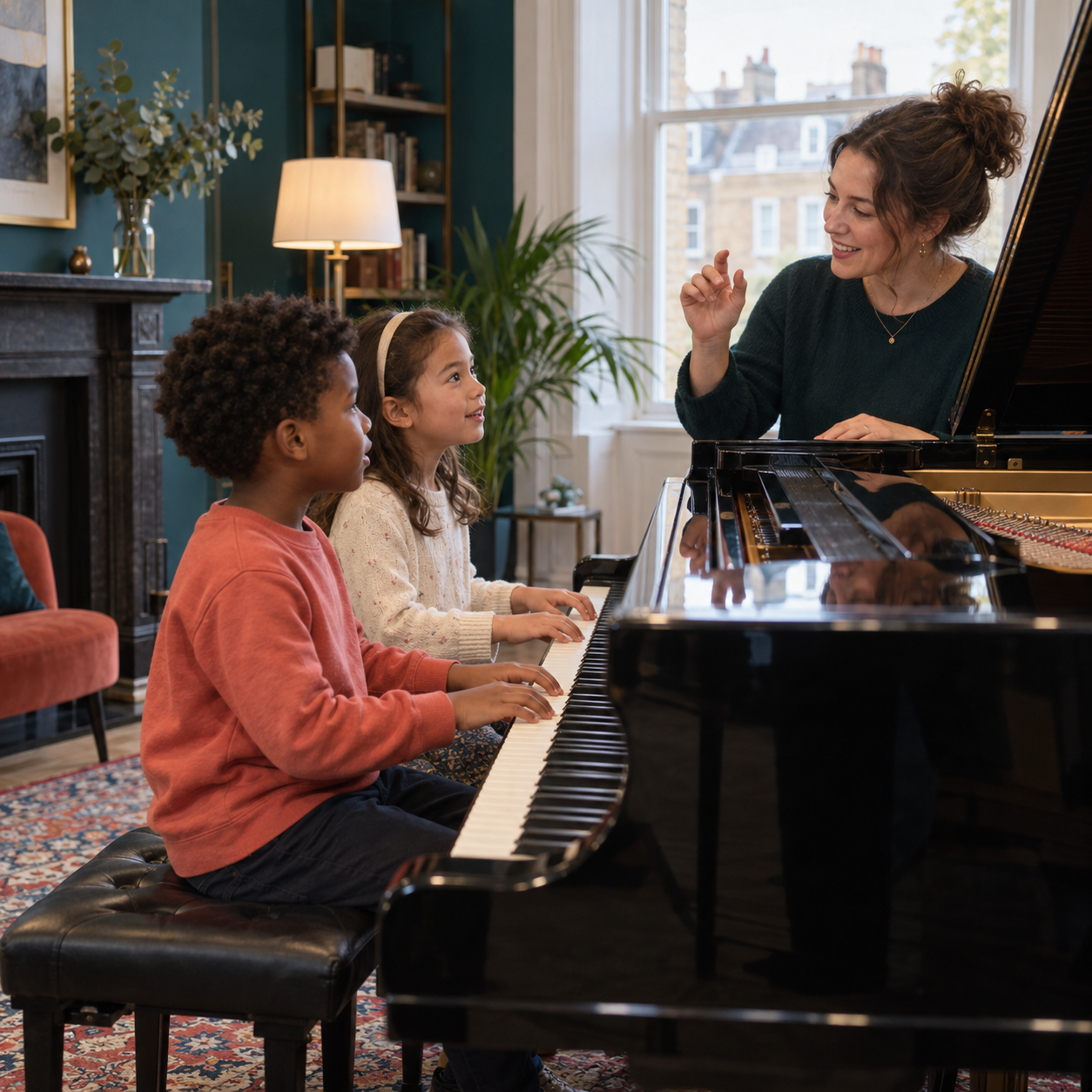
Play two notes and ask only ‘same or different?’ before adding ‘higher or lower?’. Echo a three-note shape, then alter one note and let the child find it. Tap two rhythms whose final beat differs. Finally, play the same phrase with two contrasting articulations and ask which sounds more like a question. Each task has a clear answer but still leads towards musical meaning.
Keep the challenge close to success. If every example is obvious, attention drifts; if every example is ambiguous, the child begins to guess. Good piano lessons for children in London adjust the distance between examples in real time. That responsive calibration is one advantage of face-to-face teaching.
How parents can listen without turning practice into a test
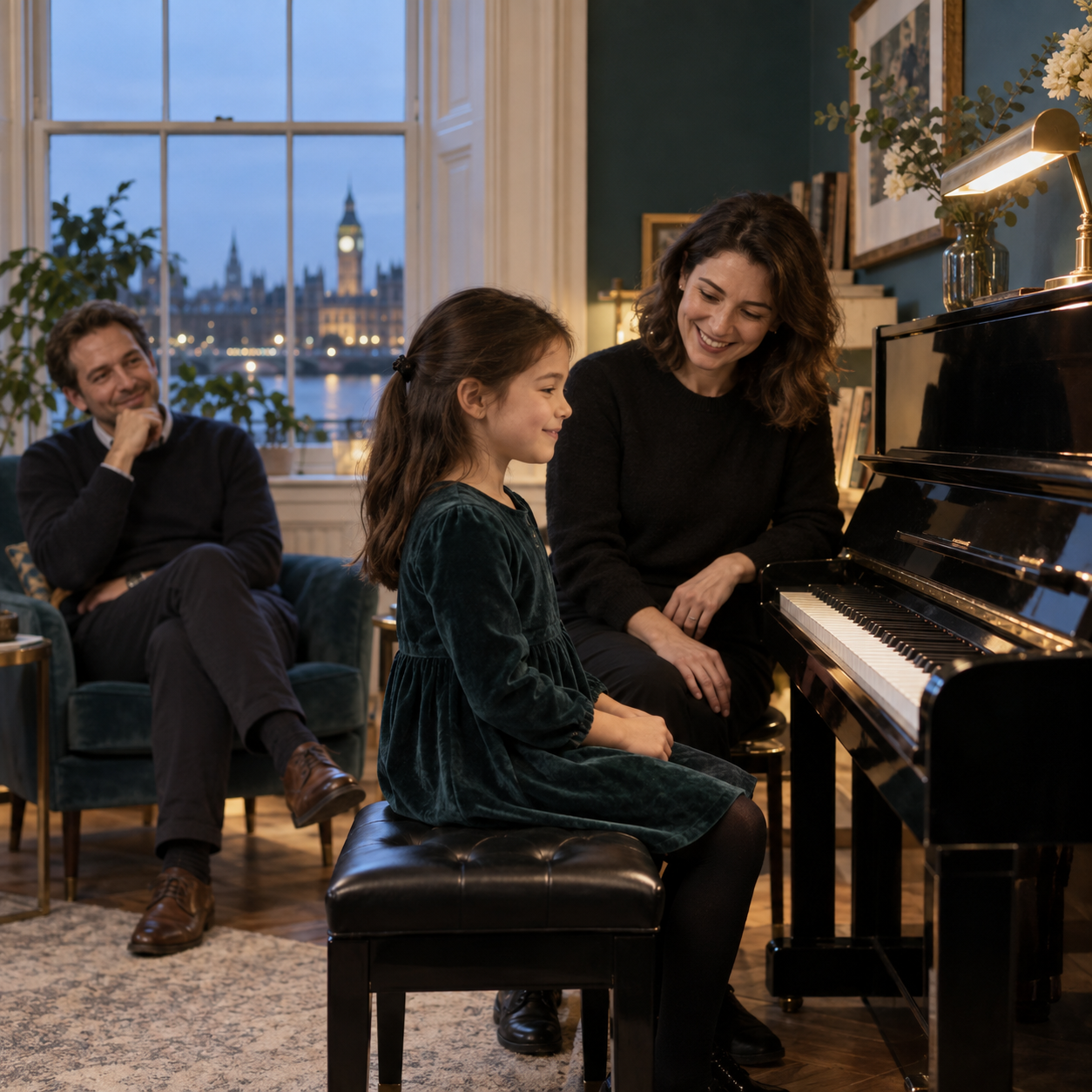
At home, use curiosity rather than constant correction. Ask, ‘Which version sounded more settled?’ or ‘Where did the tune change direction?’ Let the child answer by singing, pointing or replaying. If the answer is wrong, repeat the sounds more clearly instead of increasing pressure. Auditory discrimination develops through many successful comparisons, not through fear of being caught out.
A two-minute listening game can precede ordinary practice, then disappear into the piece itself. This keeps the skill connected to music. Over time, parents may notice a child correcting pitches sooner, copying rhythms more accurately or choosing tone more deliberately. Those audible behaviours are more useful than making broad claims about intelligence.
Try a short sound-identification game
Learning Hats offers a brief environmental-sound quiz that families can use as a light listening warm-up. It is not a clinical assessment; the useful question is how carefully the child compares each sound. Embedded from YouTube for educational commentary; rights remain with Learning Hats and the rights holder.
WKMT London
Give your child a musical setting where careful listening, technique and imagination develop together.
Sources on auditory discrimination
- PNAS: piano training, pitch and speech perception
- Developmental Cognitive Neuroscience: accelerated auditory processing
- Journal of Neuroscience: 12-year auditory development study
- PubMed: statistical learning and auditory processing
- Frontiers: music lessons and auditory performance
- UCL Discovery: auditory training review
Sources checked 14 September 2026. Educational guidance; individual circumstances and progress vary.