
 TRIAL LESSON
Piano Lessons
Adult Education: Why Piano Lessons Suit Mature Learners
Sep
Adult Education through piano classes at WKMT
WKMT London adult learner guide
Adult Education: Why Piano Lessons Suit Mature Learners
Learning in adulthood is rarely empty of history. A mature pianist arrives with tastes, habits, responsibilities and reasons for studying that deserve to shape the lesson. The result can be both more practical and more intellectually ambitious than the beginner expects.
In brief
Adult education includes formal, non-formal and informal learning undertaken after initial schooling. Piano lessons fit this broad field because they combine structured instruction, self-directed practice, cultural participation and personal development. Mature learners can progress at any starting age when goals are realistic, teaching is responsive and practice is organised around specific musical tasks rather than childhood assumptions.
What adult education means
UNESCO treats adult education as part of lifelong learning, spanning personal, civic, cultural and professional purposes. This wider definition matters. Adults do not study only to gain credentials or repair an earlier gap. They may learn because a discipline offers meaning, community, artistic voice or a richer understanding of the world.
Piano belongs comfortably within that landscape. It has a body of knowledge, a skilled teacher, deliberate practice and standards that can deepen over years. Yet it also permits individual routes. One learner may value Bach counterpoint, another accompaniment, another the return to a piece abandoned decades earlier. Seriousness comes from the quality of attention, not from professional ambition.
Purpose
Choose music that gives study personal meaning.
Structure
Link technique, repertoire and listening.
Continuity
Keep a small practice floor on busy days.
Evidence
Track audible changes, not only completed pieces.
Why mature learners bring valuable strengths
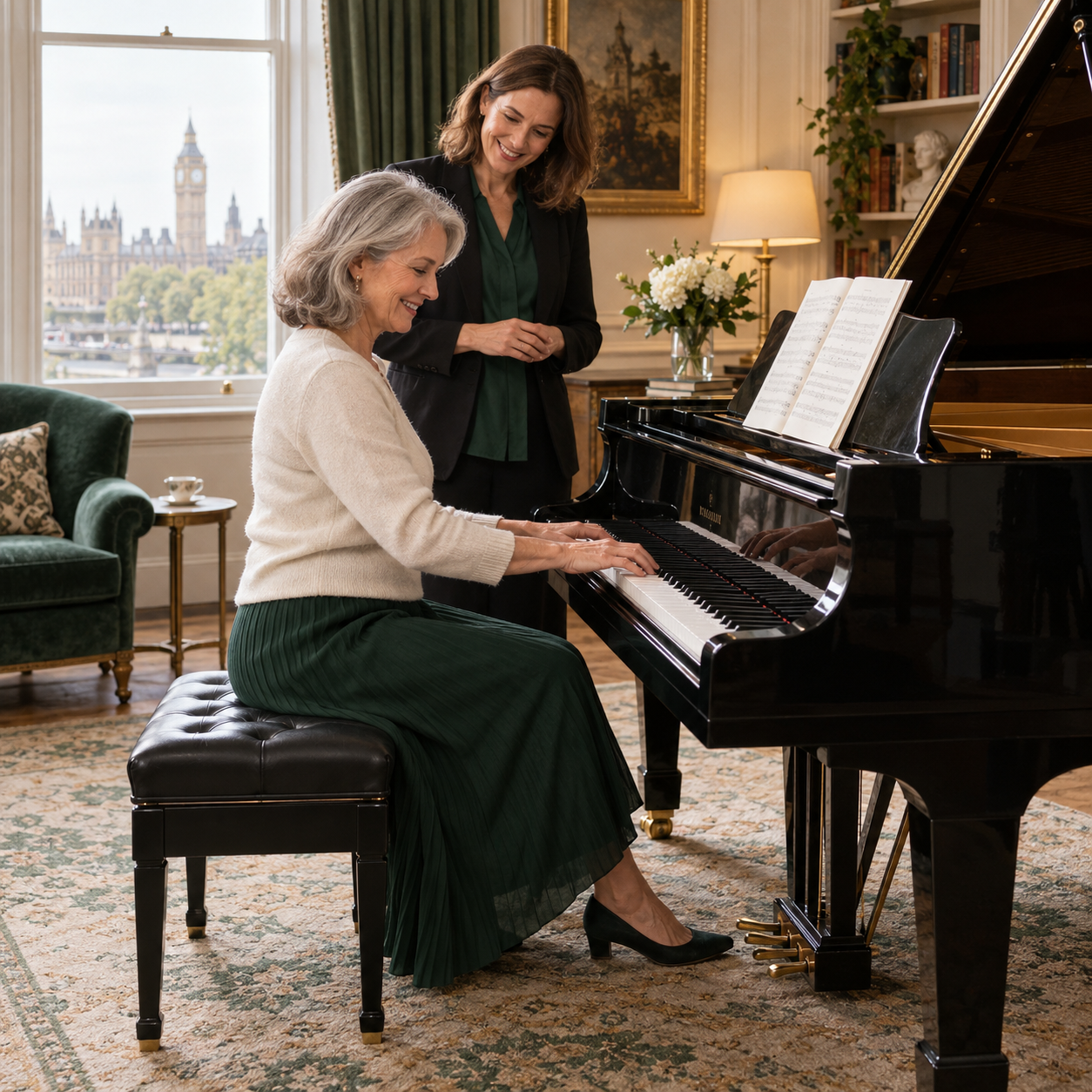
Adults often bring strong conceptual understanding and a developed capacity to compare, question and plan. They can connect harmony with repertoire, describe the sound they want and recognise why a practice method works. Life experience can also deepen interpretation; a phrase that once seemed decorative may carry more emotional and structural weight.
The difficulties are real but manageable. Work, caring responsibilities and fatigue can interrupt routine. Some learners judge themselves harshly or expect the hands to execute an idea immediately because the mind understands it. Effective adult education separates comprehension from motor consolidation. Knowing what to do is the beginning; patient, well-spaced repetition turns that knowledge into reliable playing.
How adult piano study should be structured
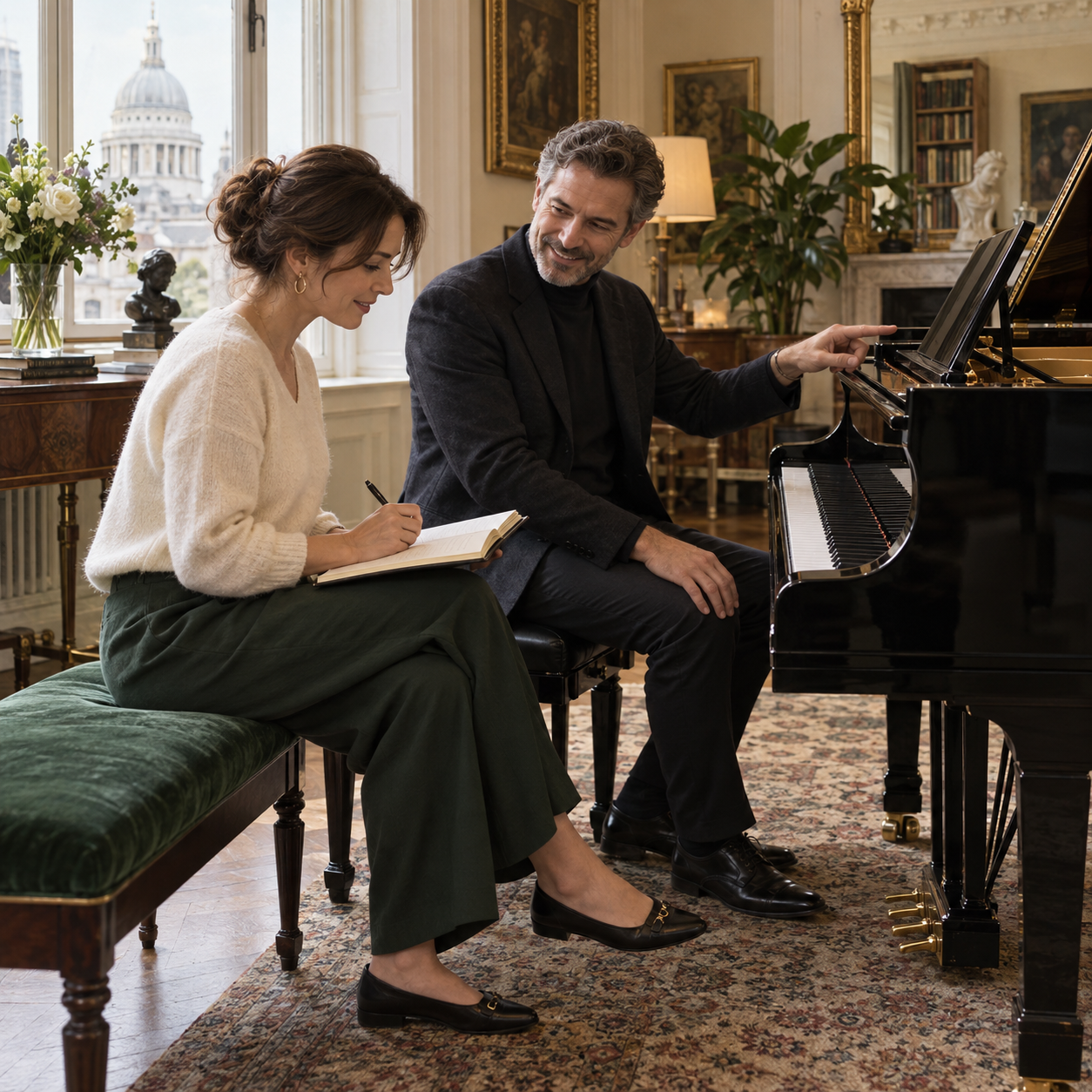
A useful lesson links repertoire, technique and musicianship rather than treating them as unrelated boxes. A scale can prepare the fingering and tonal balance required by a piece. Sight-reading can reinforce pulse and pattern recognition. A short listening comparison can clarify stylistic choices before the learner returns to the keyboard.
Practice should have a small reliable core. Fifteen attentive minutes may include one technical pattern, one difficult phrase and one uninterrupted play-through. Longer sessions can expand from that structure. WKMT’s guide to practising piano after work offers a practical route for days when concentration is limited.
Adult learning becomes durable when ambition is matched by an honest structure for time, attention and recovery.
What progress looks like in adult education
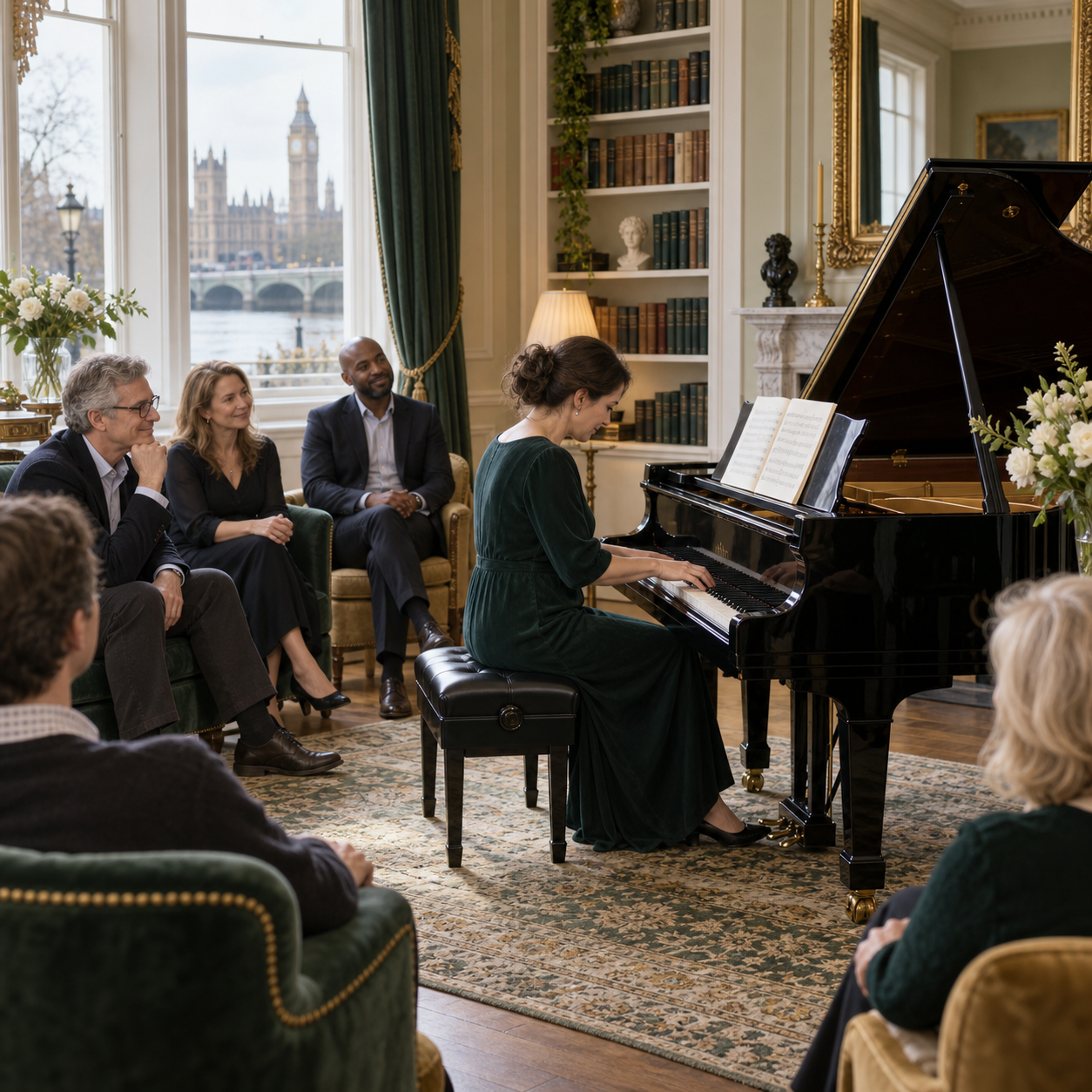
Progress is broader than moving through grades. It may mean reading more fluently, balancing voices, recovering after an error, sustaining a weekly routine or hearing form more clearly. Formal exams can be valuable when they provide direction, but they are one framework rather than the definition of achievement.
At WKMT London, adult piano lessons are built around the learner’s musical aims and current capacity. The teacher can preserve ambition while adjusting pace, fingering, repertoire and practice design. This is the strongest promise adult education can make: not effortless transformation, but intelligent support for meaningful, continuing development.
WKMT London
Build a serious, flexible course of piano study shaped around your experience, repertoire and available time.
Sources on adult education
- UNESCO Institute for Lifelong Learning: adult learning and education
- UNESCO: lifelong learning
- OECD: adult learning
- UK Government: adult education and learning
- Frontiers in Psychology: active music making in older adults
- PMC: piano training and healthy ageing
Sources for adult education checked 14 September 2026. Educational guidance; individual circumstances and progress vary.