
 TRIAL LESSON
Piano Lessons
Task Persistence: How Piano Helps Children Stay with a Musical Problem

Sep
WKMT London parent guide
Task Persistence: How Piano Helps Children Stay with a Musical Problem
A child meets a stubborn bar: the rhythm slips, the hands disagree, and the first instinct is to begin again or walk away. Piano teaching can turn that moment into a manageable musical investigation, where staying with a problem feels purposeful rather than punitive.
In brief
Task persistence is the ability to remain engaged with a challenging activity long enough to make progress. At the piano, children practise it when a teacher reduces a difficult passage, sets a clear goal, offers timely feedback and helps the pupil notice improvement. Persistence grows through achievable challenge, autonomy and recovery from mistakes; it should never mean forcing a distressed child to continue indefinitely.
What task persistence looks like at the piano
Task persistence is visible when a child returns attention to the next useful step after an error. The pupil may clap the rhythm, isolate two notes or try a slower tempo rather than restarting the whole piece. The important behaviour is not silent obedience. It is continued, goal-directed engagement with a problem that has become understandable.
Research links task persistence with self-regulation and later classroom learning, while also showing that children differ in temperament, attention and the support they need. Piano lessons provide repeated opportunities to practise staying, adjusting and trying again, but they are not a diagnostic test and should not be presented as a guaranteed route to wider academic success.
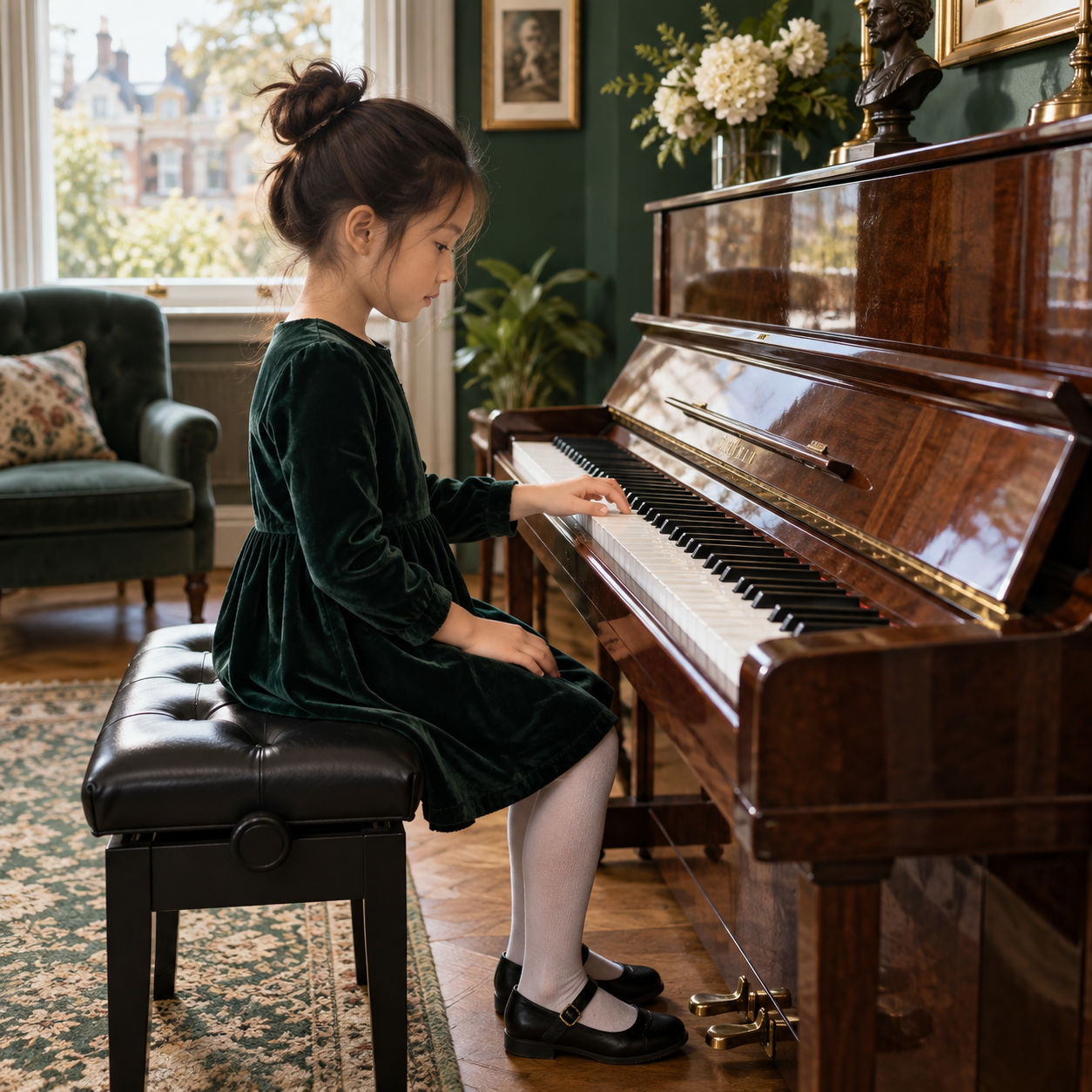
Build task persistence with the right-sized challenge
A problem must be difficult enough to require effort and small enough to admit a next move. Four bars may be overwhelming; one hand, one rhythm or one landing point may be workable. The teacher can define success precisely: play the final two notes three times with a relaxed hand, or keep the pulse while one pitch changes.
In piano lessons for children in London, task persistence develops through graded musical demands rather than generic exhortation. WKMT’s guide to music, discipline and patient learning explains why dependable routines matter more than pressure or praise for being naturally talented.
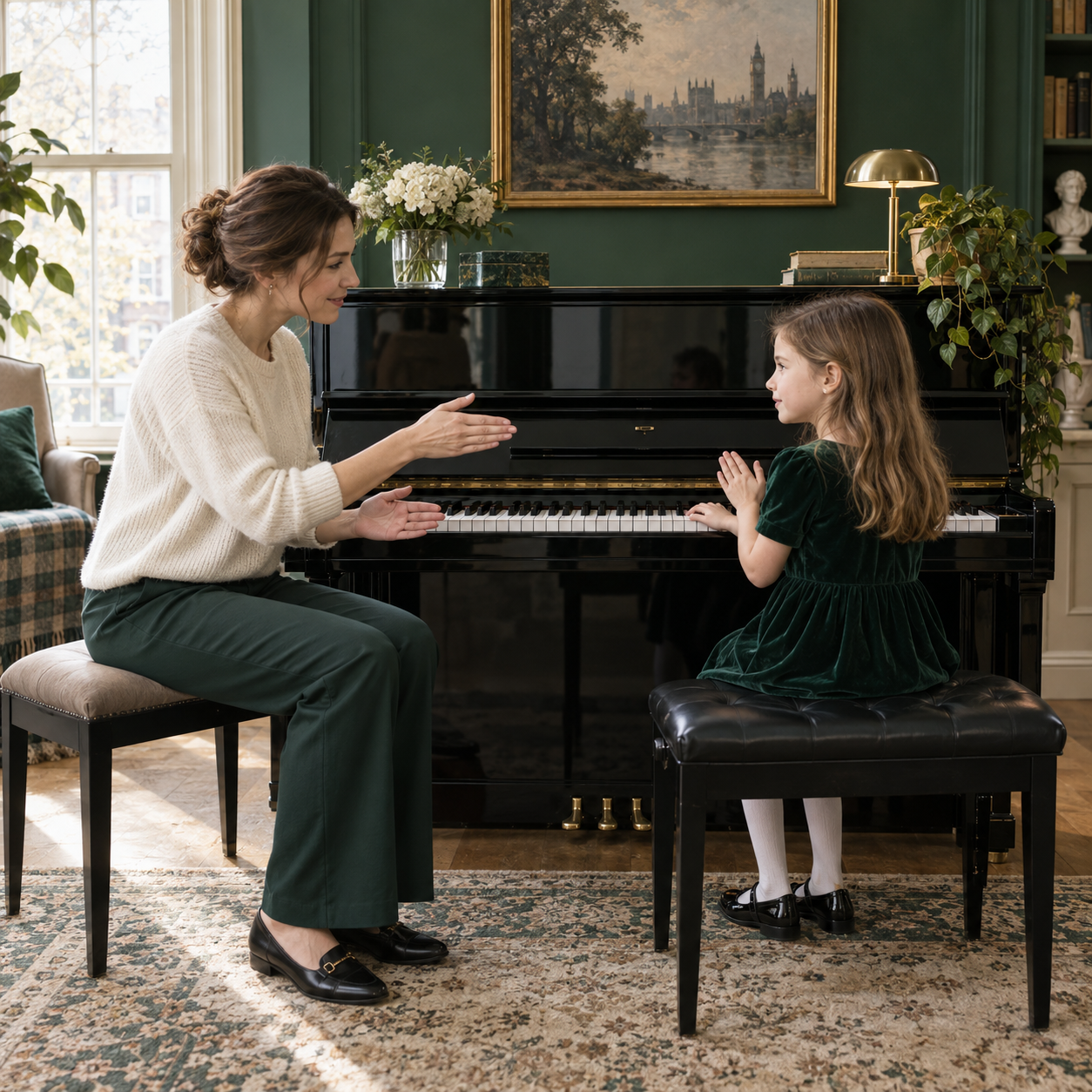
Feedback that keeps a child engaged
Useful feedback names an action the child can control: the left hand arrived early, the repeated note lost its pulse, or the leap needs a prepared destination. Global comments such as be careful or try harder offer no route forward. Task persistence strengthens when effort produces audible information and the pupil understands what to change.
Offer a choice between two legitimate strategies: clap first or play one hand; repeat twice or record once. Choice supports ownership without removing the musical boundary. If frustration rises sharply, pause, simplify or change activity. Returning later is often a stronger form of persistence than continuing after listening and coordination have collapsed.
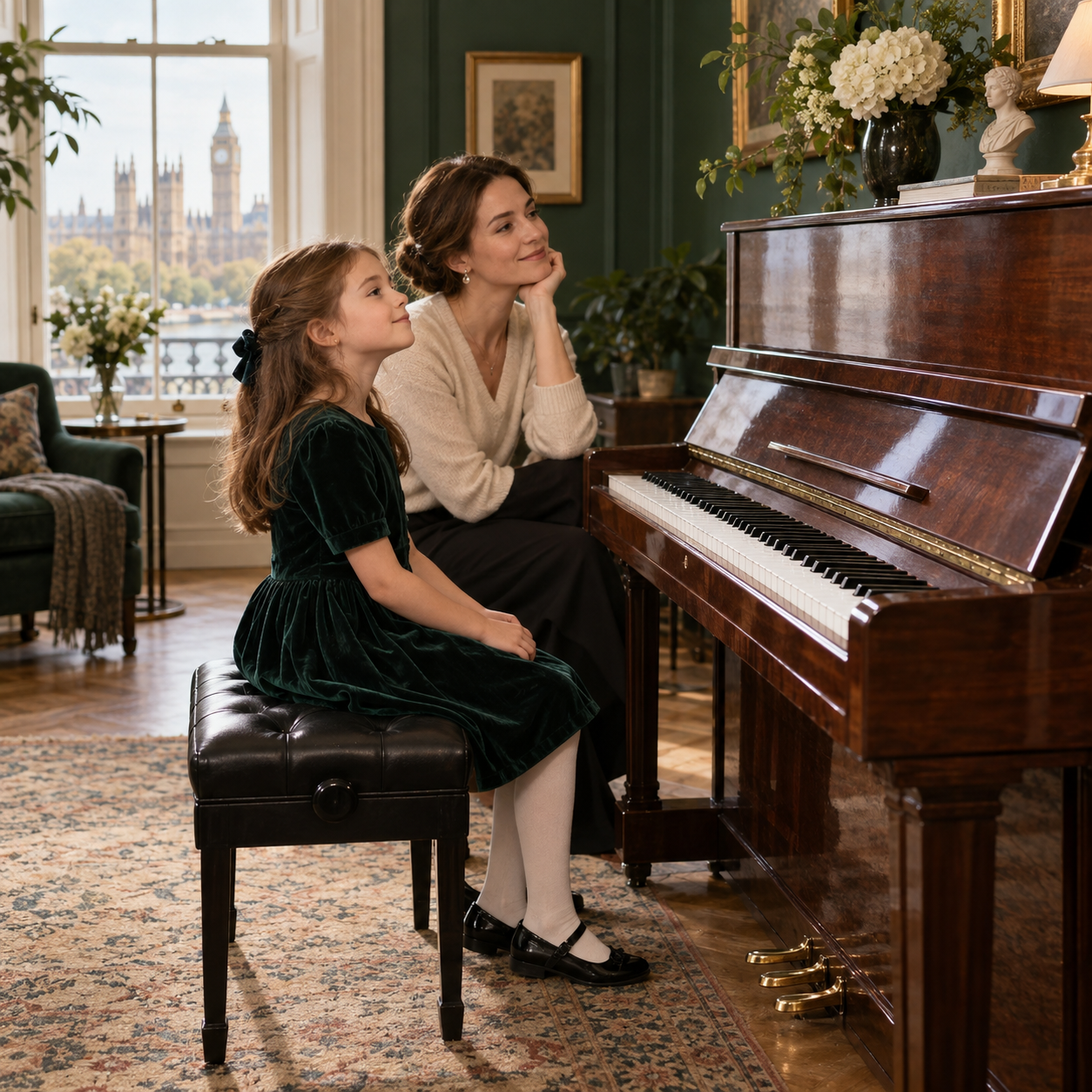
Persistence becomes teachable when a difficult passage offers a visible next step rather than an endless demand to try harder.
Four musical routines for task persistence
Use a ninety-second investigation: identify the smallest error, choose one repair and test it. Keep a visible three-box practice card and tick each focused attempt. Ask the child to predict what will improve before repeating. Finally, finish with one complete phrase so detail work reconnects to music.
Parents can use neutral prompts: what is the problem, what is your smallest next step, and what changed? Avoid correcting every note from across the room. WKMT’s piano practice tips for parents offer a wider framework for helping without taking control of the session.
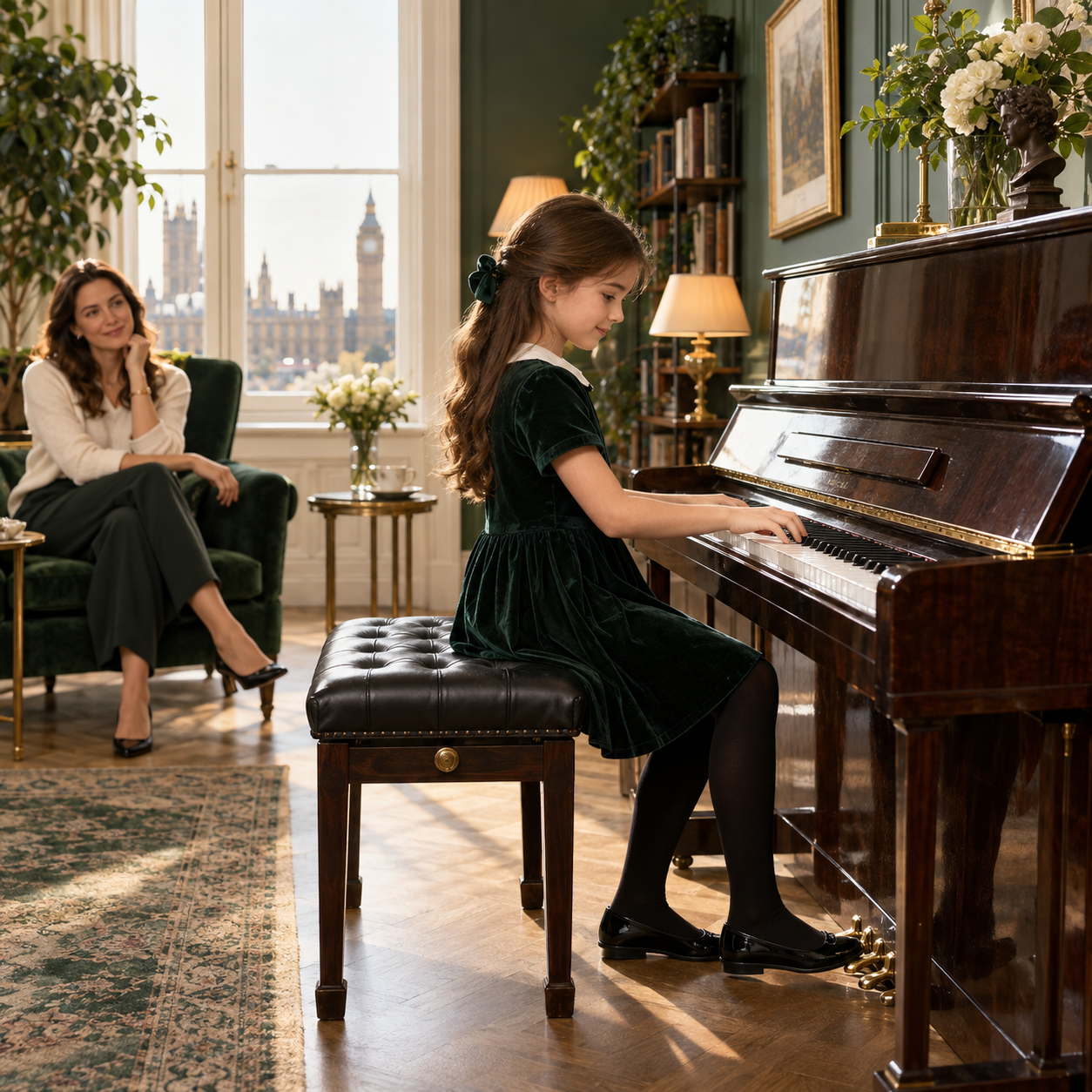
How parents can recognise healthy persistence
Healthy task persistence includes concentration, experimentation and the ability to accept a brief reset. The child may still show disappointment, but can describe the obstacle and attempt a specific solution. Progress appears when the pupil needs fewer adult reminders, transfers a strategy to another passage or stops at an agreed point with a clear plan for next time.
Watch for the opposite pattern: repeated tears, physical tension, fear of mistakes or sessions that always end in conflict. In those cases the task, timing or teaching approach needs adjustment. The aim is not to produce a child who never stops. It is to cultivate a young musician who can meet difficulty with curiosity, proportion and a growing repertoire of responses.
WKMT London
Give your child a patient lesson environment where musical problems are broken down, heard clearly and solved with growing independence.
Explore children’s piano lessonsSources on task persistence for kids
- PMC: preschool task persistence and later attention
- International Journal of Behavioral Development: persistence and executive functions
- Early Childhood Research Quarterly: children’s task persistence
- Harvard Center on the Developing Child: executive function
- PMC: self-regulation and school readiness
- Frontiers: autonomy-supportive teaching and motivation
Sources checked 22 September 2026. Educational guidance; individual circumstances and progress vary.