
 TRIAL LESSON
Pianists
Tatiana Nikolayeva in London: Bach, Shostakovich and Monumental Musical Memory
Sep
WKMT London listening guide
Tatiana Nikolayeva in London: Bach, Shostakovich and Monumental Musical Memory
Tatiana Nikolayeva could make a fugue feel architectural without turning it to stone. Her memory held immense cycles, yet the point was never display: each voice acquired character, each return carried history, and Bach became the route through which Shostakovich imagined a modern contrapuntal monument.
In brief
Tatiana Nikolayeva was a Russian pianist, composer and teacher born in 1924. Trained by Alexander Goldenweiser at the Moscow Conservatory, she won the 1950 Bach Competition in Leipzig, inspired Shostakovich’s 24 Preludes and Fugues, Op. 87, and premiered the cycle in 1952. Late international tours, acclaimed London recitals and award-winning recordings brought her art to a wider Western audience.
Tatiana Nikolayeva: training, composition and musical memory
Tatiana Nikolayeva began piano with her mother before entering Moscow’s Central Music School and the Moscow Conservatory, where she studied piano with Alexander Goldenweiser and composition with Evgeny Golubev. The double education mattered. She heard form from the inside: not simply as a performer following instructions, but as a musician alert to how themes are built, transformed and recalled.
The Moscow Conservatory records a career of roughly 3,000 concerts and about 1,000 works by 74 composers. Such figures describe capacity, but not its musical use. Tatiana Nikolayeva’s memory served long-range argument. In Bach, Beethoven and Shostakovich she could make a late return sound connected to a decision heard many minutes earlier.
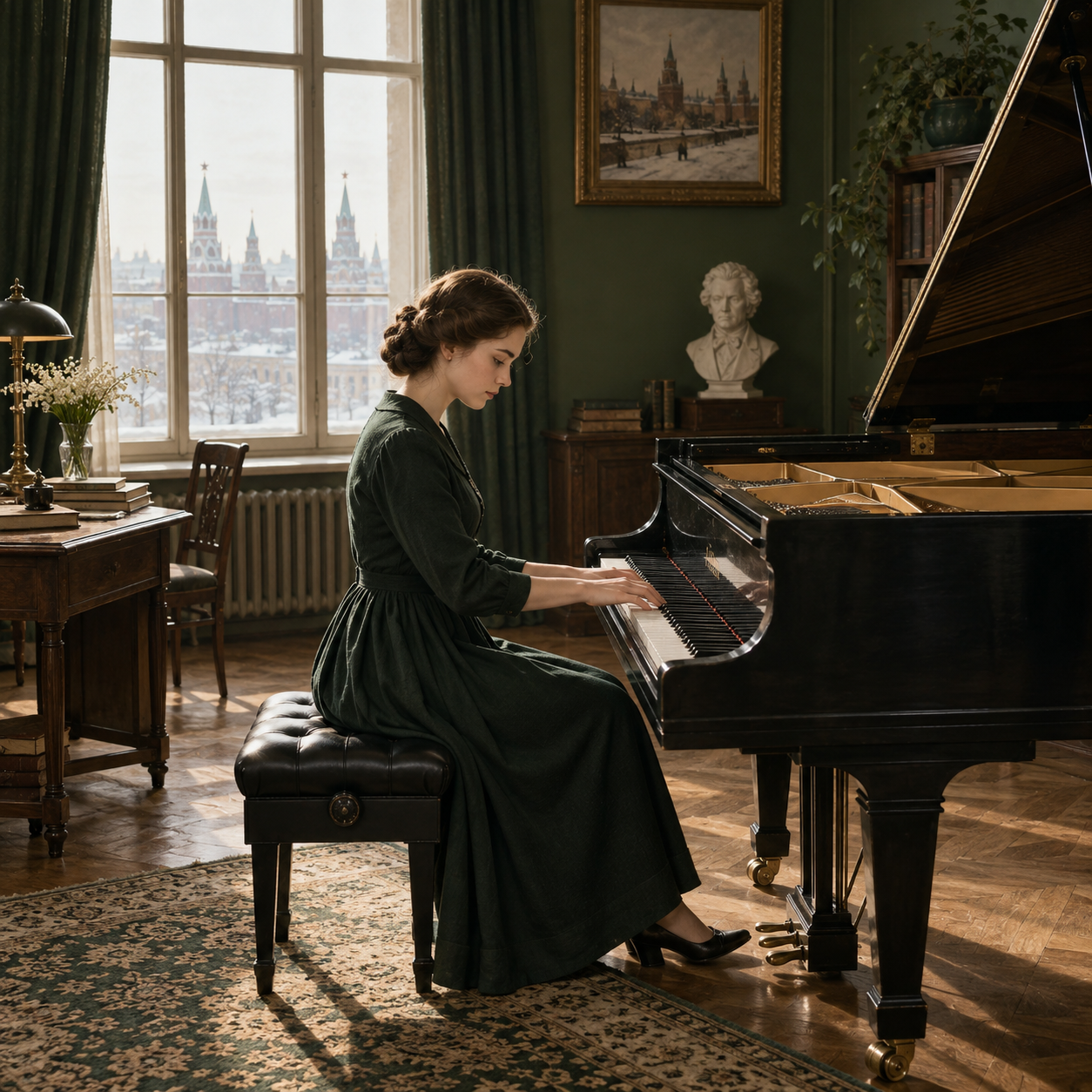
Why Bach changed the course of Tatiana Nikolayeva’s career
At the first International Johann Sebastian Bach Competition in Leipzig in 1950, Tatiana Nikolayeva won first prize after arriving with the Well-Tempered Clavier held in memory. Dmitri Shostakovich, a member of the jury, was deeply impressed. The encounter helped prompt his own cycle of 24 Preludes and Fugues, Op. 87, and Nikolayeva became its dedicatee, first major advocate and first performer after the composer.
For pianists pursuing classical piano study in London, her Bach suggests a practical discipline: identify the subject, hear every re-entry, and let harmony determine the weight of an accent. WKMT’s guide to what inspired Bach’s music offers further context for hearing counterpoint as living rhetoric rather than an academic diagram.
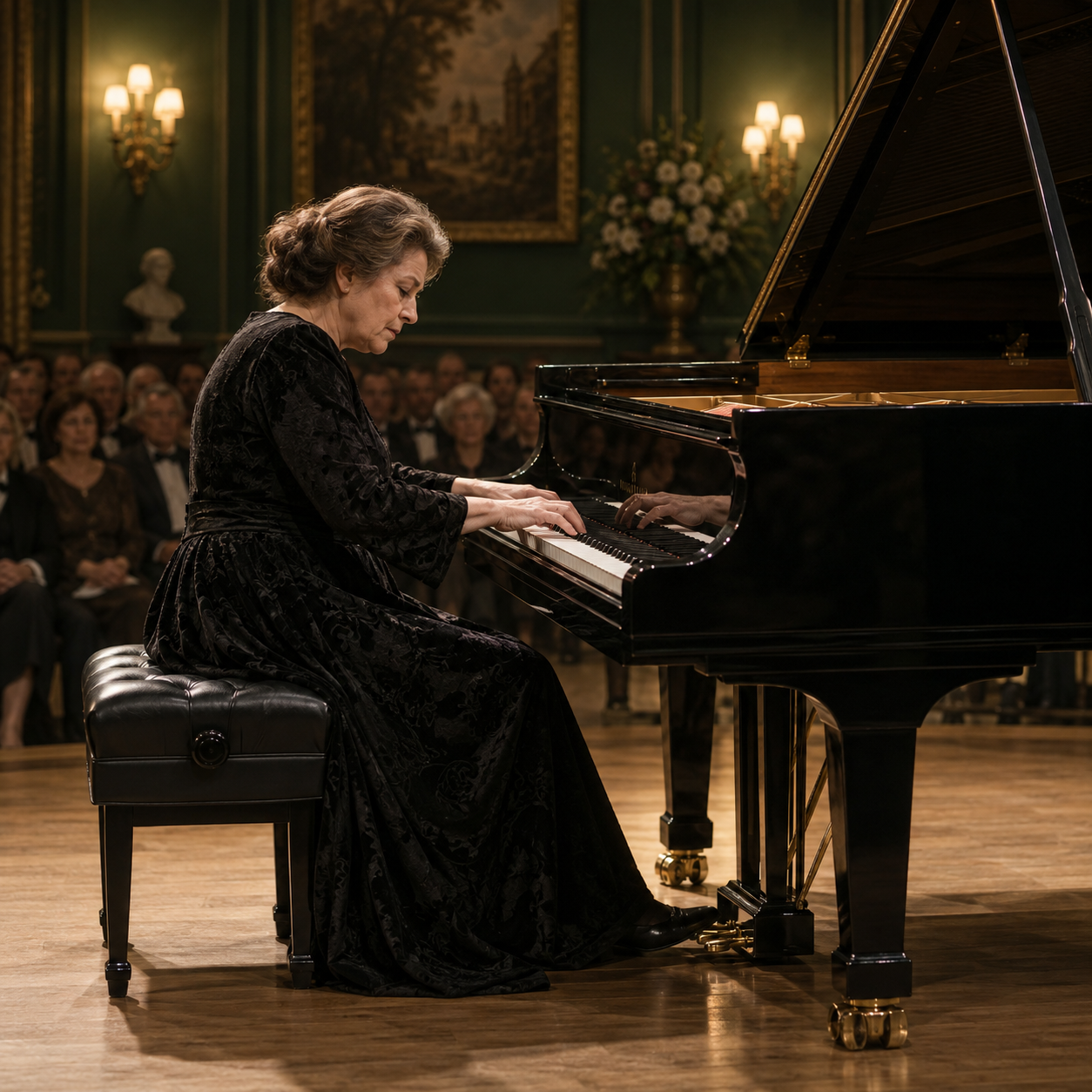
Tatiana Nikolayeva in London: recitals, recordings and recognition
Tatiana Nikolayeva became widely known in the West comparatively late. Sources document several acclaimed London recitals in 1986, including a St John’s Smith Square broadcast of Bach’s Goldberg Variations. A BBC recording from London in January 1993 preserves Beethoven and Schubert, while London sessions around 1990-92 produced major Bach and Shostakovich recordings associated with Hyperion.
Her 1991 recording of Shostakovich’s Op. 87 received a Gramophone Award, placing an interpretation built over decades before a new international public. London therefore became more than a tour stop: it was a place where her mature repertory was performed, recorded, reviewed and transmitted. The evidence is especially valuable because it replaces vague legend with named venues, dates and surviving documents.
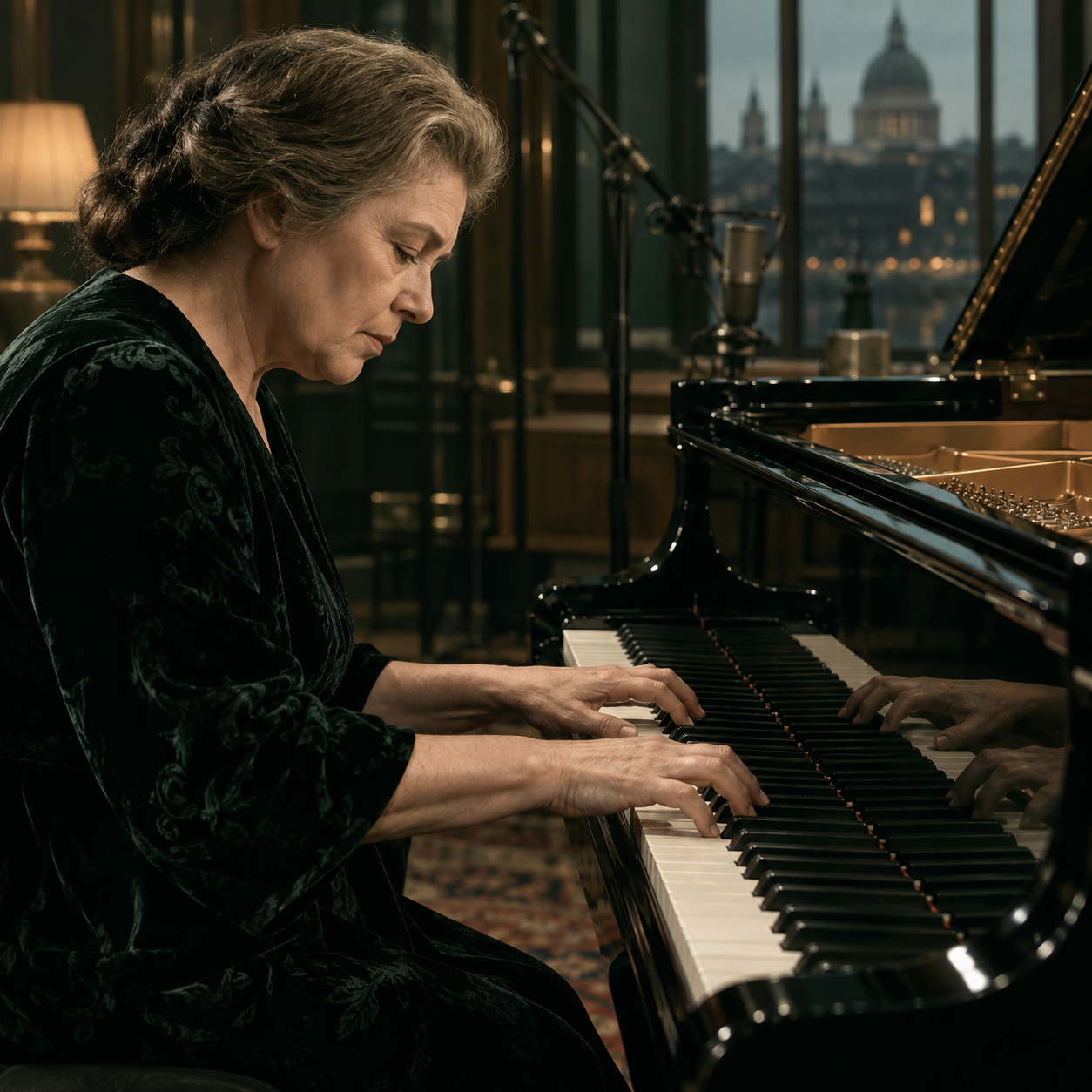
Musical memory is not storage alone; it is the power to make the present phrase answer the whole journey.
What to hear in Bach and Shostakovich
In Tatiana Nikolayeva’s Bach, listen for the left hand as an equal narrator. A bass entry can redirect the whole texture, and a cadence often feels prepared over a long span. Her modern piano sonority is unapologetically rich, but the central question remains contrapuntal: can the listener follow several purposeful lines at once?
In Shostakovich, the same clarity meets sharper character. A fugue may accumulate severity, wit or desolation while the prelude establishes its emotional climate. Compare her approach with WKMT’s portrait of Maria Yudina’s moral imagination. Both pianists give structure unusual intensity, yet Nikolayeva’s continuity often feels more capacious and patiently cumulative.
A four-stage Tatiana Nikolayeva listening route
Begin with the opening aria of the Goldberg Variations and note the bass pattern rather than the melody alone. Follow one canon, then hear a fast variation for articulation and buoyancy. Finally, compare the return of the aria: the notes are unchanged, but memory has altered their meaning. This is Tatiana Nikolayeva’s monumental scale in miniature.
At the piano, choose a short prelude and fugue. Mark subject entries, practise the bass alone, sing one inner voice and then play a complete take without stopping. Record it and ask whether every emphasis clarified the architecture. Tatiana Nikolayeva’s enduring lesson is that memory becomes musical when it gives every present sound a past and a destination.
Hear Tatiana Nikolayeva in Bach
This 1979 account of Bach’s Goldberg Variations allows close listening to Nikolayeva’s bass direction, long memory and changes of character across the cycle. Video attribution: embedded from YouTube for educational commentary; rights remain with the channel and rights holders.
WKMT London
Develop the structural listening, tonal control and musical independence that allow great piano cycles to unfold with conviction.
Explore piano lessons in LondonSources on Tatiana Nikolayeva in London
- Moscow Conservatory: Tatyana Nikolaeva
- Russian National Museum of Music: Nikolayeva centenary
- Gramophone Classical Music Awards 1991
- Bach Cantatas: Tatiana Nikolayeva biography
- Classical Pianists archive: Nikolayeva chronology
- The Independent: Tatiana Nikolayeva obituary
Sources checked 22 September 2026. Educational guidance; individual circumstances and progress vary.