
 TRIAL LESSON
Piano Lessons
Social Emotional Learning: What Piano Lessons Can Practise Quietly
Sep
WKMT London parent guide
Social Emotional Learning: What Piano Lessons Can Practise Quietly
A child who pauses after a mistake, listens to a partner and tries again is doing more than learning notes. A thoughtful music lesson can become a small, protected space in which attention, emotion and relationship are practised through real musical work.
In brief
Social emotional learning is the development of skills used to understand emotions, manage behaviour, empathise, build relationships and make responsible decisions. Piano lessons can support this development through turn-taking, careful listening, manageable challenge, reflection and shared music-making. They complement, but do not replace, a school’s wider provision or professional support when a child needs it.
What social emotional learning includes
CASEL describes five connected areas: self-awareness, self-management, social awareness, relationship skills and responsible decision-making. Social emotional learning is therefore broader than teaching a child to be calm or compliant. It concerns how young people notice internal experience, act with agency, understand others and participate in a community.
These capacities develop across home, school and wider relationships. A weekly piano lesson is one setting among many, but it has useful qualities: immediate feedback, a shared task, repetition without identical outcomes and a clear relationship between effort and audible result. Music gives emotion a form the child can hear, revisit and discuss.
Notice
Name the feeling or musical difficulty.
Choose
Select one manageable next action.
Connect
Listen and respond to another person.
Reflect
Describe what changed after trying again.
How piano lessons can support emotional regulation
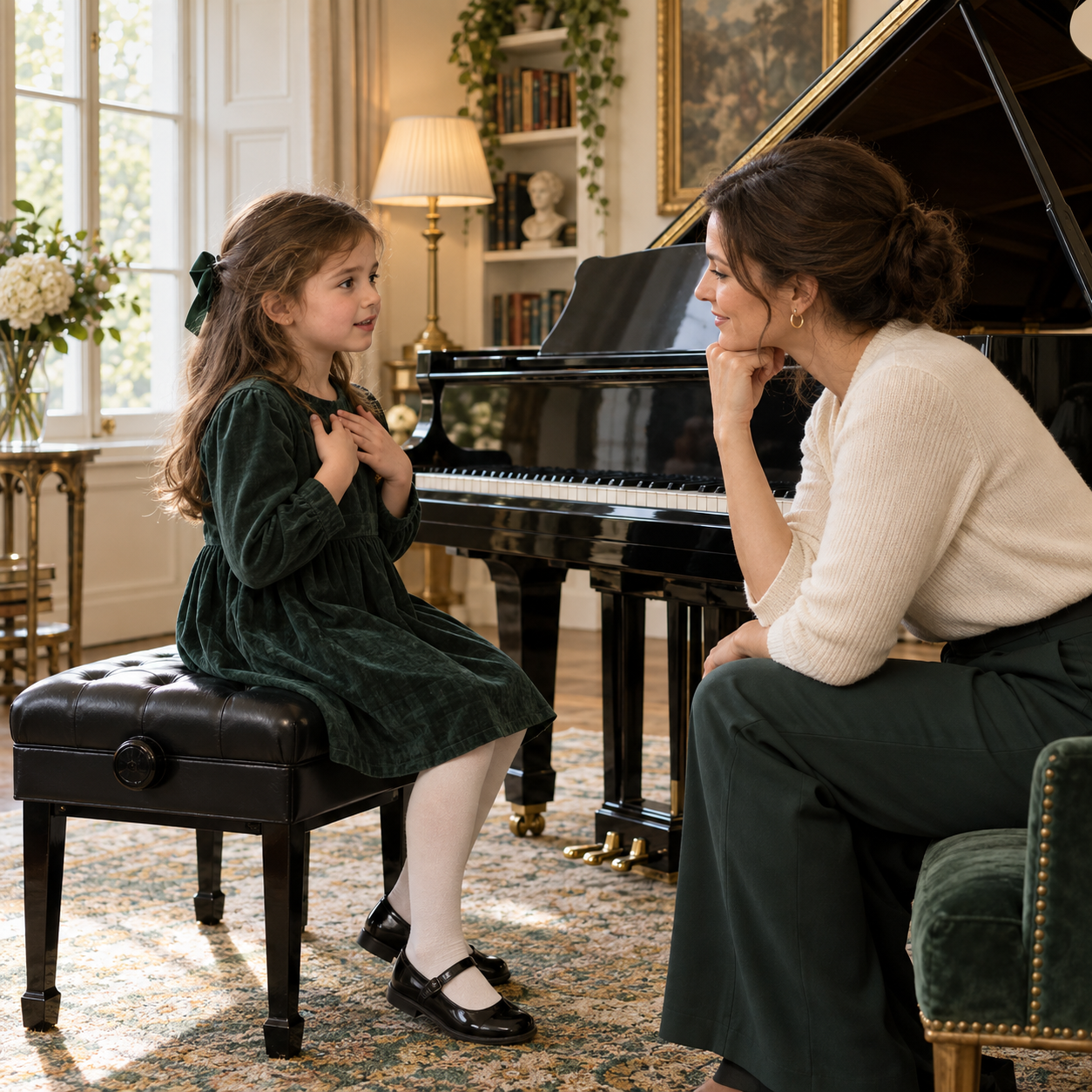
Mistakes make the learning process visible. A teacher can respond without alarm, helping the child name what happened and choose the next action: slow the passage, separate the hands or play only the rhythm. This is social emotional learning in a practical form. The child experiences frustration without allowing it to decide the entire lesson.
Musical breathing also offers a genuine reason to pause. Before beginning, teacher and child can hear the tempo internally and prepare the first gesture. After finishing, they can leave a moment of silence before evaluating. These habits are not clinical techniques. They are musical disciplines that can also strengthen self-management and awareness.
Listening, empathy and relationship skills
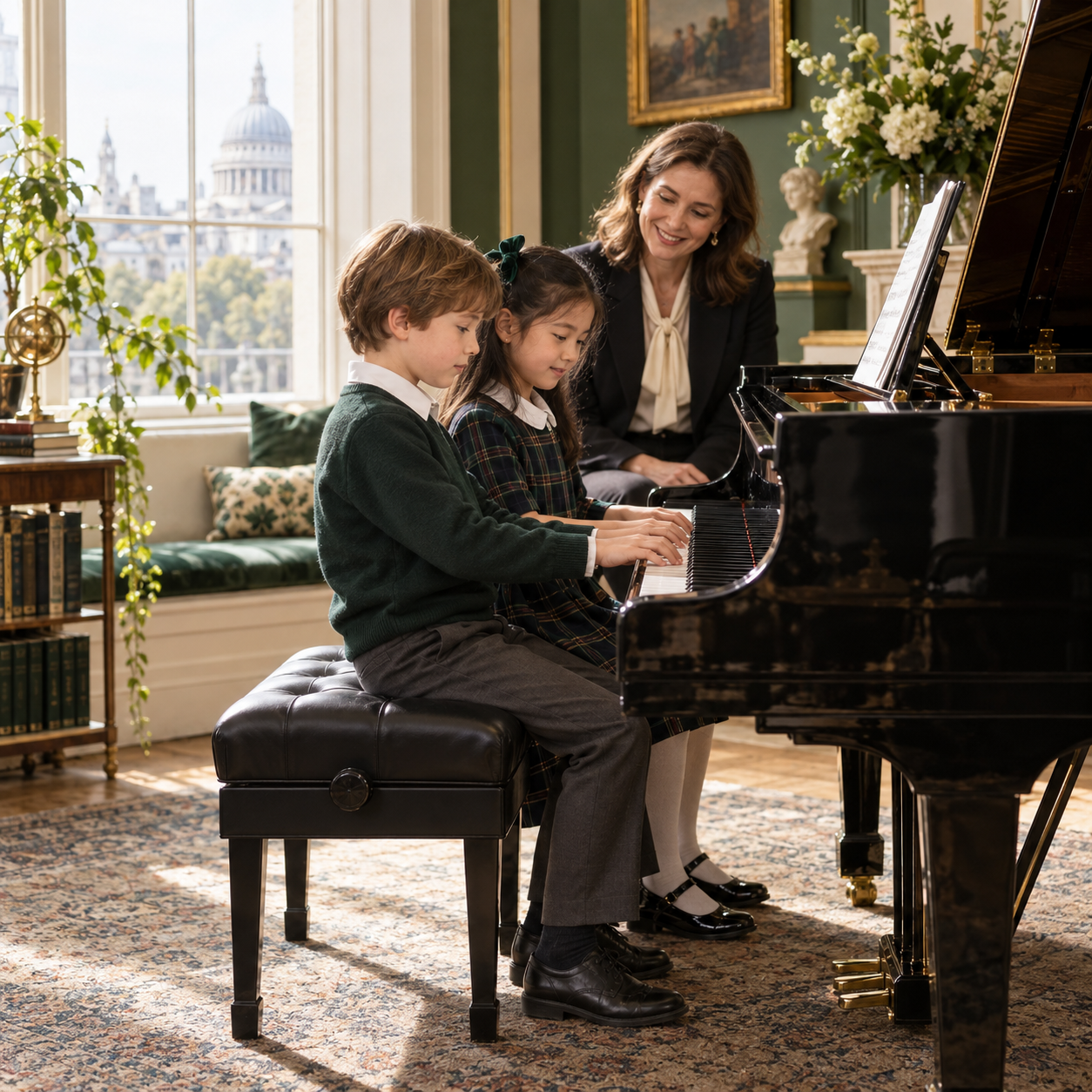
A duet asks a child to notice another person’s timing and sound. Leading does not mean ignoring the partner; following does not mean becoming passive. Each player contributes while adjusting. Even a simple four-bar exchange can practise turn-taking, anticipation and repair when coordination slips.
Teacher language matters. Specific observations such as ‘the second attempt was steadier because you waited’ are more useful than vague praise. They connect choice with consequence and protect the child’s sense of competence. For more on this musical dimension, WKMT’s guide to music and emotional development explores how expression and relationship meet.
Music gives a child a real task through which patience, agency and empathy can become visible.
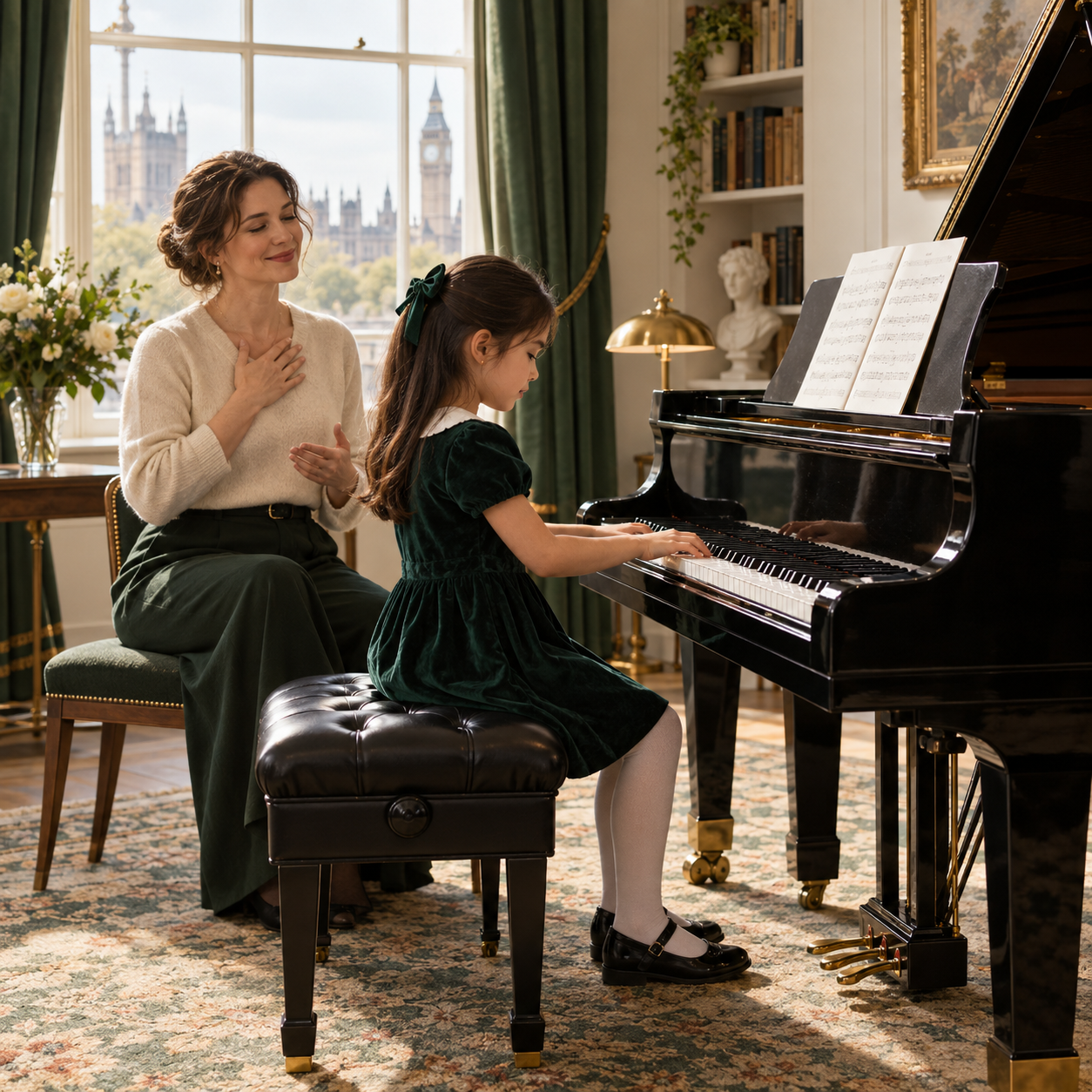
A proportionate guide for parents
Look for musical evidence: the child can wait for a cue, recover from a small error, describe a sound, listen while someone else plays and accept a manageable correction. Those behaviours may support social emotional learning, but progress will not be linear. Tiredness, temperament, age and the difficulty of the task all affect what appears in one lesson.
Face-to-face piano lessons for children at WKMT London allow the teacher to adapt pace and communication immediately. Parents can help by asking one open question after the lesson and keeping home practice calm and short. If emotional or behavioural concerns are persistent or distressing, families should seek appropriately qualified support rather than asking music lessons to carry a role they cannot fulfil.
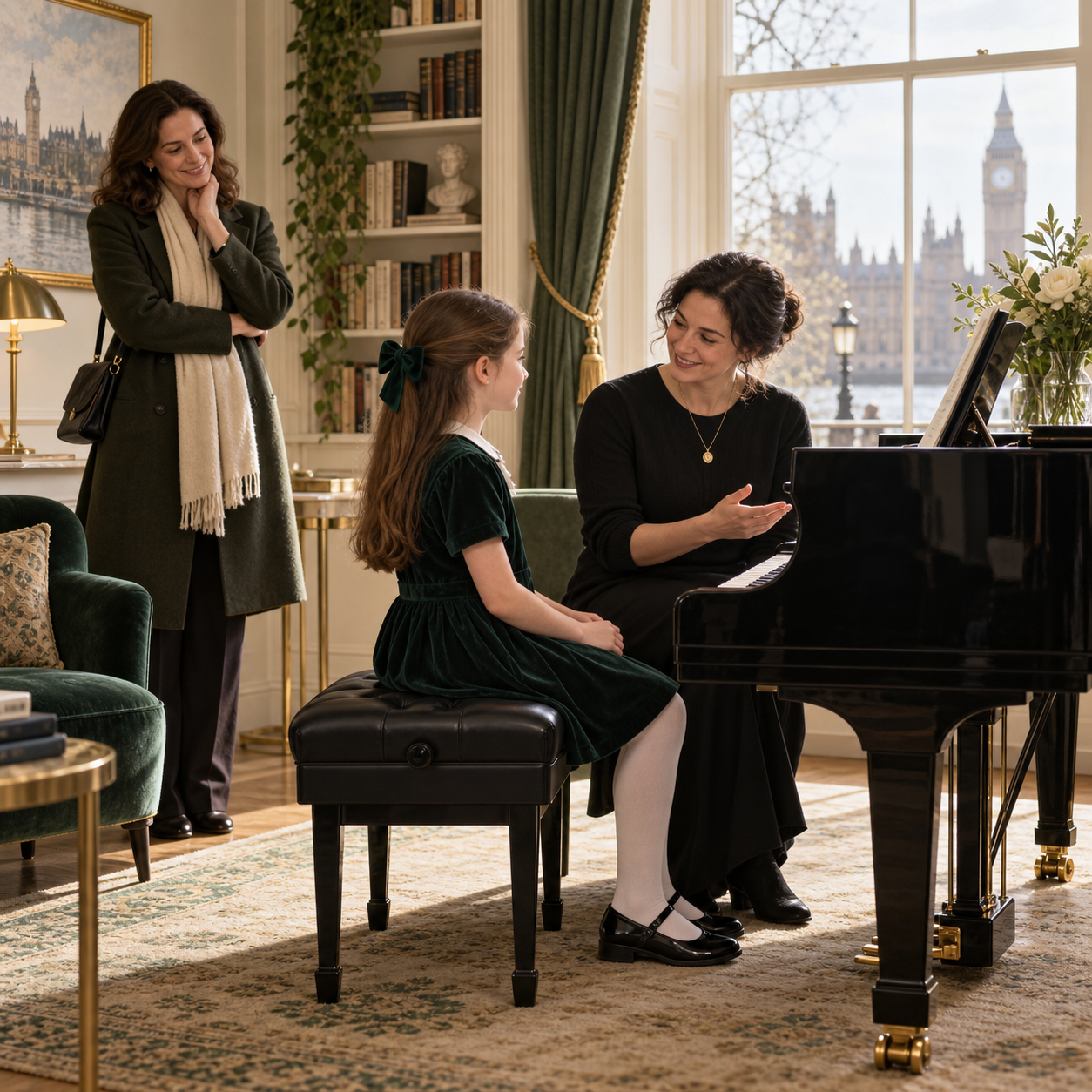
WKMT London
Give your child a structured musical relationship in which confidence, listening and expressive skill can grow together.
Sources on social emotional learning
- CASEL: SEL framework
- Education Endowment Foundation: social and emotional learning
- Harvard Center on the Developing Child: personal skills
- Arts Education Partnership: music and social-emotional learning
- Frontiers in Psychology: music education and social-emotional competence
Sources checked 14 September 2026. Educational guidance; individual circumstances and progress vary.