
 TRIAL LESSON
Piano Lessons
Piano Phrasing: How Teachers Help Learners Turn Notes into Speech
Sep
WKMT London interpretation guide
Piano Phrasing: How Teachers Help Learners Turn Notes into Speech
A phrase can be perfectly accurate and still feel silent in meaning. The transformation begins when a pianist hears direction: where a line gathers, where it yields, and why one note carries more expressive weight than another.
In brief
Piano phrasing is the shaping of musical ideas so that notes sound connected, directed and expressive, rather than merely consecutive. Pianists create it through timing, articulation, dynamics, voicing, harmonic awareness and carefully judged release. A teacher helps the learner hear a phrase’s destination, coordinate the physical gesture and compare several credible readings without imposing a mechanical formula.
What piano phrasing means
Piano phrasing is often compared with speech because both depend on grouping, emphasis and arrival. A sentence has grammar and punctuation, but a convincing speaker also gives it intention. Music behaves similarly. The bar line may organise notation, yet the audible thought can begin before it, cross it or relax after it. The pianist must decide which notes belong to one breath and which note changes the direction.
Harmony supplies much of this grammar. A dissonance may ask for tension, a cadence for release, and a modulation for renewed energy. Melody supplies contour; rhythm supplies pace. Good piano phrasing joins these elements, allowing the listener to follow a long thought even when the texture is busy. This is why expressive shaping is not decoration added after technique. It is part of understanding the score.
Hear
Sing or play the principal line alone.
Aim
Name the harmonic and melodic destination.
Shape
Coordinate tone, timing and release.
Review
Record once and compare intention with sound.
How pianists shape a phrase
Begin by singing the upper line away from the piano. The voice naturally reveals where breath, stress and taper belong. Then play the melody alone, preserving that direction without exaggerating every note. Add the bass to hear harmonic motion, followed by inner voices. This layered method keeps piano phrasing audible when the full texture returns.
Touch and timing work together. A crescendo is rarely a sequence of equally louder notes; it is often a gradual increase in harmonic urgency. Legato does not require holding every finger rigidly. It depends on overlapping sound with a supple transfer of weight and listening to the decay. At the end of a phrase, release should feel intentional rather than abrupt or sentimental.
Piano phrasing in different styles
Style changes the available language. In Bach, a line may be articulated through inflection, rhythmic lift and the relationship between independent voices. Mozart often needs clarity, proportion and a speaking elegance. Chopin invites flexibility, yet the left hand must retain enough pulse for rubato to sound poised. Debussy may ask the pianist to phrase colour and resonance as carefully as melody.
The comparison matters because a single recipe quickly becomes mannered. A student who swells through every two-bar unit stops hearing larger structure. Another who delays each cadence can weaken forward motion. Mature piano phrasing balances local detail with the architecture of the whole movement: the destination of eight bars matters as much as the curve of two.
A phrase speaks when every detail belongs to a larger direction.
How a teacher develops musical speech
A teacher can make an invisible listening decision concrete. One useful exercise is to play the same phrase with two different destinations and ask which version makes the harmony intelligible. Another is to remove pedal, exposing uneven connection and balance, then restore resonance selectively. Recording a short passage also helps the learner compare intention with result.
At WKMT London, face-to-face teaching lets the teacher respond to tone, movement and acoustic balance in real time. The aim is not to manufacture a house interpretation. It is to give students the ears and physical organisation to make informed choices. Through careful listening in piano study and structured technical work, piano phrasing becomes a repeatable craft rather than a lucky expressive moment.
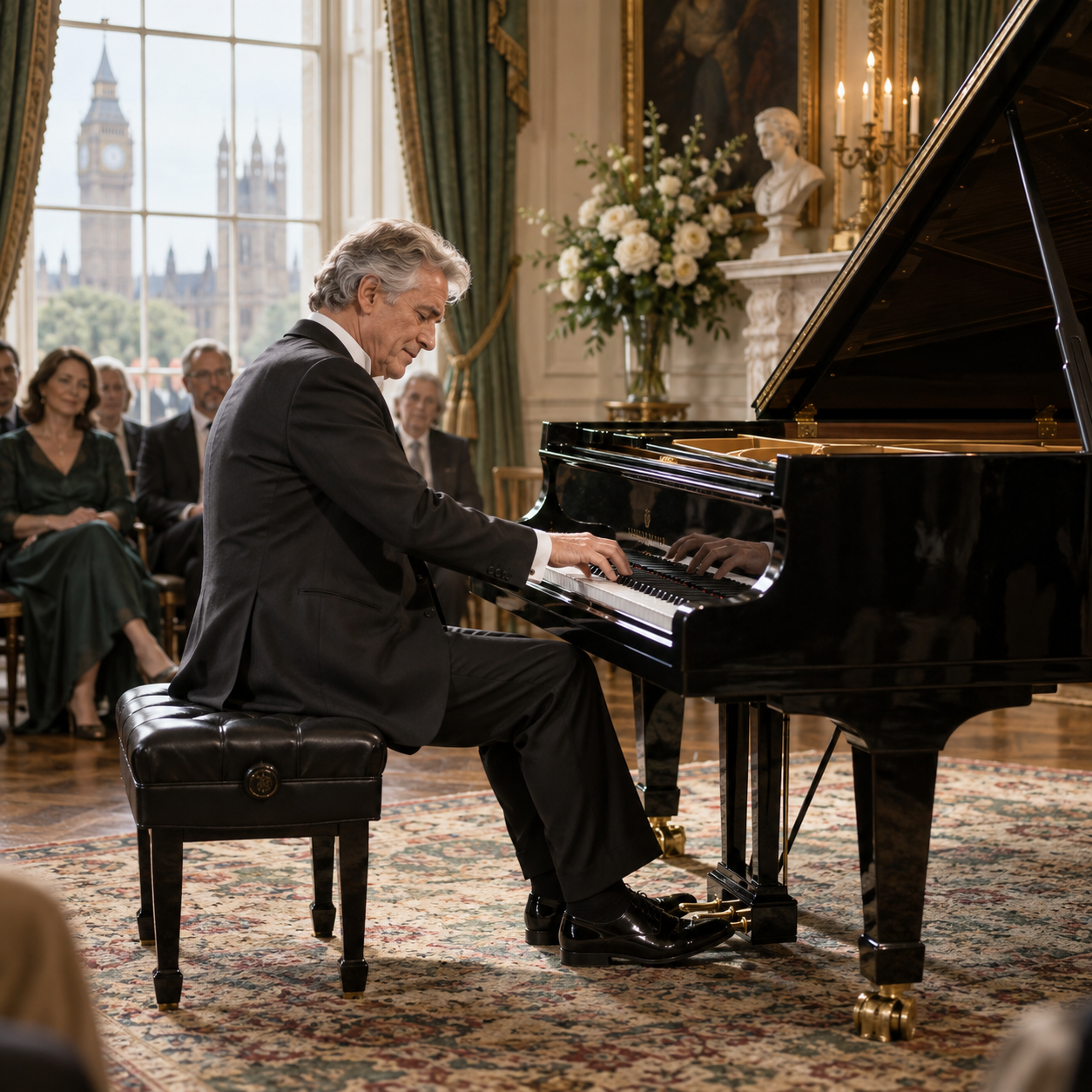
A practical phrasing masterclass
Pianist Magazine presents Graham Fitch on articulation and phrasing at Steinway Hall in London. Embedded from YouTube for educational commentary; rights remain with the channel and rights holder.
WKMT London
Develop the listening, touch and stylistic judgement that turn written notes into persuasive musical thought.
Sources on piano phrasing tips
- Open Music Theory: phrase and form
- Yale University Library: Music Theory for the 21st-Century Classroom
- University of Edinburgh: Music and communication
- ABRSM Teacher Hub: shaping musical direction
- Encyclopaedia Britannica: musical expression
Sources checked 14 September 2026. Educational guidance; individual circumstances and progress vary.