
 TRIAL LESSON
Piano Lessons
Music and Creativity: What Piano Gives Young Learners
Aug
WKMT London parent guide
Creativity at the piano is not a decoration added after the serious work. It is the moment a child begins to hear that a phrase can breathe differently, that a rhythm can answer back, and that an idea can be made clearer through touch.
The short answer
Music and creativity belong together when children turn imagination into audible choices. Music helps children become more creative because it turns imagination into audible choices. In a good piano lesson, a young learner copies, varies, compares and refines an idea until creativity becomes disciplined musical thinking.
Music and creativity begin when a child listens differently
Parents often recognise creativity when a child invents something: a tune, a funny ending, a dramatic bass note, a tiny change of rhythm. At the piano, the deeper sign is more subtle. The child begins to notice what the change did. Did the second version sound calmer? Did the louder touch make the phrase clumsy? Did the new ending actually finish the musical thought?
This connection between music and creativity is why structured piano lessons for children in London should never separate imagination from craft. A child needs enough freedom to try an idea, and enough teaching to hear whether the idea has shape. Without the first, lessons become obedient. Without the second, creativity becomes vague.
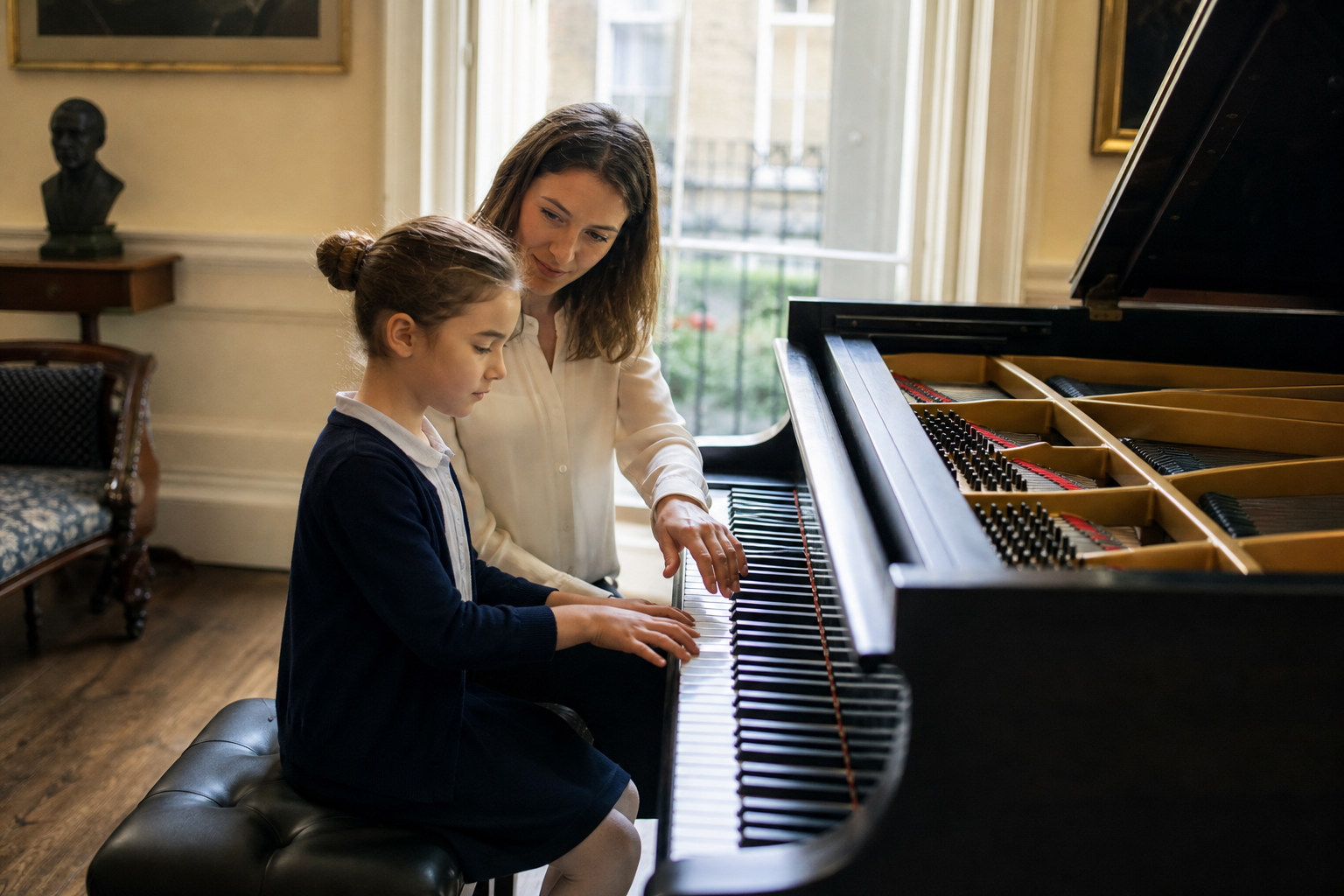
The best teaching keeps the two in conversation. A teacher may ask for the same phrase with a softer ending, or invite the child to keep the rhythm but move the notes higher. Nothing spectacular has to happen. The creative act is the child’s decision to listen, choose and improve.
For parents
After practice, ask one question that points back to sound: what did you change? A child can answer in words, by playing both versions, or by showing the gesture that made the difference.
The creative loop inside a serious children’s piano lesson
Research on children’s musical creativity often returns to guided exploration: children benefit when the task is open enough to invite invention, but precise enough to make improvement possible. A piano lesson can do this beautifully because the instrument makes pitch, rhythm, register and harmony physically visible.
The route is usually modest. Hear a phrase. Copy it. Change one feature. Listen again. Name what improved. Try a finer version. This is not a break from technique; it is one of the ways technique becomes meaningful. The child discovers that finger control, pulse and reading are not abstract demands. They are tools for making the musical idea more exact.
The creative piano loop
Notice the teacher’s rhythm, shape, touch or register.
Repeat enough of the idea to understand its character.
Change one thing, not everything at once.
Choose the version that sounds clearer, calmer or more alive.
What creative growth looks like at home
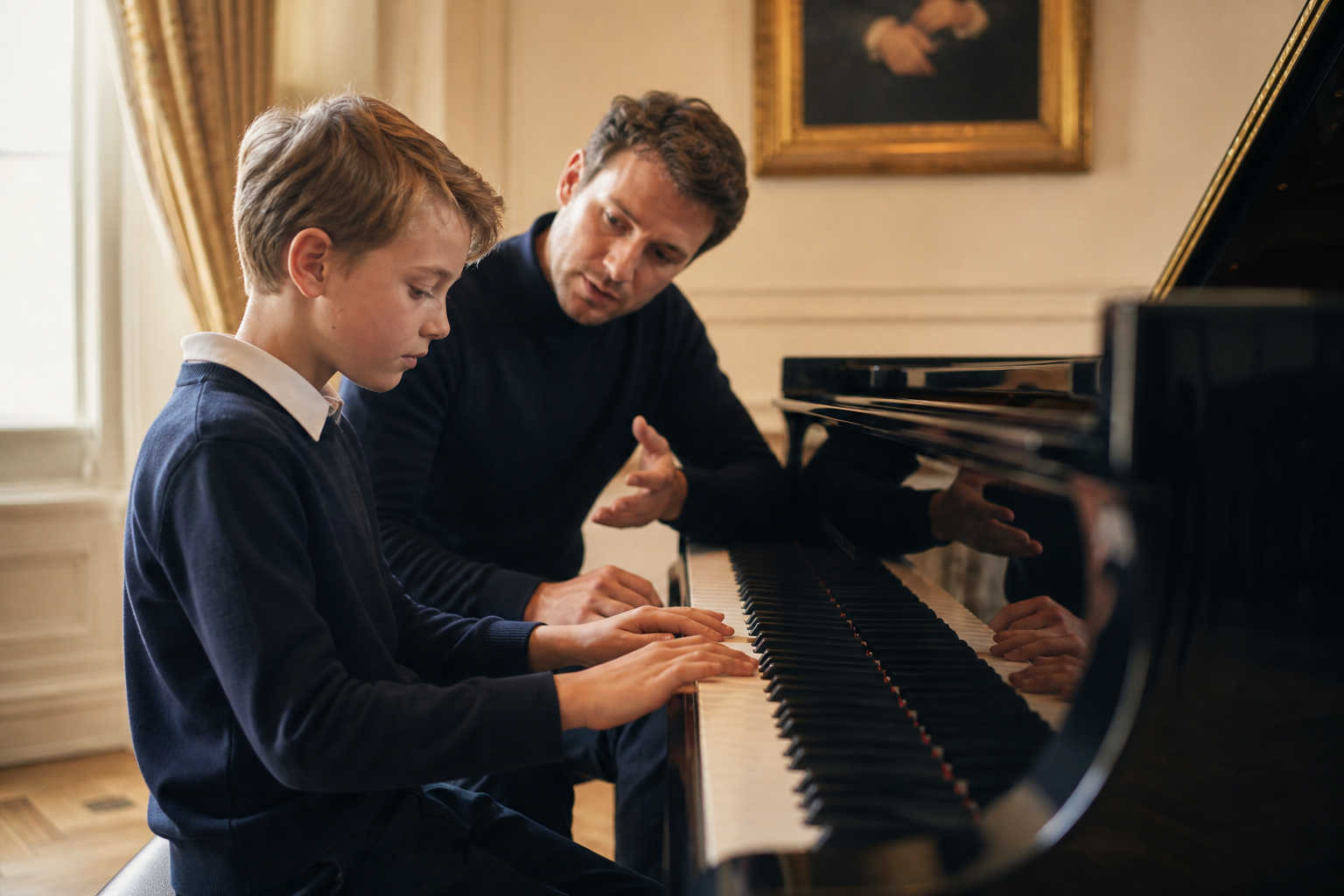
At home, music and creativity can look less dramatic than parents expect. It may be a child choosing a gentler touch for the last two notes, noticing that a left-hand pattern sounds like walking, or laughing because a phrase suddenly sounds like a question. These small recognitions matter because they show that the child is no longer treating the piano as a sequence of buttons.
The parent does not need to become the teacher. The parent’s role is to protect attention. Rather than saying, “be creative”, try a musical prompt: play the answer higher; make the ending softer; keep the rhythm and change only the notes; choose which version sounds more finished. Specific prompts encourage imagination without taking over the child’s musical ownership.
Teacher’s note
Children rarely become more imaginative because an adult asks for originality. They become more imaginative when the musical problem is small enough to solve and interesting enough to care about.
What to listen for
Can the child repeat a pattern and then answer it?
Can they choose between bright, gentle, heavy or singing sound?
Can they hear where a phrase begins, leans and finishes?
Can they explain or demonstrate why one version works better?
“A child becomes creative at the piano when imagination learns to listen back.”
A WKMT video context for children’s piano study
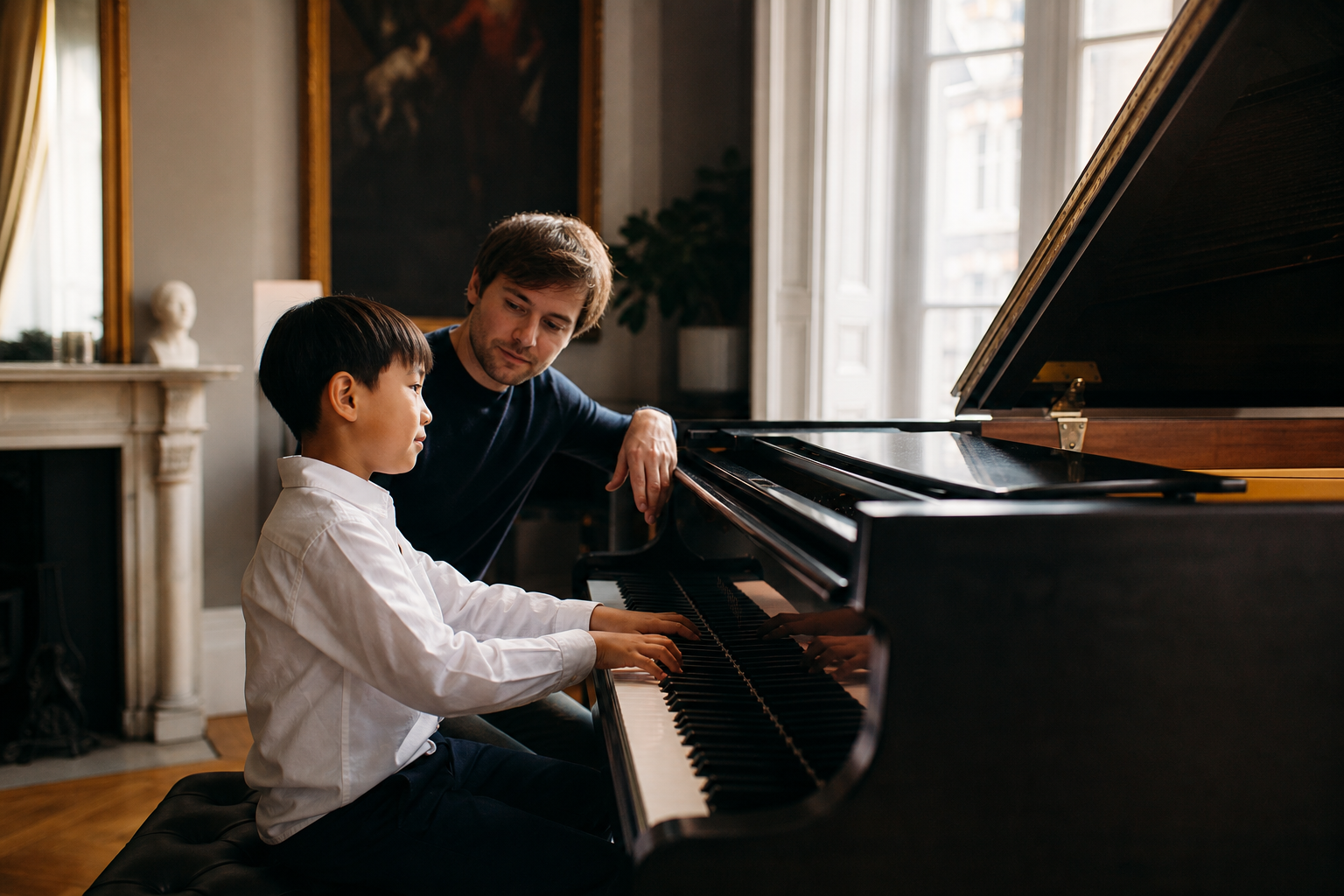
A single video should never replace a lesson, but it can help parents see the tone of a serious children’s piano environment: attentive, warm, specific and musically purposeful.
If the embedded player is unavailable, open the WKMT children’s piano lesson video on YouTube.
Why this matters beyond a single lesson
A child who learns to improve a musical idea is also learning patience with revision. The first version is not thrown away in shame; it becomes material. This is one reason music and creativity sit so naturally together. The piano lets the child hear that improvement is not mysterious. It has rhythm, touch, balance, memory and choice inside it.
WKMT’s article on music and confidence is a useful companion because creative children need enough security to risk an idea. The guide to music and brain development gives wider context, while the discussion of whether a child is musical helps parents avoid confusing early fluency with deeper listening.
A thoughtful next step
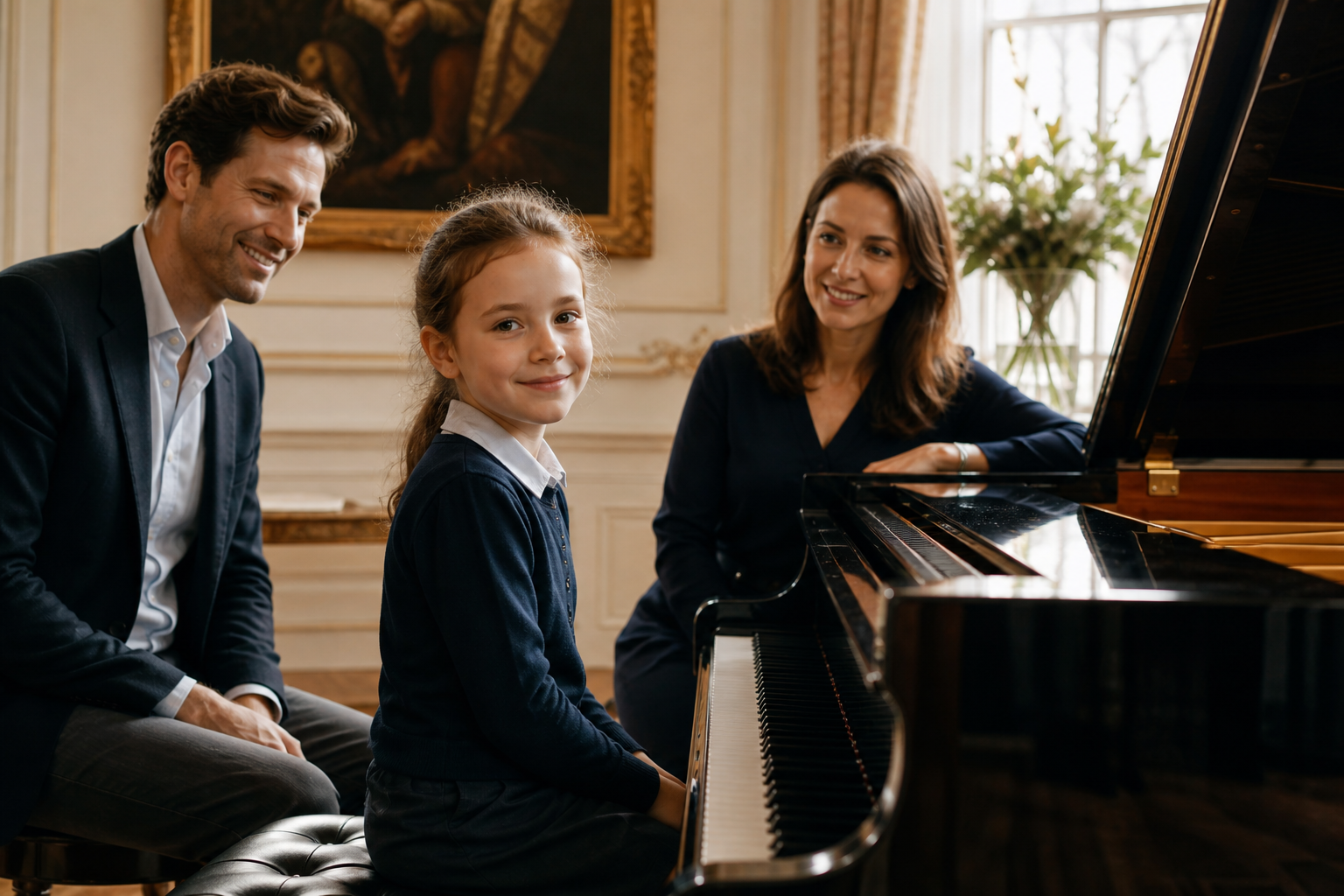
WKMT helps young learners build imagination through proper piano teaching: listening, technique, notation, repertoire and careful musical choices.
Sources and further reading on music and creativity
- WKMT London children’s piano lessons, checked 16 August 2026.
- Department for Education, Early Years Foundation Stage statutory framework, checked 16 August 2026.
- The impact of musical improvisation on children’s creative thinking, 2021.
- Cultivating music students’ creativity in piano performance, 2021.
- Department for Education, The Power of Music to Change Lives, published 25 June 2022, checked 16 August 2026.
- WKMT: music and confidence, checked 16 August 2026.