
 TRIAL LESSON
Piano Lessons
Piano Expression Coaching in London with WKMT
May
Piano Expression Coaching in London
Piano Expression Coaching in London
Definition and Conceptual Foundation
“Playing with expression” in classical piano performance refers to infusing music with emotional character, nuance, and personal interpretation. It goes beyond hitting the correct notes: the pianist uses dynamics, timing (rubato), articulation, and tone color to convey mood and meaning. Historically, pedagogues have stressed that technical proficiency is a means to an end – the end being expressive depth. Carl Philipp Emanuel Bach, in his 1753 Essay on the True Art of Playing Keyboard Instruments, famously insisted that music is “above all else, a vehicle for the expression of the emotions,” not a mere decorative art. He wrote that a performer “must understand the true content of each piece” and faithfully transmit its expressive nuances to stir the listener’s heart. This foundational view draws a clear line between technical proficiency (the accurate and skillful execution of notes) and expressive depth (the ability to make those notes speak).
🎵 Curious to know what piano expression coaching feels like in practice?
At WKMT London, we don’t just talk about it — we teach it, every day.
👉 Book a trial lesson now and experience expressive coaching from the very first note.
Technical skill enables artistry but does not guarantee it. A performance can be note-perfect yet emotionally flat, just as it can be technically simple yet deeply moving. C.P.E. Bach and his father J.S. Bach both held that technique is only a means to express musical content – in other words, virtuosity serves the music’s expressive goals, not the other way around. Later pedagogues echoed this idea. The great Russian teacher Heinrich Neuhaus wrote that the pianist “must have something to say” in the music: merely “knowing how to speak” (technique) isn’t enough. Neuhaus believed the clearer one’s artistic vision, the clearer the technical means to achieve it: “The clearer the goal (the content, music, the perfection of performance), the clearer the means of attaining it”. In sum, technical proficiency is the pianist’s toolbox – scales, arpeggios, fingering, accuracy – while expressive depth is the soul of the performance, the storytelling that connects with audiences. Pianists who play with expression marry these elements, using technique in the service of communicating character and emotion. As Neuhaus noted, technique and musical imagery form an integrated whole. This conceptual foundation underpins modern piano expression coaching, which seeks to cultivate not just how a note is played, but why – encouraging students to delve into the emotional narrative behind the notes and to develop a personal, authentic interpretation. Let´s go through this Guide on Piano Expression Coaching in London.
The Legacy of Expression: Key Maestros
A rich lineage of piano maestros has explored and taught the art of expressive playing. Their philosophies still inform piano coaching today. Below we highlight seven such figures – their backgrounds, teaching ethos, and contributions to expressive piano performance:
Florica Musicescu (1887–1969)
A Romanian pianist and professor, Musicescu is revered as the matriarch of the Romanian piano school. She taught at the Bucharest Conservatory and mentored greats like Dinu Lipatti and Radu Lupu, instilling in them a balance of intellectual rigor and heartfelt expression. Colleagues described Madame Musicescu’s approach as an “affectionate tyranny” – she was a demanding teacher, yet deeply devoted. In her letters she urged students to seek a “gladdening light” in music, advising one to “look for light higher in others and even deeper in yourself”. Musicescu emphasized clarity of interpretation and fidelity to the score’s spirit. A pupil of hers noted that true artists never “sacrifice [their] musical thinking on the altar of instrumental technique.” In other words, Musicescu trained virtuosity but always subordinated it to musical meaning. Her legacy is evident in the singing lyricism and sincere, unsentimental expression of her students’ performances.
Vincenzo Scaramuzza (1885–1968)
Also known as Vicente Scaramuzza, this Italian-born pedagogue made his career in Buenos Aires, Argentina. Scaramuzza was teacher to legendary pianists like Martha Argerich, Bruno Gelber, and Daniel Barenboim’s father Enrique. His expressive philosophy fused meticulous technique with imaginative vision. Scaramuzza developed a holistic method emphasizing natural hand movements, relaxation, and singing tone.
He encouraged students to mentally “visualize the sound before they played it, and to imbue each note with full expressive content.”
Physical freedom and tactile awareness were key – by leveraging arm weight and flexibility, students could produce a resonant, unforced tone that carried emotional depth. Scaramuzza’s acuity for expression showed even in how he recognized young talent: hearing a 6-year-old Martha Argerich, he remarked that “she may have been six, but she had the soul of a 40-year-old.” His training cultivated prodigious technique and profound musical feeling. To this day, disciples of Scaramuzza speak of the “unique method” grounded in anatomical understanding and emotional projection. Maria Rosa Oubiña de Castro, one of his students, later compiled his teachings into a 1973 book Enseñanzas de un gran Maestro (Teachings of a Great Master), preserving detailed explanations of his unique approach. Scaramuzza’s legacy lives on wherever teachers prioritize tone production and expressive intention alongside technical drills.
Marguerite Long (1874–1966)
A French pianist who was friend and collaborator to composers like Fauré, Debussy, and Ravel, Marguerite Long became an influential teacher in Paris. She epitomized the French pianistic tradition of elegance, clarity, and jeu perlé (pearly, refined touch). Long taught at the Paris Conservatoire and later ran her own school, mentoring artists such as Samson François. Her expressive philosophy stressed fidelity to the composer’s style and disciplined phrasing – but never without emotion. In Debussy’s words as relayed by Long, “Liberty can only exist within the scope of a regular, severe, immutable pulse.” She insisted that even the most poetic rubato must be underpinned by an unbroken rhythmic framework. Critics sometimes stereotyped Long’s playing as restrained, but those who listened closely heard “diamond-hard, yet butterfly-light” articulation and extraordinary attention to detail. In works of Fauré and Ravel, Long balanced Gallic clarity with soulful rubato, achieving what one reviewer called a “maximum of expression with a minimum of gestures.” As a teacher, she imparted this sense of stylish expressivity – students learned to combine precision (clean trills, even scales) with charm and singing tone. Long’s influence is still felt in how French repertoire is taught, emphasizing that expressive playing is not about indulgence but about artistry within clarity.
Friedrich Gulda (1930–2000)
An Austrian pianist known both for impeccable classical interpretations and for his iconoclastic flair, Gulda brought a fearless personal expression to his music. He rebelled against stuffy conventions (even faking his own death and performing jazz in nightclubs), yet he was a deeply serious musician. Gulda’s expressive credo can be summed up in his famous exhortation: “Play every tone as if your life depends on it! For your life really does depend on it.”. In performance and teaching, he demanded intensity and commitment to every note. A student of the great Bruno Seidlhofer, Gulda combined Viennese classical training with a free spirit’s spontaneity. In masterclasses he emphasized honesty in interpretation – stripping away affectation to let the music’s drama speak. He also showed that expressive depth was compatible with a lean, clear style: observers noted that he could be physically undemonstrative at the keyboard, yet produce performances of searing passion. Gulda’s legacy to expression coaching lies in encouraging individuality. He proved that respecting the score and embracing personal flair are not mutually exclusive. Many contemporary pianists, especially those bridging genres, cite Gulda as an inspiration for playing with both precision and fire – treating each performance as a vital act of communication.
William Grant Naboré (born 1941)
An American pianist and revered pedagogue, Naboré is the founder of the International Piano Academy Lake Como in Italy. A student of masters like Carlo Zecchi (himself a pupil of Busoni and Schnabel), Naboré inherited a rich tradition of European piano artistry. He is often called the “Yoda of the Piano” for his wisdom in teaching. Naboré’s expressive philosophy places great importance on bel canto singing tone and fidelity to a composer’s spirit. “The pianist who wants to play Brahms has to be a great ‘singer on the piano,’” Naboré says – if you want to play Brahms his way. In lessons, he works tirelessly on voicing and tone shading to achieve a vocal quality on the instrument. Naboré also speaks of “painting landscapes of the heart and soul” in music – a poetic image passed down from his teacher Renata Borgatti, who traced her lineage back to Brahms. This approach means that students must learn to shape phrases with imagination and a sense of narrative. Technically, he focuses on transparency of texture and “rigorous articulation” so that expressive details emerge clearly. Naboré’s students (many of whom are competition winners and notable concert artists) testify to his blend of insistence on technical excellence and nurturing of personal expression. His continued mentorship – he remains active at Lake Como and in masterclasses worldwide – ensures that the traditions of heartfelt European pianism are handed to a new generation.
Maria Tipo (1931–2025)
An Italian pianist and esteemed teacher, Maria Tipo was celebrated for her luminous sound and lyrical sensibility. Often nicknamed the “Neapolitan Horowitz,” she combined fiery virtuosity with Mediterranean warmth. Tipo’s training with Alfredo Casella and Guido Agosti gave her a formidable technique, which she applied to a wide repertoire from Scarlatti (for which she earned renown) to Chopin. Expressively, critics noted that she favored flexibility and rubato to highlight musical lines – sometimes controversially so. At times she was “widely criticised for ‘wallowing in the twists and turns of romanticism’,” taking freedoms that purists questioned. Yet analysis shows that Tipo’s rubato was in fact carefully controlled. One reviewer defended her approach, observing that she “maintain[ed] an impeccable rhythmic pulse” even while using “controlled agogic freedom” to illuminate melodic design and natural breathing. In other words, she bent tempo subtly to bring out phrasing, all within an underlying structural integrity. As a pedagogue at conservatories in Bolzano, Florence, and Geneva, Tipo imparted this blend of discipline and freedom. She taught students to be faithful but not literalistic. Her methods included intensive listening for tonal quality – a legacy of her mother (who studied with Busoni) and the Neapolitan school. Maria Tipo’s influence is notable in the Italian piano scene’s emphasis on cantabile playing. Even in her 90s she remained an inspiring figure, proof that expressive interpretation, grounded in a solid technique, leads to performances of enduring impact.
María Rosa Oubiña de Castro (1924–2013)
An Argentine pianist and teacher, “Cucucha” Oubiña de Castro is best known as the devoted pupil who codified Vicente Scaramuzza’s teachings. She studied under Scaramuzza for two decades and, recognizing the value of his approach, compiled his lesson notes and instructions into the book Enseñanzas de un gran Maestro. Published in 1977, this work became the primary written account of the Scaramuzza Technique and its expressive philosophy. Oubiña de Castro’s own teaching – she taught in Buenos Aires and gave masterclasses internationally – disseminated Scaramuzza’s principles to new generations. She emphasized the connection between physical technique and emotional expression. For example, she would demonstrate how a relaxed arm and flexible wrist could produce a round, singing forte (as Scaramuzza taught, a fortissimo should never be “metallic” or harsh). She also inherited her mentor’s insistence on imagination: students were asked to visualize imagery for phrases and to “listen for the story” behind the notes. Through Oubiña de Castro, many of Scaramuzza’s famous pupils (Argerich, Gelber, etc.) indirectly influenced pianists who never met the maestro. In short, she was a crucial link in the pedagogical chain – ensuring that an expressive, physically natural style of playing continued to flourish in an era that was becoming increasingly dominated by competition-driven virtuosity. Her life’s work stands as a testament that the legacy of expression in piano playing can be passed on systematically, not just through innate talent.
Each of these maestros, in different ways, championed the ideal of expressive depth in piano playing. Florica Musicescu taught that intellect serves emotion; Scaramuzza that the body serves the musical imagination; Marguerite Long that style and expression are two sides of the same coin. Gulda urged fearless personal conviction in every note. Naboré bridges old-world bel canto and modern pedagogy. Maria Tipo showed freedom within form, and Oubiña de Castro preserved an entire school of expressive technique. Their collective wisdom forms a rich tapestry that modern coaches in London (and worldwide) draw upon to teach expressive piano performance. Piano Expression Coaching in London.
Scaramuzza Technique in London Today
In London’s piano pedagogy scene, the influence of Vincenzo Scaramuzza’s techniques is alive and well – particularly at WKMT Studio, a renowned piano school in the city, which promotes the idea of Piano Expression Coaching in London. WKMT London, founded by Argentinian pianist Juan Rezzuto, proudly continues the legacy of the Scaramuzza technique. Rezzuto himself trained in Buenos Aires under a Scaramuzza disciple and brought this approach to London, where it has been integrated into the school’s curriculum from the ground up. But what does this mean in practice for students?
At WKMT, coaching based on Scaramuzza’s principles emphasizes physical freedom, tone control, and emotional projection. Students are trained from the earliest lessons in the fundamental movements of this technique – including coordinated forearm rotation, flexible wrist work, arm weight transfer, etc. – all aimed at eliminating unnecessary tension and facilitating a singing sound. For example, teachers guide beginners to use the weight of their arm through relaxed wrists to produce a warm tone, instead of forcing sound with stiff fingers. This reflects Scaramuzza’s core idea that sound is created by the whole body working in harmony.
A hallmark of the method is visualization and pre-hearing. WKMT instructors often ask students to “imagine the sound” they want before playing a phrase. By developing an inner auditory image, the student approaches the keyboard already focused on expression rather than mechanics. As one WKMT teacher put it, “If you can sing it in your mind, you can play it with feeling.” This process leads to many “aha” moments or expressive breakthroughs. Students describe experiences where a piece that felt mechanical suddenly “clicks” emotionally once they apply these visualization techniques. In the words of one young pupil, “playing with expression made it more interesting and relatable. You can make the piece yours.” Such breakthroughs – when a student taps into genuine emotion in their playing – are a direct goal of the Scaramuzza-inspired training.
Another focus area is tone differentiation and color. Scales and arpeggios at WKMT aren’t just finger exercises; they are practiced with varying touch to cultivate a palette of tone colors. Teachers might ask a student to play a scale “dolce” (sweetly) then “brillante” (brightly), encouraging awareness of how arm weight, finger shape, and velocity affect timbre. This practice ties back to Scaramuzza’s insistence on imbuing each note with expressive intent. Even technical drills become musical in this approach. Physical technique is never separated from listening – students are constantly prompted to listen for differences in sound. Indeed, Scaramuzza taught that developing the ear is as crucial as developing the fingers.
Importantly, WKMT’s use of the Scaramuzza technique is not dogmatic but adaptive. London’s diverse musical environment means students at the studio apply these expressive tools to everything from Baroque to contemporary music. A student might use arm rotation to achieve a singing legato in a Bach fugue, or employ a freer wrist for warm chord voicing in a Debussy prelude. In masterclasses or student concerts, one often hears the results: performances that are technically secure and notably vivid in character. Listeners have remarked on the physical ease and naturalness of WKMT students’ playing – a direct outcome of the technique’s ergonomic foundation – and how that ease translates into uninhibited, engaging performances.
The culture at WKMT also supports expressive development. Students are encouraged to share interpretive ideas in monthly piano workshops and to perform regularly in intimate studio concerts. This simulates the concert experience and teaches them to project emotions to an audience. As nerves give way to communication, many pupils find new confidence. One adult student, after conquering a Chopin nocturne on stage, reflected, “The technique unlocked my ability to speak through the piano. I finally felt the music breathe.” Such testimonials echo the value of combining Scaramuzza’s physical technique with an emphasis on artistic storytelling.
In summary, the Scaramuzza technique in London – as exemplified by WKMT on Piano Expression Coaching in London – involves training the body to serve the music, from foundational movements to advanced tone coloring, and nurturing the student’s inner musical voice from day one. The result is a generation of pianists equipped to play with both freedom and expressivity, carrying on a distinguished pedagogical lineage in a contemporary London setting.
Ready to experience expressive coaching firsthand?
🎹 Book your first trial piano lesson with one of our dedicated instructors today to improve on Piano Expression Coaching in London:
The Role of Nikita Burzanitsa
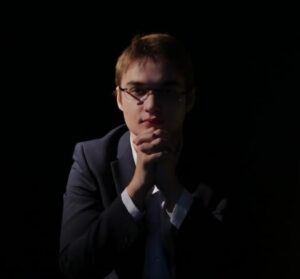
Nikita Burzanitsa: a Portrait in Poise and Passion
Our main Piano Expression Coaching in London – A Ukrainian-born pianist now based in London and piano teacher in London at WKMT, Nikita Burzanitsa bridges emerging talent and disciplined craft. His path—from early studies in Donetsk to advanced training at the Royal College of Music, and now his role at WKMT—reflects a focused commitment to both performance and pedagogy.
Early Foundations
Burzanitsa was born into a family of musicians in Donetsk, commencing formal piano studies at the age of seven with Professor Nataliya Chesnokova—a grounding that imbued his playing with both discipline and songfulness. A scholarship to Wells Cathedral School whisked him to Somerset in 2015, where the guiding hand of John Byrne helped shape his burgeoning technique and interpretative flair.
London Calling
London beckoned decisively in 2020 when Burzanitsa secured a double scholarship to the Royal College of Music. There, under the tutelage of the formidable Dmitri Alexeev, he completed a Master of Performance with distinction and is presently refining his craft on the RCM’s prestigious Artist Diploma course. The city’s exacting musical climate, so steeped in expressive traditions, has proved fertile soil for his artistic maturation.
Laurels on the Competition Stage
Success on the platform has followed apace:
- Wells Concerto Competition winner (2017) The Keyboard Charitable Trust
- International London Piano & Music Competition 1st Prize (2017)
- Sevenoaks Young Musician of the Year (2020)
- Joan Chissell Schumann Piano Competition 2nd Prize (2021)
- Orbetello Piano Competition (Junior, Italy) 2nd Prize (2021)
- Moscow International Music Competition 1st Prize (2021)
- Nouvelles Étoiles International Music Competition, Paris 1st Prize (2021)
- Four Notes Piano Competition, Abu Dhabi 1st Prize (2021)
- Vienna Music Competition – Virtuoso Category 1st Prize (2021)
- Beethoven Medal of the Worshipful Company of Musicians (London, 2022)
Masterclasses and Artistic Influences
Burzanitsa has absorbed further polish in classes with an enviable roster of luminaries—Stephen Hough, Mitsuko Uchida, Barry Douglas, Boris Berman, Vanessa Latarche, Vovka Ashkenazy, Andrey Ivanovich and Dmytro Sukhovienko among them—each encounter adding a new tint to his already vivid tonal palette.
At the Heart of WKMT
Today, Nikita serves as a full‑time advanced piano teacher at WKMT London, where his RCM‑honed command of line and colour dovetails elegantly with the studio’s Scaramuzza‑inspired ethos of physical freedom and vocal tone. His faculty profile is refreshingly matter‑of‑fact: “Nikita prepares students for graded examinations and competition work,” it states—yet anyone who has overheard his lessons will know that he also cultivates the subtler art of narrative phrasing.
Concert Life
Performance remains central to his identity. Recent London engagements have included a warmly received recital at St Mary’s Perivale—part of the church’s enterprising piano series—and appearances under the auspices of the Keyboard Charitable Trust, the latter placing him on the same roster that once fostered talents such as Maurizio Baglini and Yevgeny Sudbin. Reviews note the “lyrical ease” of his Beethoven and a “chiselled clarity” in Skoryk, hallmarks of a pianist who prizes narrative over display.
A Closing Word
In an age when the term “virtuoso” is applied rather too liberally, Nikita Burzanitsa offers a more nuanced model: technique at the service of poetry; youthful ardour tempered by scholarly rigour; and, crucially for us at WKMT, a communicative spark that kindles the same in his pupils. Watch this space—London’s rich expressive tradition has gained another articulate voice.
🎓 Meet the instructors shaping the next generation of expressive pianists:
The Cultural Weight of Expression in London’s Musical History
London has long been a crucible for expressive traditions in classical music. As one of the world’s great musical capitals, it has hosted legendary performers whose interpretations became the stuff of lore, and it has nurtured audiences who value emotional communication as much as virtuosity. The city’s iconic venues themselves tell part of the story. Wigmore Hall, for instance, is famed for its intimate acoustics and cultured audiences, making it a sanctuary for nuanced, expressive playing. Since its opening in 1901, Wigmore Hall has been the site of countless memorable recitals where pianists could explore the subtlest expressive shadings. Its very design – a relatively small, oval hall with a domed ceiling – rewards delicate tonal control and fine gradations of dynamics. Many great artists gave career-defining performances here: from Artur Schnabel’s heartfelt Beethoven cycles to Sviatoslav Richter’s hypnotic late-night recitals. The hall’s atmosphere encourages a kind of rapt music-making where “every expressive detail” can be appreciated. Indeed, portraits of past masters line the green room, inspiring contemporary performers to rise to that golden-age standard of expression.
Interior of London’s Wigmore Hall, an iconic venue where intimate, expressive piano performances have enthralled cultured audiences for over a century.
On a grander scale, Royal Festival Hall (RFH) – opened in 1951 on the Southbank – symbolizes London’s post-war musical renaissance and democratization of classical music. With over 2,500 seats, RFH has seen the world’s leading pianists communicate across a vast space, proving that genuine expression can project in a large modern hall. One famous example was the 1963 London debut of Vladimir Ashkenazy and John Ogdon playing Rachmaninoff’s Second Piano Concerto (each taking two movements); the emotional sweep of that performance, delivered to a sold-out RFH, reportedly moved listeners to tears despite the hall’s size. London audiences at RFH have been treated to everything from the profound spirituality of Arthur Rubinstein’s late Brahms interpretations to the fiery passion of Martha Argerich’s concerto appearances. The expectation is that artists will bring something of themselves to the music. London critics, accordingly, often highlight whether a performer’s interpretation had emotional impact or fell flat. As music critic Edward Seckerson noted, observing a concerto at RFH, “what we see in an expressive musician’s body and face is important” in conveying involvement. A performer who appears detached risks leaving the audience cold, whereas one visibly invested can double the listener’s engagement. This insight underlines the London ethos that music is a performing art, and expressiveness includes not just sound but stage presence. A city that values theater and drama as much as London does naturally extends that to concert life: a pianist is expected to be, in a sense, an actor of the instrument, incarnating the music’s character in performance.
London’s musical history is replete with events that highlight the cultural weight given to expression. In the late 19th century, the city was captivated by the expressive playing of composer-pianists like Franz Liszt (during his visits) and Camille Saint-Saëns, who both gave recitals here. Critics of the time marveled not simply at their technical feats but at the emotional narratives they spun from the keyboard. By the early 20th century, London became the adopted home of Polish pianist Ignacy Jan Paderewski, whose soulful interpretations (and charismatic persona) turned him into a star – even a figure of political influence. The public flocked to hear Paderewski’s poetic rubato in Chopin; for many Londoners, he embodied Romantic expression at the piano. His popularity underscored how much value London audiences placed on the expressive aura of a performer.
Mid-century, the rise of broadcast concerts (e.g., BBC Proms and radio relays) further shaped the city’s expressive traditions. Performers had to connect not just with those in the hall but also with unseen listeners at home, refining an expressive directness and clarity. The Proms, though held in the vast Royal Albert Hall, have a tradition of communicative programming – piano soloists there (from Myra Hess in the wartime National Gallery concerts to modern virtuosi) often choose repertory that speaks from the heart to the masses. It is telling that London’s two major conservatories (RCM and Royal Academy of Music) have always included “interpretation” classes and public masterclasses as key parts of training, emphasizing that technical grooming alone isn’t sufficient to succeed on London’s storied stages.
Furthermore, London’s rich chamber music and song recital scene has kept expressive nuance at the forefront. Venues like Wigmore, St. John’s Smith Square, and more recently King’s Place, regularly host song recitals where the pianist must be an equal expressive partner to the singer, shading every chord with meaning. This tradition of accompaniment (Gerald Moore, the legendary accompanist, was a Londoner) has fed back into solo piano training – pianists learn to “breathe” with singers and phrase with lyrics in mind, a tremendous boon to their expressiveness even in instrumental music. It’s no coincidence that many great expressive pianists, such as Sir Clifford Curzon and Geoffrey Parsons, were deeply involved in collaborative music in London.
In essence, London’s musical history illustrates a continuum: each generation of artists upholds a standard of expressivity, often mentored by the previous generation in a kind of lineage. An example: the young Daniel Barenboim, while living in London in the 1950s, was mentored by Edwin Fischer and also encountered the ethos of Furtwängler and Barbirolli – he often recounts how he learned that “the sound must always carry an expressive intention.” Barenboim’s own later London performances (like his complete Beethoven Sonata cycles at the Southbank) were lauded for their narrative quality and emotional insight, showing the fruits of that lineage. London audiences, critics, and institutions thus collectively maintain a culture where expressive piano playing is highly prized, expected, and cultivated. Coaches and teachers in the city operate in this context, constantly reminding students that a performance in London needs to say something. The city’s historical tapestry – from intimate Victorian parlors to grand modern halls – all weave into a single message: technique and virtuosity, while admired, ultimately serve the higher goal of moving the listener. Piano Expression Coaching in London Guide.
The Lyricism of British Composers
Britain’s own composers have contributed significantly to the ideal of expressive playing, often through music that demands a particularly lyrical or introspective approach. Consider Edward Elgar and Frank Bridge – two very different British composers whose works nonetheless influenced pedagogical and performance trends in London, especially in how pianists approach expression.
Elgar, though known primarily for orchestral and choral works, wrote piano music (and transcriptions) imbued with what observers call a noble lyricism. His Violin Concerto, for instance, was described at its Boston premiere as “steeped in the noble lyricism for which Elgar is rightly famous… by turns explosive, passionate, and a little wistful.” Those same qualities permeate pieces like Elgar’s Salut d’Amour or the piano transcription of Nimrod from the Enigma Variations. British pianists learning Elgar – whether in solo arrangements or accompanying singers in the Sea Pictures – quickly discover how much expressive nuance is required. The phrase “nobilmente e semplice” (nobly and simply), marked in Elgar’s scores, became almost a motto for interpreting his music. London teachers often use Elgar’s shorter pieces to teach singing tone and rubato: the music invites a broad, singing line supported by a dignified restraint. It’s a very British type of expressiveness – passionate yet somewhat held in check by form. Students learn to voice melodies with a rich cantabile and to implement tempo flexibility in an organic way. The influence on pedagogy is evident: Elgar’s style reinforces lessons about long-line phrasing and dynamic contour. Also, Elgar’s personal recordings (he recorded piano rolls of some works) show a late-Romantic performance practice full of portamenti and flexible tempoclassicalmusicguide.com. This historical evidence has encouraged modern pianists in London to adopt a freer approach when appropriate, shrugging off overly metronomic playing for music of this idiom.
Moreover, Elgar’s deeply emotional moments (for example, the Adagio of his Symphony No.1, often likened to a heartfelt song without words) have influenced how London audiences and judges perceive expressiveness. There is an expectation, especially in national competitions or festivals, that a performer rendering a British hallmark piece will bring out the emotion. Jury members have been known to cite the “nostalgic lyricism” or “passionate nobility” of an interpretation as a deciding factor in competitions – a direct nod to capturing Elgarian spirit. In pedagogical literature too, Elgar’s phrase shaping is used as an exemplar of how to balance structure and sentiment: his scores often layer a singing melody over a steady accompaniment, teaching students to project one while controlling the other.
Turning to Frank Bridge, we encounter a composer who straddled late-Romantic expressiveness and early modernism. Bridge’s early works (roughly pre-1920) are lush, lyrical, and rife with expressive harmonies influenced by Fauré and Brahms. His later works (mid-1920s onward) embraced more dissonance and complexity, influenced by the Second Viennese School. This evolution had a pedagogical legacy through Bridge’s most famous student, Benjamin Britten. Bridge taught Britten privately in the 1920s-30s, and Britten absorbed Bridge’s ethos of taking music seriously and expressing sincerity.
In a 1960 interview Britten said of Bridge: “He really taught me to take as much trouble as possible over every passage, over every progression, over every line,” demanding “scrupulous attention to good technique [and] saying clearly what is in your mind.”.
This quote has become part of British piano pedagogy lore – often cited to illustrate the point that expressive playing arises from meticulous preparation and clarity of intention. In essence, Bridge instilled in Britten (and thereby in future generations) the idea that every detail matters for expression. A subtle dynamic marking, a inner voice, a harmonic color – all must be shaped knowingly. British pianists trained in this lineage learn to be extremely faithful to markings and to understand the structure beneath the sentiment.
Bridge’s own music offers rich material for teaching expression. His piano pieces like Rosemary or Spring Song are charming miniatures that require nuanced voicing and gentle rubato. Teachers in the UK sometimes introduce these to intermediate students to practice lyrical playing and pastel tonal shades. On the other hand, Bridge’s later, more experimental piano pieces (e.g., his Sonata or Three Sketches) challenge advanced students to find new means of expression – perhaps more angular or stark, showing that “expressive” need not mean sweet or pretty, but can include the expressivity of tension or ambiguity. This breadth broadened British pedagogy: it wasn’t just about romantic cantabile, but also about modernist expression (sometimes an acquired taste).
Interestingly, Britten’s own early piano works and his interpretive choices reflect Bridge’s dual influence. Britten composed Variations on a Theme of Frank Bridge (for strings) as a tribute, in which he characterizes Bridge’s qualities: “his integrity… energy… charm… wit… gaiety”. These human qualities translated into musical attributes that Britten and others would emulate. For example, “integrity” might translate to structural coherence in performance; “gaiety” to lightness and humor in touch (Bridge had a playful side in his lighter pieces). London’s performance community took note – when the Variations on a Theme of Frank Bridge premiered at the 1937 Salzburg Festival (with Boyd Neel Orchestra, largely a British ensemble), critics admired not just Britten’s composition but the portrait of Bridge’s character it painted. It implicitly set a template: a well-rounded musician should be capable of multiple expressive shades – from wit to depth – something pedagogues strive to cultivate in students.
In London’s conservatoires, one can trace an “expressive lineage” from Bridge through Britten to later British composers and teachers. Many of Bridge’s students (besides Britten) became noted teachers themselves – for instance, Harold Craxton and Myra Hess (though Hess was not Bridge’s student, she was Britten’s mentor later on). They perpetuated an approach where expressive romanticism blended with modern clarity. A paradoxical outcome of Bridge’s later turn to modernism is that he taught Britten (a modernist) to appreciate the expressive power of older music too. Britten famously championed Purcell and wrote about conveying the passionate expression within Purcell’s Baroque forms. Thus, British pianists learned from this example that expression is timeless – whether in a Bach fugue or a new contemporary piece, the performer must find the emotional core.
Elgar and Bridge also influenced interpretation trends in London’s concert programming and competitions. For instance, the BBC Young Musician competition (piano category) over the years has seen contestants frequently choose an Elgar transcription or a piece by Britten; judges often comment on their interpretation. A moving performance of, say, an Elgar Salut d’Amour transcription can sometimes outshine flashier etudes if it connects with listeners – reinforcing to young pianists that communicative playing is valued. The Royal Academy of Music in London even has an award named after Frank Bridge, emphasizing interpretation of English repertoire.
To sum up, British composers like Elgar and Bridge have shaped pedagogical and performance practices by providing quintessential examples of English lyricism, nostalgia, and also innovation. Elgar’s noble passion and Bridge’s expressive evolution taught pianists in London to honor the singing line and heartfelt directness, while also embracing structural clarity and, when called for, modern edginess. This dual legacy means London pianists are equally at home drawing tears with an “English Romance” and navigating the complex emotions of 20th-century tonalities. The common thread is a commitment to honest expression – a trait that these composers manifested in their music and which London’s musical community has eagerly adopted and passed on. Piano Expression Coaching in London.
Techniques for Teaching Expression
Teaching a pianist or advanced student to play expressively is a nuanced art that draws on established pedagogical approaches and new research alike. In London’s conservatoires and piano studios, instructors employ a variety of techniques to cultivate musical expression in students. These range from time-honored methods (as outlined by great teachers in literature) to innovative exercises influenced by psychology and physiology. Continuing with Piano Expression Coaching in London Guide.
One foundational approach is outlined in Heinrich Neuhaus’s classic treatise The Art of Piano Playing. Neuhaus, who taught the likes of Richter and Gilels, believed that technique and expression are indivisible. He advocated training the imagination first: the student must hear and conceptualize the ideal sound internally. Only then should they figure out the technical means to produce it. In practice, a teacher following Neuhaus’s approach might spend a lesson having the student describe the character of a piece (joyful, melancholic, turbulent, etc.), even relating it to images or narratives, before playing a note. Neuhaus famously said, “in order to speak and to be heard it is essential not only to know how to speak, but first of all to have something to say.” This quote is often cited to students as a reminder that playing scales or études mindlessly will not make an artist; one must cultivate inner poetry alongside finger dexterity. Pedagogically, this translates into assigning repertoire that the student connects with emotionally (to encourage heartfelt playing) and into asking the student to sing phrases or play them cantabile to find natural expression.
- Score analysis is another tool: teachers help students understand the structure of the music – harmonic tension and release, phrase syntax, climaxes – because expressive playing is rooted in highlighting those structural points. As pianist-scholar Charles Rosen noted, a deep interpretation often comes from recognizing how the music’s form creates feeling. For example, a student learning a sonata might be guided to discover where the melody reaches its peak or where a surprising modulation conveys a new emotion, and then adjust their dynamics or timing to underscore it. This approach reflects the influence of theorists like Heinrich Schenker (whose ideas trickled into teaching: phrase arching, “arrival” points, etc.) and writers like Charles Rosen, who in works like Piano Notes and Music and Sentiment explained how composers encode sentiment into notes and what pianists can do to reveal it. One might not cite Rosen directly in a lesson, but a London professor might say something akin to, “Be mindful that Chopin wrote a ritardando here – he’s telling us this harmony is special, savor it.” Such guidance is informed by generations of analytical insight married to performance.
- Teachers also use historical recordings and imitation as a method. While originality is the end goal, students (especially younger ones) can learn a lot by emulating masters. A teacher might play a recording of Alfred Cortot or Dinu Lipatti to illustrate expressive rubato or tonal shading. For instance, hearing Cortot’s natural, speech-like rubato in a Chopin waltz can free a student from rigid playing. Similarly, watching videos of expressive performers can teach body language that aids expression. The caveat is always given: we imitate to learn possibilities, not to become clones. Interestingly, modern research supports this: a Frontiers in Education study found that aural modeling (teacher playing for the student) helped learners build an aural image and inspired them to play more expressively themselves. Pupils in that study said things like, “I liked listening to my teacher play it because it sounded amazing… it made me want to play like that.”. London piano pedagogy often involves teachers demonstrating with emotive exaggeration, knowing the student will catch some of that musical “spark”.
- Masterclasses and performance classes are institutionalized techniques at academies like RCM or Guildhall. In these settings, a student performs and then is critiqued in front of peers – a format that particularly focuses on interpretation. Master teachers might stop a student and say, “What do you want us to feel here? Decide, and make it stronger.” The public nature of the class encourages the student to project character more vividly (shy, half-formed ideas usually get called out). It’s not uncommon in a London masterclass to hear a professor use metaphors: “Play this like a lovers’ quarrel,” or “Imagine walking through a foggy London street – that’s the atmosphere for this prelude.” Such imagery, while seemingly fanciful, can unlock very concrete changes in tone and timing. Pedagogues like Margaret Fingerhut and Ronald Smith have been known for their rich use of metaphor in teaching, a tradition that goes back to earlier masters (e.g., Leschetizky in the 19th century would famously evoke scenes or emotions for his students). The goal is to shift the student’s focus from how to press the keys to why the music moves as it does.
- We also see references to specific pedagogical texts: for instance, Charles Cooke’s “Playing the Piano for Pleasure” or György Sebők’s teachings, which many London teachers integrate. Sebők emphasized attention to physical feeling – how an expressive sound often correlates with a certain physical release. This aligns with scientific studies today. A 2024 research paper on Expressive Movements in Piano Performance concluded that integrating body awareness and expressive gesture in teaching significantly enhances students’ expressivity. At institutions like the Royal Academy, it’s no longer unusual to have sessions on Alexander Technique or Feldenkrais Method for pianists, which address bodily tension and promote natural movement. By encouraging gestures (like allowing the torso to sway or the arms to follow through freely), teachers help students physically embody the music. This in turn reflects in sound – freer, more singing tone, and phrasing that “breathes.” Even something as simple as singers’ techniques (having pianists practice breathing as if phrasing a vocal line) is used. The scientific rationale is that music and movement are interconnected, and expressive intentions often manifest in bodily motions. Observing a passionate pianist, one often sees their body react – a lean in a yearning phrase or a slight lift of the hand in a moment of repose. Instead of discouraging these as extraneous, modern pedagogy often harnesses them: a student told to make a certain gesture at the end of a phrase might thereby execute a more convincing diminuendo.
- Another emerging tool is technology and data. Some teachers use recording and playback – letting students hear themselves, which can be revelatory. Others use MIDI or computer visualizations to show dynamic curves or timing (for instance, software that graphs tempo fluctuations). A student might be surprised to see that a phrase they felt was passionate actually came out monotonous in dynamics, according to the graph. While technology is auxiliary, it appeals to analytically-minded students and provides objective feedback. That said, most teachers still prioritize developing the ear and the heart over looking at a screen.From a neurological perspective, educators take note of studies showing music’s impact on the brain’s emotion centers. They sometimes reassure very intellectual or technique-oriented students that it’s okay to let go – that their brain is wired to respond to the emotional cues if they allow it. A study from Bath University (2022) showed that learning to play music even for a short time can boost connectivity between auditory and emotional regions of the brain. In essence, expressive playing engages the brain’s reward system. Knowing this, teachers encourage students to tap into their own emotional memories or imagery to make a performance more genuine. Some advanced teachers even touch on interpretive analysis – why did the composer write this piece? what was happening in their life? – as motivation for expressive decisions, connecting empathy with interpretation.
- Importantly, teaching expression also involves feedback and encouragement. Unlike right-or-wrong technical issues, expression can be subjective, and students are often shy or afraid of being “too much.” Good teachers create a safe space for emoting. They might praise a student specifically on expressive attempts: e.g., “I love the tenderness you brought to that melody – could you do the middle section with the same imagination?” Constructive feedback pinpointing expressive details (as opposed to bland “good job”) has been shown to improve students’ commitment to musicality. For instance, competition judges’ comments often highlight phrasing, tone, and character – “Great expression (dynamic contrast, hand balance, pace and pulse)… good musical direction throughout.” When shared with students, such comments reinforce the value of their expressive work and motivate them to continue in that direction. It’s worth mentioning the influence of certain books on London pedagogy: Abby Whiteside’s “Indispensables of Piano Playing” (advocating rhythm as the life-force of expression), Josef Hofmann’s “Piano Playing” (insights on tone production and sentiment), and Walter Gieseking & Karl Leimer’s “The Shortest Way to Pianistic Perfection” (which, despite focusing on memory and reflex, also speaks to mental visualization of music). Moreover, the Russian school via Kievman or Igor Levit’s modern masterclasses, and the American “emotional piano” school via teachers like Seymour Bernstein, all feed into a cosmopolitan teaching environment in London. A student might concurrently absorb lessons on arm weight (from the Russian tradition), on intellectual structuring (from the German tradition), and on emotional vulnerability at the instrument (perhaps from the American tradition).
- Finally, a holistic trend in teaching expression is to incorporate listening and improvisation. Teachers have students listen to great recordings, yes, but also to attend live concerts in London (taking advantage of the city’s vibrant scene) and report what moved them. This sharpens their discernment of expressive performance. And some teachers encourage improvising in the style of a piece – by extemporizing, a student often connects more freely to emotional expression without the “pressure” of written notes. This was something even Heinrich Neuhaus did in his lessons: he would have students improvise transitions or cadenzas to develop freedom and imagination.
In conclusion, teaching piano expression in London today is an artful blend of science and sentiment, tradition and innovation. It leverages classical pedagogical wisdom – like Neuhaus’s focus on inner singing, Long’s insistence on rhythmic integrity, and Rosen’s analytical depth – and supplements it with modern understanding of body mechanics, psychology, and neuroscience. Expressive playing is encouraged through visualization, imitation, analysis, physical technique, and emotional coaching. The overarching goal is to ensure the student has both the tools and the mindset to deliver performances that are not only accurate and controlled, but also emotionally compelling and authentic. And when this goal is achieved, the effects are profound: studies show that such performances not only win competitions or earn diplomas, but also deeply engage audiences and even provide performers themselves with greater artistic fulfillment. After all, the ultimate measure of expressive depth is in its impact – on juries, on listeners, and on the students’ own sense of connection to the music.
Have questions or prefer a tailored recommendation?
📩 We’re here to help. Contact us directly and we’ll guide you through your options — whether you’re in London or learning online.

Additional Elements of Expressive Piano Performance
Beyond historical pedagogy and practical techniques, there are other dimensions to piano expression coaching that merit attention. One is the growing body of scientific research linking expressive performance to neurological and physiological responses. Brain imaging studies, for example, demonstrate that when a pianist plays with genuine feeling, there is significant activation in areas of the brain related to emotion, empathy, and reward. Listening to or imagining music also lights up these circuits. A study using fMRI revealed that music performance (and even vivid music imagery) engages a broad cortical network, including regions governing motor control, hearing, and emotion. In essence, playing music expressively is a whole-brain activity. Another study noted “enhanced connectivity between the auditory and emotional regions of the brain” when individuals engage deeply with music. This supports what musicians have long intuited: expressive music-making is not just a finger exercise but an emotional experience at the neural level.
Physiologically, performers often experience measurable changes when playing expressively – heart rate fluctuations, altered breathing patterns, and hormonal responses. One investigation of elite pianists observed variations in autonomic responses (like heart rate and skin conductance) corresponding to expressive peaks in the music. In simpler terms, when a pianist pours emotion into a passage, their body “rides” that emotion. Coaches sometimes share these insights with students to validate the intensity they feel and to teach performance management. Knowing that an emotional climax might raise your heartbeat, for instance, a student can practice calming techniques or harness that adrenaline positively.
From the listener’s perspective, studies in music psychology have shown that audiences – even non-trained ones – consistently pick up on performer expressiveness and it heavily influences their enjoyment and memory of the performance. In competition settings, juries are often moved to consensus by a performer who communicates sincerely. It’s often cited anecdotally that jurors might forgive minor slips in a performance that was “rich with personality and emotion,” whereas a note-perfect but bland performance leaves them unenthused. Empirical research echoes this: one study of competition evaluations suggested that musical expression and communication were as decisive (if not more) than technical accuracy once a certain basic level was met. This doesn’t undermine the importance of technique, but rather confirms that beyond a threshold, expressive depth is the differentiator.
Expressive playing also has implications for student motivation and retention. Music educators note that students who learn to play expressively tend to stick with their instrument longer and find more personal fulfillment. This was reflected in a qualitative study of young learners, where pupils described playing with expression as making the music “more interesting and relatable” and allowing them to “make the piece [their] own”. Such feelings contribute to a sense of ownership and identity as a “musician” rather than just someone executing notes, boosting self-efficacy. Teachers in London often observe that once a student experiences the emotional reward of a truly expressive performance – perhaps moving an audience or themselves being moved – a kind of virtuous cycle begins. They become more eager to practice and improve, not just for external rewards but for the intrinsic joy of musical communication. In fact, many adult amateurs cite the ability to express themselves as the primary reason they continue lessons; it’s a therapeutic, creative outlet distinct from daily life pressures.
Another contemporary element is the cross-pollination of ideas through international exchanges and online platforms. London, being a global hub, attracts masterclasses by visiting artists from all over. A student might get a dose of Russian expressivity from a Denis Matsuev masterclass, or Schubertian lyricism from Imogen Cooper’s workshop. These experiences reinforce to students that expression is a universal language – each culture might have its flavor (the Russian school’s grand passion, the French school’s refined nuance, etc.), and London’s openness allows students to sample all. Online, pedagogues share tips on forums (like The Piano Street or Music StackExchange) where questions like “How do I play more expressively?” get answered by teachers worldwide: suggestions include singing along, studying phrasing, and even reading poetry to enhance musical phrasing. The digital age, therefore, complements traditional coaching by providing a wider community emphasis on expression.
🌐 Not in London? No problem. Our expressive coaching is available globally through online one-to-one lessons. You’ll learn from the same qualified instructors, wherever you are.
Finally, respected European and British pianists often publicly voice the value of expressive playing, which reinforces its importance in pedagogy. In interviews or articles (such as those in BBC Music Magazine or Gramophone), one hears pianists like Stephen Hough, Angela Hewitt, or Paul Lewis discuss interpretation at length. For example, Hough has written about how a performer must “find the story” in each work and that virtuosity without poetry rings hollow. Such viewpoints, coming from admired professionals, filter into teaching philosophies. A London teacher might quote Hewitt on Bach: how dance rhythms and articulation create emotional affect, or reference András Schiff’s idea that one should “speak” the music as a language to be expressive. These viewpoints validate the emphasis on expression and give students role models who exemplify that ideal.
In conclusion, piano expression coaching in London as portrayed in this article is multi-faceted and deeply rooted. It resonates with historical principles from C.P.E. Bach’s time to the present, is enriched by the legacy of great 20th-century pedagogues and performers, and continues to evolve with scientific insights and cultural exchanges. The voice of Juan Rezzuto, as reflected through the lens of BBC Classical Music Magazine’s style, tells us that fact-based knowledge and artistic nuance go hand in hand. We see that teaching someone to play with expression is not a mystical hit-or-miss affair, but an educable, learnable art. With the right guidance, physical freedom, and mental imagery, even a technically equipped player can have an “expressive breakthrough” that elevates their musicianship to new heights. And in the vibrant musical city of London – with its storied halls, its lineage of maestros, its openness to all schools of thought – the tradition of expressive piano playing is not only preserved but continually renewed, one passionate note at a time.
This guide not only explores the art and legacy of expressive piano playing, but also introduces you to the coaches who teach it every day in London — both in-studio and online.
Sources for Piano Expression Coaching in London Guide:
- Bach, C.P.E. – Essay on the True Art of Playing Keyboard Instruments. Introduction by W. J. Mitchell (quotations on music as “a vehicle for the expression of the emotions”).
- Frontiers in Education (2020) – Young pupils on learning expressive performance: “Playing with expression made it more interesting… You can make the piece yours.”.
- Neuhaus, Heinrich – The Art of Piano Playing (English trans., 1993). Neuhaus emphasizes having “something to say” and that clear musical goals yield clear technical means.
- Lipatti, Dinu – Commentary on Florica Musicescu. Musicescu urged students to “look for light higher in others and even deeper in yourself” and never to sacrifice musical thought for mere technique. Piano Expression Coaching in London.
- Interlude (2023) – Martha Argerich: Fifteen Facts. On teacher Vincenzo Scaramuzza: “she had the soul of a 40-year-old” (re: expressive maturity in a child).
- Piano-Composer-Teacher London (WKMT Blog) – Scaramuzza Piano Technique Round-Up. “Visualize the sound… imbue each note with full expressive content.” – focus on holistic mind-body approach. Piano Expression Coaching in London Guide.
- Interlude (2021) – Friedrich Gulda: Terrorist Pianist. Gulda’s quote: “Play every tone as if your life depends on it! For your life really does depend on it.”.
- Naboré interview (Facts & Arts, 2017) – “The pianist who wants to play Brahms has to be a great ‘singer on the piano’,” and recollection of painting “landscapes of the heart and soul” in Brahms.
- Opera Today (2012) – Frank Bridge Song Focus. Bridge’s style: early “expressive romanticism of Fauré and Brahms”, later adoption of modernist techniques. Also Britten on Bridge’s meticulous teaching: “every passage, every line”, “good technique… saying clearly what is in your mind.”.
- Boston Classical Review (2025) – Review of Elgar Violin Concerto: “steeped in noble lyricism… explosive, passionate, and wistful” and notes of deeply personal feeling and expressive range.
- The Arts Desk (2009) – Edward Seckerson on performance: “what we see in an expressive musician’s body and face is important” for engagement.
- Journal of Human Movement Science (2024) – Chen, Expressive Movements in Piano. Findings stress integrating body awareness and expressive movement in piano education to enhance expressivity. Piano Expression Coaching in London.
- Pianoprodigies.com (2015) – Competition judges’ feedback example: “Great expression (dynamic contrast), left-right hand balance, pace, and pulse, and good musical direction throughout.”, illustrating valued criteria. Complete Guide on Piano Expression Coaching in London.
- Medium (WKMT, 2018) – Juan Rezzuto on Scaramuzza: WKMT students “are trained from scratch in this piano technique”, covering movements for physical freedom. Looking for Piano Expression Coaching in London.
- Musicians’ Company (2022) – Bio of Nikita Burzanitsa: details of RCM studies, scholarships, and competition wins (Beethoven Medal 2022, etc.).
- Royal College of Music – Prof. Gordon Fergus-Thompson profile: specialist in Debussy, Ravel, Scriabin, Schumann, Brahms (breadth of repertoire informing Nikita’s interpretive training). Looking for a Piano Expression Coaching in London.
- Dinulipatti.org – Music Critic article: Florica Musicescu described guiding Lipatti with “affectionate tyranny” and emphasizing artistry: “never sacrifices his musical thinking on the altar of technique.”.
- Wikimedia Commons – Image of Wigmore Hall interior (2022), illustrating a famed venue for expressive music-making【85†】. Guide on Piano Expression Coaching in London.