
 TRIAL LESSON
Piano Lessons
Vladimir Ashkenazy in London: The Curious Story Behind His Most Celebrated UK Performances
Apr
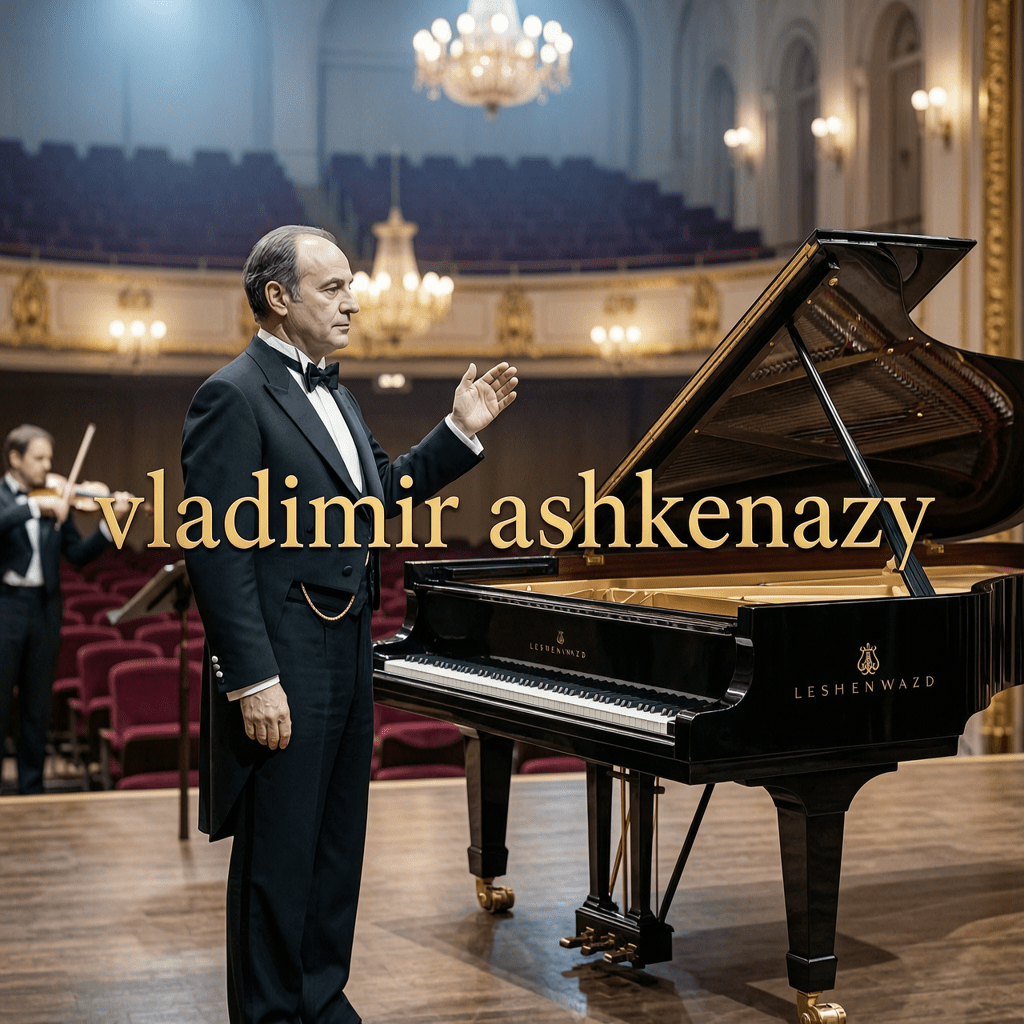
Vladimir Ashkenazy in London Complete Guide
Vladimir Ashkenazy in London: The Curious Story Behind His Most Celebrated UK Performances
Why Vladimir Ashkenazy’s London Years Matter
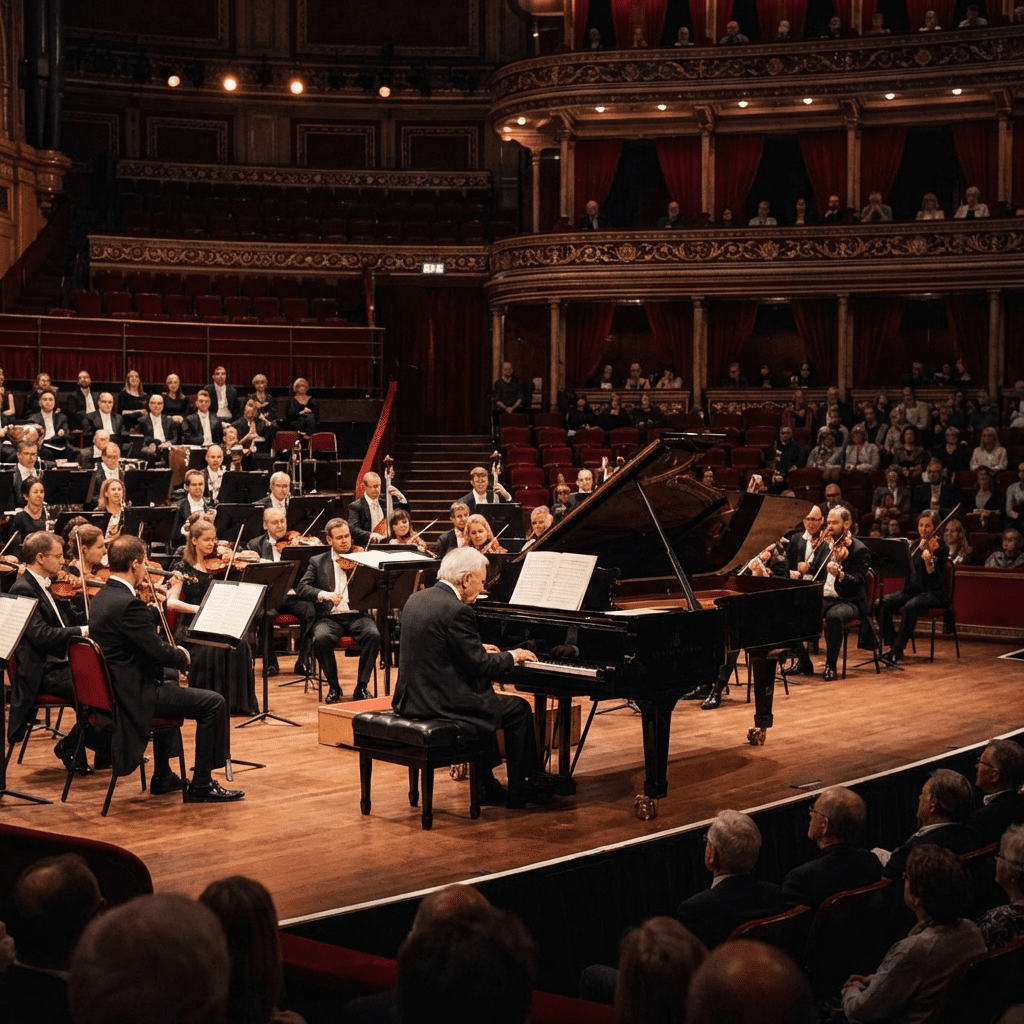
London did not merely host Vladimir Ashkenazy; it framed him. Across a career that moved fluently between pianist and conductor, he returned to the city’s major platforms—
the Royal Festival Hall, the Royal Albert Hall, the Barbican—bringing with him a repertoire that often joined Russian experience to Western structure.
His London story is therefore less a neat narrative of “debut–triumph–farewell” than a sequence of public encounters: Proms broadcasts that tested his authority,
Festival Hall programmes that sharpened his relationship with the Philharmonia, and occasional evenings that provoked scepticism as well as admiration.
What follows is a compact London timeline, then seven concerts that help explain why vladimir ashkenazy became—over decades—one of the capital’s most familiar musical presences.
The focus is deliberately local: where it happened, what was played, how it landed, and where the evidence still sits for anyone who wants to check the record.
- Through-line: pianist–conductor versatility, with a persistent commitment to Russian and Soviet-era repertoire alongside canonical German classics.
- London anchors: Royal Albert Hall (BBC Proms), Royal Festival Hall (Philharmonia), Barbican Hall (visiting orchestras), and earlier recital circuits.
- Afterlife: broadcasts, surviving programmes, and recordings that still circulate—often via BBC and major-label reissues.
London’s Ashkenazy story is a sequence of public encounters: a musician returning to the same rooms—Albert Hall, Festival Hall, Barbican—until the city’s listening habits begin to recognise his instincts as part of the local musical weather.
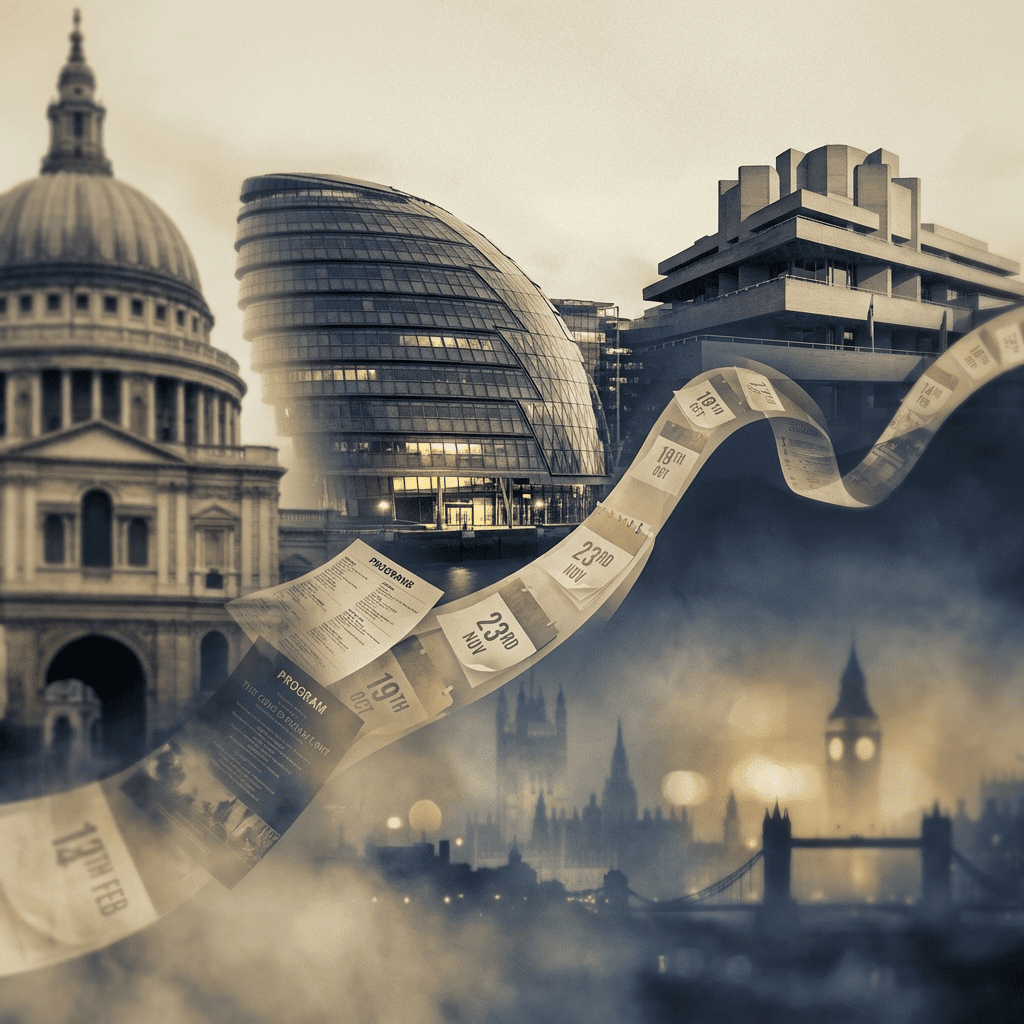
At a Glance — London Timeline
- 17 Mar 1985: South Bank Recital Series (Royal Festival Hall, London) — Ashkenazy as solo pianist (recital programme not archived online).
- 5 Sept 1985: BBC Proms, Royal Albert Hall (London) — Royal Philharmonic Orchestra; Ashkenazy as soloist/conductor. Programme: Brahms Tragic Overture, Beethoven Piano Concerto No.3 (Ashkenazy piano), Prokofiev Symphony No.5.
- 1987: Appointed Music Director of the Royal Philharmonic Orchestra (London).
- 12 Sept 1989: BBC Proms, Royal Albert Hall — Berlin Radio Symphony Orchestra; Ashkenazy conductor. Programme: Brahms Symphony No.1, Shostakovich Symphony No.6.
- 16 Nov 2002: Barbican Hall (London) — Czech Philharmonic Orchestra; Ashkenazy conductor, Hélène Grimaud piano. Programme: Dvořák Slavonic Rhapsody in A minor (Op.45, No.3), Ravel Piano Concerto in G (Grimaud), Janáček Suite from The Cunning Little Vixen, Dvořák Hussite Overture.
- 12 Aug 2006: BBC Proms (Prom 39), Royal Albert Hall — European Union Youth Orchestra; Ashkenazy conductor. Programme: Schnittke Kein Sommernachtstraum, Mozart Violin Concerto No.5 (solo Janine Jansen), Shostakovich Symphony No.4. (Broadcast live on BBC2/Radio 3).
- 31 Jan 2010: Royal Festival Hall — Philharmonia Orchestra; Ashkenazy conductor, James Ehnes violin. Programme: Elgar Cockaigne Overture, Mendelssohn Violin Concerto (Ehnes), Elgar Symphony No.1.
- 6 Nov 2015: Royal Festival Hall — Philharmonia Orchestra; Ashkenazy conductor, Seong-Jin Cho piano. Programme: Chopin Piano Concerto No.1 (Cho), Berlioz Roman Carnival Overture, Rachmaninoff Symphony No.2.
- 23 Mar 2018: Royal Festival Hall — Philharmonia Orchestra; Ashkenazy conductor. Programme: Mosolov The Iron Foundry, Glière The Red Poppy (suite), Shostakovich Symphony No.2.
The Seven Most Important Ashkenazy Performances in the UK
1) 5 Sept 1985 — Royal Albert Hall (BBC Proms, Prom 51): Soloist and Conductor, Publicly
The 1985 Proms appearance is a useful starting point because it places Ashkenazy in his most exposed configuration: leading and playing in the same evening.
With the Royal Philharmonic Orchestra he began with Brahms’s Tragic Overture, then moved to the piano for Beethoven’s Third Piano Concerto,
and finished the night as conductor alone for Prokofiev’s Fifth Symphony.
Contemporary press noticed the character of his Beethoven, with The Times observing that “every note sung with a kind of bittersweet intensity”.
It is the kind of line that tends to survive because it captures the Ashkenazy proposition in miniature: a musician who persuades less by surface glamour than by concentration.
Why it mattered: London heard, in one Prom, the joined-up identity—pianist and conductor—on which much of his later UK profile depended.
2) 12 Sept 1989 — Royal Albert Hall (BBC Proms, Prom 64): Brahms and Shostakovich on a Single Spine
By 1989 Ashkenazy stood at the Proms as an established conductor, directing the Berlin Radio Symphony Orchestra in a programme designed around musical solidity:
Brahms’s Symphony No.1 before the interval, Shostakovich’s Sixth afterwards.
The critical response highlighted his directness. Gramophone later described the performance style in concise terms: “Tempo was brisk, textures lucid”.
This mattered not as a stylistic slogan, but as evidence that Ashkenazy’s approach to Shostakovich—often treated as either raw confession or cold mechanism—could be made coherent in a large public hall.
Why it mattered: it underlined his authority in Soviet repertoire on a flagship London broadcast platform, while refusing to cordon it off from the German symphonic tradition.
3) 16 Nov 2002 — Barbican Hall: Czech Colouring, French Edge, and a Divided Press
Not every London appearance needs to be a triumph to be historically revealing. At the Barbican, Ashkenazy led the Czech Philharmonic in a programme that moved from Dvořák and Janáček
to Ravel, with Hélène Grimaud as soloist in the Piano Concerto in G.
The repertoire itself was part of the event’s significance: Dvořák’s Slavonic Rhapsody (Op.45, No.3), Janáček’s suite from The Cunning Little Vixen, and the overtly national gesture of the Hussite Overture.
Reviews, however, were mixed. The Independent characterised the evening as “a frustrating glimpse of immense orchestral potential squandered by mediocre direction”, while also describing Ashkenazy as “cheerful, reasonably efficient, and apparently self-effacing… loyal”.
Why it mattered: it shows how London critics could admire the musician while questioning the technique—an honesty that, paradoxically, strengthens the long view of his legacy.
4) 12 Aug 2006 — Royal Albert Hall (BBC Proms, Prom 39): The EUYO, Schnittke, and the Fourth of Shostakovich
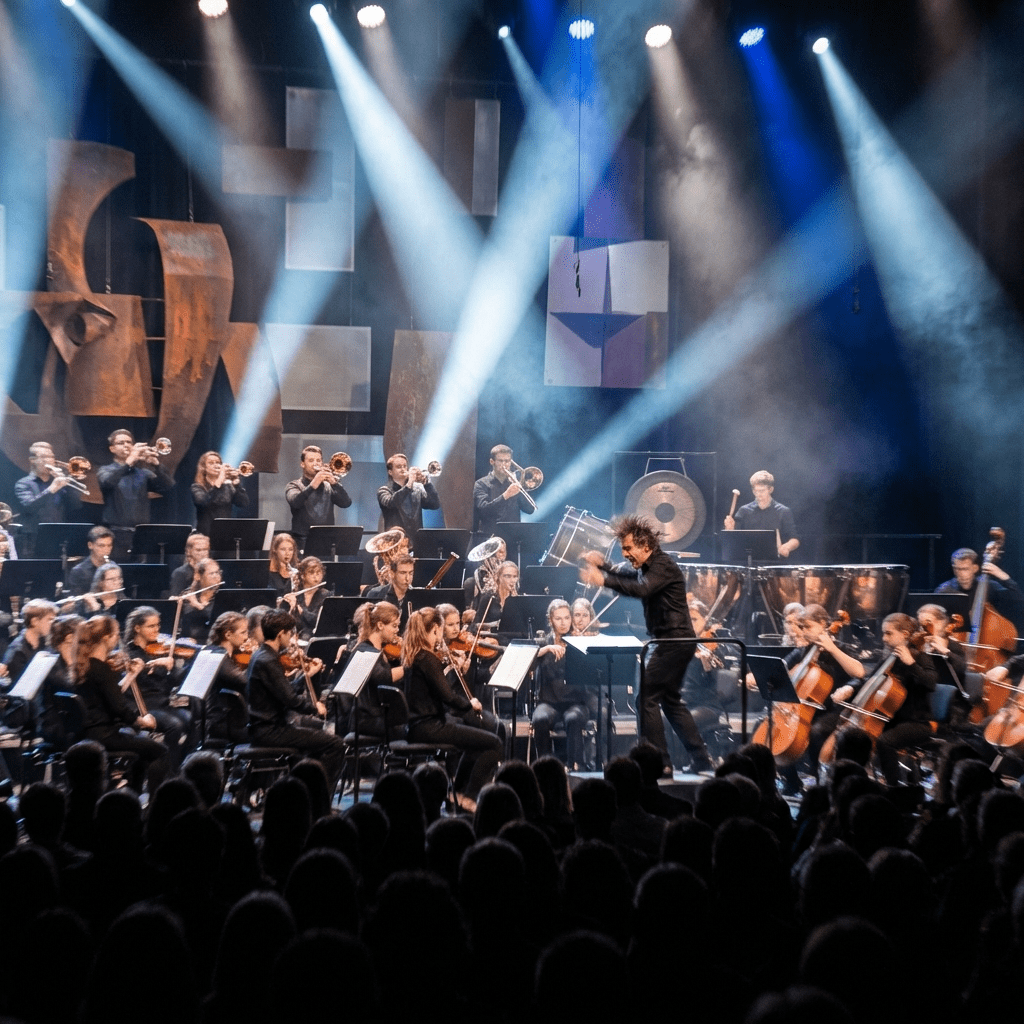
Ashkenazy’s return to the Proms with the European Union Youth Orchestra carried a different kind of weight: a senior musician staking his reputation on young players in difficult music.
The programme was ambitious by any standard—Schnittke’s Kein Sommernachtstraum, Mozart’s Violin Concerto No.5 with Janine Jansen, and Shostakovich’s colossal Fourth Symphony.
The event was broadcast live on BBC2 and Radio 3.
Reviews caught the double impression: the energy of youth, and the certainty of a conductor who understood the idiom.
The Independent described the Shostakovich as “ferocious, impeccably disciplined”.
Why it mattered: it positioned Ashkenazy as a conduit—between generations and between repertories that London audiences do not hear every week.
5) 31 Jan 2010 — Royal Festival Hall: Elgar as a Homecoming (of Sorts)
There is something quietly persuasive about a Russian-born musician making a case for Elgar without special pleading.
At the Royal Festival Hall, Ashkenazy led the Philharmonia through Cockaigne, Mendelssohn’s Violin Concerto with James Ehnes, and Elgar’s First Symphony.
Press reaction focused on the character of his presence—“a benign and hyperactive presence from the start”—and on the slow movement’s inwardness.
The Arts Desk wrote that Ashkenazy “underlined [the Adagio]’s passing ghosts … [leaving] us in no doubt that Elgar had become happily lost to the world in the private peace of its closing bars”.
Why it mattered: the concert made a credible argument for Ashkenazy as more than a ‘Russian specialist’, and for Elgar as repertoire that can travel when approached honestly.
6) 6 Nov 2015 — Royal Festival Hall: New Pianistic Stardom, Older Conducting Questions
A late-career London concert can serve two functions at once: it can introduce new talent, and it can test an established conductor’s continuing grip.
This Philharmonia programme placed Seong-Jin Cho—fresh from the Chopin Competition—at the centre of Chopin’s First Piano Concerto, followed by Berlioz’s Roman Carnival and Rachmaninoff’s Second Symphony.
The reception, again, was not uniform. A Guardian review found that “there was not much lustre about the Philharmonia’s playing under Ashkenazy”, regretting a shortage of sparkle.
Others valued the seriousness of the evening and the continuity it represented.
Why it mattered: it captured Ashkenazy’s role as an institutional elder in London—still shaping programmes and platforms even as opinion divided on results.
7) 23 Mar 2018 — Royal Festival Hall: “Voices of Revolution” and a Late Statement in Soviet Repertoire
If you want a single late London concert that sums up Ashkenazy’s instinct for Soviet-era music, this is a strong candidate.
The Philharmonia programme placed Mosolov’s industrial clangour (The Iron Foundry) beside Glière’s The Red Poppy suite and Shostakovich’s Second Symphony.
The response was notably warm. The Guardian wrote: “Ashkenazy conducts this repertory like one born to it, eliciting a terrific response from the Philharmonia throughout”.
Glière, in particular, was judged “infinitely persuasive”, winning over the hall.
Why it mattered: it read as a considered closing argument—an experienced musician returning to the sound-world that first made his name, and doing so on London’s most visible orchestral stage.
Ashkenazy and London’s Orchestras
Royal Philharmonic Orchestra: leadership as an institutional fact
Ashkenazy’s appointment as Music Director of the Royal Philharmonic Orchestra in 1987 is one of the key London datapoints.
It formalised a relationship already apparent in his Proms work with the ensemble and ensured that, for a period, his musical decisions were part of London’s regular orchestral life rather than special occasions.
Philharmonia Orchestra: continuity through the Festival Hall years
With the Philharmonia, the connection became long-term. He was appointed Conductor Laureate in 2000 and returned frequently to the Royal Festival Hall.
The programmes in 2010, 2015 and 2018 show the range: British symphonic writing, core Romantic concerto repertoire, and rarer Soviet works.
For London audiences, that matters as much as any single performance. It created the sense of a continuing conversation—sometimes harmonious, sometimes argumentative—between conductor, orchestra, critics and public.
Guest appearances: London as a crossroads
The record also points to guest engagements with other London institutions, including less frequent appearances with the London Symphony Orchestra and BBC ensembles.
Even when sporadic, those platforms helped connect his work to the city’s wider broadcast culture.
Recordings, Radio Broadcasts and the BBC Connection
London’s relationship with Ashkenazy is not confined to the hall. Several of the performances above were broadcast live, and many survive through BBC holdings.
The BBC Proms appearances in 1985, 1989 and 2006 are specifically noted as broadcast events, with the 2006 concert transmitted on BBC2 and Radio 3.
On disc, his catalogue remained a constant point of reference for UK listeners. The research record highlights major projects and reissues,
including the Ashkenazy: 50 Years on Decca box set, a Grammy-winning album of Shostakovich’s Preludes and Fugues (2000), and concerto projects such as Mozart concertos with the Philharmonia (1992).
The point is less to build a shopping list than to note how thoroughly his London presence is reinforced by recorded afterlives.
Contemporary Press and Critical Reception
The London critical record around vladimir ashkenazy is unusually candid. It includes admiration for musical intelligence and doubts about technical clarity.
That combination is instructive: it keeps the story human and prevents legacy from hardening into slogan.
- 1985: The Times praised Beethoven’s Third Concerto for its “bittersweet intensity”.
- 1989: Gramophone noted “brisk” tempi and “lucid” textures in Brahms/Shostakovich.
- 2002: The Independent was sharply divided—at once questioning direction while describing Ashkenazy’s manner as “cheerful” and “self-effacing”.
- 2010: The Arts Desk wrote perceptively on the Elgar Adagio, hearing “passing ghosts” and a closing “private peace”.
- 2015: The Guardian questioned orchestral “lustre” in the Philharmonia’s playing under his baton.
- 2018: The Guardian strongly endorsed his feel for Soviet repertoire, calling the Philharmonia response “terrific”.
Where to Find Archives and Programmes in London
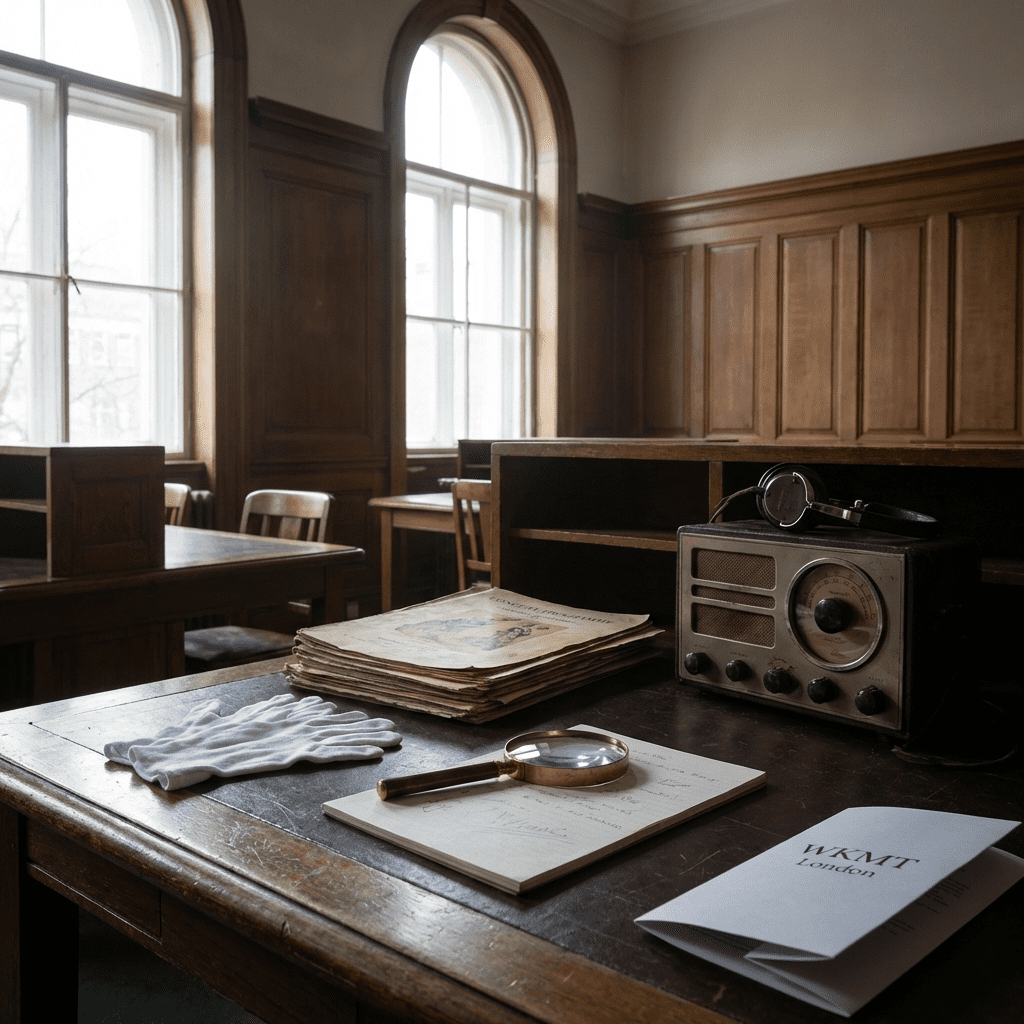
Royal Albert Hall and the Proms paper trail
The Royal Albert Hall archives retain scans of Proms programmes, and Proms events can be traced via the Hall’s catalogue entries.
For researchers, this is the cleanest route to confirming dates, works, performers and orchestral line-ups.
The British Library and specialist programme collections
London’s broader paper record is dispersed but accessible. The British Library holds concert programmes and related ephemera within its music collections.
The Concert Programmes Project aggregates catalogue data, showing numerous London entries for Ashkenazy across venues.
Conservatoire libraries, including the Royal College of Music’s Pendlebury Library, are also noted as relevant holdings.
BBC archives and rebroadcast culture
For broadcast traces, the BBC Archives provide listings for Proms concerts and related material.
In practical terms, BBC Radio 3 remains a key route for hearing rebroadcasts of historic performances.
Researchers are advised (in the record used here) to consult the RAH online archive or visit the British Library Reading Rooms.
Ashkenazy’s London Legacy Today
Ashkenazy announced his retirement from public performance in 2020, so the London story is now, inevitably, a matter of recordings, rebroadcasts and influence.
Yet the influence is not abstract. It remains audible in the way London orchestras programme the composers he persistently brought to the fore—Elgar in a serious symphonic context,
Shostakovich beyond the familiar Fifth and Tenth, and Soviet-era works that still feel like repertoire with arguments left in it.
Institutional profiles, including HarrisonParrott, underline the sheer breadth of his recording legacy. In London terms, the point is simple:
much of what was heard in the city continues to circulate in listening rooms, classrooms, and on-air.
Practical Guide — Hearing Ashkenazy’s Music in London Now
What to listen for
- Proms broadcasts: look for BBC Radio 3 rebroadcasts and archive listings, particularly the 1985, 1989 and 2006 Proms.
- Philharmonia and RPO programmes: watch for repertoire he championed in London—Elgar and Shostakovich are recurring touchpoints.
- Recordings: explore major reissues such as Ashkenazy: 50 Years on Decca and the Grammy-winning Shostakovich Preludes and Fugues (2000), alongside concerto and orchestral projects referenced in UK contexts.
A WKMT note
If Ashkenazy’s London story suggests anything practical, it is that serious listening is built over time—through concerts, archives, and sustained contact with repertoire.
If you value that kind of musical continuity, consider exploring WKMT London’s concerts and educational activity, or joining our membership for access to masterclasses and chamber recitals.
It is the quiet, local way to keep the tradition alive.
Continue the London listening tradition
FAQ on Vladimir Ashkenazy
- Which major London orchestras did Ashkenazy lead?
- He was Music Director of the Royal Philharmonic Orchestra from 1987 to 1994 and longtime Conductor Laureate of the Philharmonia, appointed in 2000. He also guest-conducted the London Symphony Orchestra and BBC orchestras.
- Is Ashkenazy still active in London concerts?
- No. He announced his retirement from public performance in 2020. His recordings and broadcast performances remain available, while London venues and broadcasters occasionally feature tributes or rebroadcasts.
- Where can I find original programme materials?
- Proms booklets are traceable via the Royal Albert Hall’s online archive. The British Library’s music collections and the Concert Programmes Project also list programme materials, and some orchestras maintain their own archives.
Sources for Vladimir Ashkenazy in London
Sources: Authoritative records and reviews were consulted, including the Royal Albert Hall performance archives; Gramophone and BBC archives; contemporary press (e.g. The Guardian, The Independent); and institutional profiles (Britannica, HarrisonParrott). (Last checked: 2026-03-31.)
WKMT link
Britannica
HarrisonParrott
Gramophone
BBC archives
The Guardian
The Independent
British Library
Concert Programmes Project