
 TRIAL LESSON
Uncategorized
Musical Mannerism and the Keyboard — From Gesualdo to the Virginalists
Oct
Mannerism in music shaped the keyboard repertoire
Musical Mannerism and the Keyboard — From Gesualdo to the Virginalists
Mannerism in music is one of the most misunderstood periods in the Western tradition — and one of the most important for anyone who studies the keyboard. Between the sack of Rome in 1527 and the first stirrings of the Baroque around 1600, European composers developed a musical language of extremity, chromaticism, and expressive violence that directly gave rise to an independent keyboard tradition. This guide traces that story from Gesualdo to the English virginalists.
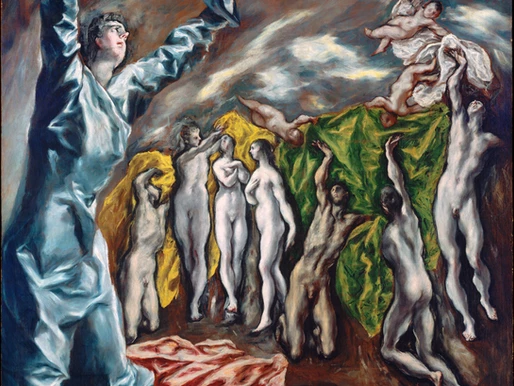
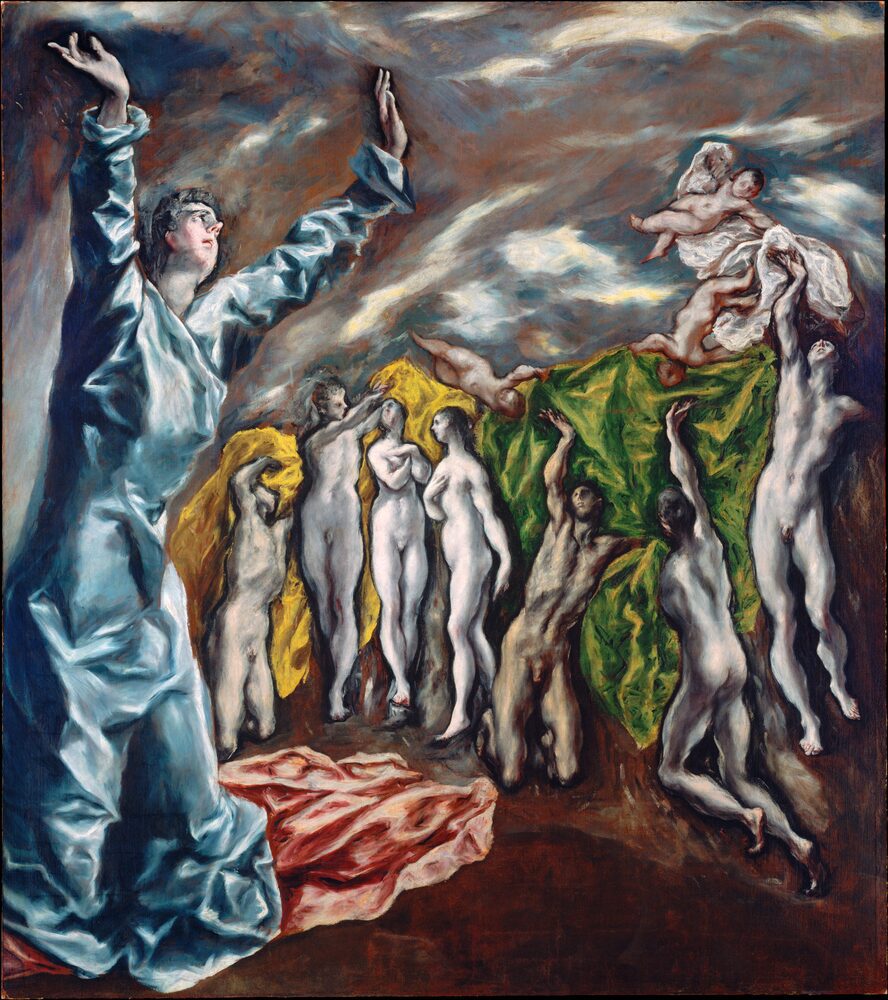
When the imperial troops of Charles V sacked Rome in 1527, the shock reverberated across every art form in Europe. The confident humanism of the High Renaissance — the world of Raphael’s perfect balance, of Josquin’s serene polyphony — suddenly seemed inadequate to express what had happened. Artists and composers began reaching for something more extreme: elongated figures, unsettled harmonies, exaggeration for its own sake. This is mannerism in music, and its consequences for keyboard players were profound and lasting.
The composers who defined Mannerist music — Gesualdo, Orlando di Lasso, Giovanni Gabrieli, Tomás Luis de Victoria — were predominantly working in vocal forms: the madrigal, the motet, the polychoral mass. But the harmonic experiments they conducted in vocal music were simultaneously being absorbed and transformed by a generation of keyboard composers who gave the style a new life on the organ, the virginal, and the harpsichord. Understanding music in this period means understanding both sides of that story.
What You Will Find in This Guide
- What mannerism in music means and why it matters for keyboard students
- The defining musical characteristics of the Mannerist style
- Carlo Gesualdo and the outer limits of Renaissance chromaticism
- The Mannerist keyboard tradition: English virginalists — Byrd, Farnaby, Gibbons
- Antonio de Cabezón and Spanish keyboard music
- Jan Pieterszoon Sweelinck — the bridge from Mannerism to the Baroque
- A recommended repertoire table for modern keyboard students
- How to approach this music in the practice room
Sack of Rome — Mannerism begins
End of Mannerist period
Pieces in the Fitzwilliam Virginal Book
Keyboard works by Cabezón
What Is Mannerism in Music?
The term “Mannerism” — from the Italian maniera, meaning style or stylishness — was originally applied to the visual arts to describe the period between the High Renaissance and the Baroque. In music, mannerism in music refers to a cluster of compositional tendencies that emerged roughly between 1530 and 1600 across Italy, Spain, the Netherlands, and England. These tendencies shared a common impulse: the deliberate rejection of Renaissance balance and clarity in favour of expressive complexity, harmonic surprise, and an emotional intensity that earlier composers had considered excessive.
The Mannerist style in music can be summarised by five overlapping characteristics. First, irregular melodic phrases — lines conceived as abstract gestures rather than singable melodies, often with unexpected leaps or compressed chromaticism. Second, an intensification of harmonic colour through the use of chromatic alterations and unprepared dissonances that went well beyond the modal conventions of the time. Third, a frequent alternation between polyphonic and homophonic textures, with the homophonic sections often treated chromatically to maximise their shock value. Fourth, in larger-scale sacred works, the use of polychoral writing — multiple choral groups positioned spatially to create shifting textures and antiphonal dialogue. Fifth, the expressive use of harmonically forbidden intervals, such as the augmented fifth and the diminished fourth, as deliberate rhetorical devices for word-painting.
“The Mannerists invented a language in which harmony was no longer a framework for melody but a substance in its own right — something that could contract, expand, or convulse independently of the text it was setting.”
— WKMT Editorial Notes on Mannerist Music
Carlo Gesualdo and the Limits of Chromaticism
No figure embodies mannerism in music more completely than Carlo Gesualdo, Prince of Venosa (c.1566–1613). His madrigals — particularly the six books published between 1594 and 1611 — deploy chromaticism so extreme that they remained effectively unperformable for three centuries after his death. Gesualdo’s harmonic language moves in sudden, unpredictable leaps between distantly related keys, pairing the most anguished text phrases with the most destabilising harmonic progressions. His six-book set culminates in a chromaticism that anticipates Wagner by two and a half centuries.
What Gesualdo explored in the madrigal, other composers were simultaneously investigating in keyboard music. The Italian keyboard tradition of the late sixteenth and early seventeenth centuries — represented by Giovanni Maria Trabaci (c.1575–1647) and Ascanio Mayone (c.1565–1627), both active in Naples — shows unmistakable Mannerist influence in its chromatic progressions, its unexpected textural contrasts, and its willingness to use dissonance for expressive effect rather than merely as a passing event to be resolved. Trabaci’s Ricercate and Mayone’s Capricci are among the earliest keyboard works to carry the Mannerist aesthetic from voice to instrument with full conviction.
The Keyboard in the Mannerist Era — A New Independence
One of the most significant developments of the Mannerist period was the establishment of keyboard music as an independent compositional tradition. Throughout the sixteenth century, much keyboard music had been directly derived from vocal originals — intabulations of madrigals, motets, and chansons transcribed for organ or harpsichord. The Mannerist generation changed this. The tiento (Spain), the fantasia (England), the toccata (Italy), and the ricercare (Netherlands) emerged as distinctly keyboard forms, each exploiting technical possibilities of the instrument that no vocal form could approach.
The keyboard suddenly had something that vocal polyphony could not offer: the ability to sustain multiple independent lines simultaneously without the coordination problems inherent in ensemble vocal music. A single player could realise the full harmonic complexity that a madrigal choir would struggle to execute in tune. This technical advantage made the keyboard the ideal laboratory for the Mannerist harmonic experiments. The chromaticism that was difficult to tune in choral performance was perfectly realisable on a well-tempered keyboard instrument.
William Byrd and the English Virginalists
The most fully developed keyboard tradition of the Mannerist era was English. Between approximately 1560 and 1620, a group of composers working principally in London — William Byrd, Giles Farnaby, John Bull, Orlando Gibbons, and Thomas Morley — created a body of keyboard music of extraordinary range and sophistication. Their primary instruments were the virginal, the harpsichord, and the organ, but the music translates naturally to the modern piano and forms an ideal entry point for students approaching Renaissance keyboard repertoire.
The principal source for this repertoire is the Fitzwilliam Virginal Book, a manuscript compiled in the early seventeenth century containing 298 pieces by English and Continental composers. Named after Viscount Fitzwilliam, who bequeathed the manuscript to Cambridge University in 1816, it now resides in the Fitzwilliam Museum. It contains 51 of Giles Farnaby’s 52 known keyboard works, a large number of Byrd’s most significant pieces, and contributions from John Bull, Orlando Gibbons, Thomas Tallis, and even the Dutch master Jan Pieterszoon Sweelinck.
William Byrd (1543–1623) is the central figure of the English tradition. His keyboard output ranges from liturgical organ pieces to secular dances, from elaborate sets of variations on popular songs to sophisticated fantasias in strict imitative counterpoint. What is distinctly Mannerist about Byrd’s keyboard writing is his use of chromatic passages and unexpected harmonic turns as expressive devices — a technique directly comparable to what Gesualdo was doing in the madrigal, but applied to the independent keyboard idiom. His My Ladye Nevells Booke (1591) collects his most considered keyboard works and remains one of the great monuments of pre-Baroque keyboard writing.
“Byrd’s keyboard music achieves what Gesualdo’s madrigals attempted but could never fully realise in four voices: a harmonic language that moves as fast as emotion itself, without apology or resolution.”
— WKMT Editorial Notes on the English Virginalists
Giles Farnaby (c.1563–1640) is a more idiosyncratic figure, represented in the Fitzwilliam Virginal Book by 51 pieces. His character pieces — with titles such as “Giles Farnaby’s Dreame,” “His Humour,” and “His Rest” — are among the earliest examples of genuine keyboard personality: music written not for vocal or liturgical function but to express a single composer’s inner world. The chromaticism in several Farnaby pieces echoes the Mannerist madrigal tradition while using keyboard idioms that would have been impossible in vocal writing.
Antonio de Cabezón and the Spanish Keyboard Tradition
While England was developing its virginalist school, Spain had already established a keyboard tradition of comparable importance. Antonio de Cabezón (1510–1566), blind from childhood and employed as organist to the Spanish royal court, is widely considered the first major Iberian keyboard composer. His Obras de música para tecla, arpa y vihuela (published posthumously by his son Hernando in 1578) contains approximately 275 pieces: tientos, diferencias (variations), hymn versets, and intabulations.
Cabezón’s role in the international Mannerist keyboard tradition is partly one of influence. He accompanied Philip II on his visit to England in 1554–56, and it has been argued that his variation technique — which involves a migrating, heavily ornamented cantus firmus above varied harmonic frameworks — directly influenced Thomas Tallis and William Byrd. His tientos — polyphonic instrumental pieces analogous to the Italian ricercare — deploy a contrapuntal complexity that anticipates the Baroque fugue. The diferencias sobre el canto del Caballero and the Diferencias sobre las Vacas are accessible examples still played today.
Much of this repertoire is performed on harpsichord or virginal in recordings. When approaching it on the modern piano, students should not feel obligated to replicate harpsichord articulation. The piano’s capacity for dynamic variation and singing tone can illuminate aspects of this music — particularly in Byrd and Farnaby — that the harpsichord cannot express. The music is richer on the piano than most students expect.
Jan Pieterszoon Sweelinck — The Bridge to the Baroque
The Dutch organist and composer Jan Pieterszoon Sweelinck (1562–1621) occupies a pivotal position in the history of keyboard music. Based in Amsterdam, where he served as organist at the Oude Kerk for forty years, Sweelinck synthesised the English variation technique (which he absorbed directly from Byrd and Bull), the Italian toccata tradition, and the Flemish contrapuntal heritage into a keyboard style of extraordinary sophistication. He is also represented in the Fitzwilliam Virginal Book — evidence of how thoroughly connected the European keyboard world was in this period.
Sweelinck’s significance goes beyond his own compositions. He was the teacher of virtually every important North German organist of the early Baroque — a generation that would include Samuel Scheidt, Heinrich Scheidemann, and, indirectly, the direct ancestors of Johann Sebastian Bach. The transmission of Mannerist keyboard techniques from England and Italy through Sweelinck to the North German Baroque is one of the great chains of influence in music history. When students play Bach’s organ preludes or keyboard toccatas, they are the inheritors of a tradition that began with the Mannerist harmonic experiments described here.
Recommended Keyboard Works from the Mannerist Era
| Composer | Work | Country | Piano Difficulty | Why Study It |
|---|---|---|---|---|
| William Byrd | Pavana and Galiarda (Fitzwilliam Virginal Book) | England | Grade 5–6 | Introduction to Renaissance keyboard idiom; clear binary form; ornamentation practice |
| William Byrd | The Bells (BK38) | England | Grade 6–7 | Famous ostinato bass with elaborate variations; excellent for even voice distribution |
| Giles Farnaby | Giles Farnaby’s Dreame | England | Grade 5 | Short, introspective; Mannerist chromaticism in miniature; very accessible |
| Giles Farnaby | His Humour | England | Grade 5–6 | Character piece; irregular phrase lengths; expressive ornament freedom |
| Antonio de Cabezón | Diferencias sobre el canto del Caballero | Spain | Grade 6 | Variation technique; migrating cantus firmus; Iberian keyboard idiom |
| Orlando Gibbons | Fantasia in G minor | England | Grade 7 | Imitative counterpoint; bridge between Renaissance and early Baroque style |
| Sweelinck | Fantasia Chromatica | Netherlands | Grade 7–8 | Explicit chromatic subject; contrapuntal complexity; direct link to Bach’s chromatic works |
| John Bull | The King’s Hunt | England | Grade 7 | Virtuosic figuration; extended technique for the period; dramatic character |
How to Approach Mannerist Keyboard Music in the Practice Room
Students encountering this repertoire for the first time sometimes find the style unfamiliar — the phrase lengths are irregular, the harmonic language does not resolve to tonic-dominant patterns in the way that later tonal music does, and the ornamental conventions require separate study. These five steps provide a practical entry point.
- Listen before you learn. Find a recording of the specific piece on harpsichord first, then on piano if one exists. The difference between the two reveals which features are instrument-specific and which are compositional. Andreas Staier, Pieter-Jan Belder, and Christopher Hogwood have made essential recordings of this repertoire.
- Map the phrase structure before playing. Renaissance keyboard music does not use regular four- and eight-bar phrases. Identify where each section ends by looking for the final cadences. Play only the cadential moments first — this establishes the harmonic framework before you encounter it phrase by phrase.
- Handle the chromaticism carefully. In Byrd and Farnaby, chromatic passages are expressive events, not ornamental ones. They should be given extra time — a slight broadening of tempo — so that the harmonic surprise registers. Rushing through them neutralises their effect entirely. This is closely related to the principle of Baroque harmony and non-chord tones that WKMT teaches in composition and theory lessons.
- Ornaments are rhetorical, not decorative. The mordents, trills, and slides in this repertoire are expressive devices — they inflect the melodic line in the way that an orator inflects a phrase for emphasis. Do not add them mechanically. Practise the piece without ornaments until the melodic and harmonic sense is clear, then add them as interpretive choices.
- Use arm weight from the shoulder, not finger pressure. The key depth and action of a modern piano differs entirely from the harpsichord. The Scaramuzza technique’s emphasis on transferring weight from the shoulder and upper arm through the forearm and into the key produces exactly the kind of singing, articulate tone that this repertoire requires — warm enough to give the music character, but transparent enough to allow the independent voices to be heard.
At WKMT London, we introduce students to pre-Baroque keyboard music as early as Grade 5, using Byrd pavans and Farnaby character pieces as the first encounter with imitative counterpoint and Renaissance harmonic language. Understanding mannerism in music is not merely a historical exercise — it illuminates why tonality developed the way it did, what function dissonance serves as an expressive device, and how keyboard composers of every era since have continued to exploit the relationship between voice-leading surprise and emotional effect. This repertoire also provides ideal preparation for ABRSM and Trinity grade examinations that include Renaissance and early Baroque keyboard pieces at Grade 5 and above.
Frequently Asked Questions about Mannerism in Music
What is mannerism in music?
Mannerism in music refers to a European compositional style that flourished roughly between 1530 and 1600, characterised by expressive chromaticism, irregular phrase lengths, unexpected harmonic progressions, and a deliberate rejection of the balanced clarity of High Renaissance polyphony. The style is associated with composers such as Gesualdo, Orlando di Lasso, and Giovanni Gabrieli in vocal music, and with the English virginalists, Cabezón, and Sweelinck in keyboard music.
Who were the main keyboard composers of the Mannerist period?
The major keyboard composers of the Mannerist era include William Byrd, Giles Farnaby, John Bull, and Orlando Gibbons in England; Antonio de Cabezón in Spain; Jan Pieterszoon Sweelinck in the Netherlands; and Giovanni Maria Trabaci and Ascanio Mayone in Italy. Their combined output is the foundation of the Western keyboard tradition before the Baroque.
What is the Fitzwilliam Virginal Book?
The Fitzwilliam Virginal Book is a manuscript collection of 298 keyboard pieces compiled in England in the early seventeenth century. It is the primary source for English virginalist repertoire and contains works by Byrd, Farnaby, John Bull, Orlando Gibbons, Thomas Morley, Thomas Tallis, and the Dutch composer Sweelinck. It is now housed in the Fitzwilliam Museum at Cambridge University.
Can Mannerist keyboard music be played on the modern piano?
Yes — and it often sounds richer on the piano than on the harpsichord. The piano’s dynamic range allows players to give the chromatic passages and expressive surprises of Byrd and Farnaby the weight they deserve, rather than the uniform dynamic level of the harpsichord. The main adjustment required is a lightening of the pedal use and a more articulate touch to preserve the independence of the inner voices.
How is Gesualdo related to keyboard music?
Carlo Gesualdo was primarily a madrigal composer, but his extreme chromaticism directly influenced the harmonic language of keyboard composers working in Naples in the same period, particularly Trabaci and Mayone. More broadly, the Mannerist harmonic experiments conducted in vocal polyphony by Gesualdo and his contemporaries provided the theoretical permission for keyboard composers to use chromaticism and dissonance as primary expressive devices rather than controlled ornamental features. Mannerism in music guide.
How does Sweelinck connect Mannerist music to Bach?
Sweelinck synthesised the English variation technique (from Byrd and Bull), the Italian toccata idiom, and Flemish counterpoint into a keyboard style that he transmitted directly to a generation of North German organists including Samuel Scheidt and Heinrich Scheidemann. These composers in turn influenced the North German organ school from which Johann Sebastian Bach’s own keyboard style descended. Sweelinck’s Fantasia Chromatica — with its chromatic fugue subject — is a direct ancestor of Bach’s chromatic keyboard works.
What ABRSM grades cover Mannerist keyboard repertoire?
Byrd and Farnaby pieces typically appear at Grades 5–7 in ABRSM and Trinity syllabi. Simpler Farnaby character pieces such as “His Humour” or “Giles Farnaby’s Dreame” are appropriate from Grade 5 upwards. Byrd’s more elaborate pavans and variations suit Grades 6–7. Gibbons fantasias and Sweelinck toccatas belong at Grade 7–8 and above.
Study Historical Keyboard Repertoire in London
WKMT London teaches piano students from beginner through to diploma level, including Renaissance and early Baroque keyboard repertoire as part of a structured, historically informed curriculum. If you are interested in exploring this tradition — or in starting piano lessons in London — we would be glad to hear from you.