
 TRIAL LESSON
Piano Lessons
Stress Management Techniques: What Piano Practice Adds for Adults

Sep
Stress management techniques for adults on their piano training
WKMT London adult wellbeing guide
Management Techniques: What Piano Practice Adds for Adults
Useful stress management techniques create a small area of control without pretending life has become simple. Piano practice can offer that area when the task is bounded, absorbing and free from self-punishment.
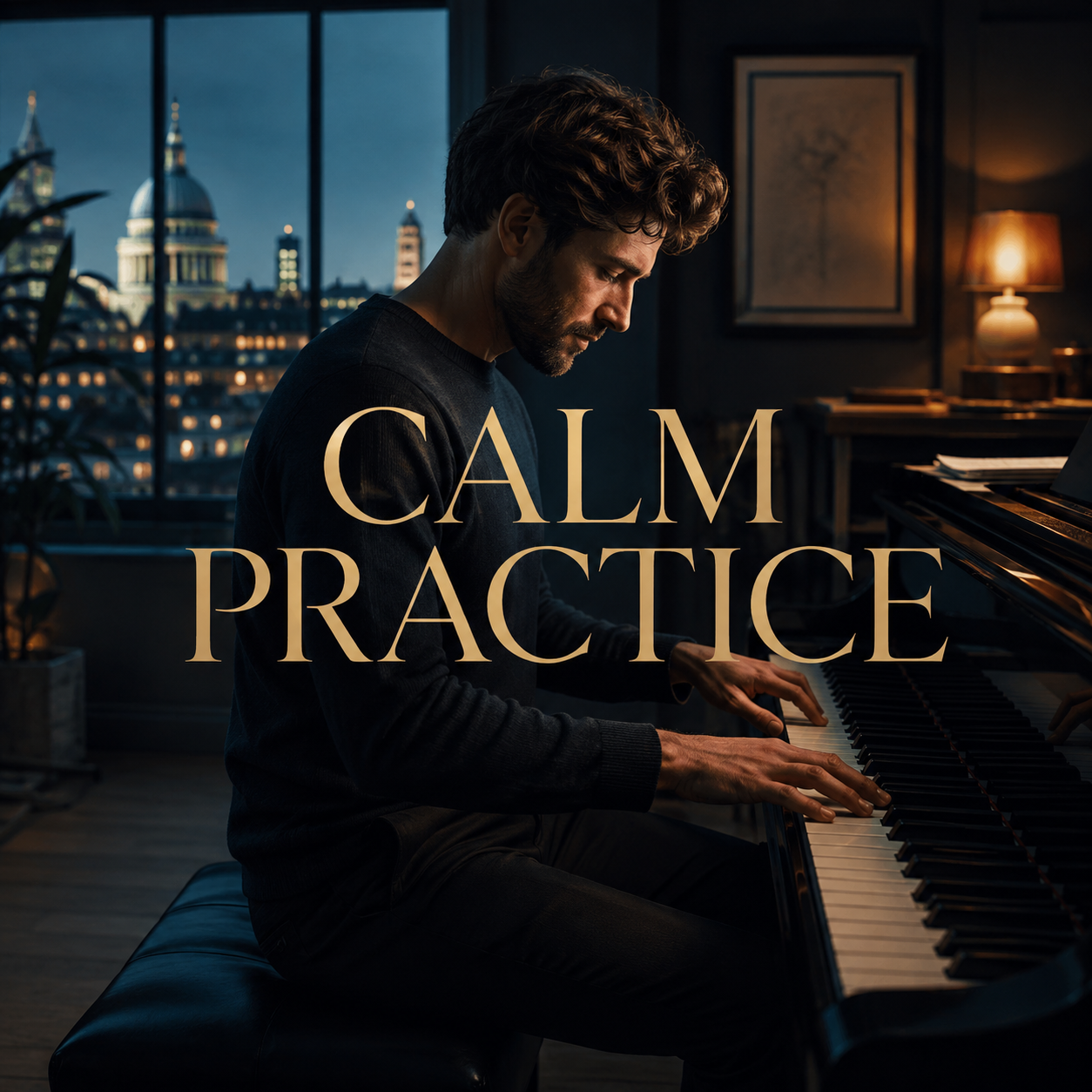
Useful stress piano management techniques create a small area of control without pretending life has become simple. Piano practice can offer that area when the task is bounded, absorbing and free from self-punishment. In a lesson, the subject becomes practical: what should the ear follow, what action changes the result, and how can the learner repeat that change without losing curiosity?
Where piano fits among stress management piano techniques
The instrument gives attention a specific destination: one phrase, one pulse, one colour. That can interrupt rumination more effectively than demanding that the mind become blank. As with other stress piano management techniques, the effect depends on conditions. A piece far beyond the learner’s current capacity, practised against a deadline, may add pressure rather than relieve it.
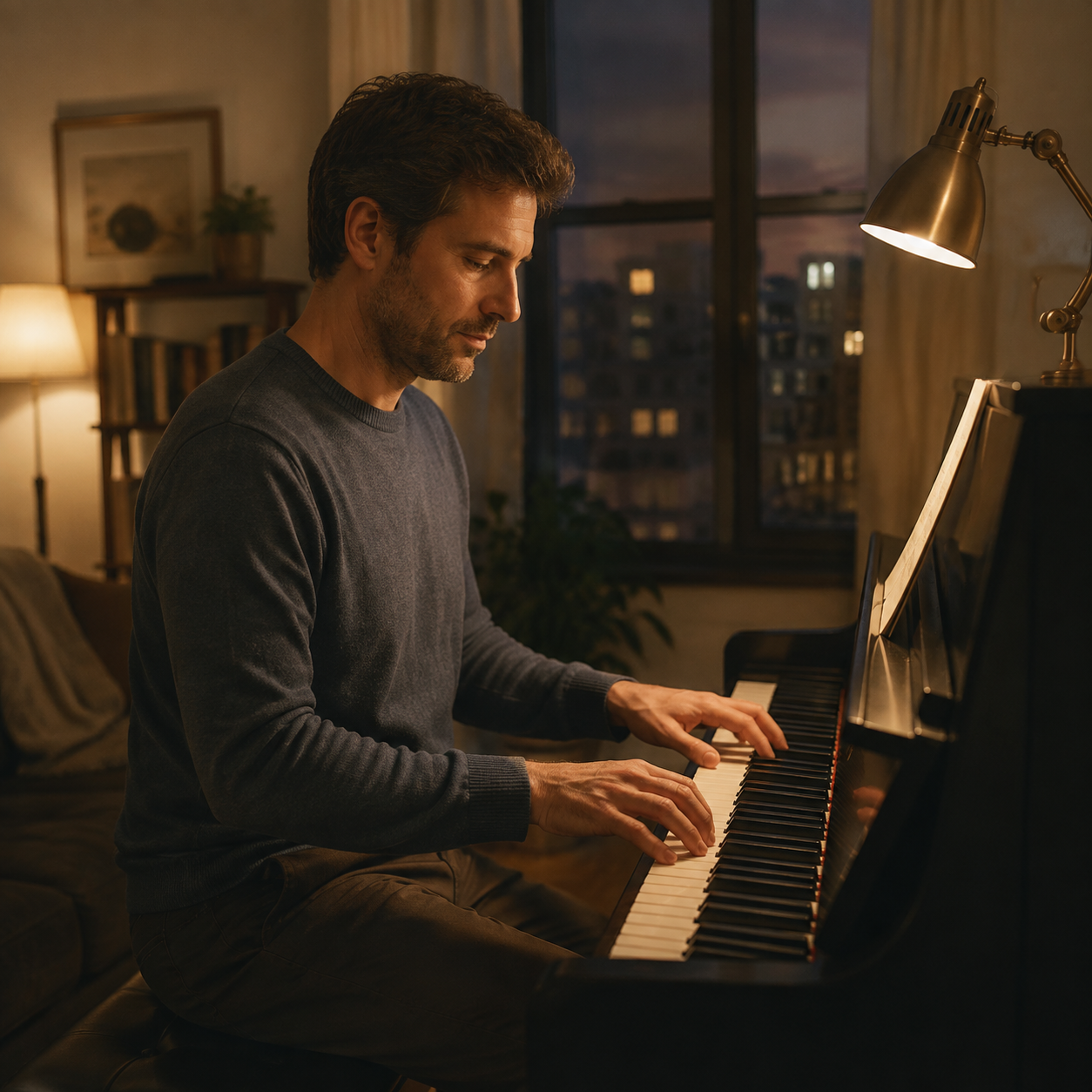
Shrink the task
Use one phrase and one audible aim.
Remove urgency
Choose a tempo that permits release and listening.
Close musically
End with a familiar piece, not frustration.
Begin with the body and the task size
Before playing, place the feet, release the shoulders and choose a passage that fits on one line. Breathe normally; music practice is not a breathing test. These stress management techniques work through clarity and proportion. A slow five-minute task completed with attention is more restorative than forty minutes of tense repetition and harsh self-commentary.
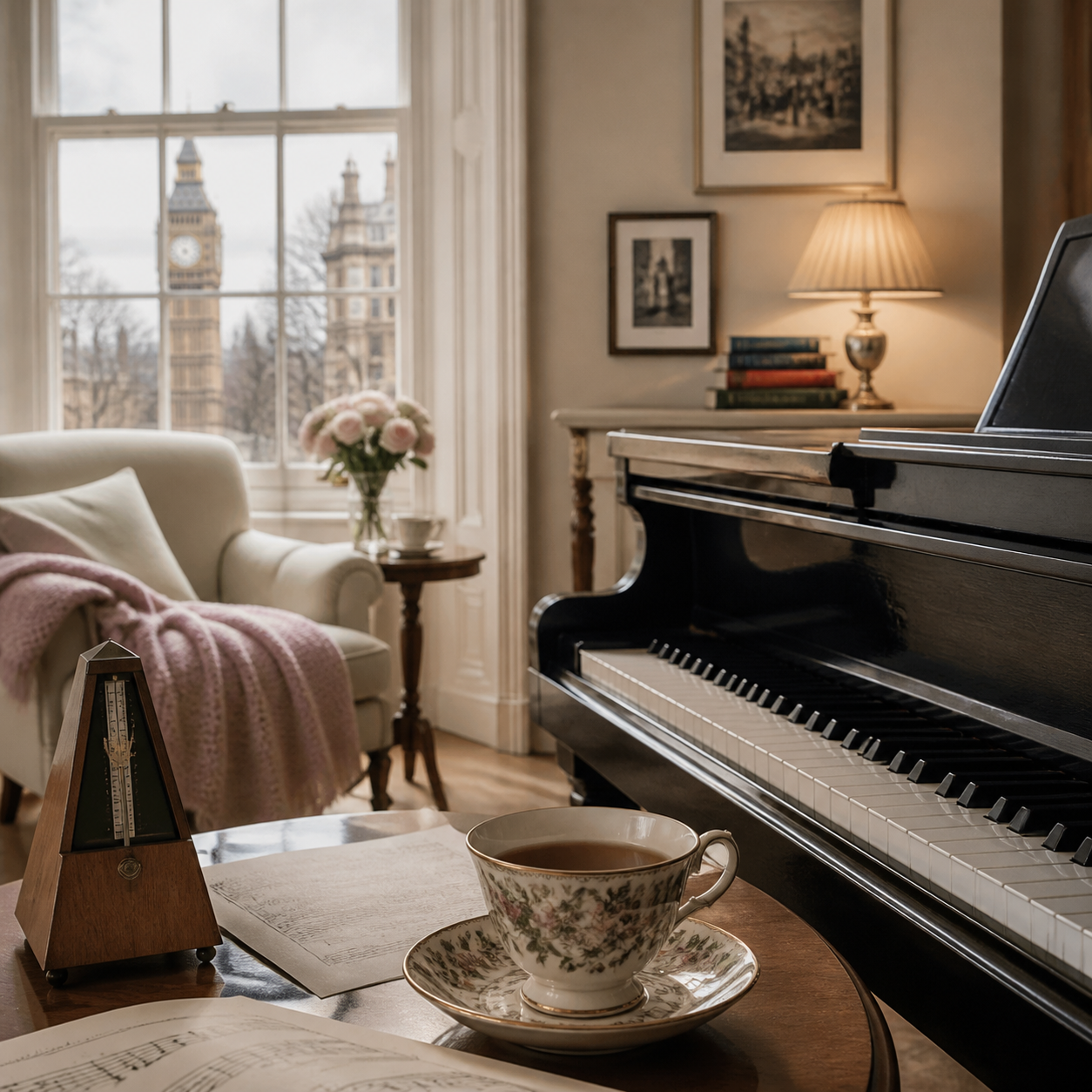
Progress becomes trustworthy when the learner can hear what changed and understand why.
Design an after-work transition
Leave the phone outside the room, play a familiar piece once, then work on two bars with a single audible goal. Finish by playing something chosen for pleasure. This routine makes piano one of several sustainable stress management techniques because it has a clear entrance and exit. The learner does not need to prove productivity before receiving the benefit of music.
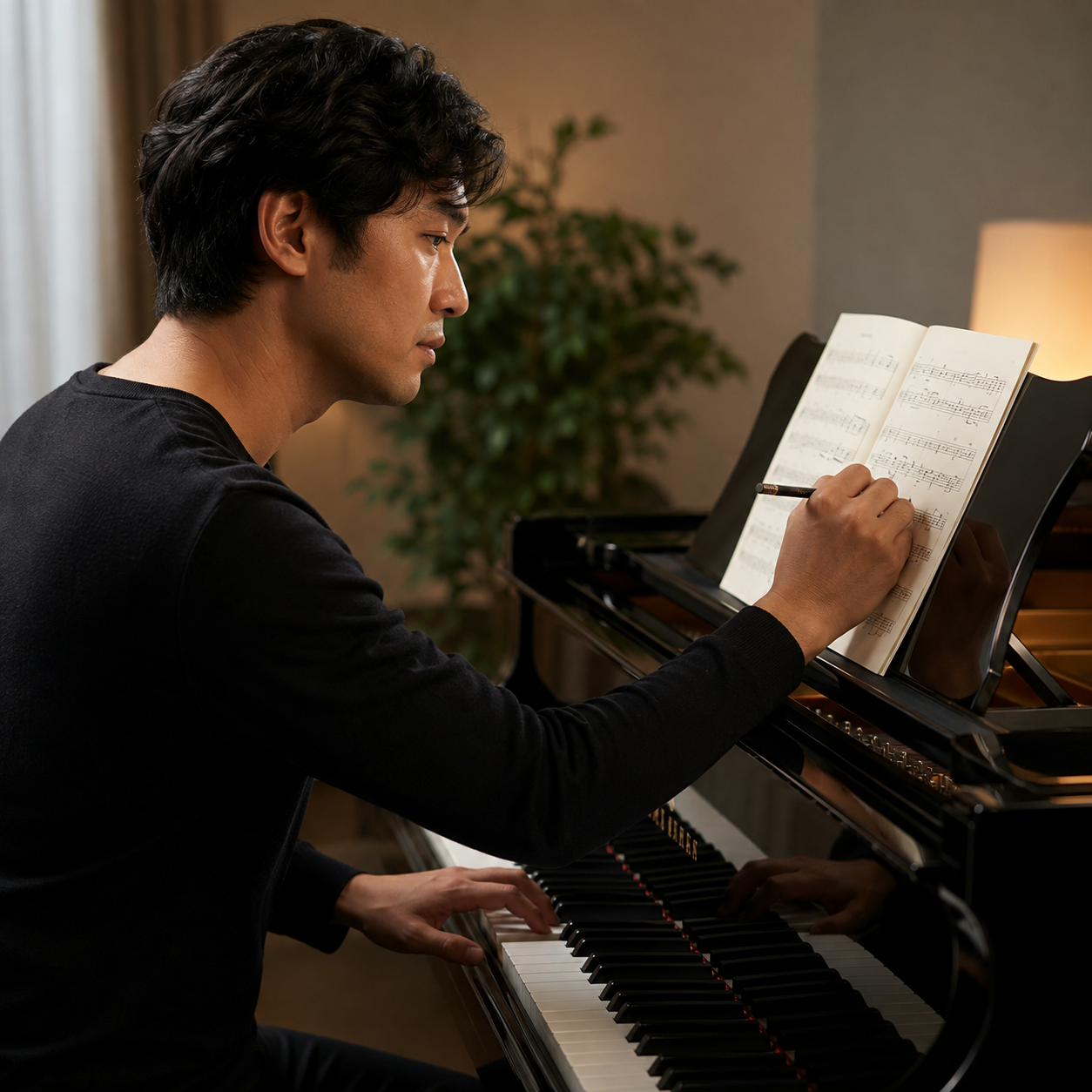
Teaching can prevent practice from becoming another demand
Adults often bring perfectionism from work to the piano. A teacher can redefine success, select realistic repertoire and demonstrate efficient practice. In face-to-face London lessons, stress management techniques remain secondary to honest musical study, but the way study is organised can protect curiosity, attention and a healthier relationship with difficulty.
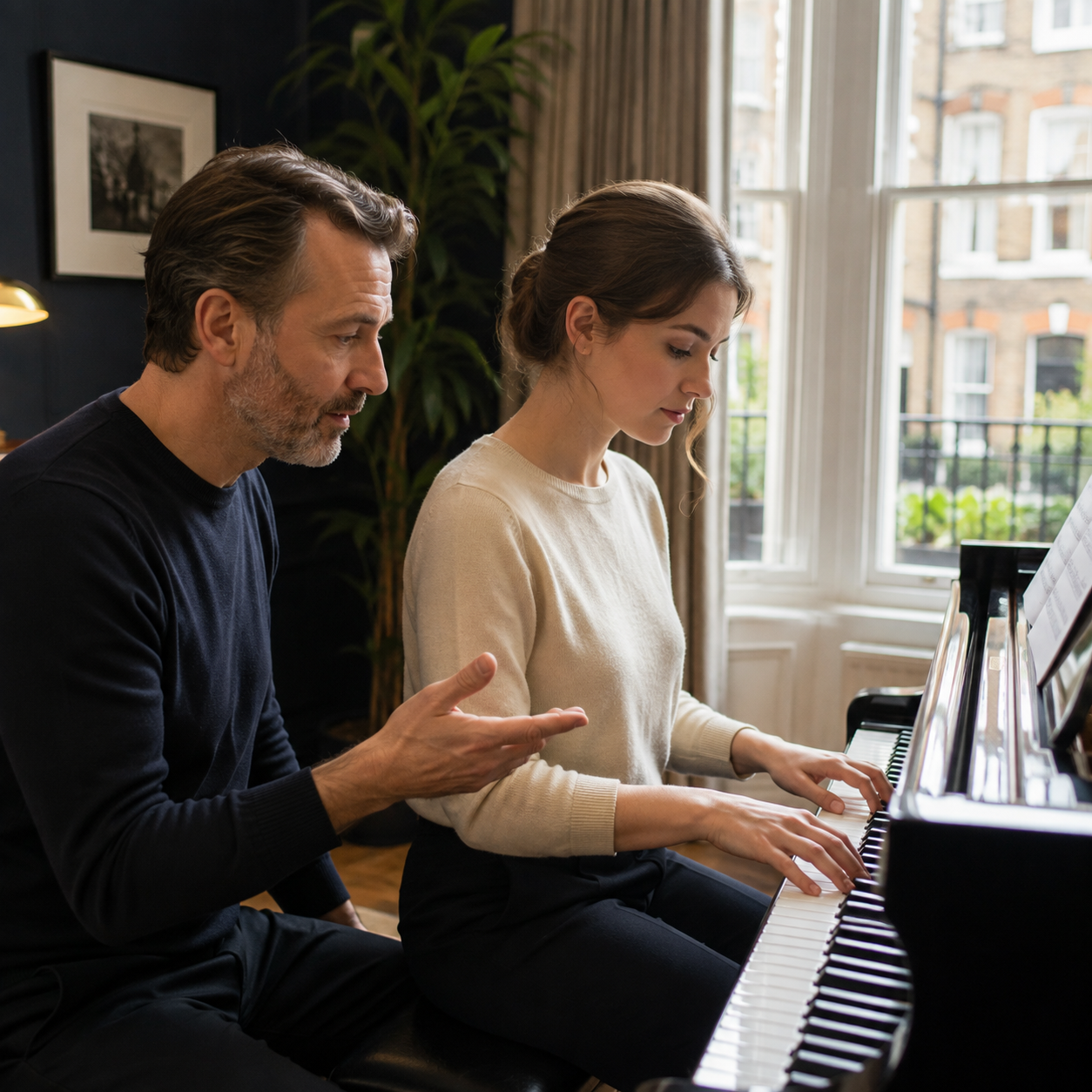
For a connected perspective, read WKMT’s practical piano guidance. The value of stress management piano techniques is clearest when it supports musical independence rather than exaggerated promises.
WKMT London
If you want to develop stress piano management techniques through serious, face-to-face musical study, explore WKMT’s London teaching.
Sources and further reading on stress piano management techniques
- NHS stress guidance
- Mind information on stress
- World Health Organization mental health
- Mental Health Foundation
- National Institute for Health and Care Excellence
Sources checked 8 September 2026. Educational guidance only; no clinical or developmental outcome is guaranteed. Images are AI-generated editorial artwork.