
 TRIAL LESSON
Piano Lessons
Self-Esteem Activities: Why Piano Can Give Children Visible Progress
Sep
WKMT London family guide
Self-Esteem Activities: Why Piano Can Give Children Visible Progress
The most useful self esteem activities do not shower a child with praise. They create believable evidence: I attempted something difficult, changed my approach and can now hear the result.
The most useful self esteem piano activities do not shower a child with praise. They create believable evidence: I attempted something difficult, changed my approach and can now hear the result. In a lesson, the subject becomes practical: what should the ear follow, what action changes the result, and how can the learner repeat that change without losing curiosity?
Why piano works among self esteem activities
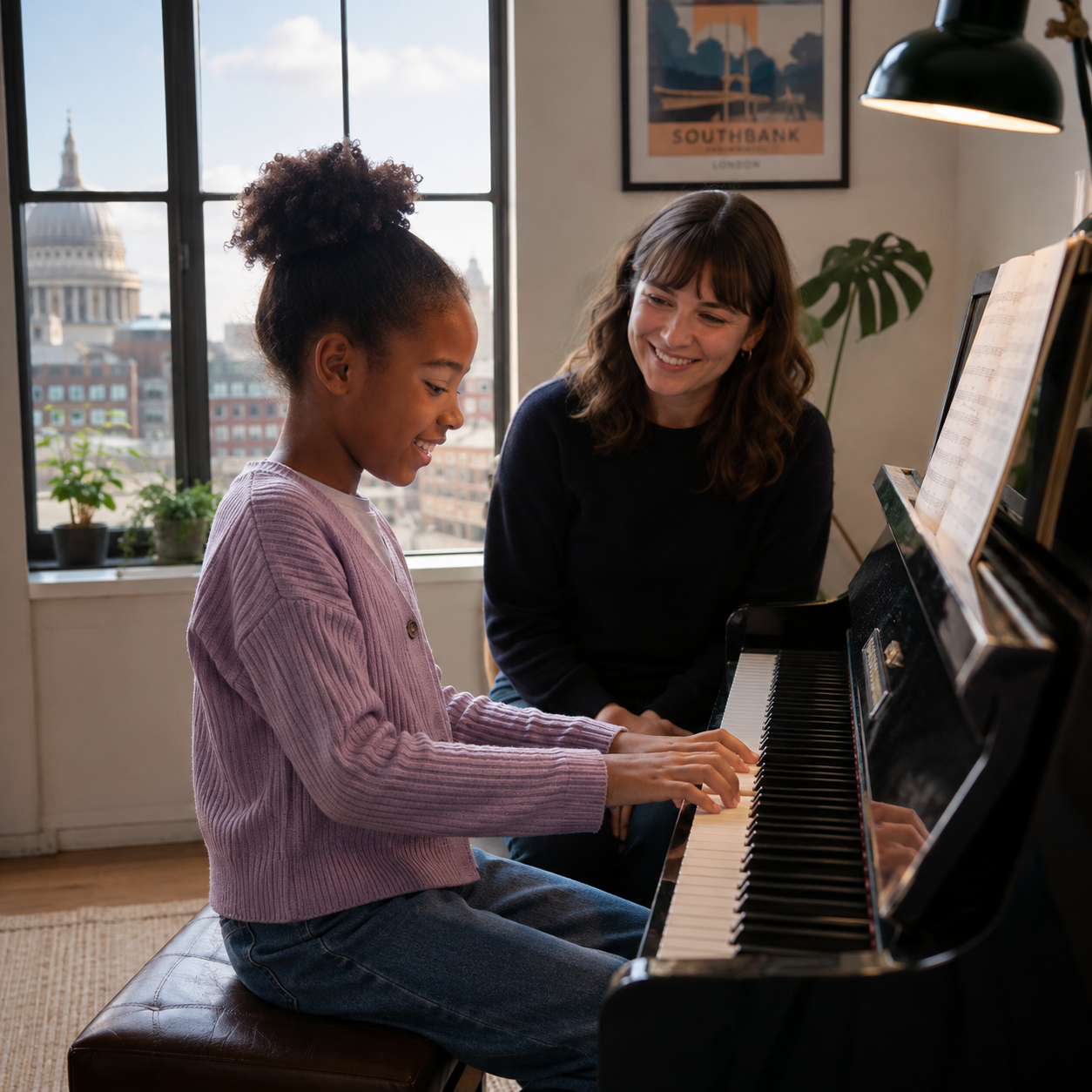
A musical task has a beginning, an end and an audible outcome. The child can point to what changed. That makes piano different from vague encouragement and gives self esteem activities a basis in experience. The teacher protects the scale of the challenge: hard enough to require effort, small enough that a thoughtful strategy can succeed within the child’s attention span.
Set one target
Define success in a way the child can hear.
Notice strategy
Praise the action that changed the result.
Give agency
Let the child compare and choose.
Praise the process without making praise empty
Comments such as “you kept the pulse after the mistake” or “you tried a different fingering” identify behaviour the child can repeat. Empty superlatives can make children dependent on adult judgement. Effective self esteem activities invite their own verdict: which version felt more secure, and what helped? The child gradually becomes a reliable observer of their work.
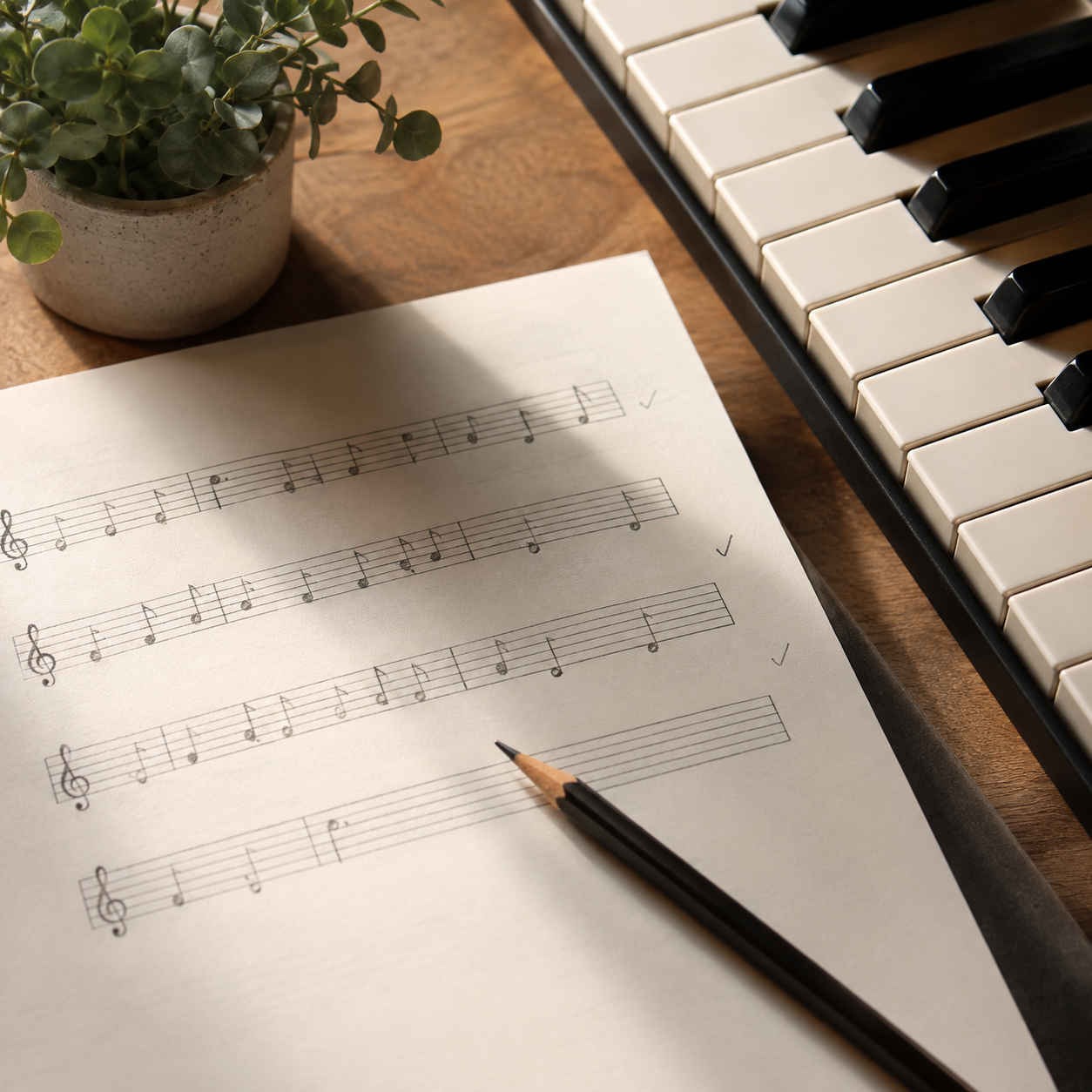
Progress becomes trustworthy when the learner can hear what changed and understand why.
A visible-progress practice ritual
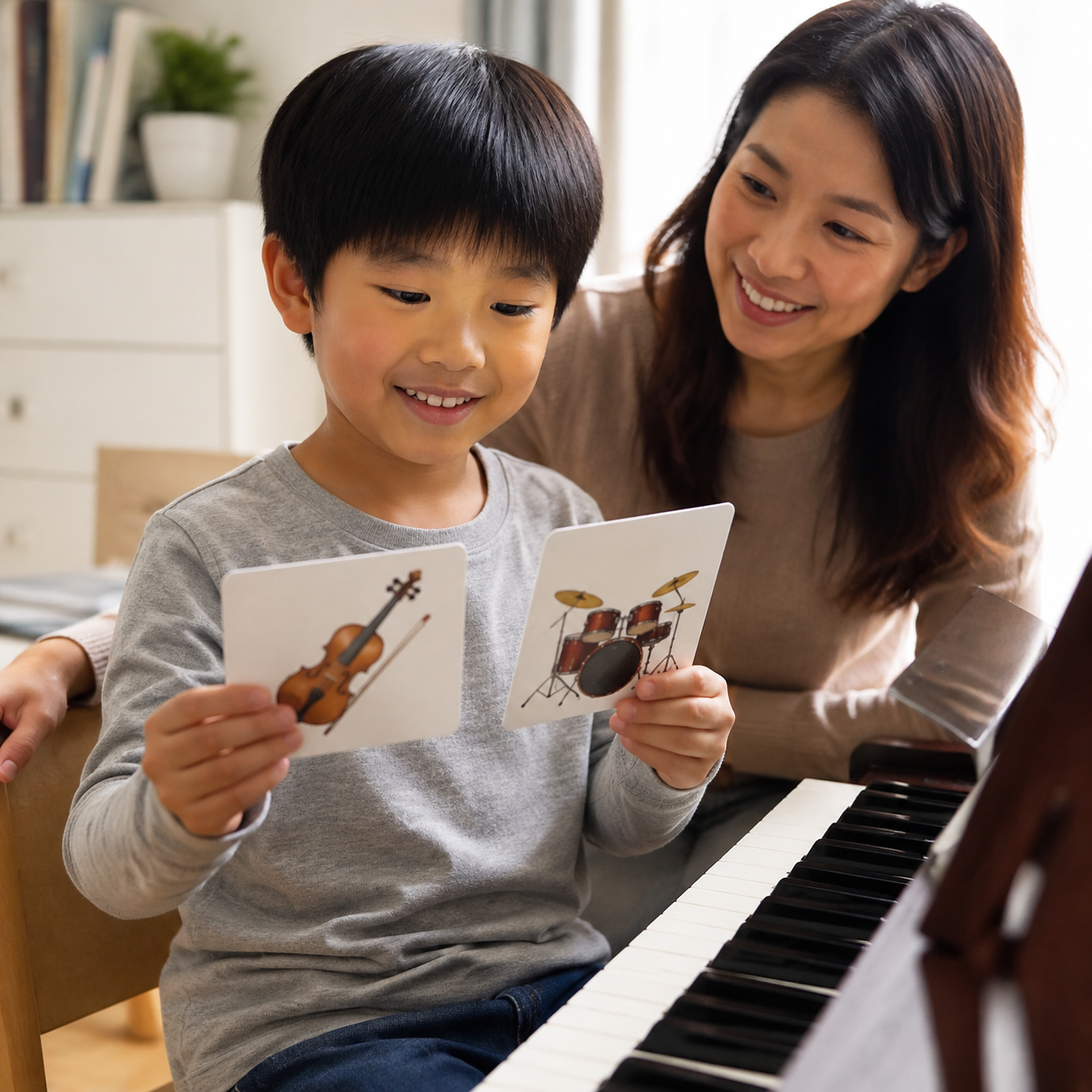
At the start, choose one two-bar target. Record the first attempt, practise slowly for three minutes, then record again. Ask the child to name one difference before the adult speaks. This is one of the simplest self esteem activities because evidence replaces argument. Stop after the agreed task and finish with a familiar piece that restores musical pleasure.
Performance should be invitation, not ordeal
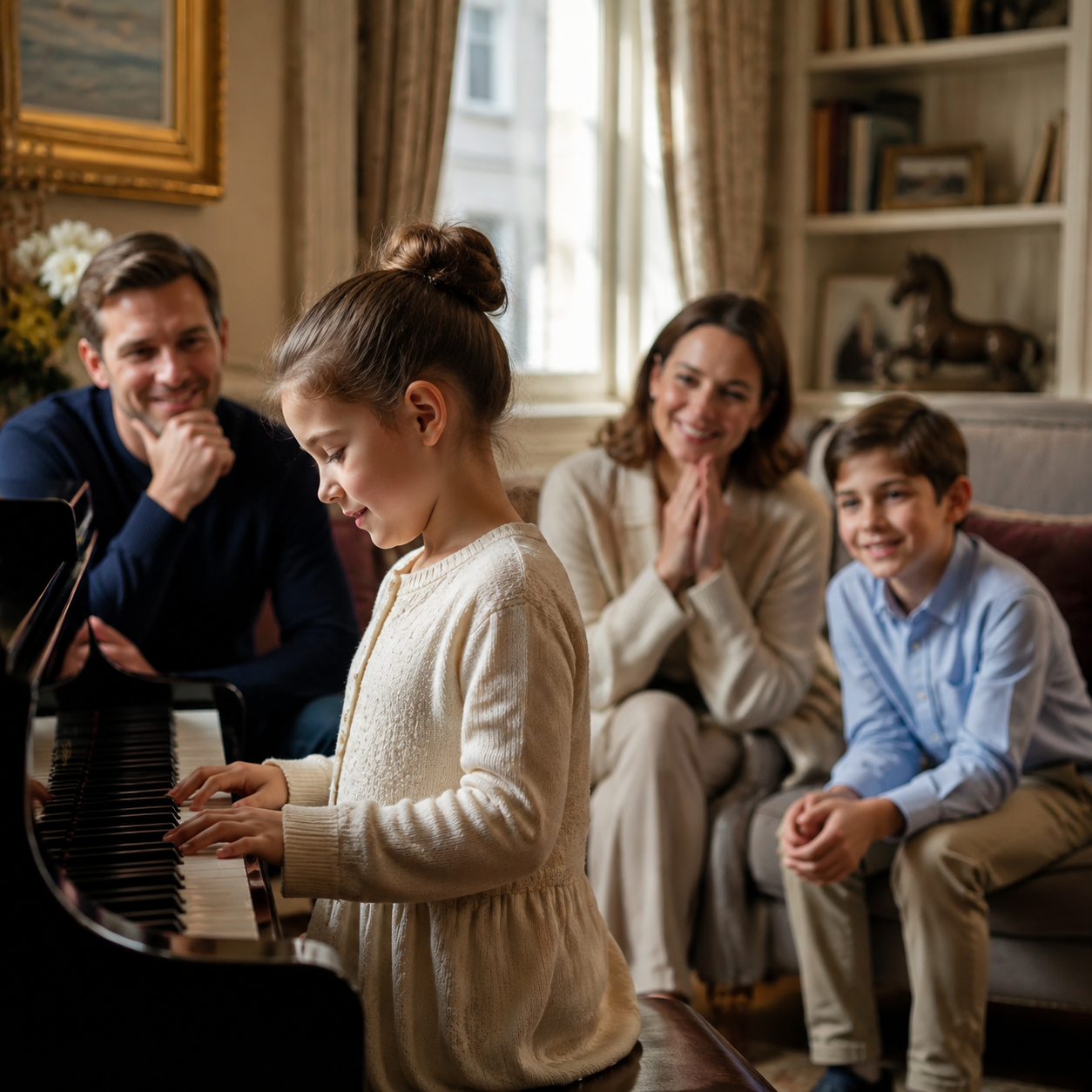
A studio concert, family performance or duet can give learning social meaning, provided participation is prepared and emotionally safe. The aim is not fearlessness. It is discovering that nerves and musical purpose can coexist. Thoughtful London teaching makes self esteem activities part of ordinary musicianship rather than a separate motivational programme.
For a connected perspective, read WKMT’s practical piano guidance. The value of self esteem piano activities is clearest when it supports musical independence rather than exaggerated promises.
WKMT London
If you want to develop self esteem activities through serious, face-to-face musical study, explore WKMT’s London teaching.
Sources and further reading on self esteem activities
- NHS Every Mind Matters
- UNICEF positive parenting
- Harvard Center on the Developing Child
- Child Mind Institute
- Anna Freud Centre
Sources checked 8 September 2026. Educational guidance only; no clinical or developmental outcome is guaranteed. Images are AI-generated editorial artwork.