
 TRIAL LESSON
Piano Lessons
Spatial Awareness at the Piano: How Children Learn the Geography of the Keyboard
Sep
WKMT London parent guide
Spatial Awareness at the Piano: How Children Learn the Geography of the Keyboard
A piano keyboard is a landscape before it becomes a collection of note names. Children learn where sounds live by noticing black-key groups, measuring distance, preparing movement and listening for whether the journey arrived where they expected.
In brief
Spatial awareness at the piano is a child’s growing ability to understand position, distance, direction and pattern across the keyboard. It develops when pupils use black-key groups as landmarks, move by step and skip, estimate leaps, cross the midline and connect physical distance with pitch. Good teaching builds this map through sound and movement rather than note-name drills alone.
Spatial awareness begins with keyboard landmarks
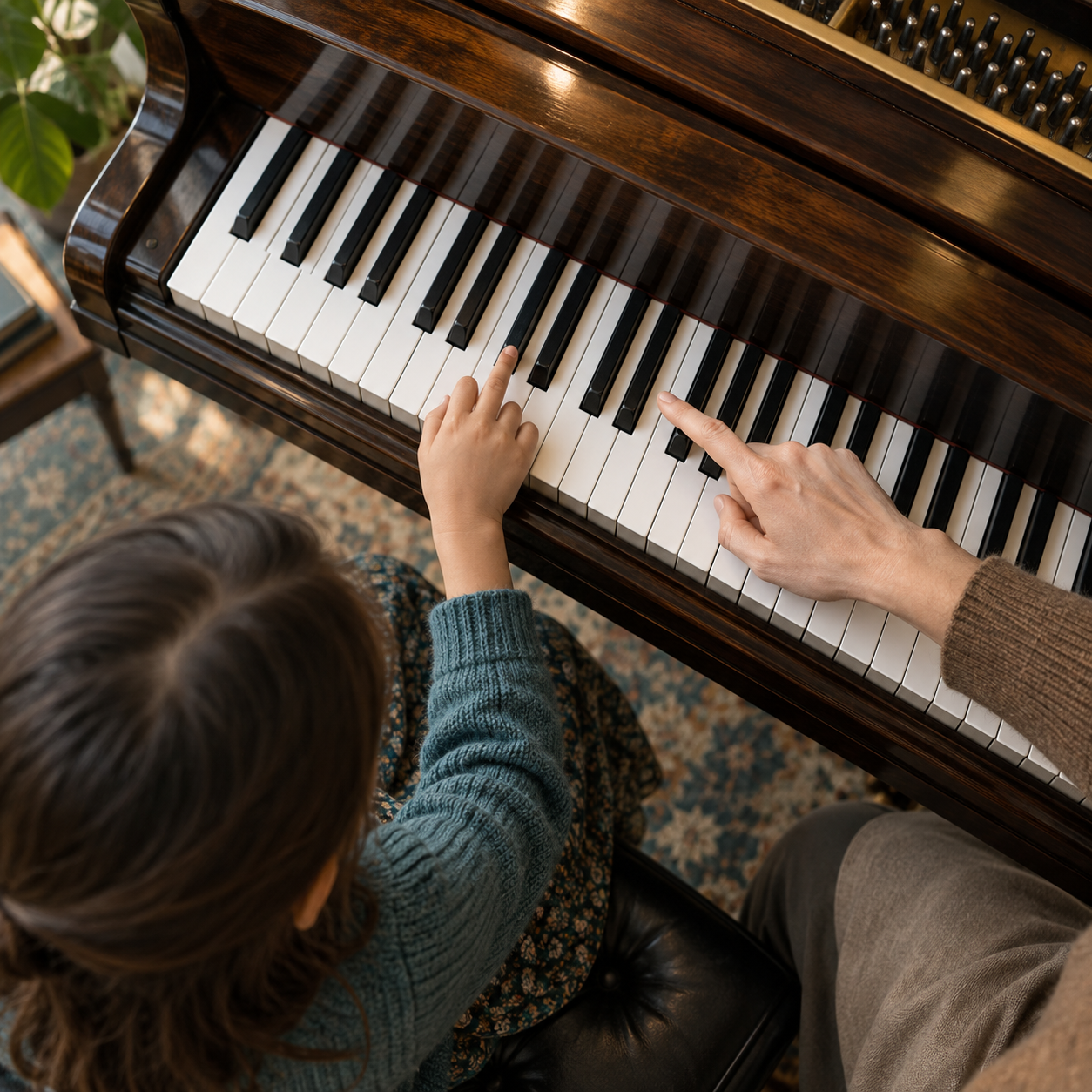
The repeating pattern of two and three black keys gives a child a reliable map. Instead of counting from the bottom of the instrument, the pupil can find every D between two black keys or every F beside a group of three. Spatial awareness grows when these landmarks are recognised quickly in different registers and with either hand.
Ask the child to close their eyes, touch a group of two black keys and then check visually. Play a call-and-response pattern in a new octave. These games turn keyboard geography into a sensory memory. The aim is not speed for its own sake, but a calm sense of location before the first note sounds.
Direction, distance and spatial awareness
Up and down on the keyboard must become connected to higher and lower sound. Step, skip, repeat and leap then describe both what the ear hears and what the hand travels. A teacher can place one starting note, sing the contour and ask the pupil to predict the direction before moving.
In piano lessons for children in London, spatial awareness can be graded carefully. A pupil may first move between neighbouring keys, then between familiar five-note positions and finally across larger leaps. WKMT’s guide to pattern recognition at the piano explains how relationships reduce the burden of reading isolated symbols.
How movement makes the keyboard map reliable
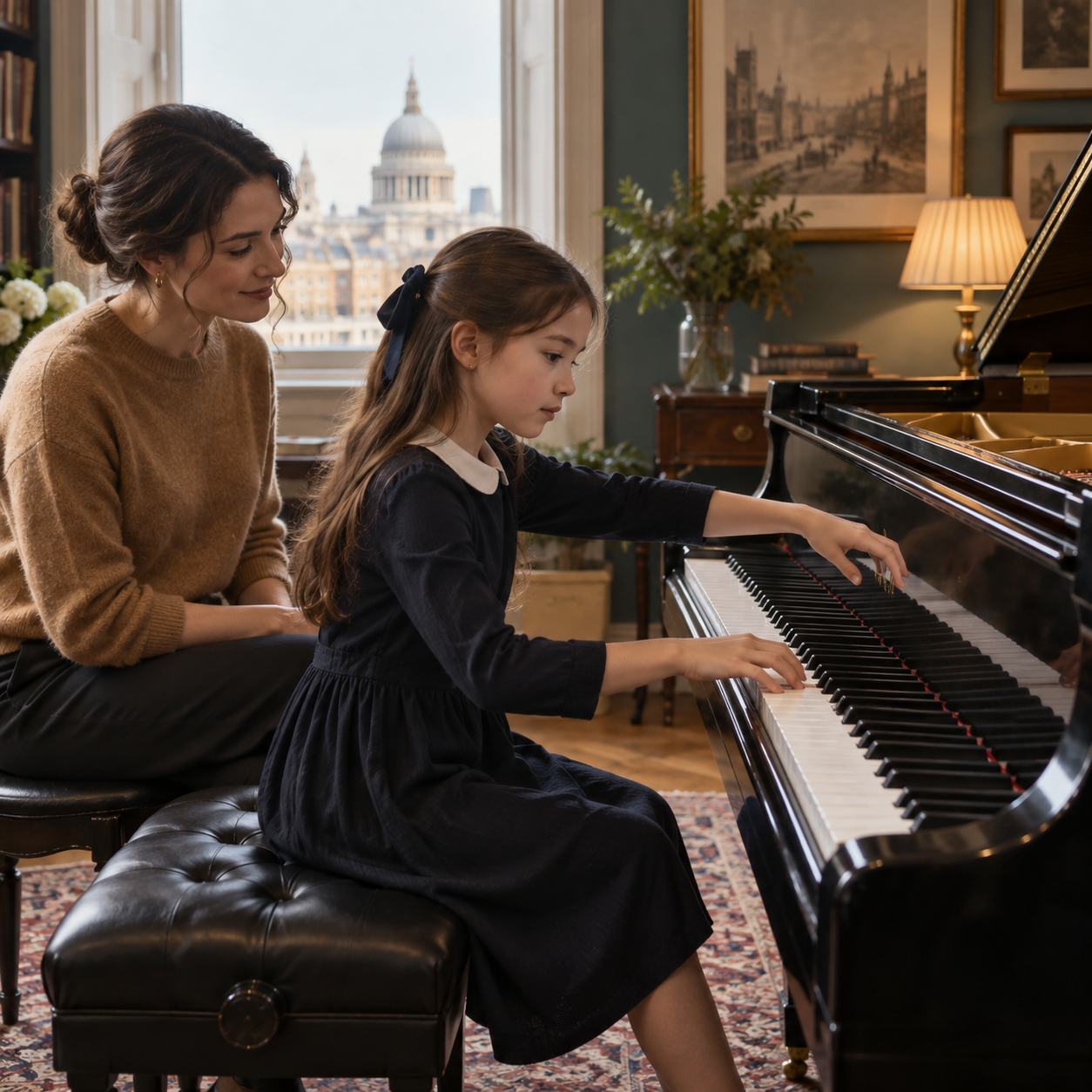
A leap succeeds when the arm begins travelling before the hand reaches anxiously for the destination. Children can practise silent landings, prepare the new shape and then add sound. Crossing the midline, changing register and coordinating two hands extend spatial awareness beyond a fixed five-finger position.
Research on keyboard instruction and spatial reasoning has produced mixed results. Some studies report gains, while others find no special advantage over comparison activities. The responsible claim is narrower: learning piano certainly practises instrument-specific spatial skills. It should not be marketed as a guaranteed route to broader intelligence or as a substitute for developmental assessment.
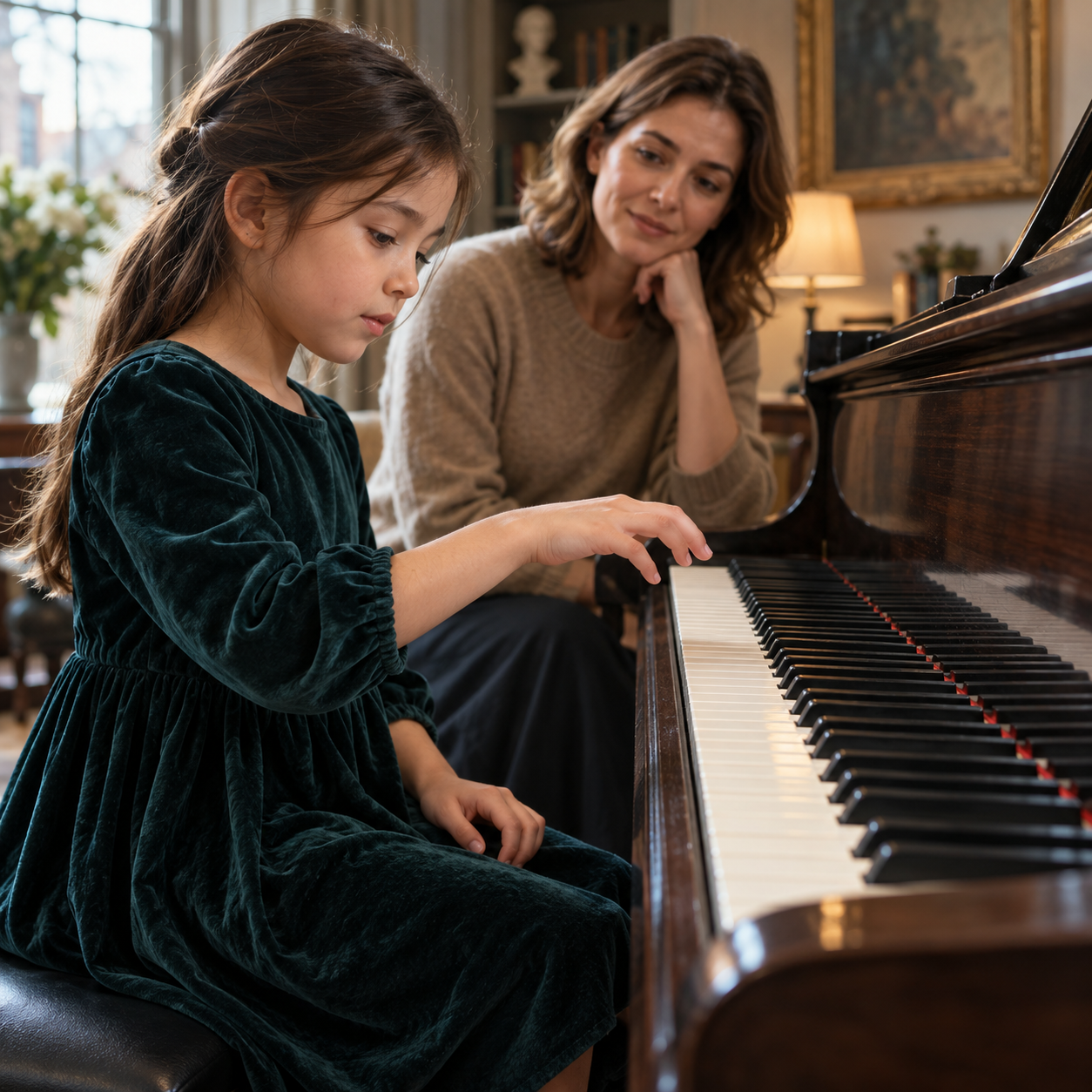
Keyboard confidence begins when a child knows where sound is going before the hand arrives.
Four games for spatial awareness at the piano
Try landmark races without note names: find all groups of three black keys with the left hand. Play a three-note pattern and move it one octave higher. Place a small card on a target key, look away and travel to it silently. Finally, improvise a question in the low register and an answer in the high register.
Each game should include listening. Was the answer higher, farther away or in the same register? If the child misses, reduce the distance and rebuild the route. Spatial awareness becomes musical when position predicts sound, not when the keyboard is treated as a visual puzzle disconnected from the ear.
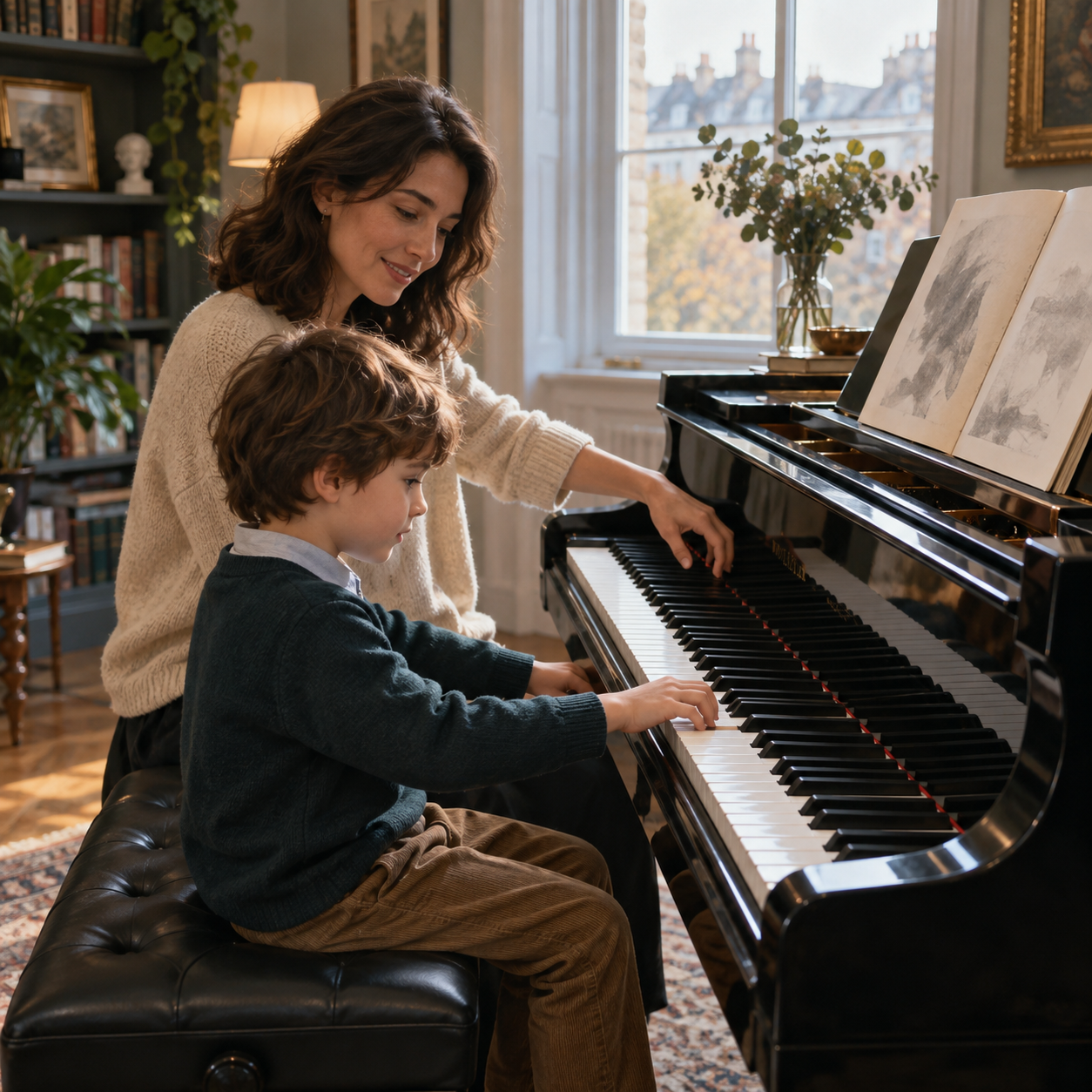
What parents can notice at home
Look for a child who prepares the starting area without counting every key, moves to a new register without panic and keeps a stable hand shape during a leap. Better spatial awareness may also appear when the pupil finds the same pattern in another octave or recovers from a slip at the next landmark.
Use brief prompts: where are you starting, which direction will you travel, and what landmark comes next? Avoid pointing to every key during performance, because constant rescue prevents the internal map from forming. WKMT’s article on first piano lesson activities offers further ways to make early keyboard discovery purposeful and playful.
WKMT London
Give your child a lesson environment where keyboard geography, movement and listening develop together with patience.
Explore children’s piano lessonsSources on spatial awareness
- PubMed: music training and spatial-temporal reasoning
- ScienceDirect: classroom keyboard instruction field experiment
- Journal of Research in Music Education: piano instruction and cognition
- PMC review: music training and cognitive development
- PMC: music practice, verbal ability and nonverbal reasoning
- University of Maryland: instruction and spatial ability
Sources checked 21 September 2026. Educational guidance; individual circumstances and progress vary.