
 TRIAL LESSON
Piano Lessons
Social Development: What Music Lessons Can Encourage
Aug
WKMT London parent guide
Social Development: What Music Lessons Can Encourage
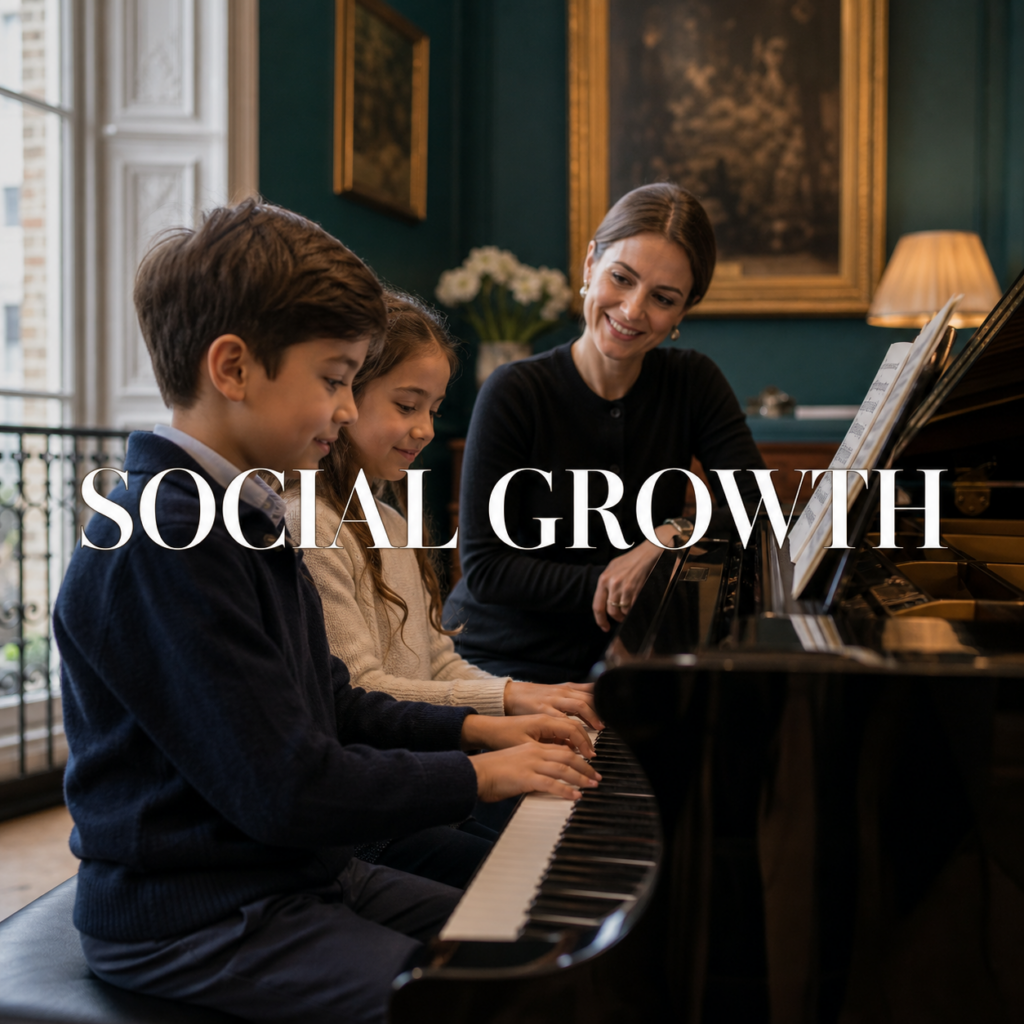
A music lesson cannot manufacture friendship or maturity. It can, however, create a small, structured place where a child practises listening, waiting, responding, recovering from mistakes and contributing to something larger than one correct note.
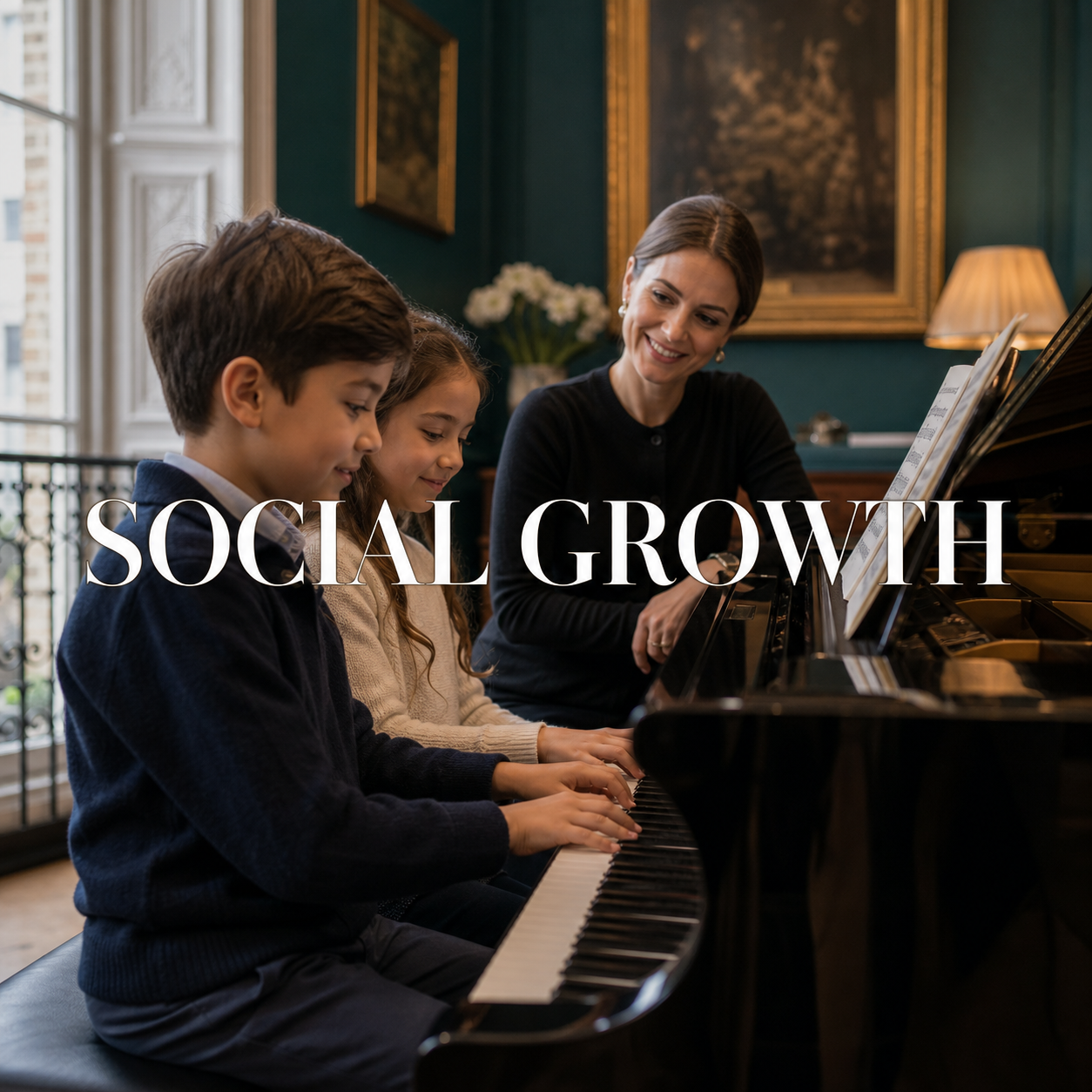
Social development is the gradual learning involved in relating to other people: noticing cues, expressing needs, managing frustration, cooperating and developing a sense of belonging. It does not follow a perfectly tidy timetable. A child may speak confidently with adults but hesitate with peers, enjoy an ensemble yet dislike public performance, or need longer to feel secure in a new room.
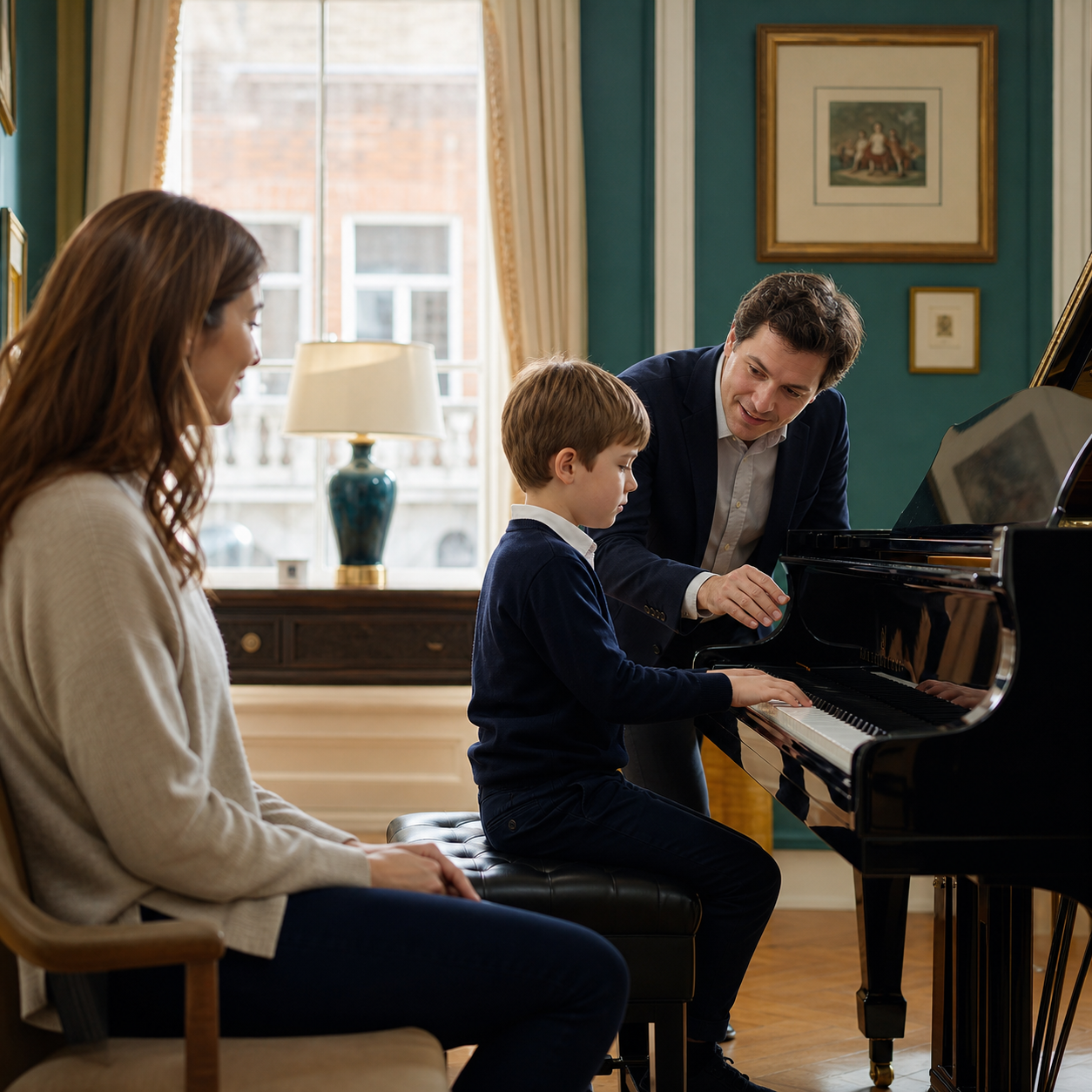
That is why children’s piano lessons in London should begin with observation. WKMT London offers one-to-one teaching that can adapt language, pace, repertoire and challenge. A lesson is not a social-development test. It is a musical relationship in which the teacher can model attention, invite choice and help a child hear how one action affects the next.
What social development can look like in a music lesson
At the piano, social development often appears in ordinary moments. The child waits while the teacher finishes a phrase. They copy a rhythm, then invent a reply. They say that an instruction was unclear. They tolerate a duet going wrong, reset and try again. None of these moments proves a broad life outcome, but each gives a concrete behaviour that adults can notice without labelling the child.
Listening
The child notices a cue before responding rather than guessing ahead.
Turn-taking
Musical space is shared without one player disappearing.
Repair
A mistake becomes a joint problem, not a source of blame.
Contribution
The child hears that one reliable part can support a whole piece.
Social development through solo, duet and ensemble work
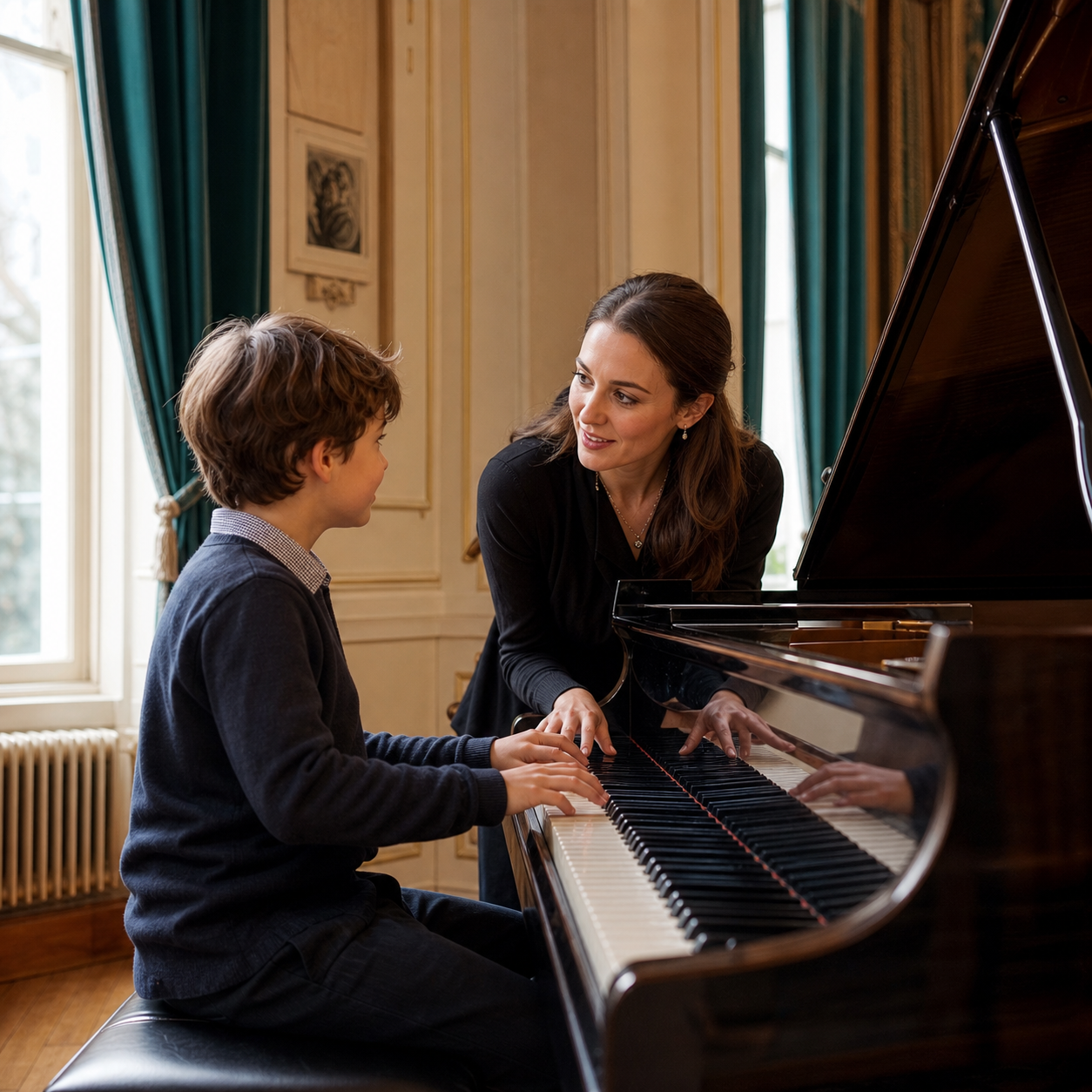
Individual lessons and group music serve different purposes. A one-to-one piano lesson can be socially rich because it offers a stable relationship, careful conversation and manageable feedback. It is often the safest place for a shy or easily overwhelmed child to practise speaking up. Yet it does not reproduce peer negotiation. Duets, chamber groups, choirs and ensembles add the direct experience of matching, yielding and leading among equals.
The NFER evaluation of In Harmony, commissioned by Arts Council England, found improved musical enjoyment and skills and reported positive social and musical contributions for participating children, while also treating the programme as a complex educational intervention rather than a guaranteed effect of music itself. That distinction is important: format, continuity, teaching quality and community context all matter.
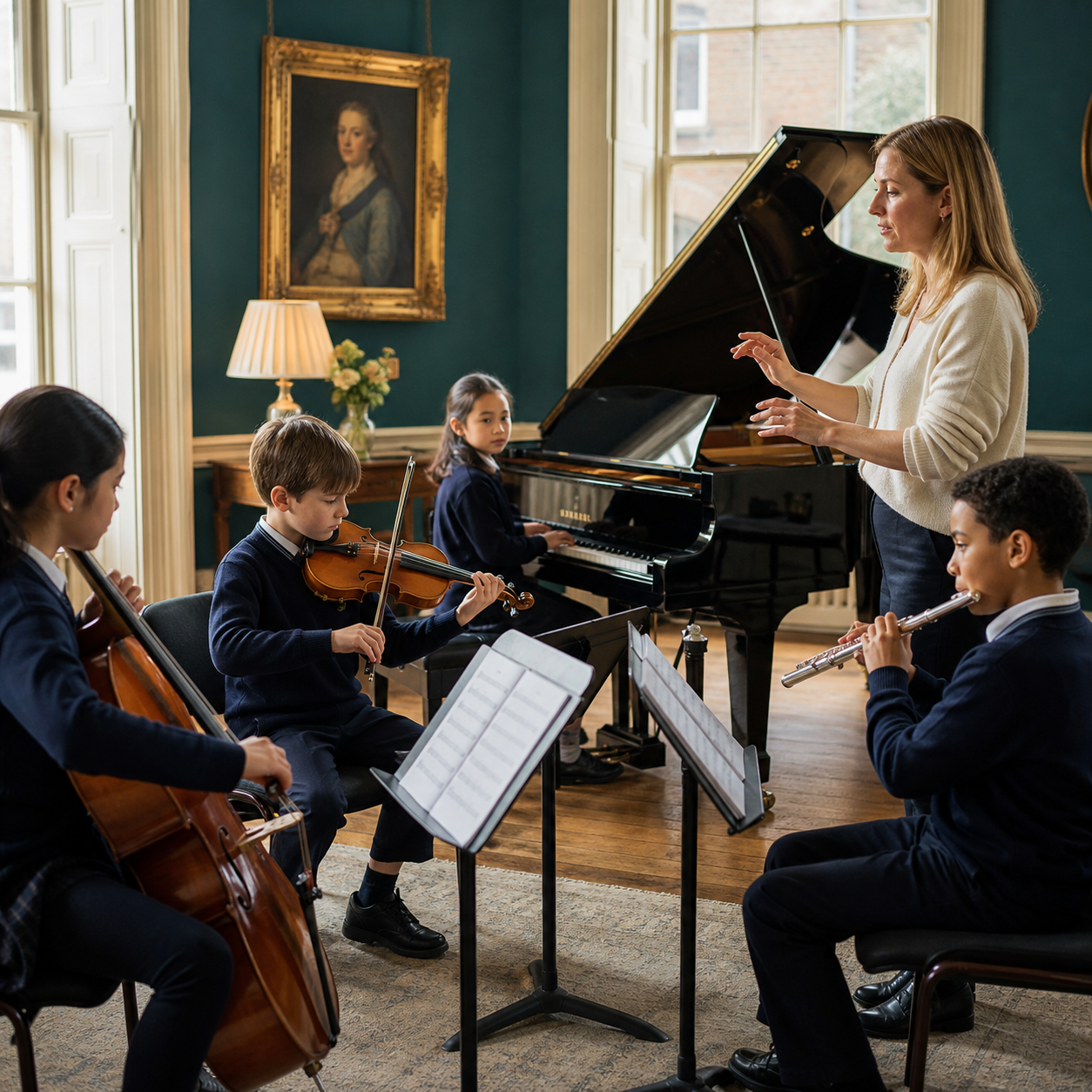
The social value of music is not that everyone performs the same part. It is that different parts learn to belong together.
What the evidence says—and what it does not
Research gives reasons for interest, not a licence for extravagant promises. A recent Queen’s University Belfast evaluation of the Crescendo music and social-emotional learning programme followed 559 children aged five to six in a community-led orchestral project. It examined musical skills and behavioural self-regulation, illustrating how sustained programmes can study specific outcomes rather than relying on anecdotes.
Studies of children’s musical collaboration also show that relationship and task design influence how children communicate. The Open University repository summarises research on friendship, age and collaborative composition, finding that children working with friends used communication conducive to successful collaboration. This does not mean every group automatically improves social development. It means musical tasks can reveal and exercise collaborative processes.
Parents should also know the wider caution. A major University of Liverpool meta-analysis of 54 studies found that claims about broad transfer from music training to non-musical cognitive or academic achievement became null after study quality was controlled. The review’s conclusion is a useful guardrail: value music for its own demanding, relational practice, and describe broader benefits with precision.
A practical parent framework for social development
Use four questions over several weeks rather than judging one lesson. Does the child feel safe enough to communicate? Is the musical task genuinely shared? Can mistakes be repaired without shame? Is progress described in musical and behavioural terms? The answers help distinguish a thoughtful programme from one that uses development language as marketing.
Safety
The teacher listens, sets clear boundaries and adapts without humiliation.
Structure
Turns, cues and roles are clear enough for the child to succeed.
Challenge
A small stretch invites growth without overwhelming attention.
Reflection
Teacher and child name what helped the music work together.
For younger children, a duet with the teacher or parent may be enough. School-age learners can gradually take on chamber parts, shared performances or peer listening. WKMT’s guide to developmental milestones and piano offers a complementary way to observe readiness without imposing a rigid timetable.
When music lessons need support from elsewhere
Piano teaching is education, not diagnosis or therapy. If a child shows persistent distress, isolation, communication difficulty or behaviour that affects daily life, parents should speak with the school, GP, health visitor or an appropriately qualified professional. A thoughtful teacher can share observations and adapt a lesson, but should not promise to treat anxiety, developmental conditions or family difficulties.
What music lessons can honestly encourage
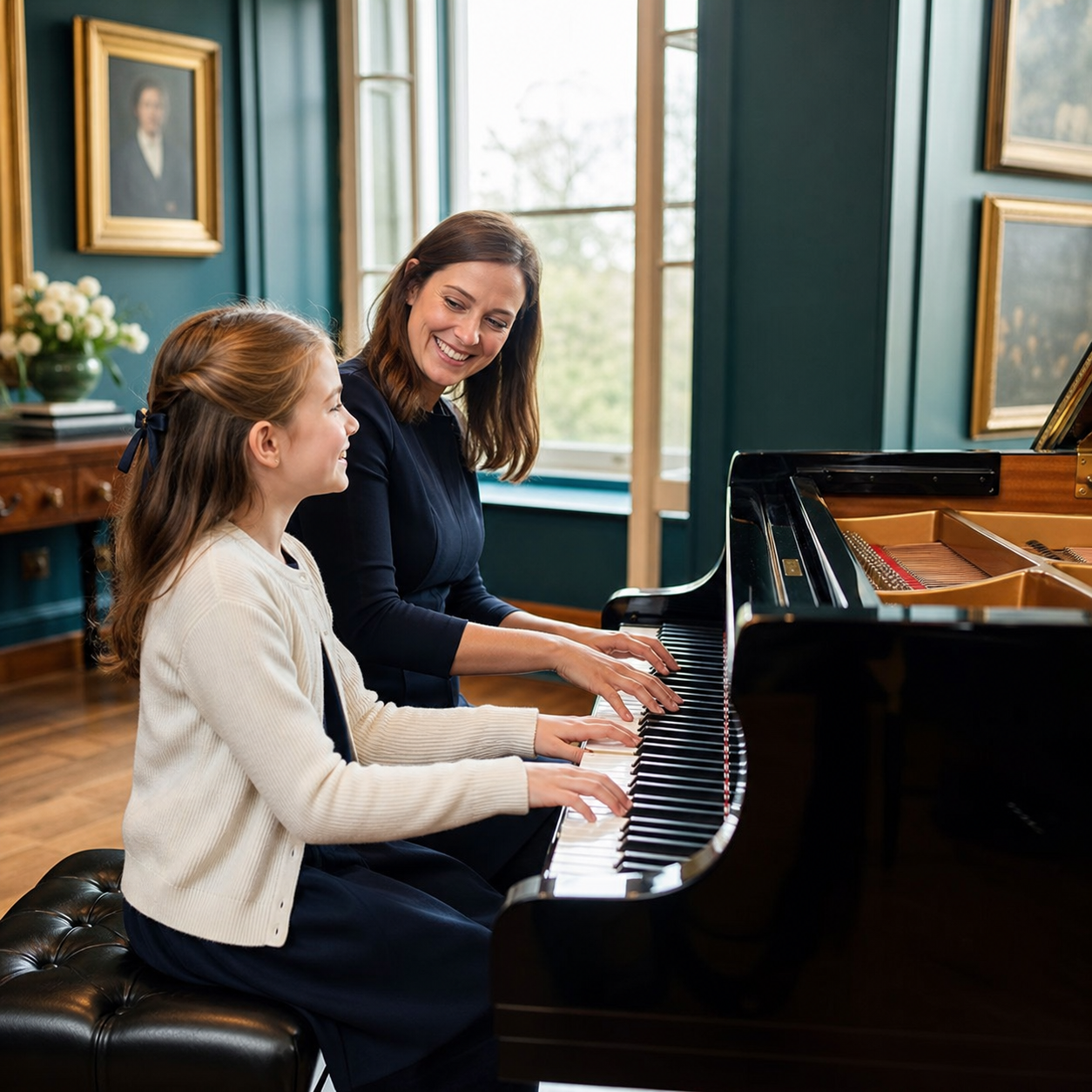
Music lessons can offer repeated practice in attention, responsibility, emotional expression and cooperation. Social development remains broader than any activity, and every child brings a different temperament and history. The strongest teaching avoids promises and builds conditions: a dependable relationship, meaningful music, attainable challenge and occasions to share sound with other people.
WKMT London
Explore individual children’s piano lessons shaped around careful listening, clear musical goals and each learner’s pace.
Related video
A useful companion video
Building Empathy for Kids | Social & Emotional Rap Education is embedded below from YouTube for educational commentary and context. Rights remain with Flocabulary / YouTube; WKMT is not affiliated with or endorsed by the creator.
Sources
- NFER: Evaluation of In Harmony
- Queen’s University Belfast: Crescendo programme evaluation
- Open University: children’s musical collaboration
- University of Liverpool: music-training meta-analysis
- LSE Research Online: transfer from music training
Sources last checked 28 August 2026.