
 TRIAL LESSON
Pianists, Piano Lessons
Shura Cherkassky in London: Spontaneity, Colour and a Legendary Recital Life
Sep
WKMT London listening guide
Shura Cherkassky in London: Spontaneity, Colour and a Legendary Recital Life
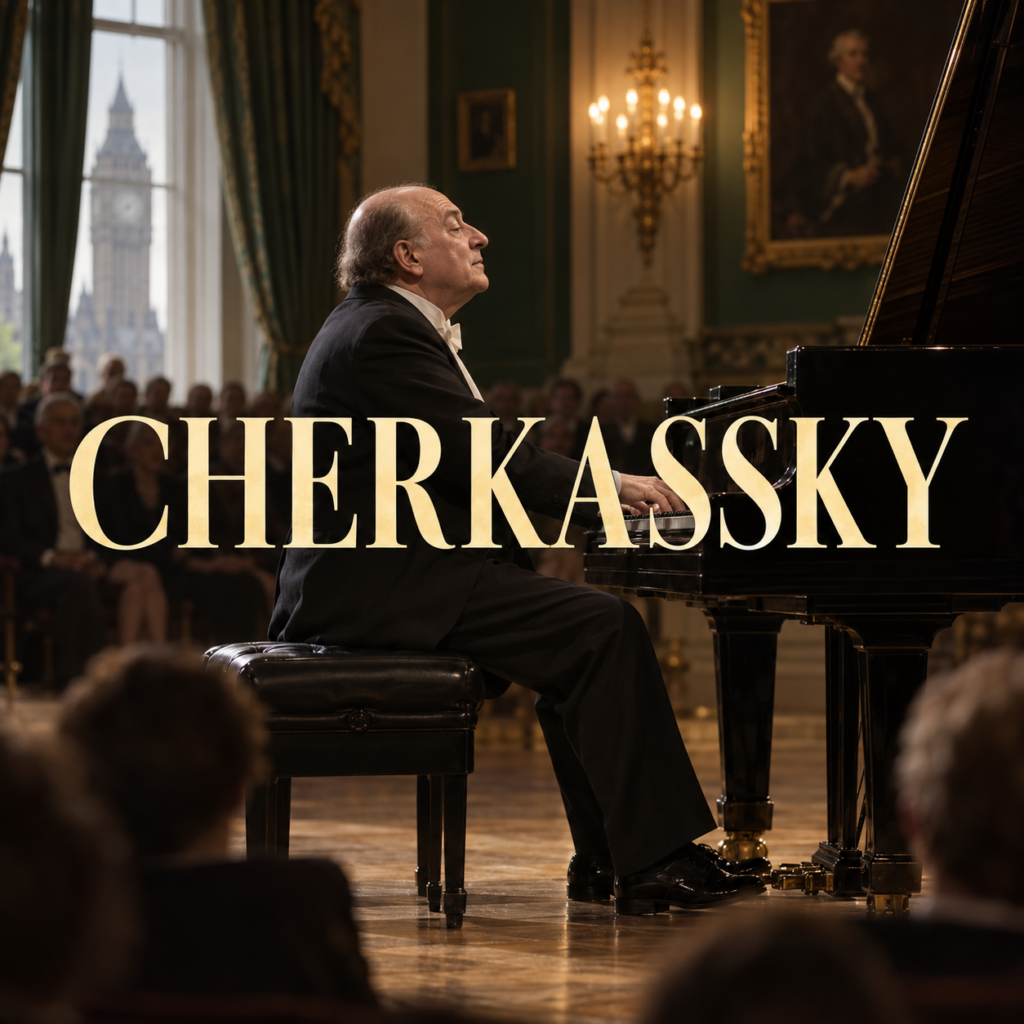
Shura Cherkassky could make a familiar score feel newly invented. A delayed arrival, a sudden gleam of inner melody or a daring change of colour never sounded like decoration: each surprise belonged to a performer listening intensely in the moment. London became the lasting home of this legendary recital artist.
In brief
Shura Cherkassky was a Ukrainian-born American pianist, born in Odesa in 1909, who studied with Josef Hofmann at the Curtis Institute and built a seven-decade international career. After settling in London in 1961, he became celebrated for unpredictable recitals, a vast repertoire, luminous tone and performances that balanced old-world freedom with formidable control.
Shura Cherkassky: from Odesa to Josef Hofmann
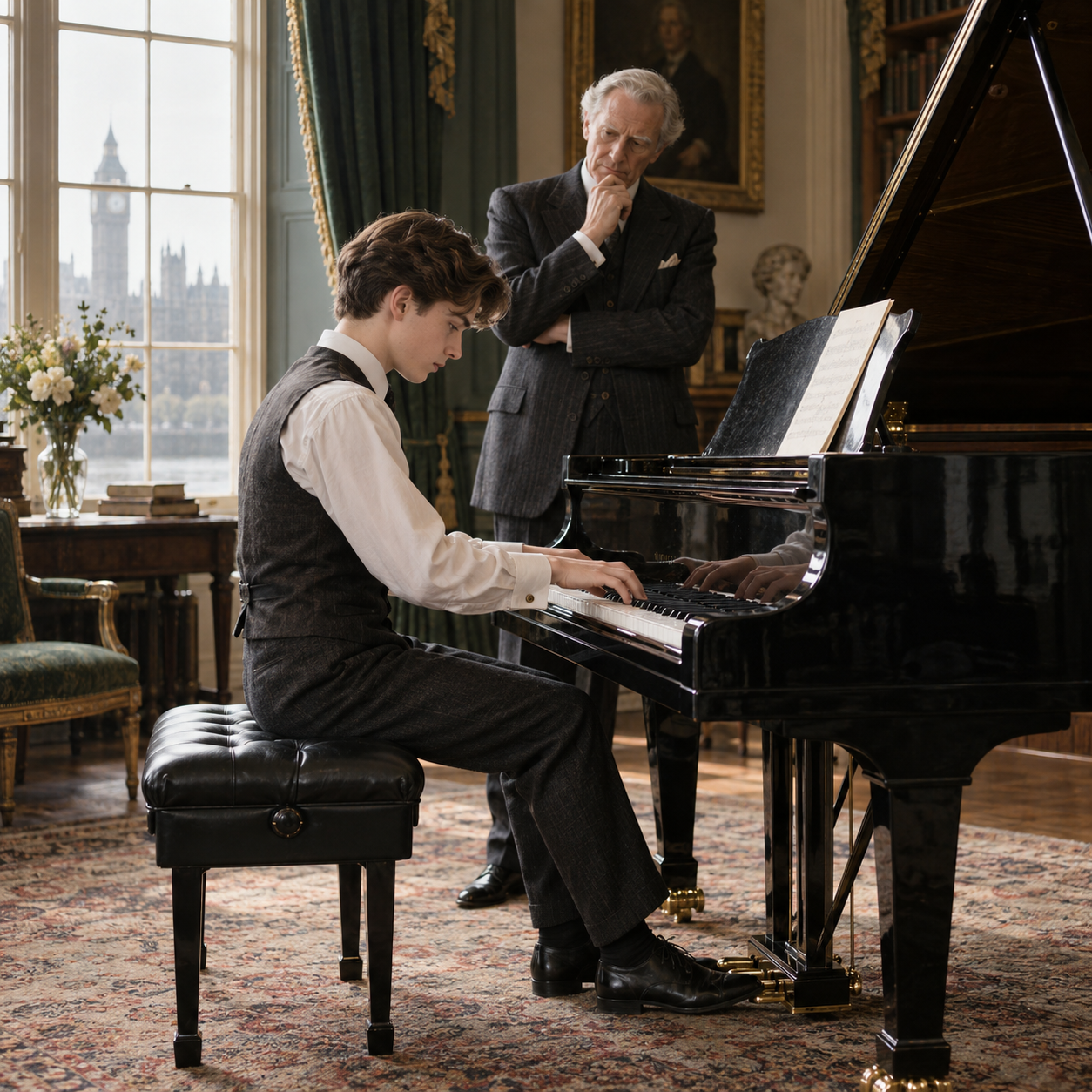
Shura Cherkassky left Odesa with his family after the Russian Revolution and grew up in the United States. His mother first guided his musical education before he entered the Curtis Institute in Philadelphia, where Josef Hofmann became the decisive teacher. Hofmann encouraged economy of movement, tonal imagination and independence rather than a single approved interpretation.
Cherkassky’s American debut years established a prodigious technique, but his mature identity arrived through decades of performance. He retained a remarkable ability to alter detail without losing the score’s larger line. The result was not casual improvisation. It was the freedom of a pianist who knew harmony, voicing and keyboard geography so thoroughly that choice remained available on stage.
What to hear in Shura Cherkassky’s playing
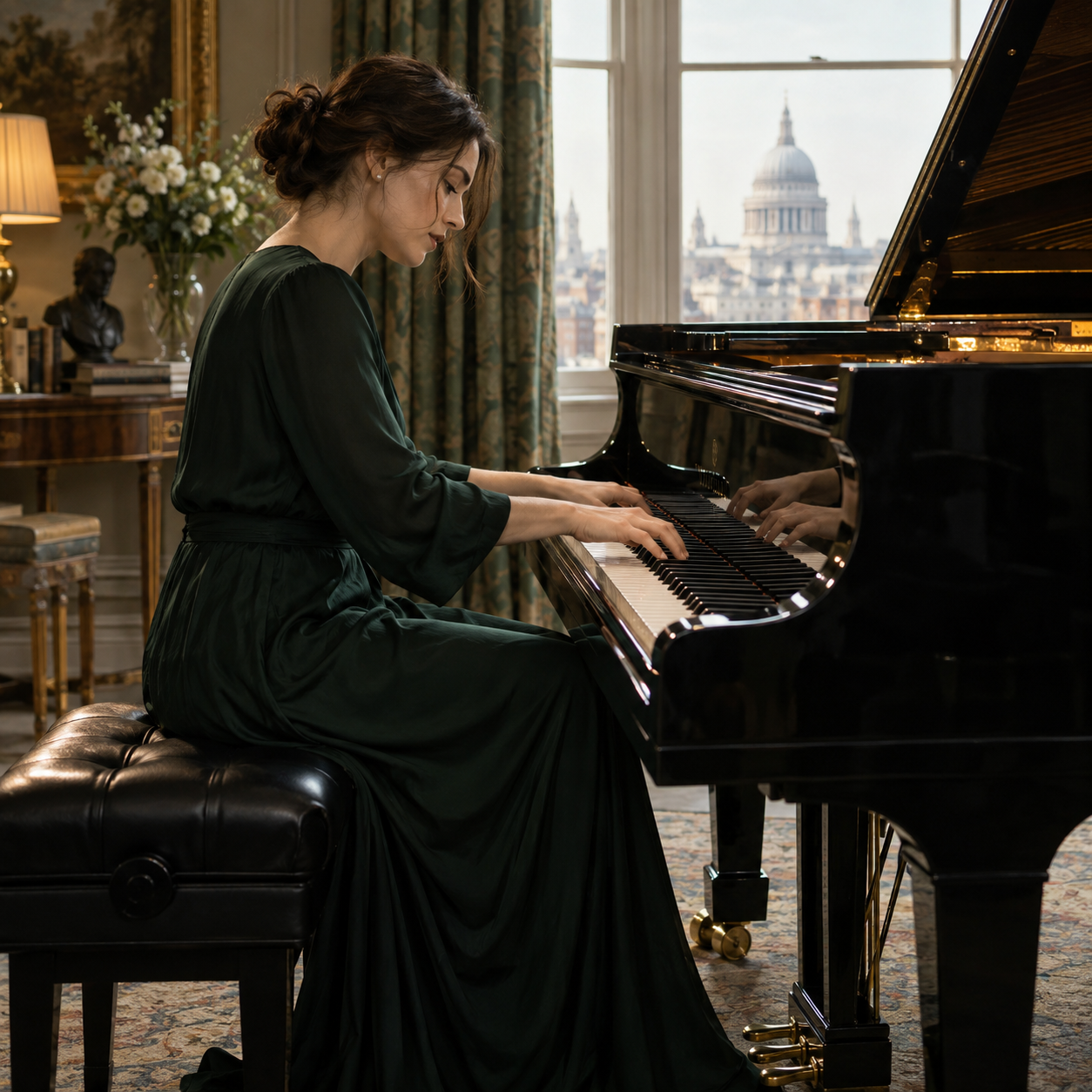
Begin with the way Shura Cherkassky voices a chord. A middle note may glow for one phrase and disappear in the next; a bass can become orchestral weight without turning harsh; an ornament can sound spoken rather than applied. His rubato often changes the listener’s sense of balance while the underlying pulse continues to breathe.
For students pursuing classical piano study in London, his playing offers a useful warning and invitation. Surface freedom cannot be copied safely. First understand the harmonic destination, rhythmic character and distribution of voices. Then experiment with timing and colour while recording the result. Surprise is convincing only when the phrase remains intelligible.
Shura Cherkassky in London: a recital life
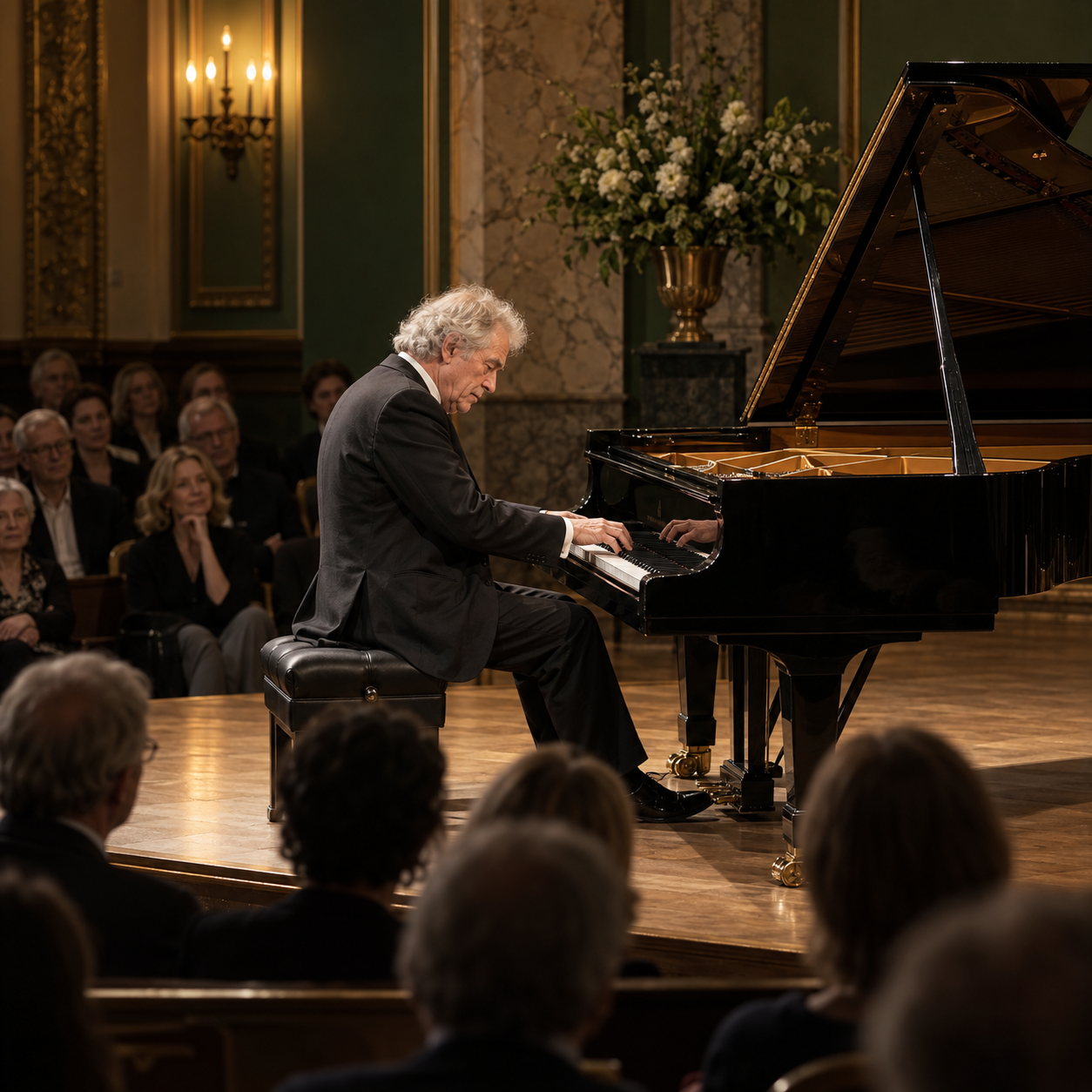
A 1957 Wigmore Hall recital helped renew Cherkassky’s British career, and after his mother’s death he settled permanently in London in 1961. He lived for decades at the White House Hotel near Regent’s Park, keeping an idiosyncratic routine while travelling internationally. London audiences came to value the sense that no two recitals would be quite the same.
His appearances extended across Wigmore Hall, the South Bank and the BBC’s musical life. Late recitals preserved both curiosity and risk: rare miniatures might sit beside Chopin, Schumann, Liszt or Tchaikovsky. WKMT’s guide to Javier Perianes in London offers a revealing contrast between cultivated restraint and Cherkassky’s mercurial theatrical instinct.
Spontaneity becomes art when every surprise reveals something the score was already capable of saying.
Recordings and the evidence of live performance
Shura Cherkassky recorded across the eras of 78s, LPs, stereo and broadcast tape. His catalogue includes Chopin, Liszt, Schumann, Tchaikovsky, Rachmaninov, Rameau, modern miniatures and concertos. Studio records document his colour, but live recordings are especially revealing because they preserve the edge of decision: a tempo settles, a phrase swerves and the hall seems to participate.
Compare more than one account of the same work. In Chopin, notice whether a return becomes more intimate or more rhetorical. In Liszt, follow how virtuosity is directed towards character rather than velocity alone. Cherkassky demonstrates that fidelity can include renewal. The printed notes remain, while balance, pacing and emotional temperature are discovered again.
A four-part Shura Cherkassky listening route
Choose one short performance and listen first for melody alone. On the second hearing, follow the bass and name each harmonic arrival. Next attend to transitions: where does Shura Cherkassky change colour, release time or reveal an inner voice? Finally, listen without analysis and decide which surprise changed your understanding of the piece rather than merely attracting attention.
At the piano, take one phrase and prepare three credible voicings. Keep fingering and rhythm stable while changing which line leads. Record all three, then choose the version that best clarifies the music’s direction. Cherkassky’s example is liberating precisely because it demands responsibility: imagination must remain answerable to sound, structure and the listener’s memory.
Hear Shura Cherkassky in recital
This 1963 Salzburg recital preserves Cherkassky’s appetite for contrast across Mendelssohn, Schumann, Chopin, Bartók and Debussy. Listen for the changing hierarchy of voices and the sense of a programme unfolding as theatre. Video attribution: embedded from YouTube for educational commentary; rights remain with the channel and rights holders.
WKMT London
Develop the tonal imagination, structural hearing and interpretative confidence that turn musical choices into a coherent performance.
Explore piano lessons in LondonSources on Shura Cherkassky
- Encyclopaedia Britannica: Shura Cherkassky
- Curtis Institute of Music: Josef Hofmann and the piano tradition
- BBC Genome: Shura Cherkassky broadcasts
- Library of Congress: Shura Cherkassky authority record
- International Piano Archives at Maryland
- Wigmore Hall: hall history
Sources checked 20 September 2026. Educational guidance; individual circumstances and progress vary.