
 TRIAL LESSON
Piano Lessons
Hobbies After Retirement: Why Piano Can Become a Serious New Chapter
Sep
WKMT London adult learner guide
Hobbies After Retirement: Why Piano Can Become a Serious New Chapter
The best hobbies after retirement do more than occupy an empty hour. They create a reason to return, notice improvement and share attention with other people. Piano can become that kind of chapter because it combines craftsmanship, imagination, listening and a repertoire that never runs out.
In brief
Hobbies after retirement are most sustainable when they offer enjoyment, manageable challenge, identity and social connection. Piano can provide all four: adults can begin at any age, practise flexibly, hear progress, study music with personal meaning and share learning through lessons, duets or informal performance. No professional ambition is required.
Choosing hobbies after retirement for depth, not busyness
Retirement changes the architecture of a week. The loss of deadlines can feel liberating, but it may also remove familiar structure. A durable hobby creates a gentle rhythm without reproducing the pressures of employment. Piano offers a clear appointment with attention: sit down, listen closely and work on one musical question at a time.
Meaning develops through return. The first weeks may be occupied by posture, geography and simple rhythm; later, a phrase begins to breathe and a favourite piece becomes playable. Among hobbies after retirement, music is distinctive because practical skill and cultural discovery can deepen together. A lesson may lead to a recording, a concert or a composer previously unknown.
Why piano suits a serious beginner
The piano makes musical relationships visible. Notes are laid out in order, a key produces an immediate sound and two hands can begin separately before being coordinated. Adults do not need a childhood history with the instrument. They need a suitable starting point, a responsive teacher and expectations shaped around their own time, mobility and musical interests.
At adult piano lessons in London, a plan can balance one stretching piece with music that is already comfortable. Short sessions are valid. Twenty attentive minutes may be more valuable than an hour of unfocused repetition. Seriousness is measured by the quality of engagement, not by speed, grade level or public performance.
What research can and cannot promise
A large sixteen-country study published in Nature Medicine found that hobby engagement among people aged 65 and over was associated with better mental wellbeing across varied cultural settings. Longitudinal work on arts engagement has also linked sustained participation with aspects of happiness, life satisfaction and a sense of purpose. These associations are encouraging, but they do not prove that one activity guarantees a particular health outcome.
Piano studies with older beginners suggest that complex musical learning remains possible and engages cognitive and motor processes. The responsible reason to begin is still musical. Hobbies after retirement should not be sold as treatment or a defence against ageing. A piece understood more deeply, a weekly lesson anticipated with pleasure and a new skill built with patience are already worthwhile outcomes.
A new chapter becomes meaningful when attention has somewhere to go and skill has time to grow.
Structure, connection and a musical identity
A workable week might include three short practice sessions, one longer exploration and a listening appointment away from the keyboard. Keep a small piece fluent, study a new passage and note one discovery after each session. The record might be as simple as ‘heard the bass change the mood’ or ‘found a calmer fingering’. Such observations make progress specific without turning leisure into performance management.
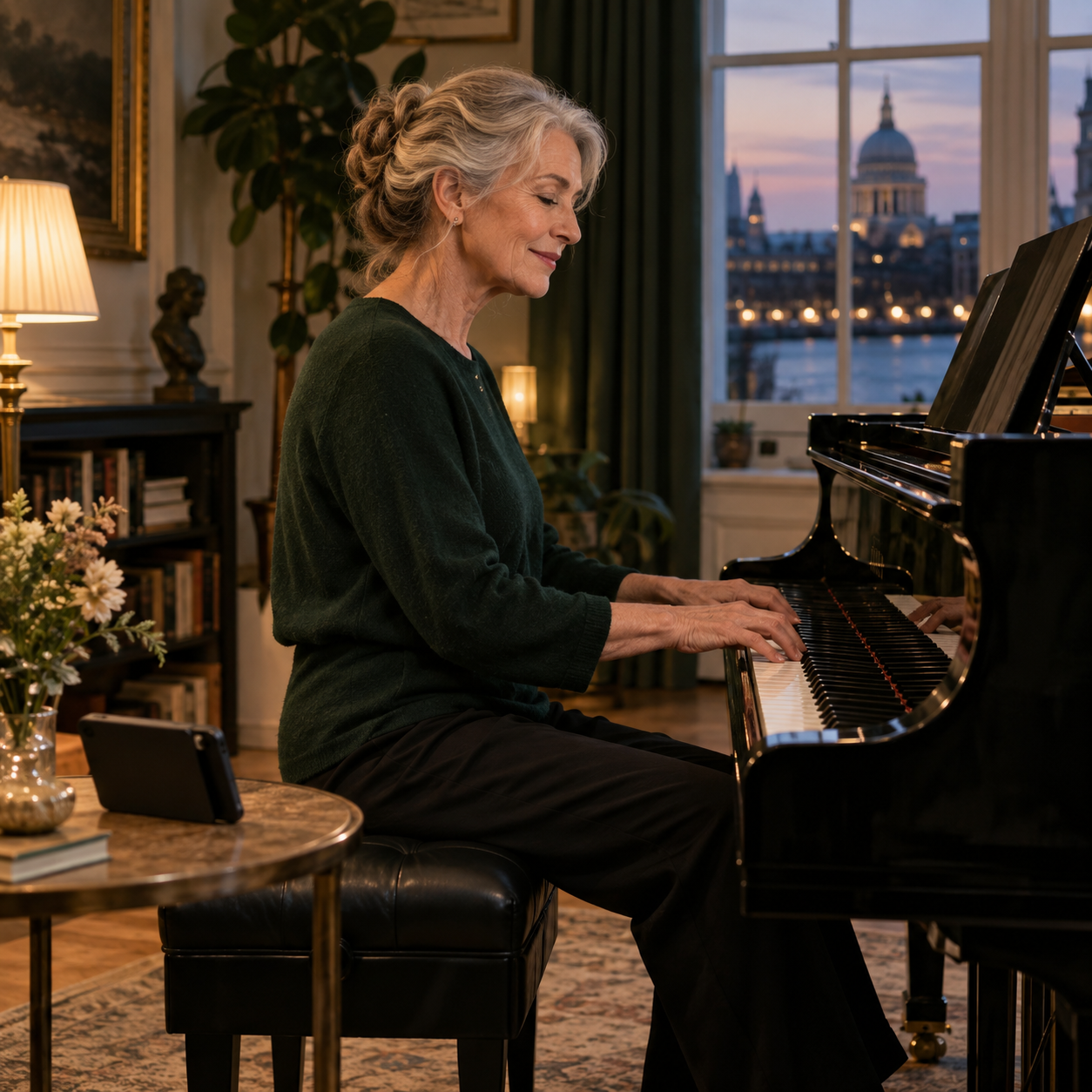
Connection can be quiet or social. A teacher provides continuity and conversation; a duet makes timing collaborative; an informal recital offers a destination; concert-going becomes richer when the listener recognises how a texture is made. WKMT’s article on meaningful hobbies through piano explores how this identity can deepen over years.
A practical first-month plan
In week one, establish a comfortable seat, learn the keyboard’s repeating pattern and play a short melody. In week two, add a steady pulse and a simple left-hand accompaniment. In week three, practise starting from several places rather than always from the beginning. In week four, record a complete version and choose the next piece with your teacher.
The plan should remain adaptable. Hands may tire, travel may interrupt practice and musical taste may change. A good teacher adjusts fingering, pacing and repertoire without lowering artistic respect. The strongest hobbies after retirement leave room for ambition and ease: they can become serious without becoming punitive, and social without demanding performance.
WKMT London
Begin an adult piano practice shaped around your experience, timetable and musical ambitions.
Explore adult piano lessonsSources on hobbies after retirement
- Nature Medicine: hobby engagement and mental wellbeing in people aged 65 and over
- UCL: international hobby engagement study
- Oxford Academic: sustained arts engagement and wellbeing in older adults
- Frontiers in Aging Neuroscience: cognito-motor functions in older adult piano learning
- PMC: musical instrument training and ageing
- Royal College of Music: Centre for Performance Science
Sources checked 19 September 2026. Educational guidance; individual circumstances and progress vary.